-
-
Presentation Slide
-
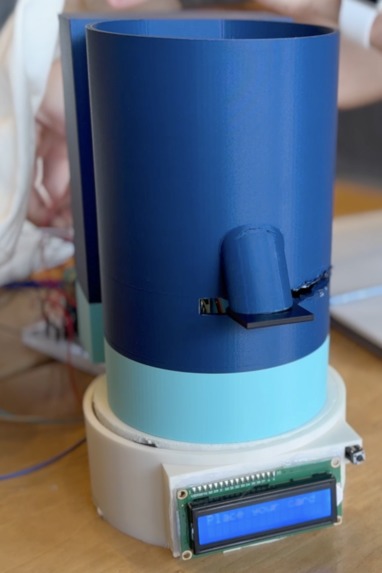
Device Image

Inspiration
We were inspired by our own experience with selfish roommates that are not respectful of other people’s belongings. We wanted to create a simple yet effective device that would enable people to monitor who is taking their food, so they can get paid for what is theirs!
What it does
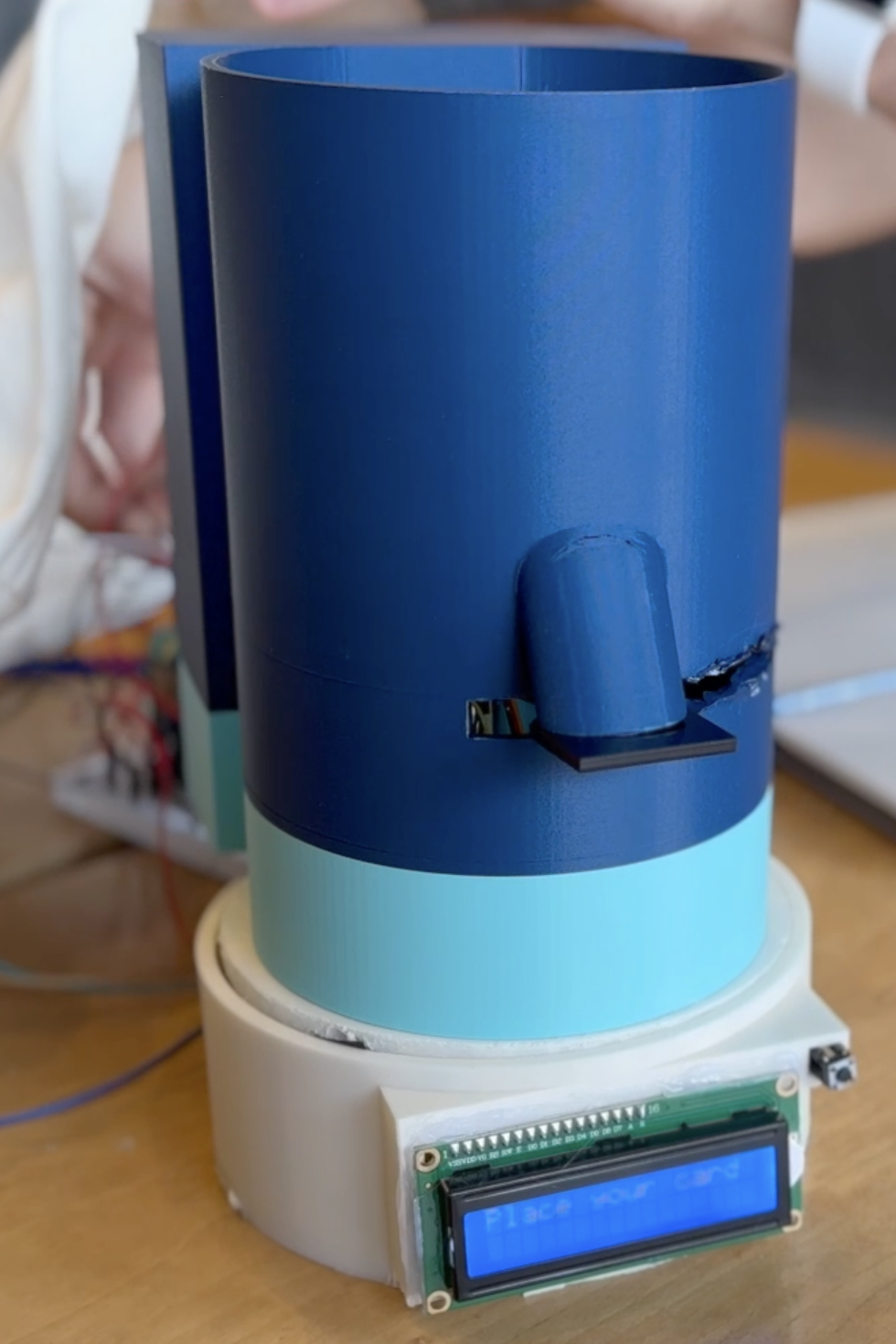
PantryPal is a modern pantry organization system useful for roommate food-sharing households. Using an RFID scanner, PantryPal records who dispenses food and how much, saving all of the information on an SD card. When the food item runs out, the authorized user is able to view the SD card and calculate how much each person owes in the purchase of the refill based on how much each person dispensed in grams. PantryPal stores the food in a cylinder and uses a loading cell to measure food dispensed.
How we built it
The encasing for PantryPal was designed on SolidWorks to include both the scale and the food housing system. The CAD for the scale needed to include specific features to ensure that the load cell was able to detect the small changes in weight from the food dispensing. The food housing cylinder needed to incorporate enough space for the servo motor and a design for the spout to ensure that food was dispensed evenly and consistently. Throughout the entire CAD design, it was important to incorporate pathways for the wires to run through the entire system and specific locations for hardware components to securely rest.
The circuitry was built on a breadboard and all components are compatible with the Arduino Mega platform.
Only two components were cut on the laser printer and this was the servo motor attachment that covered the dispenser and a ramp that was placed inside the food container cylinder to funnel the food to the dispenser.
Challenges we ran into
One of the biggest challenges we faced was figuring out how to use the SD card and the RFID scanner in concert. Both the SD card and the RFID utilize SPI ports, but the challenge was determining how to wire the 4 SPI bus ports between the two components. We discovered that the SPI ports could be wired in parallel between the two components, with a key inclusion of a 2 kOhm resistor in between the MISO pin on the Mega and the corresponding pin on the SD card. Only with the inclusion of this resistor did the SD card reader and the RFID scanner work together. We were able to toggle between the ports and activate either the SD reader or the RFID at a time through the code.
Accomplishments that we're proud of
The biggest accomplishment we are proud of is engineering a device that works. We used multiple sensors, both input and output, as well as 3D prints and laser cuts, to make this device come to life. It works great and does what we set out to do (and more by adding the SD card for data storage!).
What we learned
Our biggest take away from this project was learning how to wire two components that require SPI ports. We were able to look online and do a deep dive into Arduino Forums to see what worked for other people. This skill set will be helpful when trying to problem solve issues with other Arduino compatible components in the future.
Another issue we encountered was the food getting stuck in the dispensing system that we created, preventing a consistent flow of food when the user pressed the button. To work around this issue, we laser cut an oval to create an interior ramp to guide the food into the exit nozzle. We learned how to make slight design modifications that did not require us to completely rethink the project or the current design, allowing us to quickly adapt to new problems that we discovered.
What's next for Pantry Pal - Smart Pantry Organization System
The next step for Pantry Pal is to develop a phone application that automatically logs users and amounts of food taken. This can then automatically calculate how much money each person should be charged for the consumption of the food, creating a more pleasant and informative experience for the user.
Built With
- arduino
- solidworks

Log in or sign up for Devpost to join the conversation.