-
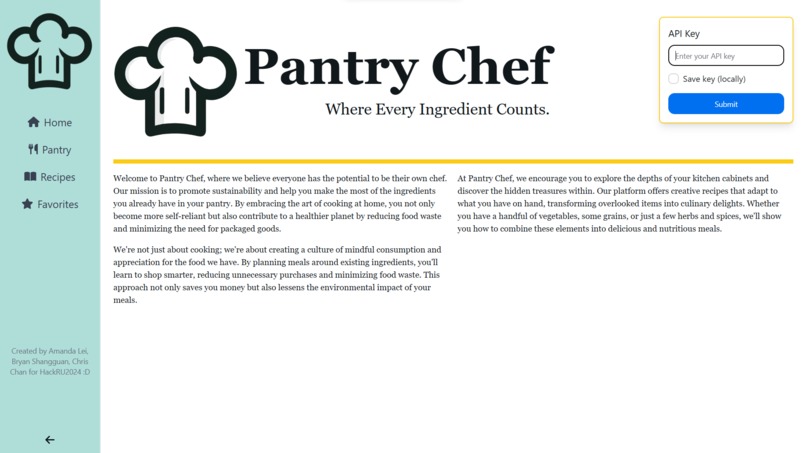
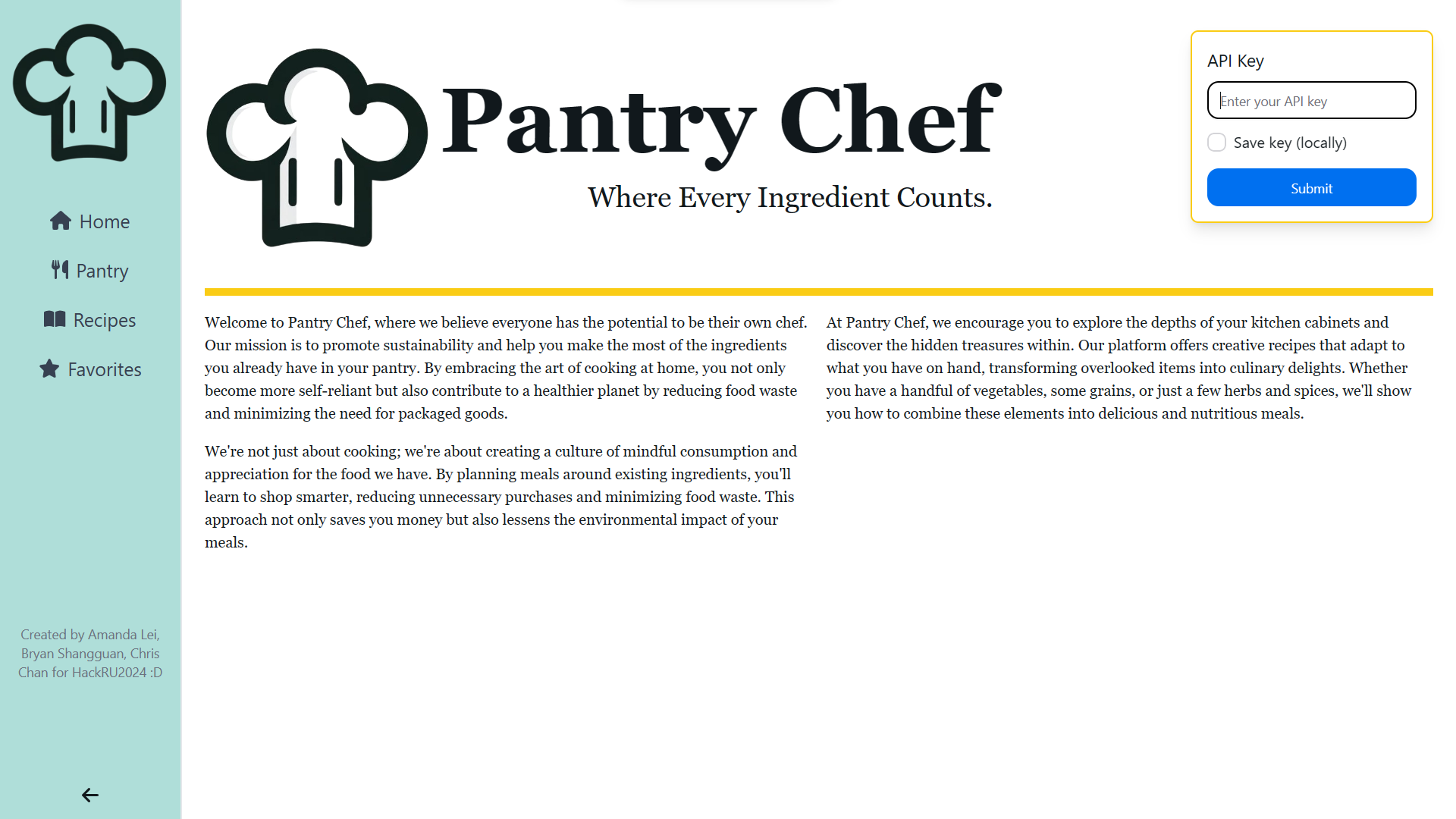
Main page
-
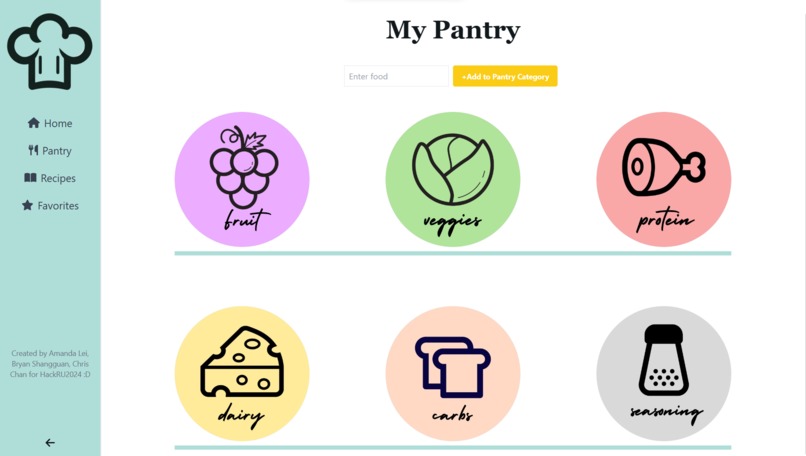
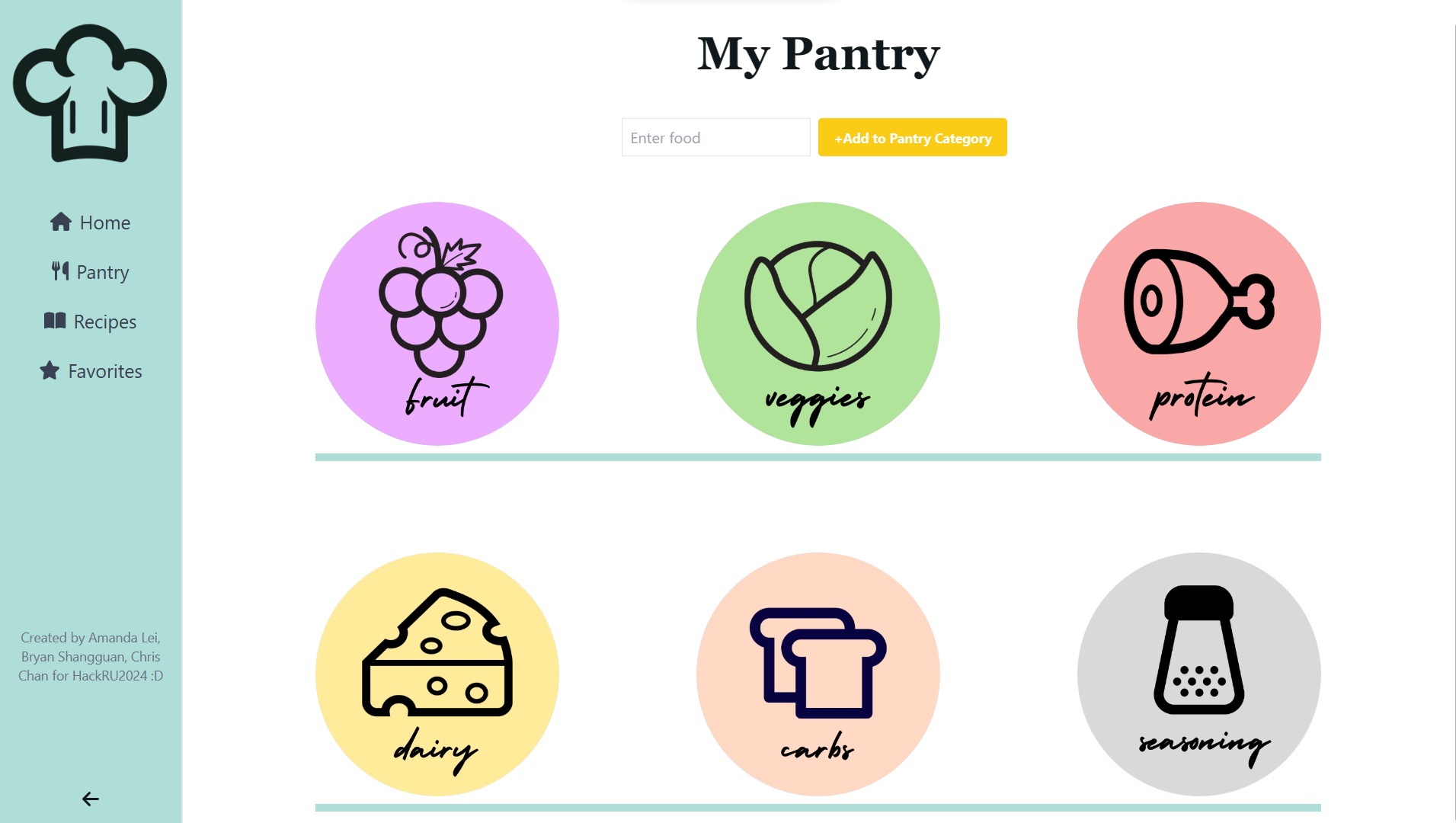
Pantry page
-
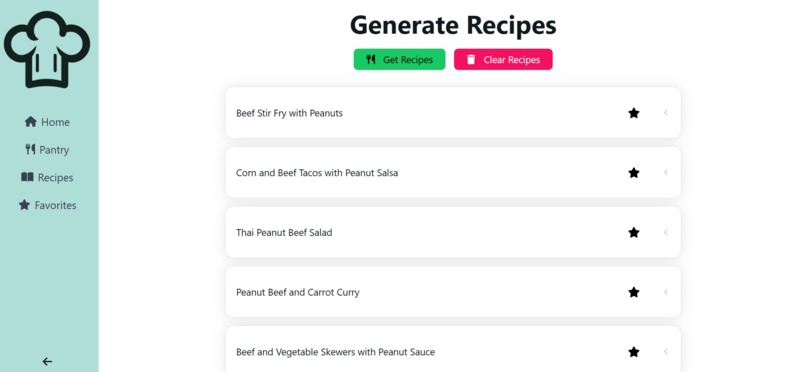
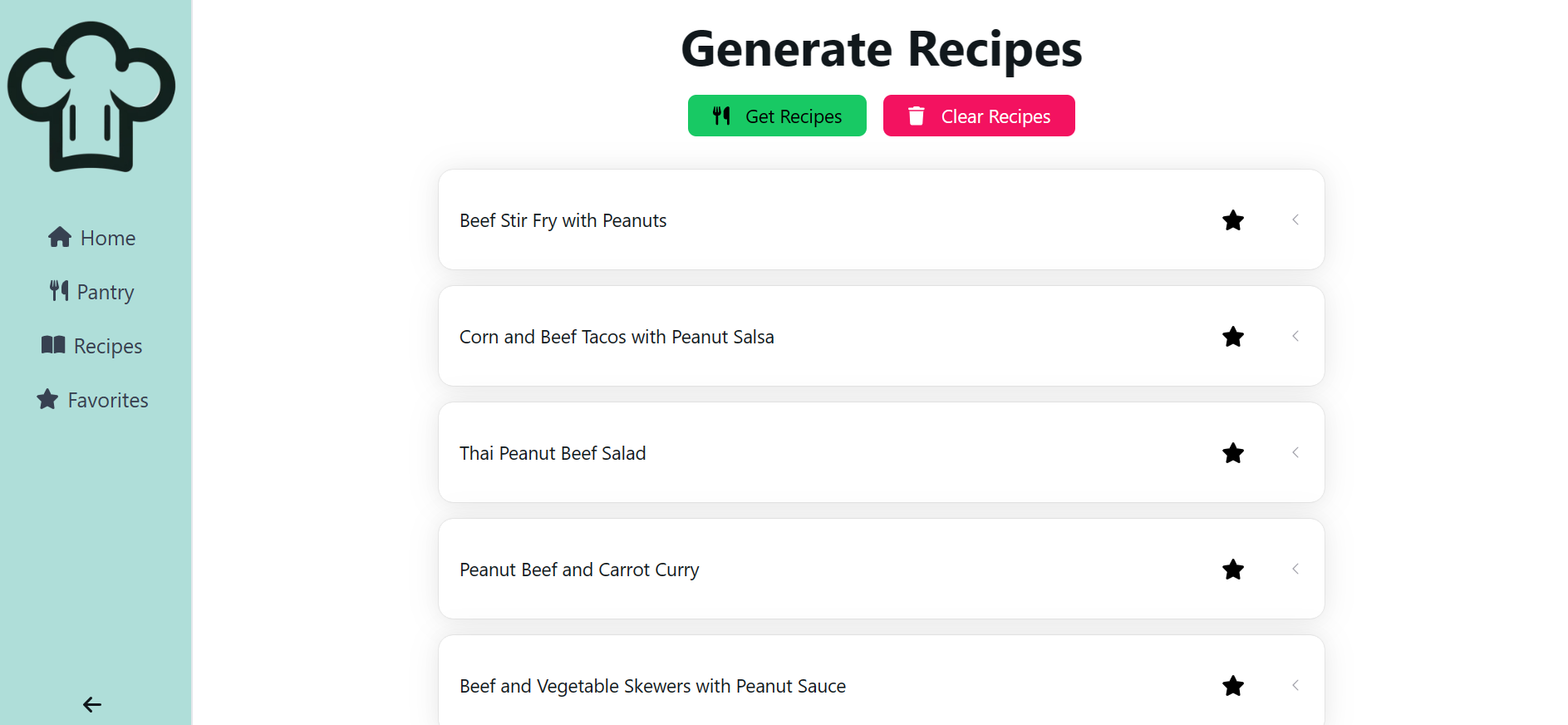
Generate recipes page
-
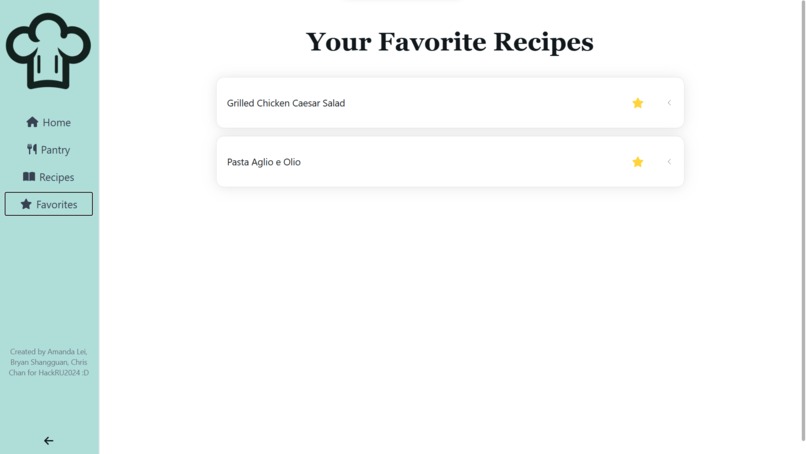
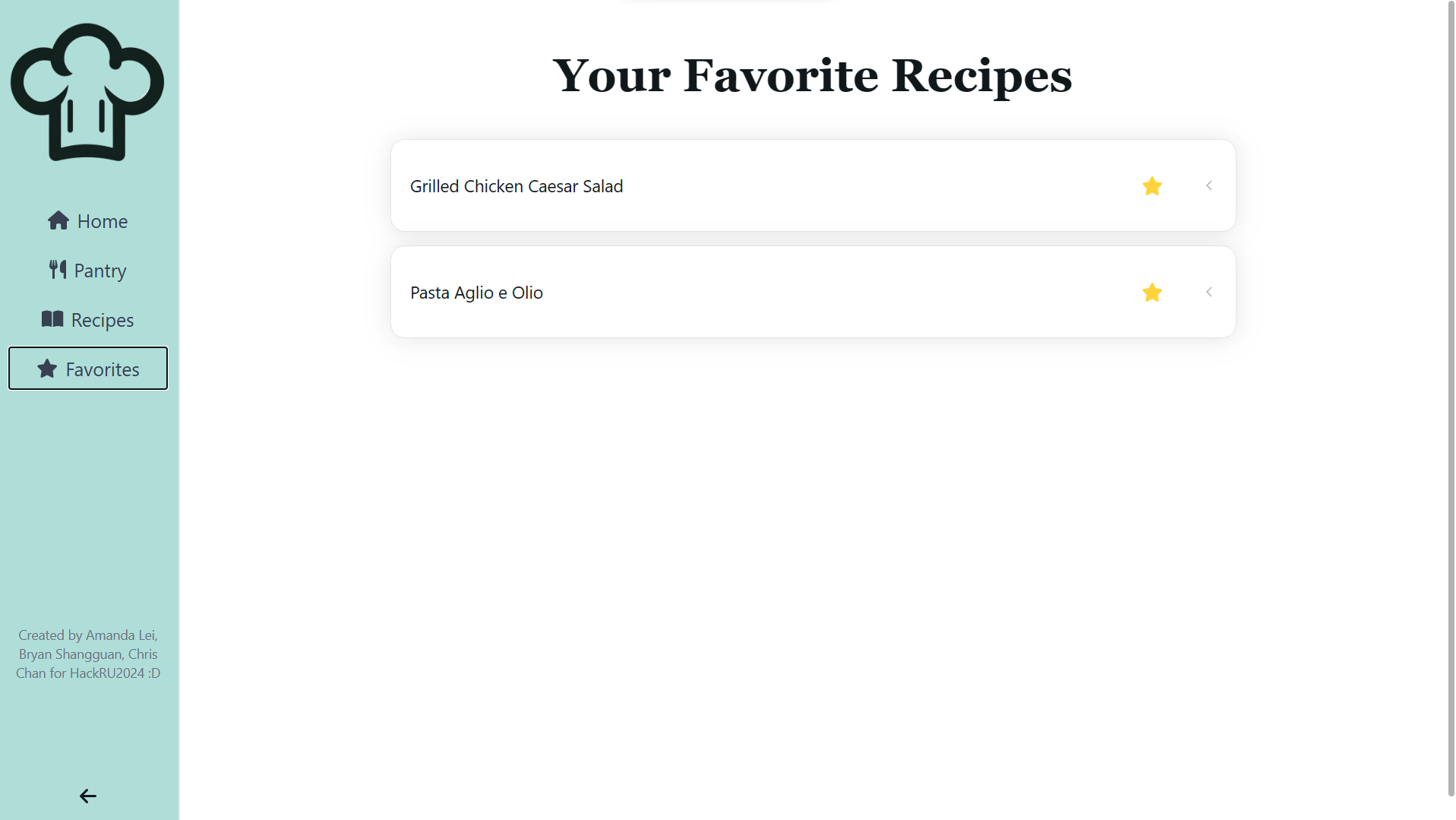
Favorite recipes page
Inspiration
As college students, we are navigating the transition to independent living, which includes managing budgets, grocery shopping, and cooking for ourselves. We noticed the struggle among our peers and ourselves to come up with meal ideas that are not only nutritious but also align with our budget and cooking skills. This challenge sparked our idea to create a solution that helps students like us to maximize the utility of the ingredients they already have, reduce food waste, and enhance their cooking skills.
What it does
Our application leverages the OpenAI ChatGPT API to function as a culinary assistant for users. Here's how it works: Users input a list of ingredients they have in their kitchen, and our system, powered by AI, suggests a variety of dishes they can prepare with those ingredients. Users can then browse through these suggestions and select recipes to view detailed cooking instructions. Additionally, the app features functionality to "favorite" recipes, allowing users to save and easily access their preferred dishes in the future. This not only makes meal planning more efficient but also helps users discover new recipes and improve their culinary repertoire.
Our Tech Stack
We built our application using React, a popular JavaScript library for building user interfaces, which allowed us to create a responsive and intuitive front end. For styling, we chose Tailwind CSS, a utility-first CSS framework that enabled us to design a sleek, modern UI without writing a lot of custom CSS. The integration with OpenAI's API was crucial for the recipe suggestion functionality, allowing our application to access a powerful AI model capable of understanding and generating human-like text based on the users’ ingredient inputs.
Challenges we ran into
A significant challenge was integrating and effectively utilizing the ChatGPT API. We had to learn how to query the API correctly, handle the responses, and present the data in a user-friendly manner, all while ensuring that the interactions were seamless and efficient. Another challenge was a new tech stack that the team members were not fully comfortable with. This unfamiliarity meant we had to invest extra time learning and understanding these technologies, often through trial and error. This process, while challenging, was immensely beneficial. It not only improved our technical skills but also enhanced our problem-solving abilities and adaptability in the face of unfamiliar tasks.
Built With
- javascript
- openai
- react
- tailwind


Log in or sign up for Devpost to join the conversation.