Pantheon - AI Physics Research Lab Hackathon Submission
Loom video: https://www.loom.com/share/c5aac9a79a08444994bd76fdf8752cd8?sid=ed45276e-b6f1-43f8-8b4e-1397baed94da
Inspiration
The complexity of modern physics research often requires interdisciplinary collaboration between theorists, experimentalists, computational scientists, and data analysts. We were inspired by the idea of creating a virtual research lab where specialized AI agents could collaborate seamlessly, each bringing unique expertise to tackle complex physics problems. The name "Pantheon" reflects our vision of a diverse collective of AI minds working together, much like the ancient Greek pantheon where different gods had distinct domains of expertise.
What it does
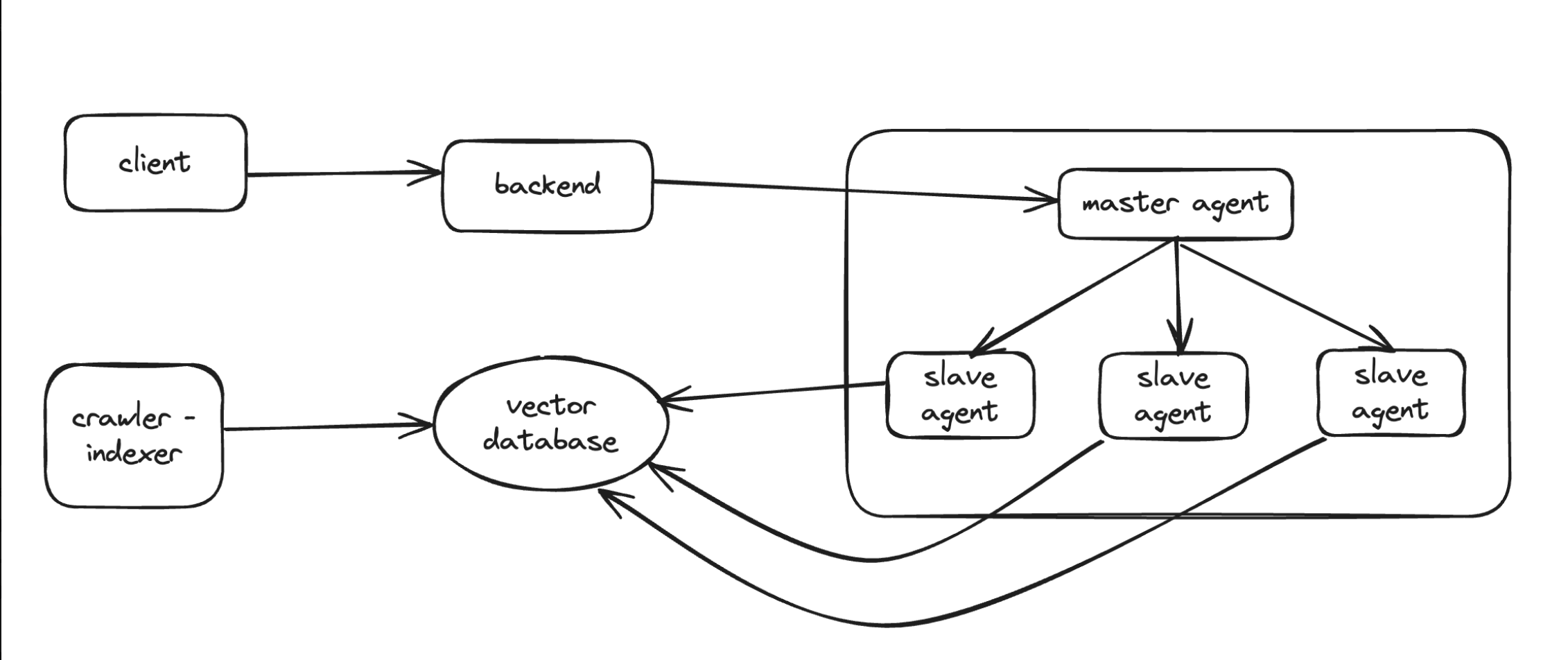
Pantheon is a multi-agent AI system designed to conduct physics research collaboratively. The system consists of four specialized AI agents: a Theorist Agent that develops mathematical models and frameworks, an Experimentalist Agent that designs virtual experiments and analyzes data, a Computational Agent that performs simulations and numerical calculations, a Data Analyst Agent that processes experimental data and identifies patterns, a Literature Agent that searches physics literature and summarizes findings, and a Coordinator Agent that manages workflow and facilitates communication. Users can input research questions or experimental data, and the swarm collaboratively develops hypotheses, designs experiments, and works toward solutions through a shared knowledge base.
How we built it
We built Pantheon using a microservices architecture where each agent operates as an independent service with specialized knowledge bases and reasoning capabilities. The system features a message-passing communication protocol for agent coordination, a centralized graph database for shared knowledge storage, a workflow engine for task decomposition and assignment, and a web-based interface for user interaction. We integrated the system with physics simulation software (OpenFOAM, COMSOL), mathematical computation engines (Mathematica, MATLAB), and scientific databases (arXiv, Physical Review journals) to provide comprehensive research capabilities.
Challenges we ran into
Our biggest challenges included ensuring effective communication between agents without creating information bottlenecks or circular dependencies, integrating deep physics knowledge into each agent while maintaining cross-disciplinary communication capabilities, implementing real-time collaboration while maintaining consistency in the shared knowledge base, managing computational resources efficiently across multiple agents running physics simulations, and developing robust validation mechanisms to ensure the accuracy of AI-generated physics research against established principles.
Accomplishments that we're proud of
We successfully achieved seamless collaboration between six specialized AI agents that can dynamically form research teams based on problem requirements. During testing, Pantheon generated interesting theoretical predictions about quantum entanglement in many-body systems that aligned with recent experimental observations, demonstrating genuine research potential. We built a highly scalable architecture but are still running into some orchestration issues on our end.
What we learned
We discovered that highly specialized agents with deep domain expertise produce better results than generalist agents, even with higher communication overhead. Implementing standardized communication protocols between agents was crucial for maintaining coherent research direction, and AI-generated physics research requires multiple layers of validation including consistency checks with established physics principles. The most effective approach combines AI agent autonomy with human oversight, and we observed emergent behaviors where agent collaborations led to research approaches that weren't explicitly programmed, suggesting potential for novel scientific methodologies.
What's next for Pantheon
We plan to integrate Pantheon with real laboratory equipment and IoT sensors for actual experiment execution, expand computational capabilities to handle quantum computing simulations and large-scale astrophysical models, develop a network of Pantheon instances for peer review, adapt the system for educational applications, extend the framework to include chemistry and biology agents for interdisciplinary research, build automated publication pipelines, and create a global community platform where researchers worldwide can contribute to and benefit from Pantheon's collective research capabilities.
Built With
- crewai
- fastapi
- gpt-4
- javascript/node.js
- litellm
- orchestration
- pydantic
- python
- tavily
- vercel


Log in or sign up for Devpost to join the conversation.