-
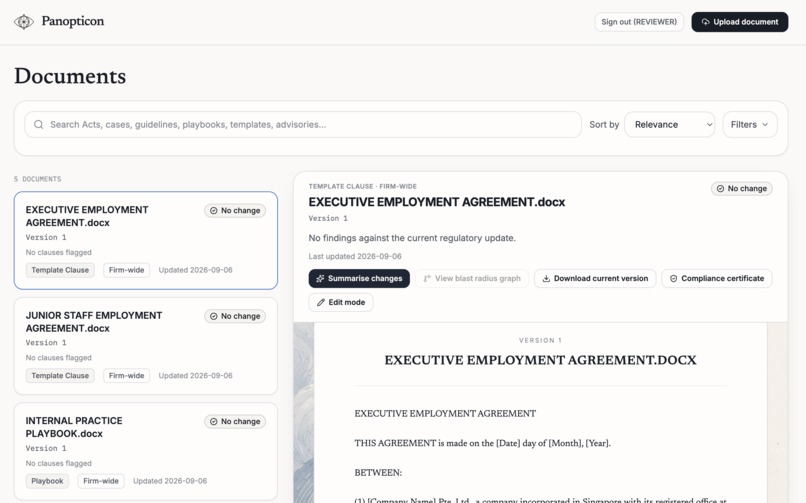
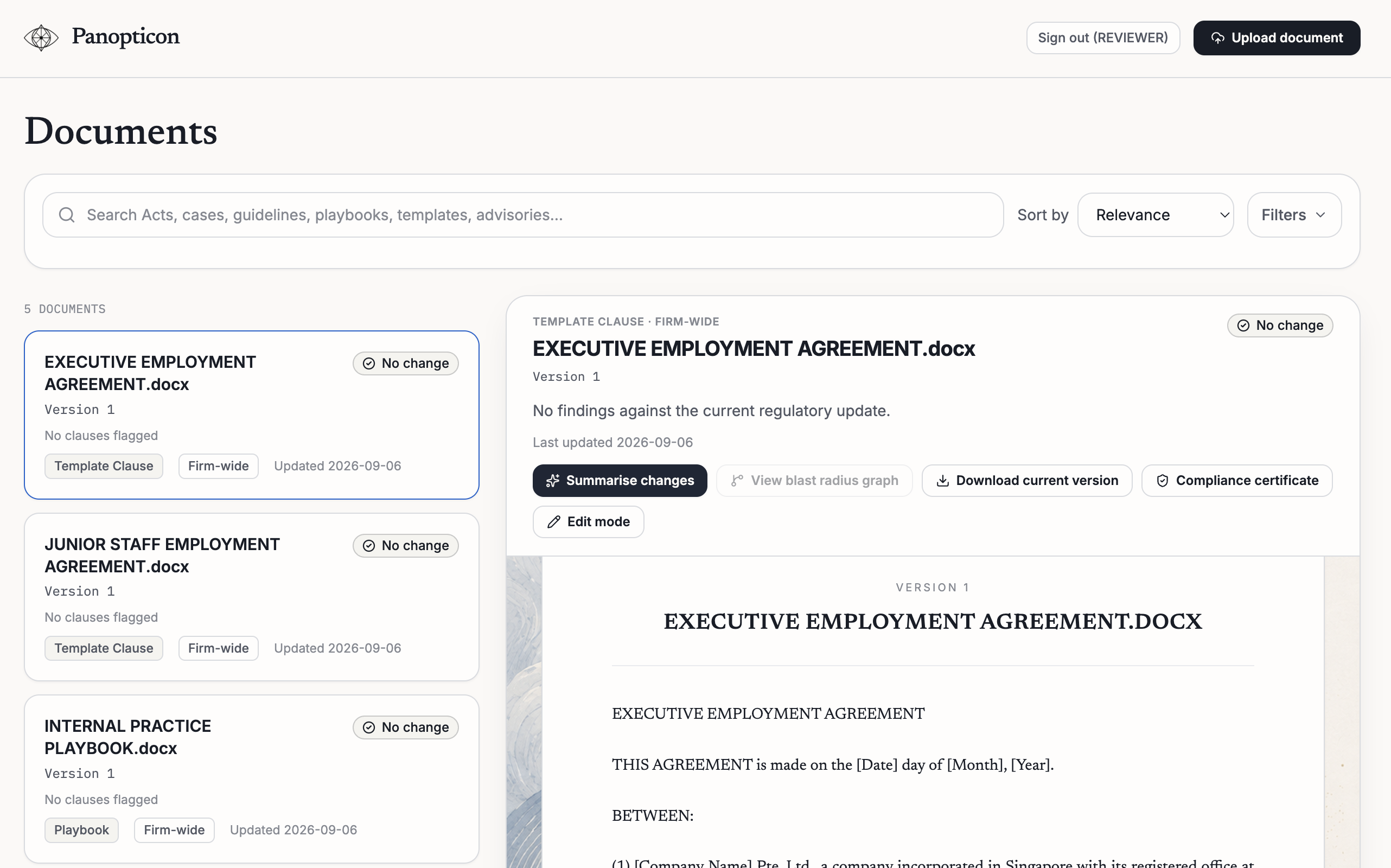
Main page
-
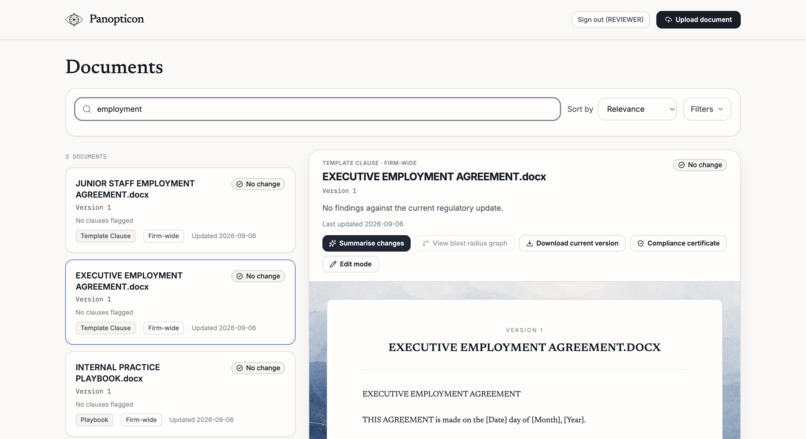
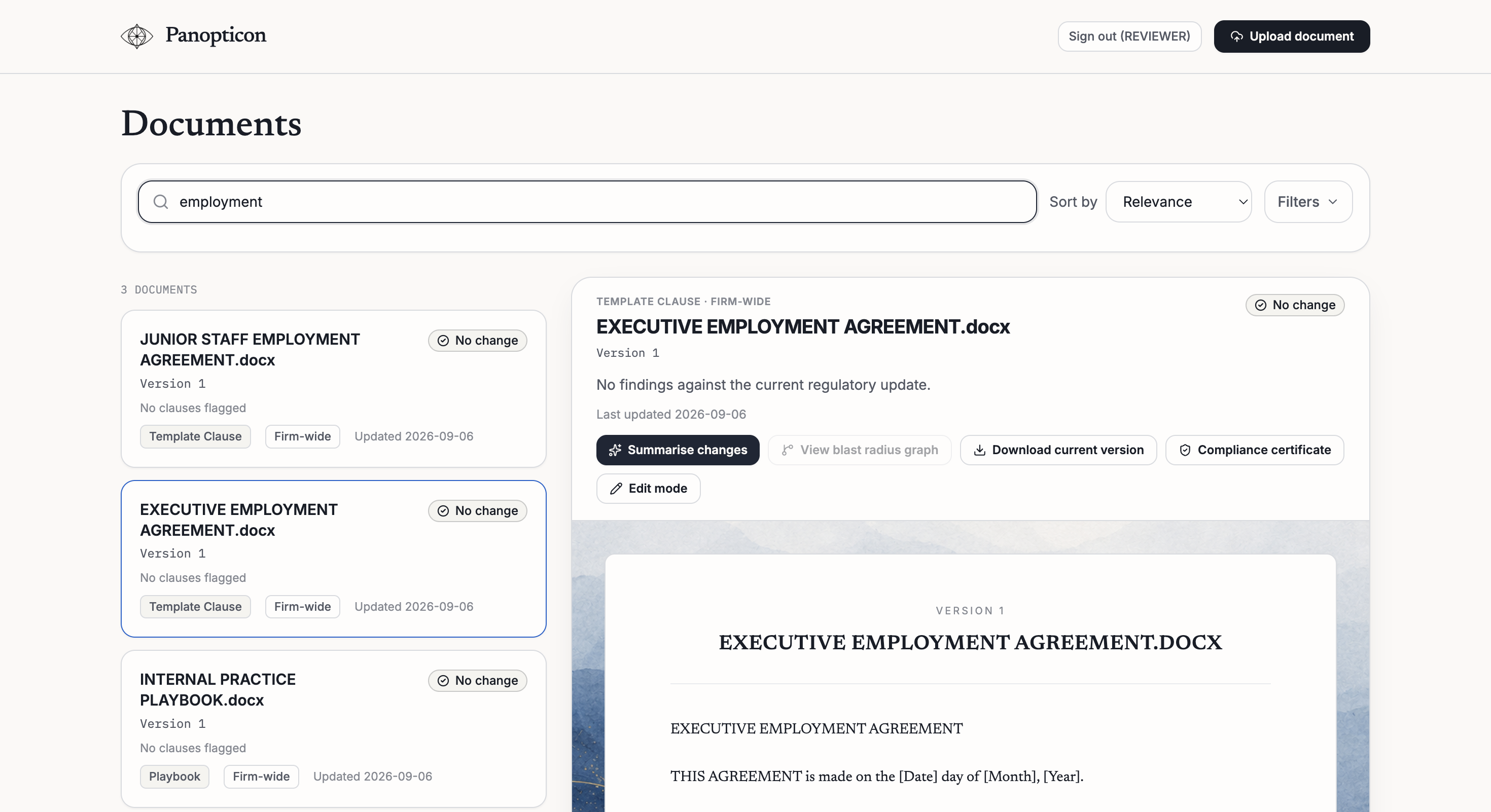
Main page with a search
-
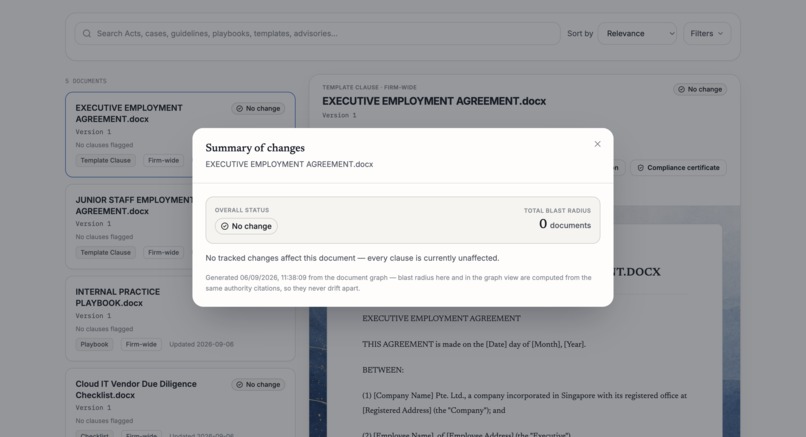
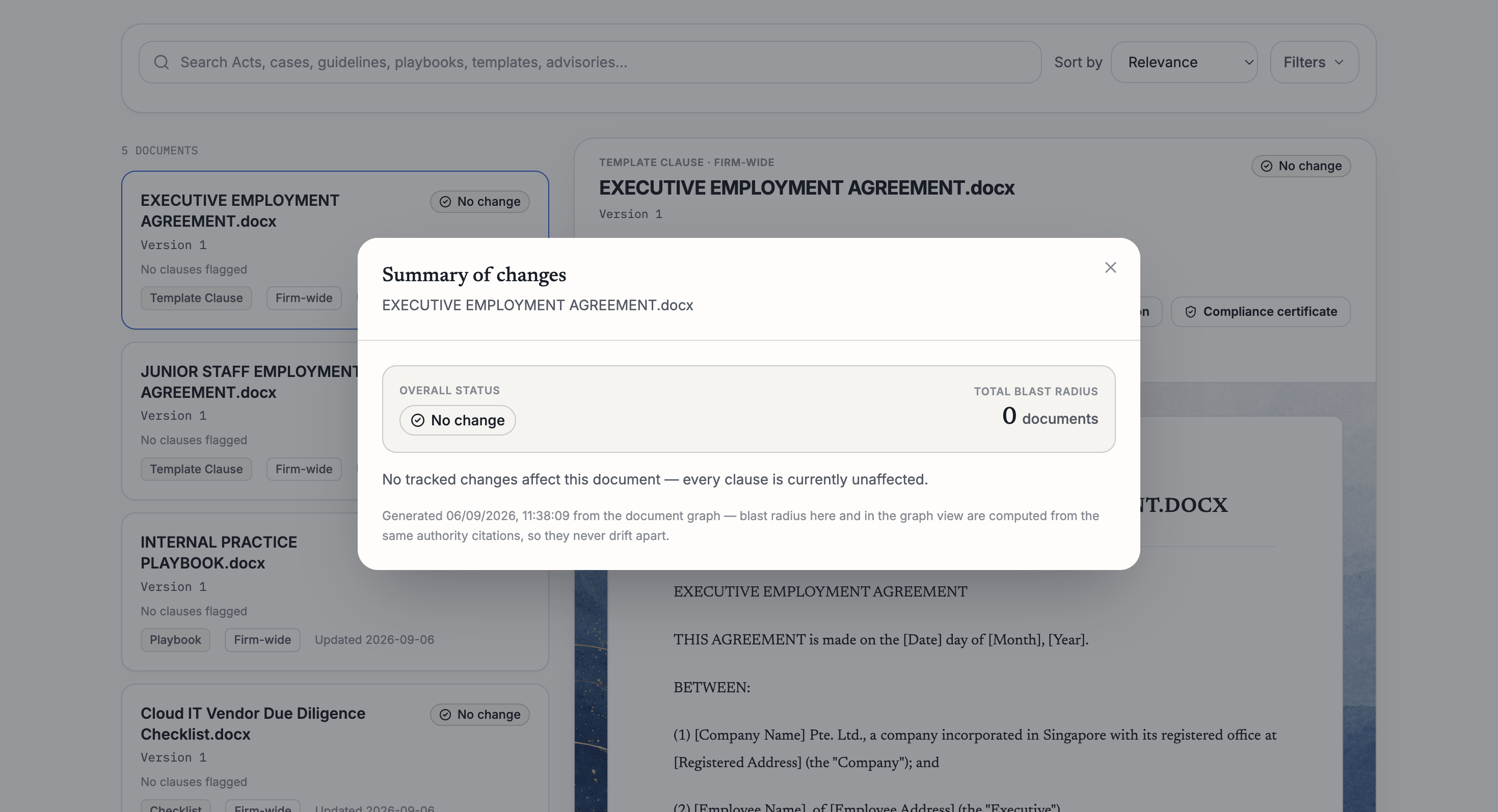
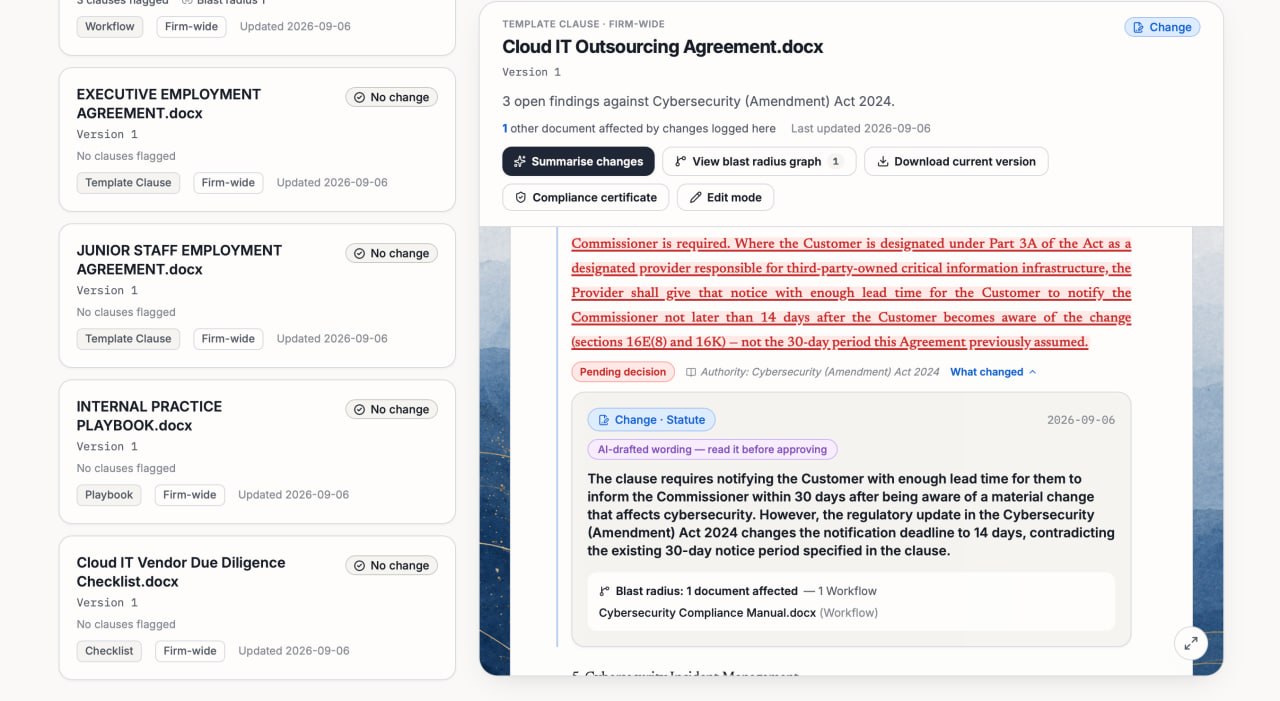
Summary of changes before change in law
-
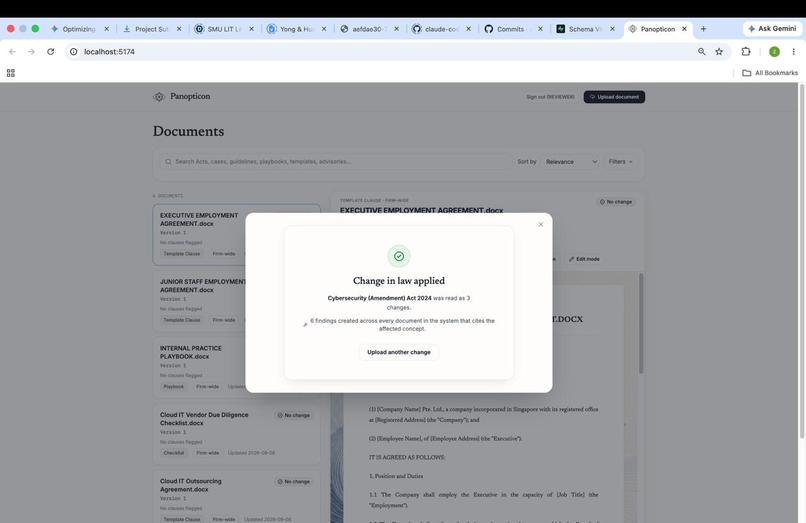
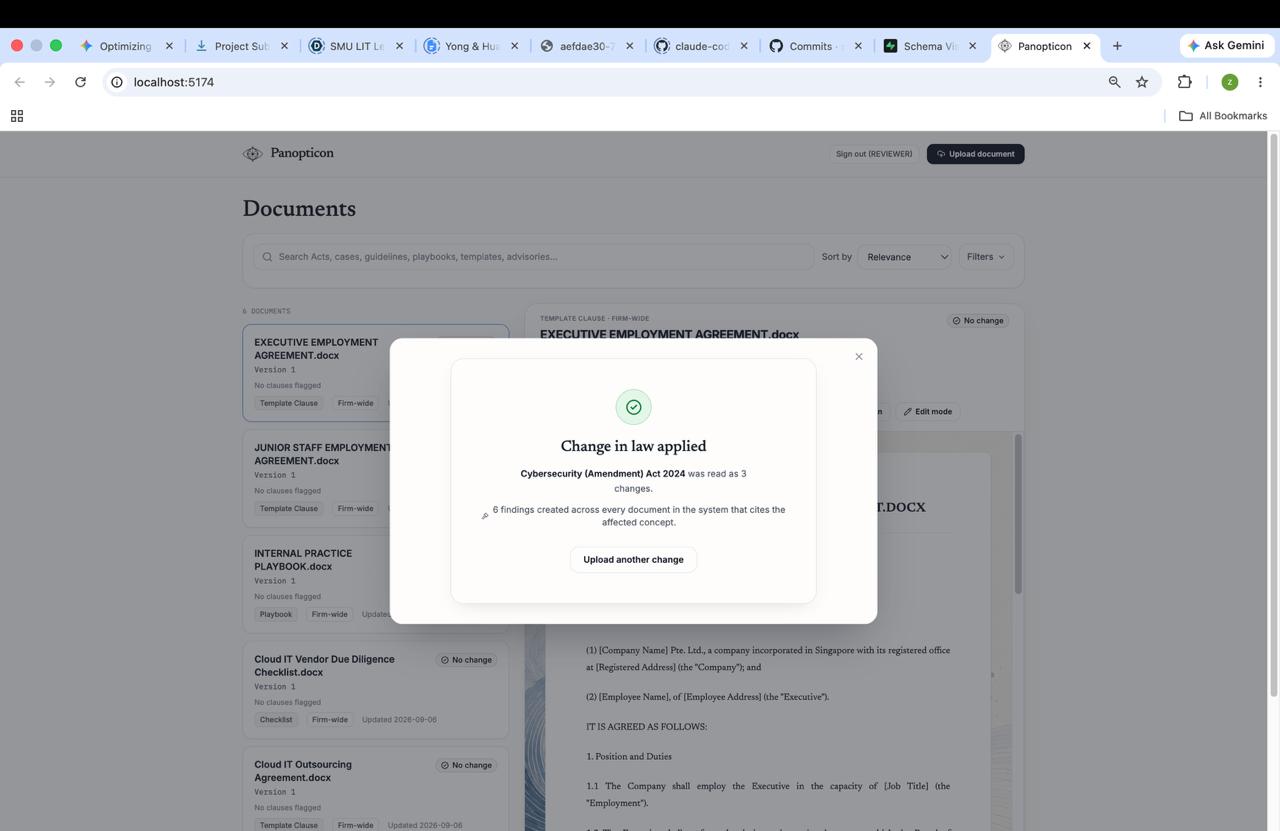
Successful upload
-
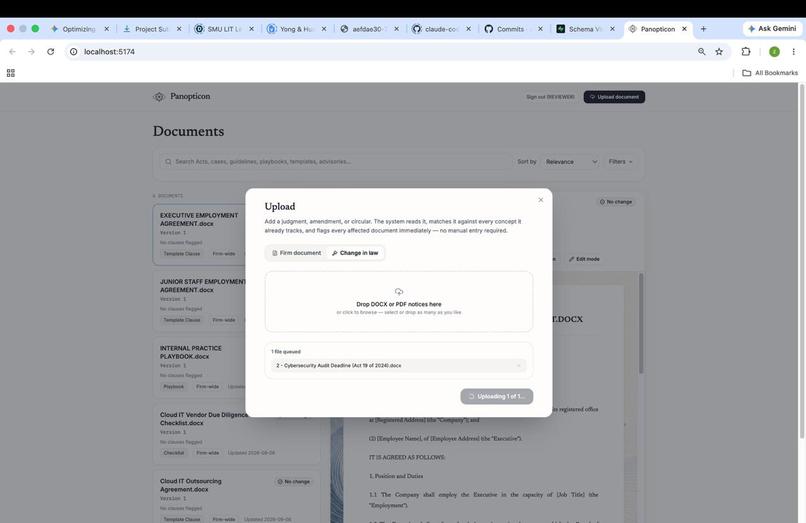
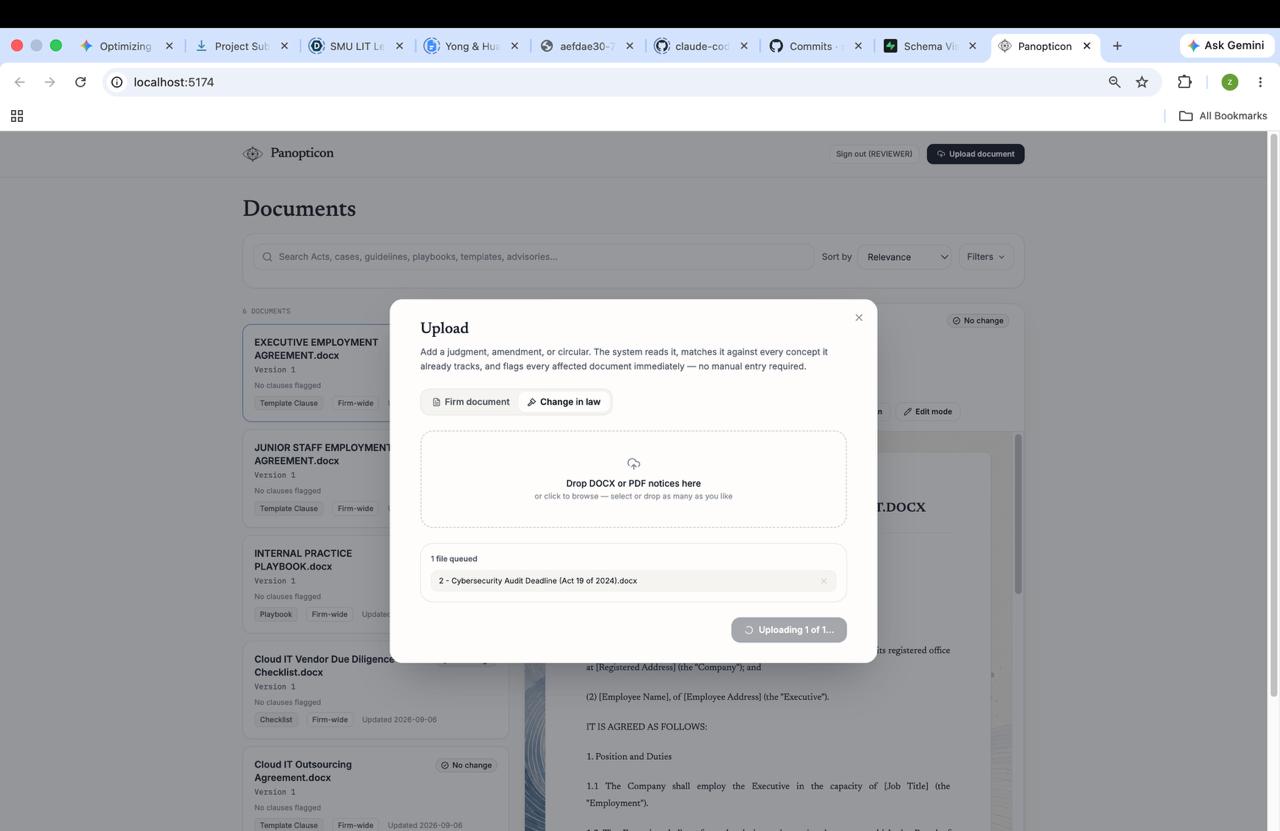
Upload feature
-
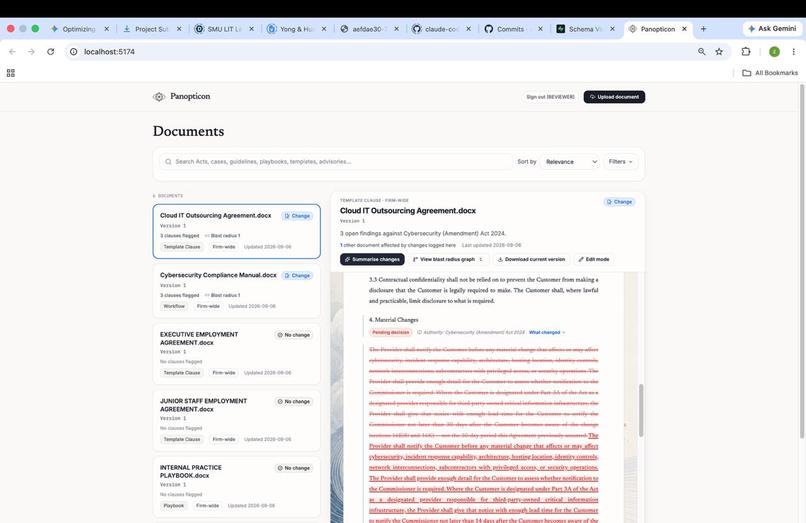
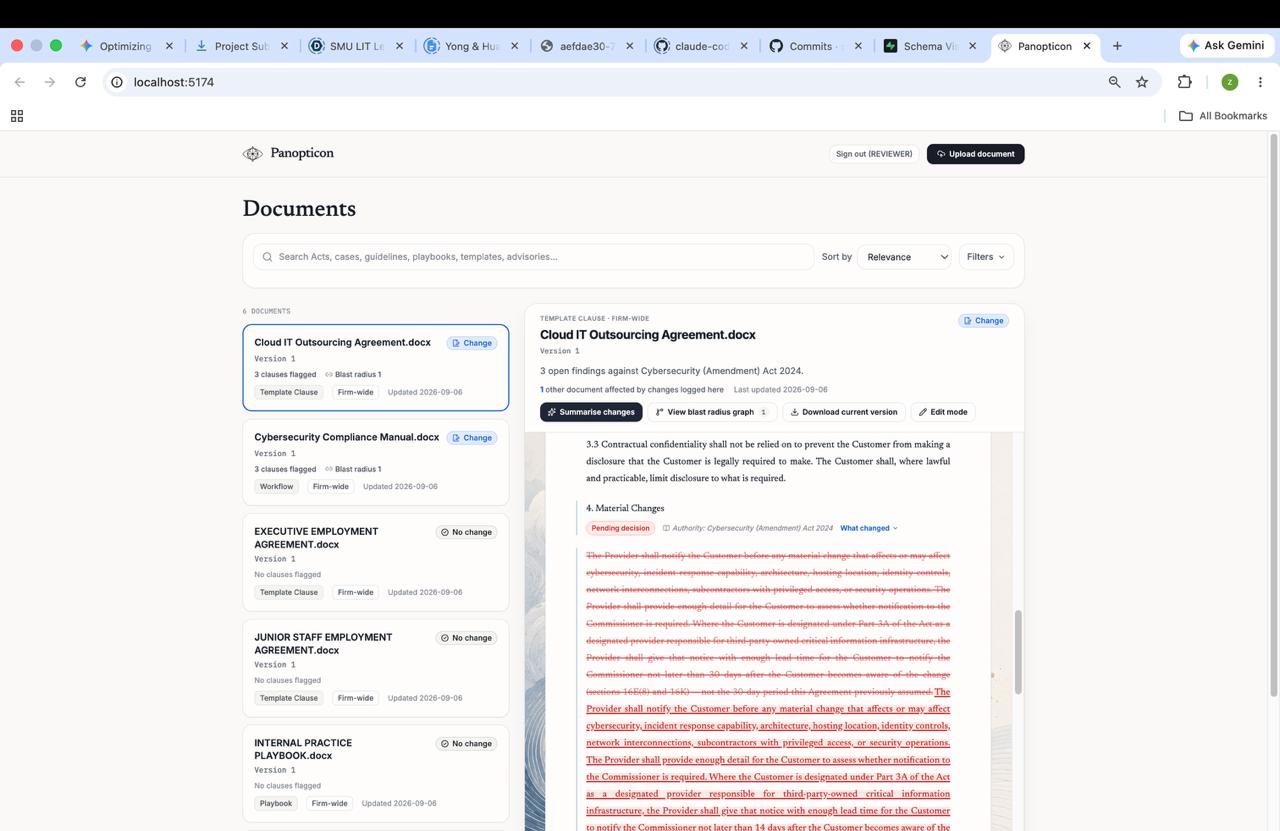
Proposed amendments after change in law
-
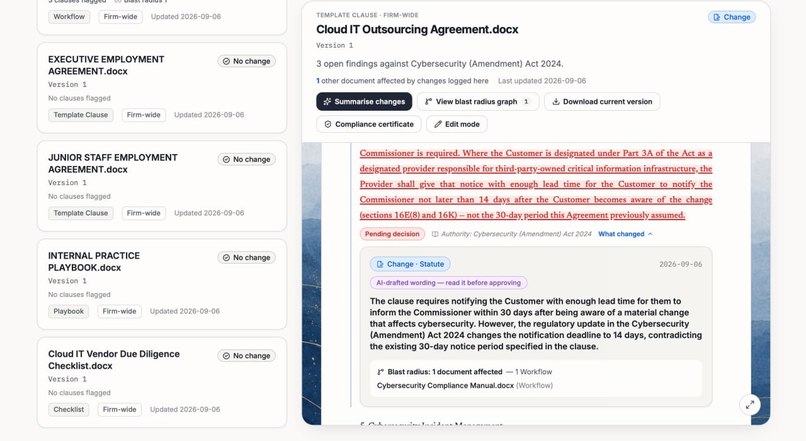
Pending decision for amendments after change in law
Team 1: Yong & Huang
Inspiration
Legal teams already receive regulatory alerts, but the harder problem is understanding what those changes break inside the organisation. A single amendment can make a clause, handbook, workflow, training document, or automated configuration outdated. We wanted to build a system that turns regulatory change into coordinated action.
What it does
Panopticon identifies which internal documents, policies, workflows, and systems are affected by a regulatory update. It shows the exact evidence on both sides, explains the impact, proposes bounded redlines. Updates are never published automatically. Reviewers can edit and submit proposed changes, while a separate approver must approve them.
How we built it
We built a React and TypeScript frontend with a Node.js and Express backend, backed by PostgreSQL.
The system:
- Ingests DOCX, PDF, and JSON artefacts.
- Extracts structured legal claims using constrained concepts.
- Matches those claims against structured regulatory changes.
- Highlights exact text, locators, and character offsets.
- Classifies findings as update needed, possible impact, current, or legal review required.
We deliberately use deterministic matching and explicit competence boundaries so the system remains explainable and testable.
Challenges we ran into
The hardest challenge was detecting non-numerical changes in law. A regulatory update may change definitions, obligations, exceptions, scope, or required processes without changing a number that can be compared directly. We had to design the system to recognise when a change falls outside safe automated handling. Instead of pretending to understand every legal nuance, Panopticon flags these cases for legal review, preserves the relevant evidence, and explains why it cannot safely generate an automatic patch.
Accomplishments that we're proud of
We built a complete end-to-end workflow from regulatory update to approved internal document version.
We are especially proud that Panopticon can:
- Identify affected content across multiple document types.
- Highlight the precise evidence that triggered a finding.
- Detect and suppress historical or unrelated matches.
- Include configuration files alongside ordinary legal documents.
- Require human review and separate approval.
- Protect against stale revisions and overlapping changes.
What we learned
Regulatory resilience is not just about finding legal updates. It is about maintaining the connection between external rules and the internal systems that depend on them. We learned that trustworthy automation needs explicit limits. The strongest system is not the one that patches everything. It is the one that knows what it can safely automate, clearly explains what it cannot, and makes human intervention fast, focused, and auditable.
What's next for Panopticon
The next step is to connect Panopticon to a horizon-scanning service so firms can receive structured regulatory updates automatically. Instead of manually uploading an amendment, Panopticon would receive verified updates through a webhook or scheduled integration, analyse them against the firm’s documents and systems, and immediately create an impact queue. Over time, Panopticon would expand beyond detecting regulatory changes to provide readiness reporting and change simulation. Firms could test a proposed amendment, see which internal materials would be affected, identify unresolved risks, and understand whether they are prepared before the new rule takes effect.


Log in or sign up for Devpost to join the conversation.