Autonomous Taxi Fleet management system T-Systems challenge
Inspiration
Other monitoring tools like kibana.
What it does
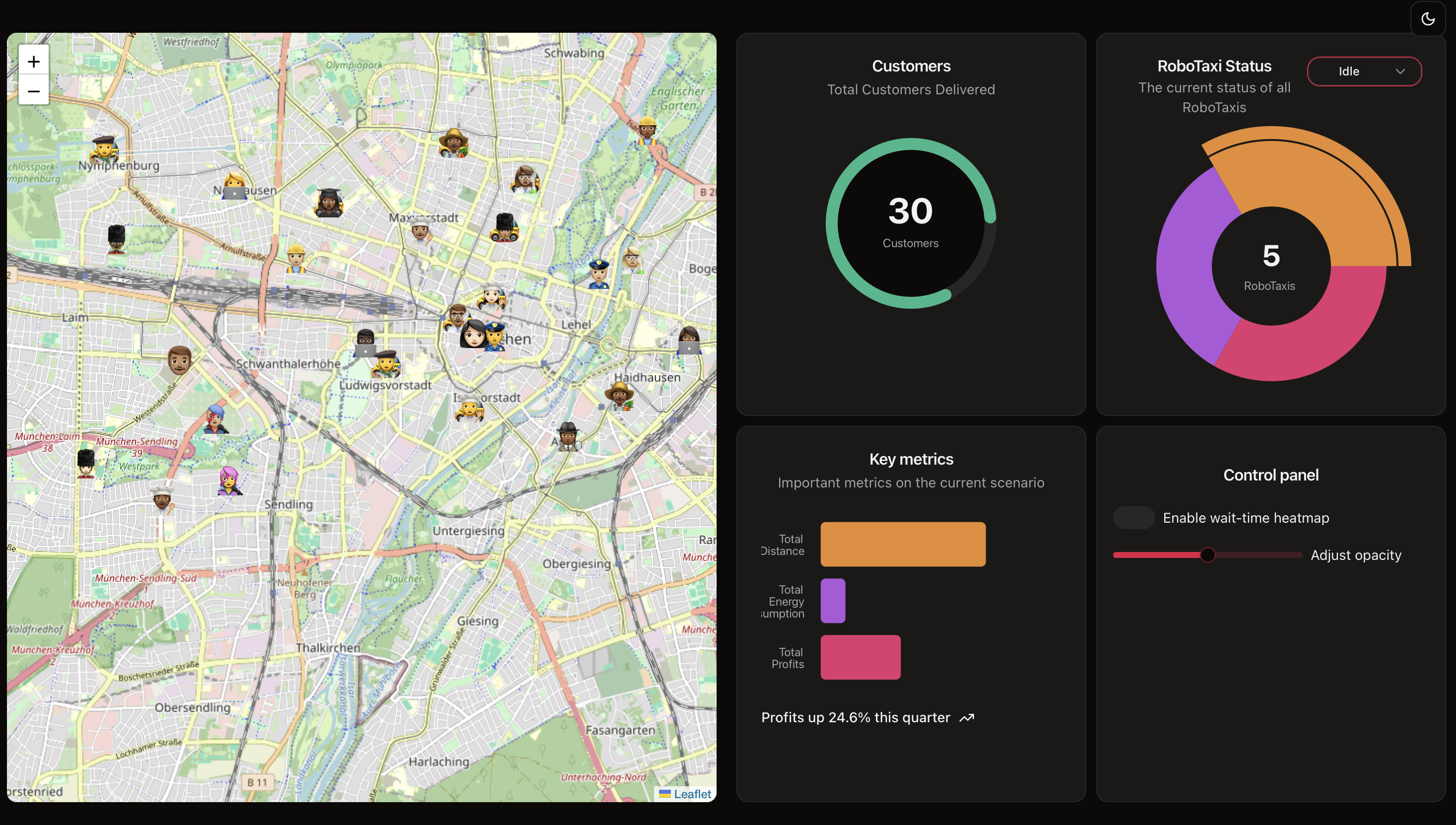
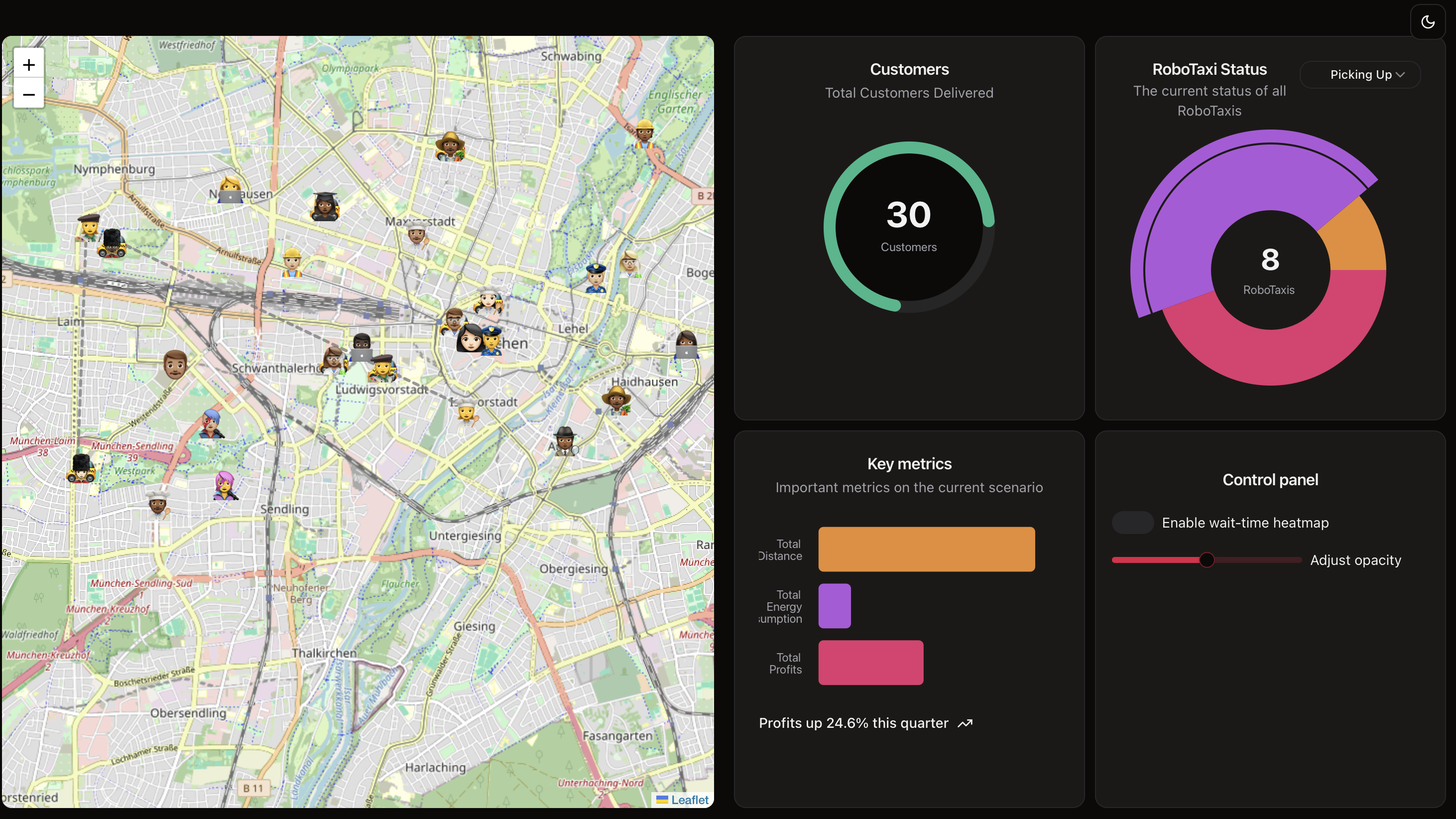
It runs the simulation using the given infrastructure and display some metrics as well as the live locations as dictated by the runner on a dynamic map. It also shows some useful metrics in a beautiful dashboard. Our system can run multiple solvers to match customers to vehicles and measures their computational performance and statistics about the customers' wait times. Our "Nearest" solver utilises an R*-Tree to stay blazingly fast, however we quickly realised that it was difficult for a solver to use even a millisecond for any number of vehicles or customers within the given limits. It is also built to be extremely easy to extend with new solvers, leveraging Rust traits to stay generic.
How we built it
We used Rust + actix-web in the backend and used shadcn-ui, tailwindcss as well as React + TS in the frontend.
Challenges we ran into
Lack of manpower and sleep, and we learnt that creating a nice dashboard is much much harder than it looks. Also async.
Accomplishments that we're proud of
The Dashboard and the integration of the backend into it works quite seamlessly and has a sharp and clean look. We managed a pretty good solution despite being only two people.
What we learned
- Working in a small team under tight constraints
- Frontend & UI/UX for Daniel
- A deep dive into Rust Actix and async for Enrico.
....and of course the importance of sleep ;)
What's next for Panopticon
In an ideal world, the admin dashboard shouldn't contain handpicked widgets, but rather mirror the approach of other surveillance and monitoring tools like grafana or kibana.
Built With
- actix-web
- react
- rust
- tailwindcss
- typescript


Log in or sign up for Devpost to join the conversation.