Inspiration
As someone who’s watched loved ones struggle with panic attacks—fumbling for help in moments of crisis—I knew we needed something faster, simpler, and more accessible. The gap between "needing support" and "getting it" felt unforgivably wide, so I set out to build a tool that required zero effort to activate: just one tap, no logins, no complexity.
What it does
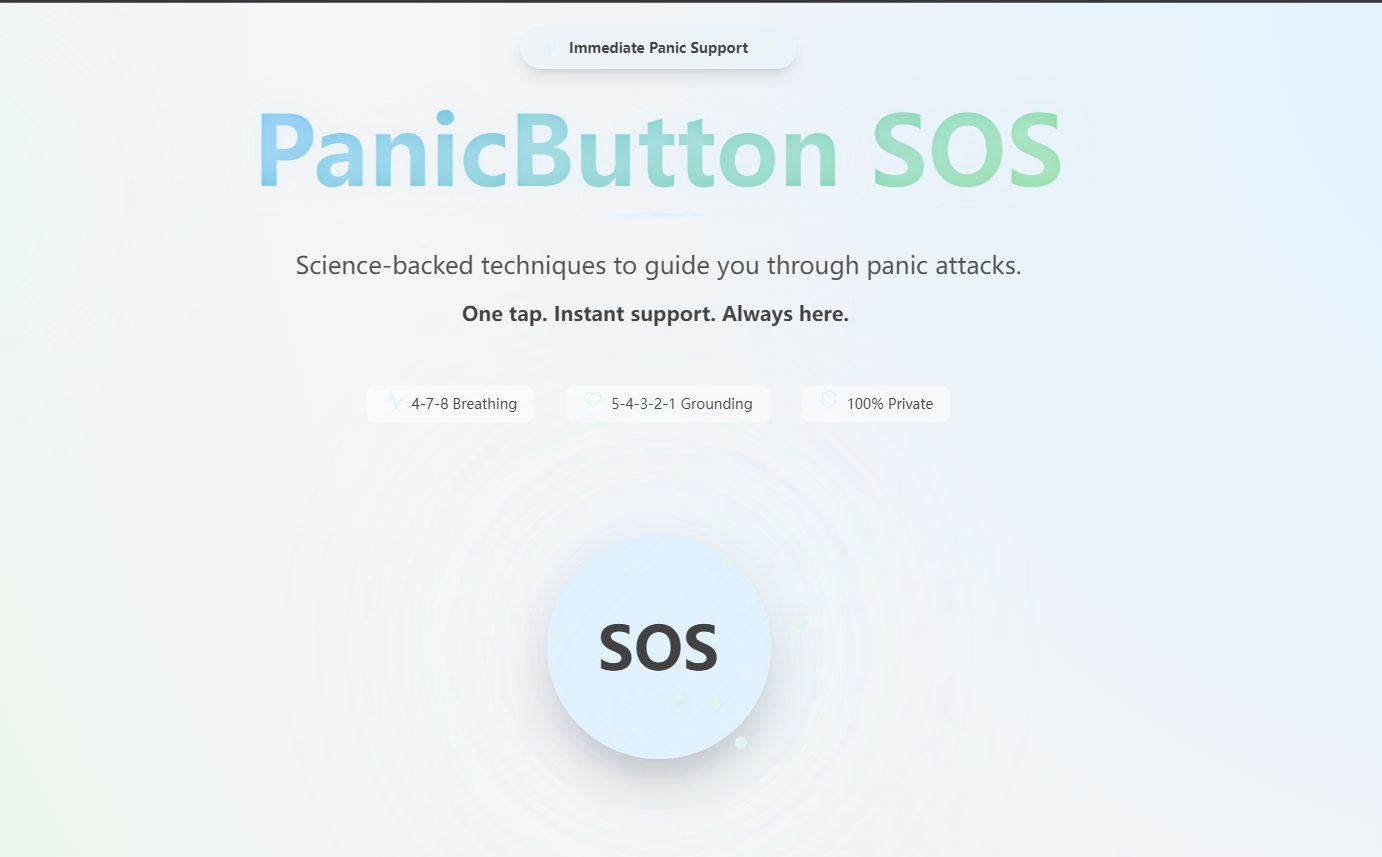
PanicButton SOS is a lifeline for anyone living with panic disorder. Tap the central button, and it launches a low-stimulation interface with 4-7-8 breathing guidance (animated, audio-optional), 5-4-3-2-1 grounding techniques, visual focus tools, and body scan guidance—all offline. It also lets users log attacks, track warning signs, and premium users get analytics to spot triggers.
How we built it
We started with core offline functionality (critical for crisis moments) using Swift/Kotlin for native mobile performance. We integrated Core Animation for smooth 30fps breathing animations, SQLite for local data storage, and Stripe for premium subscriptions. Firebase was added later for secure cloud backup (premium-only). Every UI choice—large buttons (60x60px), 18px minimum text, soft color palettes—prioritized accessibility in high-stress moments.
Challenges we ran into
The biggest hurdle was balancing simplicity with functionality: we needed the app to be intuitive enough for someone in a panic attack to use, but robust enough to track meaningful data. Syncing the visual focus tools (moving dot/expanding circle) to the 4-7-8 breathing rhythm required precise animation timing, and ensuring all core features worked offline meant rethinking how data saved locally. We also had to restrict custom breathing rates (premium feature) to a safe 3-10 second range—balancing customization with user safety.
Accomplishments that we're proud of
We built an app that launches Panic Support Mode in under 1 second with one tap—no friction, no delays. Every core feature works offline, and user testing with individuals with panic disorder confirmed the interface feels calm, not overwhelming. We also nailed the freemium model: free access to life-saving tools, with premium analytics that add value without gatekeeping essential support.
What we learned
Accessibility isn’t just a checkbox—it’s about designing for extreme emotional states. Small choices (soft colors, large text, minimal navigation) make or break usability in a panic attack. We also learned the importance of local data privacy: users trust the app more knowing their data stays on their device unless they opt into cloud backup (premium).
What's next for this project
We’re expanding the warning sign alert system to include gentle, customizable reminders. We’re also refining the premium analytics to add visual trend graphs for triggers, and testing integrations with mental health providers to let users share log data (with consent) with their therapists. Down the line, we’ll add more language support—starting with Spanish and French—to reach more people in need.
