-
-

This is the platform that we created
-
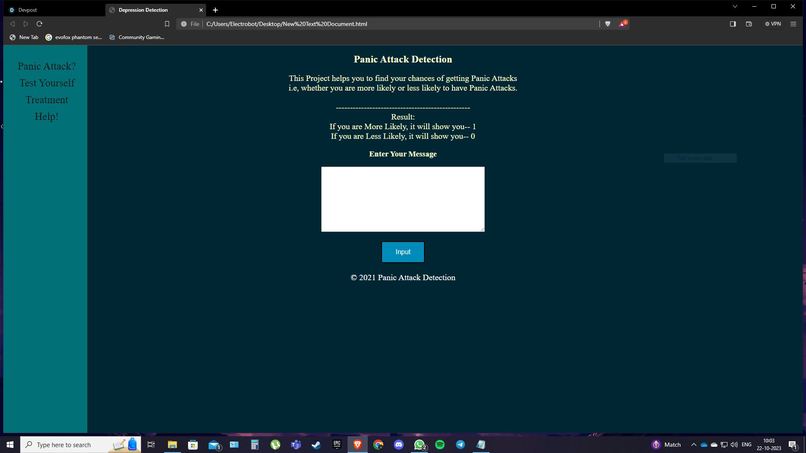


Team name: Data Wizards SRM13 Panic Attack Prediction
Panic Attack Detection Using ML
Inspiration
The inspiration for this project came from a desire to use machine learning to assist individuals dealing with panic attacks. By developing this project, we aim to help people who experience panic attacks on a daily basis, and particularly, the individuals behind the development of the project itself.
What I Learned
During the course of this project, I learned several valuable lessons:
- The importance of understanding physiological and psychological markers of panic attacks.
- Data collection and preprocessing techniques, including heart rate, skin conductance, and vocal tone analysis.
- The significance of building a balanced dataset to train the ML model effectively.
- How to utilize a range of ML algorithms such as SVM, Random Forest, and Neural Networks for classification.
How I Built the Project
Here's an overview of the project development process:
Data Collection: Gathered data from wearable devices measuring physiological parameters and audio recordings of individuals experiencing panic attacks.
Data Preprocessing: Cleaned and standardized the data, including feature engineering to extract relevant information.
Model Training: Experimented with different ML algorithms to find the most suitable for detecting panic attacks. This involved extensive cross-validation and hyperparameter tuning.
Model Evaluation: Assessed the model's performance using metrics like accuracy, precision, recall, and F1-score.
Real-time Monitoring: Integrated the trained model with a real-time monitoring system that could alert caregivers or individuals about potential panic attacks.
Challenges Faced
- Limited Data: Obtaining a substantial amount of panic attack data for training proved challenging due to privacy concerns.
- Ethical Considerations: Ensuring data privacy and gaining consent from participants was a crucial ethical challenge.
Conclusion
The project aimed to create a valuable tool for panic attack detection using machine learning. While it was successful in developing a proof-of-concept model, challenges like data collection and ethical considerations remain important aspects to address in the real-world implementation of such a system. This project represents an essential step towards leveraging technology to support mental health and well-being.


Log in or sign up for Devpost to join the conversation.