
Introduction
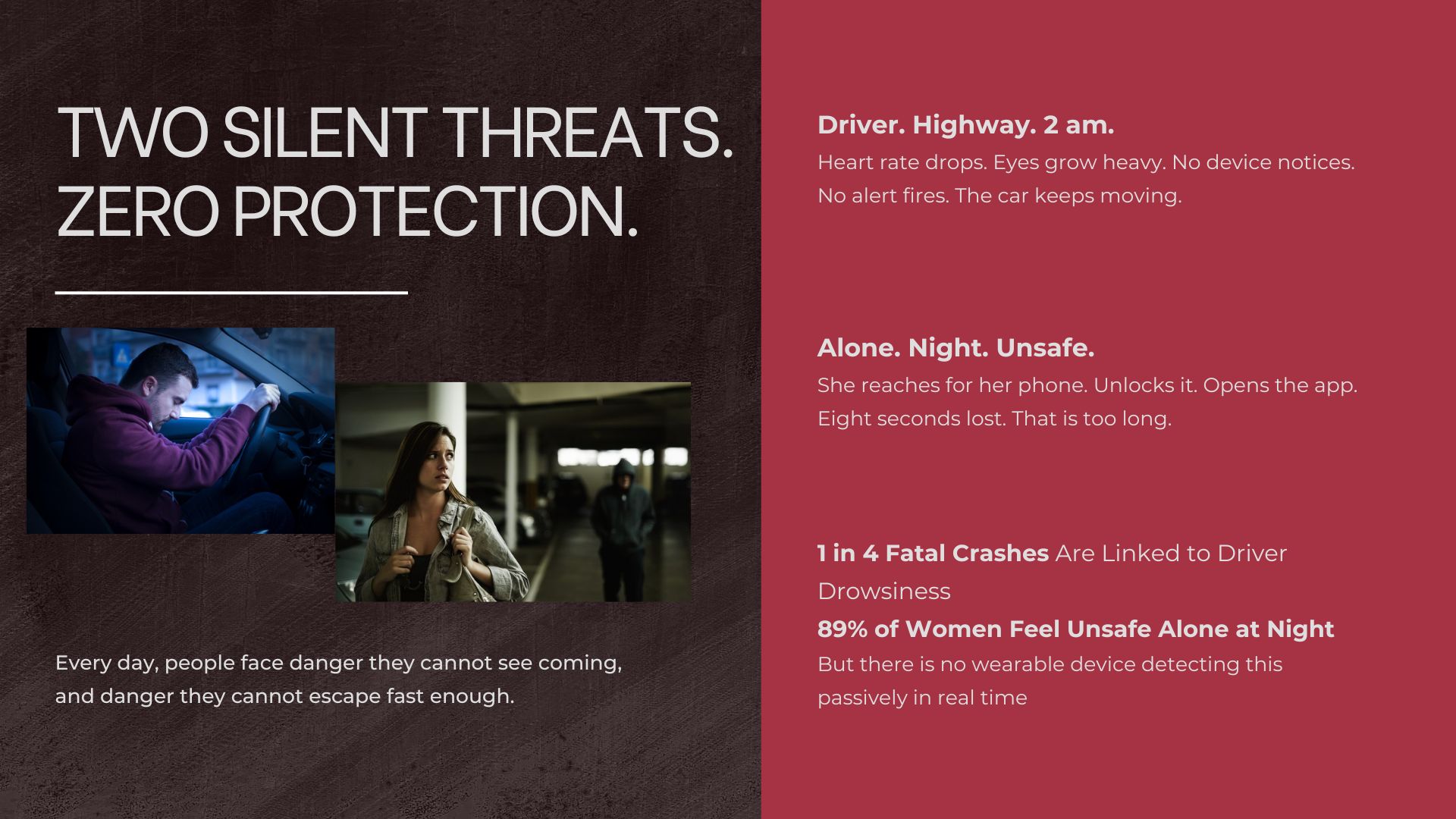
1 in 4 Fatal Crashes Are Linked to Driver Drowsiness
89% of Women Feel Unsafe Alone at Night
But there is no wearable device detecting this passively in real time
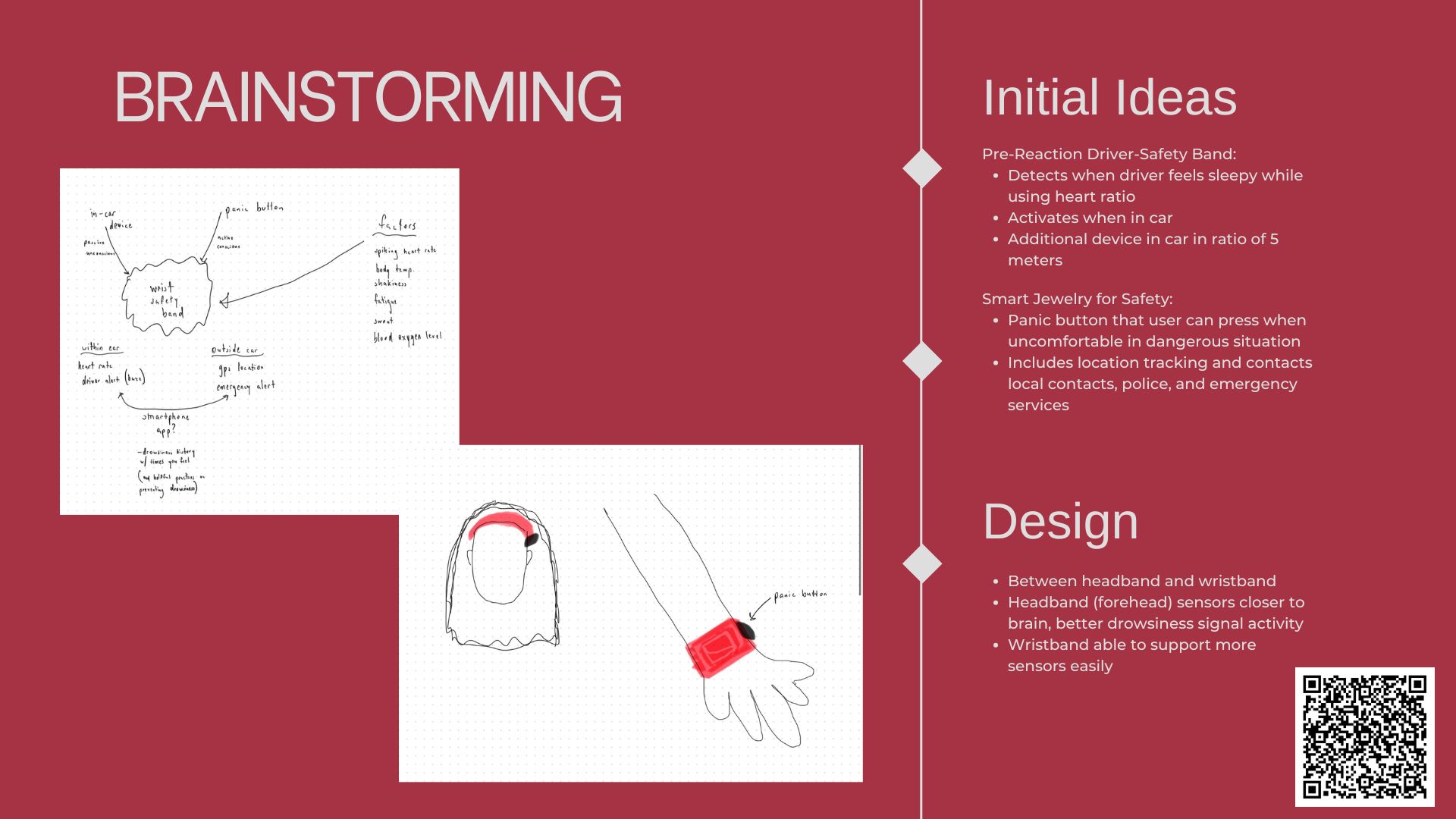
Generally lack of sleep can be as dangerous as drug abuse, alcoholism, and serious illnesses. This is largely due to the physiological responses that occur during sleep deprivation. Sleeplessness also affects reaction time, memory retention, and motor functions. These are factors that are often ignored by the general population, especially college students during Hackathons. The effects of sleep deprivation affect an individual's general capacity to function which in turn exponentially increases the possibility of injury and death throughout various environments. As unfavorable as lack of sleep is, it is not reasonable to assume that society will simply sleep more. To combat this the team ‘Panic! At The Wrist’, devised an electronic wearable Panic Bracelet that will help alert drivers as they begin to exhibit signs of transitioning to unconsciousness, and signal an SOS in case of immediate danger.
Methods
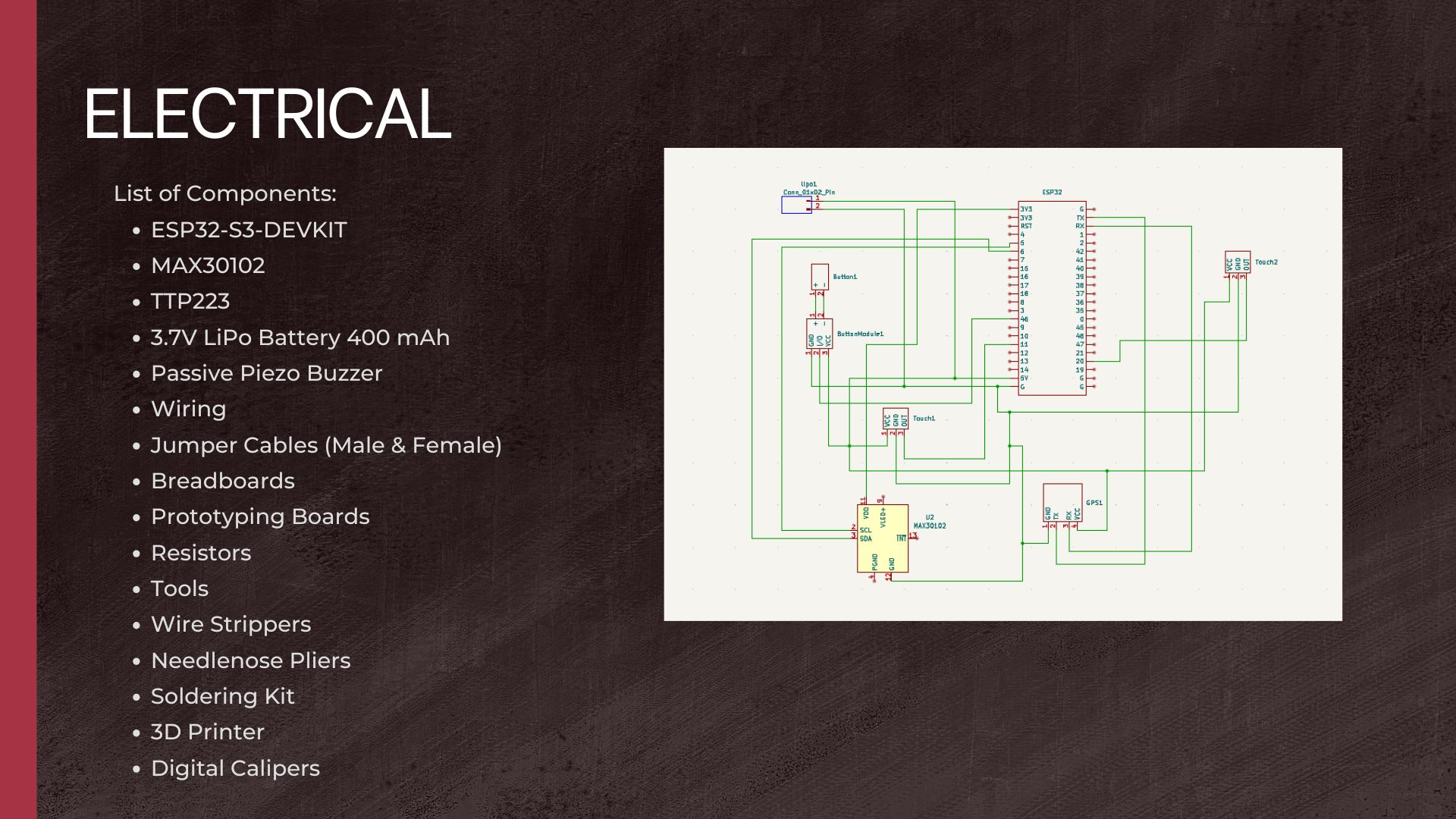
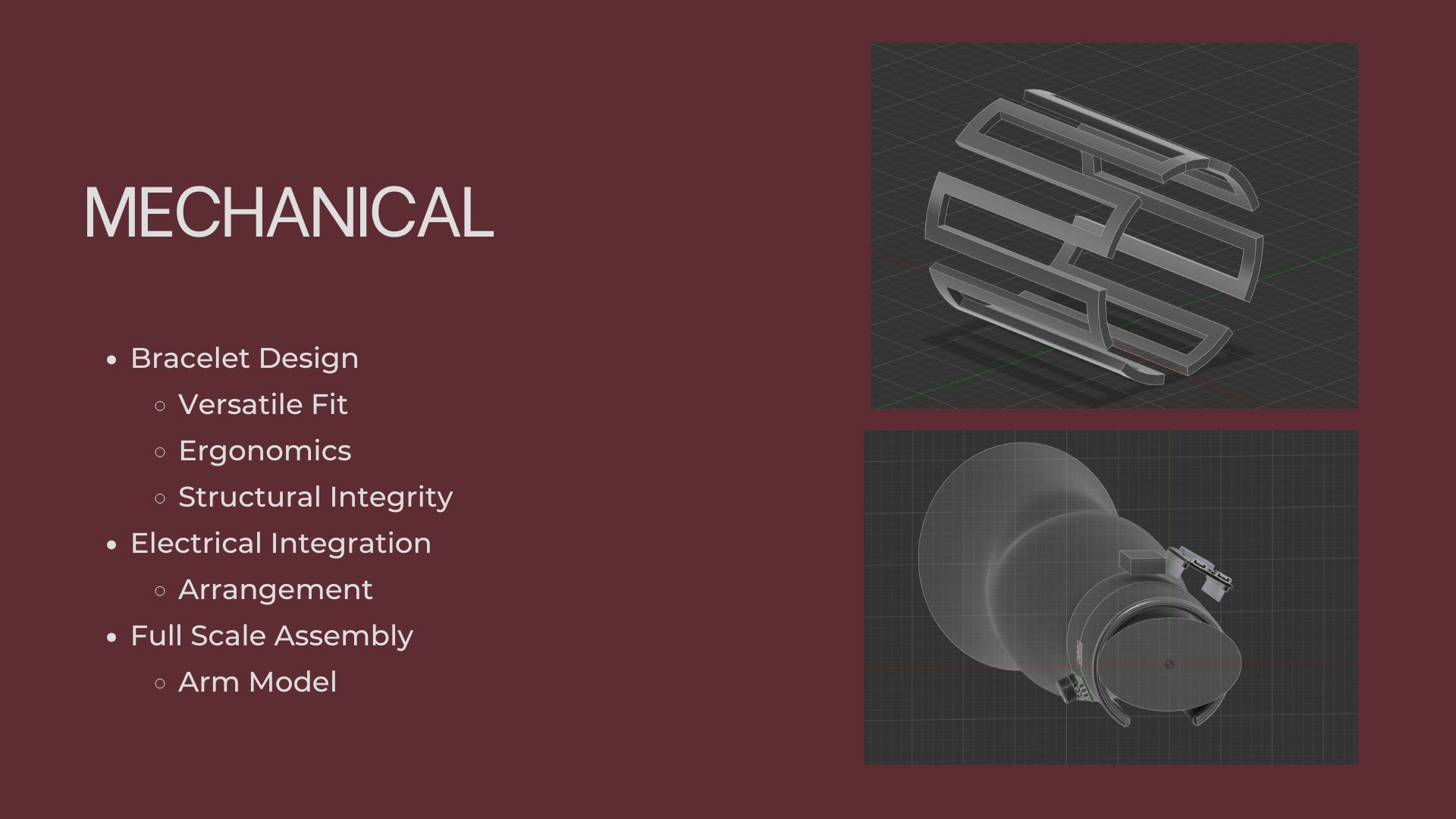
To reduce the probability of drivers falling asleep on the wheel our device, Panic Bracelet, utilizes an ESP32-S3-DEVKIT to operate the entire system and handle Bluetooth Low Energy (BLE) communications with a designated mobile application. Leveraging both its wireless capabilities and dual-core processing. The Panic Bracelet uses a MAX30102 pulse oximeter that monitors the user’s heart rate by detecting changes in blood saturation through photoplethysmography (PPG). The sensor uses this noninvasive method to gauge heart rate by projecting infrared light on the blood vessels near the skin and measuring the variations of light intensity reflected to gauge the blood volume within the vascular system proportional to the voltage used to shine the light. Typically, as the human body undergoes a transition to unconsciousness heart rate decreases and heart rate variability decreases. As we detect this particular pattern we can notify the user using the Passive Piezo Buzzer. With this buzzer we are able to provide haptic and audible feedback to the wearer in order to alert them and reduce the probability that they will lose consciousness. The goal is to provide the drivers with a few extra seconds that could save their lives. Additionally, the Panic Bracelet involves two opposing TTP223 capacitive touch sensors to provide emergency SOS functionality. With a simultaneous double tap two both sensors the user is able to activate the emergency sequence. Using a GY-GPS6MV2 global positioning system module the Panic Bracelet is traceable to the last known location. Our device is powered with a 3.7V LiPo Battery, which allows for portability and the capacity for rechargeability. The bracelet itself was designed with Fusion 360 and 3d printed using the provided fabrication services.
Testing
To test the device we first confirmed that all of our circuitry was working accordingly. This involved using a multimeter to verify the conductivity of the different pins and soldering points. Then we verified that the sensors worked in accordance with our assumptions. To test the TTP223 capacitive touch sensors we designed a simple program using C++ so the sensor blinked in accordance with the user input. In order to test the MAX30102 we simply needed to contact the sensor with a location of the human body that would provide easy access for the blood density measurements. This was as simple as resting a finger on top of it while reading that the output correlated with our inputs. To verify the buzzer’s functionality we simply created a testing circuit and verified that it did in fact provide audible feedback.
Materials List
Hardware
Components
- ESP32-S3-DEVKIT
- MAX30102
- TTP223
- 3.7V LiPo Battery 400 mAh
- Passive Piezo Buzzer
- Wiring
- Jumper Cables
- M - M
- M - F
- F - F
- Breadboards
- Prototyping Boards
- 3 x 7
- 4 x 6
- 5 x 7
- 7 x 9
- Resistors
Tools
- Wire Strippers
- Needlenose Pliers
- Soldering Kit
- 3D Printer
- Digital Calipers
Software
- Fusion 360
- KiCad
- Visual Studio Code
Programming Languages
- Flutter
- Dart
- Swift
How we built it
Bracelet components:
- GY-NEO6MV2 (NEO-6M): GPS sensor
- MAX30102: heart sensor
- ESP32-S3-DevKitC-1: Espressif microcontroller
- TTP223 Capacitive Touch Sensor
- Passive Piezo Buzzer (alarm system to wakeup drowsy user)
- LiPo Battery (to power the system)
Challenges we ran into
Panic! at the Wrist aimed to have a complete, ready-to-use safety Panic bracelet. Most of our issues were soldering and hardware-related. The prototype is extremely fragile. Our soldering kept breaking, causing delays in software.
Our Capacitive Skin Response Sensor broke on the second day of the event, transforming our final design from the design prototypes.
Our soldering kept breaking, causing delays in software. Additionally, our Google Developer billing credits did not show up in AI Studio, making it impossible to deploy the AI Studio app. In turn, we created the app using Flutter, Dart, and Swift.


Log in or sign up for Devpost to join the conversation.