-
-
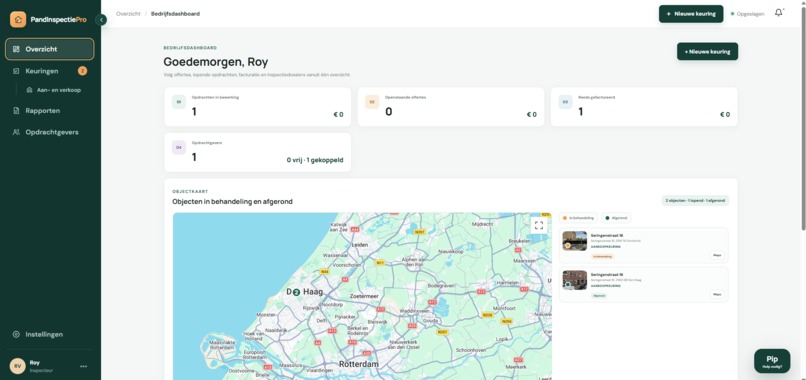
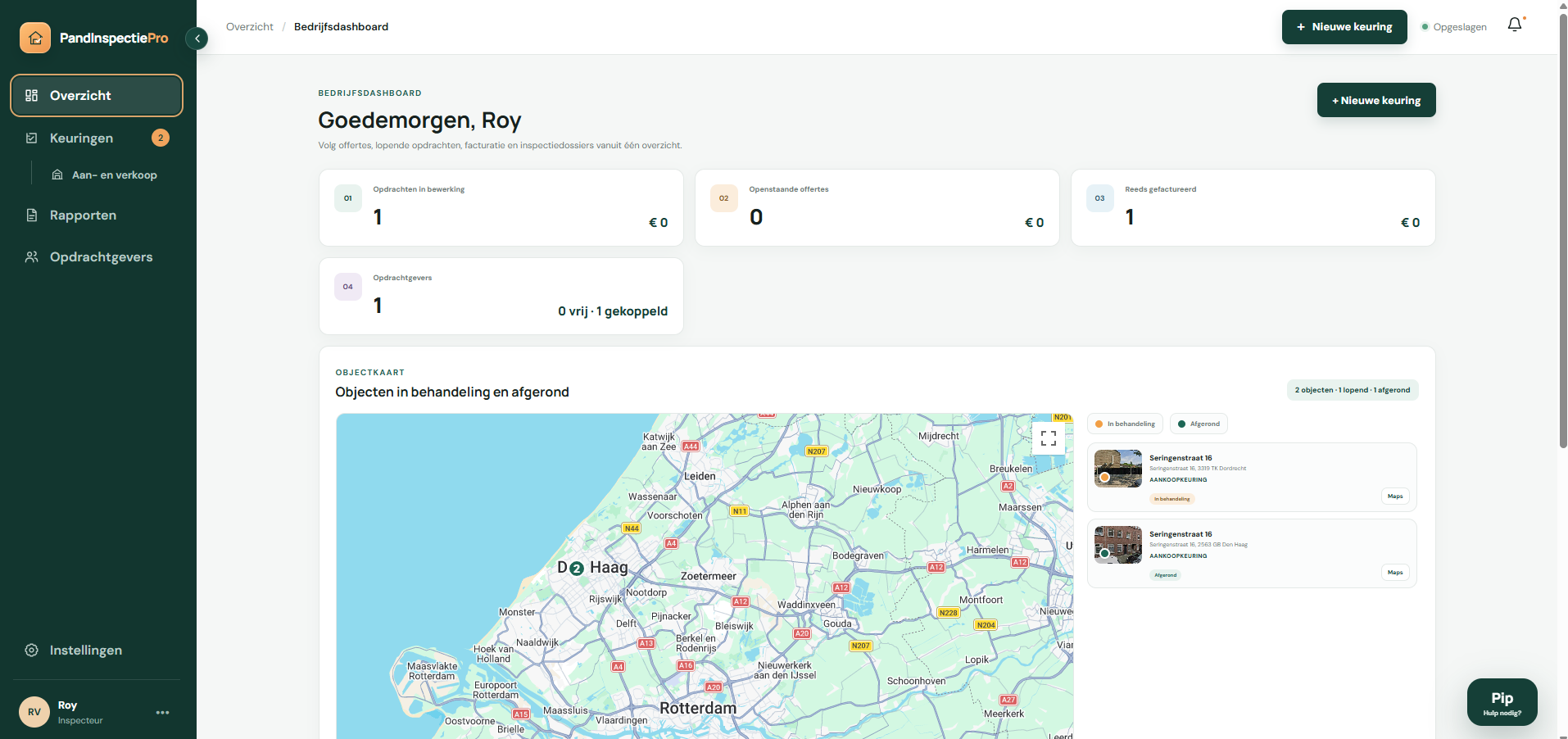
Business Dashboard
-
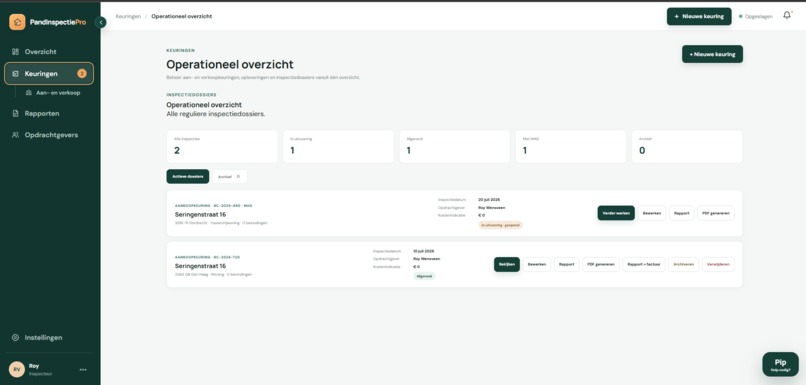
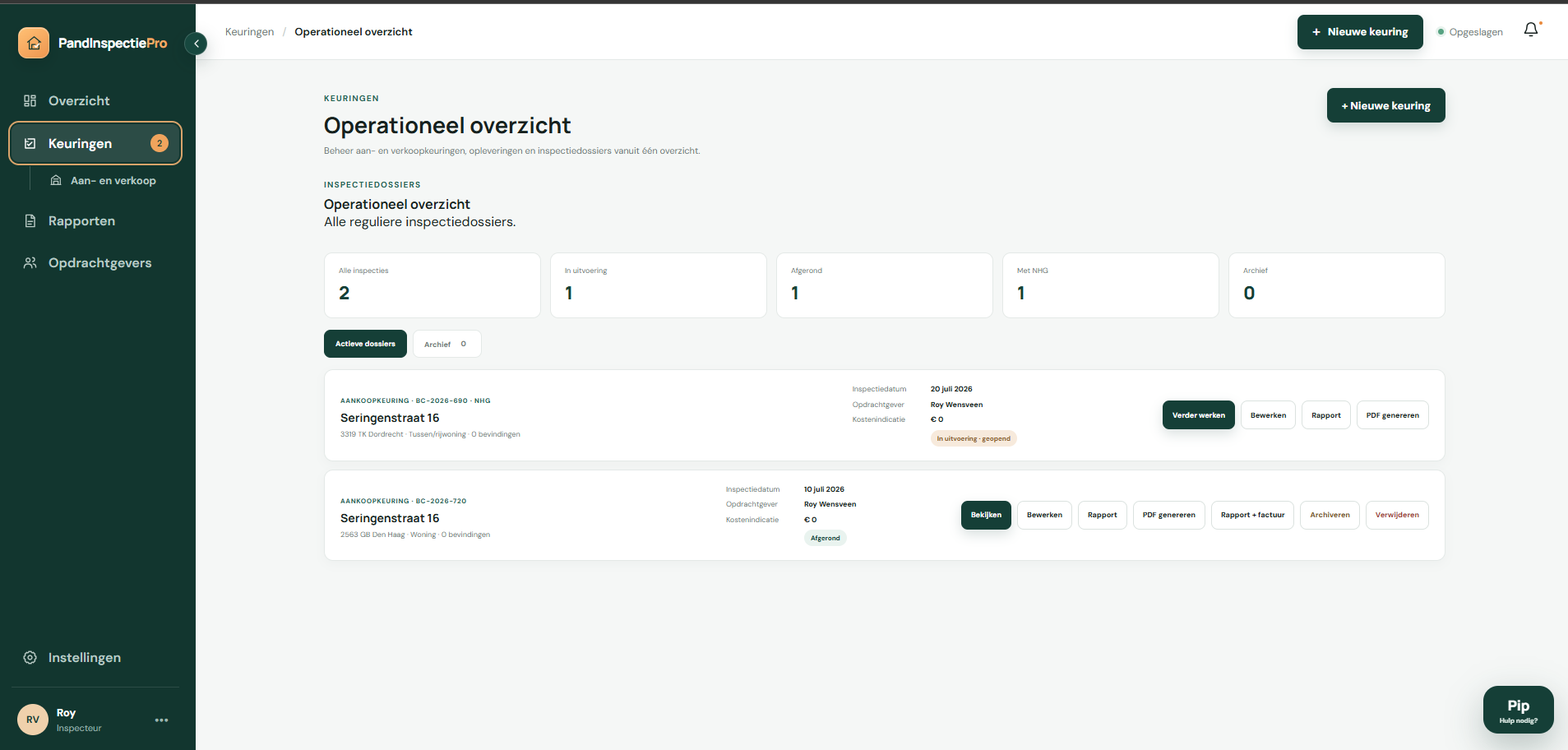
Inspection Overview
-
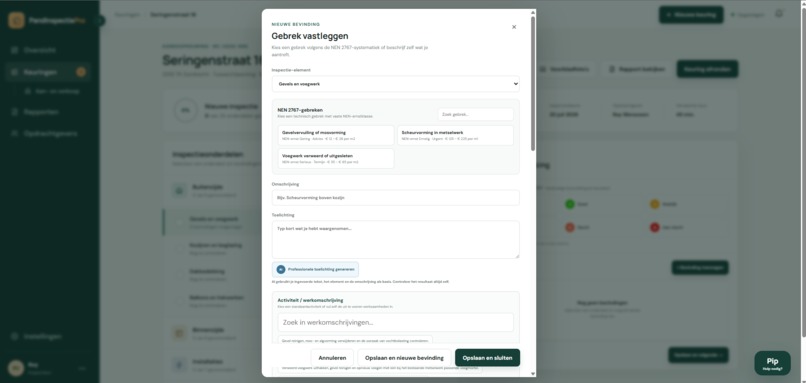
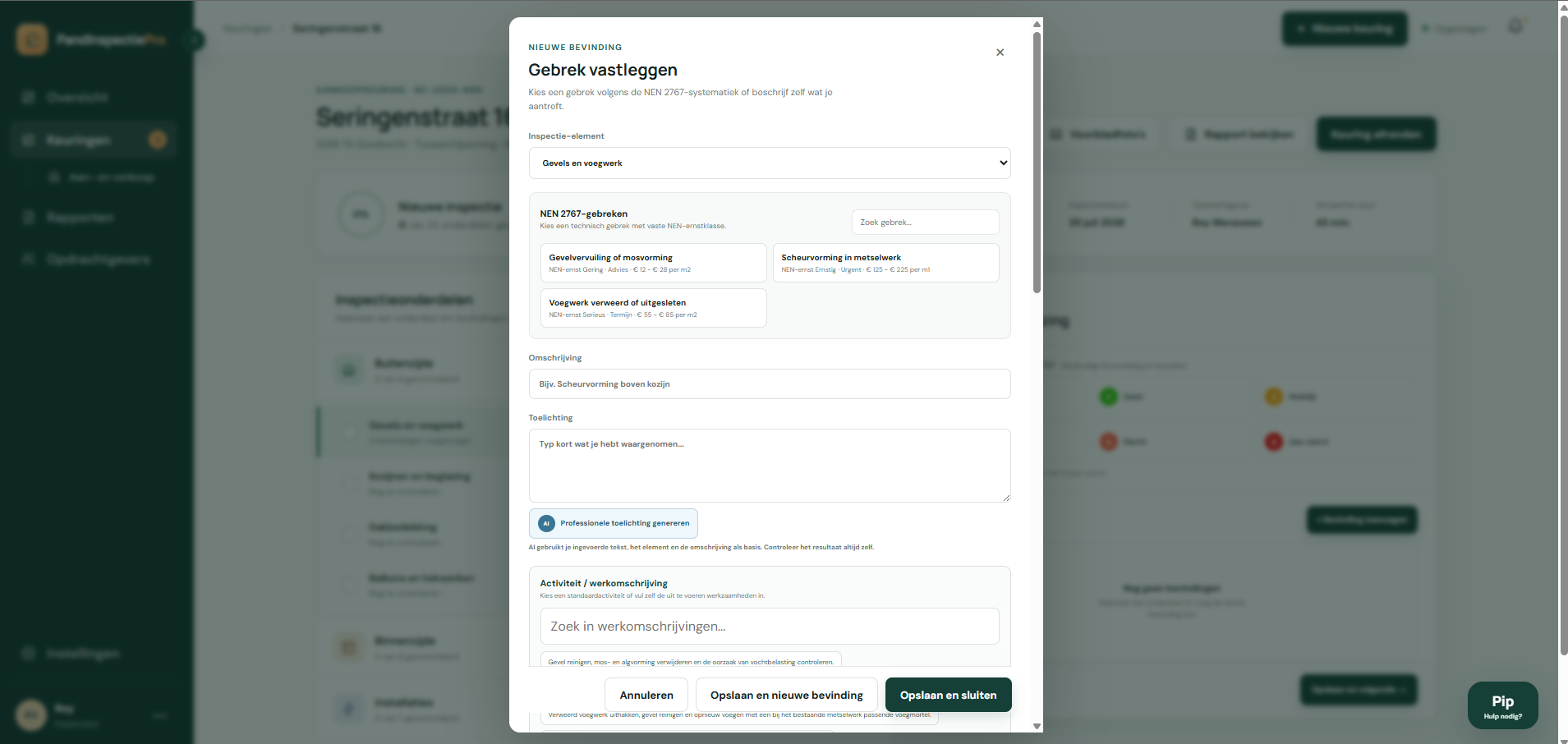
Defect Registration
-
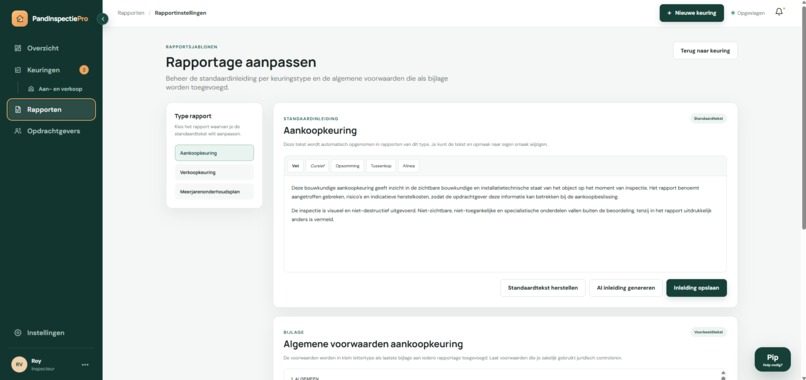
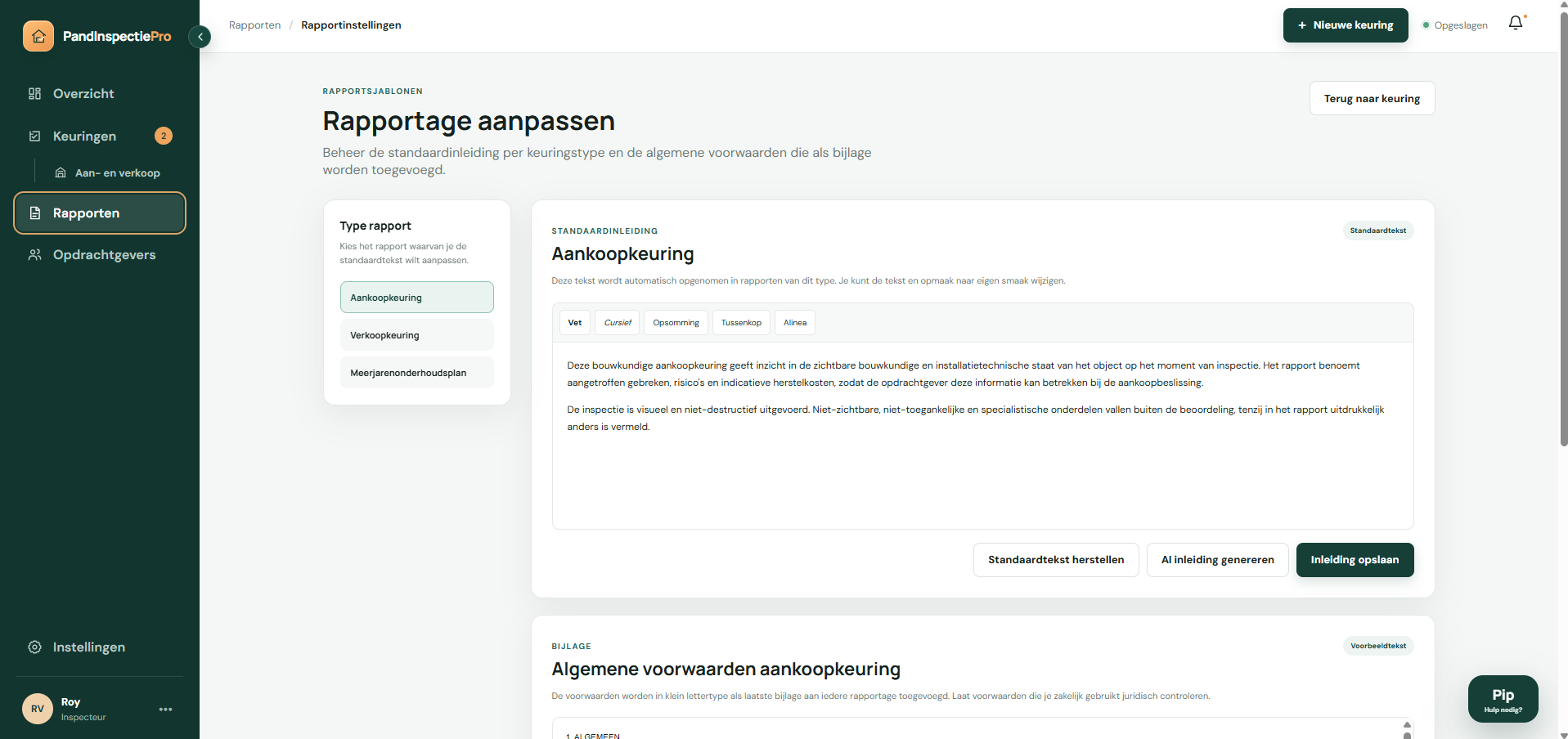
Report Templates
-
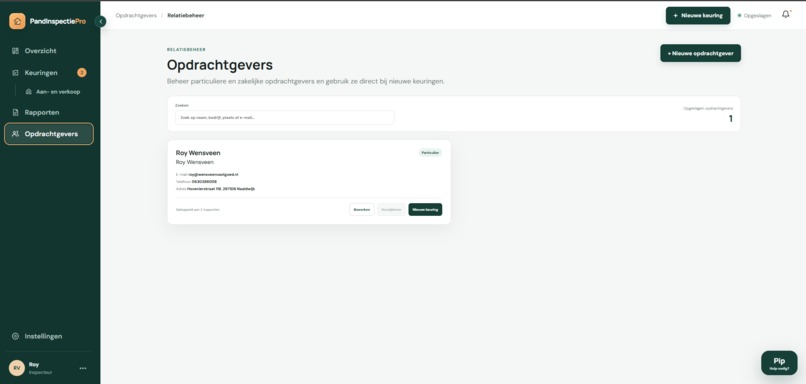
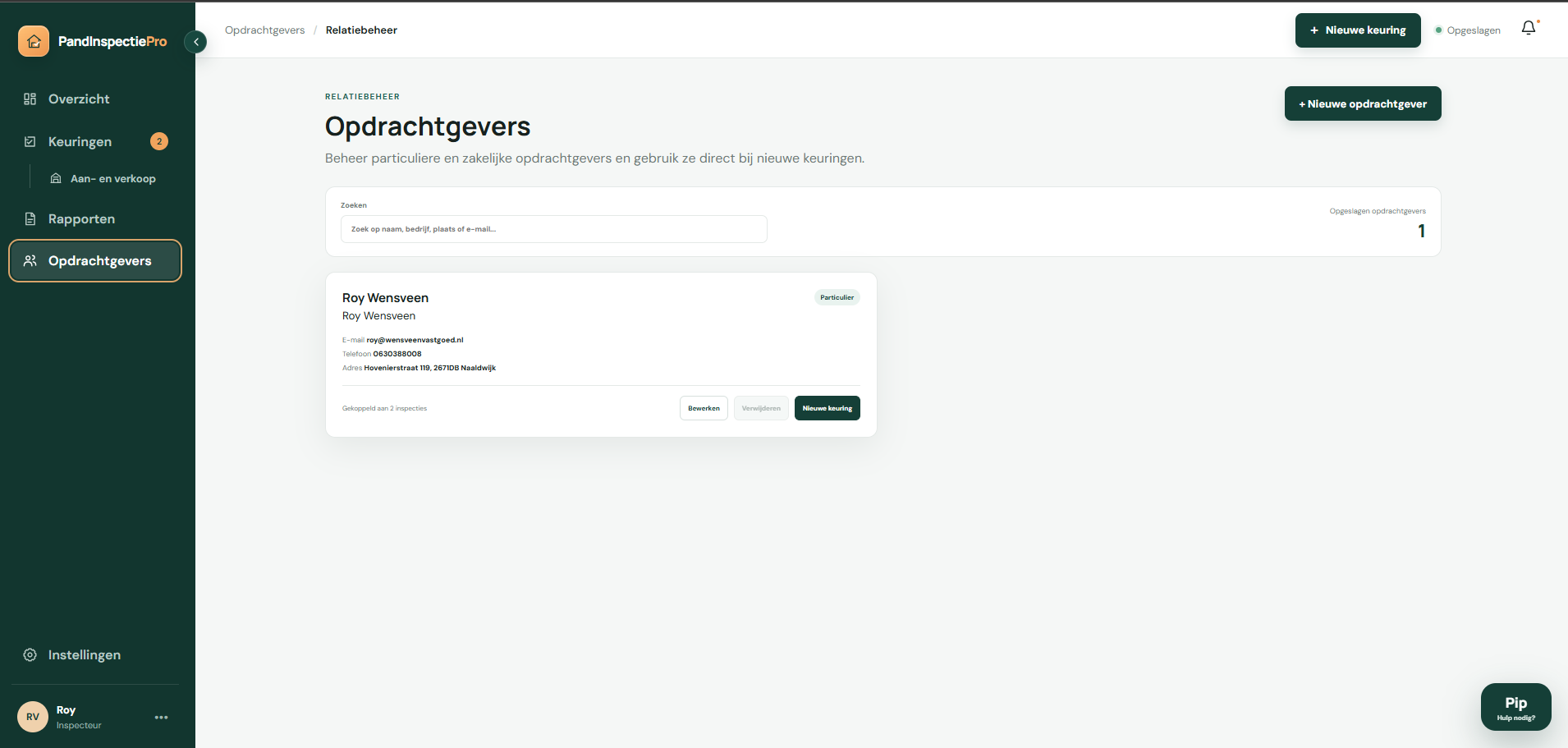
Client Management
Inspiration
The idea for PandInspectiePro had been in my head for some time. Through my work with building inspections, I saw how much time is lost switching between notes, photographs, cost calculations, client details and report templates. Information is often entered more than once, while producing the final report still requires a lot of manual work.
Before this project, I had never worked with Codex and I did not have a finished technical plan. I simply decided to describe the idea I had in my head, start experimenting and see how far I could take it.
What began as a rough concept gradually became a working application. I contributed my practical inspection knowledge, tested every version and explained what needed to work differently. Codex helped me translate that knowledge into software.
PandInspectiePro was not created from a predefined software specification. It grew through curiosity, trial and error, many screenshots and continuous improvements based on real inspection workflows.
What it does
PandInspectiePro supports building purchase and sales inspections of residential properties.
An inspector can create a property file, retrieve available property and energy-label information, register defects by building element, add photographs, calculate estimated repair costs and generate a professional PDF report.
The application includes a defect library based on the Dutch NEN 2767 methodology, reusable work descriptions, client management and editable report templates.
GPT-5.6 helps turn short inspection notes into concise professional explanations. It can suggest suitable repair activities and help draft report introductions, conclusions, general terms and client communication. The inspector remains responsible for the technical assessment and can always review or edit the generated content.
How we built it
I built PandInspectiePro iteratively with Codex. I described how an inspection works in practice, tested each version and used screenshots to show what needed to change.
This became a continuous collaboration. I provided the domain knowledge and decided how the workflow should behave. Codex helped design and implement the interface, inspection logic, reusable libraries, PDF reporting, Node.js API, PostgreSQL database and authentication flows.
Codex also helped move the application from a local prototype to an online environment running on an Ubuntu VPS with Nginx, HTTPS and a separate API.
GPT-5.6 was used inside the application as a practical writing assistant. It helps generate defect explanations, repair descriptions and report content using structured information such as the building element, defect type and inspector’s field notes.
External services are used for address suggestions, maps, property information and official energy-label data.
Challenges we ran into
One of the biggest challenges was moving from a local prototype to an online application. This was completely new to me.
We encountered PostgreSQL permission errors, Nginx proxy problems, incorrect character encoding, API authorization failures and differences between browser storage and persistent database storage. At several points the application or API stopped working, and we had to diagnose the problem step by step.
Generating professional PDF reports was another major challenge. Cover pages, photographs, page breaks, page numbering and attachments all had to remain consistent. Content could not be allowed to split across pages in the wrong place.
We also had to improve the AI output. Early versions produced long and generic descriptions. By adding more structured context and refining the prompts, the suggestions became shorter and more specific to the selected defect.
Accomplishments that we're proud of
I am proud that an idea I had in my head became a working application, even though I had never used Codex before starting this project.
PandInspectiePro now connects property information, clients, defects, photographs, cost estimates and reports in one workflow. Inspectors can maintain their own private library of preferred defect descriptions and repair activities.
I am especially proud that the application combines AI with professional judgment. GPT-5.6 supports the inspector with writing and suggestions, but it does not replace the inspector’s assessment or responsibility.
The project also grew beyond a local demonstration. It now has an online demo, a VPS-hosted API, a PostgreSQL database and a foundation for future subscribers and organizations.
What we learned
Before starting PandInspectiePro, I had never worked with Codex. I learned that I did not need to understand every technical step before I could begin. I could start with the professional workflow I understood, test the result and gradually make the requirements more precise.
I also learned that working with AI is not simply asking it to build an application. I still had to make decisions, test real situations, recognize incorrect behavior and clearly explain why something did not match an inspector’s workflow.
During the project, I learned about frontend development, APIs, databases, authentication, VPS deployment, Nginx, HTTPS and PDF generation. Many of the technical problems were unfamiliar to me, but solving them became an important part of building the product.
Most importantly, I learned how domain knowledge and AI-assisted development can reinforce each other. Codex provided technical implementation support, while my inspection experience determined what the application actually needed to do.
What's next for PandInspectiePro
The next step is to test the purchase and sales inspection module with real inspection workflows and improve it using feedback from inspectors.
I also want to continue developing the central databases for building elements, defects, repair activities and cost calculations. Subscribers should be able to maintain their own private libraries without losing the benefits of shared structured data.
After that, I plan to expand the platform with completion inspections, long-term maintenance planning through an MJOP module and WWS housing valuation.
Other planned developments include subscription management, team accounts, improved API monitoring, secure social login options and more advanced AI-assisted photo analysis.
The long-term goal is to make PandInspectiePro a practical platform that helps inspectors spend less time on administration and more time on the quality of their inspections and advice.
Built With
- ai
- altum-ai
- building-inspections
- cost-estimation
- crm
- css
- ep-online
- express.js
- google-maps
- google-places
- google-street-view
- html
- javascript
- nginx
- node.js
- openai
- pdf-generation
- photo-analysis
- postgresql
- proptech
- real-estate
- reporting
- saas
- ubuntu
- vps

Log in or sign up for Devpost to join the conversation.