-
-
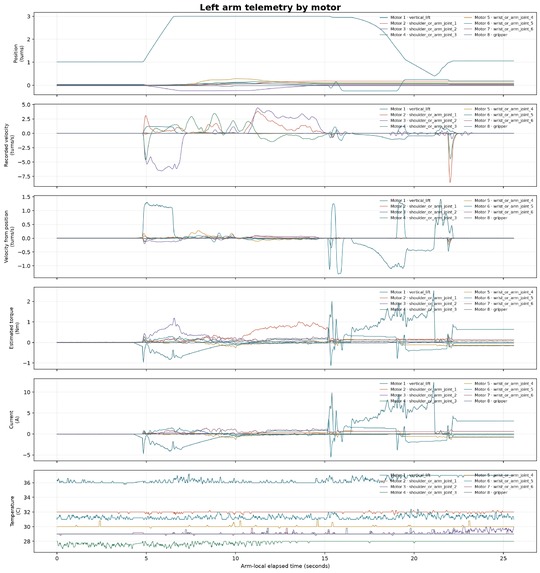
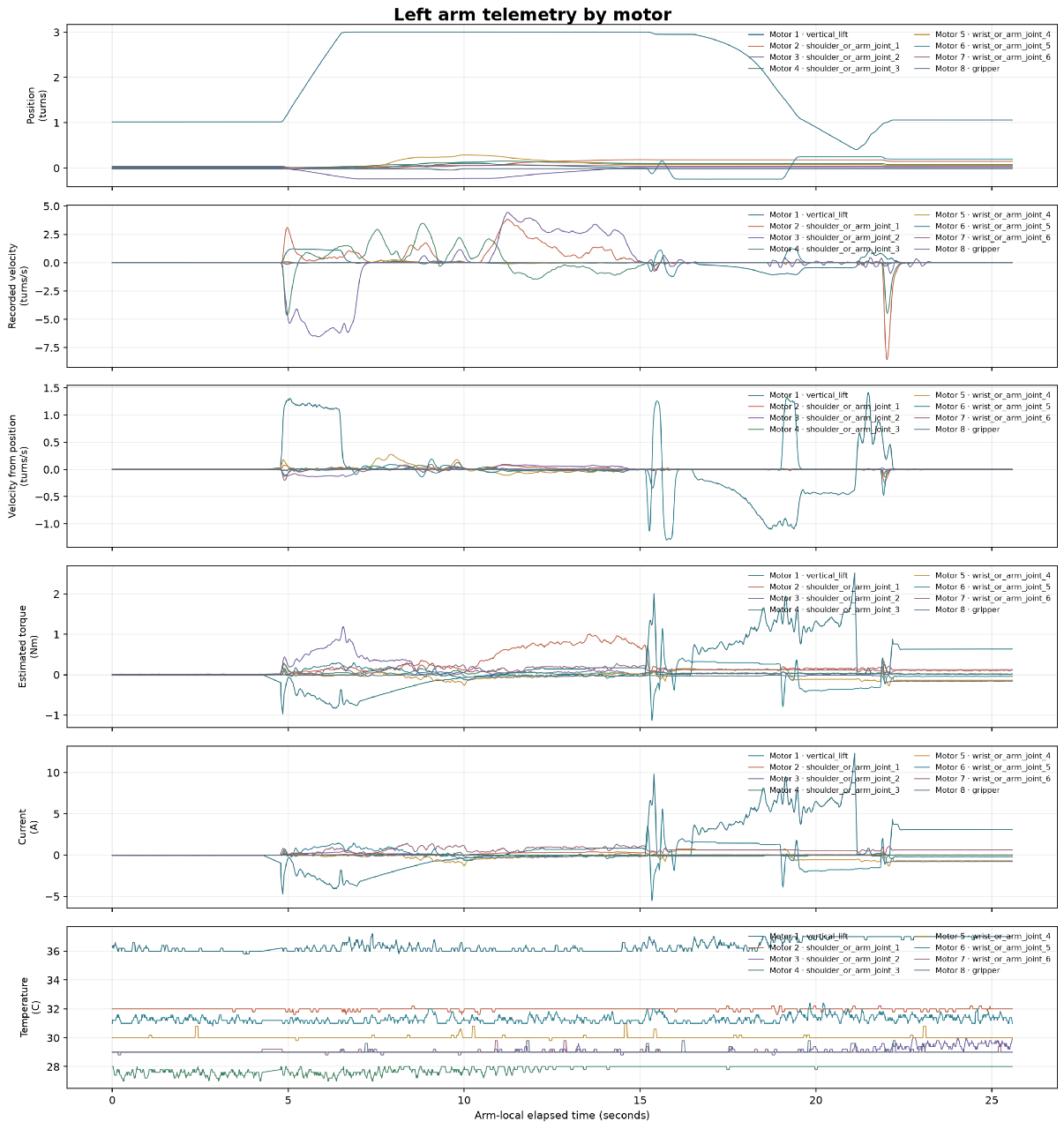
experimental data on torque and position (left arm)
-
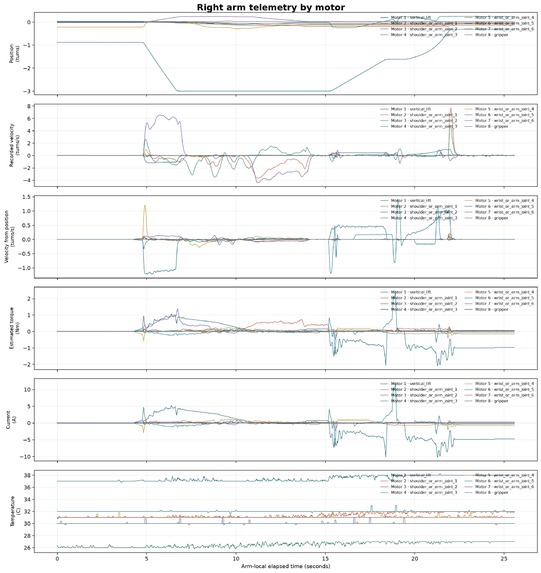
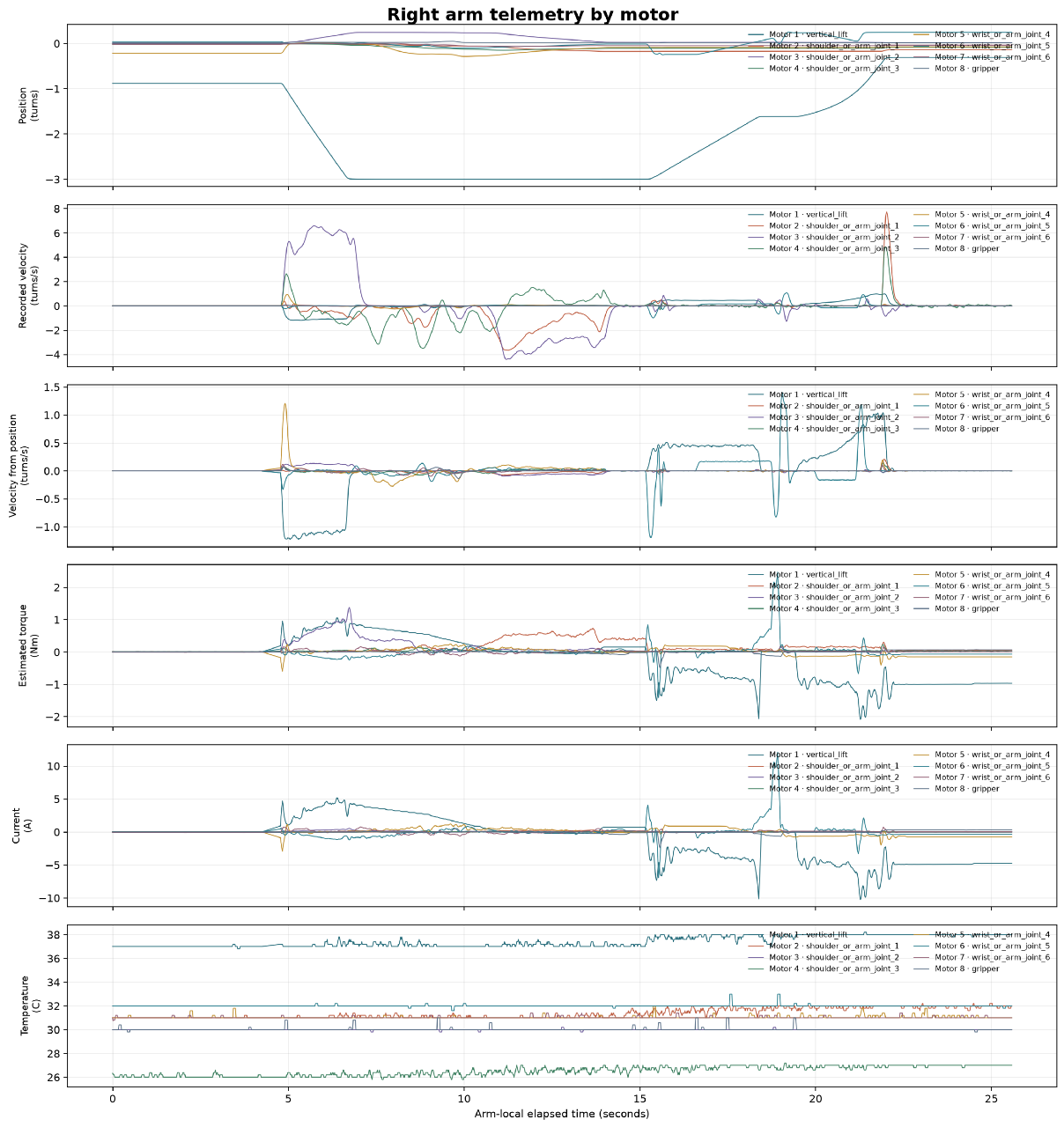
experimental data on torque and position (right arm)
-
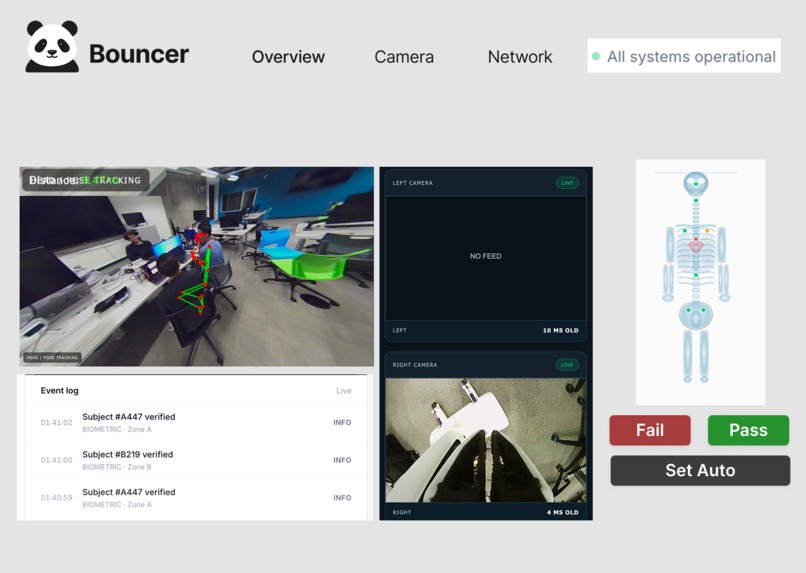
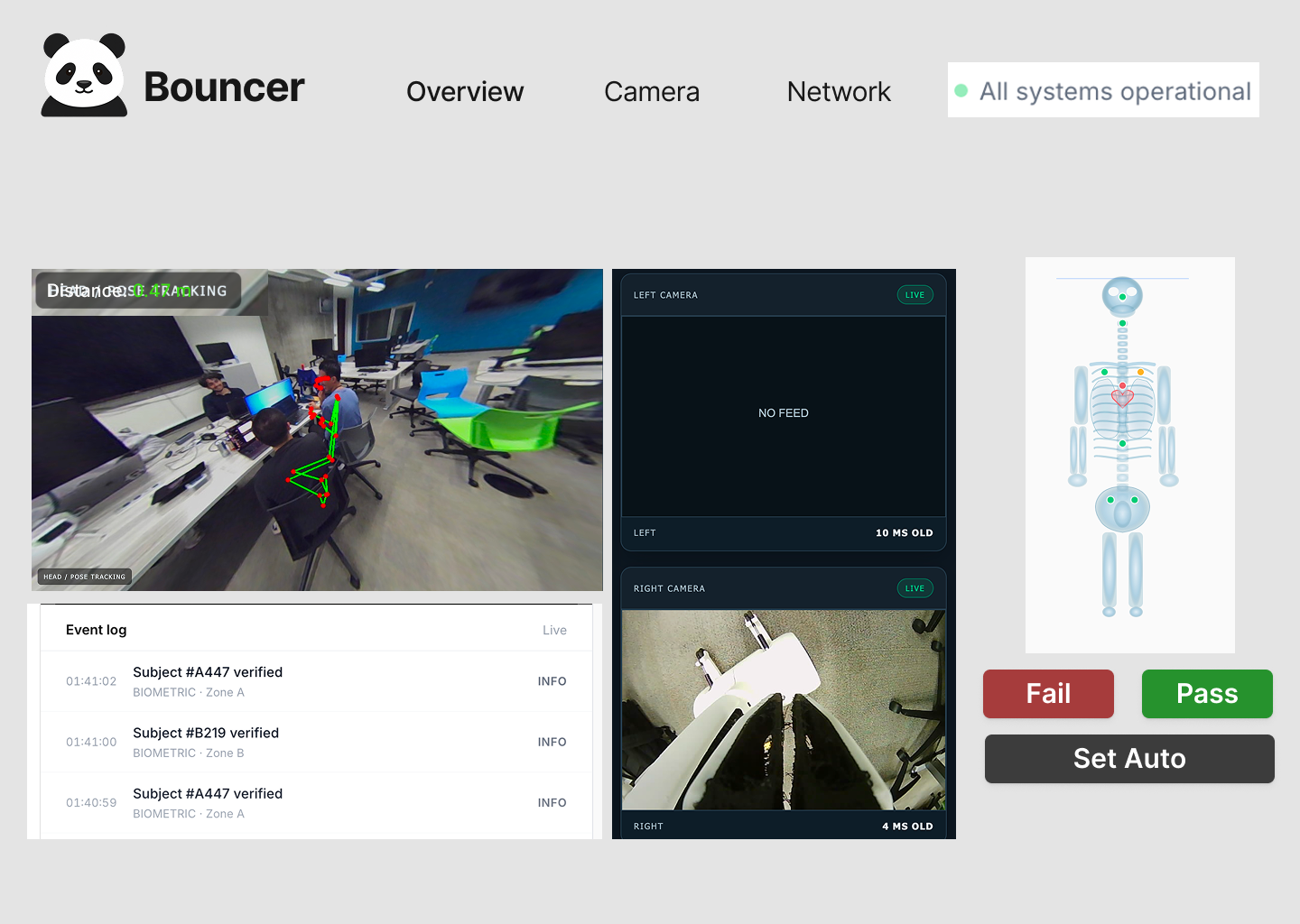
first figma dashboard mock-up
-
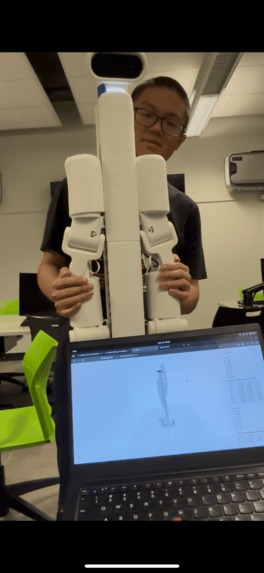
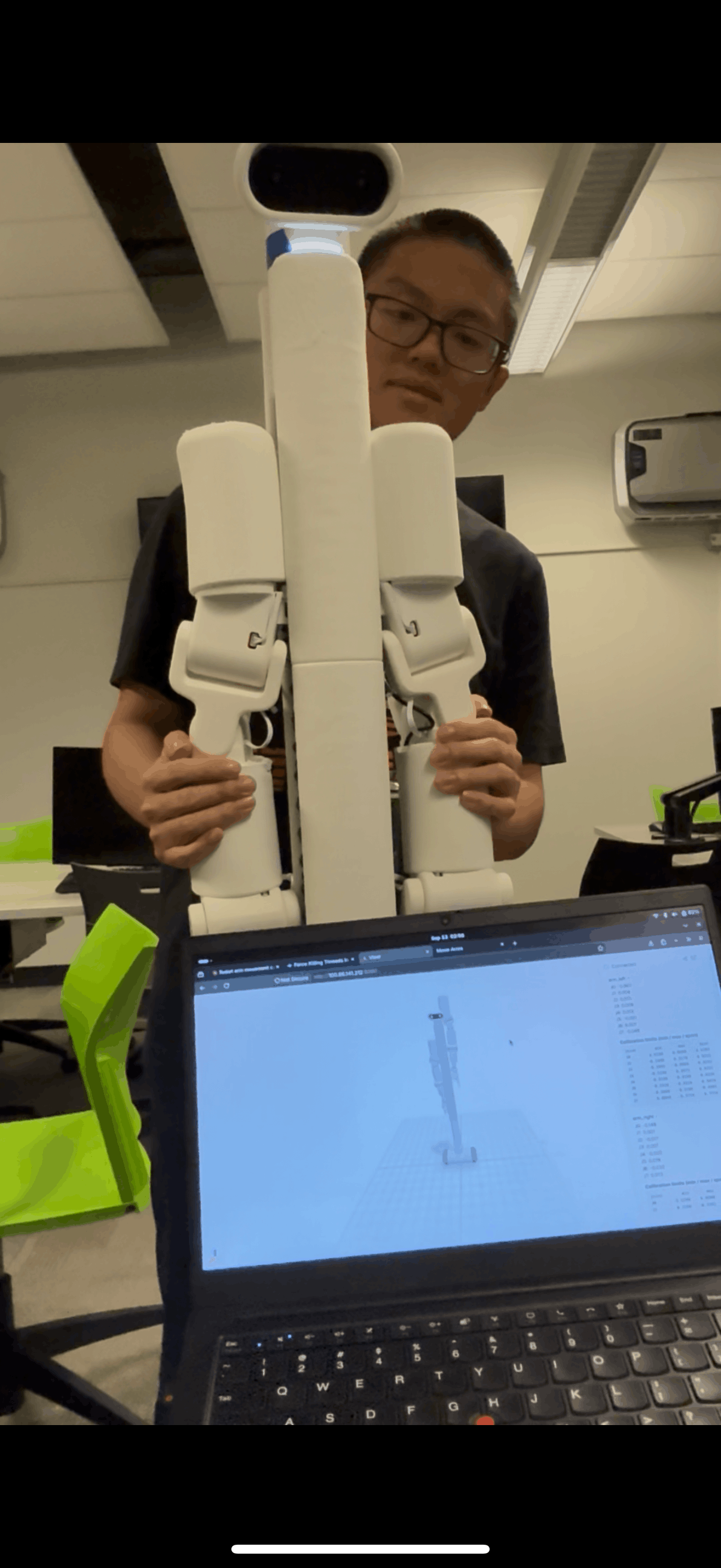
calibrating robot after unexpected shutdown
-
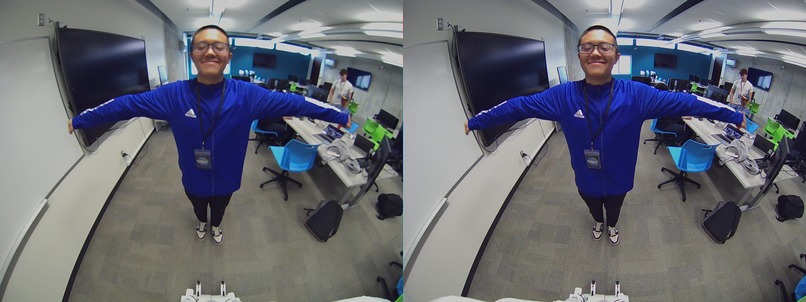
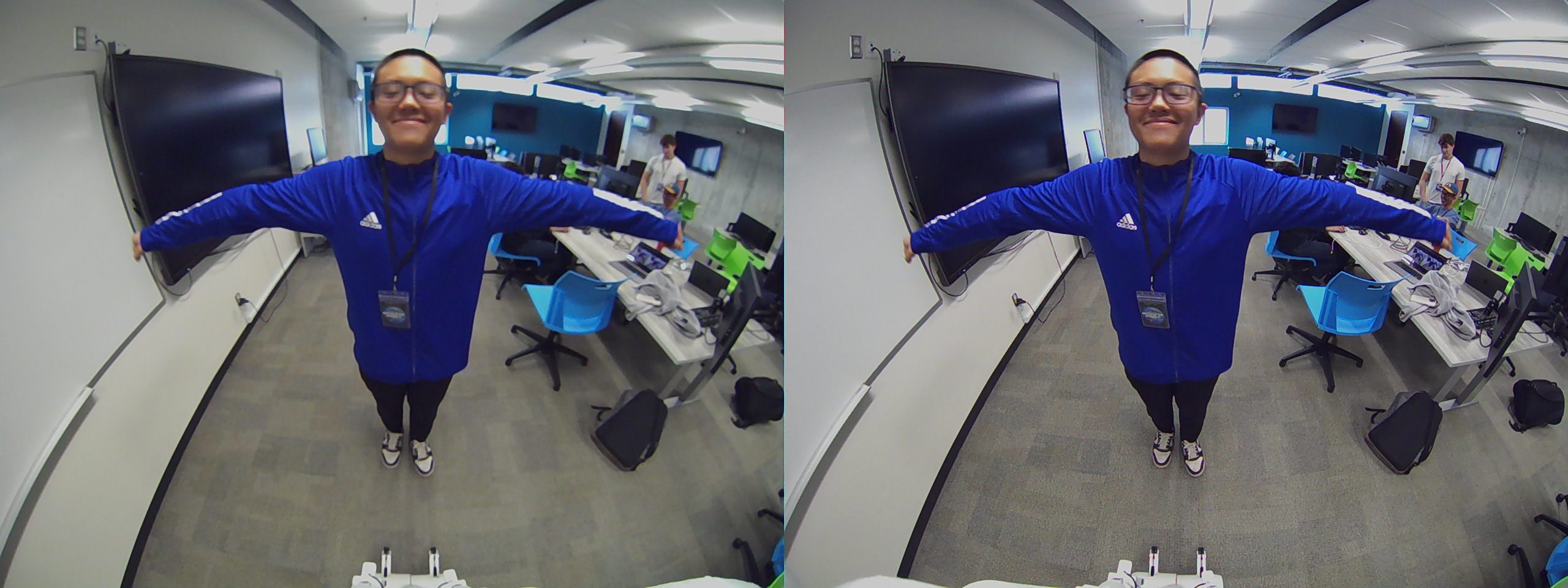
testing google mediapipe skeleton detection (1)
-
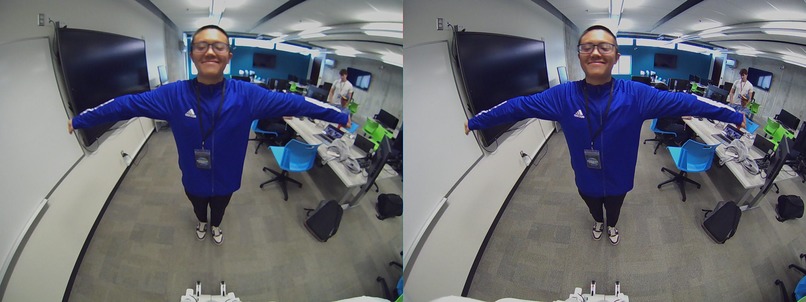
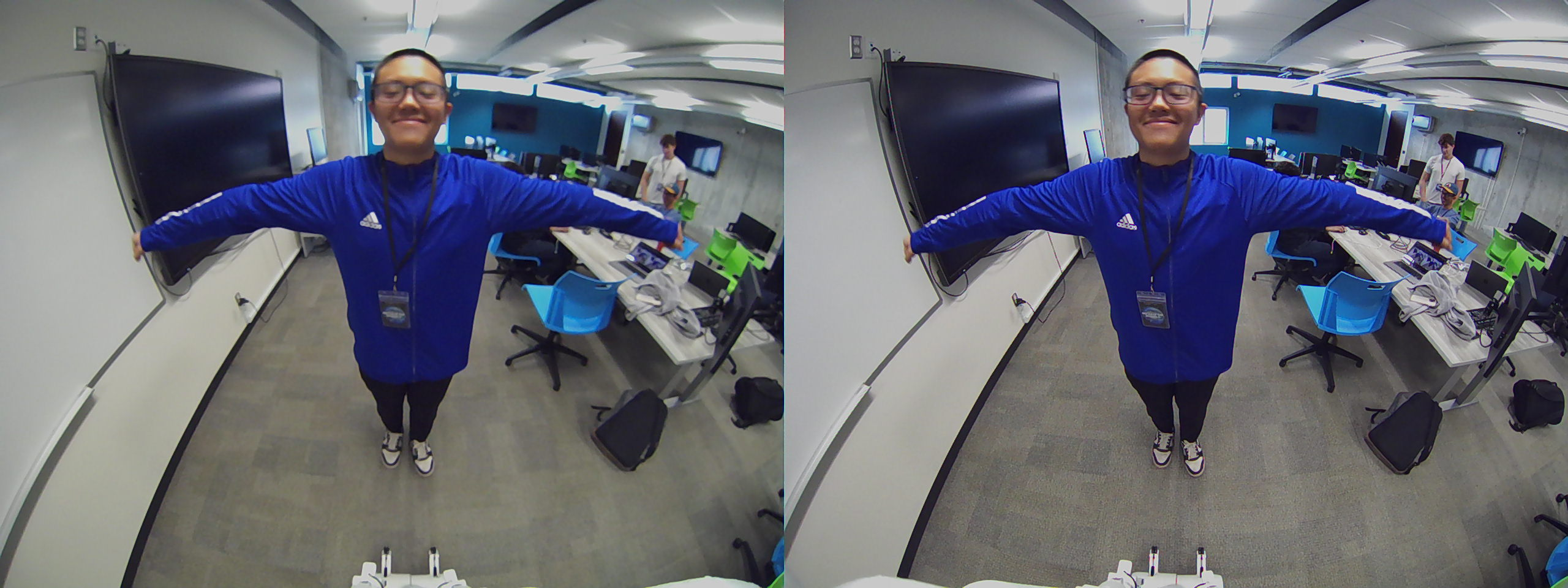
testing google mediapipe skeleton detection (2)
Inspiration
Security officers put themselves at risk every day during close-contact searches. Meanwhile, people (especially women) can face invasive pat-downs and uncomfortable security interactions. Panda keeps both sides at a safe distance while following a consistent, respectful screening process.
What it does
Bouncer starts at the feet and moves along the body, using torque feedback to detect contact and potential anomalies. Any detected anomalies are logged in software, while facial micro-expression analysis provides additional context for the security officer. A positioning algorithm also ensures the person is standing correctly so the screening can be performed consistently and safely.
How we built it
We split the project into multiple stages, especially for the core part of pocket objection detection. We used the builtin mimic application to trace arm hugging motion, which is reused to close the arms on the user. Next, we monitored hand torque data to decide when the arms contact the user. Then, we added the vertical arm movement while monitoring vertical torque data to enable micro-adjustment of hand position which ensures both a smooth scan and sensitive detection of object in pockets. We tweaked the constant values so that the detection is sensitive while reducing false positives. After finishing the core feature, we created a dashboard to aggregate data and improve user friendliness of the program.
Challenges we ran into
Being an early-stage pre-production prototype, BracketBot definitely has its quirks. At 3 AM in the morning, upon a battery swap, the arm calibration broke. That was the time when all staff had left, and we had no help. Our team ended up diving deep into the bbos directory in search of a calibration tool, and we fixed the arm calibration. This cleared us of the major roadblock. Another challenge is the lack of the necessary sensors. Without the specialized hardware we needed, we had to make do with what we had. Instead of faking the operations, we developed an anomaly detection algorithm based on how long the security bot stopped travelling a certain distance. Even with this makeshift algorithm, the robot performed incredibly well, let alone its full potential once equipped with the right hardware.
Accomplishments that we're proud of
We are proud of the actions the robot can carry out, even without the hardware to make it excel. We are also proud of the knowledge we gained along the way, specifically the skills we gained in integrating software into hardware and solving unexpected problems that is the real world that our robot navigates.
What we learned
We learned how to control joint movement and detect physical contact without relying on dedicated motion sensors. By monitoring changes in motor torque, we could estimate when the arms were making contact or applying too much pressure; which also showed us why different body sizes require adaptive force control. More importantly, we learned how a robot's touch can reveal information that a camera alone cannot.
What's next for The pandas
We would redesign Bouncer with a taller body and longer arms so it can comfortably screen people of different heights and reach areas like the arms and shoulders. We’d also improve the pat-down algorithm to use controlled in-and-out movements rather than closely contouring the body; this would make the system more comfortable and consistent across different users.

Log in or sign up for Devpost to join the conversation.