-
 GIF
GIF
Promotional video for VR and 4D experience to attract users.
-
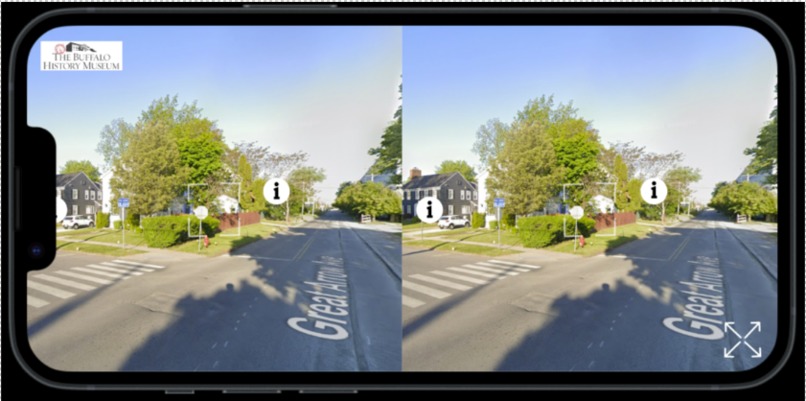
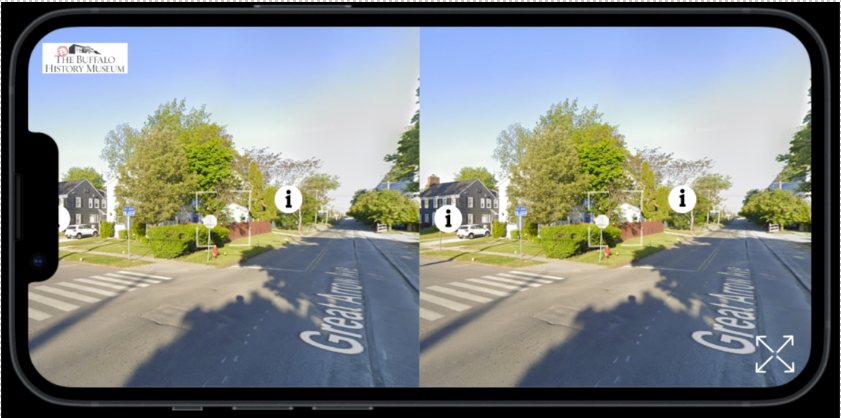
View of the phone screen for VR experience.
-
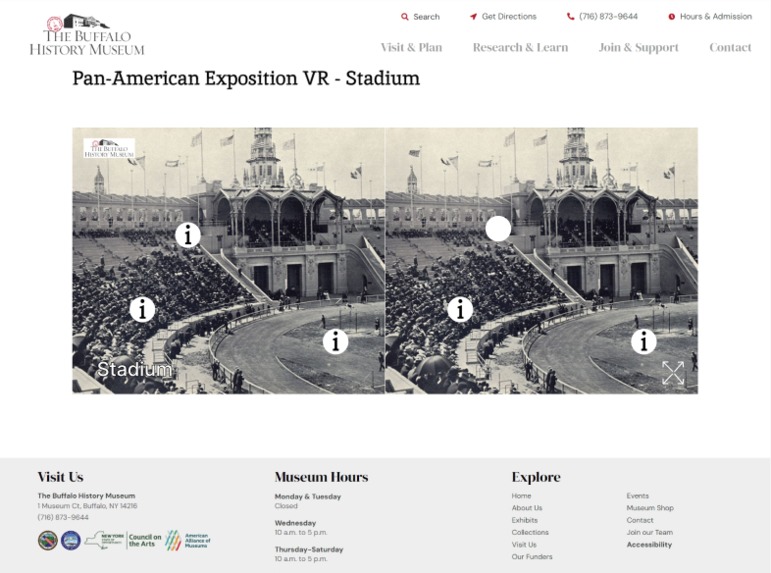
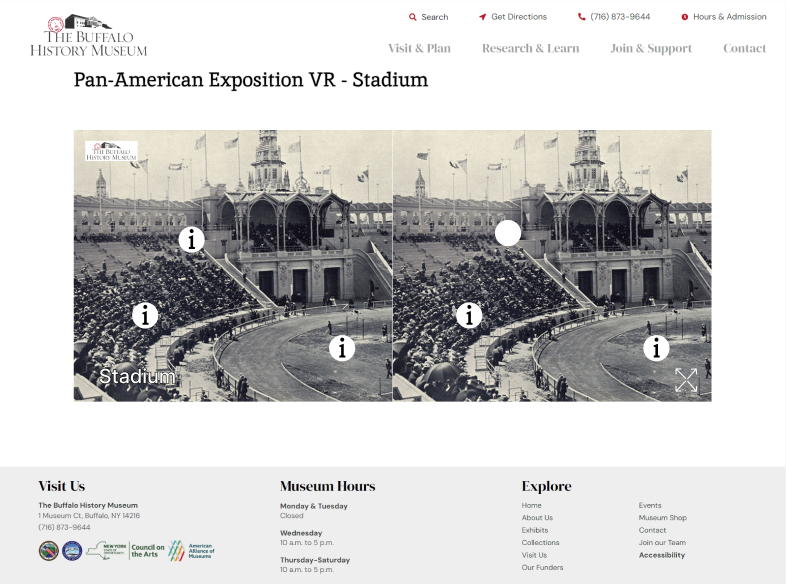
View of the website that users are redirected to after scanning QR codes.
-
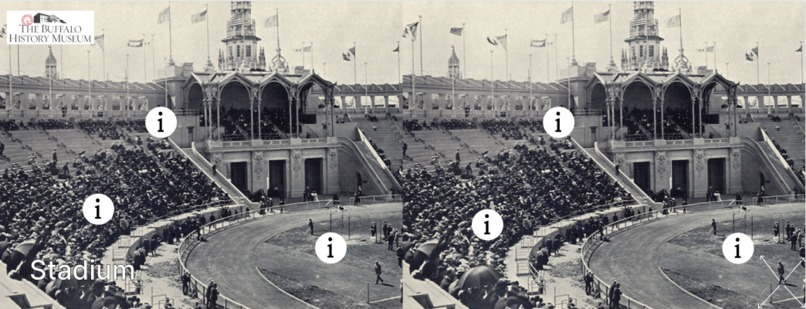
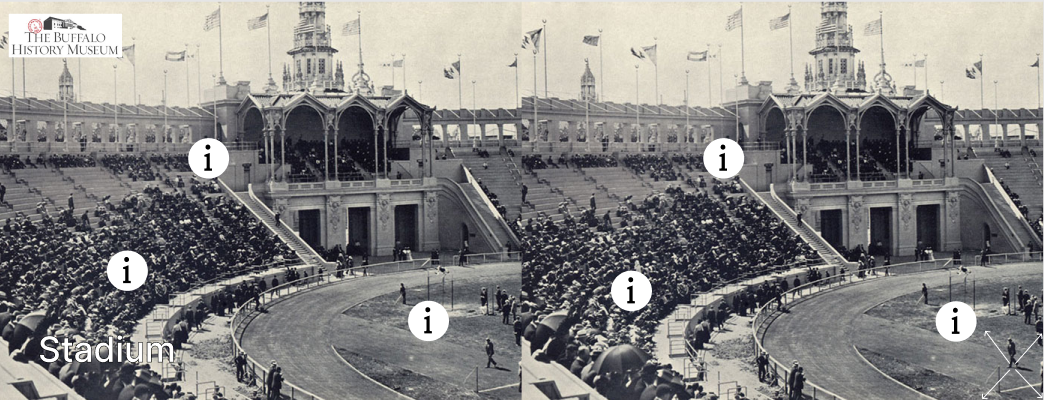
Zoomed in view of the website that users are redirected to after scanning QR codes.
-
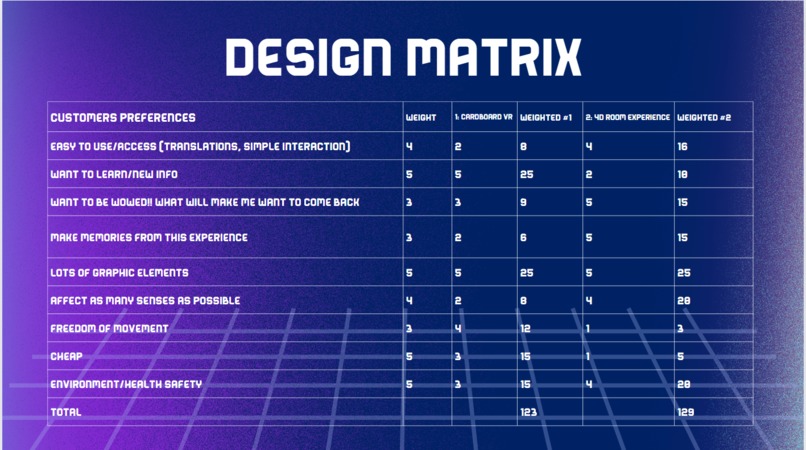
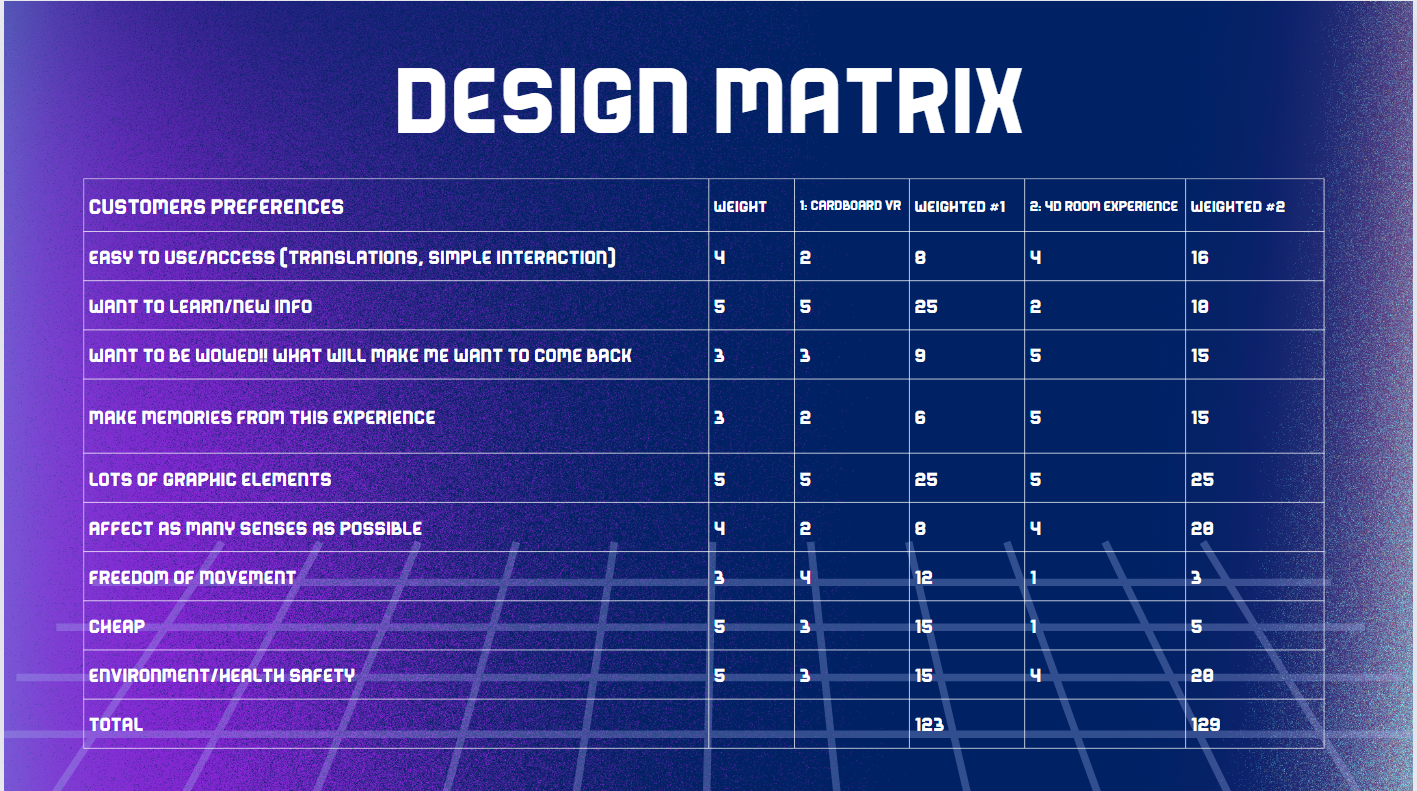
Design Matrix by which the team decided on ideas. Since the total scores were so close together, we decided to merge the ideas.
-
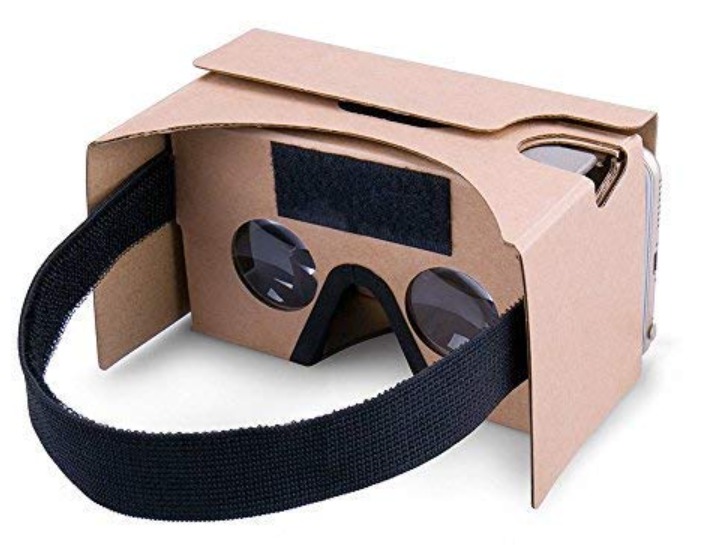
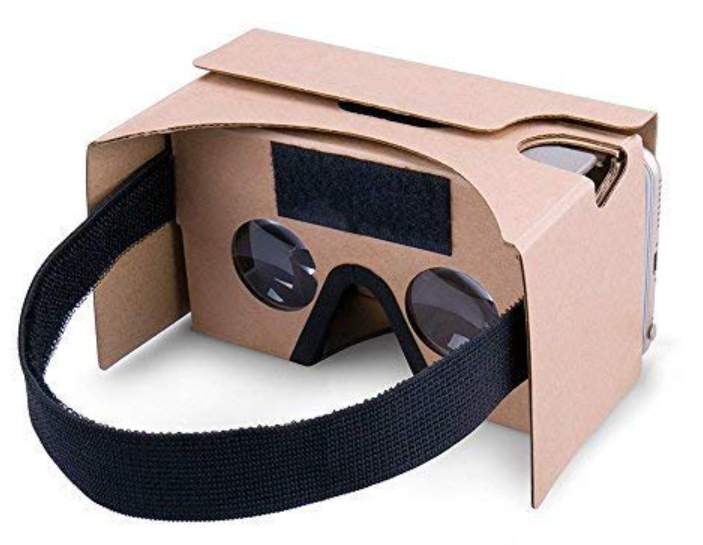
Sample cardboard VR headset.

Inspiration
Upon observing the three challenges, our team had several ideas for all of them. We were inspired to investigate the Buffalo History Museum Challenge because the scope of our ideas touched on entertainment solutions that each team member was excited to build on. To produce ways to make the experience more immersible, we had to dream of ideas that would place us into the event.
We decided that a virtual reality approach would be an effective way to show visitors the location and related information to the Pan-Am exposition in relation to the current area.
Virtual reality is popular among younger generations, and it would be an effective way to drive interest into learning more about the Pan-Am exposition.
The 4-D experience of the assassination of President McKinley was intended to be an immersive and novel experience regarding learning about a historical event.
The idea was to drive interest into attending the Buffalo History Museum for the younger generations while providing a more captivating experience for those that may already know some information about the Pan-Am exposition.
What it does
The Virtual Reality Tour, a sub-solution for our project meant for all ages, provides the first level of immersion. The museum will sell carboard VR headsets to fit phones into. Once users have the headsets, many exhibits will include QR codes that, once scanned, will bring up a virtual setting related to the exhibit in the context of the Pan-Am exposition, including a location on the exposition’s map.
The virtual setting will include interactive bubbles with information. Users will be able to move an icon over the interactive bubbles, and the bubbles will open with an image along with a caption, that is narrated.
Users will be able to choose a language for the captions and narration.
The 4D Simulation is a projector room with around 12 motion-controlled seats. The room plays on 4 of the 5 senses while taking the viewers through a short memory of President Mikinley's Assassination.
The display will be through a large projector, with 3D glasses given to each of the visitors.
How we built it
The Virtual Reality goggles are made of cardboard and are bought at around $2 per pair. The QR codes at each exhibit link to a website that produces developed 3D images that display in a Virtual Reality Mode.
The 4D Simulation is built using a motion-controlled base. To replicate tactile and olfactory sensations, vents that blow mist and fog will be present. The presentation will have a projector that surrounds the walls and ceiling of the room, and users will be provided with 3D glasses. There will be surround sound in the room with spatial audio.
Challenges we ran into
Money was a huge challenge we ran into as VR headsets can be extremely expensive, so we decided to go with cardboard headsets instead which run about $1.75 per headset.
We also ran into the challenge for the 4D room of the expense of the equipment to create this 4D room as we do not know the budget that the history museum has for projects like this.
Not everyone may have access to a cell phone so to counter this, we decided to have about four donated phones for rent at $25 each
Accomplishments that we're proud of
We are proud of our ability to come together as a team to collaboratively learn what is best for our project. By openly sharing our individual insights and seamlessly integrating them, we have created innovative and cohesive solutions.
When running into a Challenge, we quickly came together to brainstorm solutions and adjust our approach, ensuring that we stay on track and continue to make progress.
Everyone was constantly contributing, and overall wanted to do well on this project.
What we learned
We learned each other’s strengths and how to utilize them together and to our advantage when creating a power point and visual representations of what we were trying to achieve
We also learned about the history of the Pan-American Exposition that occurred in our own city
President McKinley’s assassination is significant event that happened during the Pan-Am expo
When brainstorming, there is no such thing as a dumb idea. Our final idea was created through the process of using each teammates idea to stimulate new ideas.
What's next for Pan-Am Exposition Reimagination
The development of the VR program is needed.
Once the program is developed, a more in-depth cost analysis can be conducted so that the museum can recoup the investment and continue to fund each of the exhibits there.
Determine a vendor for the VR headsets, earbuds, and the 3D glasses.
Train the employees to be able to assist
Reaching out to companies such as Universal Studios and Disney to further develop the 4-D motion ride.
Seek out private donors or investors that are interested in bringing back the Pan-Am experience
Increase advertisement to reach global audiences
Mentors: Zachary Pataky, Jake Haacker
Built With
- figma


Log in or sign up for Devpost to join the conversation.