
Inspiration
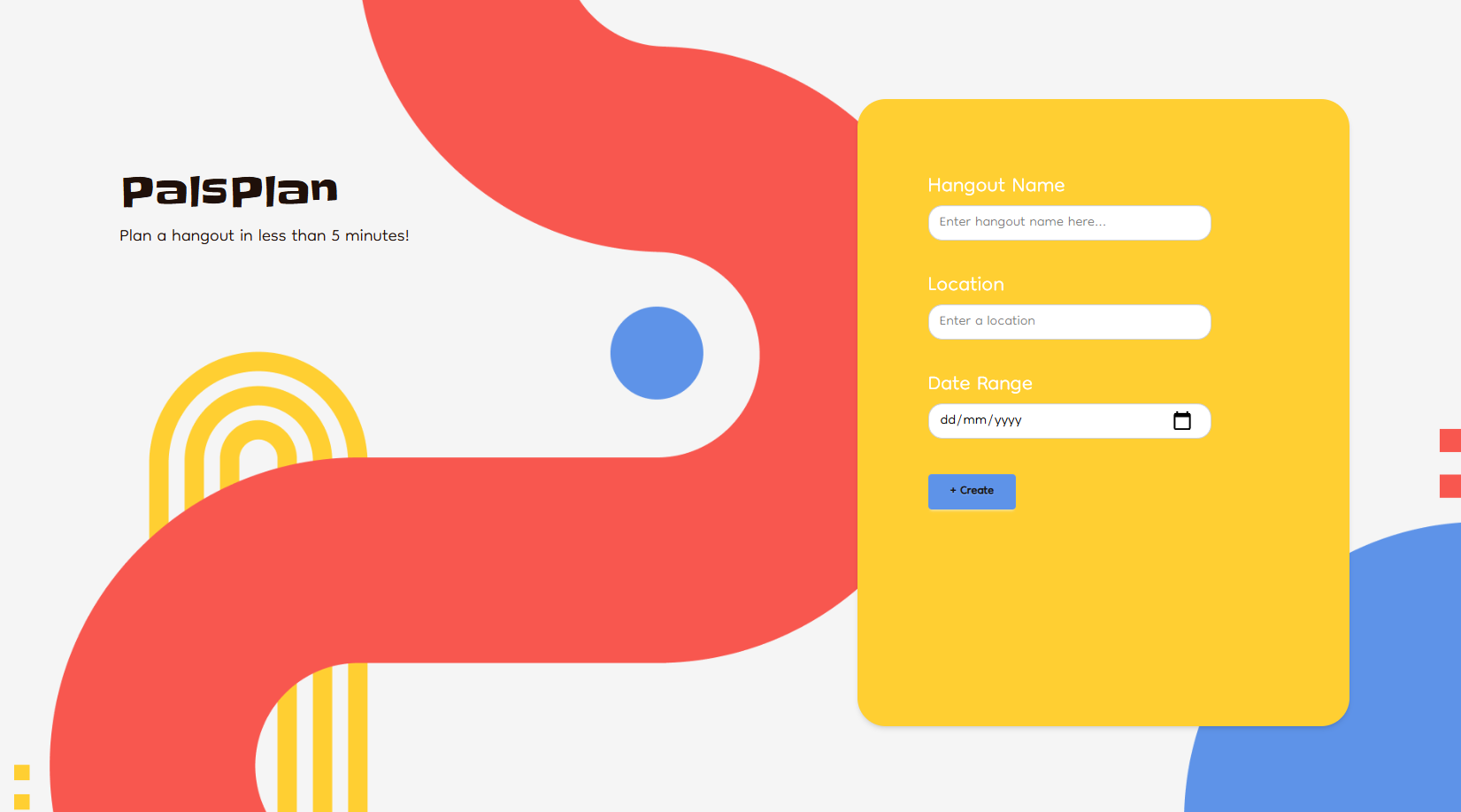
At iEye, we understand the struggle of planning outings with friends. From our own experience, organizing hangouts has always been a challenge. Whether it's deciding on an activity or dealing with indecision that leads to plans falling through, we've been there. Add in the frustration of managing multiple group chats and trying to find a time that works for everyone, and things often get complicated. That’s exactly why we created a website to make planning hangouts easier and stress-free.
What it does
Our website:
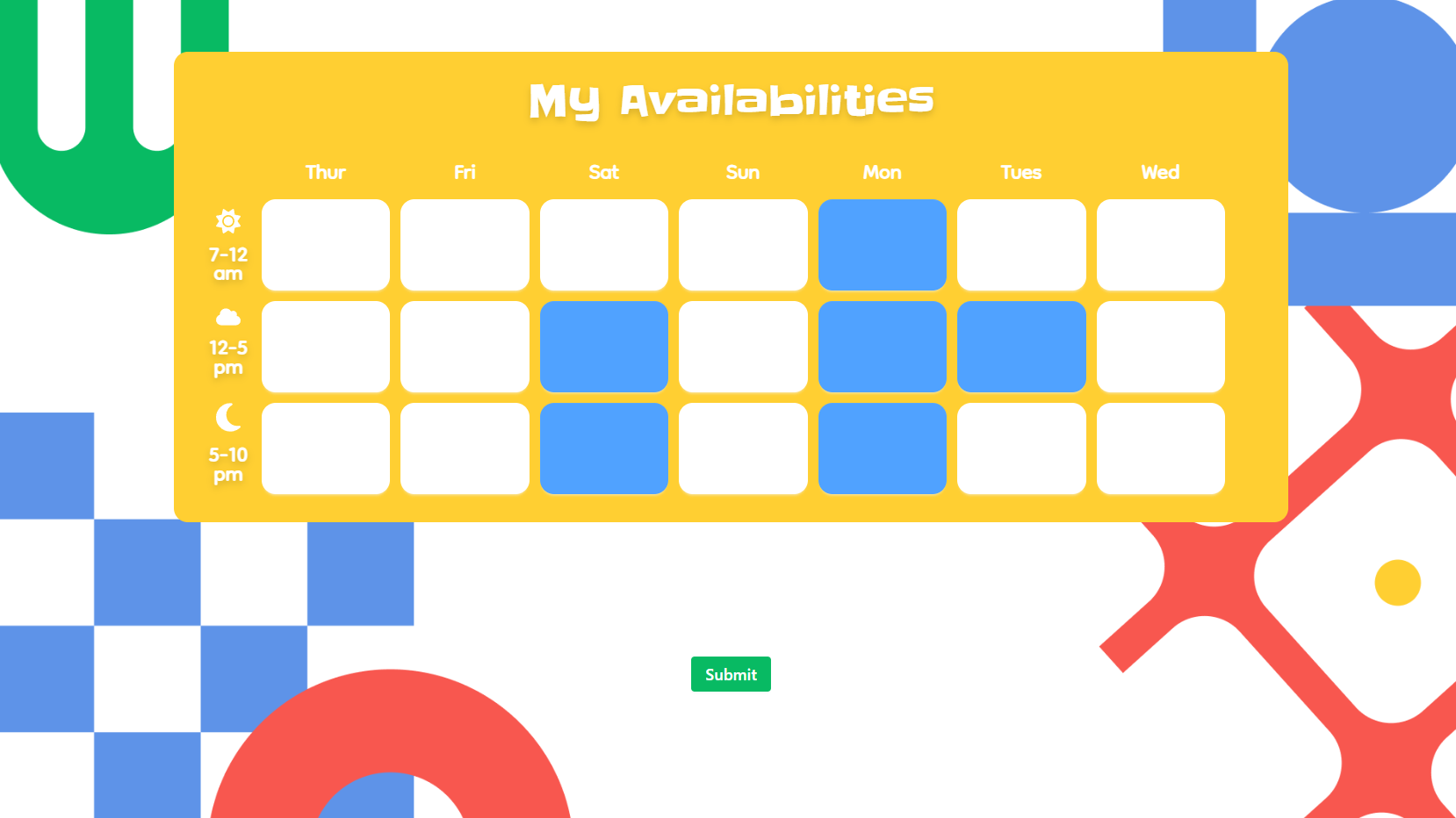
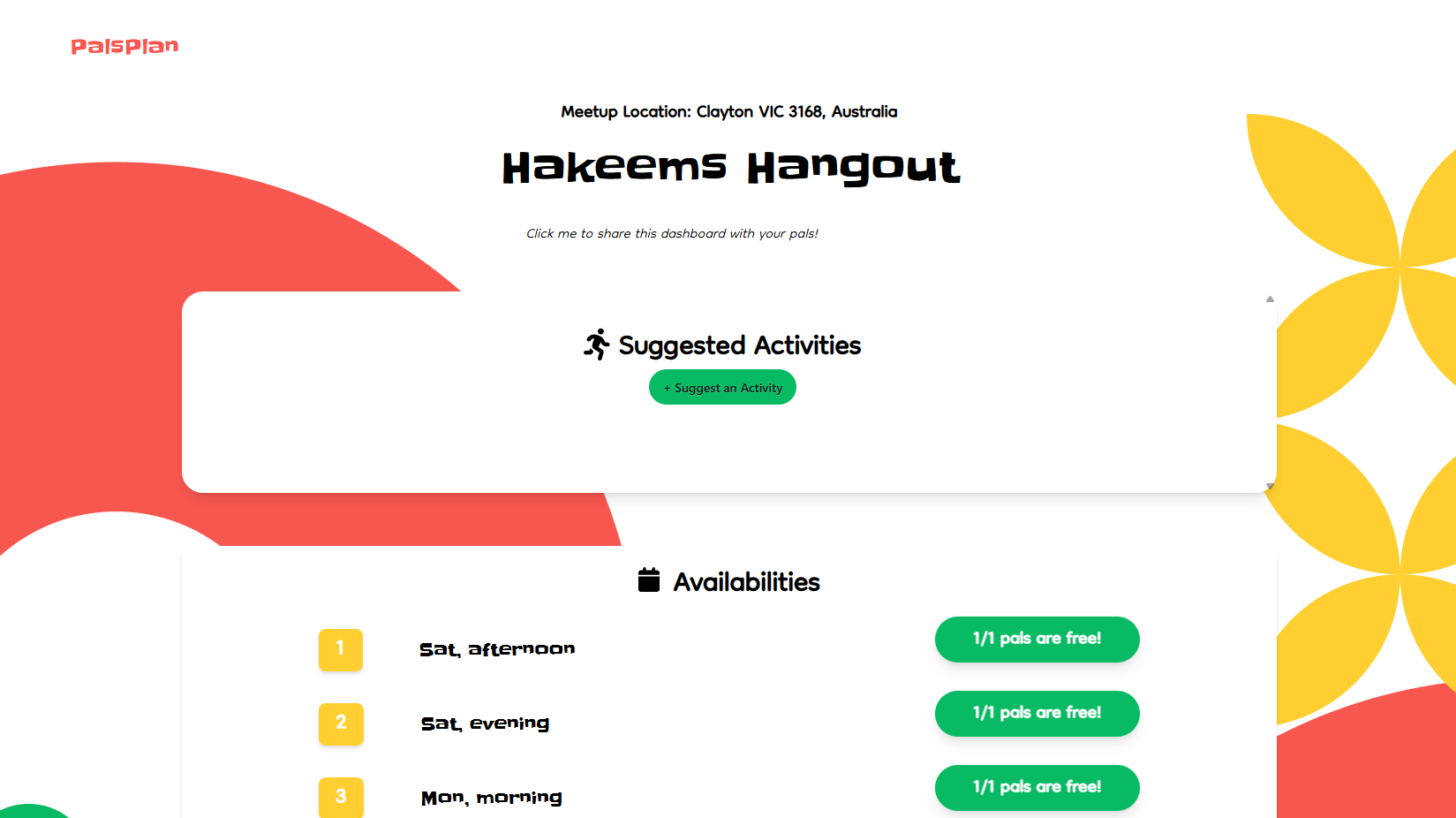
- Identifies Mutual Availabilities: The top five mutual availabilities is found and ranked from most to least attendees to find the best times for everyone.
- Suggests Nearby Activities: The Google Maps API is used to recommend nearby activities, complete with addresses, based on the specified meetup location.
- AI-Generated Activity Ideas: The OpenAI API is used to provide activity suggestions if the host lacks ideas of activities.
- Activity Voting System: Users are able to like activities such that the most popular suggestions can be identified.
- Viewable by Everyone: Upon the creation of a hangout, the host can share a hangout ‘room’ via a link for their friends to view. This ‘room’ contains crucial information about the hangout.
How we built it
- Frontend: We used React for building the user interface.
- Styling: To maintain a playful and visually appealing design, we employed Tailwind CSS.
- Location-Based Features: The Google Maps API was integrated to enable location-based activity suggestions, allowing users to explore relevant options based on the meetup location.
- AI-Driven Content: For generating activity ideas, we used OpenAI's API.
- Backend: The backend infrastructure was built with Express.
- Database: For data management and storage, we used MongoDB.
Challenges we ran into
We faced several challenges throughout development, including managing GitHub complexity, particularly issues related to branch management, and integrating the backend with the frontend. Learning to use the Google Maps API was another major obstacle, alongside the challenge of avoiding scope creep, particularly as we had a short deadline. Additionally, during our planning stage, a lot of time was dedicated to visualising the user flow to ensure efficient collaboration.
Accomplishments that we're proud of
- Successfully integrating APIs from Google Maps and OpenAI to build upon the features of our website.
- Completing a working demo of our website that solves our target problem, within the timeframe we were given.
What we learned
- Front-end frameworks - React, Tailwind CSS, DaisyUI and many more.
- GitHub collaboration and branch management/resolving
- State management
- Effective team collaboration and coordination within a short time constraint
- Working with APIs
What's next for PalsPlan
- Updating the live counter of likes for each activity in the Dashboard Page
- Implementing the ability to edit your name, availability, and activity suggestions
- Implementing tagging options to be able to filter through activity suggestions
- Using the Google Calendar API to prefill a user’s availability
- Using a Google/Apple/Email account such as OAuth for a secure login
- Making the website responsive on all screen sizes, particularly on mobile devices
Built With
- express.js
- figma
- google-places
- mongodb
- node.js
- open-ai-api
- react
- tailwind


Log in or sign up for Devpost to join the conversation.