-
-
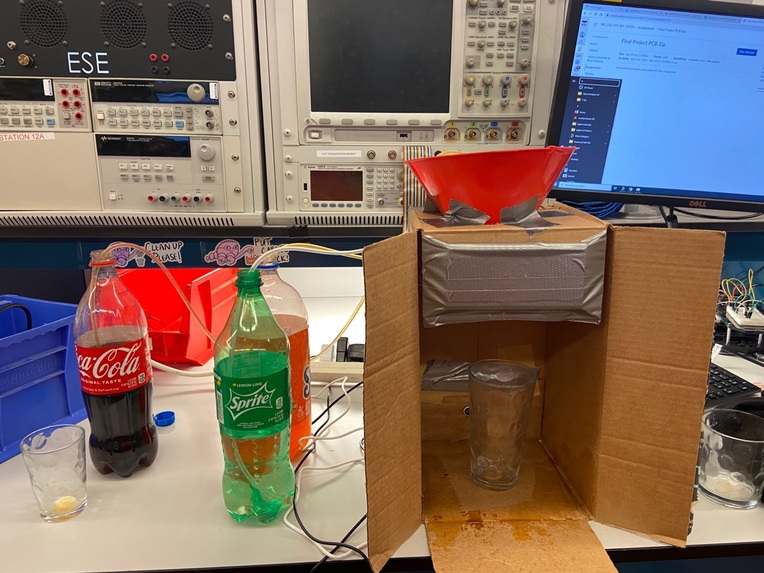
Front Picture of Design
-

-
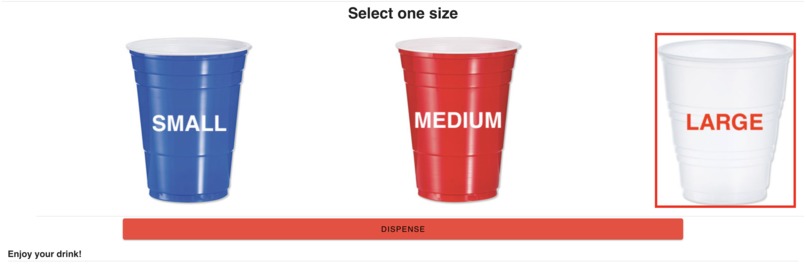
Bottom of UI Website
-
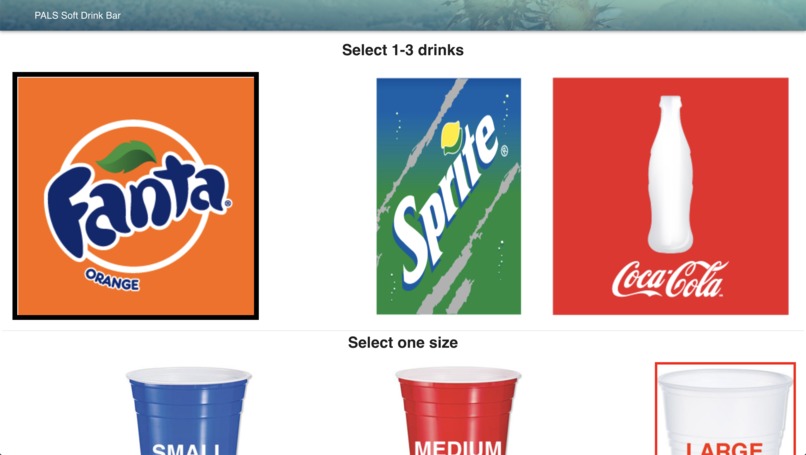
Top of UI Website
-

What happens when there is no cup!




Inspiration
The University of Pennsylvania, as great as the campus is, lacks certain amenities. When I want to use a soda machine past 10 PM, we don't have any Penn sponsored stores open. Our only options are stores like Wawa, which tend to cost a lot and cause a lot of issues. Furthermore, we enjoy mixed drinks. There are automatic coffee machines that will mix the milk, coffee, sugar, and everything we need for a selection of coffees, so why does this not exist for other drinks? The combination of these two problems inspired PALS – the Precise and Accurate Liquid Server. No longer do we have to worry about adding too much of one liquid of any kind in a drink.
What it does
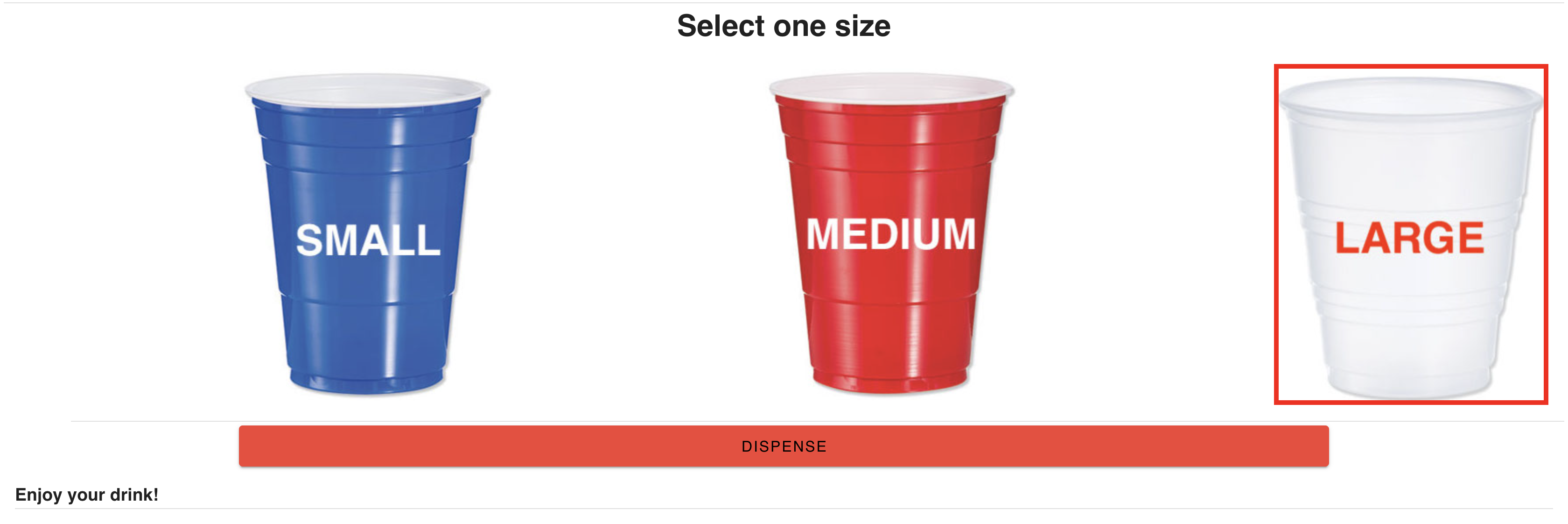
PALS is designed to have a curated menu of liquids that can be poured in equal proportions to any cup that has standard small, medium, or large measurements. As long as someone is connected to the same WiFi network, the PALS dispenser can be accessed by any device through a link on the web through a server that is run on a Raspberry Pi, and that website displays a User Interface designed to allow people to pick which liquids are served and in which size cup the liquid is dispensed. Furthermore, the PALS dispenser also checks the presence of a cup using an ultrasonic sensor to ensure that there is a cup present to prevent spillage while pouring.
How we built it
To house the electronics, we used a cardboard box as the frame and made cutouts for the tubing, DC motors, the funnel, and the wires from the DC motors coming back in order to connect to its power supply. The DC motors run a peristaltic pump that creates a vacuum through tubing to allow a precise transfer of liquid from a bottle of whatever liquid we choose to dispense to pipes inside a funnel. The funnel and the weight were strapped down to the cardboard using duct tape, while any electronics were strapped down with an initial layer of electrical tape, then duct tape for extra adhesion.
The electronics are simple. We connected an Ultrasonic to pins of a Raspberry Pi and utilized a 4 channel Relay Module to run the 3 DC motors that power the peristaltic pumps. There was a 9V power supply that powers the relay module and a 12V power supply directly supplying power to the motors.
Challenges we ran into
Hardware-wise, we ran into the issue of balancing the weight of the box since we used a lightweight cardboard box to house our components. To fix this, we added weight to the top of the front portion of the cardboard box. Another issue was how we were to protect the back electronics from any accidental leakage from the tubes coming from the DC motor. So for safety measures, we added a duct-taped piece of cardboard between the electronics and the motors.
Another challenge that was faced was the main challenge of developing the UI and API. The first coding challenge that was faced was utilizing Python packages to allow the DC motors to be powered simultaneously for set durations of time so that the liquids can be mixed in the funnel itself. Then, developing the UI using Vue.js to be able to create the a user friendly UI and be able to have everything working in real time as well as communicate with the Raspberry pi were challenging and took hours of debugging.
Accomplishments that we're proud of
We are proud that we could get the project actually working and have the website function properly with the Raspberry Pi.
What we learned
We learned a lot through this process. We learned how to use Python, Vue.js, and more through developing the UI and API for this project. Furthermore, we learned the engineering challenges and design challenges to make this project work.
What's next for PALS
We hope to expand and make something of a professional design of this project, adding more pumps, greater functionality, and even decorative lights.

Log in or sign up for Devpost to join the conversation.