The problem
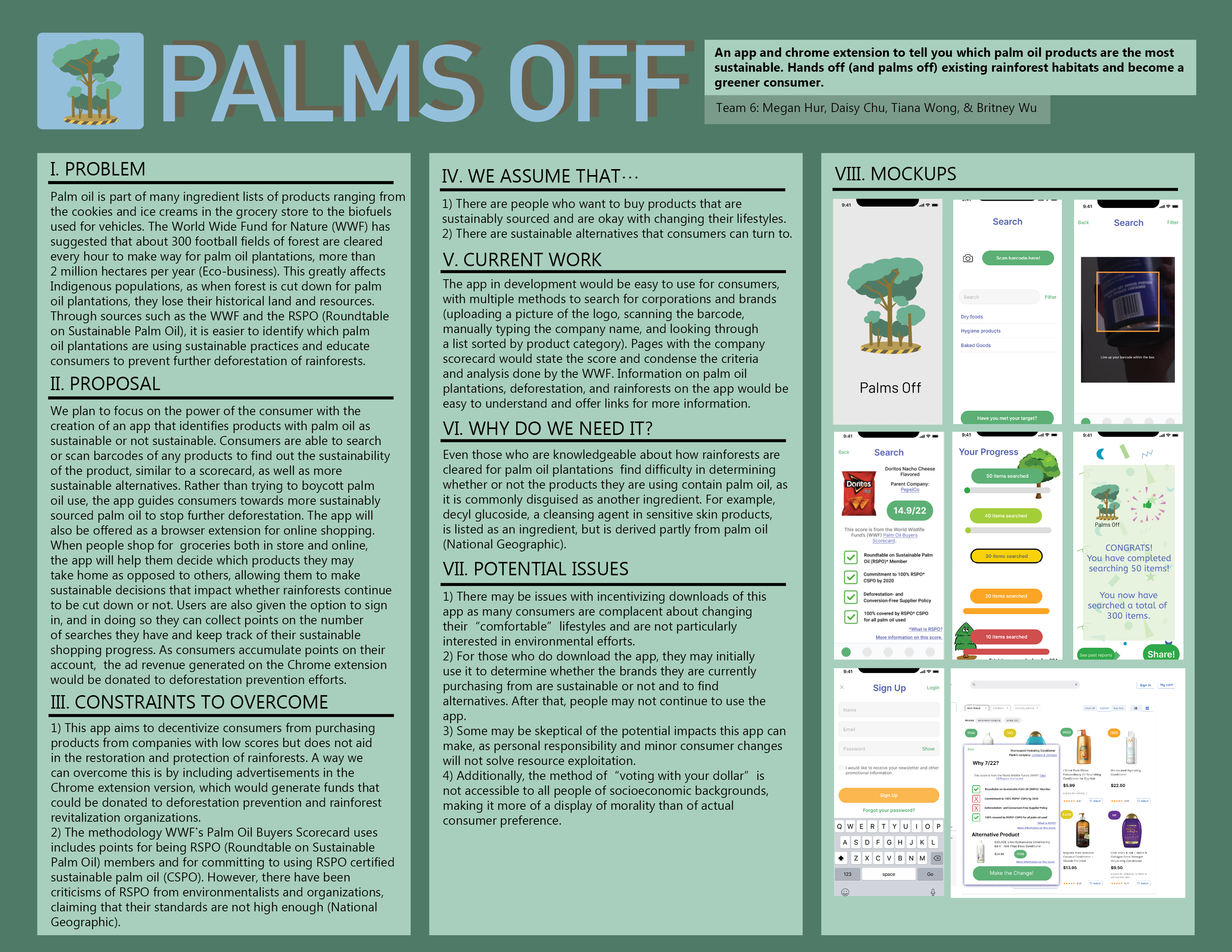
Palm oil is part of many ingredient lists of products ranging from the cookies and ice creams in the grocery store to the biofuels used for vehicles. The World Wide Fund for Nature (WWF) has suggested that about 300 football fields of forest are cleared every hour to make way for palm oil plantations, more than 2 million hectares per year (Eco-business). This greatly affects Indigenous populations, as when forest is cut down for palm oil plantations, they lose their historical land and resources. Through sources such as the WWF and the RSPO (Roundtable on Sustainable Palm Oil), it is easier to identify which palm oil plantations are using sustainable practices and educate consumers to prevent further deforestation of rainforests.
Our proposal
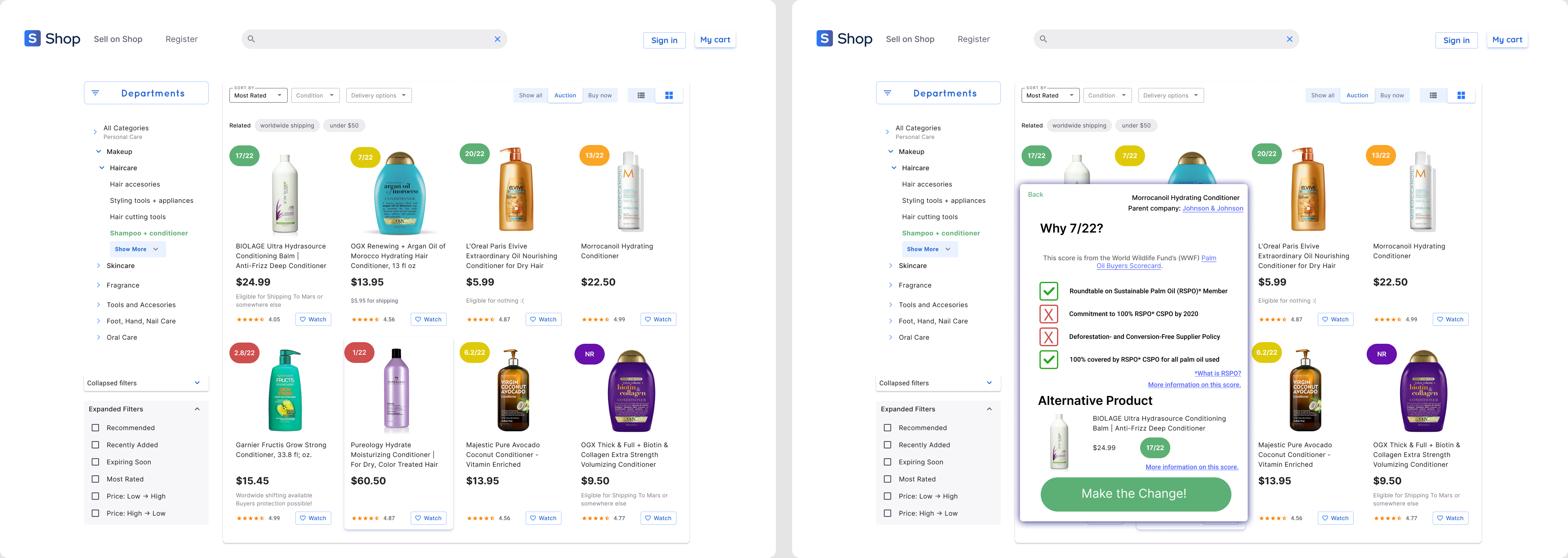
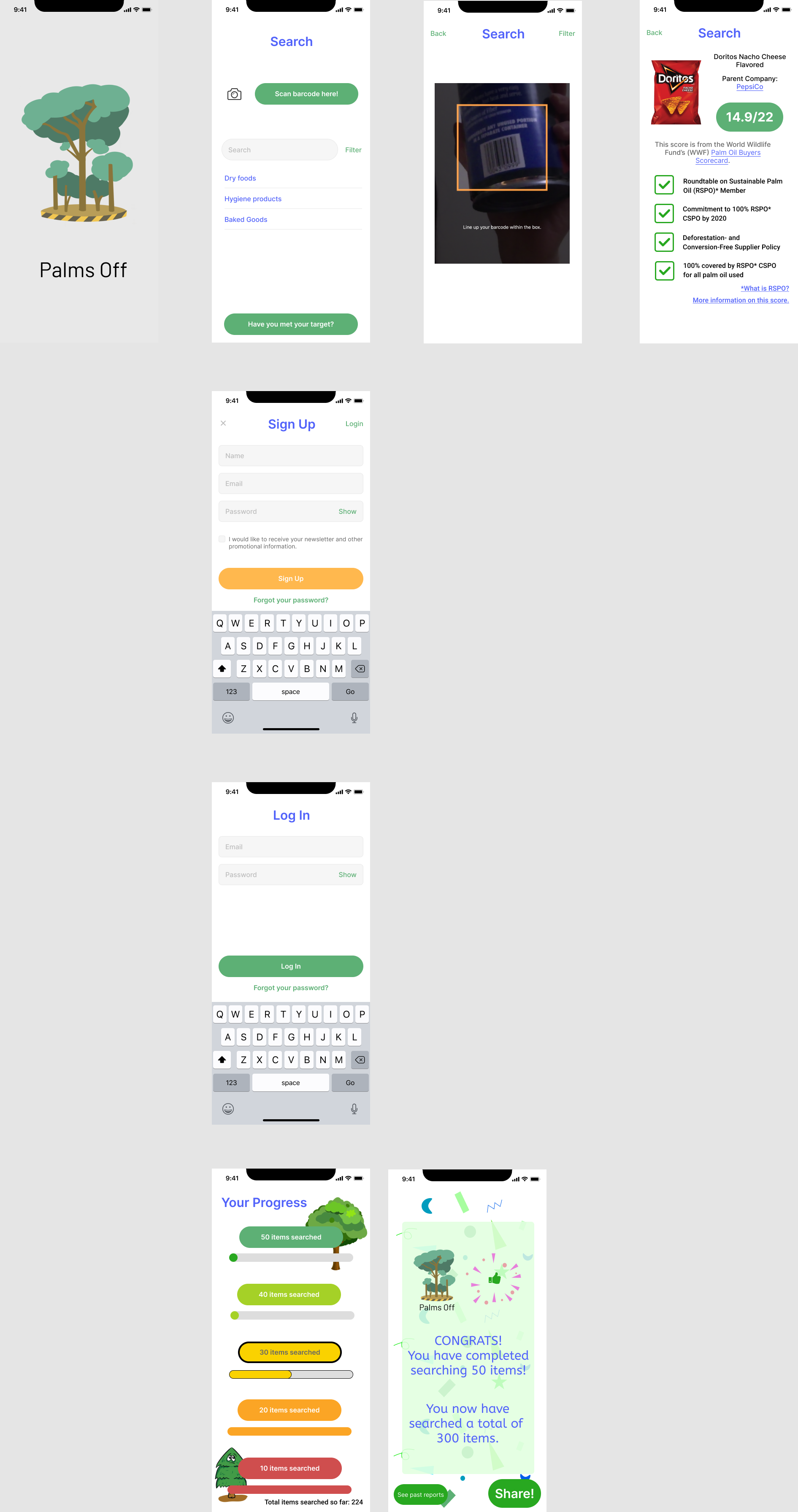
We plan to focus on the power of the consumer with the creation of an app that identifies products with palm oil as sustainable or not sustainable. Consumers are able to search or scan barcodes of any products to find out the sustainability of the product, similar to a scorecard, as well as more sustainable alternatives. Rather than trying to boycott palm oil use, the app guides consumers towards more sustainably sourced palm oil to stop further deforestation. The app will also be offered as a browser extension for online shopping. When people shop for groceries both in store and online, the app will help them decide which products they may take home as opposed to others, allowing them to make sustainable decisions that impact whether rainforests continue to be cut down or not. Users are also given the option to sign in, and in doing so they can collect points on the number of searches they have and keep track of their sustainable shopping progress. As consumers accumulate points on their account, the ad revenue generated on the Chrome extension would be donated to deforestation prevention efforts.
We assume that…
In developing this product, we are assuming that there are people who want to buy products that are sustainably sourced and are okay with changing their lifestyles for environmental efforts. By providing substitutes, we are presuming that there are sustainable alternatives that consumers can turn to.
Constraints to overcome
This app aims to decentivize consumers from purchasing products from companies with low scores, decreasing the demand for palm oil products, but doesn’t aid in the restoration and protection of rainforests. A way we can overcome this is by including advertisements in the Chrome extension version, which would generate funds that could be donated to deforestation prevention and rainforest revitalization organizations. Additionally, the methodology WWF’s Palm Oil Buyers Scorecard uses includes points for being RSPO (Roundtable on Sustainable Palm Oil) members and for committing to using RSPO certified sustainable palm oil (CSPO). However, there have been criticisms of RSPO from environmentalists and organizations, claiming that their standards are not high enough (National Geographic).
Current work
The app in development would be easy to use for consumers, with multiple methods to search for corporations and brands (uploading a picture of the logo, scanning the barcode, manually typing the company name, and looking through a list sorted by product category). Pages with the company scorecard would clearly state the score and condense the criteria and analysis done by the WWF. Information on palm oil plantations, deforestation, and rainforests on the app would be concise, easy to understand, and offer links for more information.
Current needs
Even those who are knowledgeable about how rainforests are cleared for palm oil plantations find difficulty in determining whether or not the products they are using contain palm oil, as it is commonly disguised as another ingredient. For example, decyl glucoside, a cleansing agent in sensitive skin products, and lauryl glucoside and sodium lauryl sulfate, both surfactants in body washes and toothpaste, are listed as ingredients, but are derived partly from palm oil (National Geographic).
Potential issues
There may be issues with incentivizing downloads of this app as many consumers are complacent about changing their “comfortable” lifestyles and are not particularly interested in environmental efforts. For those who do download the app, they may initially use it to determine whether the brands they are currently purchasing from are sustainable or not and to find alternatives. However, after that, people may not continue to use the app. Some may be skeptical of the potential impacts this app can make, as personal responsibility and minor consumer changes will not solve resource exploitation. Additionally, the method of “voting with your dollar” is not accessible to all people of socioeconomic backgrounds, making it more of a display of morality than of actual consumer preference.
Built With
- figma

Log in or sign up for Devpost to join the conversation.