Inspiration
Indonesia is the world's largest producer of palm oil, surpassing Malaysia in 2006, producing more than 20.9 million tonnes. Indonesia expects to double production by the end of 2030. At the end of 2010, 60 percent of the output was exported in the form of crude palm oil. All this comes at the expense of native forest and animals who live there. USA uses 1.7 million metric tons per year.
What it does
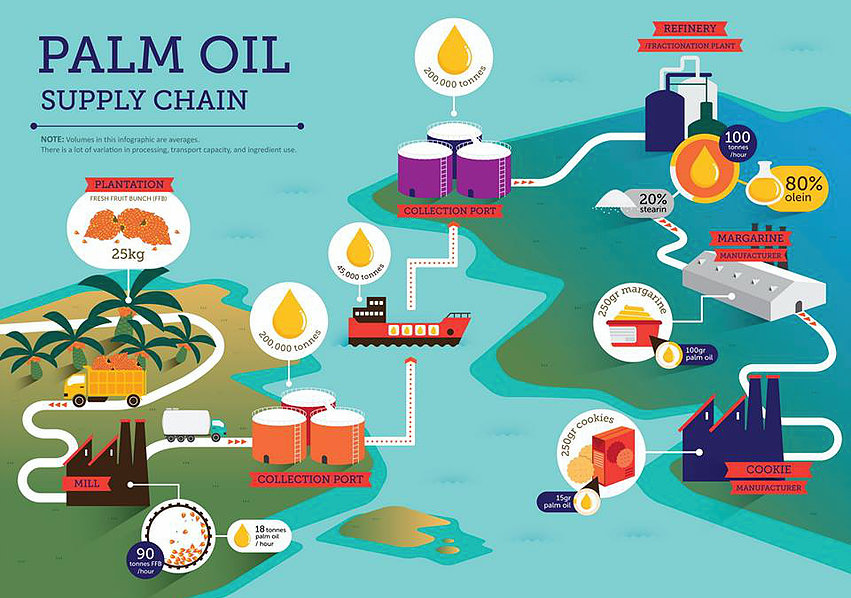
Building logistic supply chain systems is something I have experience with and believe this problem can only be solved with a transparent supply chain that validates where the oil comes from. This supply-chain should be distributed/decentralized and capable of supporting thousands of seed vendors, brokers, distributors, and drivers. The agreements between each link in the supply chain can be secured via software based smart contracts that release payment as transfer of value is recorded by the parties involved in the transaction. Agreements about delivery can be done via a concept called futures contracts. (an agreement traded on an organized exchange to buy or sell assets, especially commodities or shares, at a fixed price but to be delivered and paid for later.), which we can implement as part of the supply chain.
The resulting system would be a mobile app that let's users, locate seeds on a map, validate harvest location, make agreements to supply seeds to interested parties, and receive payments.
How I built it
Using open source tools and platforms
Challenges I ran into
There are many intricacies to think of. There is not enough time and people to dedicate to this solution
Accomplishments that I'm proud of
We have a working prototype
What I learned
The more I work on this project the more I understand the importance and value of it.
What's next for Palmoil Chain
Launching a pilot project with a partner company

Log in or sign up for Devpost to join the conversation.