Inspiration
What it does
How we built it
Challenges we ran into
Accomplishments that we're proud of
What we learned
What's next for Palm Whorl Cities
Inspiration
Look at your palm. That's a map. The heart line is a river, the life line is another, and every fingerprint is a hill drawn in perfect contour lines. You've been carrying a world around in your hand your whole life.
So we asked: what if a game had no level designer at all? Just ten founding hands round a spring in the desert, and after that, only the hands of the people who play. Every new player adds land. Every flower anyone plants stays for everybody. The world is literally made of its players.
What it does
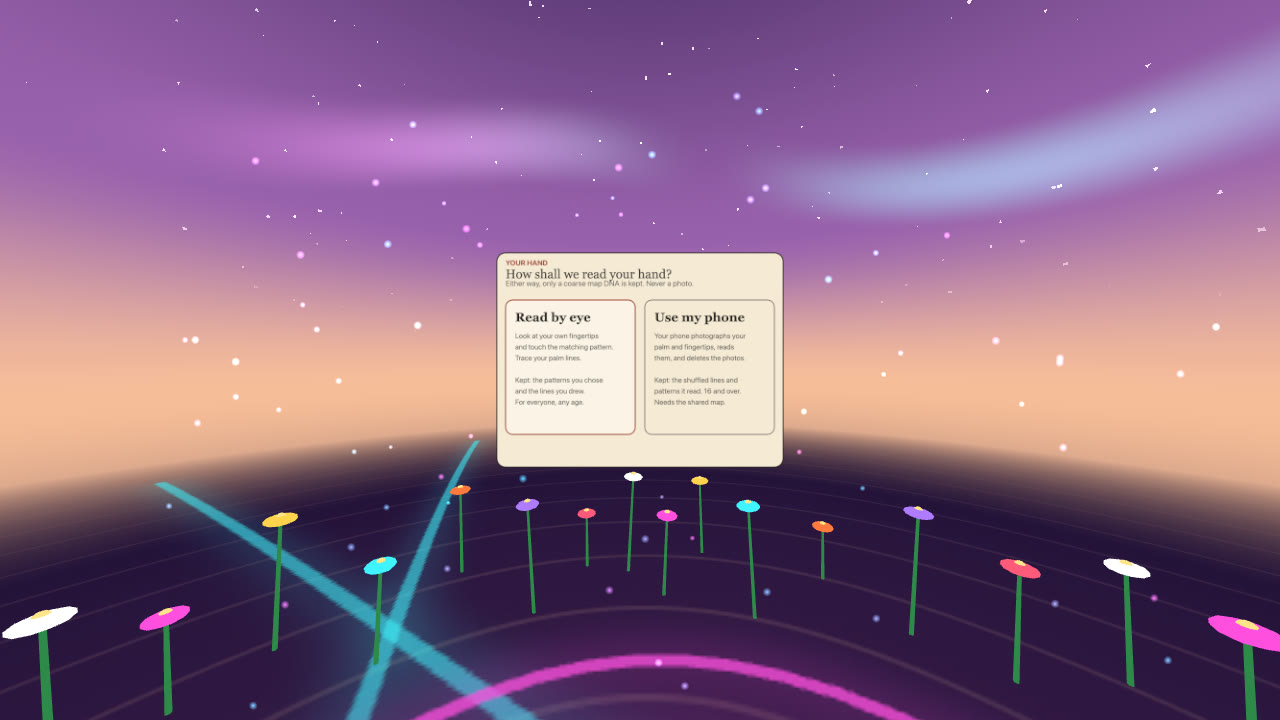
First, you read your hand. In the headset, a glowing palm is laid on your real floor with a ring of flowers around you. You touch the fingerprint pattern that matches each fingertip and trace your palm lines with a finger. (On a phone it can read photos instead, and deletes them right away.) Out comes a Hand: a few hundred bytes of map, never a picture. The world offers three spots where it fits. You pinch one, and your Hand rises out of the wilderness for every player at once.
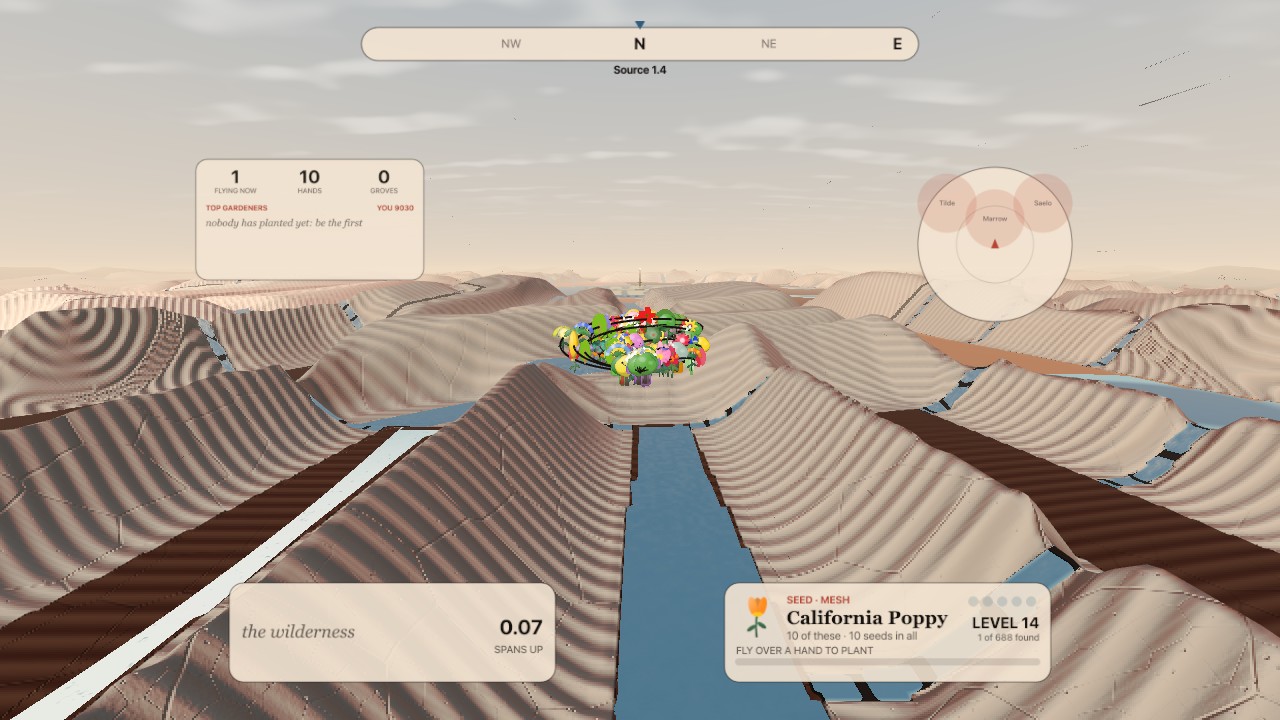
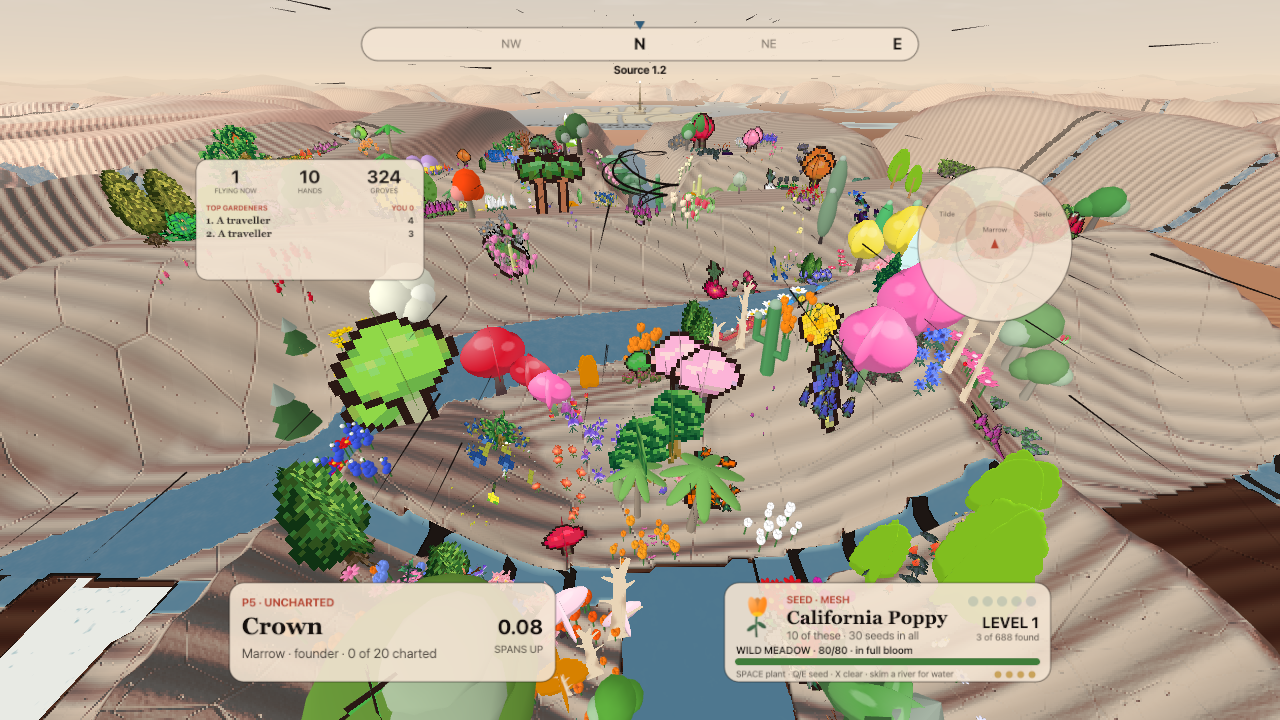
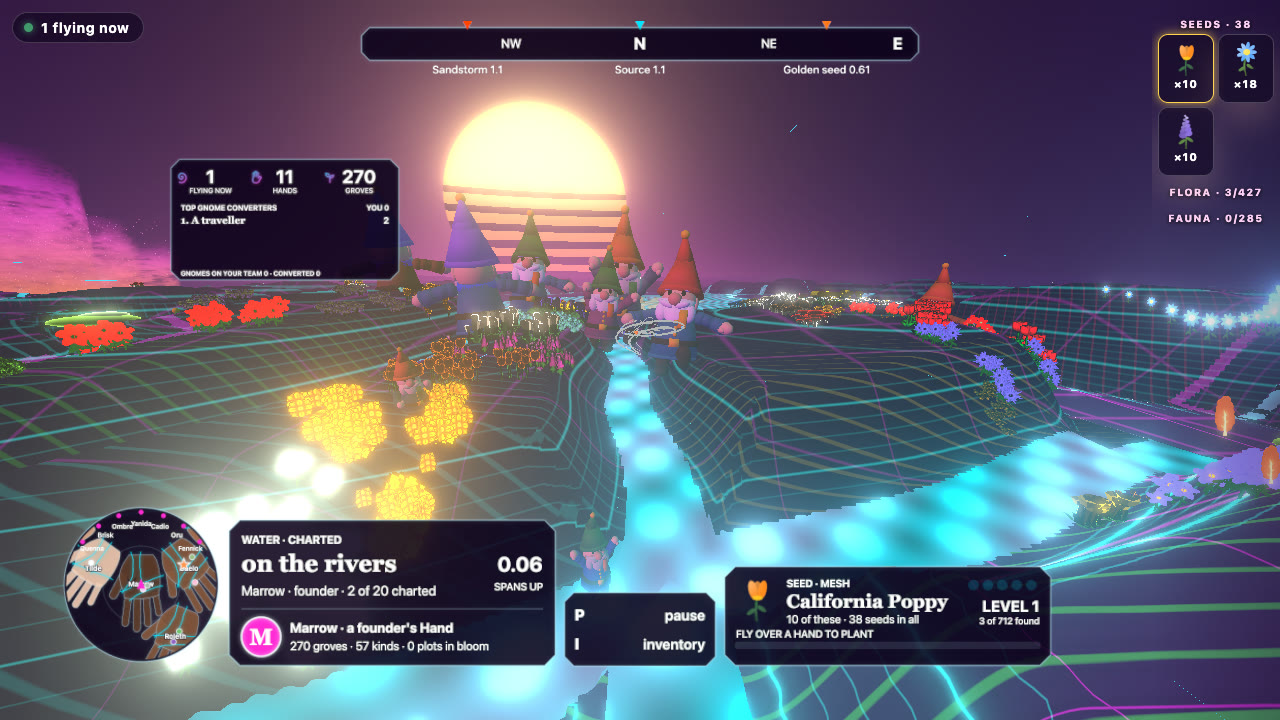
Then you fly. You are a whorl, a swirling creature of ink strands shaped by your own five fingerprints, so no two players look the same. Point where you want to go. Dive for speed.
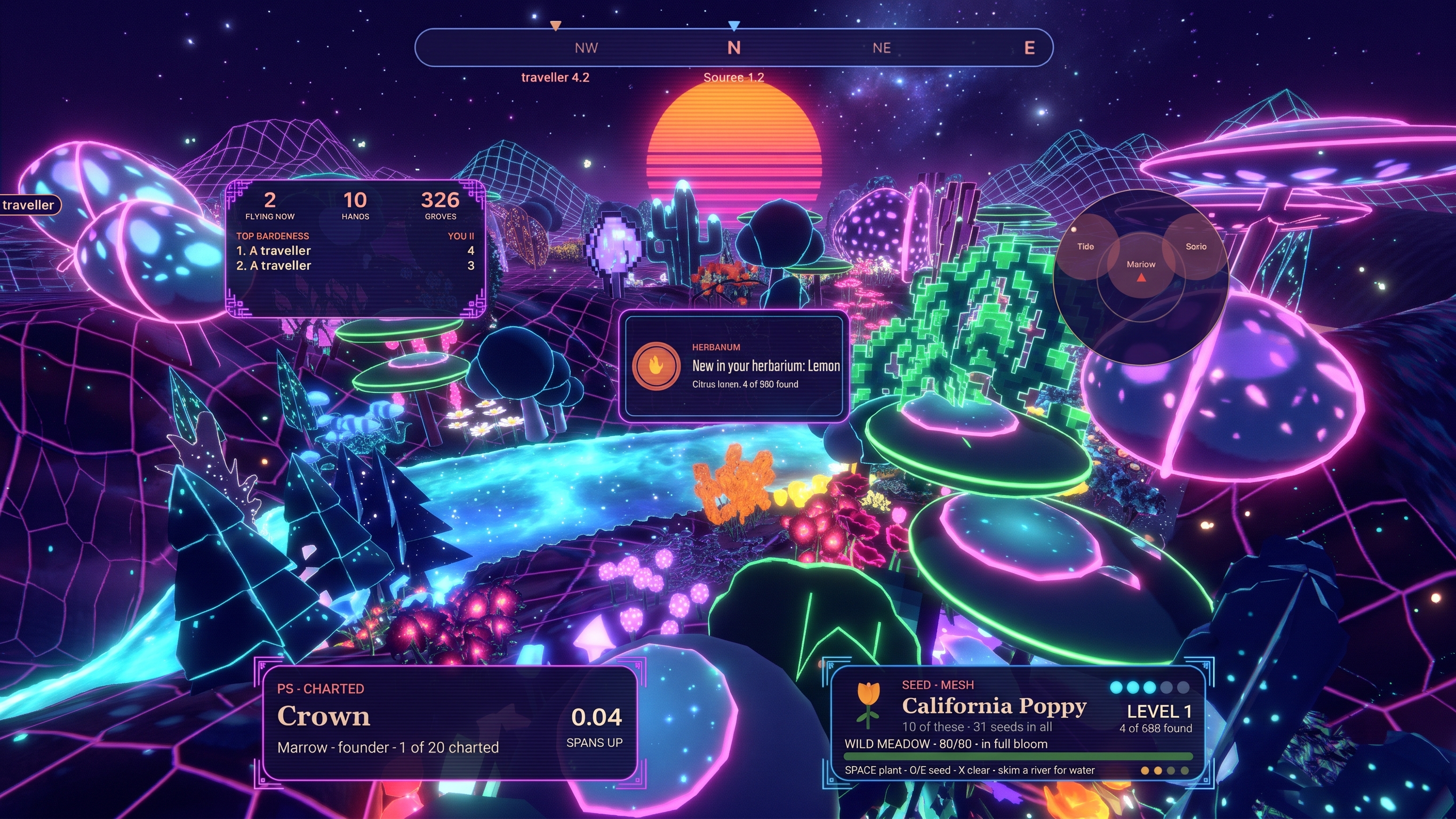
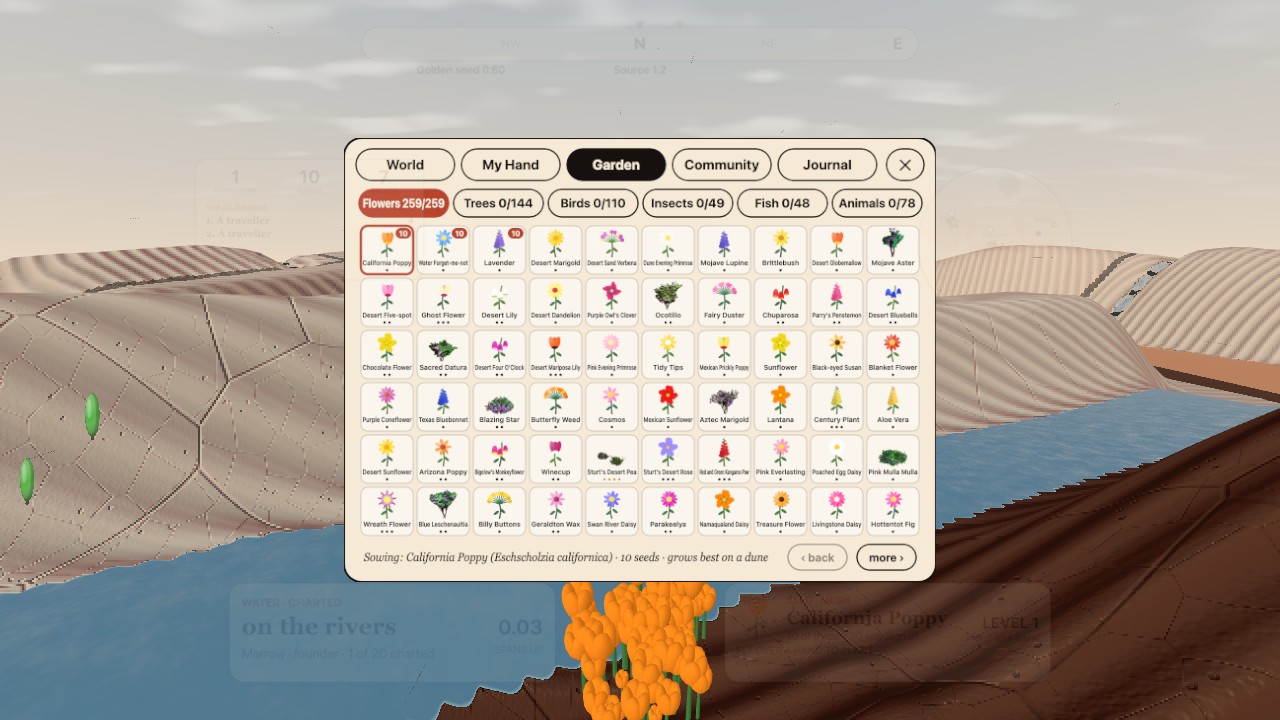
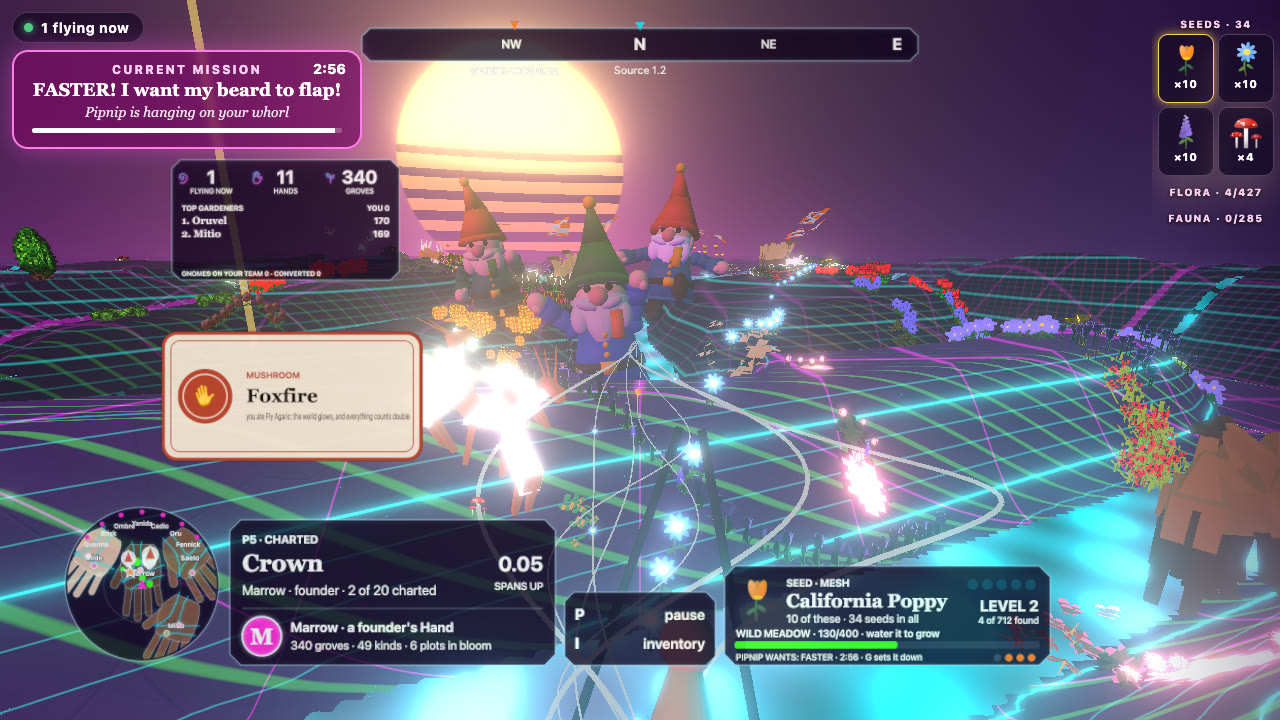
And you garden. Hold a pinch and seed shoots out ahead of you. Sweep an open hand to scatter. Skim a river to pick up water, then press a flat palm down to pour it. There are 712 real species, 403 of them sowable flowers and trees, and where plots bloom, insects, birds, fish and animals move in. Sandstorms dry out whatever they cross. A golden seed sets off a race every few minutes. A hyper sow lets you draw on the desert with flowers. And your whorl wears everything you've ever sown as a trailing bouquet.
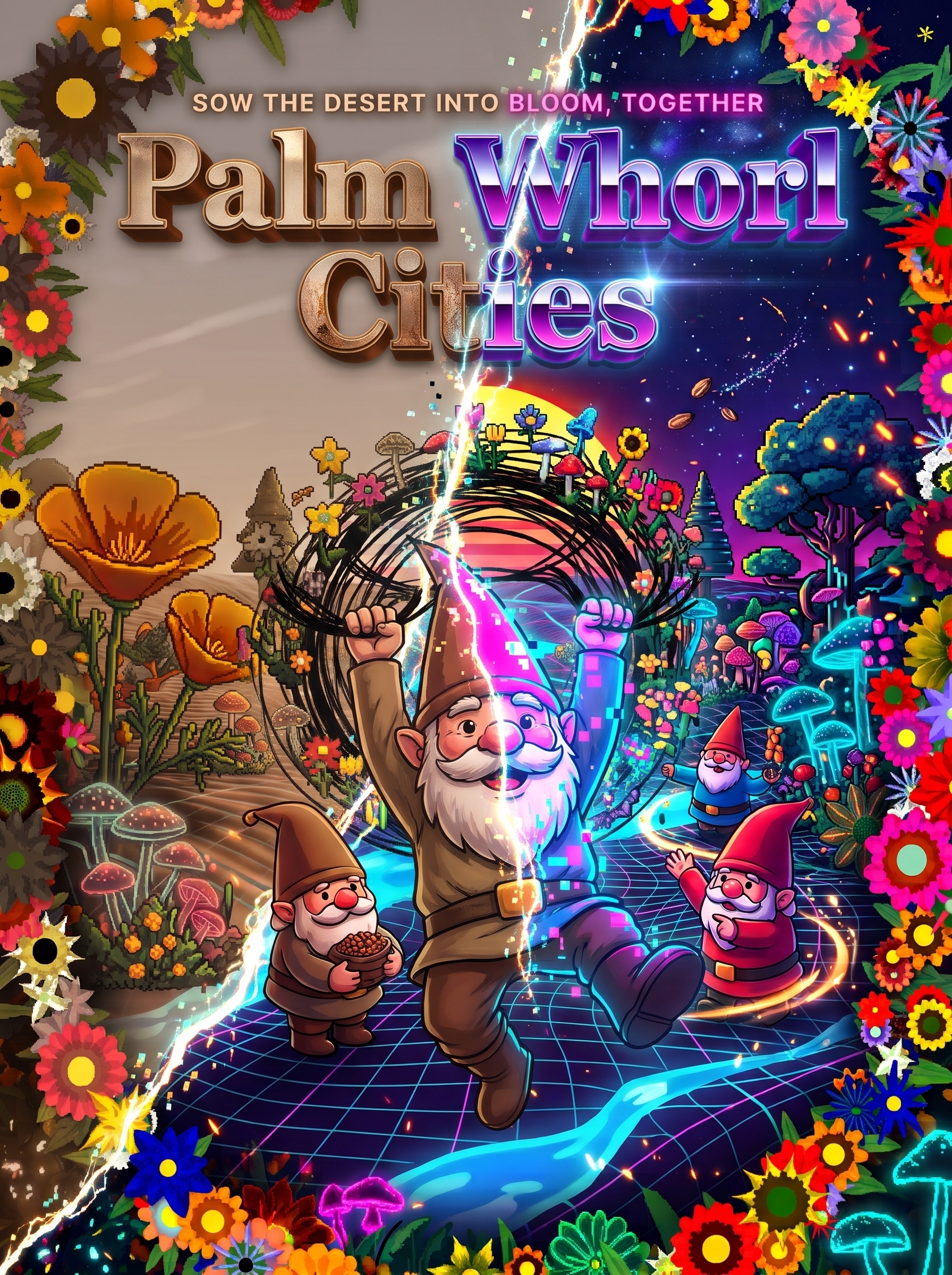
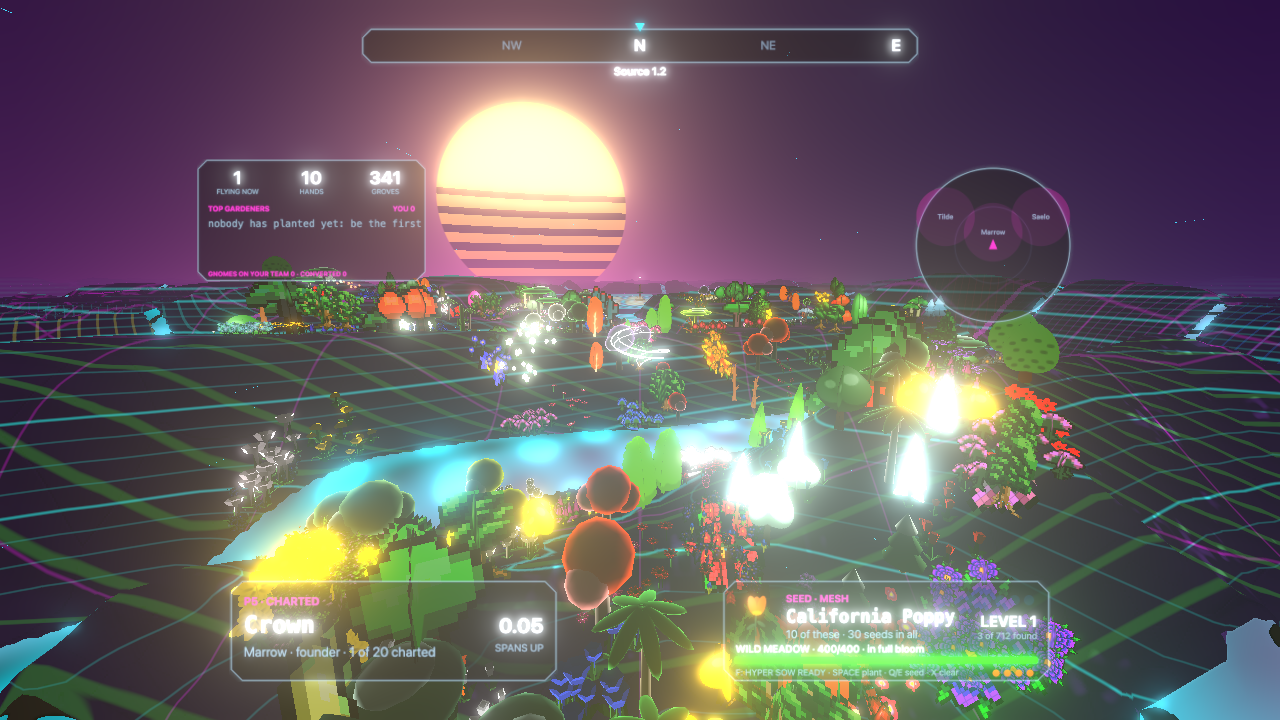
Things get weird. What dies feeds mushrooms. Fly through one and the world flips to foxfire: a neon night under a striped sun, double rewards, rows of seeds that ring up a musical scale as you thread them, every animal five times taller, and visions of giant gnome folk dancing on the dunes.
Then there are the gnomes. They live in the mushrooms, and they want things. One grabs your whorl and dangles underneath like a parachutist, yelling its wish: "FASTER! I want my beard to flap!" Grant it and the gnome joins your team, or defects from a rival's. Drop it and it plummets, screaming. (Each gnome screams differently. We checked.)
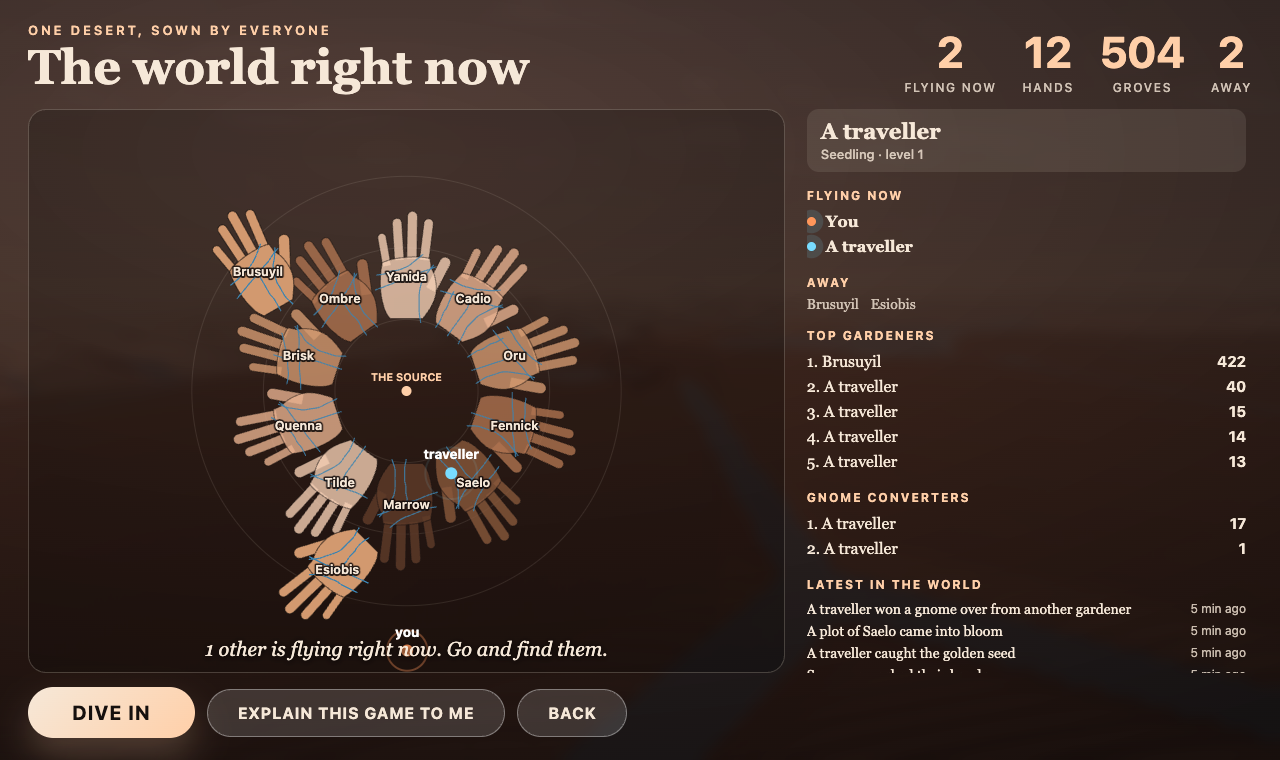
You're never alone, and never lost. Grandfather Tuft, a grumpy old gnome with a face and a voice, calls in to coach you through the first minutes ("You fly like a falling wardrobe") and then mostly leaves you in peace. A lobby shows the live world before you dive in: who's flying, the top gardeners, the latest news. Bump into another player and your whorls braid together for two seconds and swap seeds. At the Source lies the Community Hand, a portrait of every grove sown anywhere in the world, one pixel each.
It plays in the Quest browser with hands only: no controllers, no install. The same world is open on a laptop (your webcam becomes your hands) and on a phone (tilt to steer).
How we built it
It's a single web page: three.js and WebXR hand input, no build step, nothing to install. The world is generated from the Hands themselves. Every Hand's height field, rivers and fingerprint hills come from its DNA, and custom GLSL shaders paint the sand, the water, the foxfire and all 712 species, from pixel art to painted sprites to 3D meshes.
The shared world runs on Cloudflare. A Worker sits in front. One Durable Object is the single writer for every Hand and garden in the world. Room objects of up to 200 players relay positions over WebSockets. D1 stores everything. Google sign-in keeps your garden across devices, and we store only a hash of the account id.
The gnome and Grandfather Tuft were modelled and animated in Blender (Tuft is a rendered bust with sixteen talking frames). Tuft's 235 lines and the gnomes' squeals and screams are voiced by Kokoro, a neural voice model running locally, then aged and pitched with ffmpeg. The 15 synthwave tracks and the art packs are CC0 and CC-BY, credited in the repo.
We built and tested without a headset on hand, using Meta's Quest emulator (IWER) to drive virtual hands through every gesture, and filmed the demo the same way. 341 unit tests plus two-player browser checks cover the rules, the server and the network protocol.
Challenges we ran into
Steering drifted. Tilting a palm to steer felt magical for ten seconds and then sent you into a dune. So your fingers became the arrow instead, read from the wrist to the middle knuckle, where Quest hand tracking is steadiest, with a dead zone and a short hold so a resting hand never steers.
Hundreds of gardeners, one truth. When many players plant at once, someone has to decide what's real. A single Durable Object writes every grove, rooms only relay, and a crowd simulator showed us where it strained.
A world that grows forever can't break its past. Species are append-only with frozen ids, ids travel in 16 bits, and the sprite atlas grows with the list, so a garden planted today still loads when there are ten thousand species.
One innocent line ate our database. The night before submitting, the live map went dark. A single count(*) of all plants, asked for by every player every few seconds, had read 5.3 million rows in a day and burned through the free tier. Now the counts are cached and the news feed lives in memory.
Layers drown newcomers. A game with seeds, water, storms, mushrooms, gnomes, teams and a neon dimension can bury a first-time player. The tutorial, Tuft's call-ins, first-minute notes and an always-visible mission bar took many rounds of cutting back before they helped without nagging.
Accomplishments that we're proud of
The world is made of its players. No level designer, only hands. Every new player makes it bigger.
It's alive with one player and better with many. Bouquets trailing behind whorls, gnomes riding animals, petals drifting past when someone sows on the other side of the world, and a Community Hand that shows everything at a glance.
It's private by design. No camera image is ever kept, and the Hand you lay is a coarse map, not a biometric.
What we learned
Hands-only is a gift, not a limit. If a move can't be done with an open hand, a pinch or a point, it doesn't belong in the game. That rule made every interaction clearer.
Characters carry a game. Players forgive a lot when a rude old gnome is heckling them.
Count carefully. Especially rows.
What's next for Palm Whorl Cities
Seasons and weather that change the world for everyone at once. Gnome villages growing on Hands with big teams. More of everything: the species list is built to keep growing. And many more real Quests, in many more real rooms.
Built With
- blender
- claude
- cloudflare-d1
- cloudflare-workers
- css
- durable-objects
- ffmpeg
- github
- glsl
- gltf
- google-identity
- html
- iwer
- javascript
- kokoro-tts
- mediapipe
- meta-quest
- meta-quest-browser
- node.js
- puppeteer
- three.js
- websockets
- webxr
- webxr-hand-input
- webxr-passthrough
