-
-
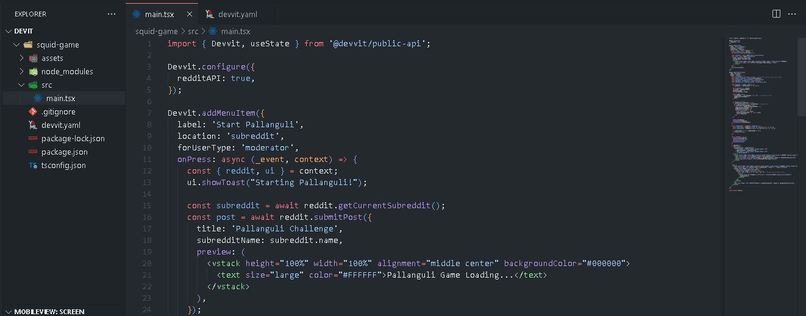
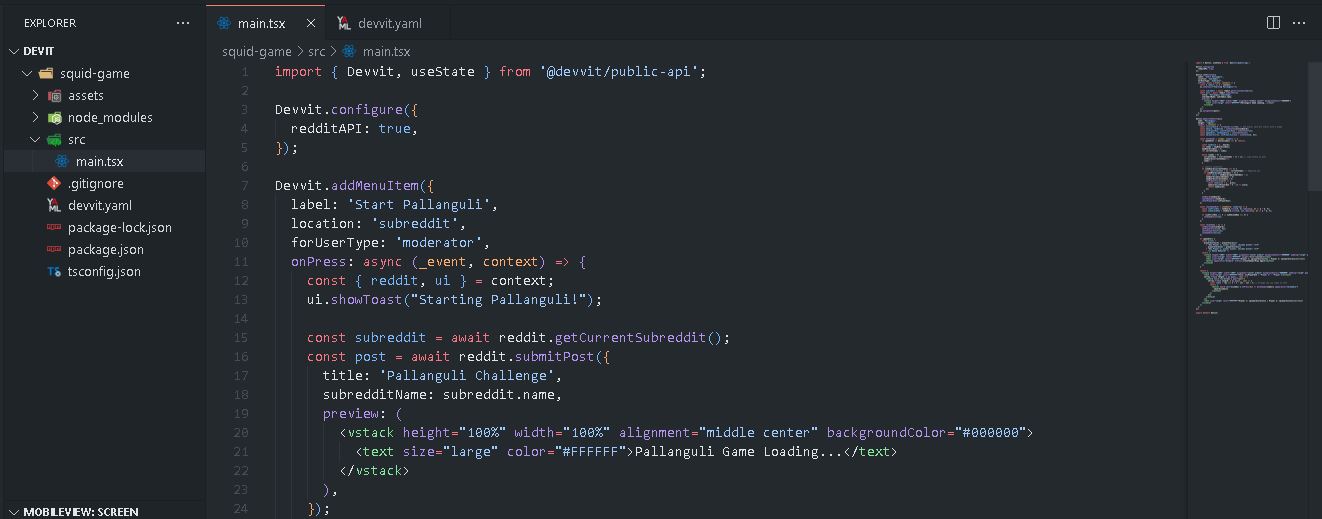
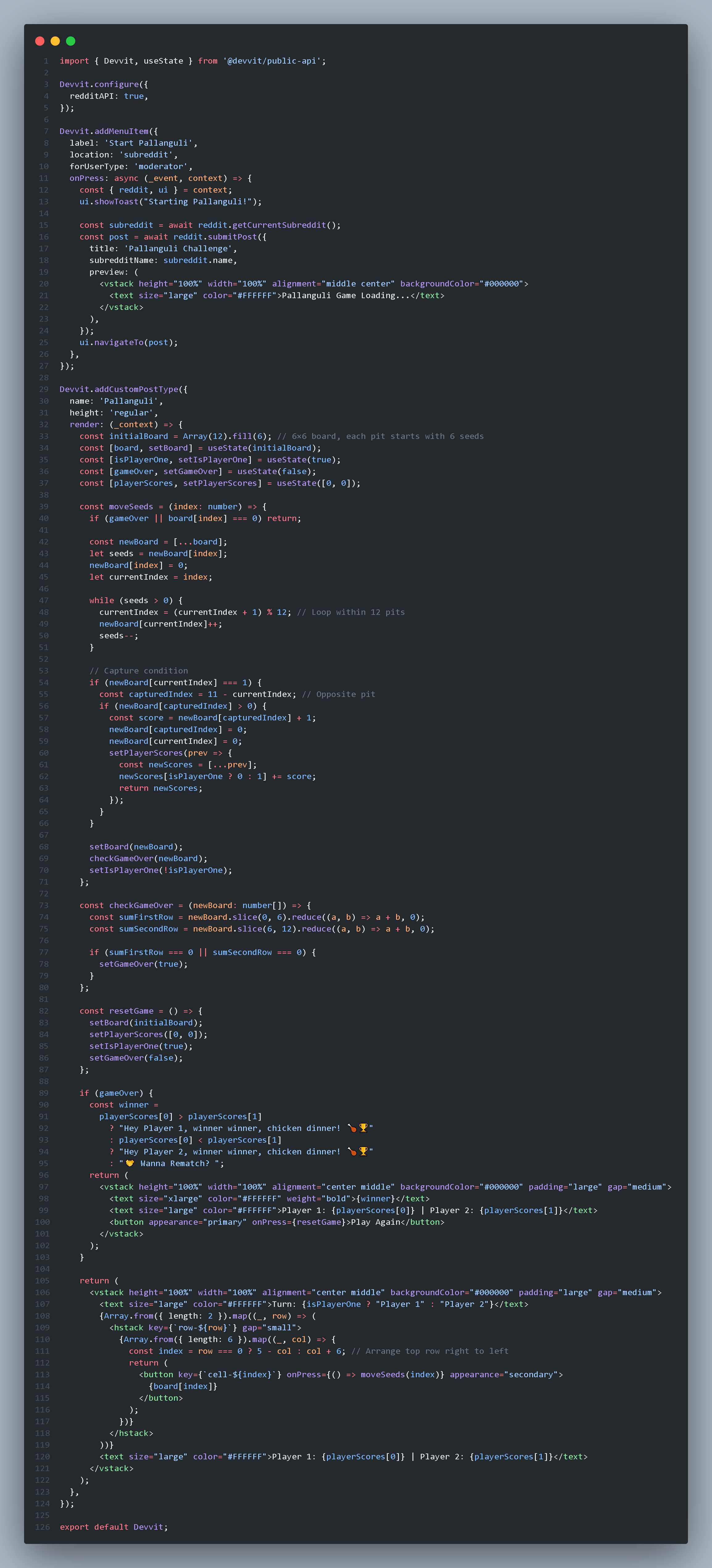
Code of Pallanguli
-
full coding solution
Inspiration
In today's generation, many cultural gems like Pallanguli are fading into obscurity. By digitizing this game, I aim to revive its significance, making it accessible to modern players and ensuring that this strategic and thoughtful game continues to thrive.
How to Play Pallanguli (Mancala)
Setup:
The board consists of two rows of six pits (total 12 pits). Each pit starts with six seeds (total 72 seeds).
Gameplay:
Players take turns picking seeds from one of their pits (Player 1 uses the bottom row, Player 2 uses the top row). The player distributes the seeds one by one in a counterclockwise direction into the next pits. If the last seed lands in a pit containing seeds, the player continues picking up all the seeds in that pit and redistributes them. If the last seed lands in an empty pit on their side, they capture the seeds from the opposite pit. The turn ends when the last seed lands in an empty pit on the opponent’s side.
Winning:
The game ends when one side runs out of seeds. The player with the most captured seeds wins.
Pallanguli Rules
Each player has 6 pits, each starting with 6 seeds. Turn-based play: Players pick seeds from one pit and drop them one by one into consecutive pits. If the last seed lands in an empty pit on the player's side, they capture seeds from the opposite pit. Skipping opponent’s store: Players do not drop seeds into the opponent's store. The game ends when one side is empty. The player with the most captured seeds wins.
How we built it
- Tech Stack: Devvit API, TypeScript, and React-like UI components.
- Game Mechanics: Implemented a 6×6 board with turn-based seed movement.
- Design: Used a sleek black-and-white theme for a clean and elegant look.
- Features: Dynamic score updates, player turn indicators, and a rematch option.
Challenges we ran into
- Designing a logical and fair turn-based system.
- Ensuring smooth state management for real-time interactions.
- Handling edge cases for game-ending conditions and capturing mechanics.
Accomplishments that we're proud of
- Successfully recreating an ancient game in a modern digital format.
- Achieving an intuitive and visually appealing design.
- Implementing a robust and engaging game logic.
What we learned
- Improved our understanding of turn-based game logic.
- Gained experience in state management and UI responsiveness.
- Learned how to integrate traditional concepts into modern digital applications.
What's next for Pallanguli or Mancala
- Adding AI-powered single-player mode.
- Implementing online multiplayer functionality.
- Introducing customization options for themes and board designs.
- Expanding to mobile platforms for a broader reach.


Log in or sign up for Devpost to join the conversation.