Inspiration
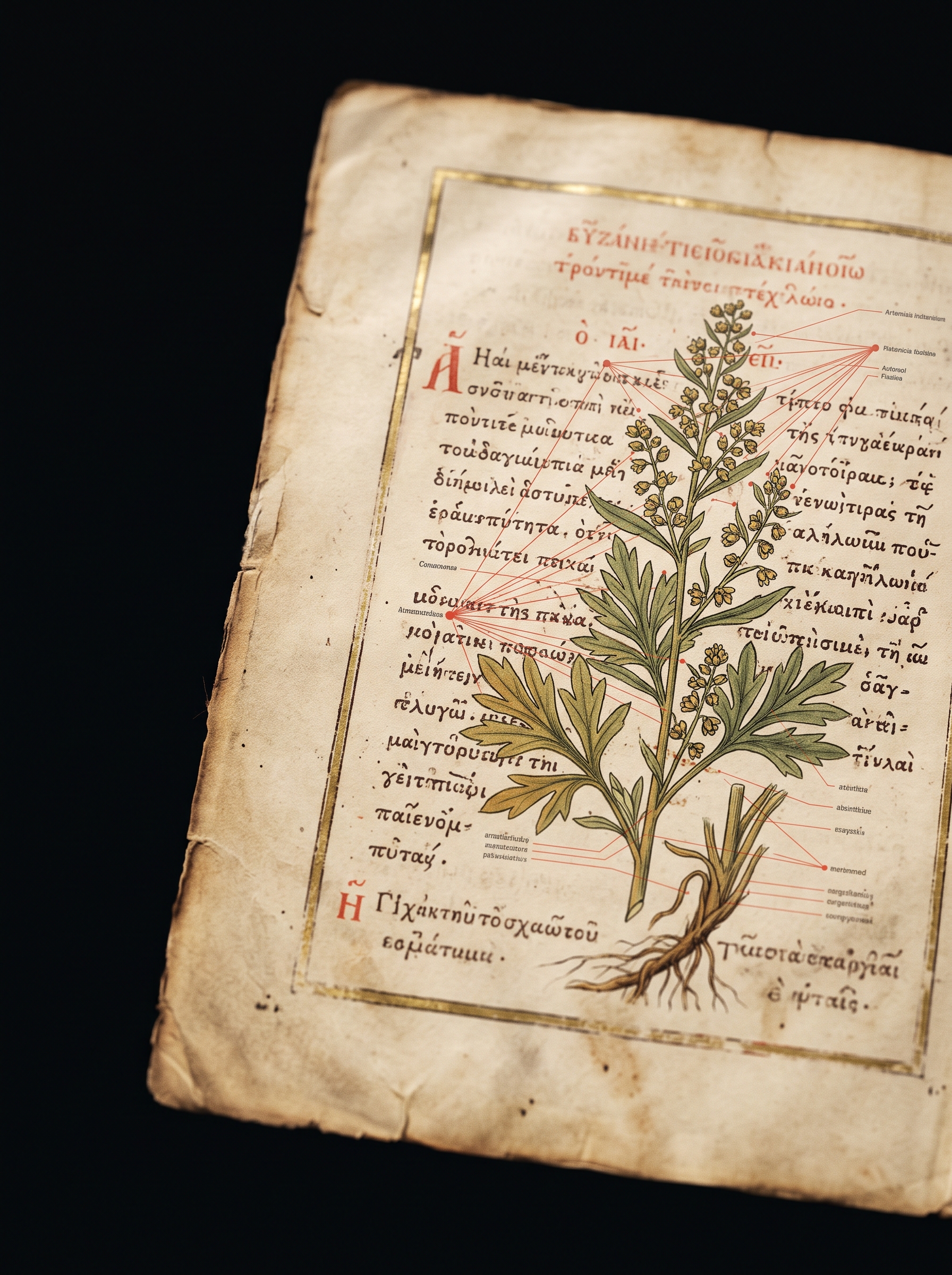
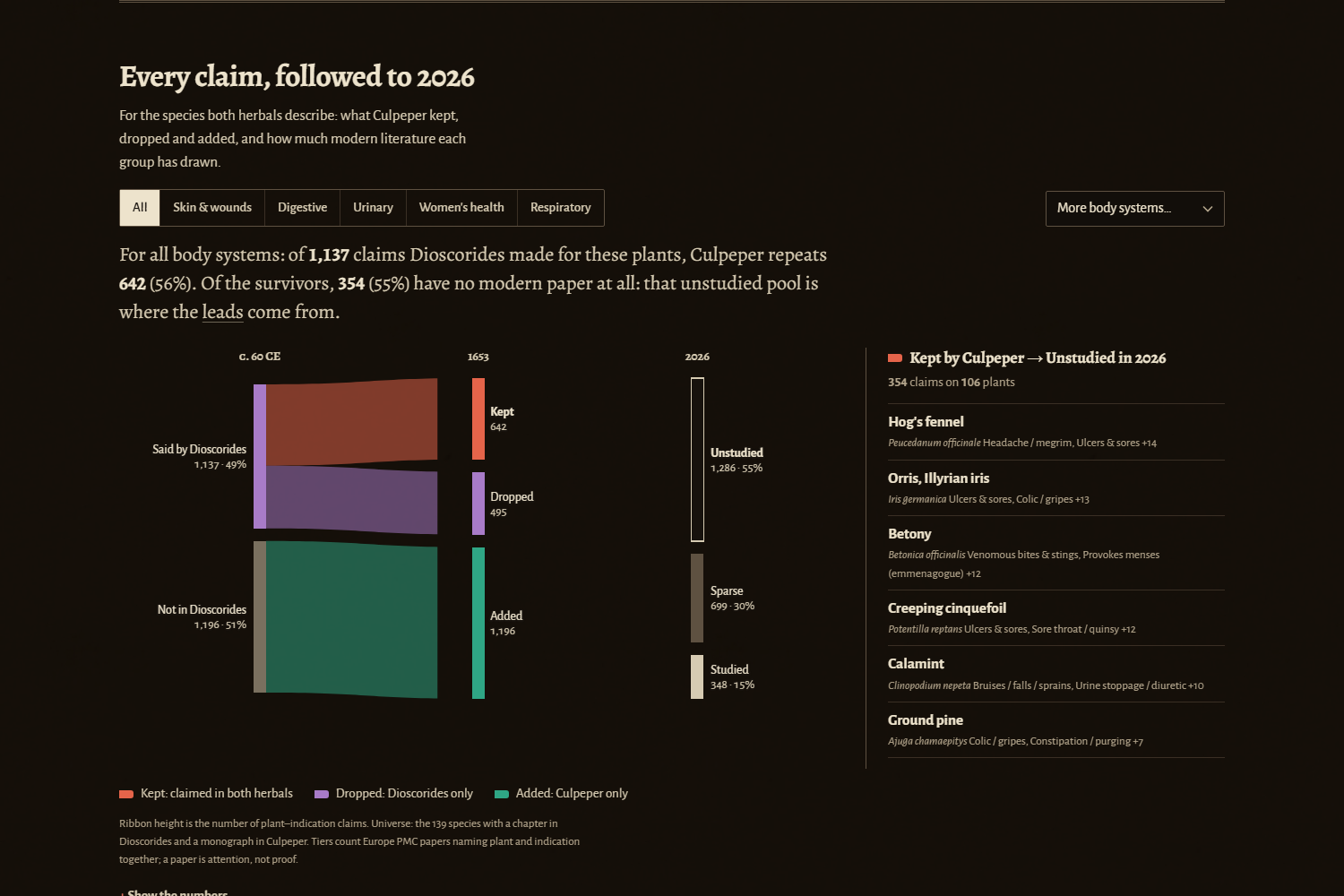
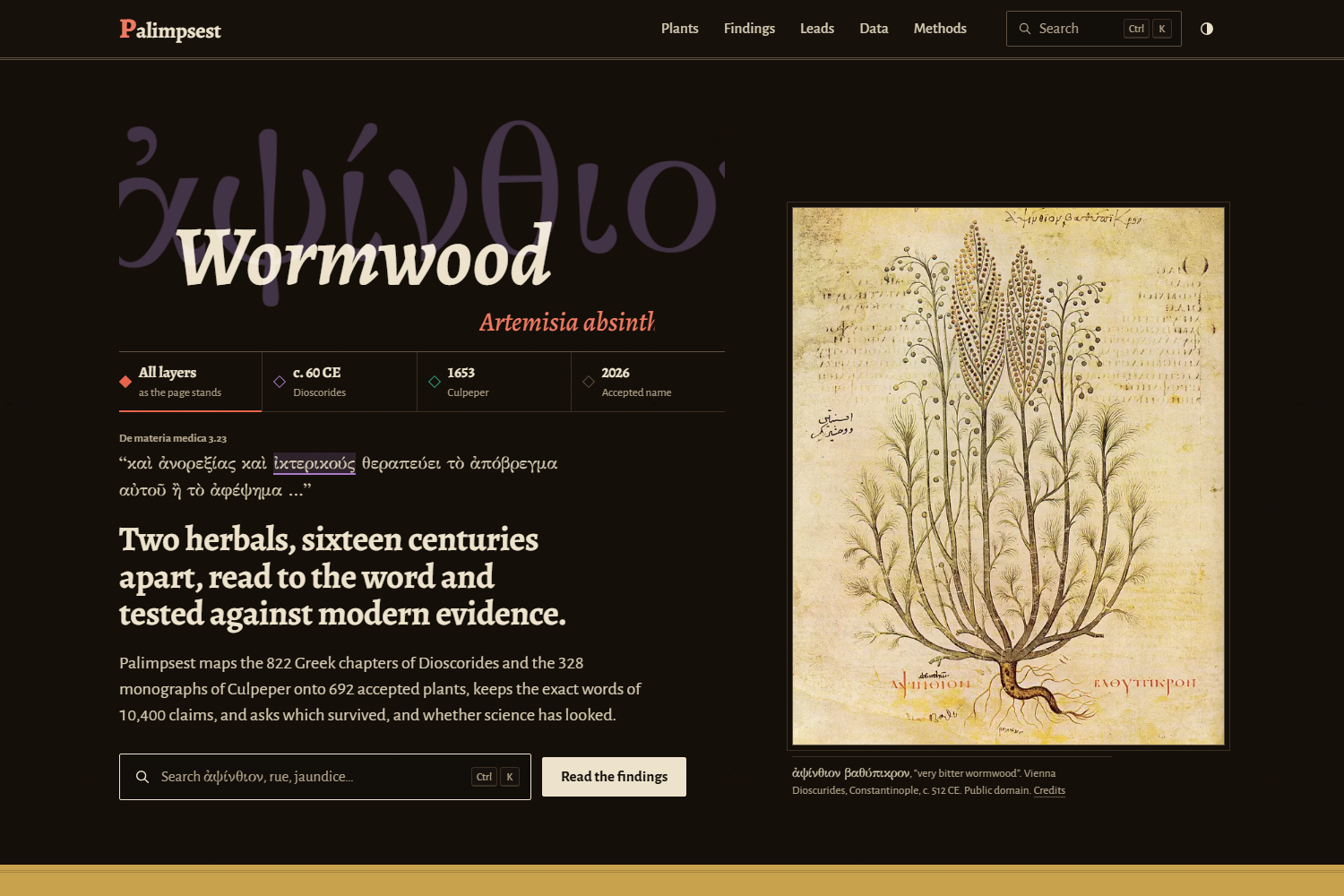
A palimpsest is a manuscript that was scraped and written over, yet the old text still shows through. Herbal medicine is the same: Culpeper (1653) wrote over Dioscorides (c. 60 CE). Old herbals are often mined for drug ideas, but usually by hand, in translation, and without checks. We wanted to read the oldest layer in its original Greek and answer two simple questions: what survived 1,600 years of copying, and has modern science actually looked at it?
What it does
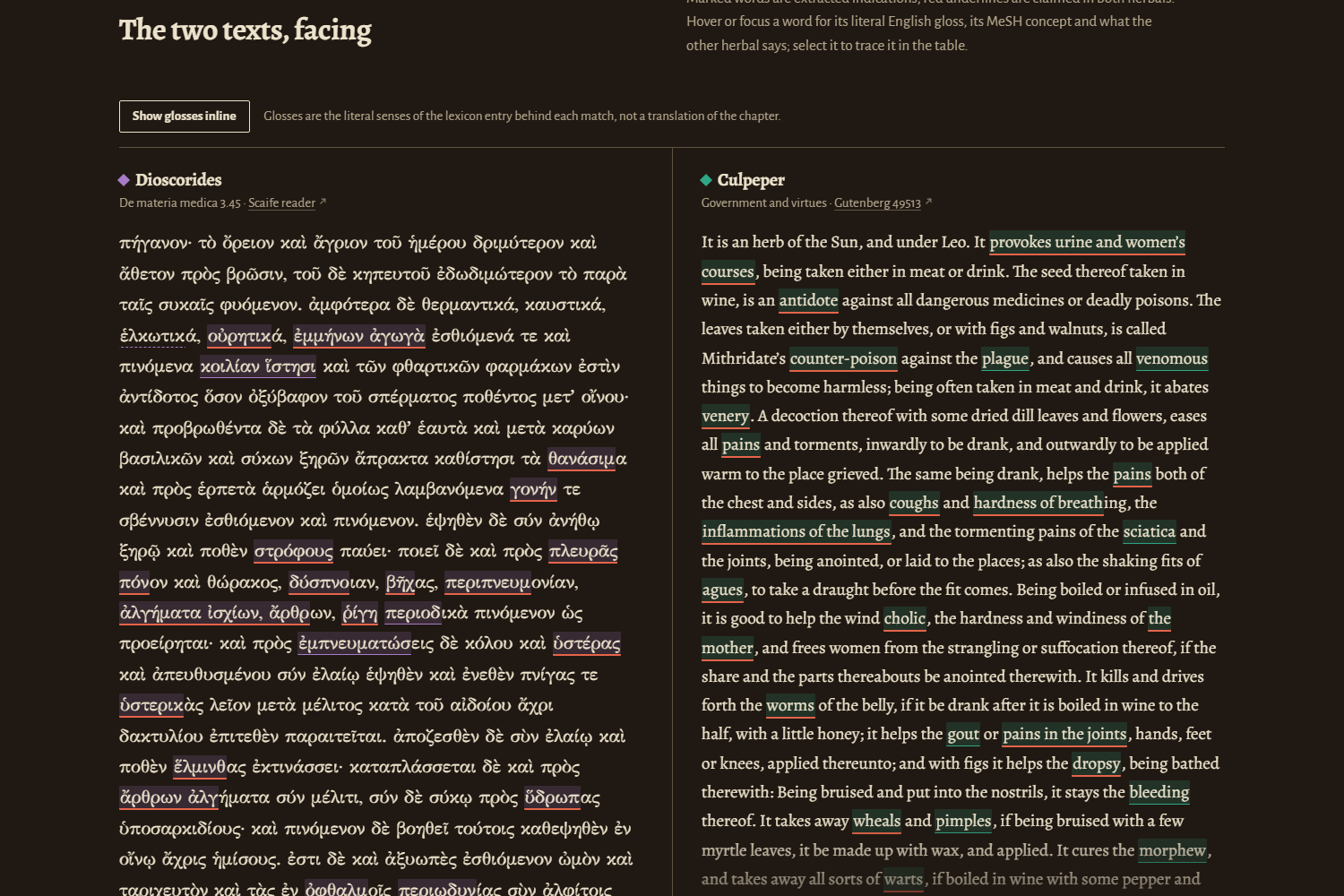
- Reads both books, word by word. All 822 Greek chapters of Dioscorides and 328 entries of Culpeper become 10,400 medical claims, each kept with its exact words.
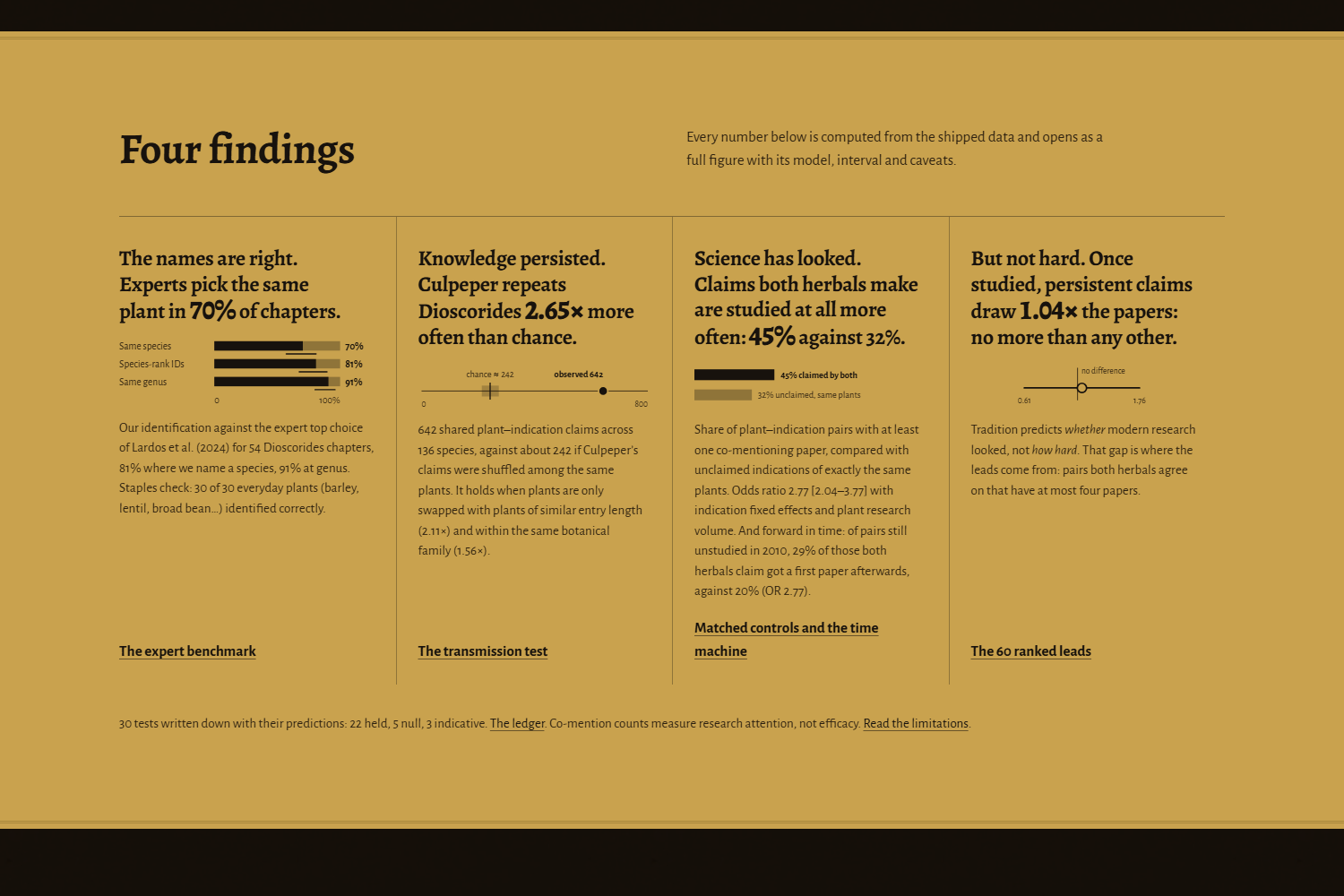
- Gets the plants right. Ancient names are matched to modern species. Our identifications agree with expert botanists 70% of the time for the species and 91% for the genus.
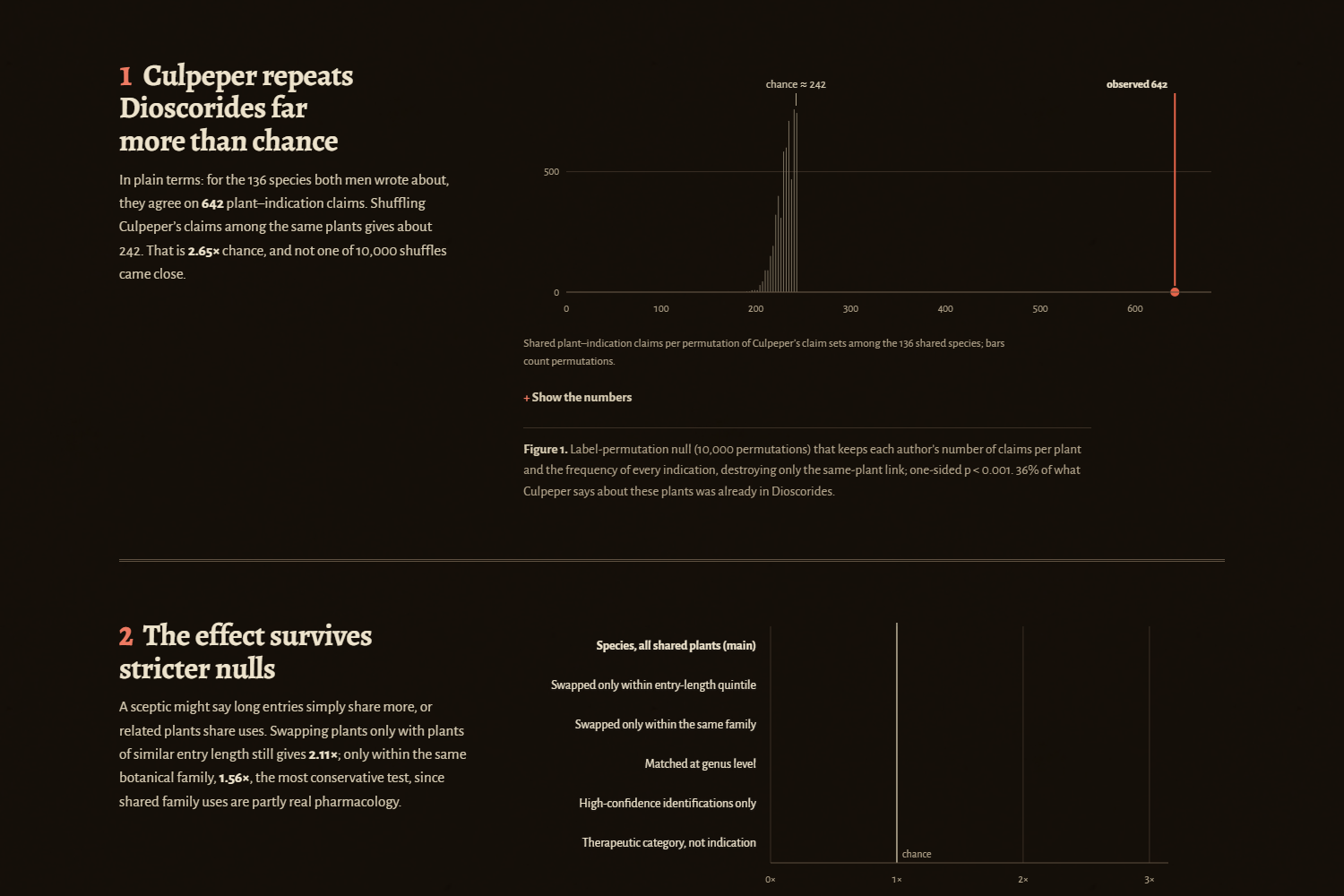
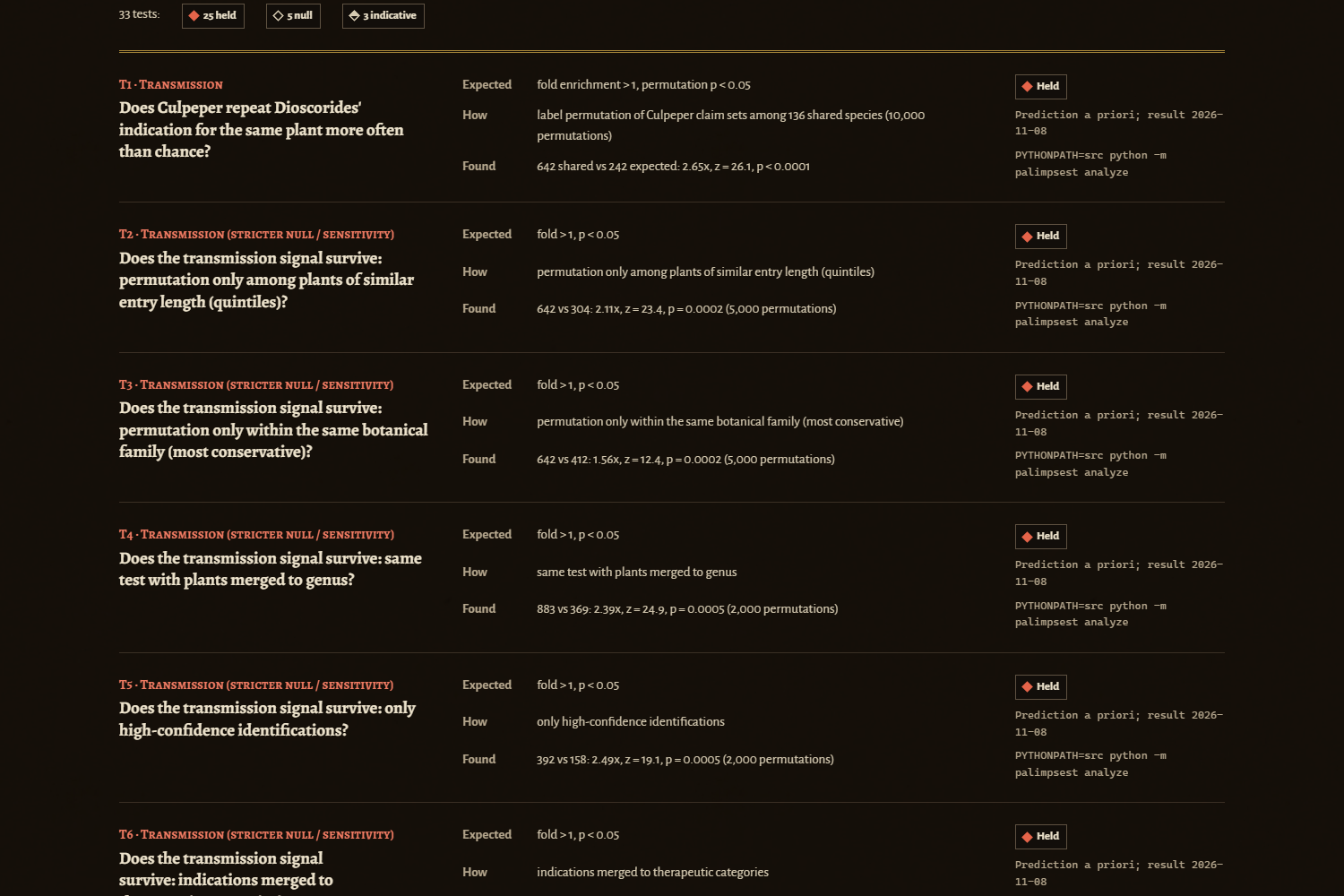
- Finds what survived. Culpeper repeats Dioscorides 2.65× more often than chance would predict, and the result holds under stricter tests.
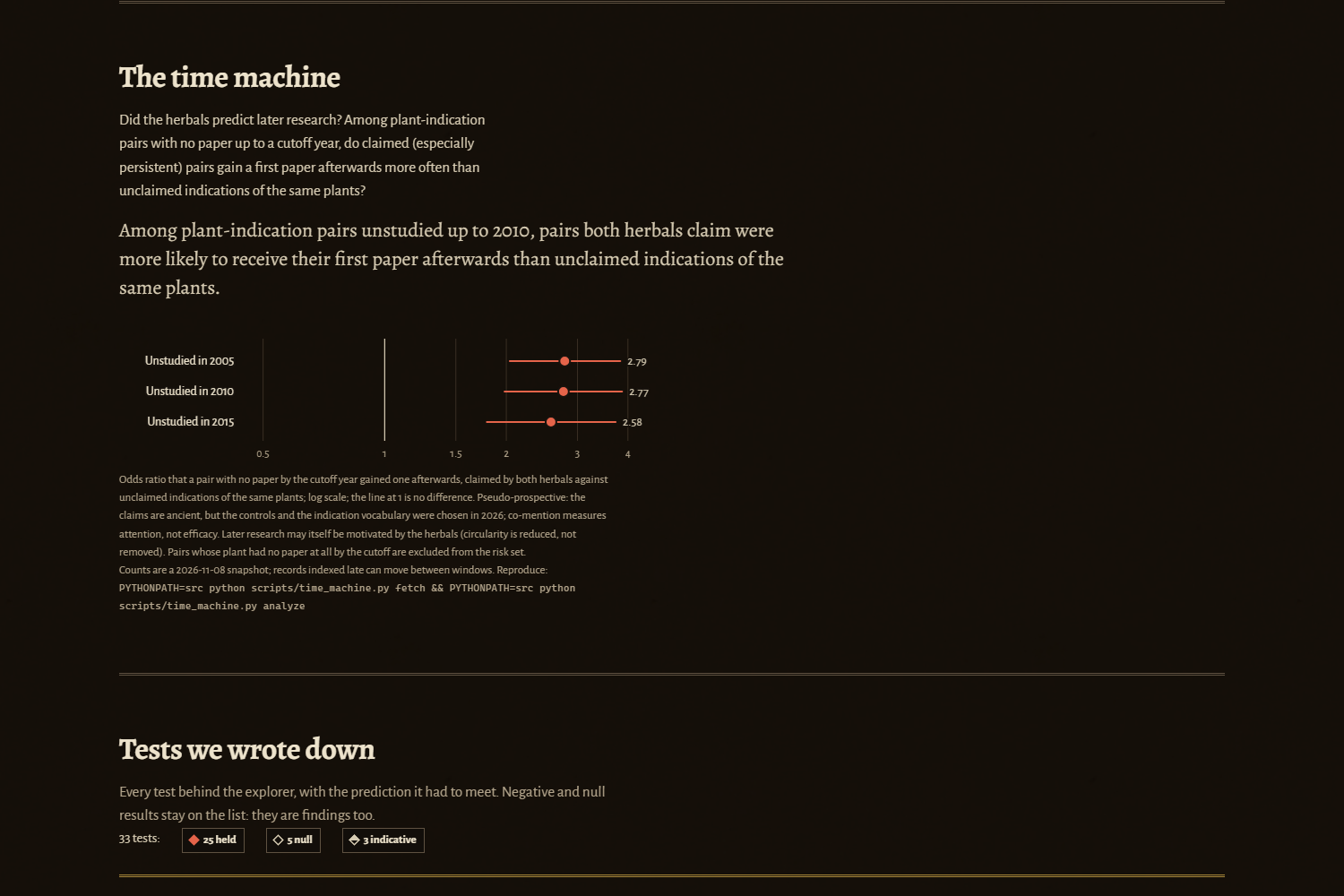
- Checks modern science. Remedies both books agree on are more often studied (45% vs 32%), but not studied in depth. Looking back from 2010, the herbals even predicted where research would go next.
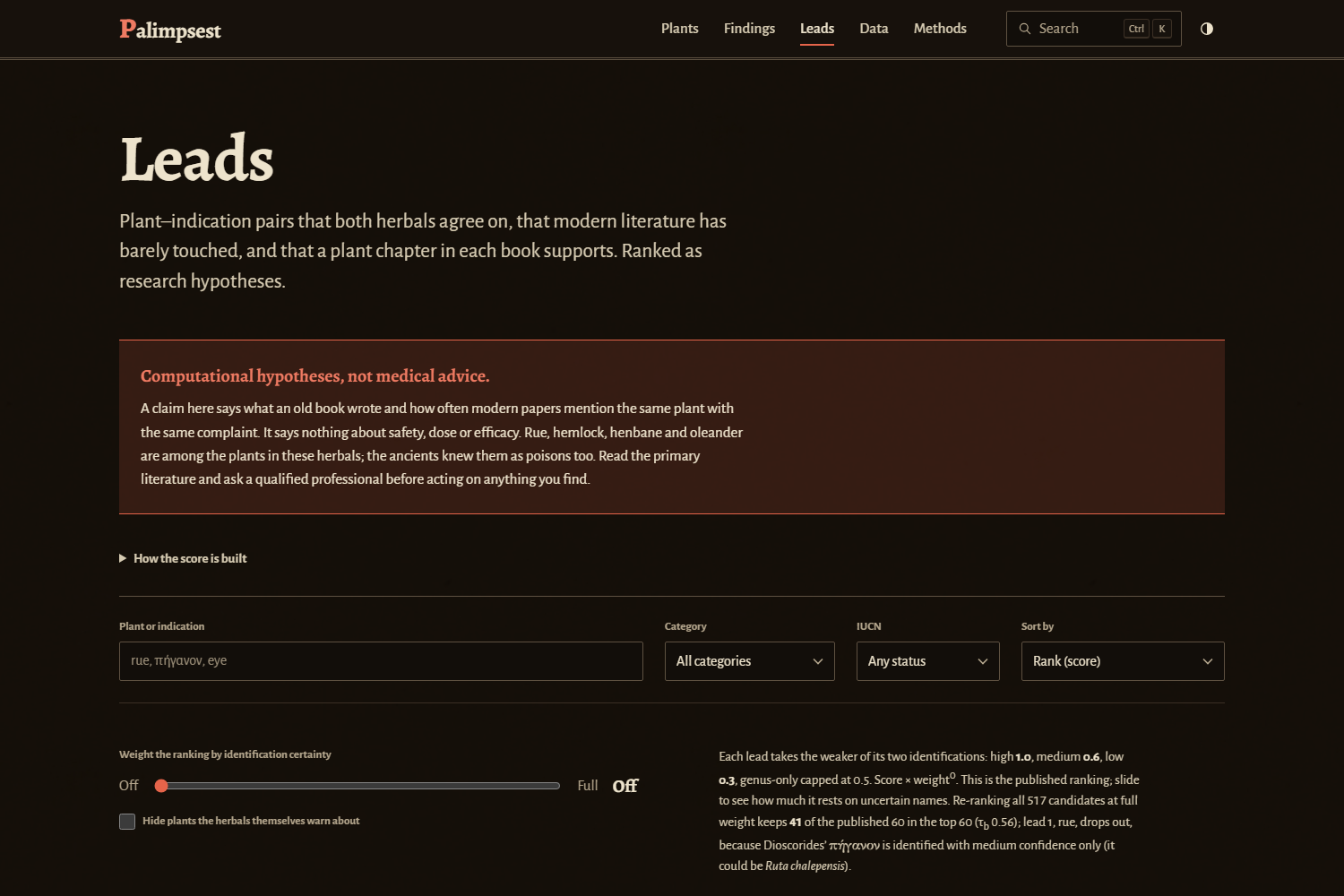
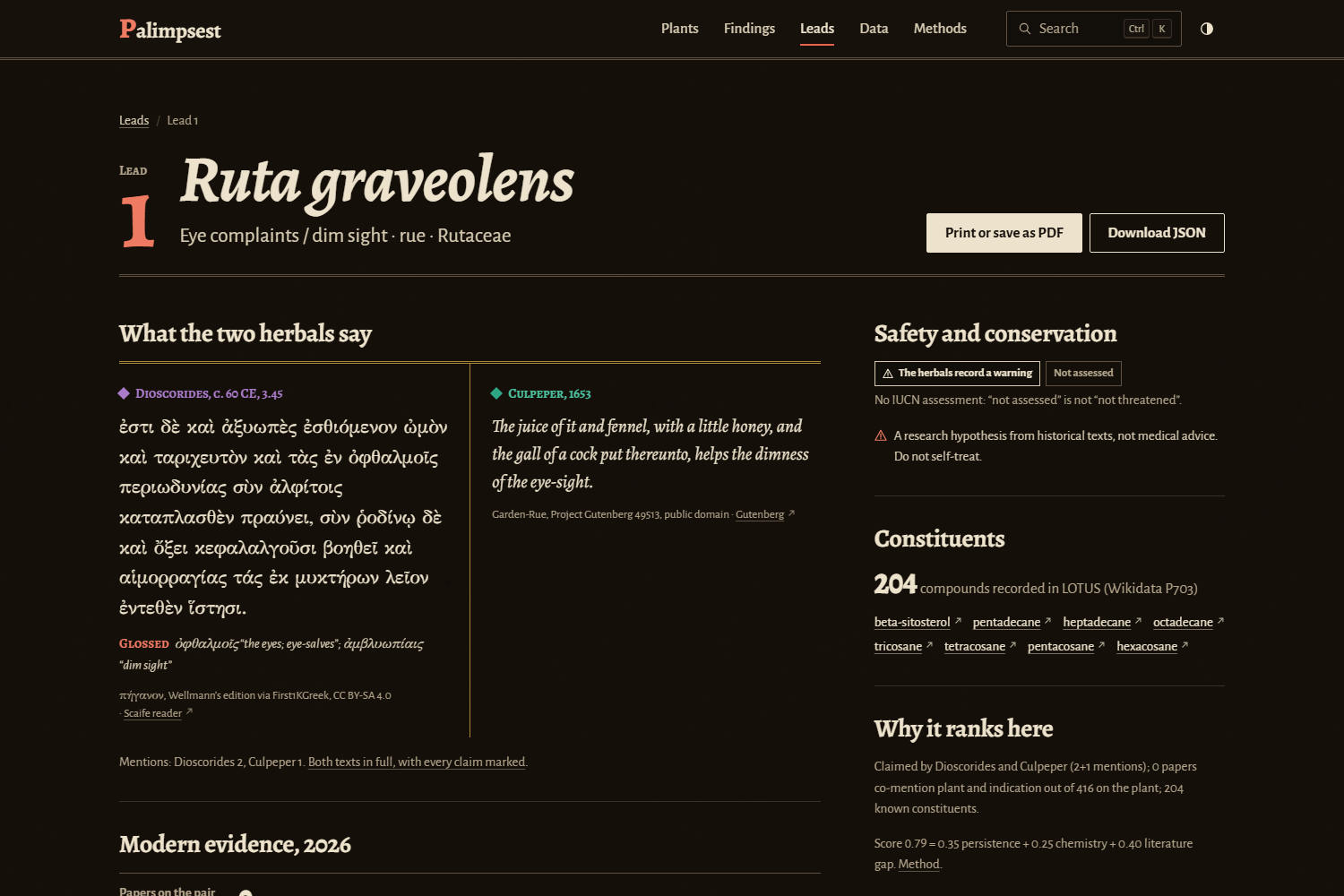
- Suggests what to test. 60 research leads, persistent and barely studied, each with its sources, chemistry and safety warnings. Rue for the eyes ranks first. These are hypotheses, not medical advice.
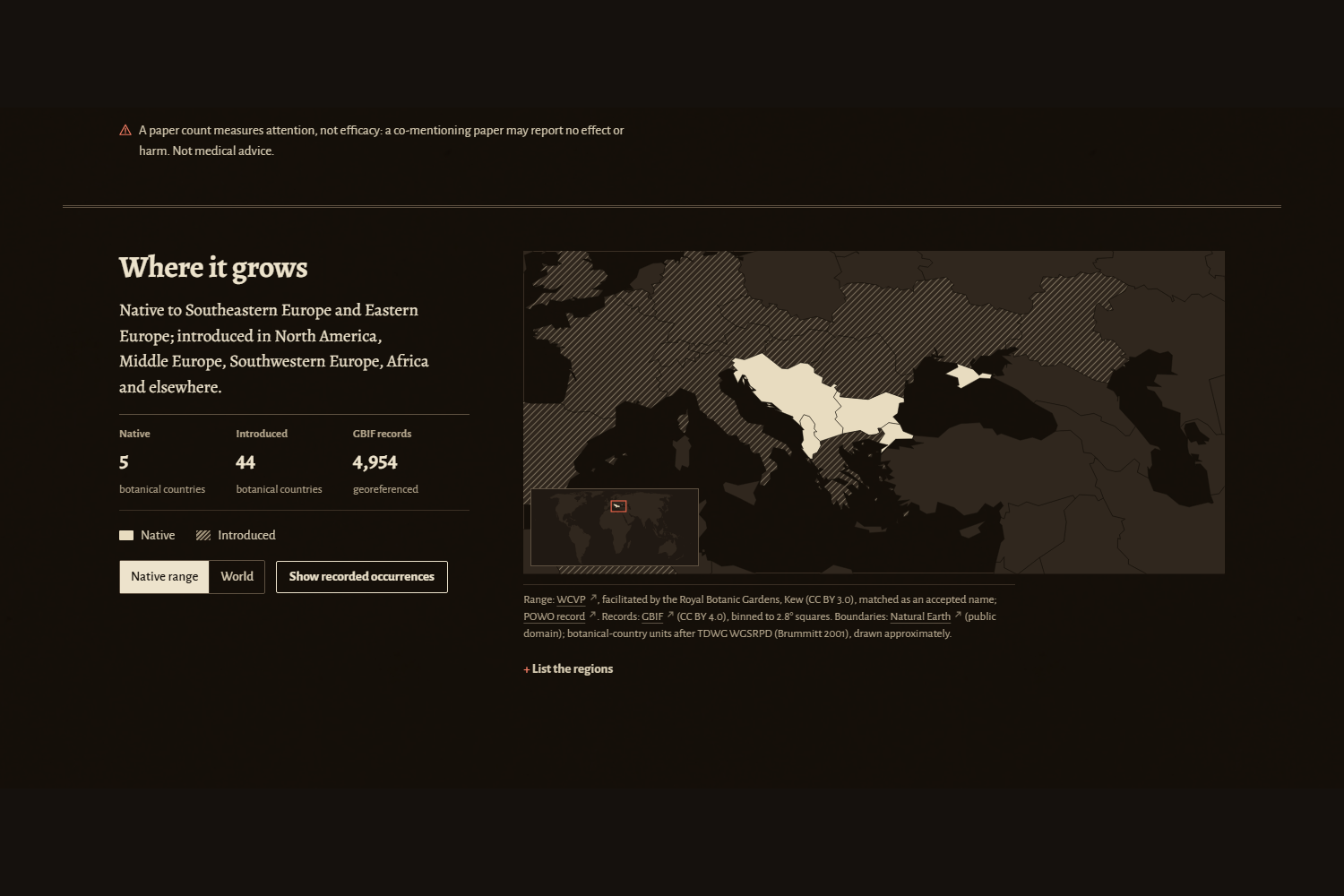
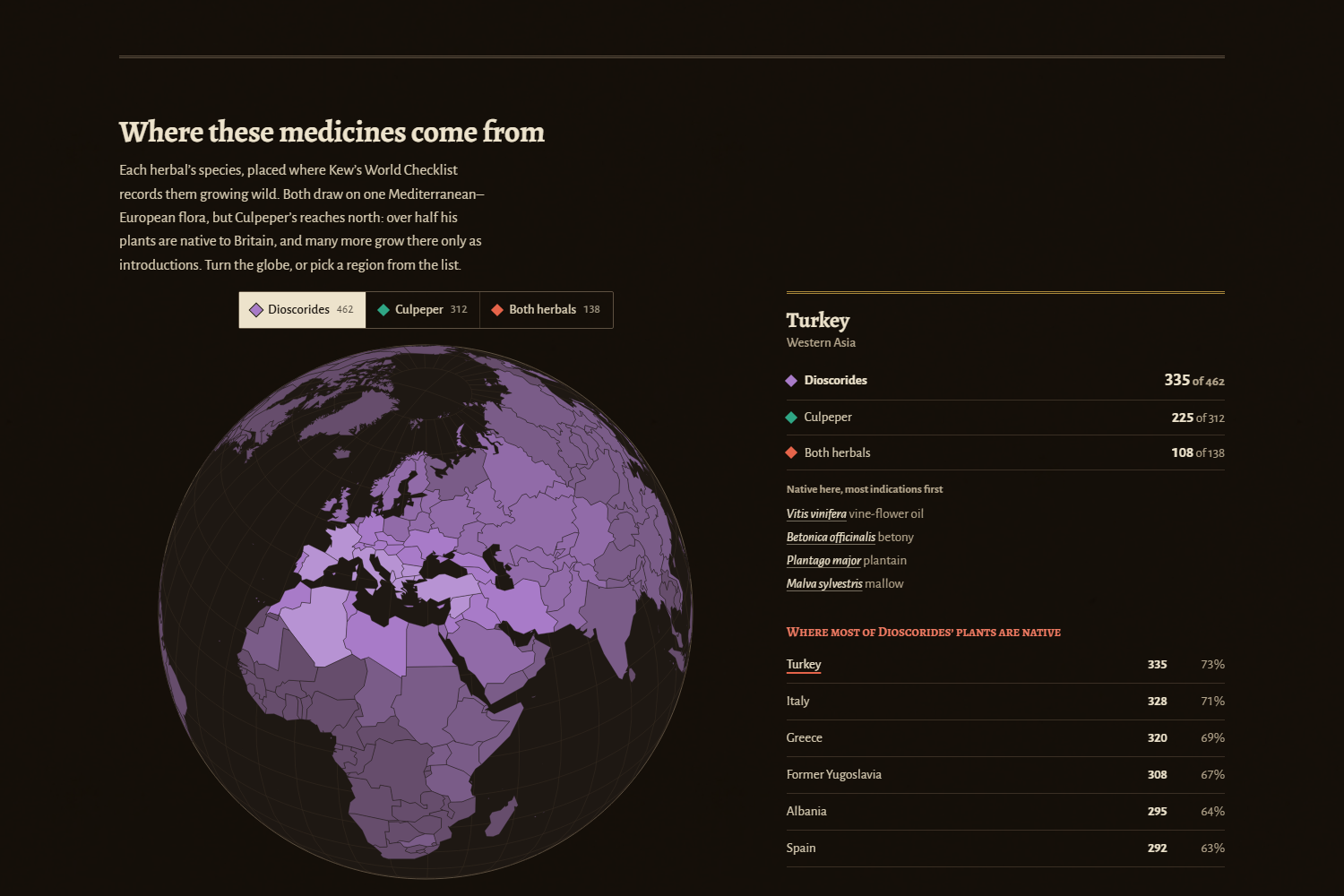
- Shows where each plant grows, with world maps and a globe.
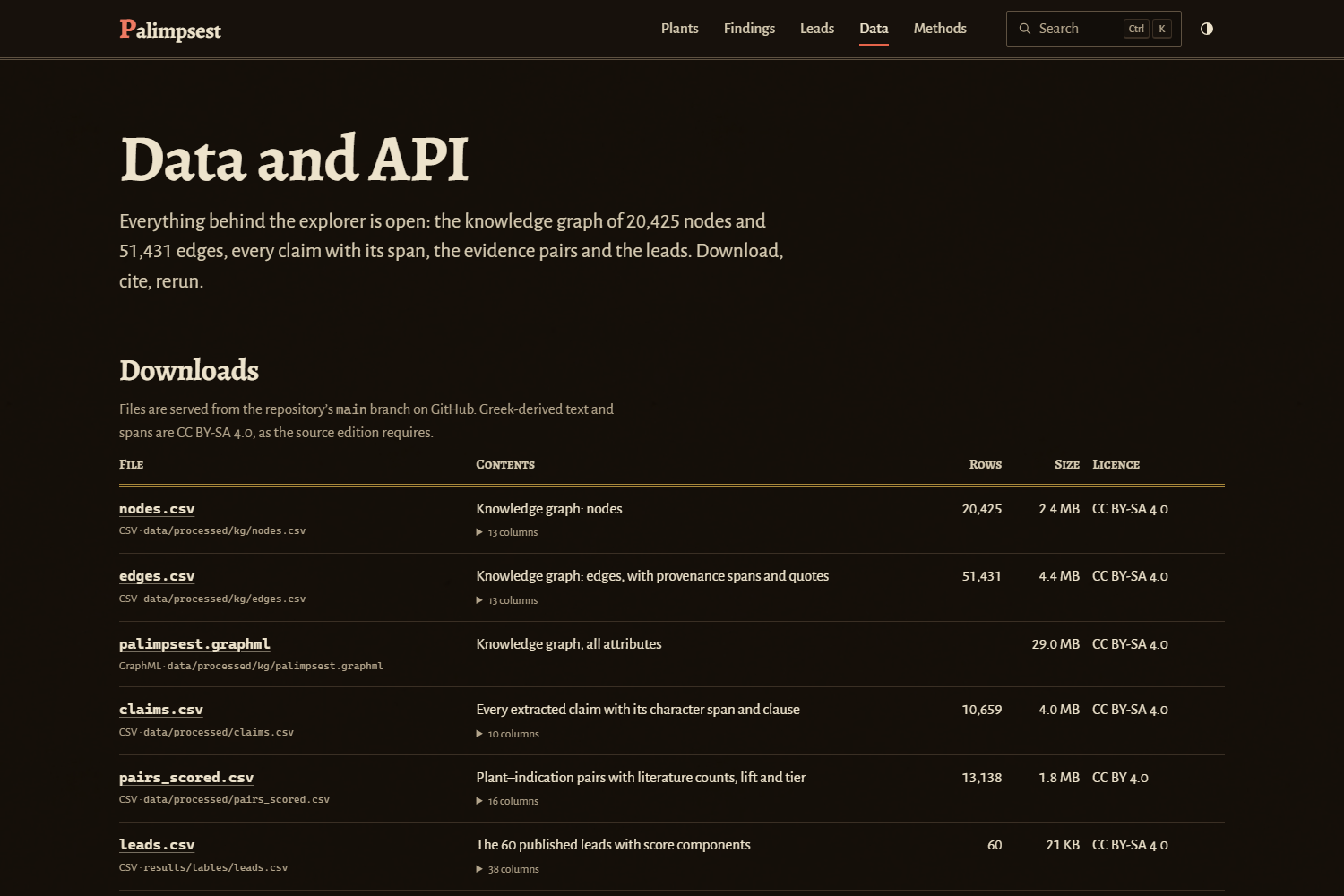
- Is fully open. A web explorer, downloadable data, and an AI-assistant server (MCP) that traces any claim from the Greek word to the modern papers.
How we built it
Python for reading the texts and running the statistics; open data from Europe PMC, GBIF, Kew, Wikidata and ChEMBL; a React website hosted on GitHub Pages, with 95 public-domain images from the Vienna Dioscurides (c. 512 CE). Every result is cached and reproducible, and 85 automated tests check the code. AI (Claude) helped identify plants and build the test set; we disclose this, and every identification has a confidence level.
Challenges we ran into
- The published Greek file hid 199 chapters inside other chapters; we fixed the parsing.
- Ancient Greek words change form constantly, and old diseases (dropsy, king's evil) have no modern names.
- Some plants are simply studied more than others, so we only compared remedies within the same plant.
- Modern research may just follow tradition, so we added a "time machine" test.
Accomplishments that we're proud of
- To our knowledge, the first automatic, tested reading of medical claims in Dioscorides' original Greek.
- Plant identifications that match the experts.
- Clear results: knowledge survived, and science looked, but not hard.
- We publish the tests that did not work, too.
What we learned
The old texts carry a real signal, but measuring it honestly takes careful checks. A count of papers shows attention, not proof that a remedy works. History and data science need each other.
What's next for Palimpsest
- Expert review with the ETHCSTWIN network.
- Adding more sources: Pliny, Galen, and Byzantine and Arabic herbals.
- Checking whether studies found positive or negative effects.
- Lab tests of the top leads.
Built With
- europe-pmc
- gbif
- networkx
- pandas
- python
- react
- scipy
- sparql
- statsmodels
- tei-xml
- typescript
- vite
- wikidata
