Inspiration
Personal color analysis ("am I a Winter or an Autumn?") is a booming salon service. Studios charge $80-300 per consultation, read colors off fabric swatches by eye, and have months-long waitlists in Seoul and NYC. Meanwhile, most of us own a closet full of colors that quietly fight our complexion, and return clothes we bought online because "it looked different on me." Both problems are the same problem: nobody can see themselves objectively. YouCam's APIs can.
What it does
Palette is a four-step consultation:
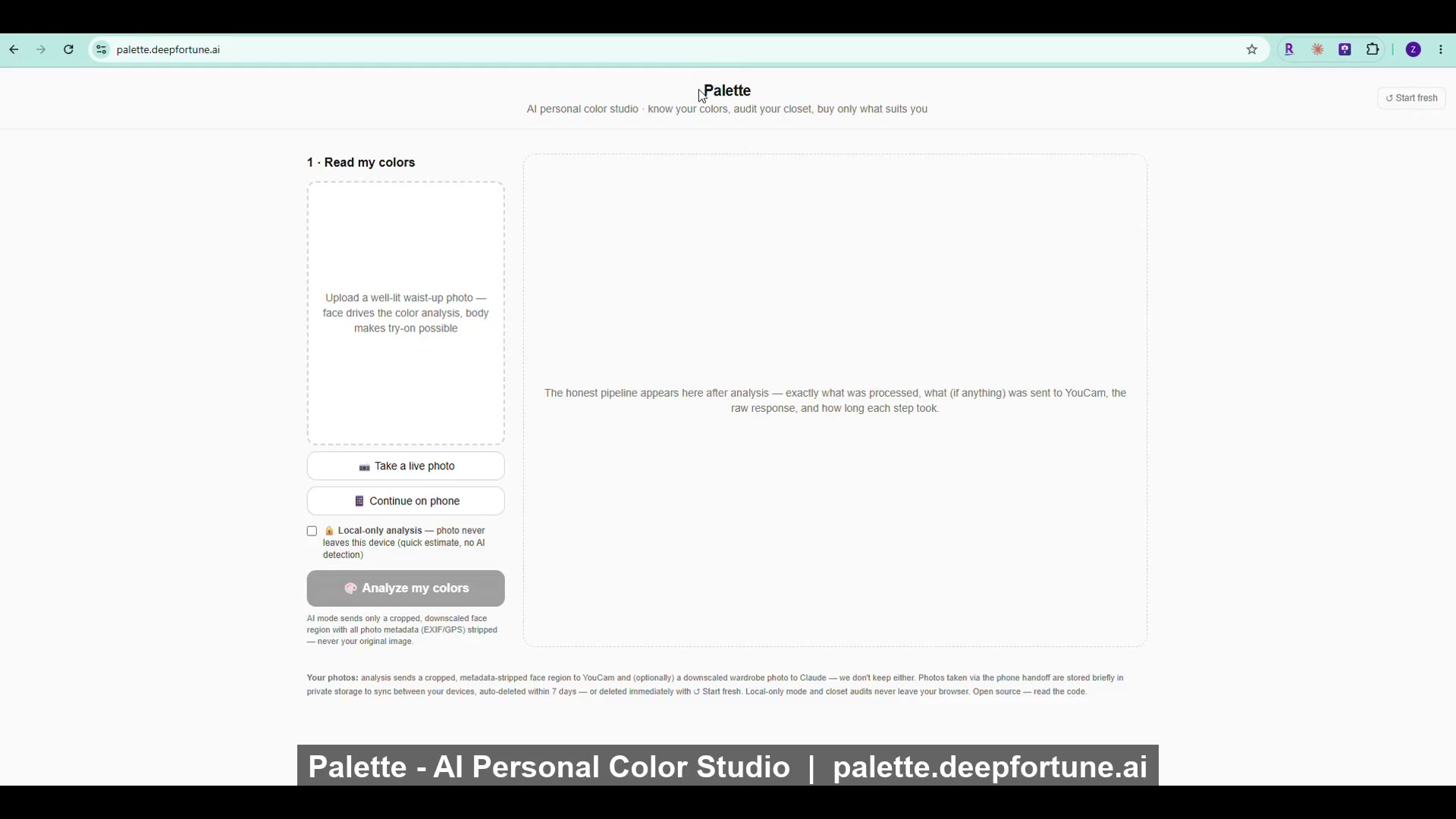
- Read my colors - YouCam Skin Tone Analysis detects your exact skin and hair colors. Our color-science engine converts them to LAB color space, computes the hue angle (undertone), ITA - the dermatology-standard skin lightness angle (depth), and chroma, then assigns one of the standard 12 color seasons. The card shows the numbers, not just the verdict.
- Audit my closet - photograph clothes you own. Dominant colors are extracted in-browser and scored against your palette using CIEDE2000, the textile industry's perceptual color-difference metric. "50% of your closet works for a Light Spring." No API cost, instant, private (closet photos never leave the browser).
- Shop your colors - the catalog re-ranks by harmony score, then YouCam Apparel VTO shows the winning garments on your body: evidence, not opinion.
- Consultation report - the take-home consultant report salons charge for: your season, why (from the real measurements), how to wear your palette, and a verdict on every closet item.
How we built it
- Next.js + TypeScript; YouCam and Claude called server-side only (keys never reach the browser); deployed on Cloudflare Workers with R2 storage and a custom domain
- The intelligence layer is ours: sRGB-to-LAB conversion, full CIEDE2000 implementation, ITA-based depth, deterministic 12-season decision tree, 12 named palettes - pure TypeScript that runs identically client- and server-side, costing zero API units per use
- YouCam supplies perception and proof: Skin Tone Analysis (the input) and Apparel VTO v4 (the evidence); async file/task/poll pattern per their API docs
- Neural face detection in the browser (190KB tiny model) crops uploads to the face only before anything leaves the device
- Every step degrades gracefully without keys, and local-only mode runs the whole analysis in-browser - the app is testable free, with zero accounts
Challenges we ran into
- Reconstructing exact API payload shapes from docs and making the client resilient to schema variants
- Making color science explainable - judges and users can see hue/ITA/deltaE numbers behind every verdict, not a black box
- Cropping reliably across selfies and full-body photos (solved with in-browser neural face detection after skin-heuristic approaches failed on real photos)
Accomplishments that we're proud of
- A real, defensible algorithm layer on top of the APIs - not a wrapper
- The closet audit: a genuinely new use of skin-tone data ("your wardrobe fights your undertone" is a sentence no shopping app says)
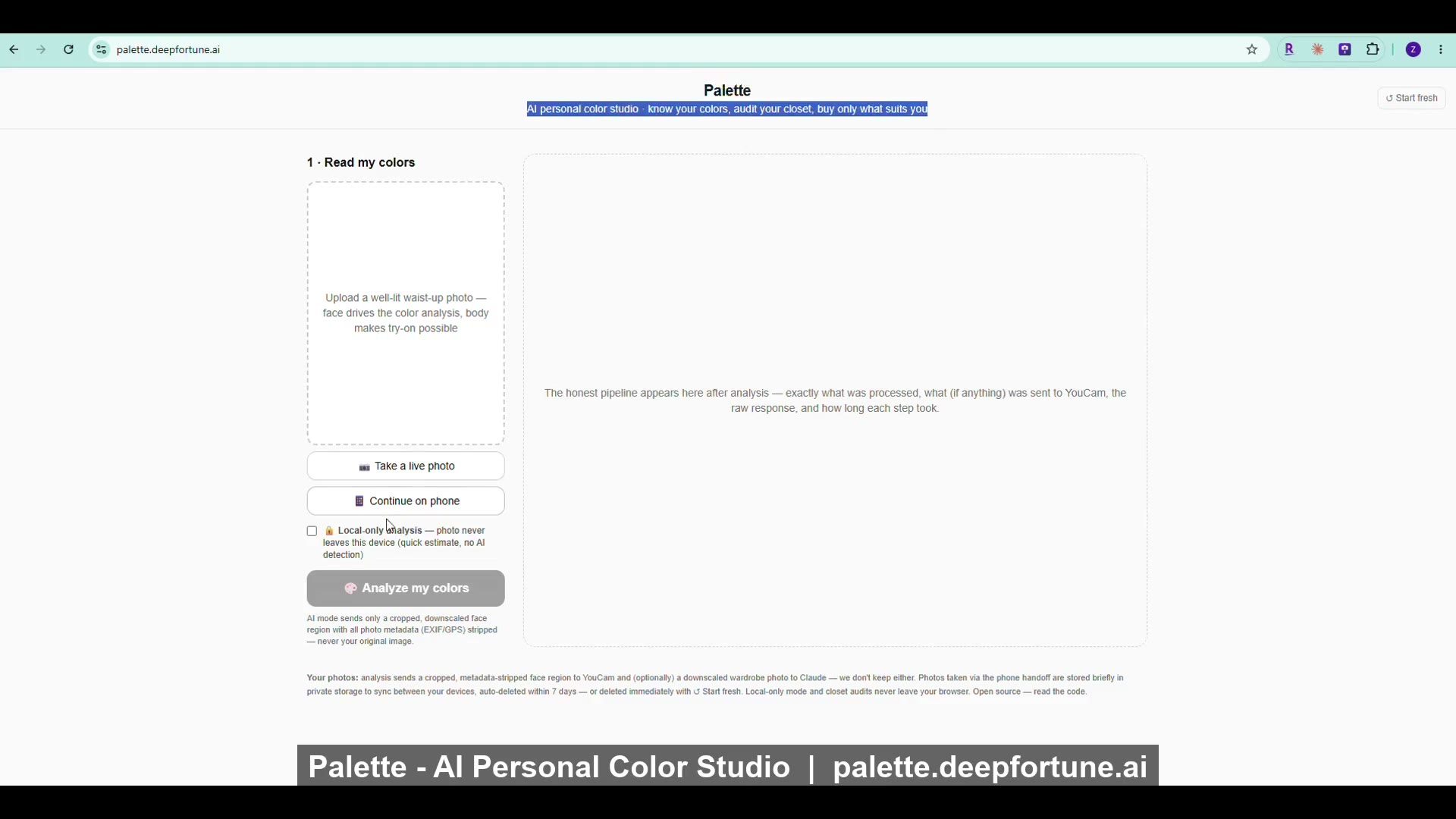
- The honest pipeline panel: the app shows exactly what left your device, what YouCam returned, and how long each step took
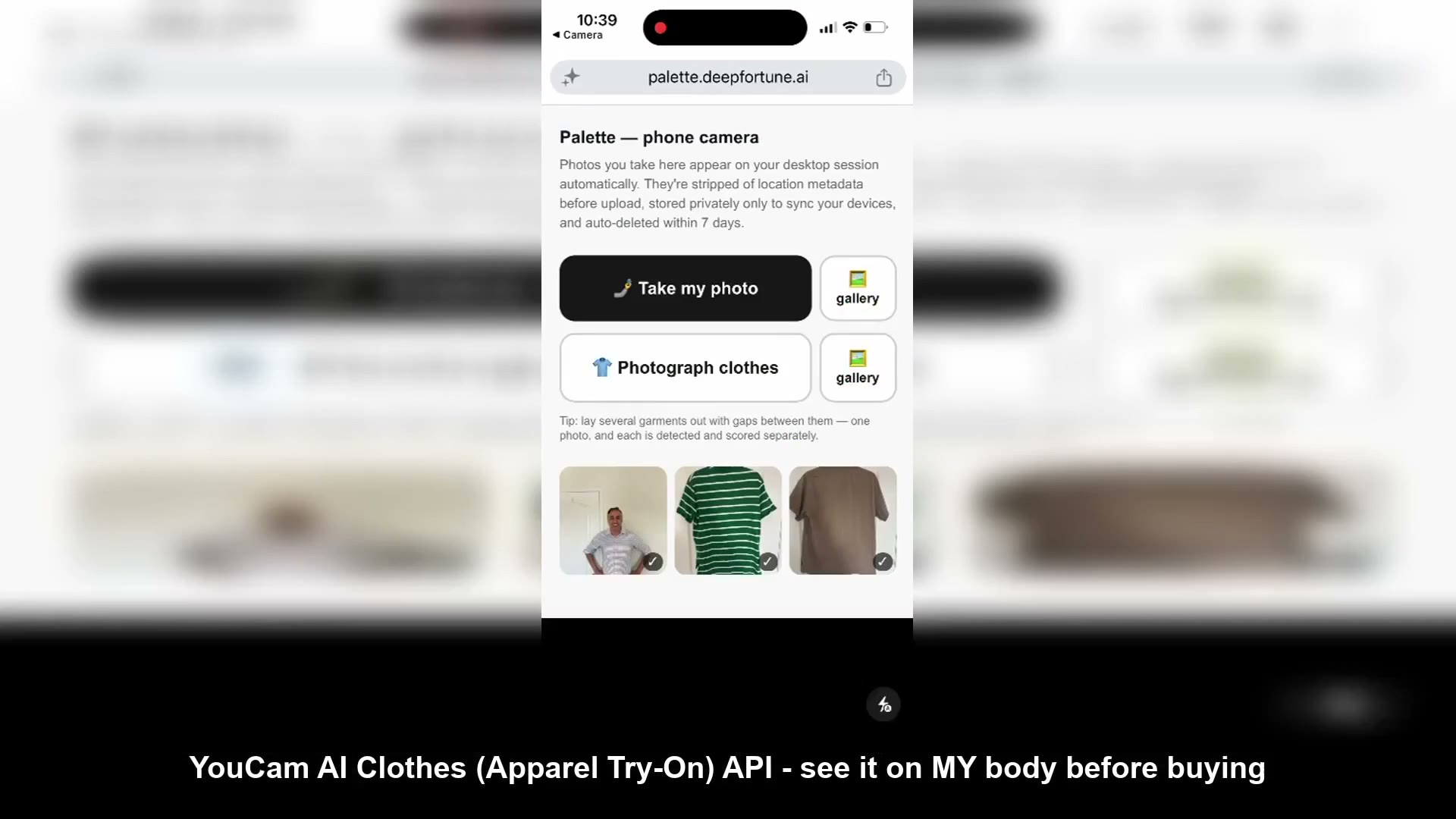
- Phone handoff via QR: capture on your phone, results on your desktop, no accounts
What we learned
APIs teach you their real contracts through error messages. The docs gave us the pattern; live 400 responses gave us the truth (flat task bodies, envelope status fields, exact schemas). Probing with cheap failing requests before spending credits became our superpower. Color detection is physics, not magic. The same face under warm lamps and daylight returns different hex values from the same API. Controlled lighting matters, which is exactly why the salon chair-side use case exists. Heuristics lose to small neural models. Three generations of hand-rolled skin-detection cropping failed on real photos (skin-toned walls, beards, lighting gradients). A 190KB in-browser face detector solved it in one afternoon. Privacy-first architecture pays twice. Local-only analysis, tight crops, EXIF stripping and instant erasure started as ethics; they turned out to also be the free tier, the teen-safe tier, and the fastest path through biometric-privacy law. Platform terms do not protect users; the app layer does. The API provider prohibits misuse contractually, but consent verification, garment gating and provenance have to be built by us. Debugging with evidence beats debugging with theory. Persisting every capture as a numbered "take" and comparing what was sent versus what came back fixed in hours what guesswork had broken for days.
What's next for Palette: AI Personal Color Studio
- Trust & safety: verified-self mode (liveness-checked live capture + face-match on uploads) so try-on only works on your own photo; garment gating and content moderation; C2PA provenance on renders
- Retailer product feeds ranked by harmony score, with affiliate monetization
- Salon B2B tier: chair-side tablet mode, white-label PDF reports, hair-color VTO restricted to the client's season
- Animated outfit reels (YouCam Image-to-Video) your friends vote on
Built With
- anthropic
- apparel-vto
- claude
- cloudflare
- color-science
- nextjs
- skin-tone-analysis
- tailwindcss
- typescript
- youcam-api

Log in or sign up for Devpost to join the conversation.