-
-
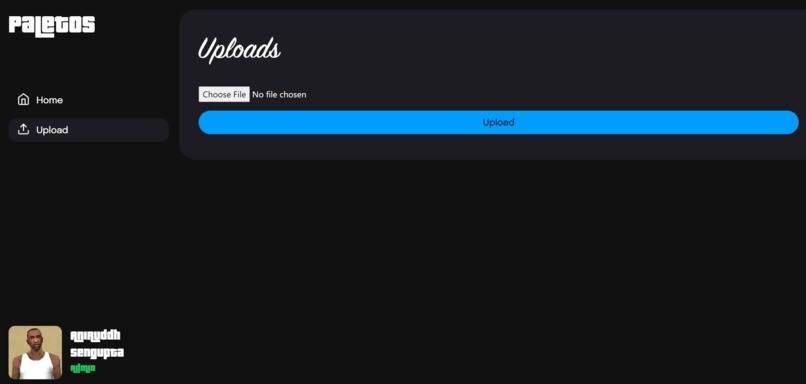
UPLOAD CSV
-
-
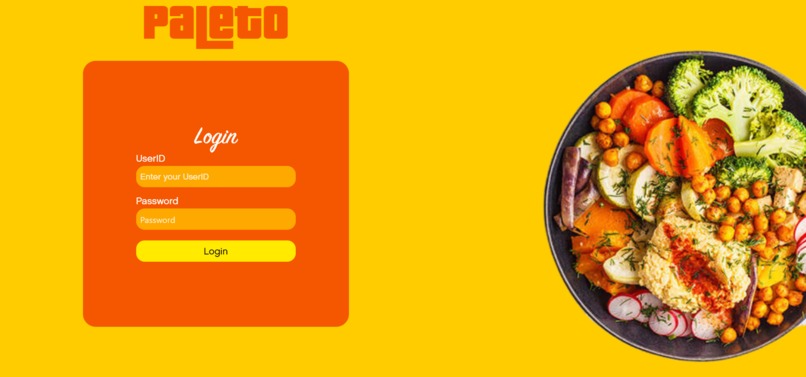
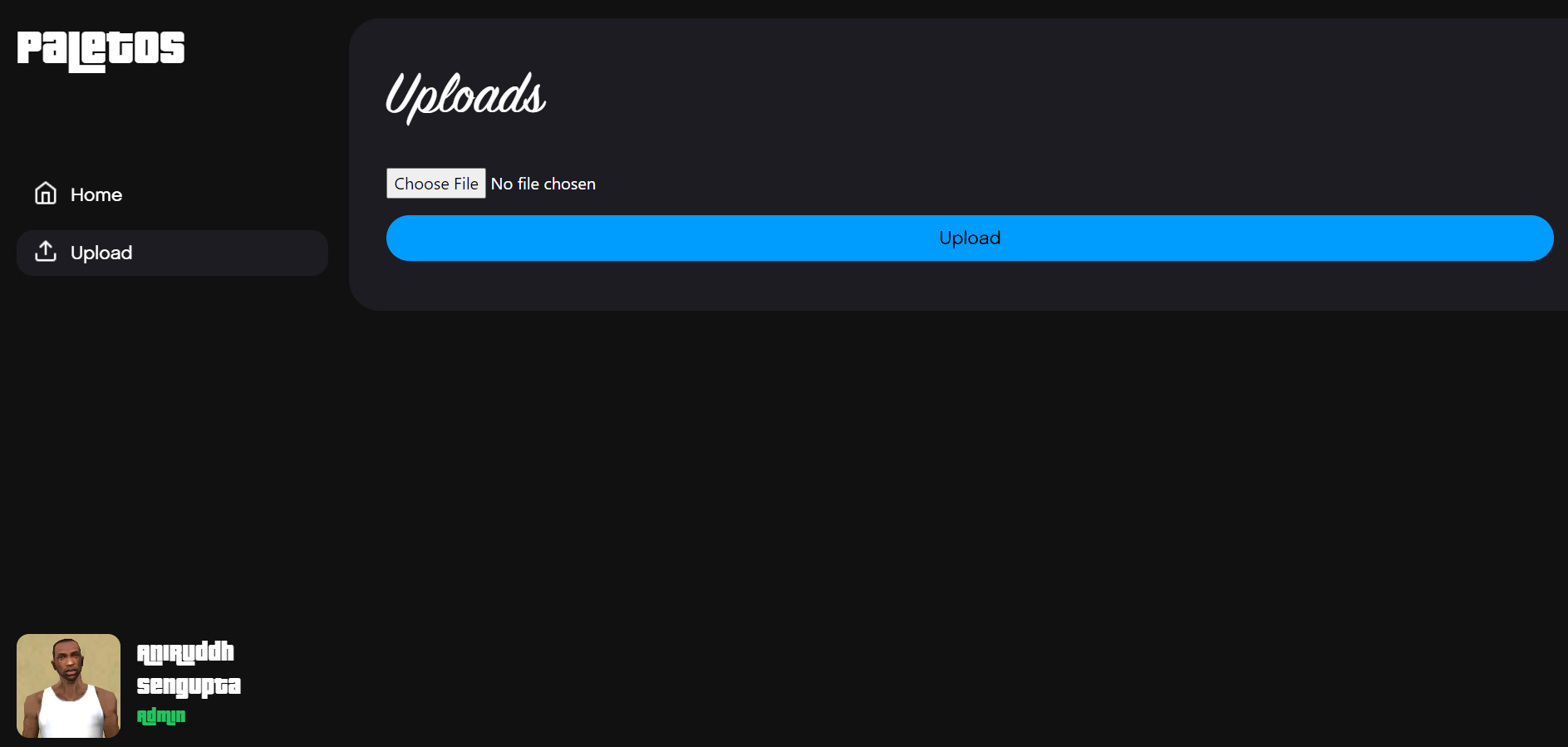
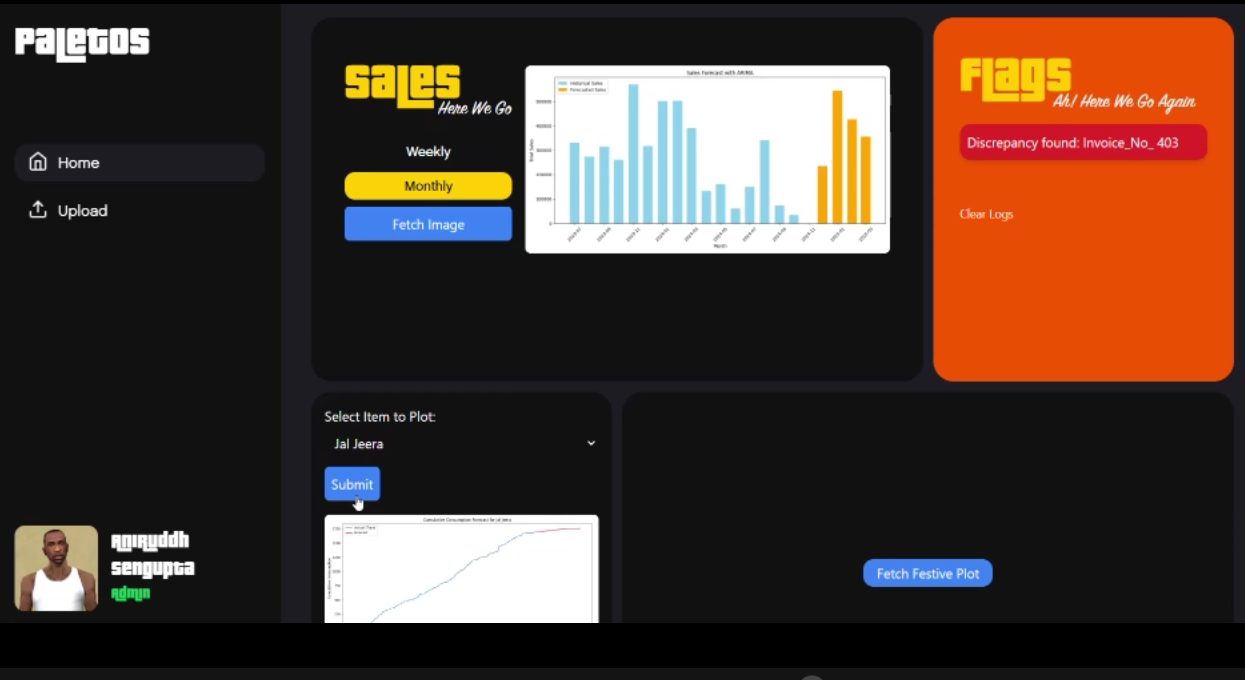

📖 About the Project 🎯 Inspiration The inspiration for Paleto's Restaurant Network came from the need to transform the chaotic and fragmented restaurant data into streamlined insights that could help restaurant owners make better business decisions. We aimed to create a solution that would handle real-world complexity, including varied data formats and unstructured datasets, while delivering actionable analysis.
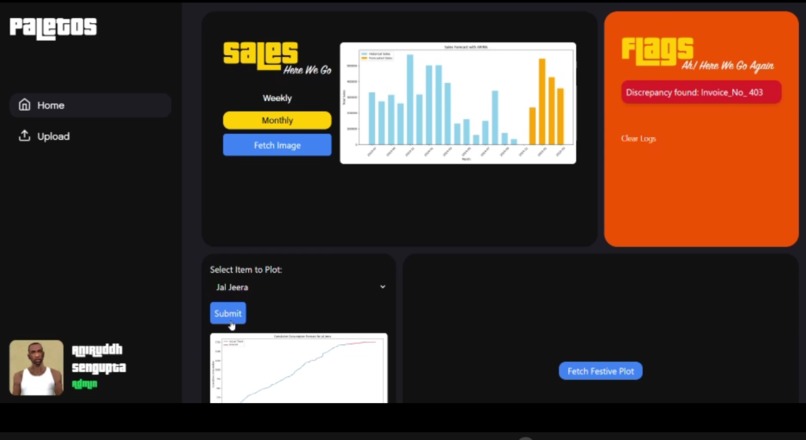
🚀 What It Does The project automates data cleaning, analysis, and prediction for a network of restaurants. It forecasts total and item-specific sales, detects anomalies like suspicious transactions, and visualizes sales trends based on Indian festivals. Restaurant owners can upload raw data files, and the system instantly provides them with a comprehensive overview of their business.
🛠️ How We Built It We utilized a combination of Python, Flask, and Django for the backend, and HTML, CSS, and JavaScript for the frontend. The machine learning model, ARIMA, was trained for accurate sales predictions. Our development was focused on metric-driven accuracy, refining predictions as live data is processed through a feedback loop. The project involved working with over 30 CSV files containing 2 million rows of unstructured sales and inventory data. We used Ngrok for backend deployment and Netlify for hosting the frontend.
⚠️ Challenges We Ran Into Handling over 30 CSV files, each with unique schemas and over 2 million rows of unclean data, was a significant challenge. The initial unfamiliarity with MLOps made setting up a robust pipeline from scratch a steep learning curve. Integrating various data sources seamlessly and ensuring consistent predictions was technically demanding. Ensuring the accuracy of forecasts with real-time data updates required a well-designed feedback mechanism. 🏆 Accomplishments That We're Proud Of Successfully created a deployable web-based interface that turns messy raw data into actionable insights in real-time. Implemented an ARIMA model that accurately forecasts sales and predicts seasonal demands aligned with Indian festivals. Designed a robust anomaly detection system capable of flagging potential theft or unsettled payments. Despite being new to MLOps, we made it to the top 10 teams in the hackathon out of 1300+ participants. 📚 What We Learned Deepened our understanding of MLOps, from data ingestion and cleaning to deployment and real-time monitoring. Learned how to work effectively with large, unstructured datasets and transform them into a usable format. Improved our machine learning skills, specifically in time-series forecasting using ARIMA. Enhanced our ability to develop a scalable solution that works for a diverse set of restaurant owners. ⏭️ What's Next for Paleto's Restaurant Network Backend Enhancements: Integrating advanced machine learning models to improve the accuracy of predictions further. Live Data Adaptation: Enable continuous learning from live data inputs to refine the model’s performance. User Dashboard: Develop a more detailed user dashboard with interactive visualizations and deeper insights.

Log in or sign up for Devpost to join the conversation.