-
-
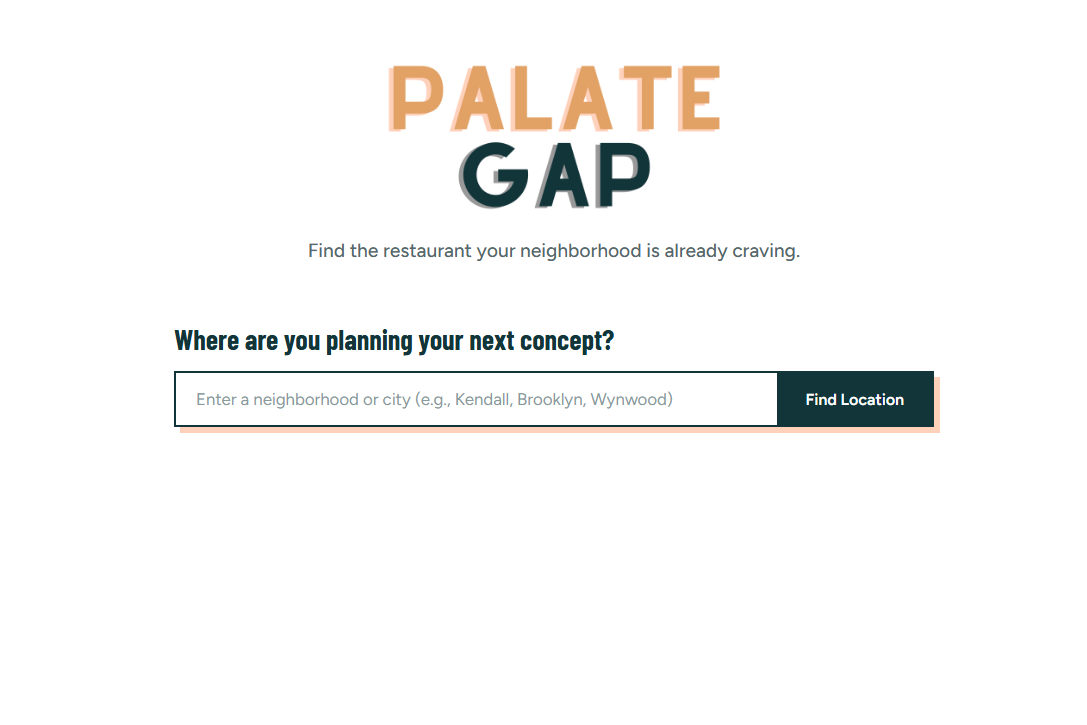
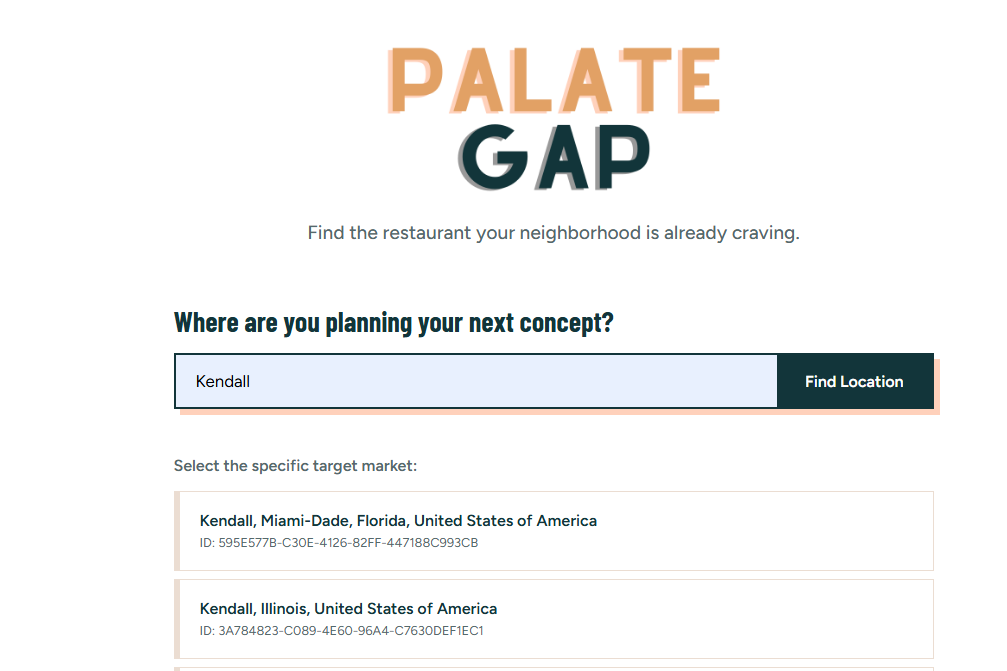
Title Screen
-
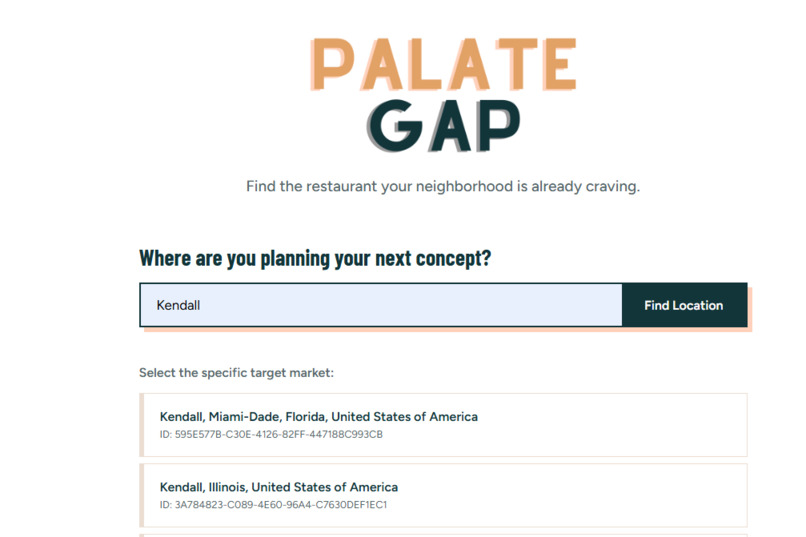
Neighborhood select
-
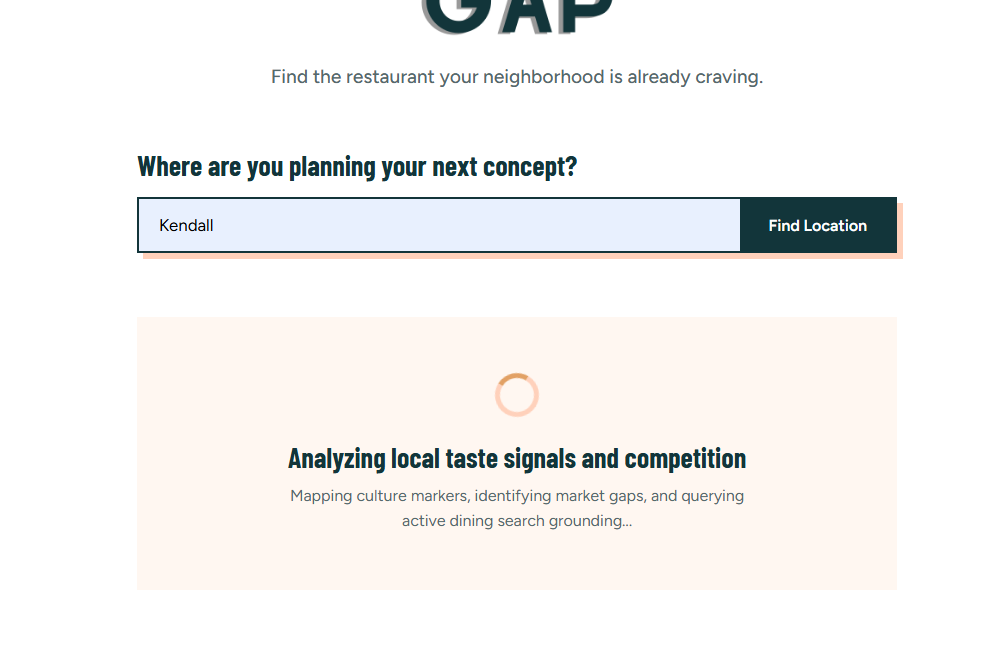
Performing the analysis
-
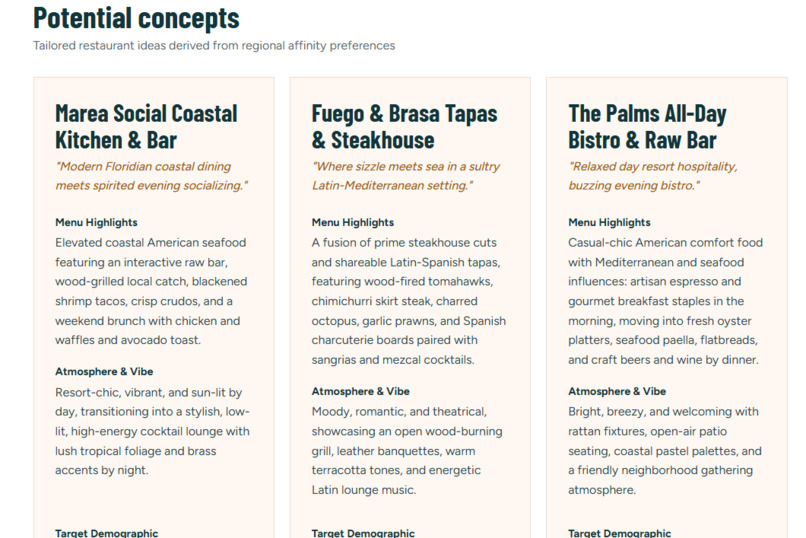
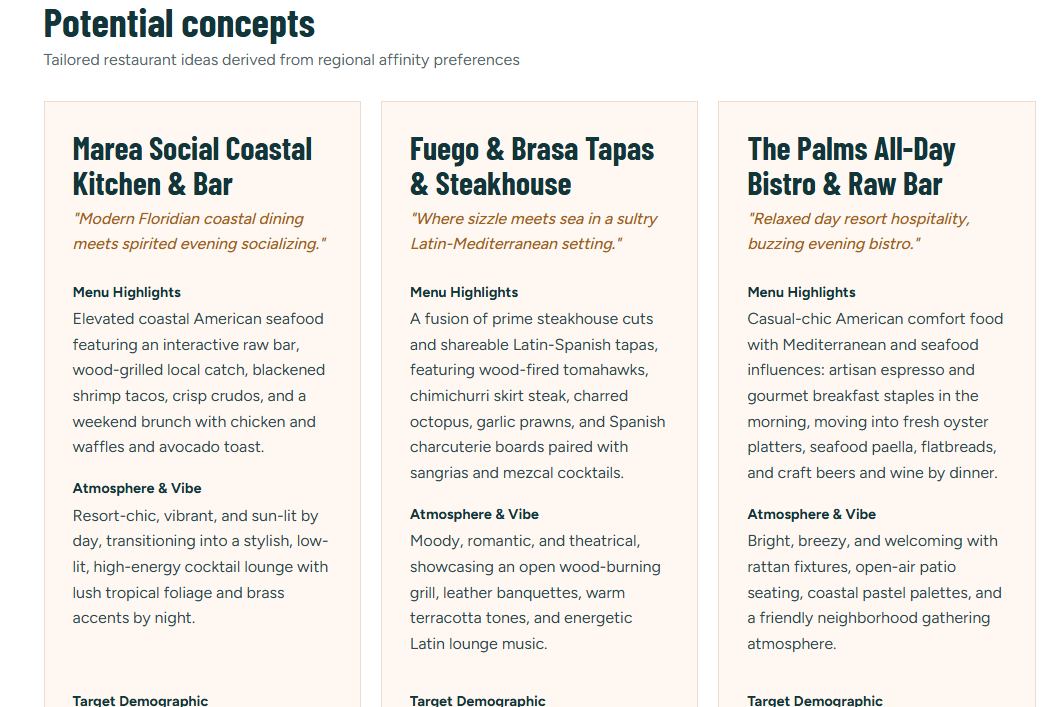
Potentital concepts
-
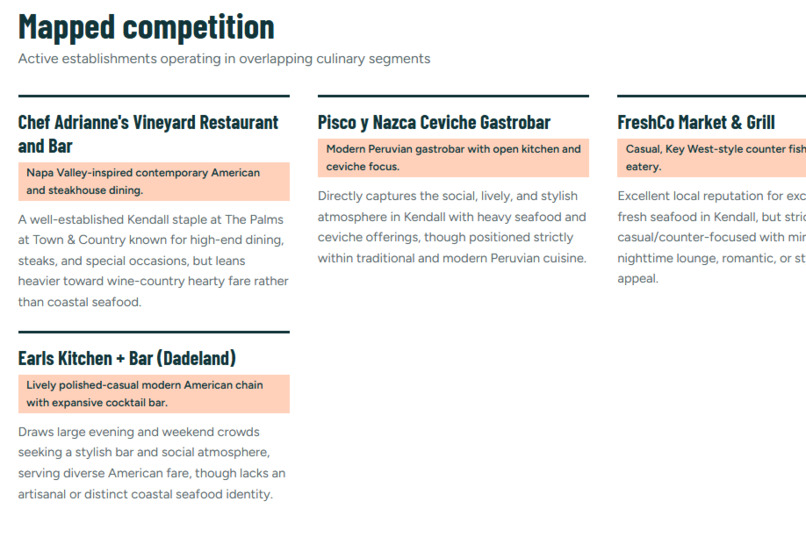
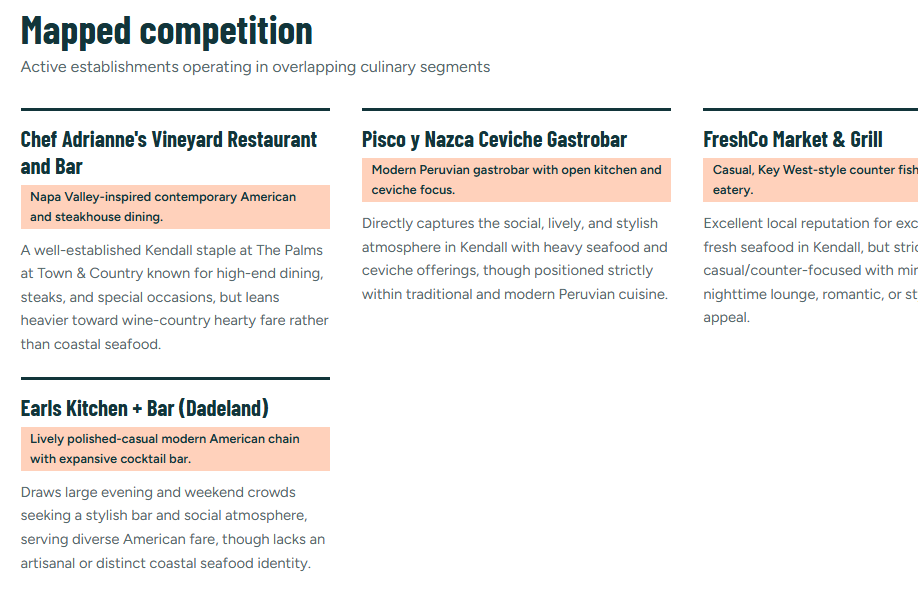
Mapped competition
-
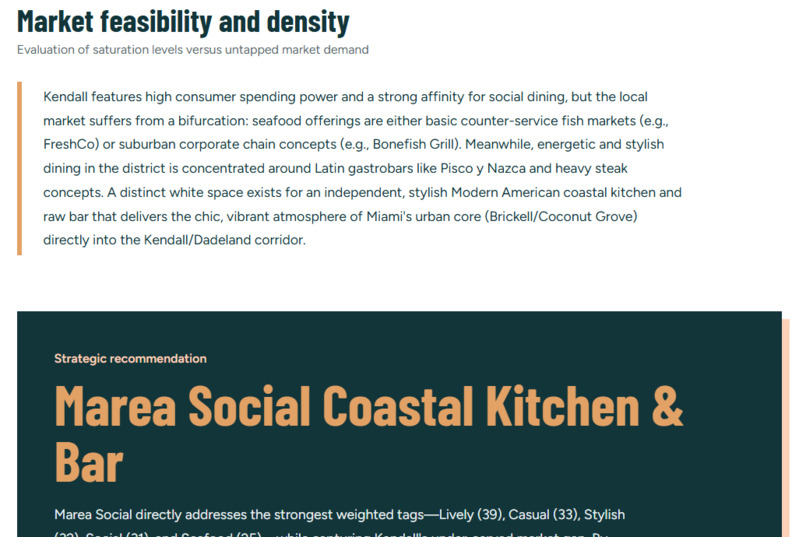
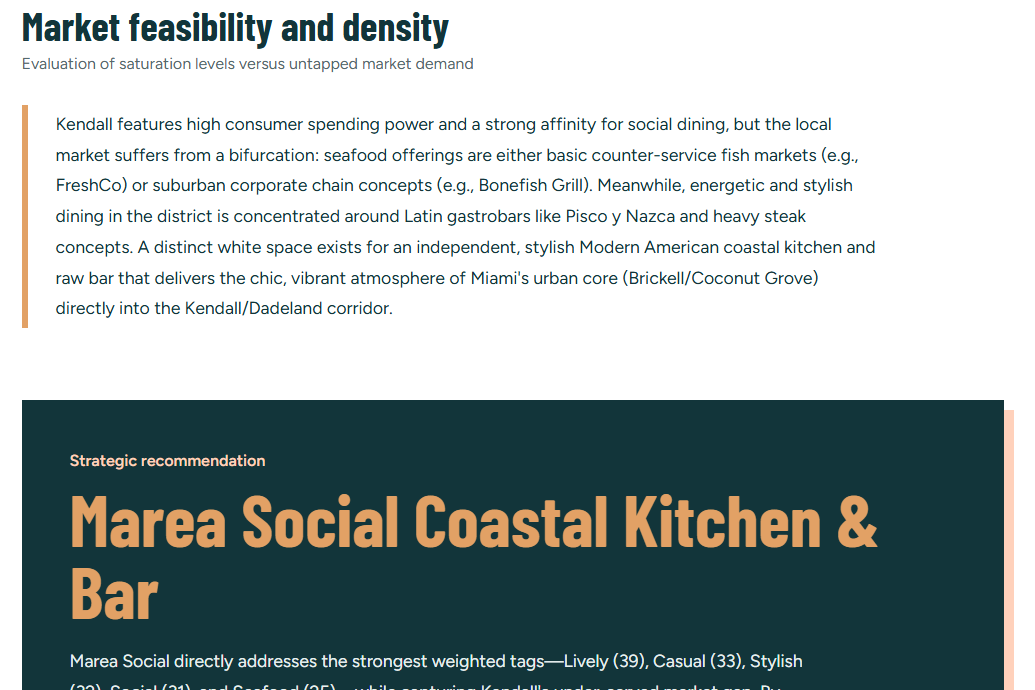
Market feasibility and density + the winning concept
-
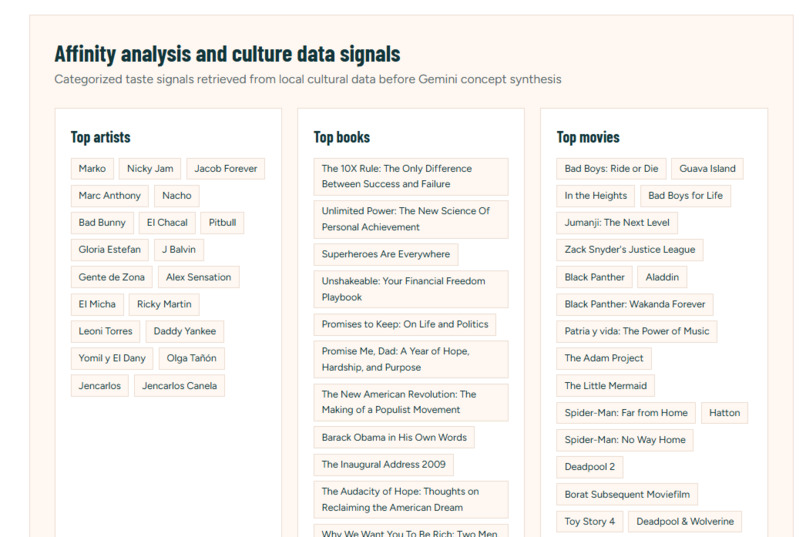
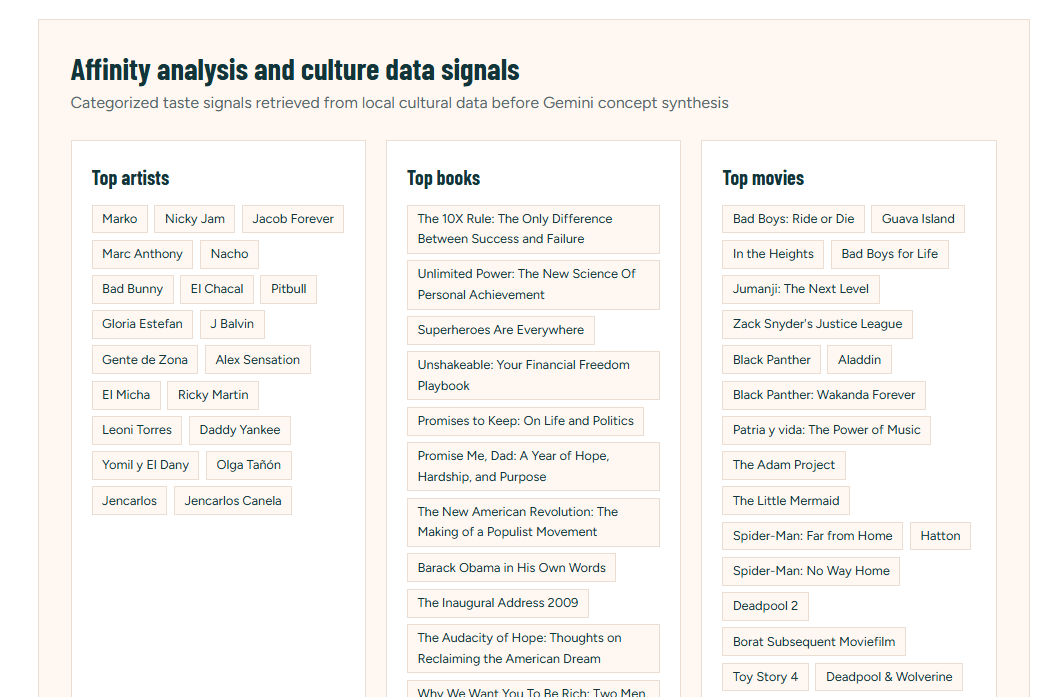
The "Inside Baseball" behind-the-scenes tags that powered the choice
Inspiration
Imagine you're a restauranteur, looking to open the next big spot. Or imagine you're an investor looking to back a new restaurant venture. With about 50% to 60% of restaurants failing or closing within their first three to five years, there is not a lot of room for error. A lot of money is at stake. And although selecting the proper location is a big step, what about ambience and cuisine?
What if there was a way to gauge what the proposed area's tastes are - and translate these into decisions regarding the new restaurant's menu, decor and mood? That small edge in determining which path to choose regarding cuisine or lighting, could ensure that the new spot thrives rather than flounder.
What it does
PalateGap uses Qloo to measure an area, or neighborhood's, tastes in artists, books, movies, TV shows and brands. It uses these groups to obtain the top 50 Qloo tags that match the restaurants (that are NOT in the proposed area) that these fans enjoy.
It can then do two things:
If the user has a restaurant description in mind, it critiques the idea and gives insight into how the idea fits with the area's tastes, how competitive the area is and if there are any white spaces (gaps in the market regarding this restaurant concept versus demand) and how viable the idea is. If the idea is almost viable, it gives a small tweak that could turn the concept into a winner.
If the user does not have a restaurant idea in mind, it analyzes the Qloo tags, determines 3 restaurant concepts that would be good fit, uses Google Search to find competing restaurants in the area and determines the winner among the three options.
How I built it
I used the Qloo API extensively to learn about the tags and the way they paired with entities like artists and movies. I then created a Python script that took the concept from beginning to end, displaying simple text regarding the best restaurant choice for the area I had selected. The next step was integrating FastAPI to turn the script into something that could run on the Google Cloud and changed the functions into endpoints. I then finally added simple HTML/CSS and some Javascript to call the endpoints and display the results. The final step was to send everything to GCP and run it as a Google Cloud Run service.
Challenges I ran into
Getting the Qloo responses to make sense took me a while - I was expecting the JSON to look one way but it then turned out to be another. The integration with Gemini was also a bit of a mess at the beginning, but I was able to hammer out the permissions and keys and such. All in all, it was not a very difficult build.
Accomplishments that I'm proud of
That I was able to stitch together Qloo, Gemini and Google Search and turn it into a really powerful restaurant viability engine.
What I learned
I had not used Qloo before and learning about its audience and taste analytics has opened the door to other possible project ideas down the road.
What's next for PalateGap
I believe that this could be a very useful tool for an entrepreneur or investor looking to make a dent in the restaurant business. The insight regarding the business's viability is not something the AI pulls out of the air - it uses the Qloo taste metrics to ground the information in reality and perform a more thorough, and believable, analysis. I would love to get this concept off the ground and in front of the decision-makers in charge of opening great new restaurant concepts.
Built With
- css
- fastapi
- gcp
- html
- javascript
- python
