Inspiration
I’ve always loved the simplicity and addictiveness of classic memory card games. But for the One-Shot Competition, I wanted to take that familiar concept and twist it into something a little... untrustworthy. The idea of building a game that looks playful on the surface but hides a layer of sarcasm, paranoia, and subtle absurdity felt like the perfect mix of fun and irony. That’s how Pairanoid was born — a game where you don’t just match cards, you question everything.
What it does
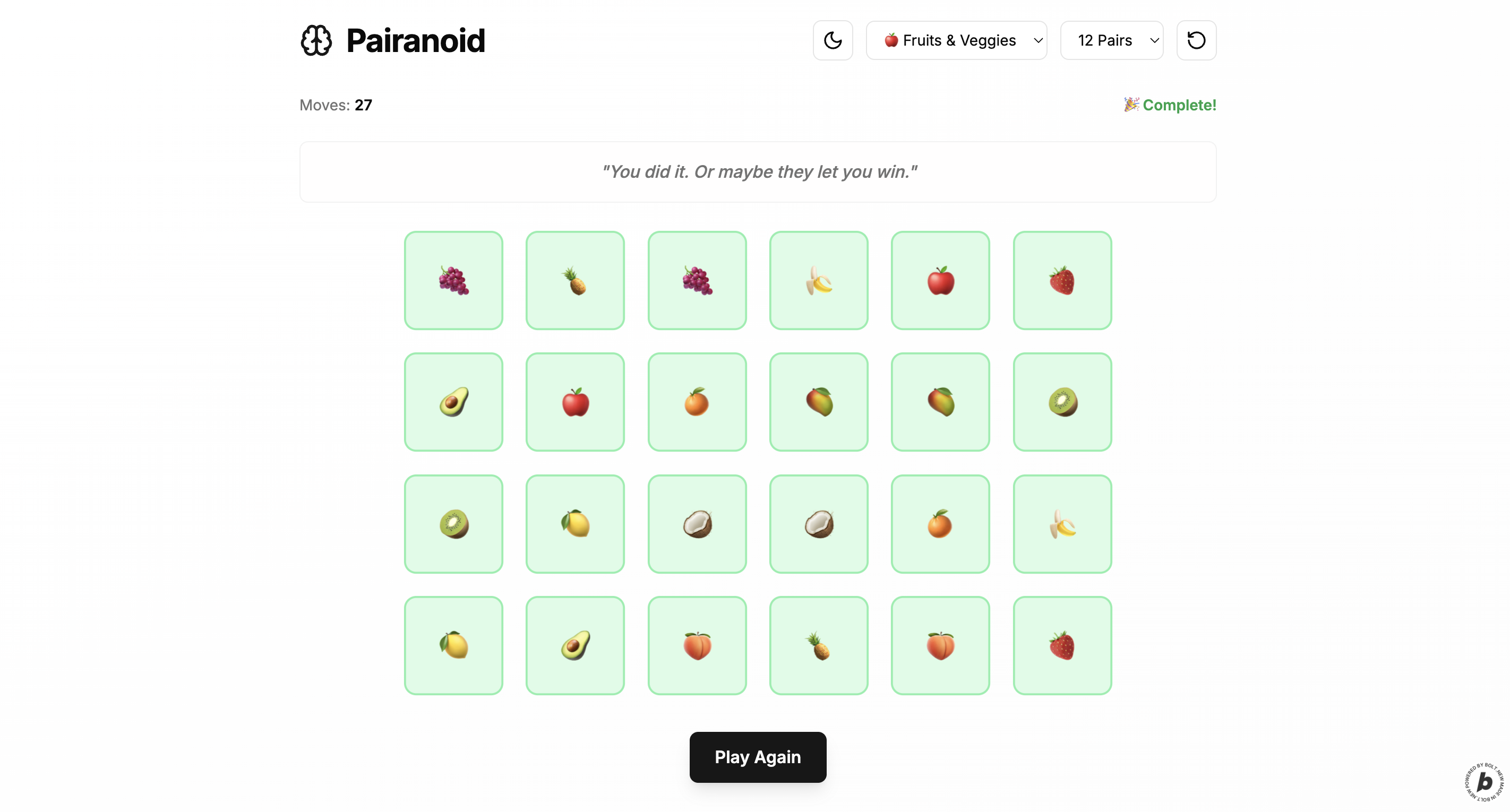
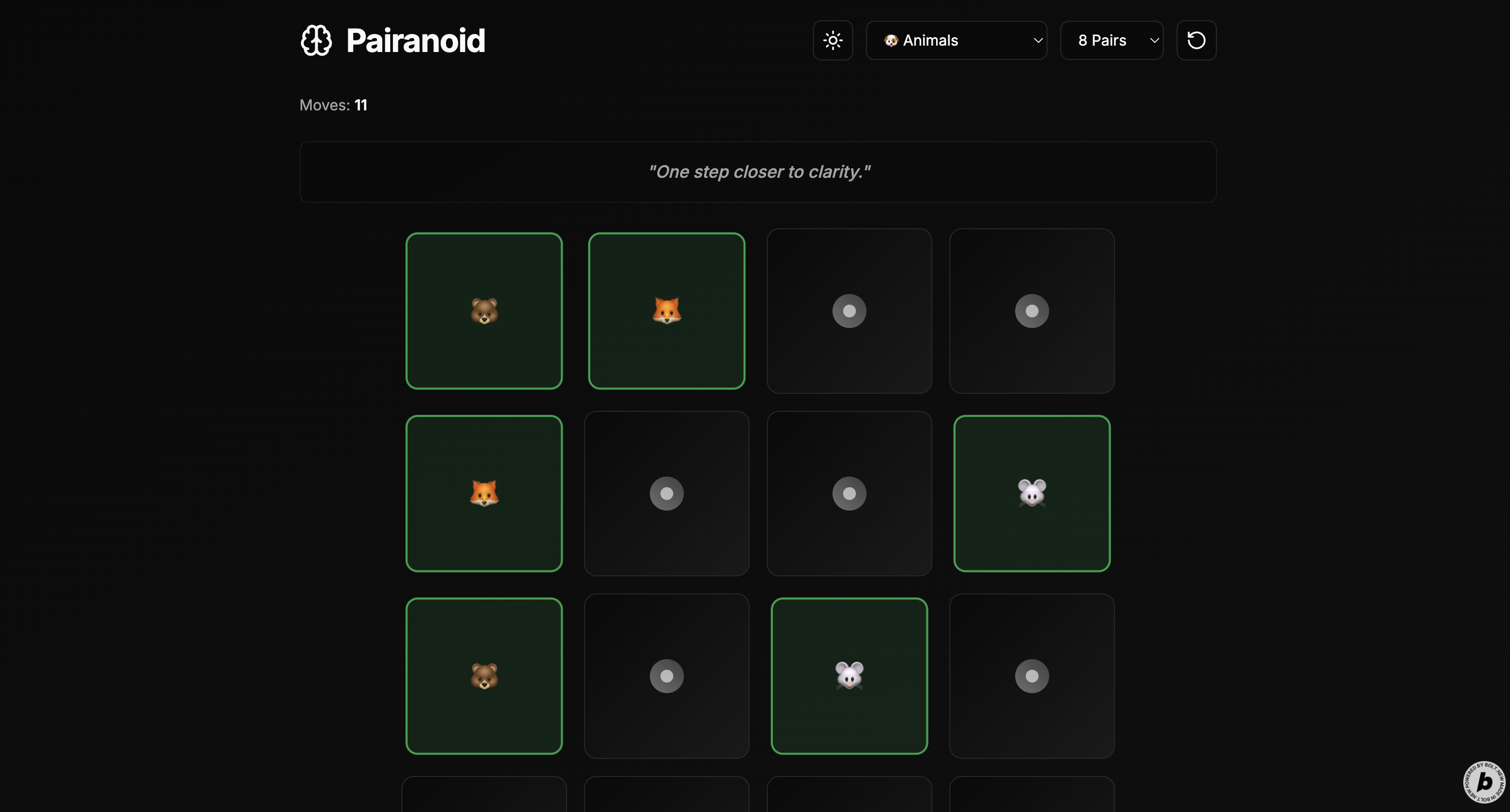
Pairanoid is a fully responsive memory card game built with Next.js and Tailwind CSS. Players flip cards to find matching pairs, choosing from emoji themes like Smileys, Fruits, or Animals. The game includes customizable difficulty levels, a theme toggle (light/dark), and a dynamic interface that responds with sarcastic and paranoid messages based on user actions. It’s minimalistic in style but packed with personality.
How we built it
The project was created using a single prompt on Bolt.new, leveraging their one-shot build process. The frontend is entirely powered by Next.js with the App Router and styled using Tailwind CSS. I used next-themes for theme switching and React hooks to manage game state and transitions. Card flip animations were achieved with CSS 3D transforms and transitions, and all emoji sets were embedded directly into the code. I focused heavily on clean layout, responsive design, and subtle UI interactions to make the game feel polished.
Challenges we ran into
The biggest challenge was fitting everything into a single prompt — not just the game mechanics, but the theming system, difficulty levels, animations, UI structure, and even the tone of the game. It required thinking through all features in advance and expressing them clearly and precisely in one shot. Creating randomized sarcastic responses that actually enhance the user experience without being distracting was also surprisingly tricky.
Accomplishments that we're proud of
I'm proud that the final result feels like more than just a card game. It has its own voice, style, and small sense of narrative absurdity. The flip animation and overall interface turned out smooth and responsive, and the game is genuinely fun to play. Most importantly, it was all built in one prompt, without relying on any external assets or manual fixes.
What we learned
This project reinforced the power of clear, structured thinking when working with AI-assisted tools. It also reminded me how much character and mood can be conveyed through simple UI decisions and well-placed text. Writing a single prompt that builds an entire game taught me to balance creativity with precision.
What's next for Pairanoid
I’d love to extend Pairanoid into a local multiplayer or timed challenge mode, add more emoji sets, or even integrate player stats. There’s also potential for sound effects and subtle animations to enhance the experience. But for now, I’m happy it exists as a strange, sarcastic little game that flips your expectations — one card at a time.
Built With
- next.js
- tailwind
- typescript

Log in or sign up for Devpost to join the conversation.