

Inspiration
Surgeons often perform intricate procedures while relying on limited two dimensional imaging or navigation systems that pull their attention away from the operative field. Our team believed that augmented reality could remove this barrier by placing clarity and guidance directly where surgeons need it. Our work is grounded in years of experience in orthopedic implants, surgical navigation, and medical visualization. That experience shaped the vision for Pair Guide. We wanted a tool that feels simple, intuitive, and supportive in real operating room conditions. Our confidence in this direction grew after receiving a granted patent for our AR based visualization and surgical planning approach, which reinforced that this technology solves a meaningful problem in orthopedic workflows.
What it does
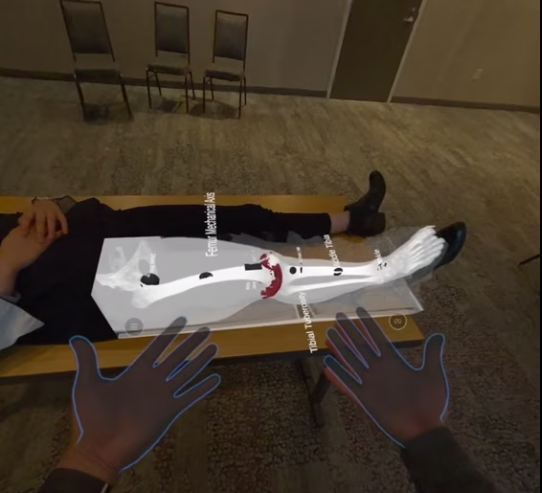
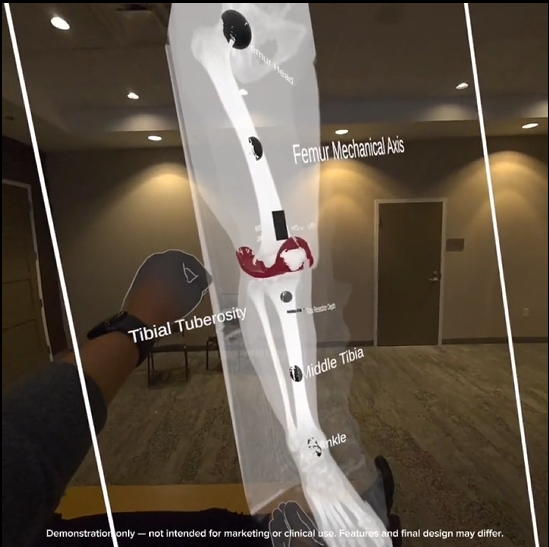
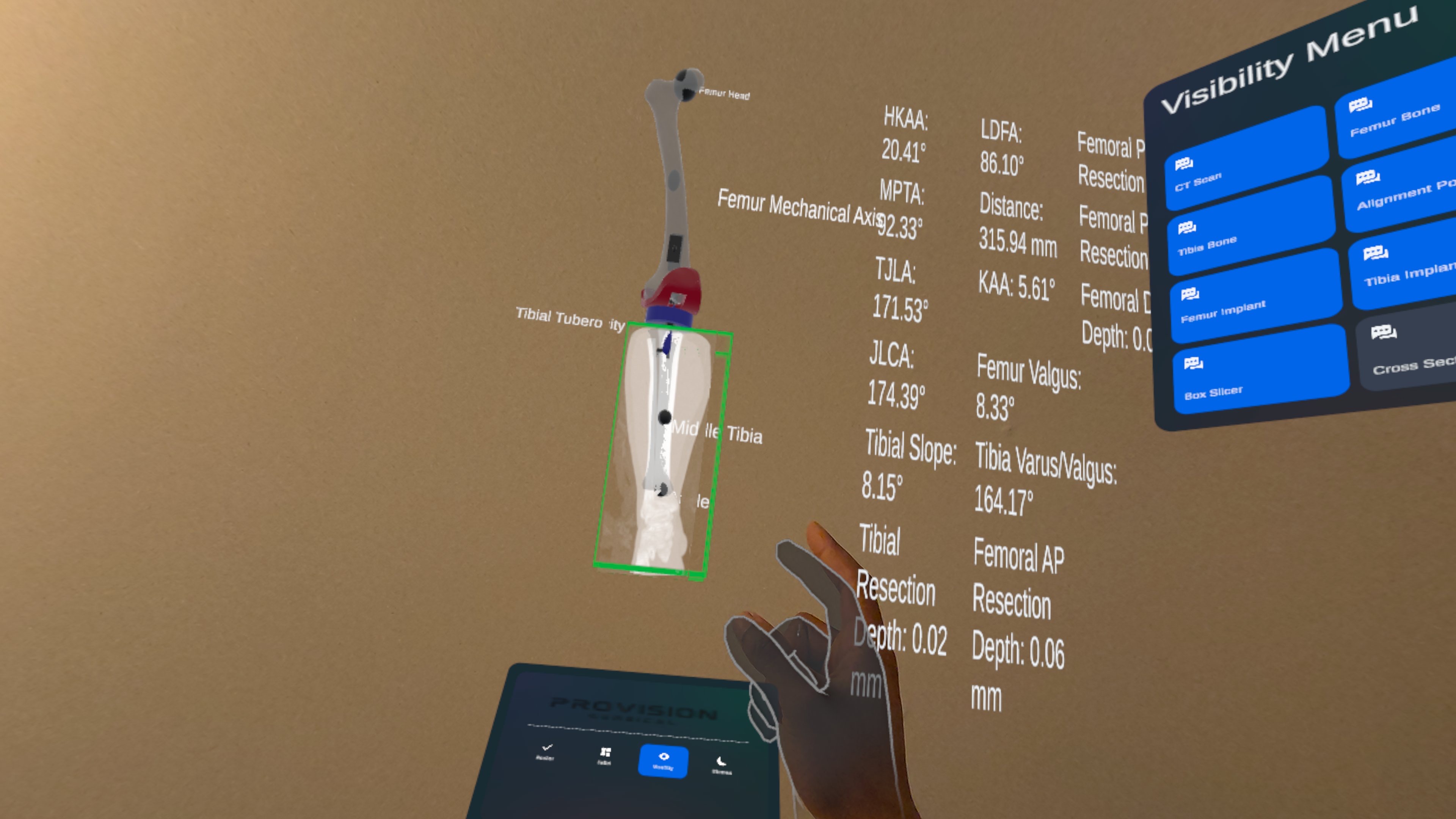
Pair Guide is an augmented reality system for preoperative planning and intraoperative alignment in total knee arthroplasty. It brings patient specific models and real time alignment information into the surgeon’s field of view. The application allows surgeons to preview resections, visualize angles and lengths with millimeter accuracy, and confirm alignment during the procedure without diverting attention away from the operative site. Pair Guide enhances situational awareness and helps surgeons operate with confidence and precision.
How we built it
We built Pair Guide with Unity and the Meta Quest platform. Our workflow converts imaging inputs into a clean three dimensional model that the surgeon can view and manipulate inside the headset. We optimized rendering performance to maintain stable visuals and precise spatial anchoring. We developed a custom calibration workflow for accuracy testing and created a series of validation objects to benchmark length, width, and angle measurements. Throughout development we incorporated continuous surgeon feedback to refine the interface and interaction design, ensuring everything feels natural inside a surgical environment. To prepare for regulatory evaluation, we also created an FDA pre-submission accuracy test plan, which outlines our dimensional benchmarking methods, human factors considerations, and validation protocol. This plan was reviewed in our FDA pre-submission meeting, guiding our path toward clinical readiness.
Challenges we ran into
Building a system that remains stable in variable lighting and spatial conditions was one of our biggest challenges. Achieving consistent tracking accuracy required repeated testing and optimization. Another challenge was designing an interface that supports both novice and experienced AR users without overwhelming them. Balancing functionality clarity and simplicity took careful iteration. We also had to ensure high performance on eyewear hardware while maintaining real time rendering of anatomical models and alignment information.
Accomplishments that we're proud of
We built an AR navigation tool capable of delivering reliable millimeter-level accuracy in a lightweight, intuitive form. We developed a full validation protocol that measures the precision of every displayed angle and distance. We created a surgeon friendly interface that supports natural interactions and does not disrupt workflow. We successfully completed our FDA pre-submission meeting, established a clear regulatory path, and have a granted patent that protects our core visualization and interaction methods. Pair Guide now includes a functional end-to-end pipeline for planning, reviewing, and guiding TKA procedures with clear visual support.
What we learned
We learned that simplicity and clarity matter as much as technical performance. Surgeons want information presented in a way that supports focus rather than forcing extra steps. We learned how small adjustments in visual layout tracking and interaction design can significantly improve usability. We also gained deeper insight into the importance of human factors design in surgical technology.
What's next for Pair Guide
Our next steps include expanding implant system options surgeon preference profiles enhanced visualization tools and a cloud connected workflow for case management. We are preparing for human factors testing accuracy studies and regulatory evaluation. The long term vision is to bring Pair Guide into clinical use and support surgeons with a tool that improves clarity performance and confidence in the operating room.


Log in or sign up for Devpost to join the conversation.