Inspiration
PainWatch Standard was inspired by my mother, who lives with frequent chronic pain from multilevel lumbar spine degeneration and herniated discs. I watched pain take ordinary things away from her, especially long walks, and that made the problem feel personal before it felt technical. Pain is one of the most common human experiences, but it is still poorly standardized: two people can describe very different sensations with the same word, and the same person may struggle to explain what happened once the moment has passed. We wanted to build a system that helps people speak about pain more clearly, closer to when it happens, using both wearable signals and guided follow-up.
What it does
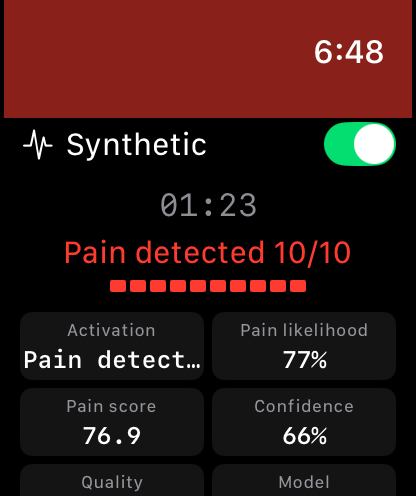
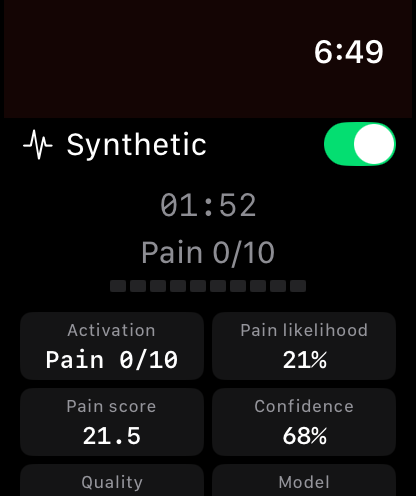
PainWatch Standard uses Apple Watch sensor data to detect sustained pain-like patterns and trigger a structured follow-up workflow. The model estimates pain likelihood, confidence, signal quality, stress likelihood, and baseline departure, then uses a rolling (7/10) activation rule to decide when an episode is meaningful enough to ask about. When triggered, a Prompt Opinion MCP questionnaire helps capture clinically useful information: what happened, where the pain was, what it felt like, current and weekly pain scores, sleep impact, fatigue, mood, and whether the person needed help.
How we built it
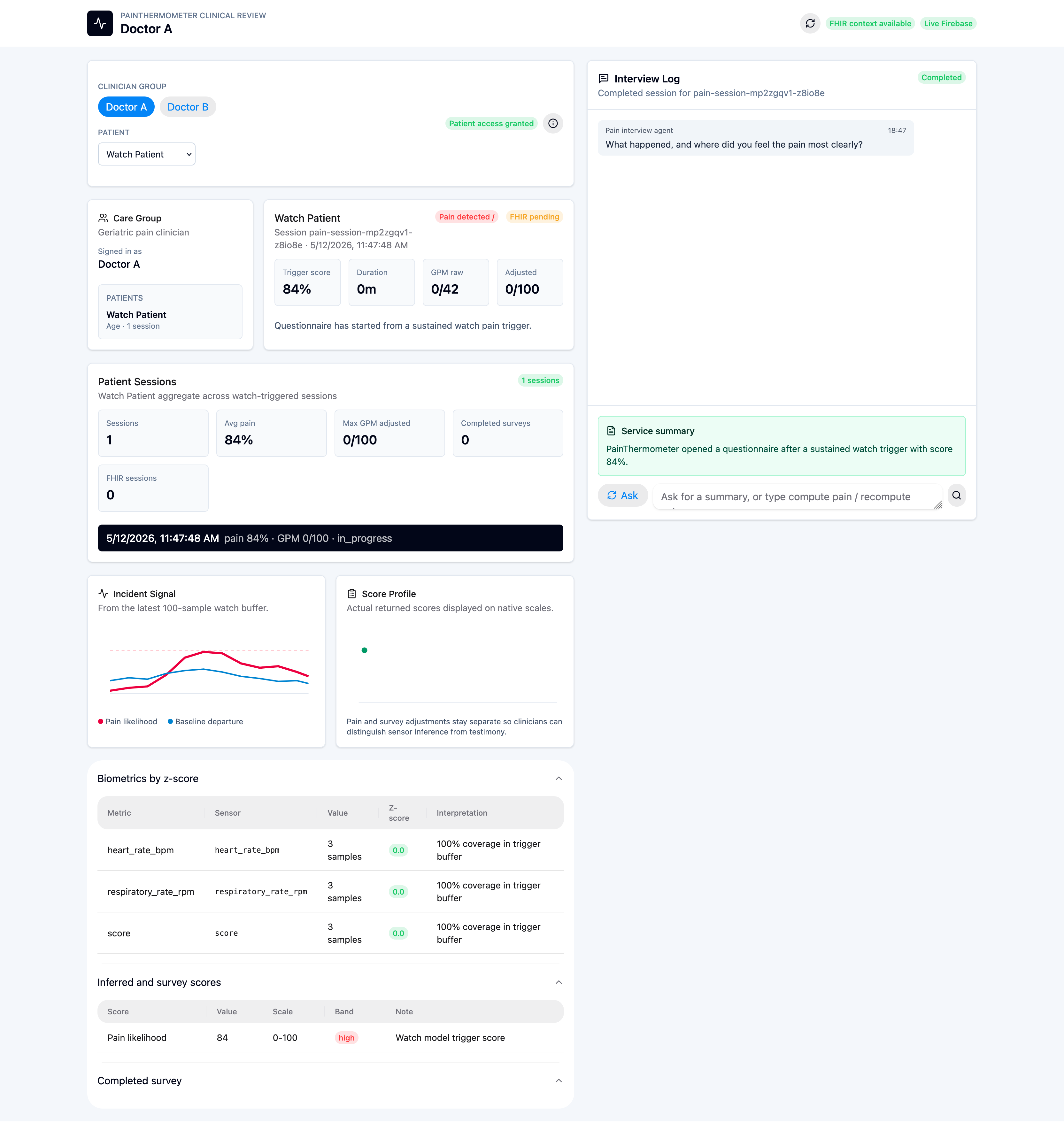
We built the project as a full watch-to-agent pipeline. The Apple Watch app records sensor windows and displays the rolling pain state. The inference layer turns windowed features into pain and context scores using a Phase 3 multitask model. The MCP server exposes tools for starting a questionnaire, retrieving state, submitting answers, and continuing dialogue. We also built a clinician-facing dashboard mock to show how a pain incident could be reviewed with sensor summaries, questionnaire answers, patient testimony, and adjusted scores in one place.
Challenges we ran into
The hardest challenge was that pain is not just a number. Wearable data is noisy, sensor streams can be missing, and physiological signals do not map cleanly to subjective experience. We had to think carefully about confidence, quality, and when not to overstate what the model knows. Another challenge was designing follow-up questions that feel natural while still producing structured, clinically useful data. We also had to connect several different surfaces: watchOS, model inference, MCP tools, Prompt Opinion FHIR context, and a dashboard review flow.
Accomplishments that we're proud of
We are proud that PainWatch Standard does not stop at prediction. It creates a bridge from a detected pain-like pattern to a human explanation of what was happening. The system produces a rolling (10)-block pain display, captures model confidence and sensor quality, and then starts a guided questionnaire that can build a more standard pain vocabulary over time. We are also proud of making the project practical: it is based around consumer wearable devices, MCP tools, and workflows that could support patients, clinicians, caregivers, and non-clinical support networks.
What we learned
We learned that the most important part of a healthcare AI system is often the handoff between signal and meaning. A model can estimate that something changed, but the person still needs to explain what it felt like and why it mattered. We also learned that standardizing pain language requires both structure and flexibility: structured fields help clinicians compare episodes, while open testimony preserves the patient’s lived experience. The goal is not to replace that experience with sensor data, but to help make it easier to communicate.
What's next for PainWatch Standard
Next, we want to harden the workflow for real-world use: persistent questionnaire sessions, production FHIR write-back, stronger patient authorization, and a watch-trigger bridge that connects episodes directly to the MCP workflow. We also want to improve calibration, expand the pain vocabulary, and make the follow-up experience more adaptive over time. The larger vision is a shared standard for pain episodes that can help people communicate clearly in clinical settings, with caregivers, and across broader support communities.

Log in or sign up for Devpost to join the conversation.