-
-
-
-
-
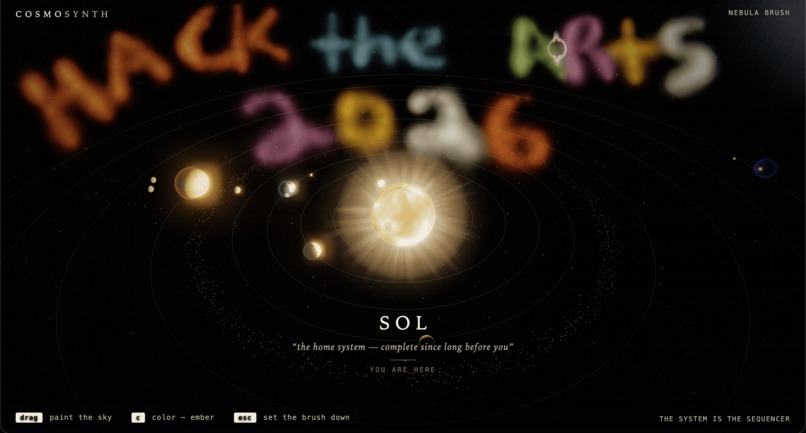
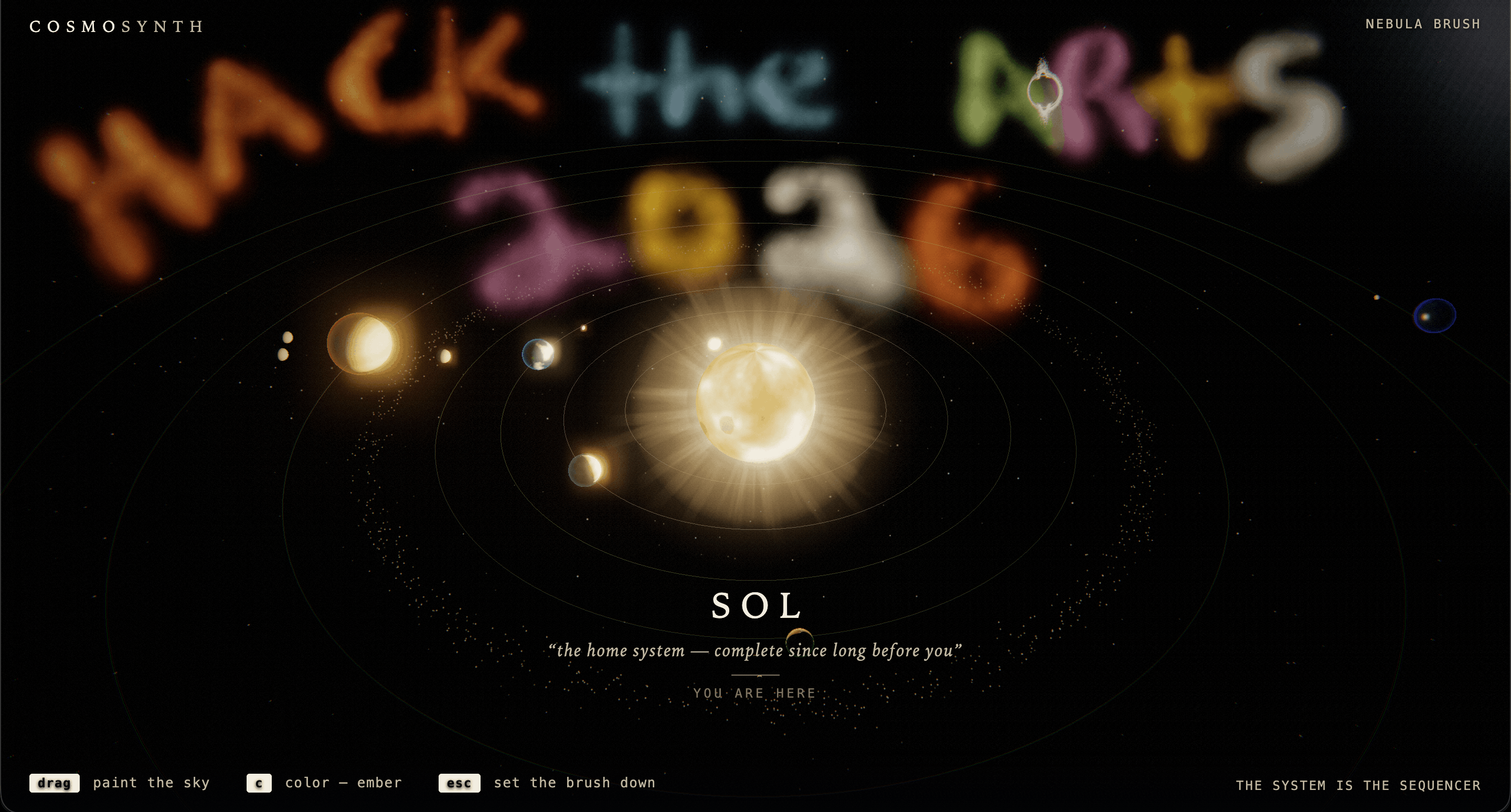
Paint glowing nebulae directly into a living, musical solar system.
-
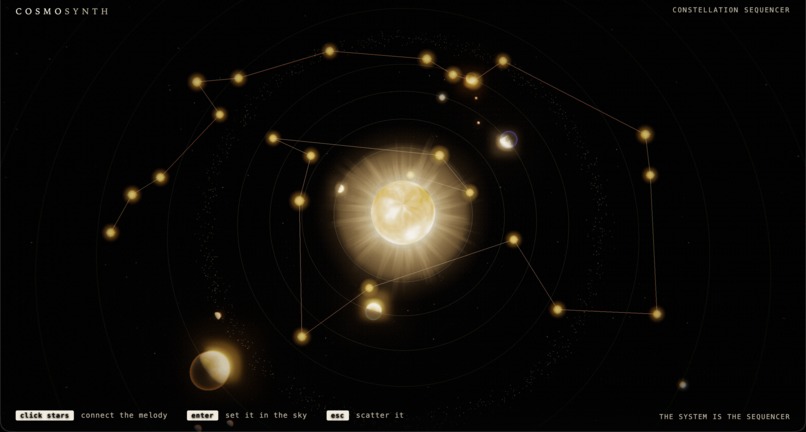
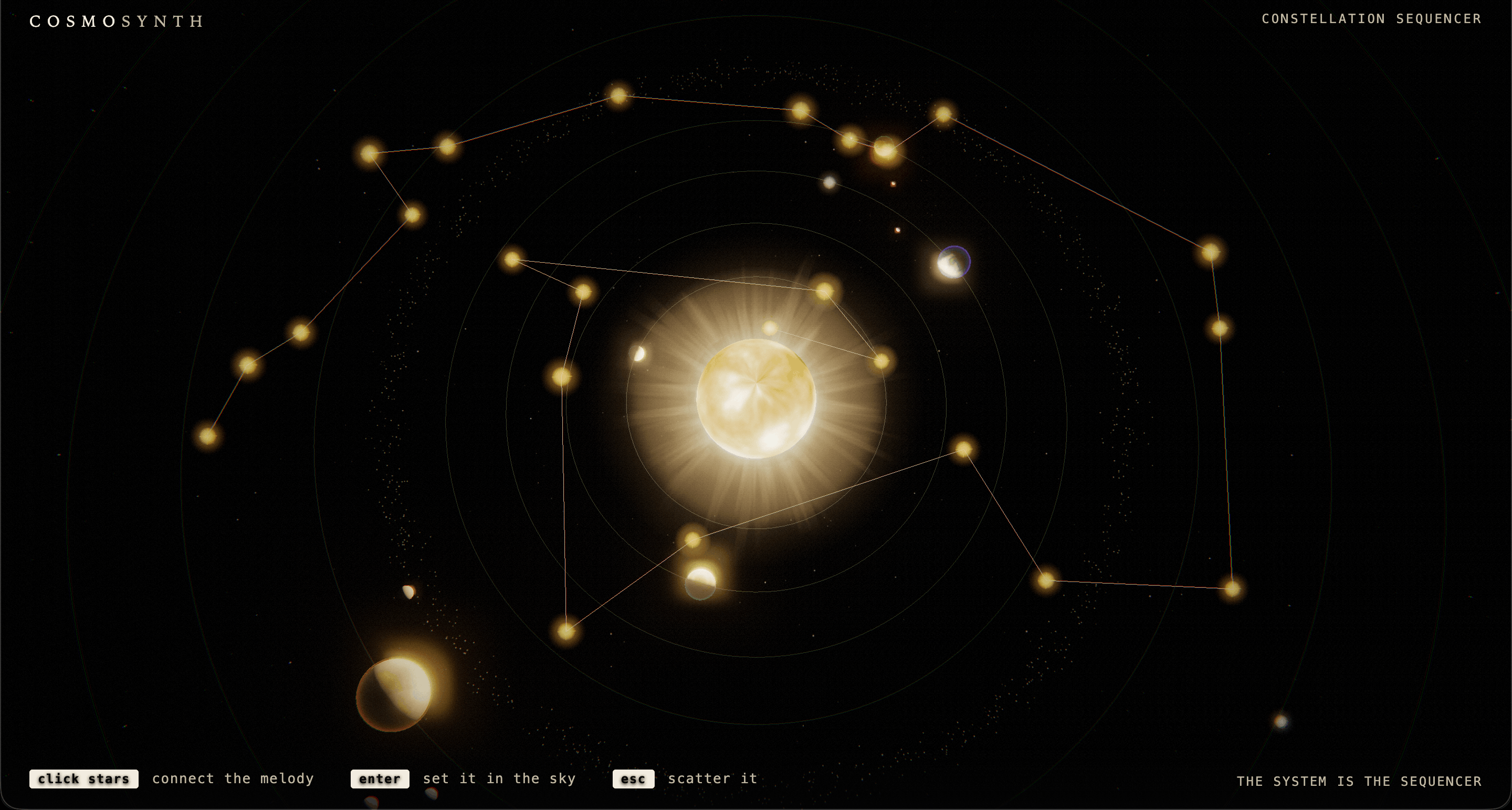
Connect stars into constellations that loop forever as melodies.
-
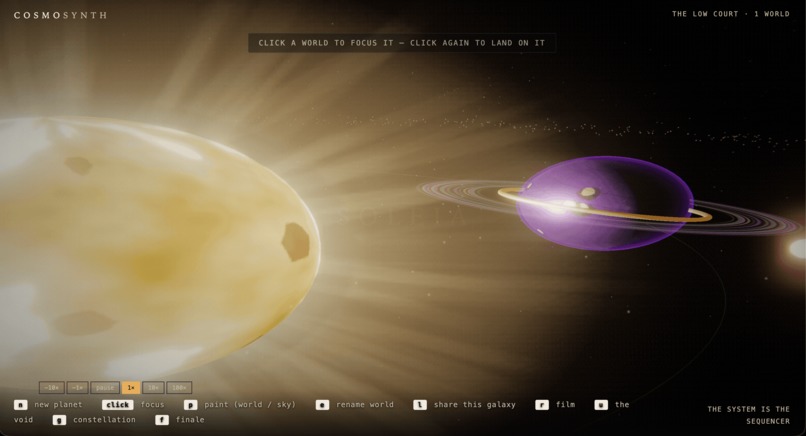
Forge, rename, explore, and conduct an entirely original galaxy
-
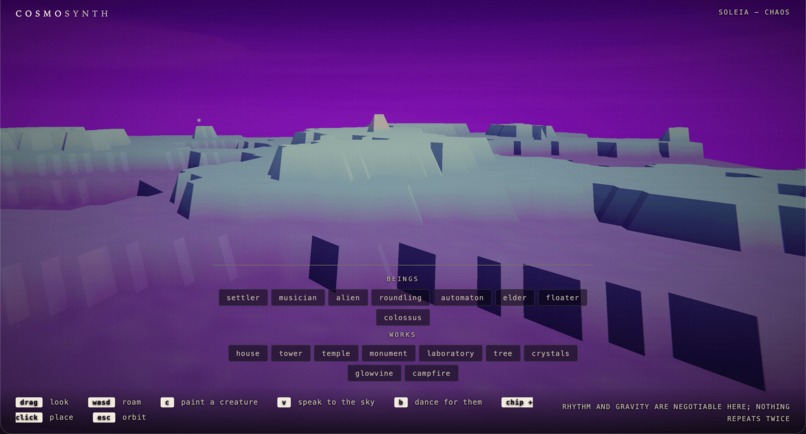
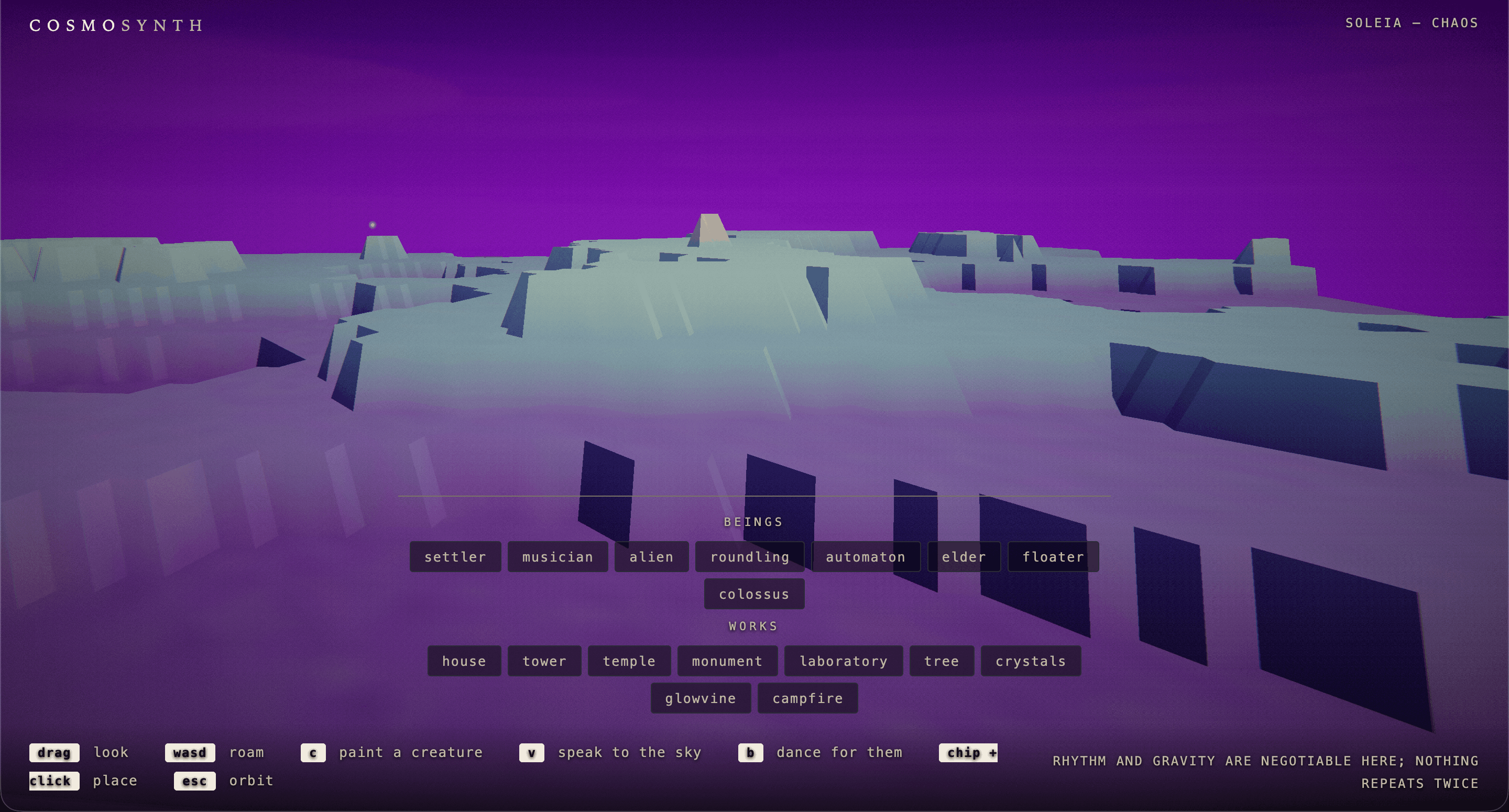
Enter surreal worlds where color, rhythm, and gravity become negotiable.
-
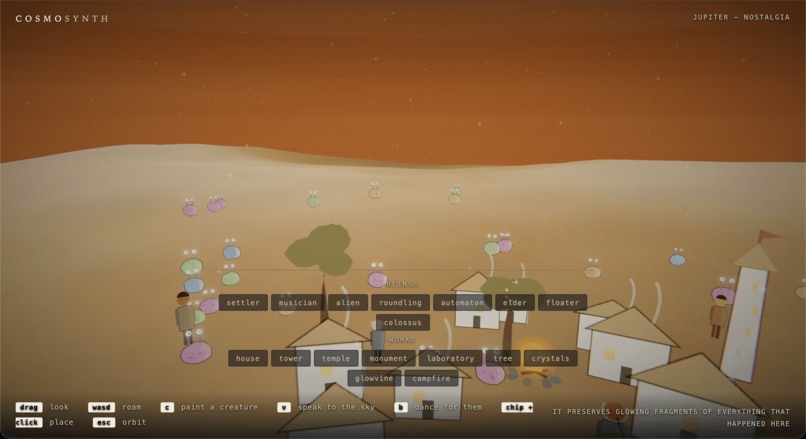
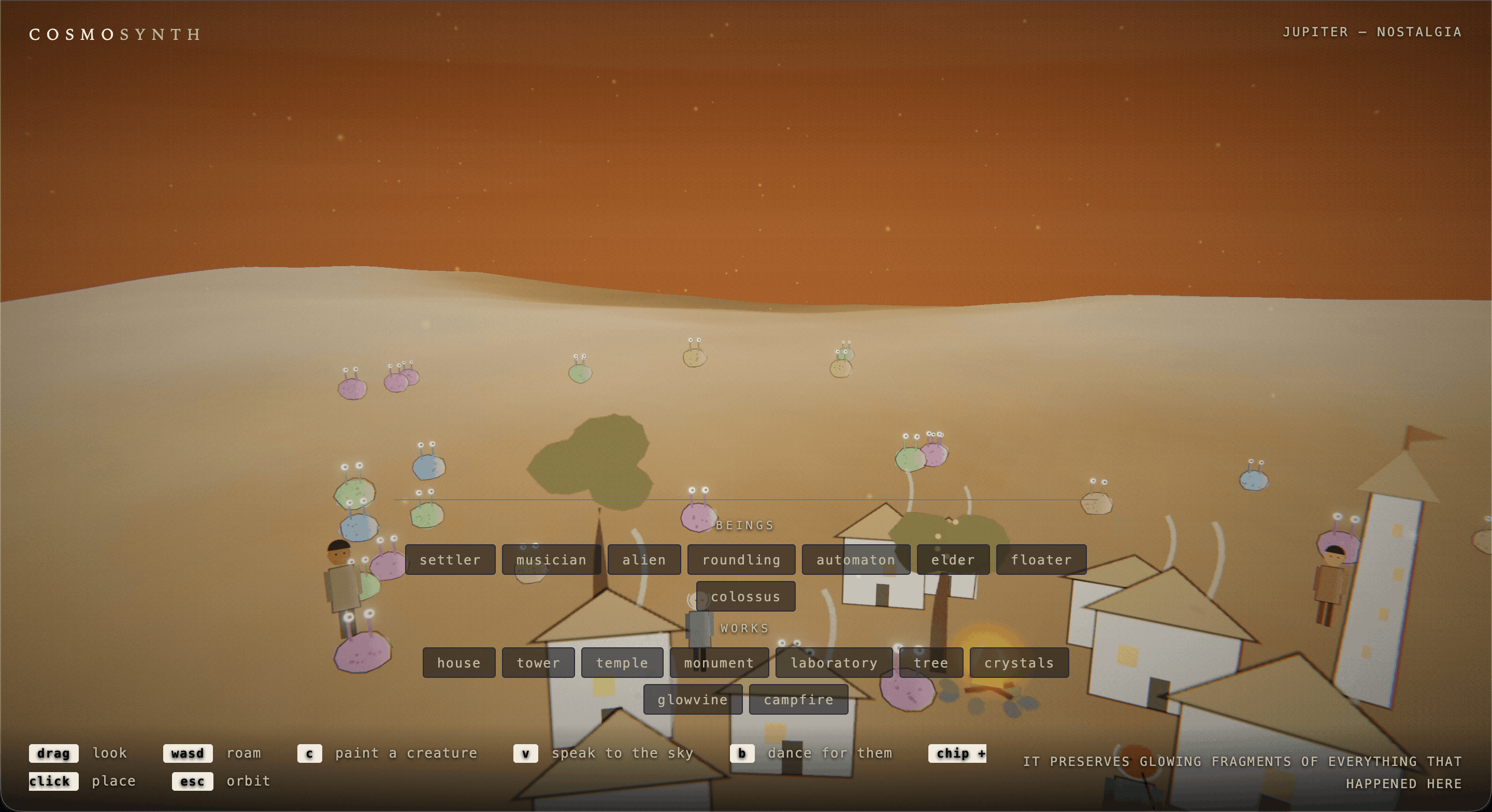
Populate planets with settlers, aliens, musicians, and evolving civilizations.
-
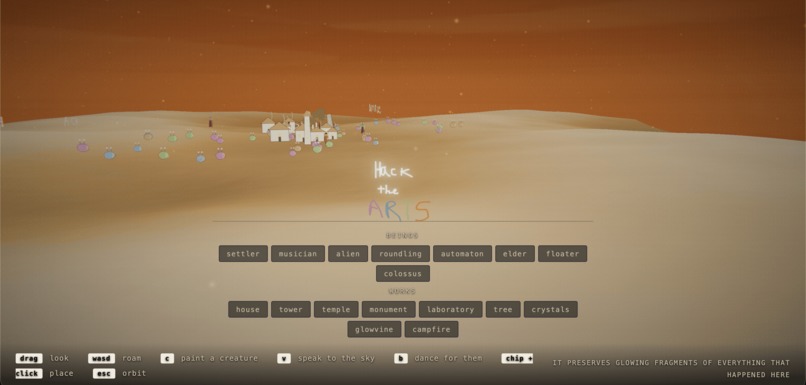
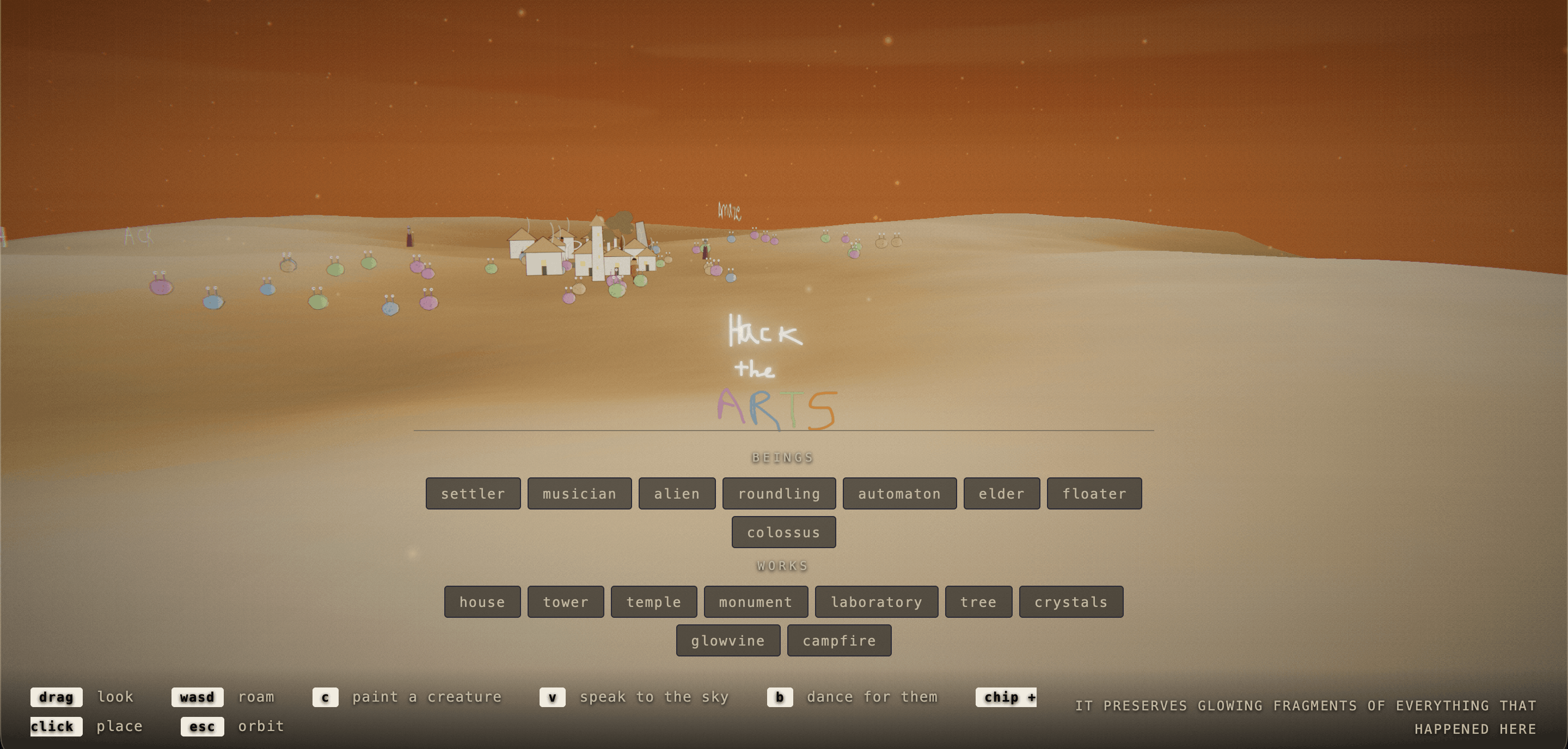
Leave permanent drawings, structures, and memories across your world.
Inspiration
Throughout humanity, when we take a gander or a detailed look at the night sky, we've always attempted to turn it into art. We drew constellations between stars; we named planets after gods. We wrote music about the Moon, painted galaxies we could never touch, and imagined civilizations on worlds we may never reach.
However, those forms of art have always placed us outside the universe, looking in. With COSMOSYNTH, we wanted to cross that boundary.
We wanted to create a universe that was not simply watched, but touched; something that could genuinely be tangible. Not simply heard but composed; Not simply designed once, but allowed to remember, respond, evolve, and eventually become something its creator could not have fully predicted.
COSMOSYNTH sparked from a simple question: What if our solar system could turn into an instrument?
No--not a visualizer that could be played alongside a prerecorded song. A literal instrument where orbital motion becomes rhythm, gravity becomes harmony, distance becomes stereo space, and every world you create changes the composition of the sky.
What it does
COSMOSYNTH is an instrument the size of a universe.
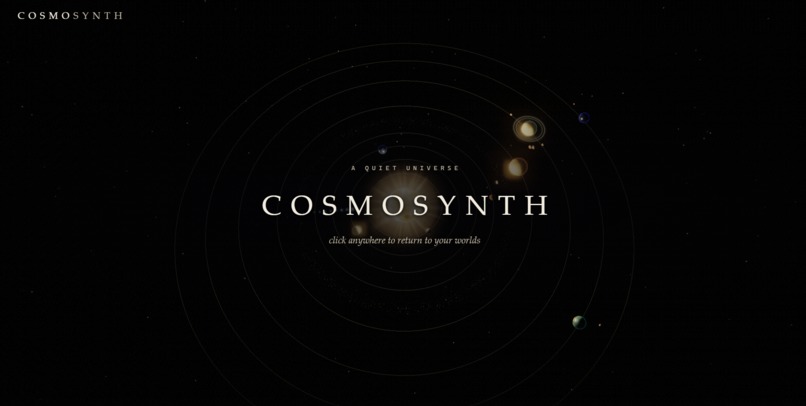
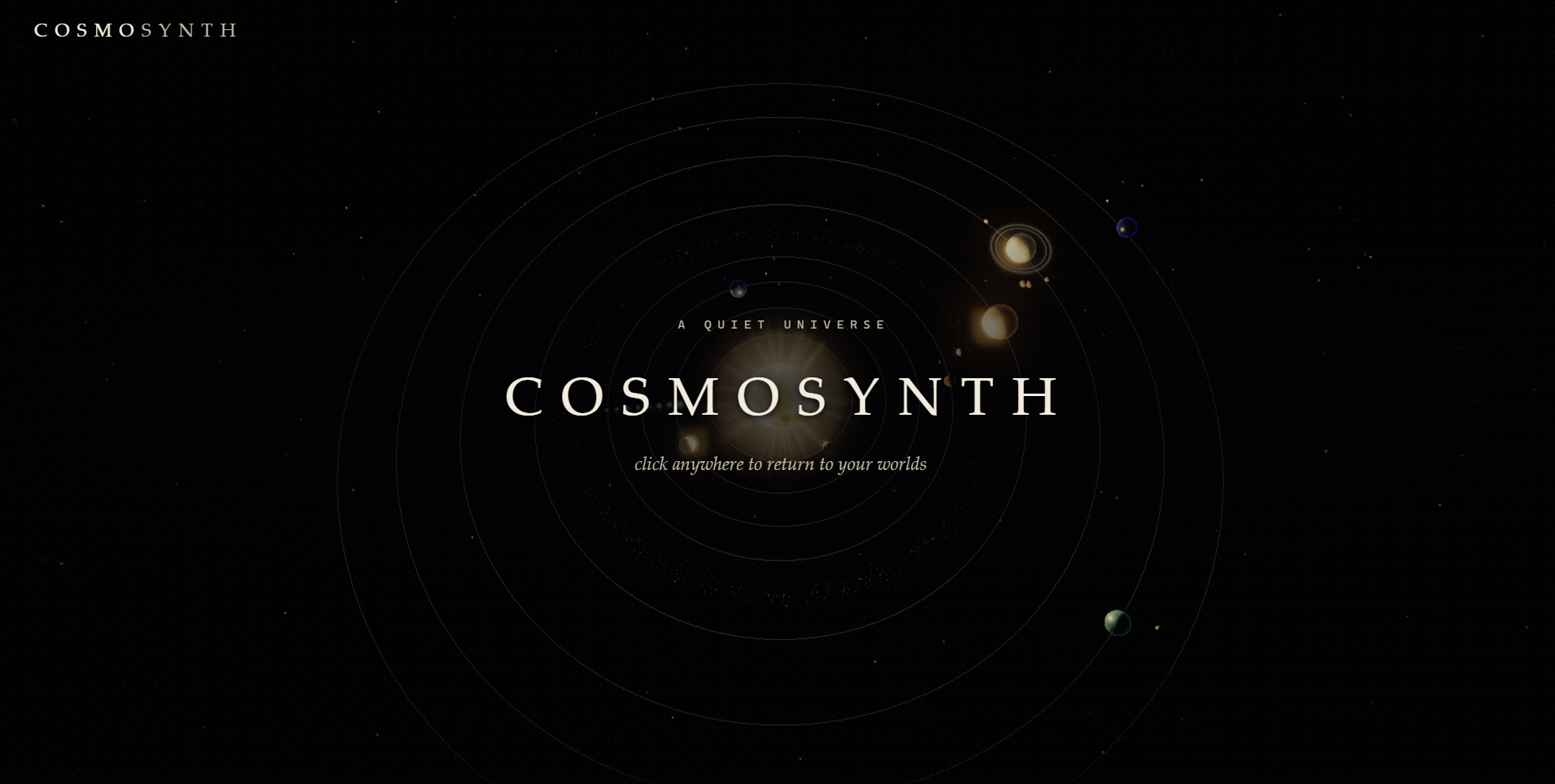
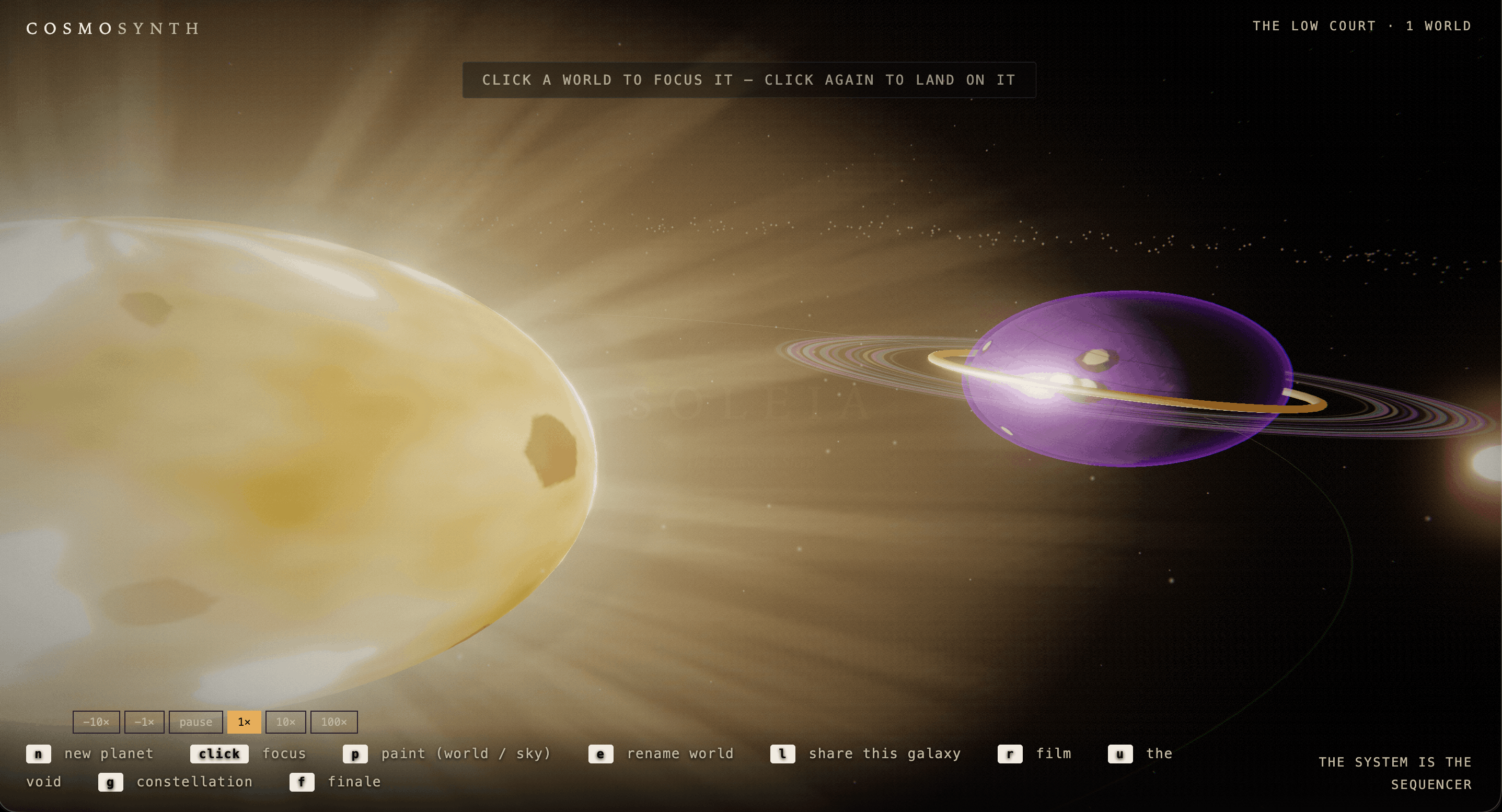
You begin in Sol, our solar system: eight worlds moving through space, an asteroid belt suspended between Mars and Jupiter, Earth glowing with clouds and city lights, Saturn wrapped in dusty rings, and a rogue black hole waiting beyond the familiar planets.
For a moment, your mind may be captivated as you appreciate the beauty of our solar system and simply invited to listen.
Every planet produces a note when it crosses a beat-point along its orbit. Its position determines where that sound appears in the stereo field. Its distance, speed, size, and material identity influence its musical voice. A shared conductor quantizes the entire system into one evolving tonal and rhythmic structure, allowing bodies traveling at completely different speeds to become part of the same composition.
Cohesively, the planets create the music. Slow time, and the composition stretches into isolated, patient notes. Accelerate it to 100×, and years of orbital motion collapse into a shimmering storm of sound. Pause the simulation, and the universe holds its breath.
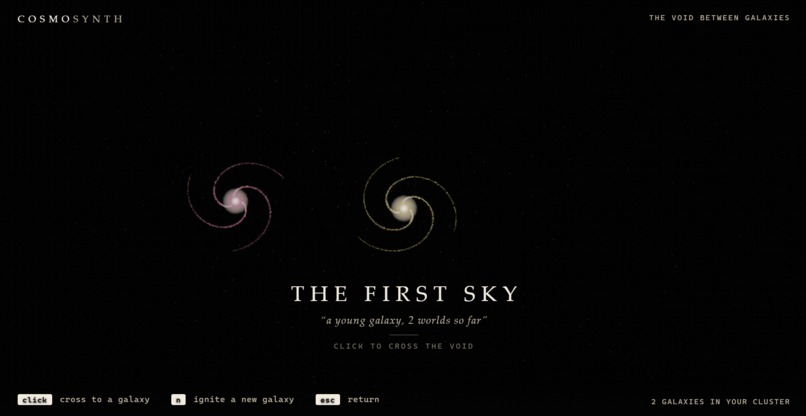
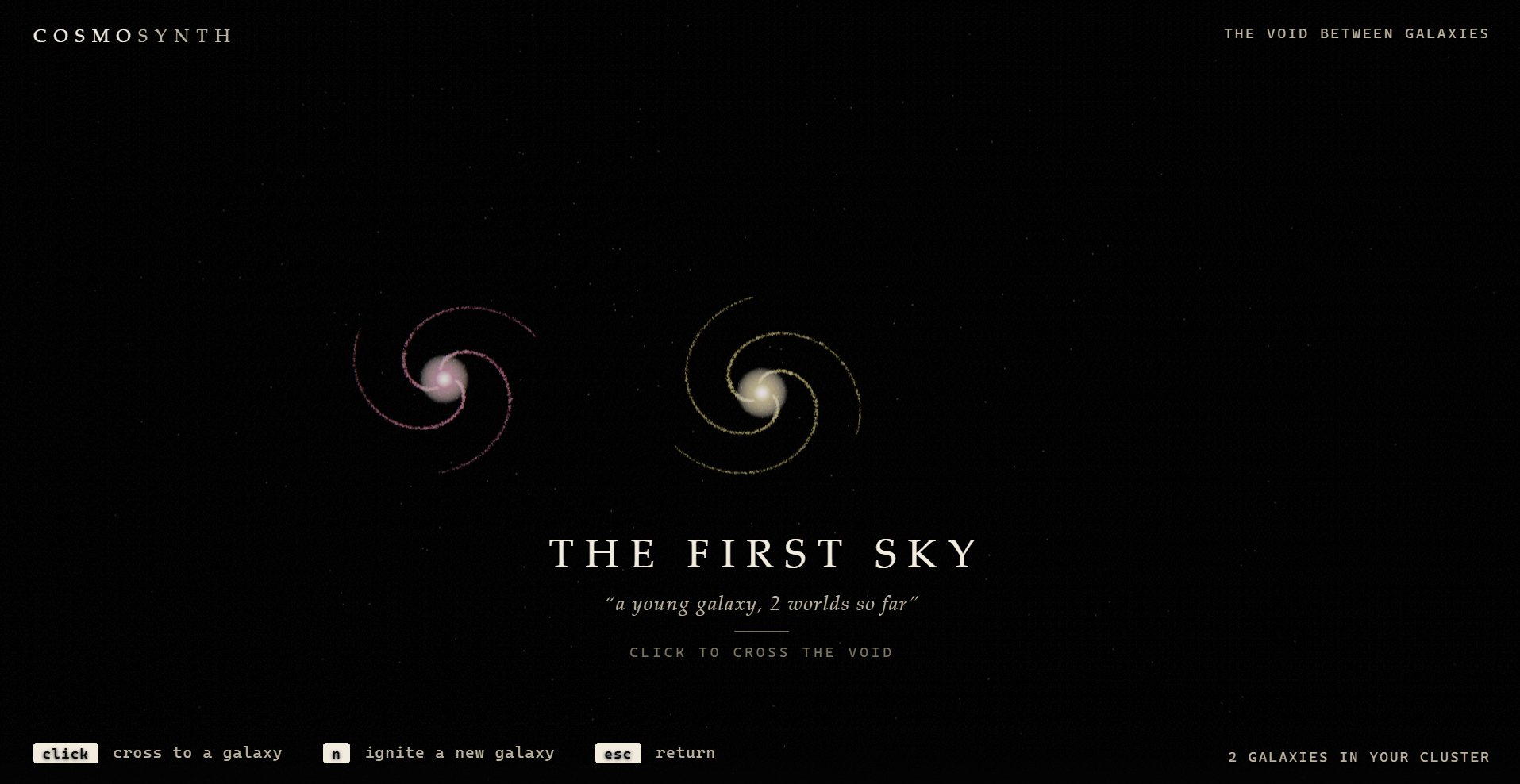
Want to make your own universe? Have no fear (except for the fact that you'll have to leave our beloved Sol), for COSMOSYNTH allows just for that! You cross the void into an unformed galaxy, give it a name, ignite its first star, and begin creating a universe that has never existed before.
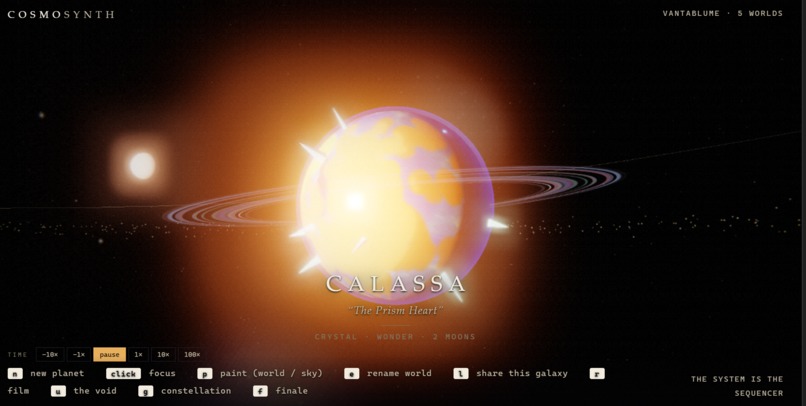
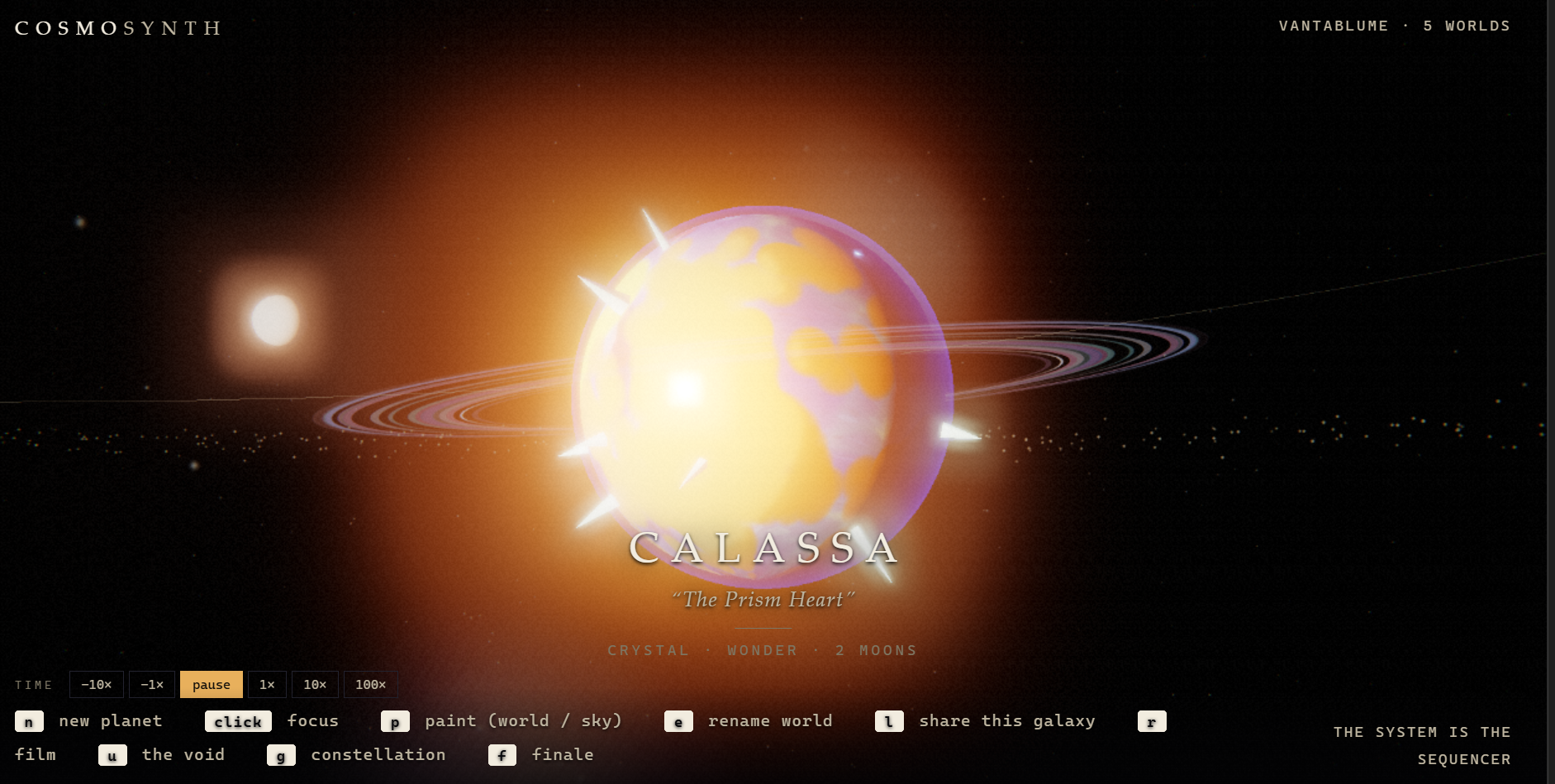
Forge a world from cosmic dust: You hold the cosmos beneath your cursor as approximately 1,400 particles spiral inward. The dust gathers into an accretion disk, compresses, heats, and finally ignites into a procedurally painted world.
The planet receives a generated name and identity: Ithith — The Prism Heart
Then, before you place a single structure or creature on its surface, it sings its first chord.
That sound becomes part of the galaxy forever.
Each world is visually generated at runtime from seeded noise, layered canvas painting, flow-field strokes, atmospheric effects, terrain patterns, and material rules. A planet may emerge as a fractured volcanic world, a quiet ocean sphere, a glowing crystal body, or something that does not resemble any natural planet at all.
Its appearance is not a texture pasted onto a model. It is the visible record of the system that created it.
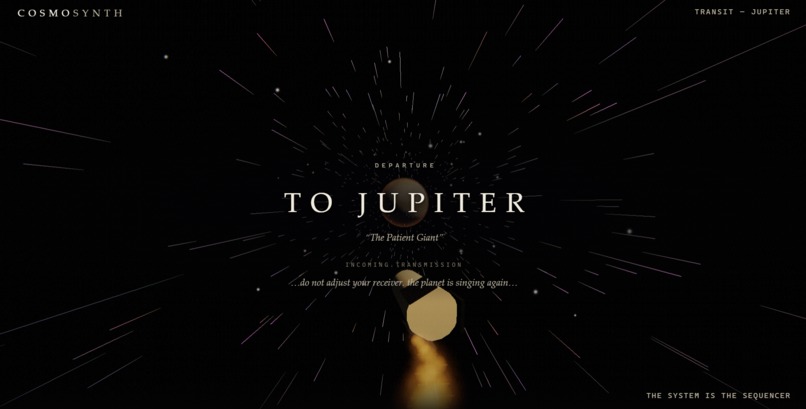
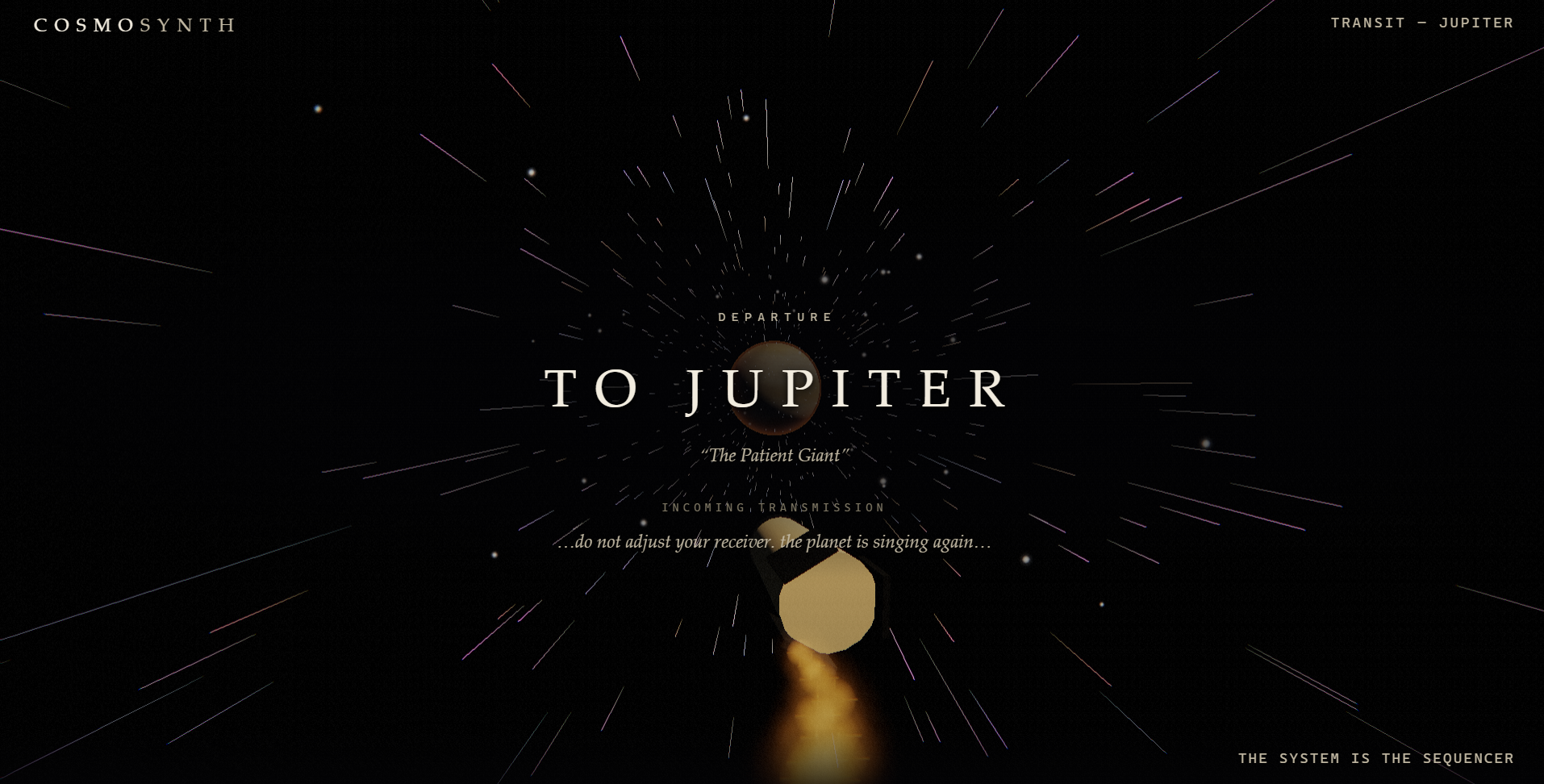
COSMOSYNTH allows for a truly immersive experience. You can launch toward any world and physically enter it through a cinematic rocket sequence .Stars stretch around the ship. The galaxy’s composition changes as the destination grows closer. The rocket itself transforms to echo the world it is approaching: crystalline, organic, mechanical, luminous, or strange. Landing changes the scale of the experience completely.
What was once a musical point in the sky becomes a place with weather, terrain, memory, and life.
You can populate the surface with settlers, aliens, temples, towers, monuments, and colossi. These are not temporary decorations. Their positions and histories are written into the planet’s persistent memory. Leave the world, close the browser, return later, and they remain where you placed them. Over time, the planet becomes a record of your decisions. A temple on a hill is no longer just an object. It marks the moment you chose that hill. A creature wandering near it remembers the world in which it was born. You're also able to create your very own "creature companions" using the "paint a creature" feature.
Speak and sing to the world:
The universe listens.
Say, “Let it storm,” and the atmosphere changes.
Sing a sustained note, and terrain rises from the ground.
Your voice is not used to select a predefined animation. Its pitch, duration, intensity, and timing become creative input.
The border between performance and construction begins to disappear. Singing can become sculpture. Speech can become weather. Breath can become movement. None of these systems produces a fixed artwork. Each produces conditions from which art can continuously emerge. The work is different every time because it depends on the evolving state of a simulation and on the person interacting with it. Two users may begin with the same empty galaxy, but they cannot create the same universe. Their timing, movement, drawing style, voice, spatial decisions, and curiosity will change both the visible world and the music it performs.
How we built it
We built COSMOSYNTH with Three.js, Vite, vanilla JavaScript, the Web Audio API, IndexedDB, custom GLSL shaders, voice input, and webcam motion tracking.
Every planet, character, nebula, texture, and sound is generated at runtime. Planet surfaces are painted procedurally from seeded noise and flowing brushstrokes, while the soundtrack emerges directly from the orbital simulation. Each planet triggers synthesized notes as it crosses points in its orbit, and a conductor brings those events onto a shared rhythm and tonality.
IndexedDB allows galaxies, creatures, buildings, nebula paintings, and memories to survive reloads. The result is not a collection of assets placed into space, but a living system built entirely from code.
Challenges we ran into
Our biggest challenge was making orbital motion sound musical without making it feel artificially synchronized. Real planets move at very different speeds, so direct note triggers created either long silences or overwhelming clusters of sound. We solved this by building a conductor that gently quantizes orbital events onto a shared rhythm and tonality while preserving the individuality of each planet’s motion.
Performance was another major challenge. COSMOSYNTH generates textures, synthesizes audio, renders thousands of particles, tracks planetary motion, stores user-created worlds, and processes microphone or webcam input in real time. We had to carefully balance visual richness with browser performance so the experience remained smooth.
The hardest challenge, however, was making every system feel like part of the same larger artwork. Some examples of things we ran into were: creatures' drawings had to influence how it moved, the black hole’s gravity had to alter the music, and the final painting had to emerge from the actual history of the session.
Accomplishments that we're proud of
The accomplishment that we are most proud of is how COSMOSYNTH feels like one living artwork rather than a collection of separate features. For instance, planets do not simply orbit while music plays in the background. It is their distinct movements that actually create the melody.
We are also proud that nearly every part of the experience is generated in real time. The planets, textures, nebulae, characters, sounds, and final artwork all emerge from code rather than prerecorded media or imported assets.
Most importantly, we began by trying to build an interactive solar system and ended up creating something much more personal: a medium where people can compose with gravity, paint with space, and leave behind a universe that reflects the way they chose to create.
What we learned
The most important thing that we learned, by far, was that generative art becomes meaningful when people can feel exactly how they shaped it.
We also learned that engineering decisions can be emotional decisions. We found ourselves asking how long a planet’s birth should take, what its first note should feel like, and how quiet the universe should become when time stops.
What's next for Cosmosynth
We would like for COSMOSYNTH to transform into an environment where several people can create a "shared universe". To elaborate, individuals would be able to collaborate by one painting a nebula, another designing a planet, another drawing its creatures, and another performing its music.
Future worlds could develop civilizations that reinterpret what their creators leave behind. Planets could exchange architecture, creatures, and songs. Giant pianos, meteor drums, and ring-shaped harps could connect entire solar systems.
Ultimately, we want these universes to keep evolving even after individauls are done creating them and have "left" them.


Log in or sign up for Devpost to join the conversation.