Inspiration: To bring portable hydroponic plants to people living in tiny homes.
What it does: This system supports a singular hydroponic plant with a soilless ebb-and-flow system, which constantly replenishes nutrients and reoxygenates water.
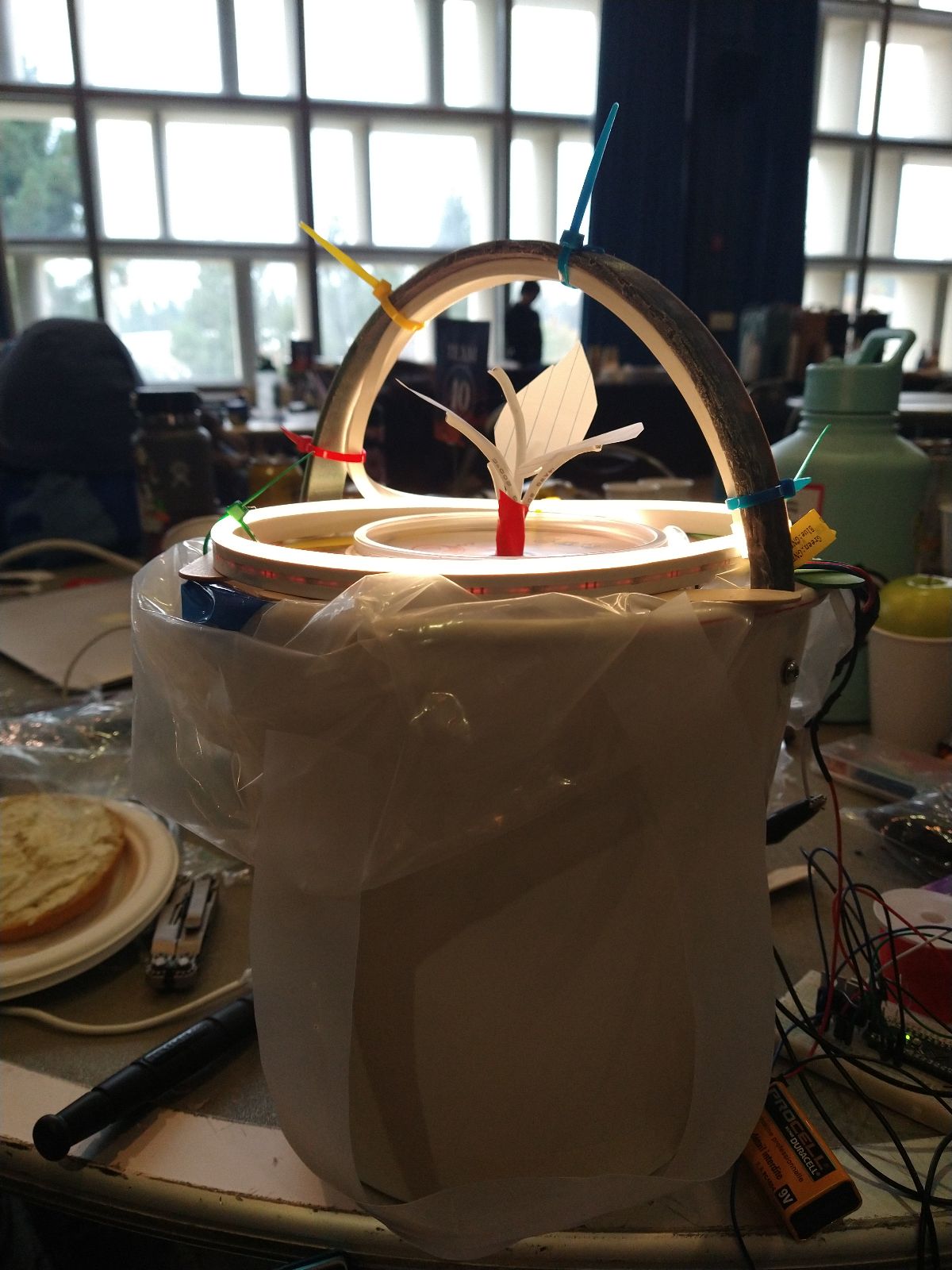
How we built it: We originally wanted to use purpose-built components, but limited supplies forced us to use repurposed materials, such as assorted to-go boxes, a UCLA merch store bag, popsicle sticks, and a simulated hydroponic plant made of wires and paper.
Challenges we ran into: Unfortunately, every single step of our design process was met with challenges, ranging from complex wiring to misidentified components. Towards the end of our project, we were forced to take a large step backward in our design, but it helped us to simplify and ultimately complete our project, albeit imperfectly. We were not able to make our design as portable as we hoped, but with more time, we can easily adapt our design into one that is more user-friendly, compact, and easily transportable.
Accomplishments that we're proud of: We managed to complete this entire project within a very low budget and with readily accessible materials. Although we faced never-ending challenges during our process, we finished the event with a working project that we are satisfied with.
What we learned: We practiced soldering, using heat shrink, breadboards, and virtual circuit schematics, but we also learned how to solve complex problems within circuits, and to apply MOSFETs, voltage regulators, and other key electronic components into a circuit.
What's next for PAHS (Portable Automatic Hydroponic System): Our hope for PAHS is to spread awareness about the affordability and accessibility of hydroponic plant systems. Our design is affordable, peaceful, simple, easy to maintain, and uses easy-to-find components.


Log in or sign up for Devpost to join the conversation.