Inspiration
Everyone has a business card — something that represents who they are professionally. But sharing them is passive. You send a card and hope someone reads it.
We wanted to flip that.
What if your card could talk? What if, instead of a static card, you had an AI that knew everything about you and could answer questions on your behalf?
What It Does
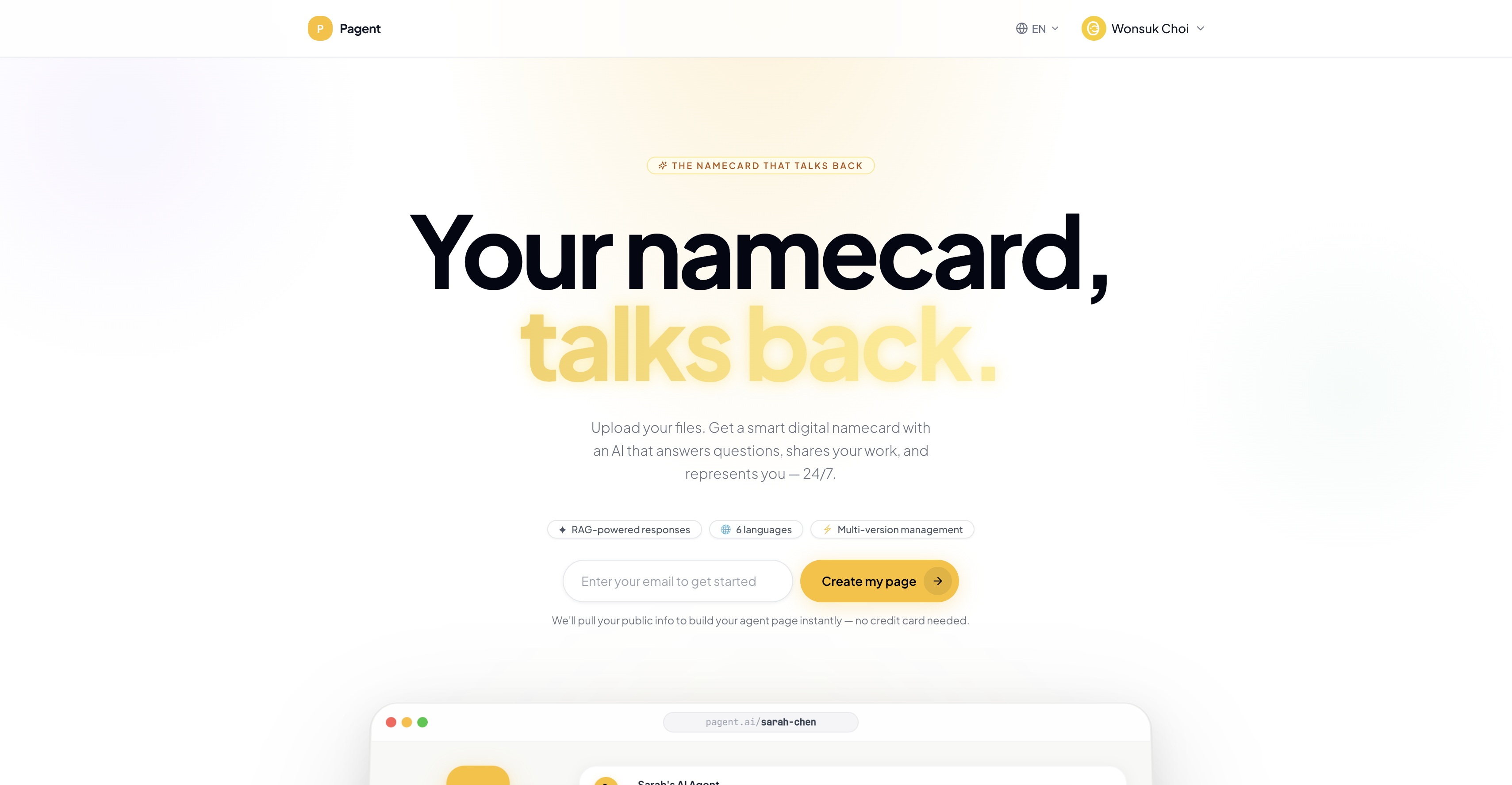
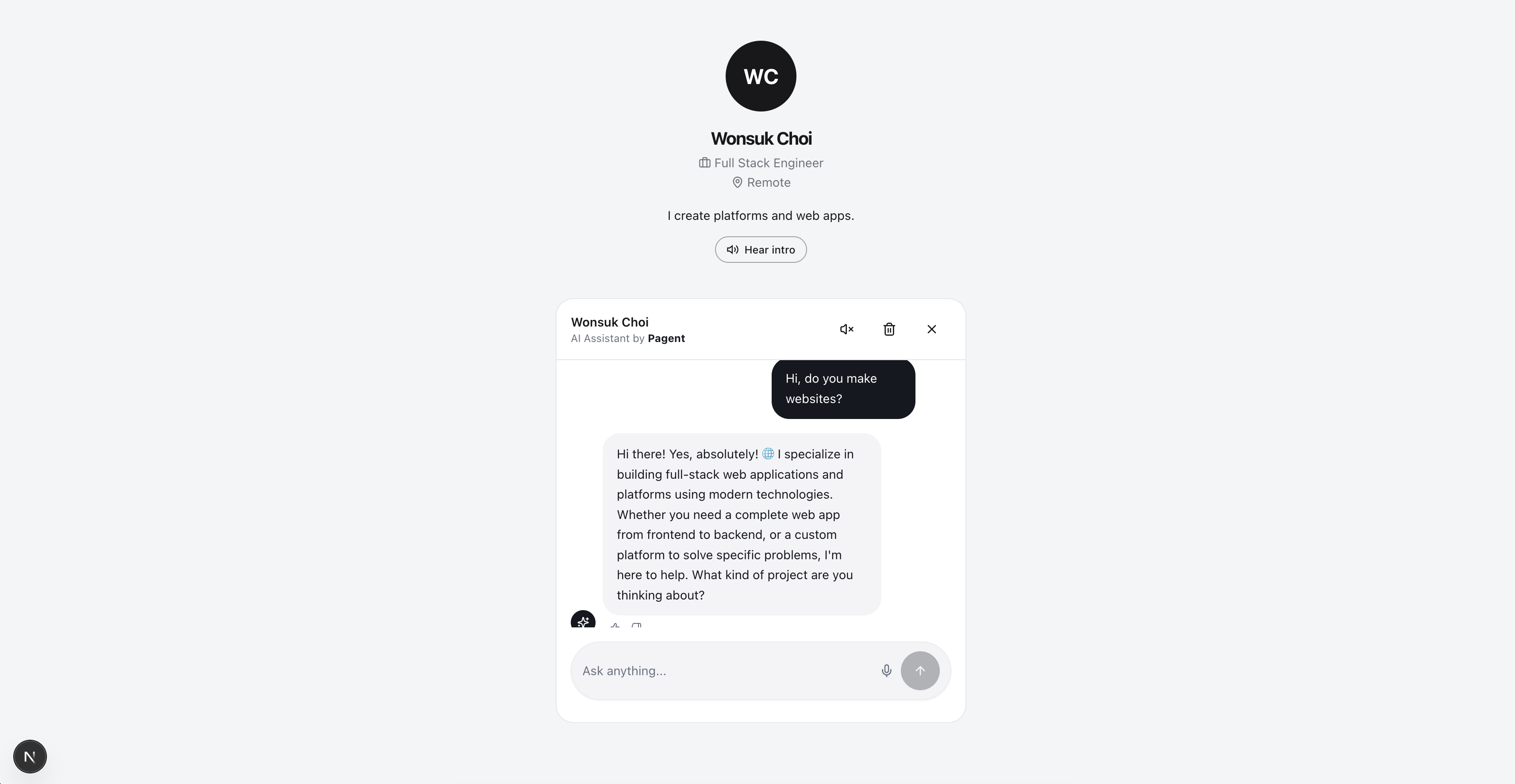
Pagent turns your business card into an AI.
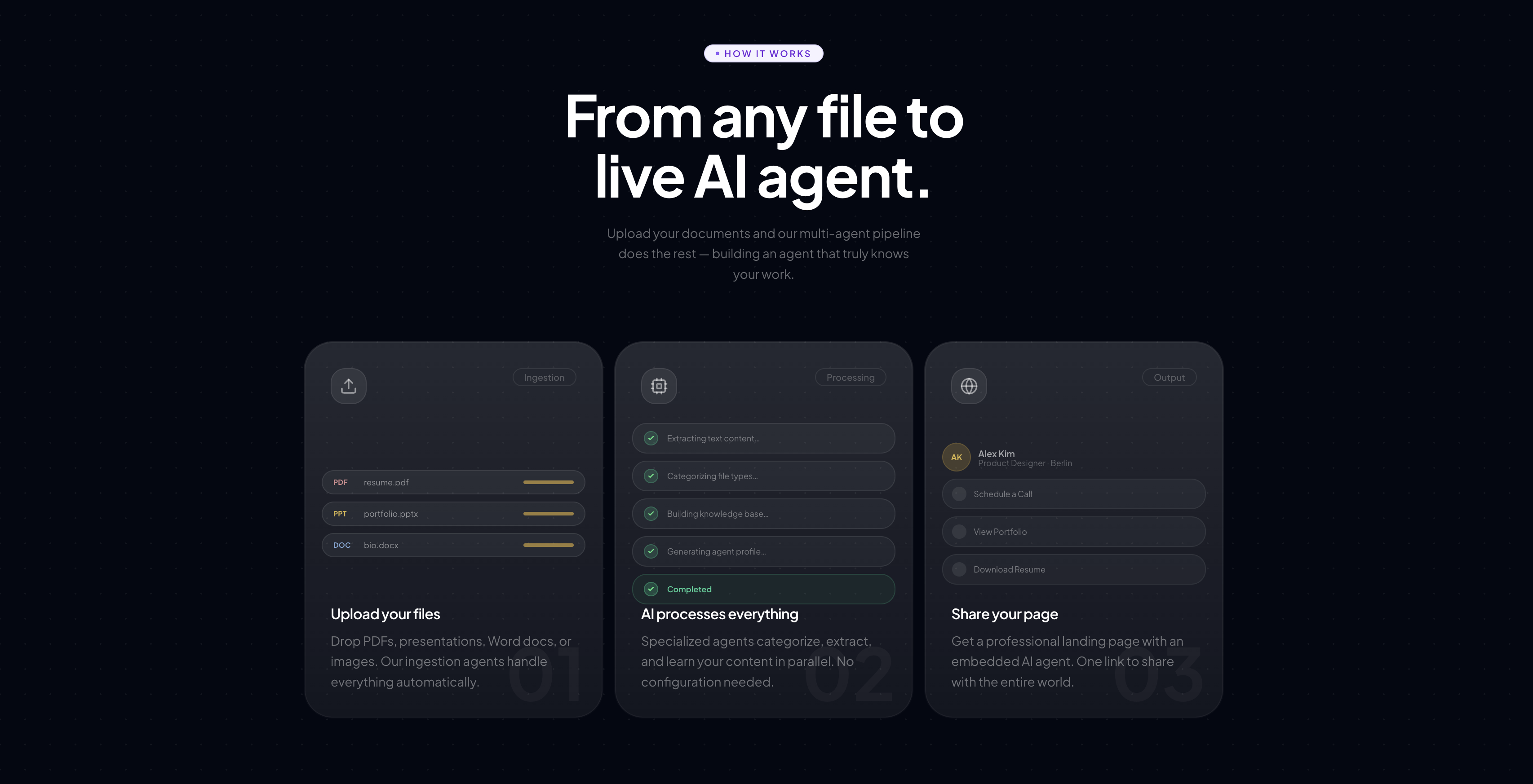
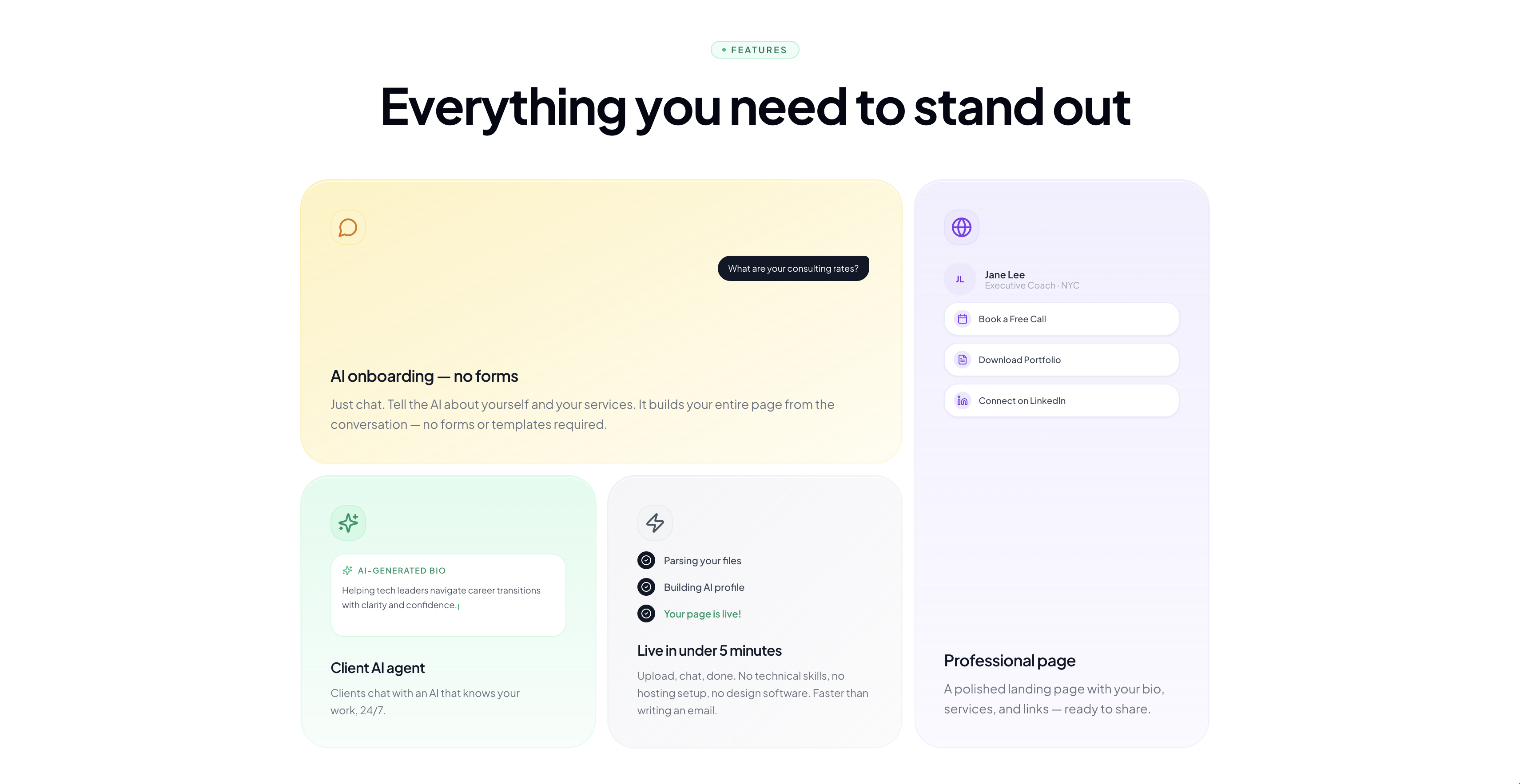
Upload your files — resume, deck, portfolio — and get a shareable personal page with an embedded AI agent that knows everything about you. Visitors don’t just browse your page; they interact with it.
They can ask about your experience, services, or expertise.
Share the link anywhere. It’s your business card — but alive.
How We Built It
Frontend: React + Next.js Personal profile page and chat interface
AI Models: OpenRouter Powers specialized agents generated from processed content
Database & Auth: Supabase Stores profiles, API keys, sessions, and integration tokens
Integrations:
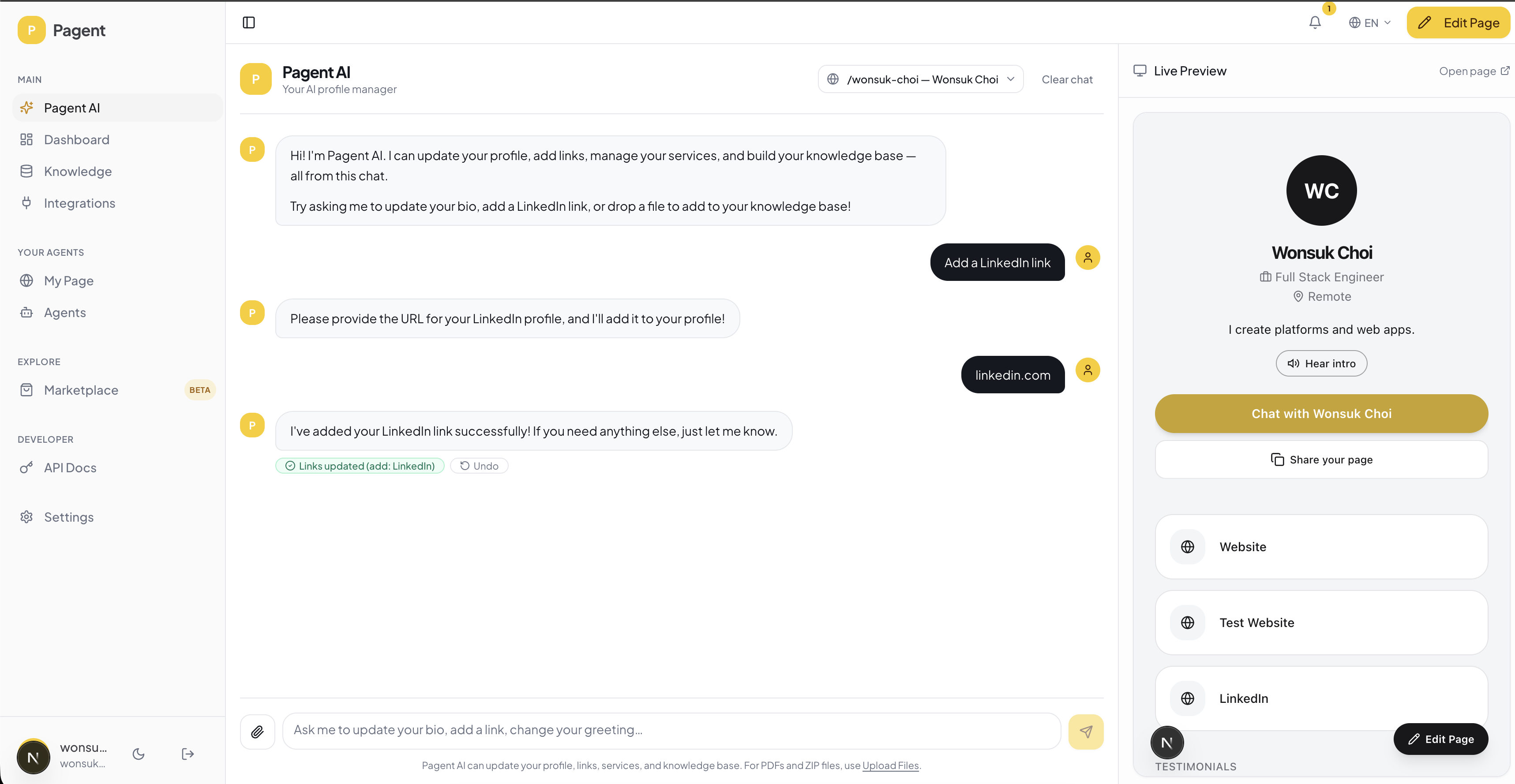
- Notion: Connect your workspace to enrich the agent’s knowledge base
- Tinyfish: Data retrieval for onboarding new users/professionals
- Obsidian: Sync your “second brain” with Pagent
Challenges We Ran Into
- Making each generated page feel personal and unique despite wildly different input types
- Keeping latency low when processing large files through sequential agents
- Building the Notion integration — complex, but ultimately successful
Accomplishments We're Proud Of
- Fully optimized pSEO and GEO for better LLM crawlability and retrieval
- Google Lighthouse optimization for speed, reducing website bounce rates through highly efficient code and performance tuning
- Multi-format ingestion (PDF, Word, PowerPoint, images) feeding into one coherent agent
- Notion integration enabling richer, external knowledge beyond uploaded files
- The core concept: transforming a passive business card into a conversational identity
- Using the knowledge base to dynamically generate custom pages
- Marketplace integration allowing developers to build modular components
- Integration of i18n for global scalability, with the potential to reach 8 billion users
What We Learned
- Users don’t want to think about “agents” — they just want something that works and sounds like them
- Product-market fit clicked when positioned as a business card, not a chatbot
What’s Next for Pagent
- More input sources: Gmail, LinkedIn, calendar — beyond just files
- Agent integration: Zalo number, Whatsapp number
- Agent personas: Customize tone and personality
- Analytics: Track visitors, questions asked, and run A/B tests
- Custom domains: Subdomains + full custom domain support
- Team pages: Shared agents for agencies and small businesses
- Per-user AWS infrastructure: Each user gets their own S3 bucket and dedicated agent instance (EC2/Fargate) for GDPR compliance, data isolation, and right-to-erasure — no shared storage
Built With
- chatgpt
- claude
- next
- notion
- openrouter
- react
- supabase
- tinyfish


Log in or sign up for Devpost to join the conversation.