-
-
-
-
-
-
-
-
-
-
-
-
-
-
-
-
-
-
-
-
-
-
-
-
-
-
-
https://youtu.be/VukS_GjG8ZAhttps://youtu.be/VukS_GjG8ZA
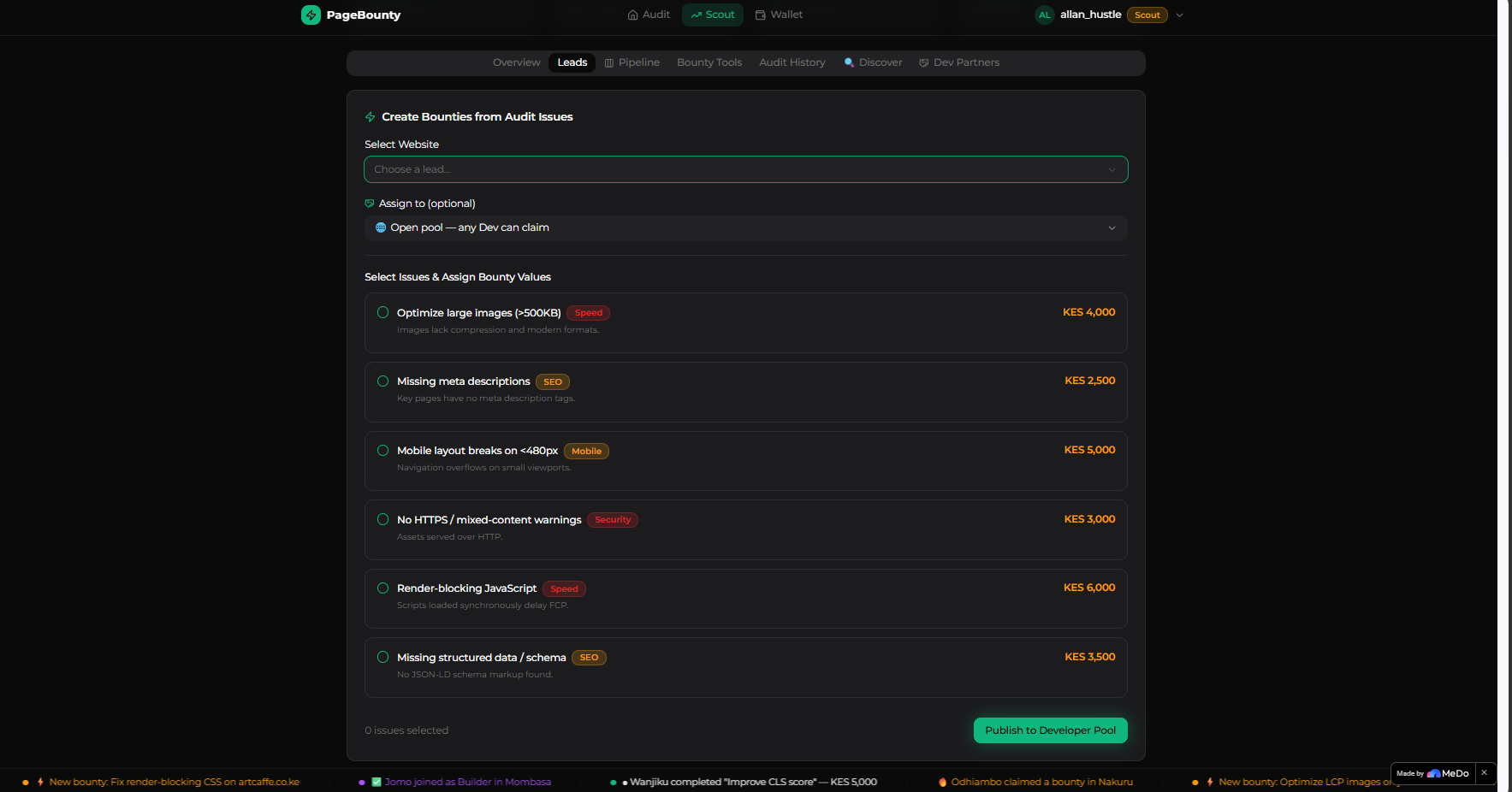
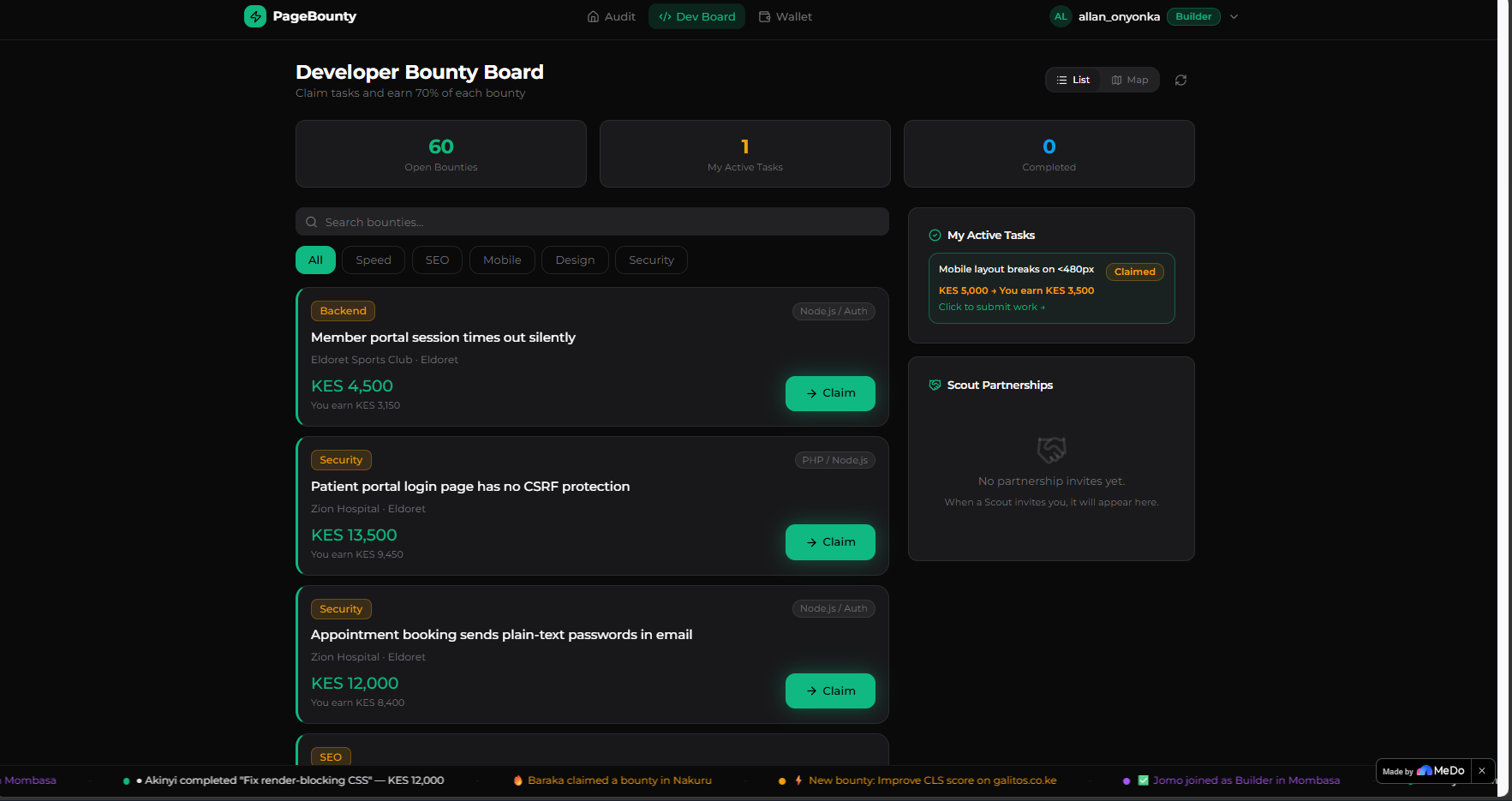
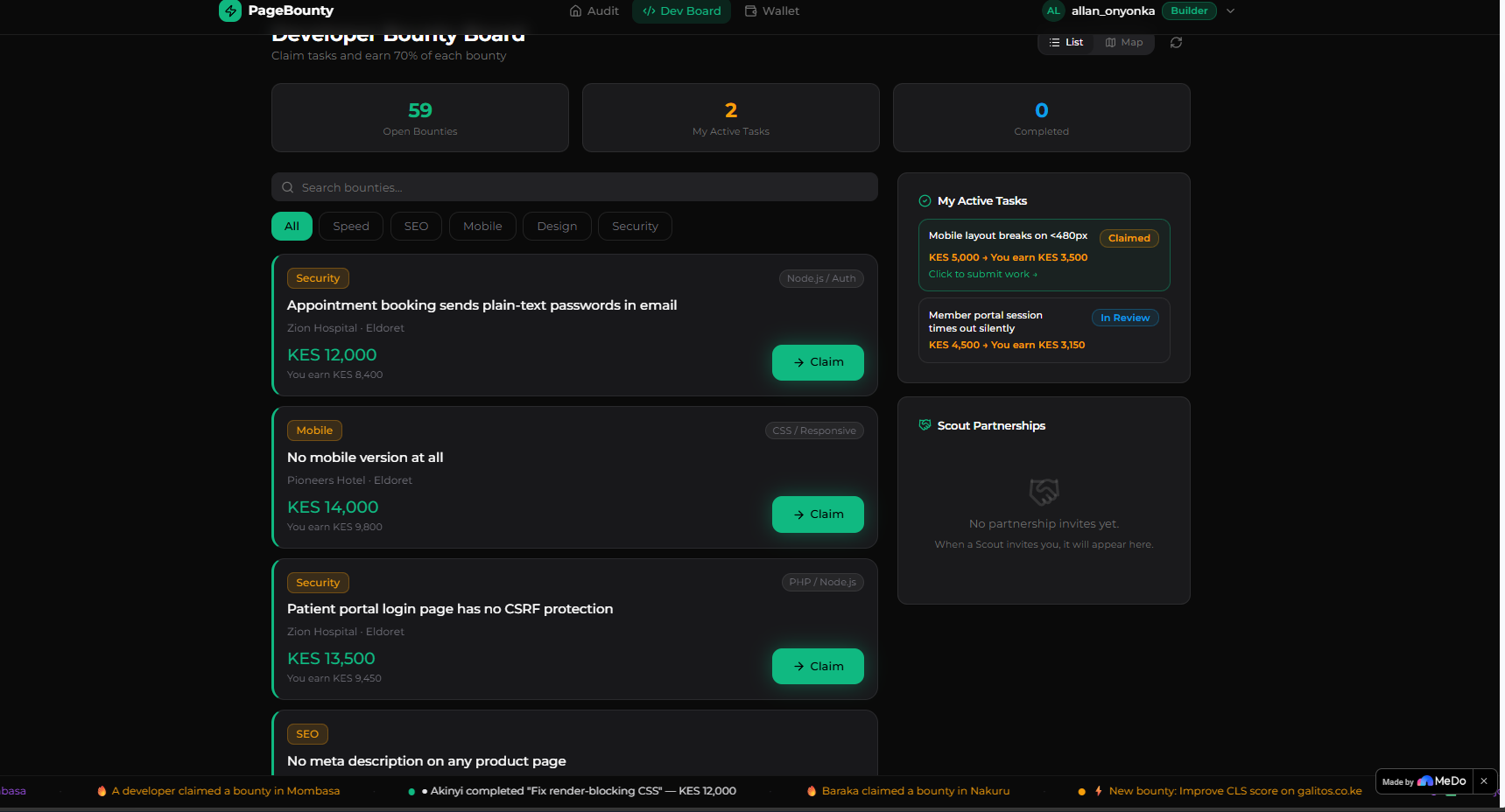
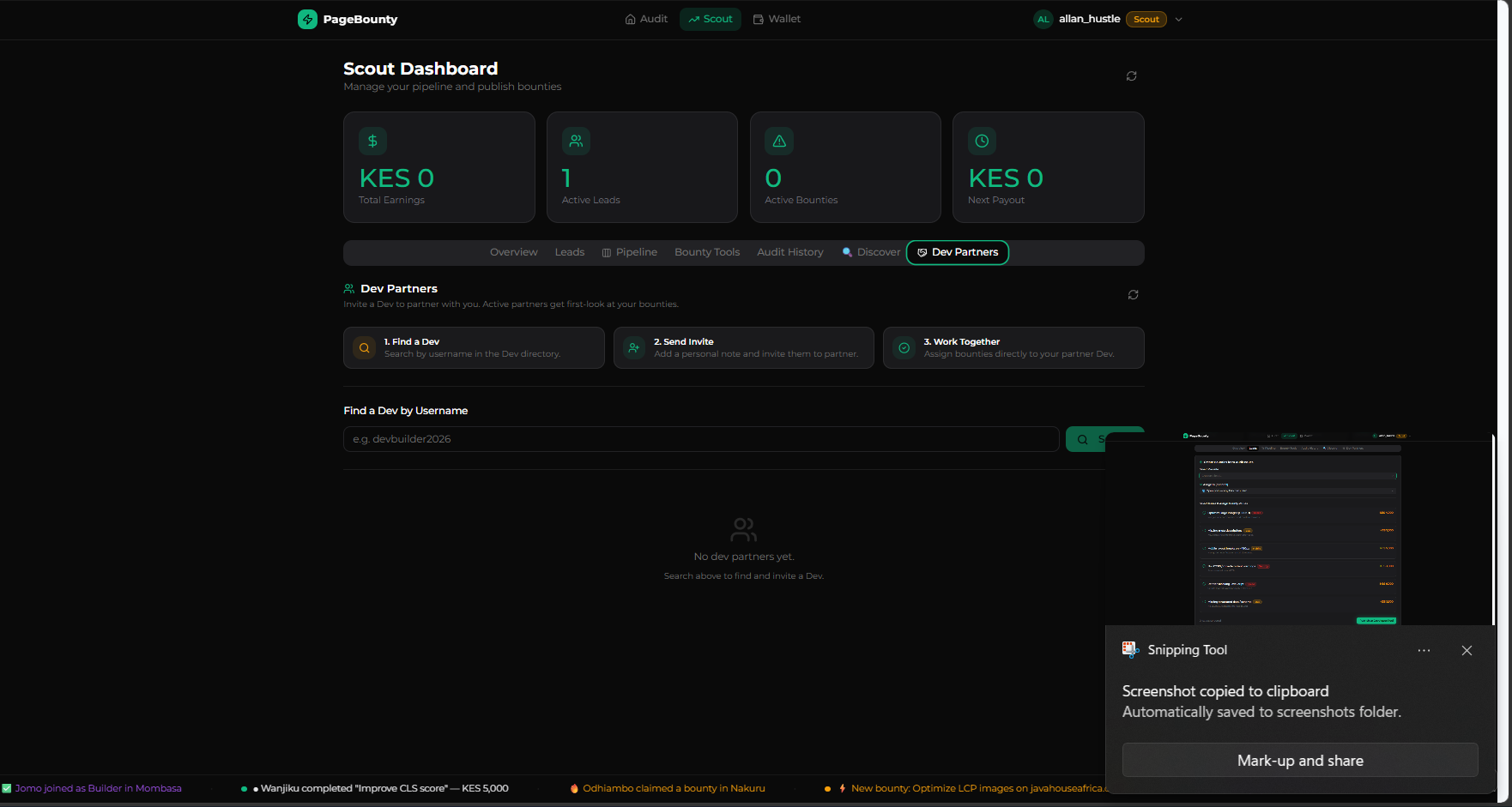
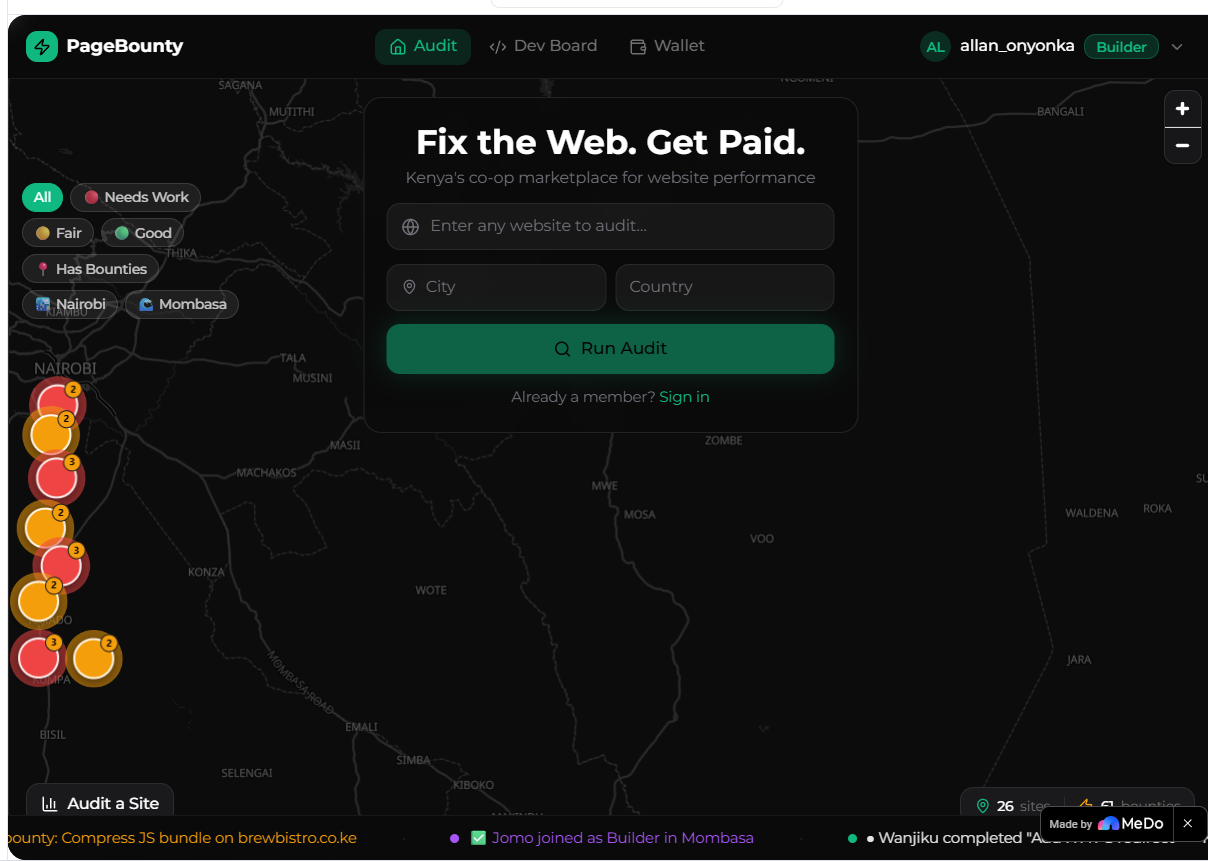
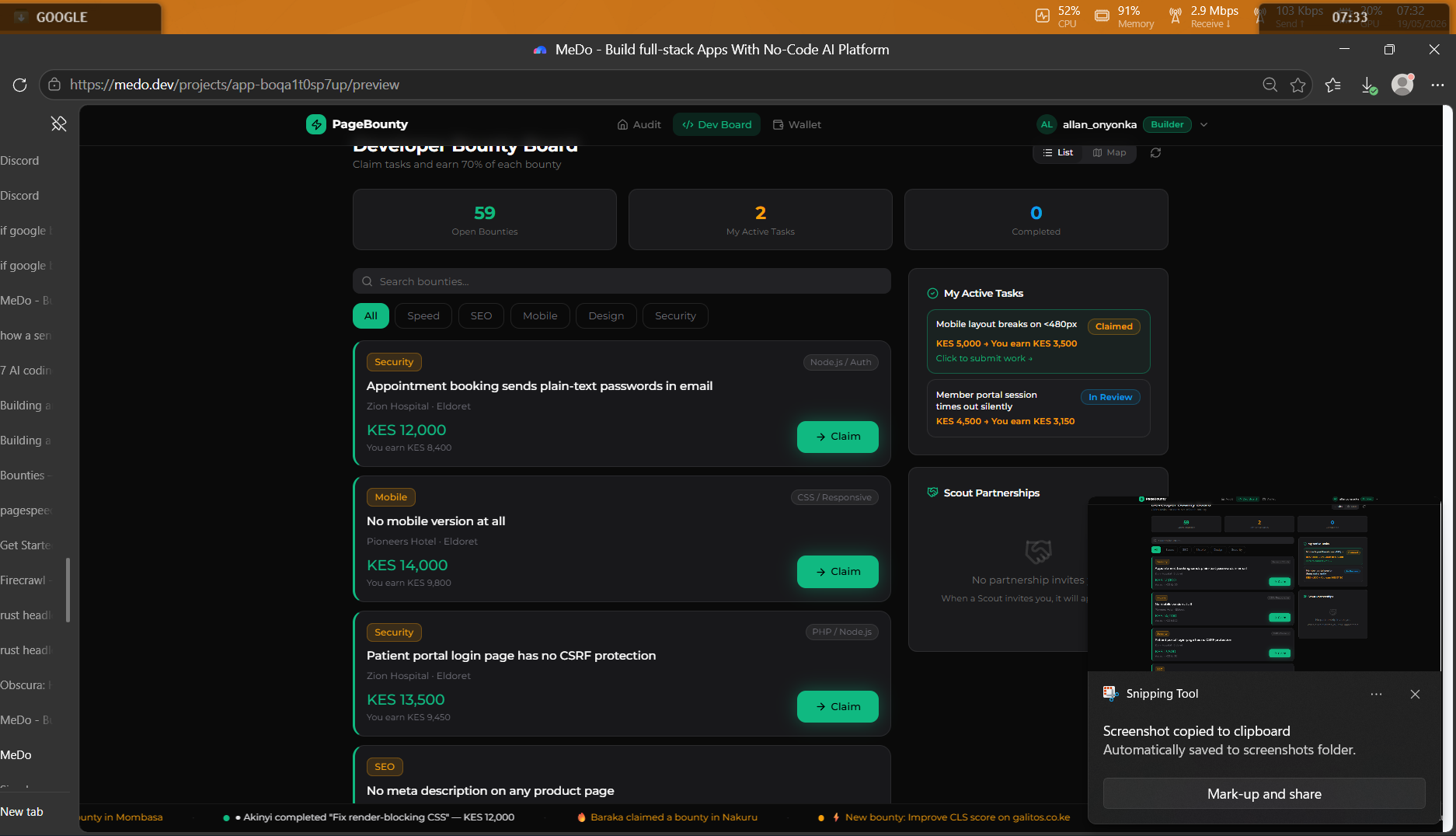
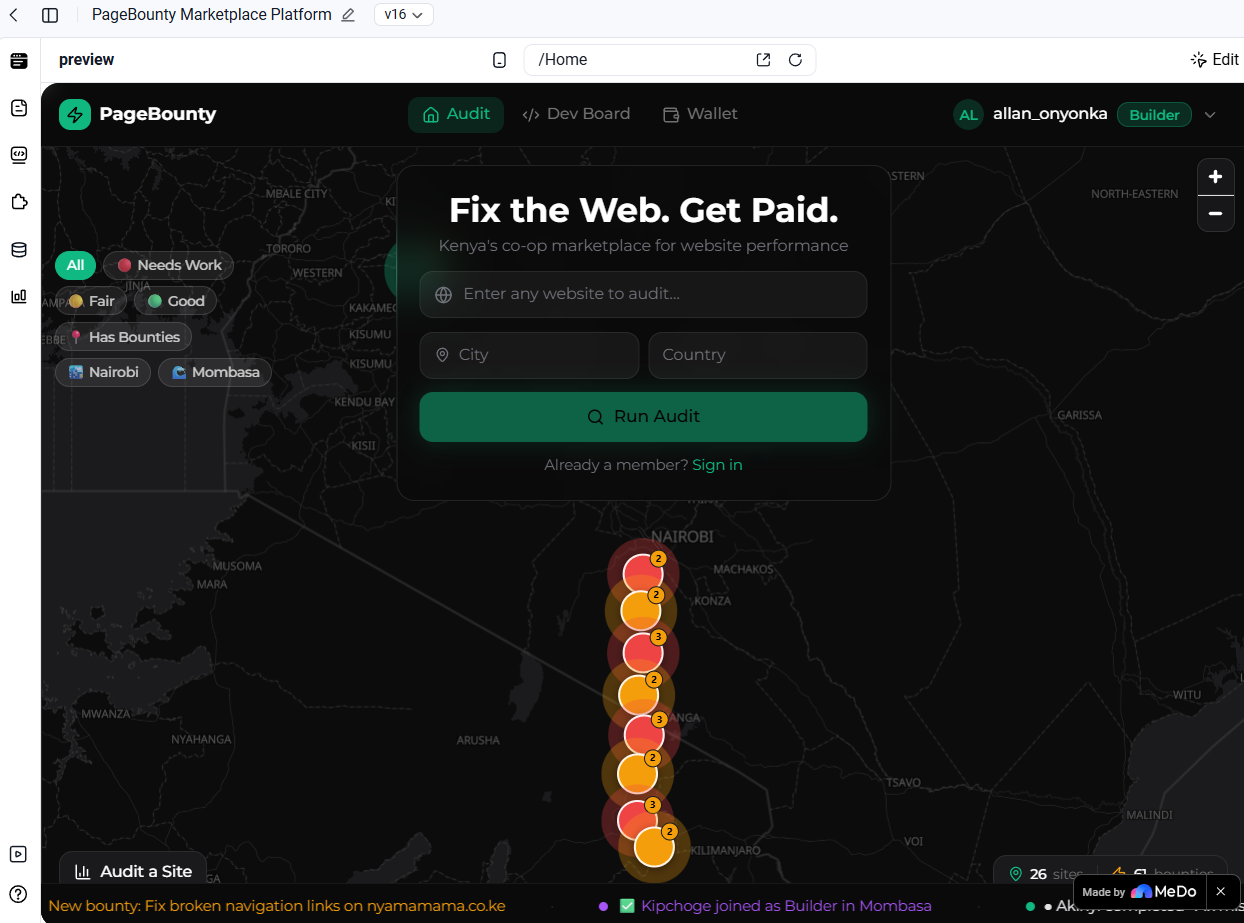
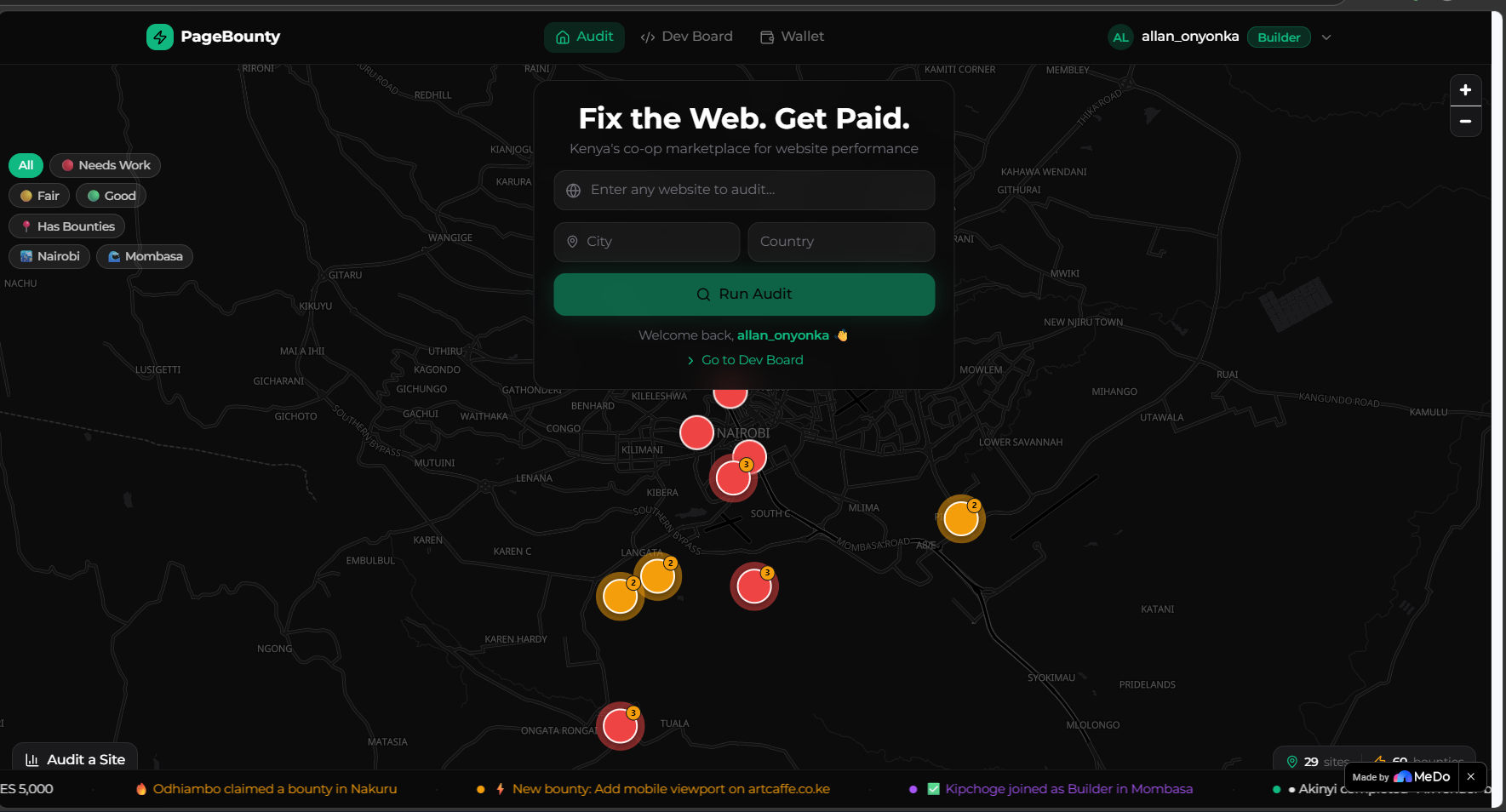
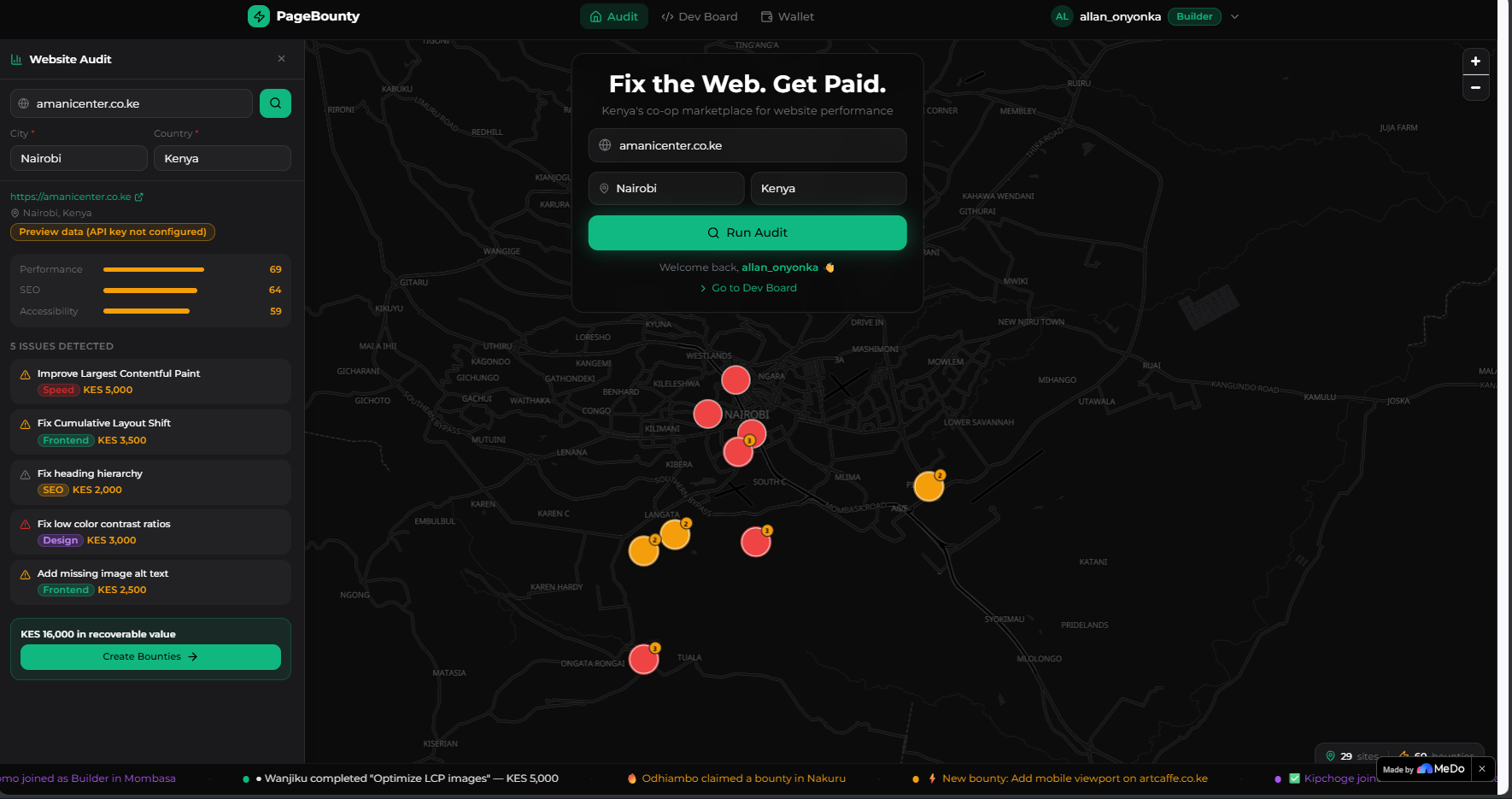
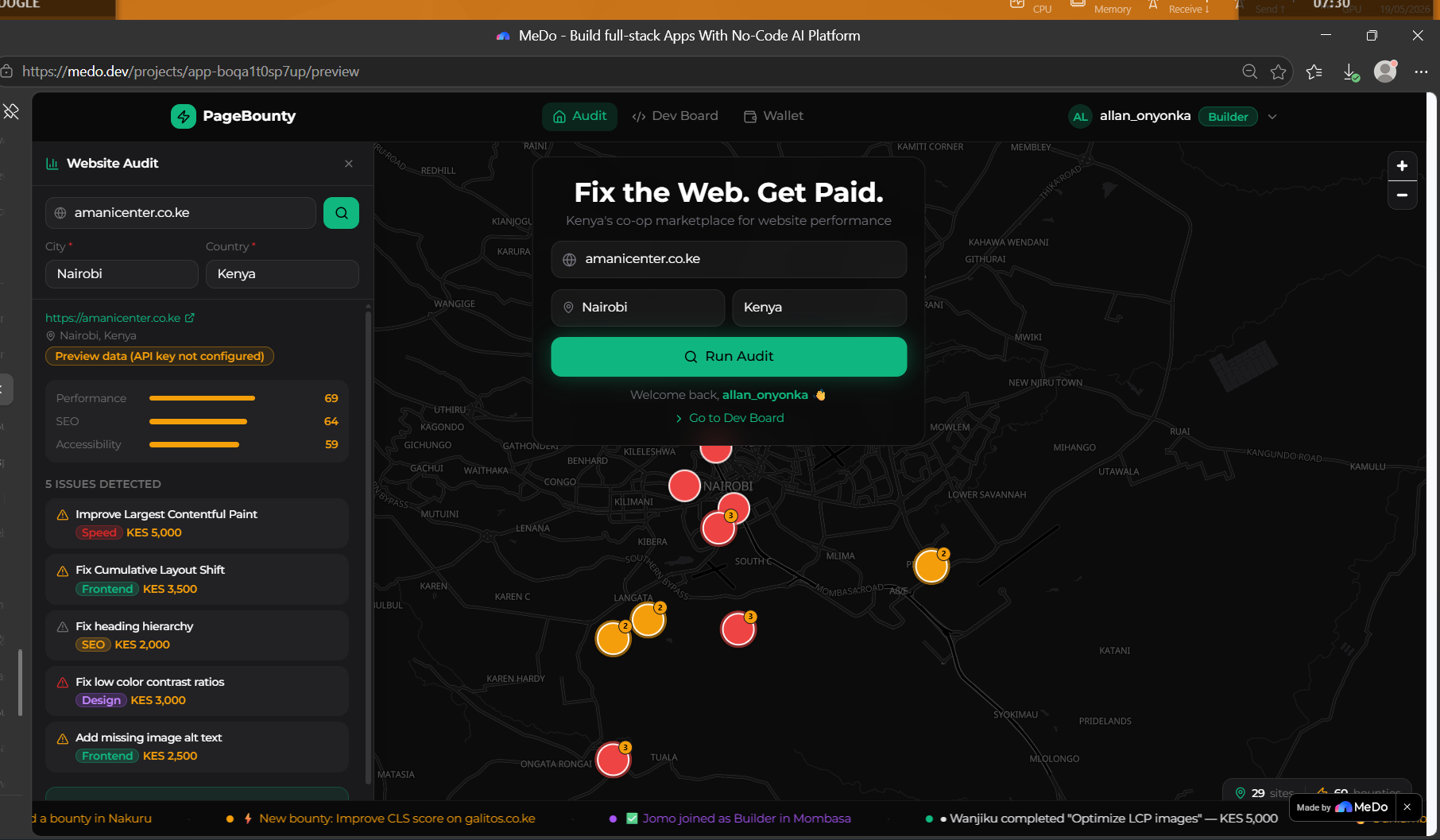
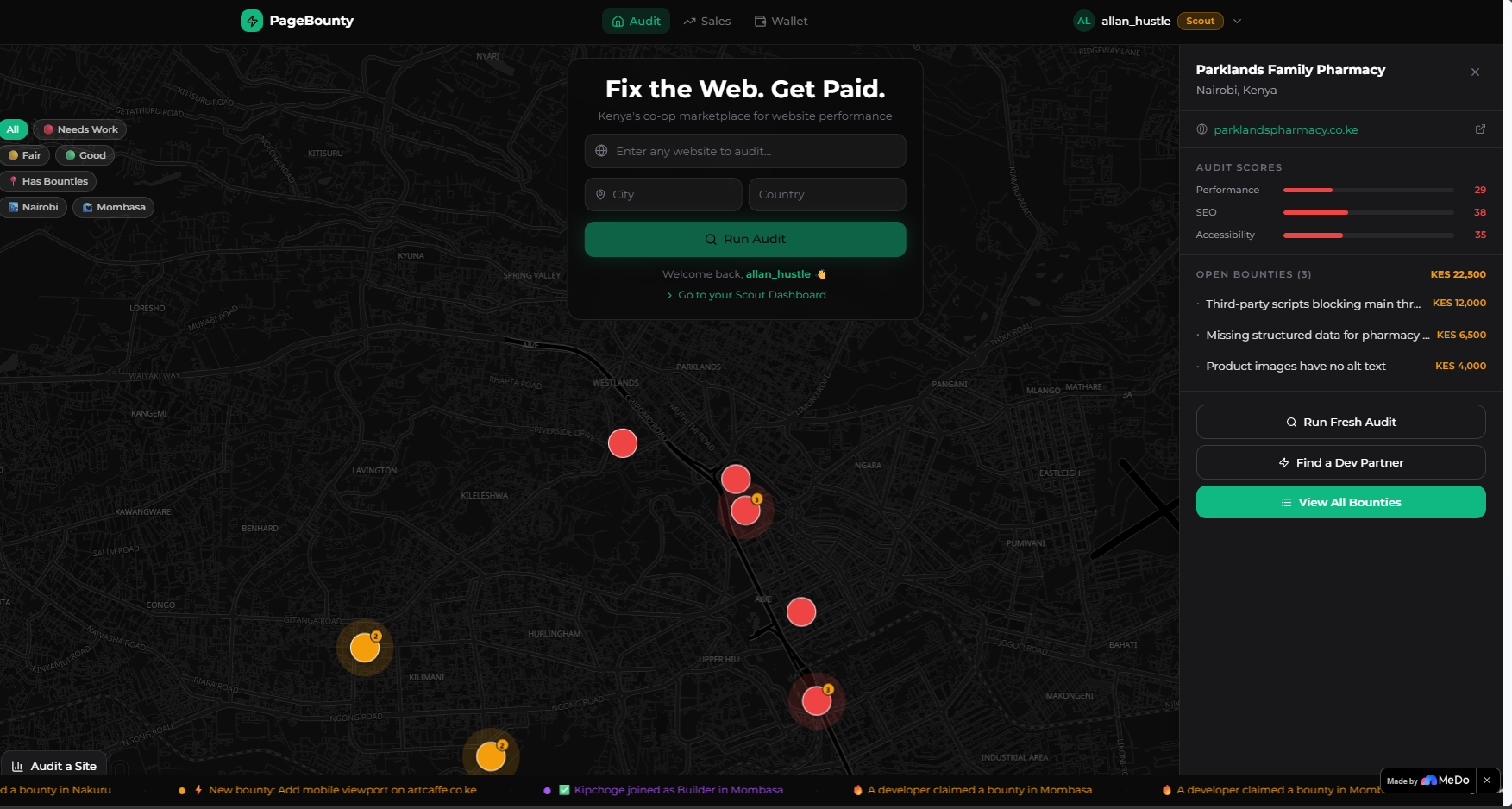
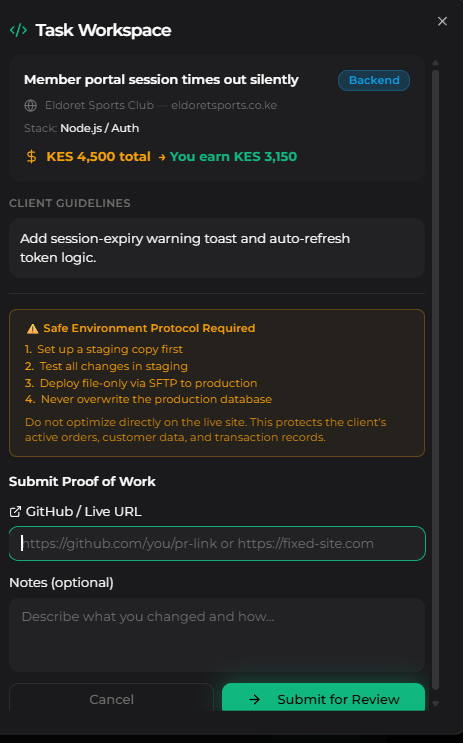
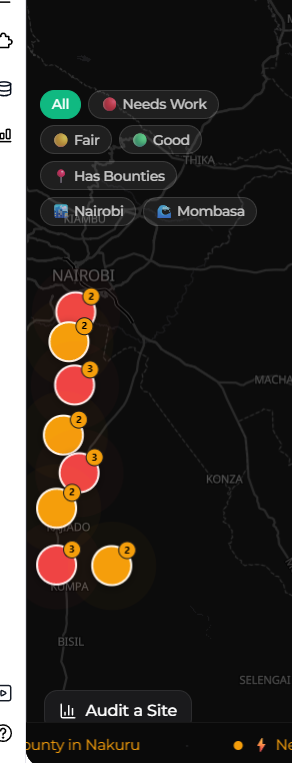

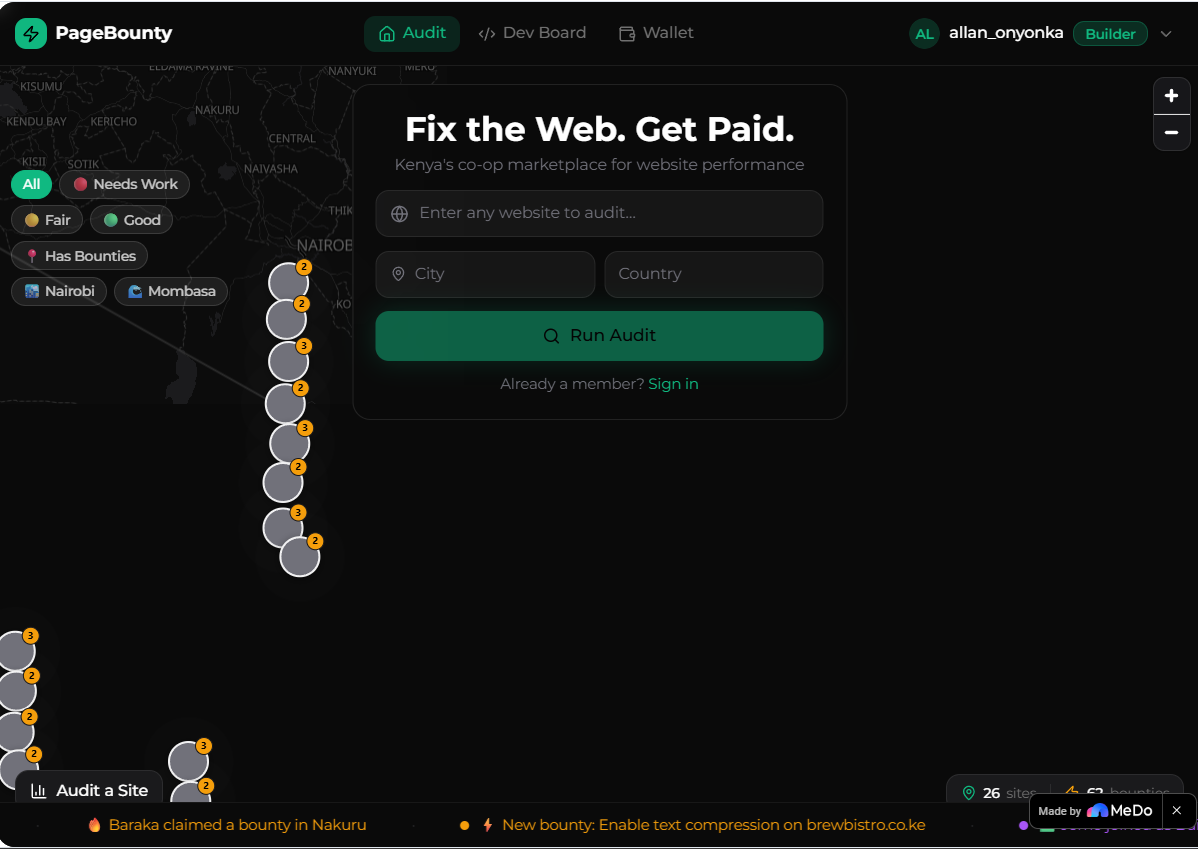
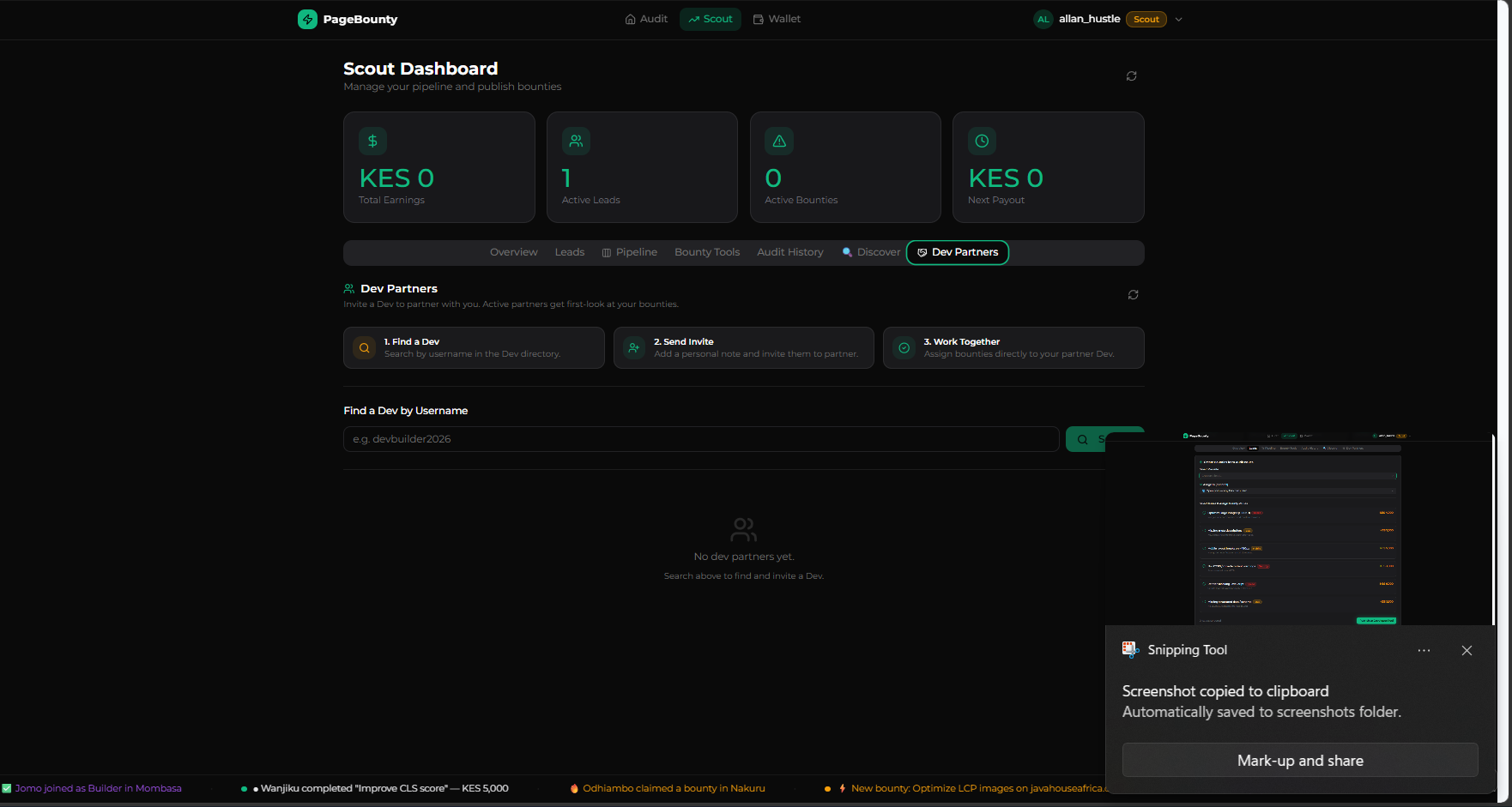
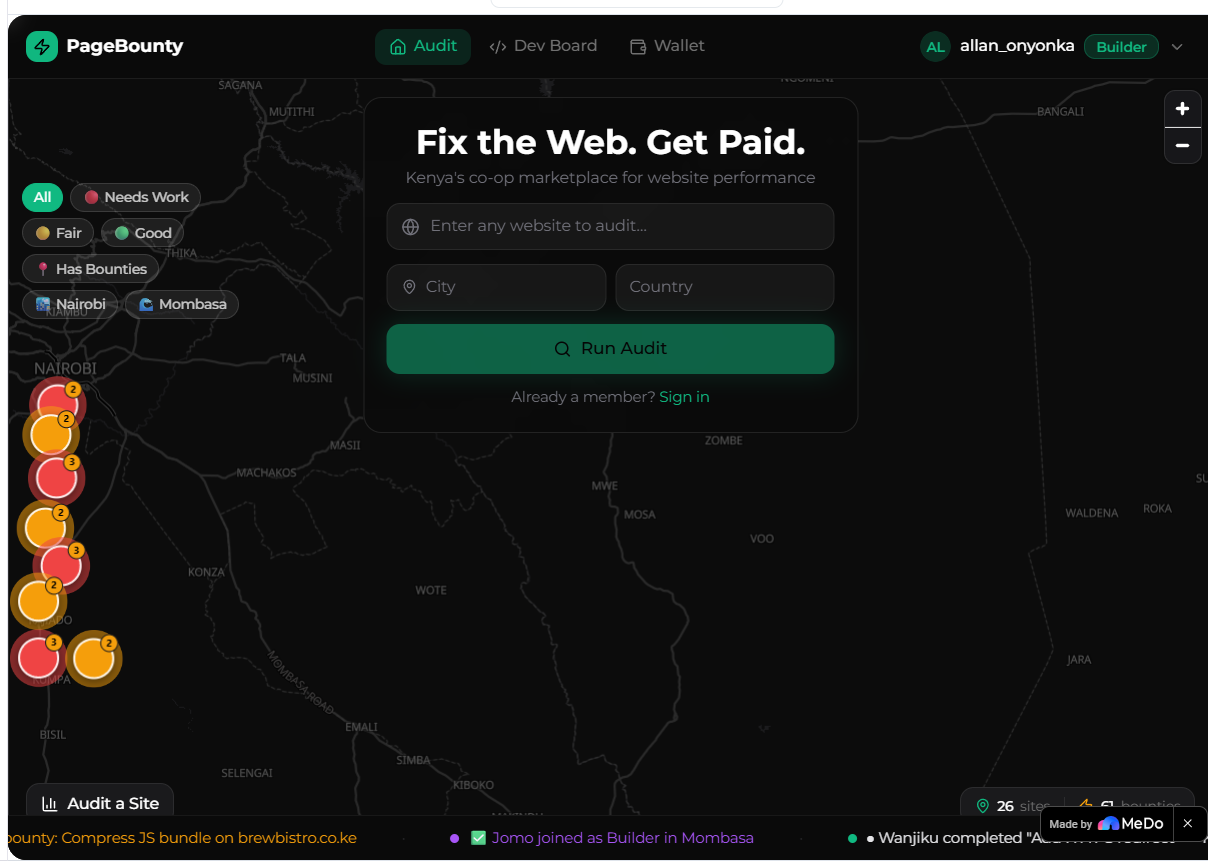
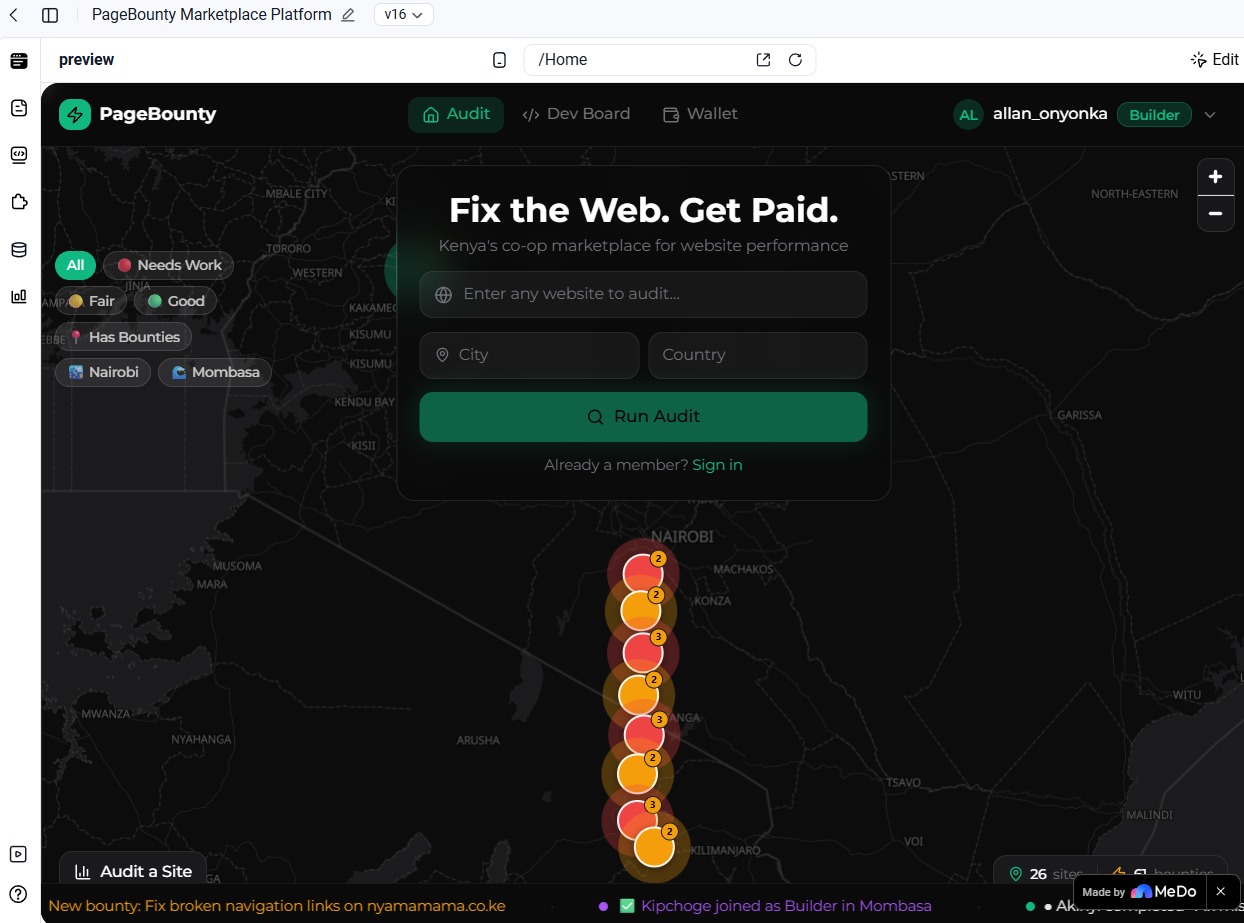
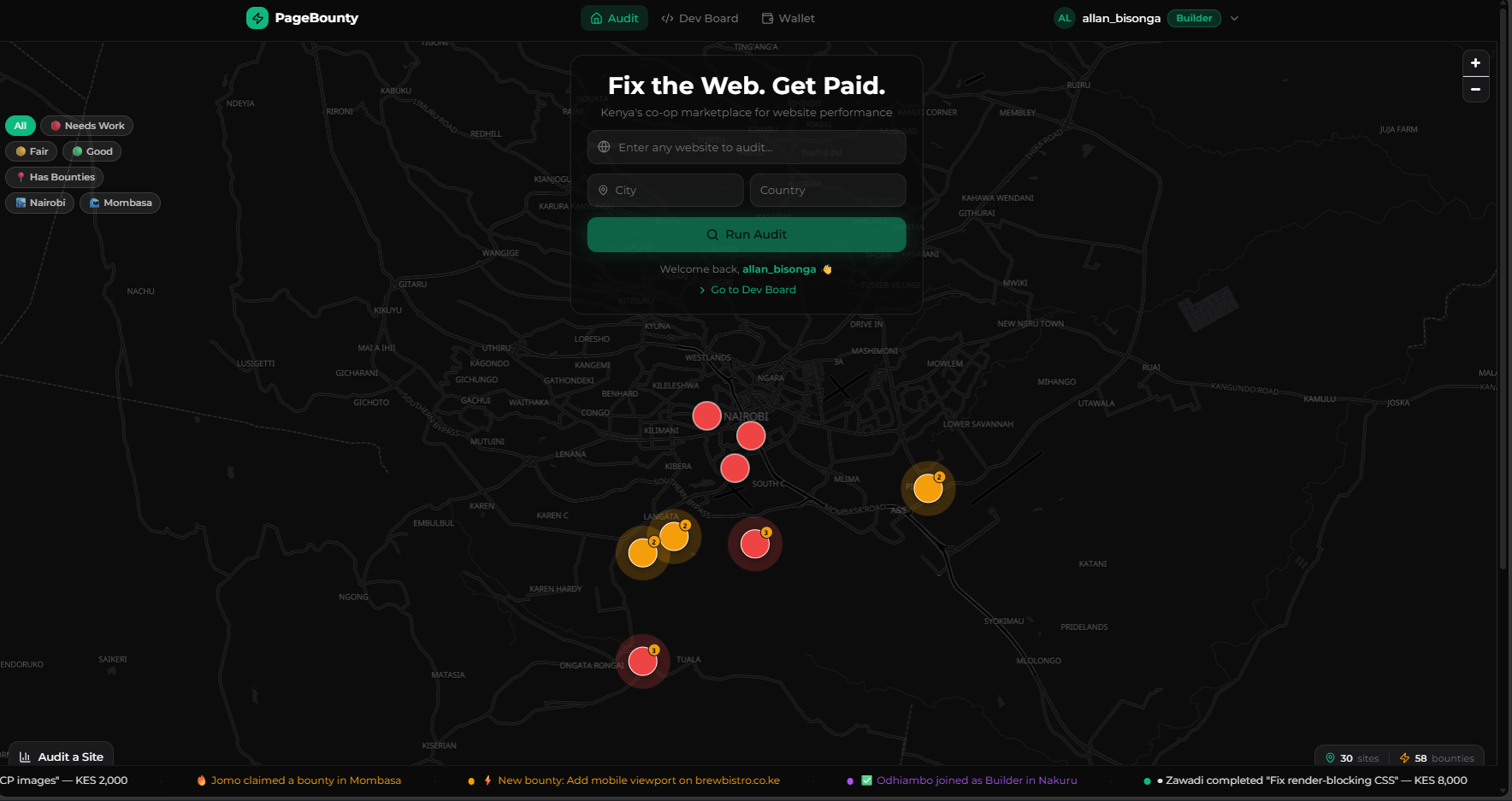
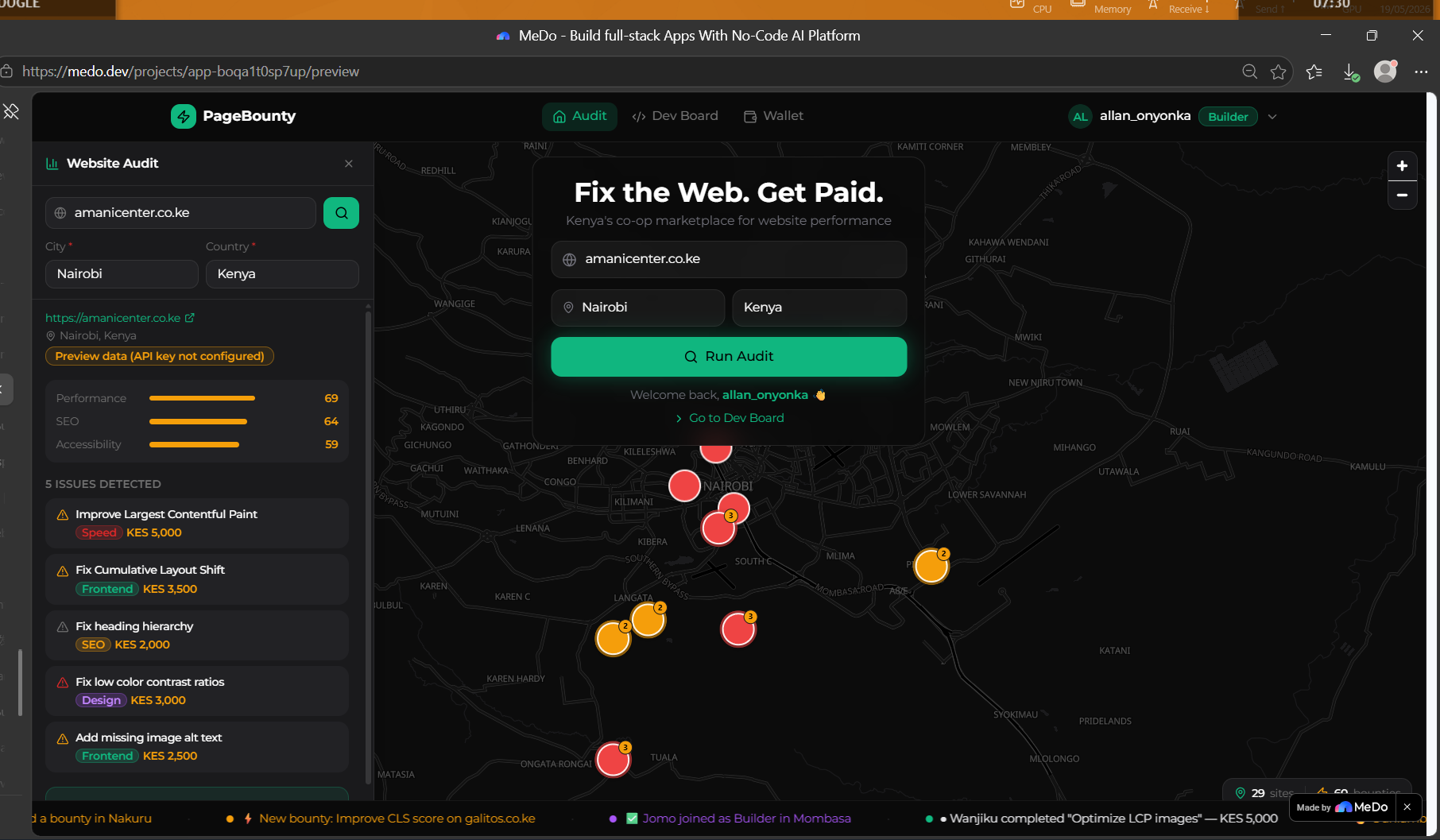
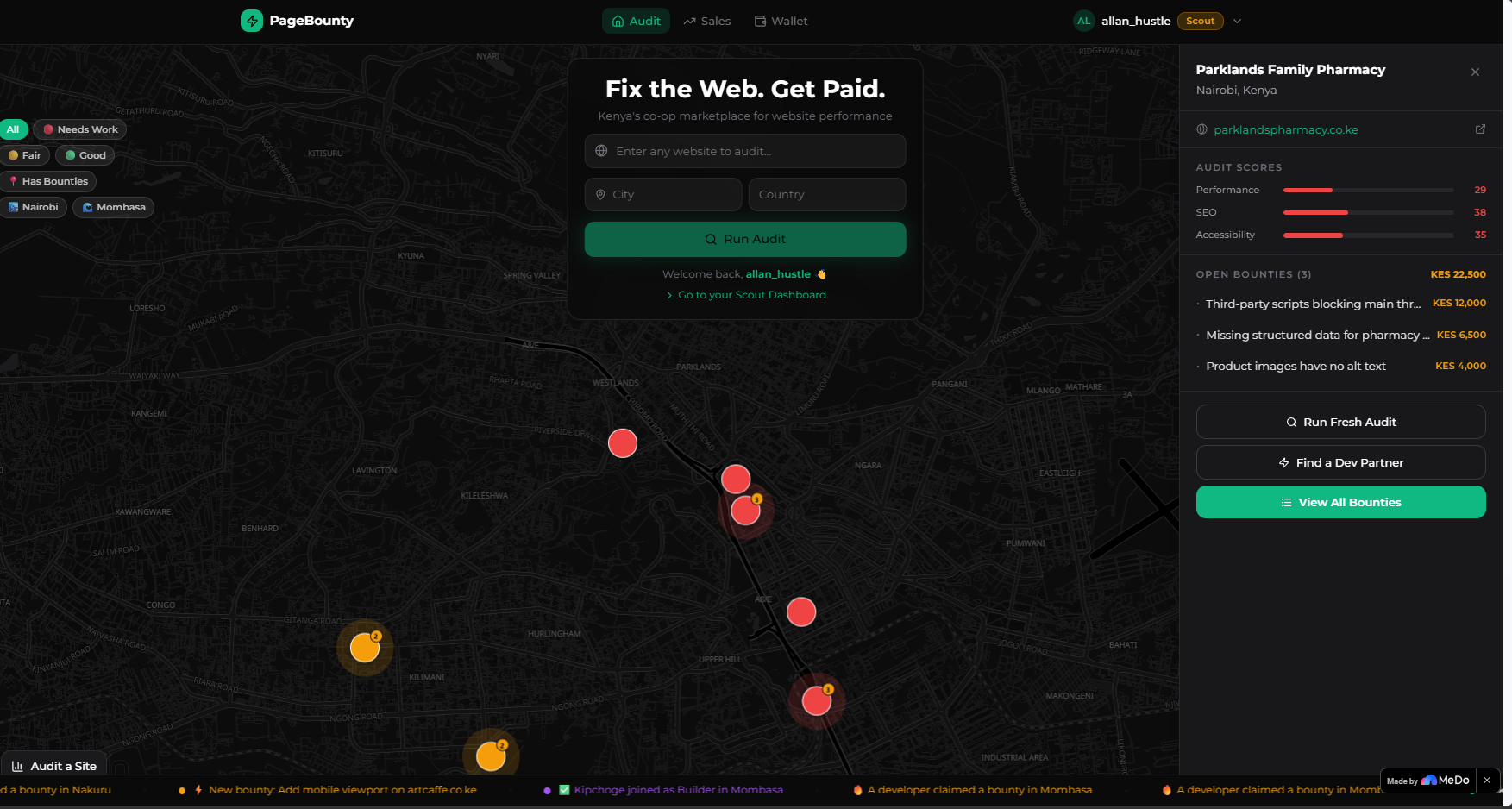
The Problem Most small businesses in Kenya (about 80%) either have broken, slow websites or don't have one at all. Because of this, they lose customers every day to competitors with better tech, and they don't even realize it.
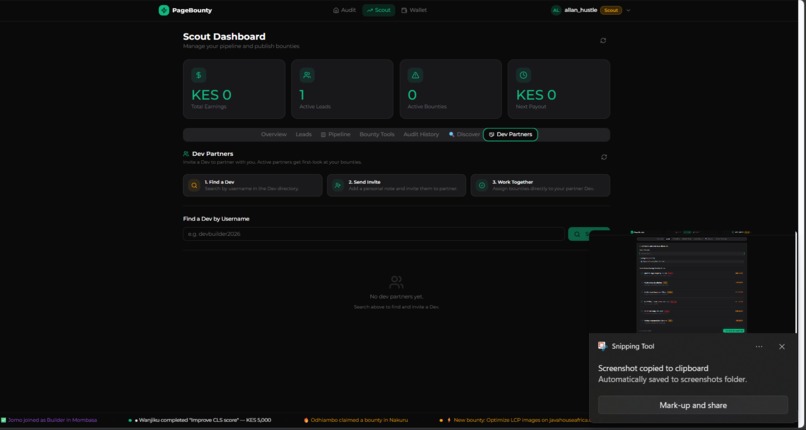
At the same time, Nairobi has tons of talented web developers looking for local work, and natural salespeople looking for great tech products to sell to local shop owners.
PageBounty connects all three groups.
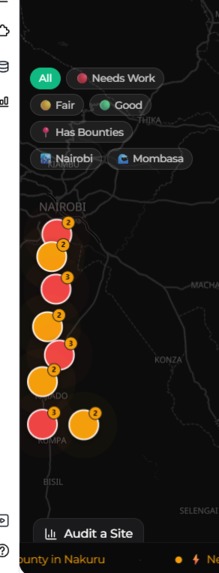
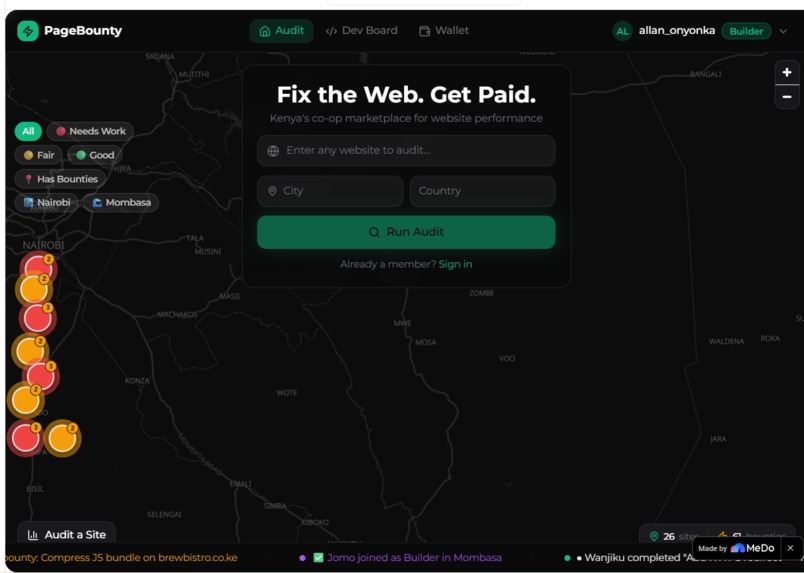
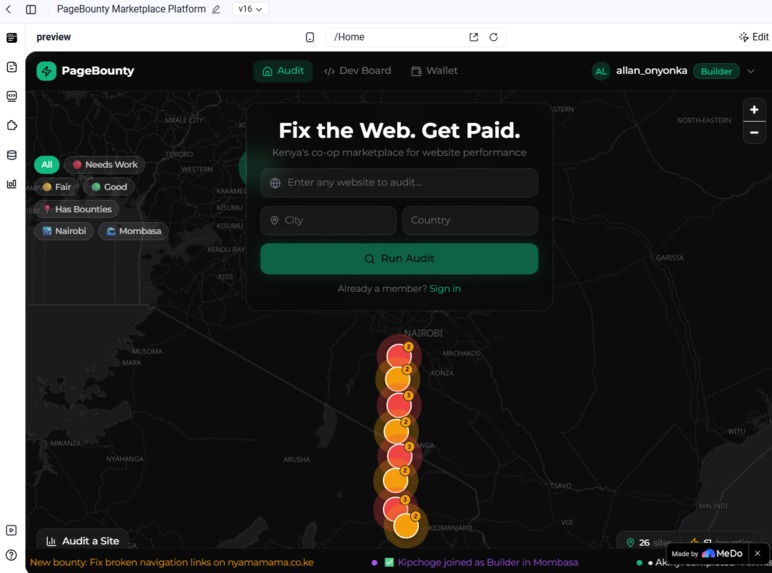
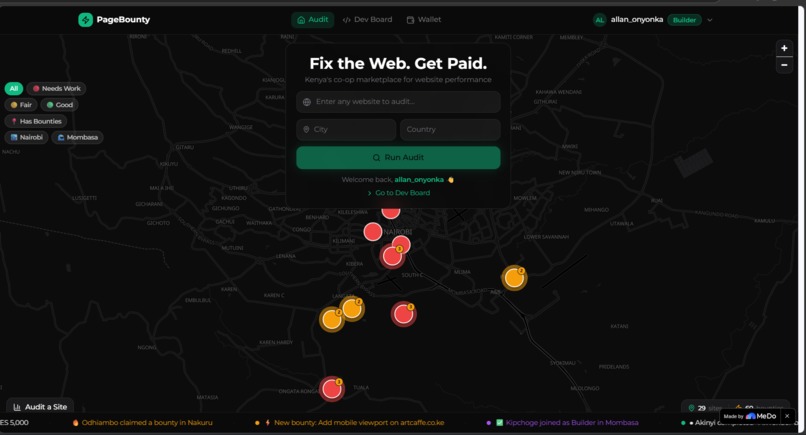
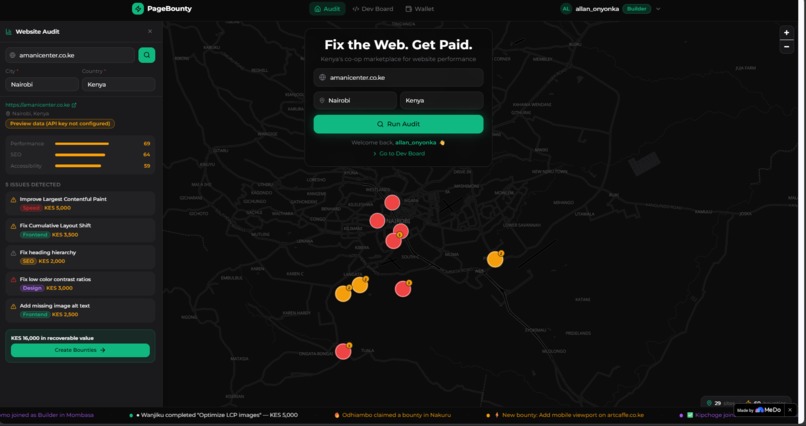
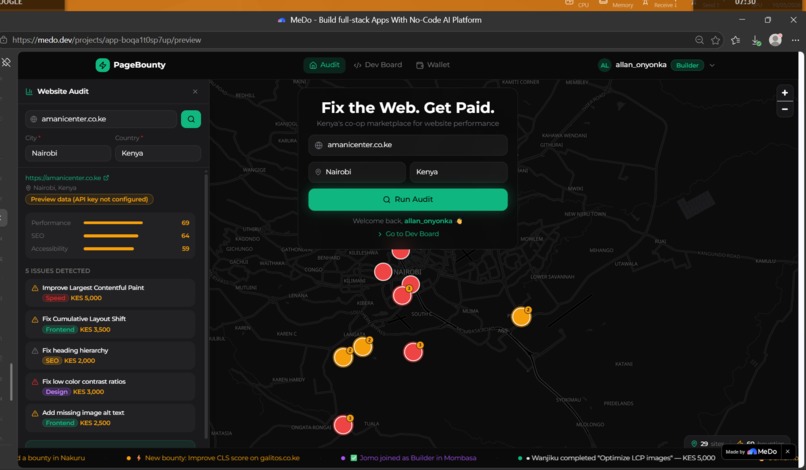
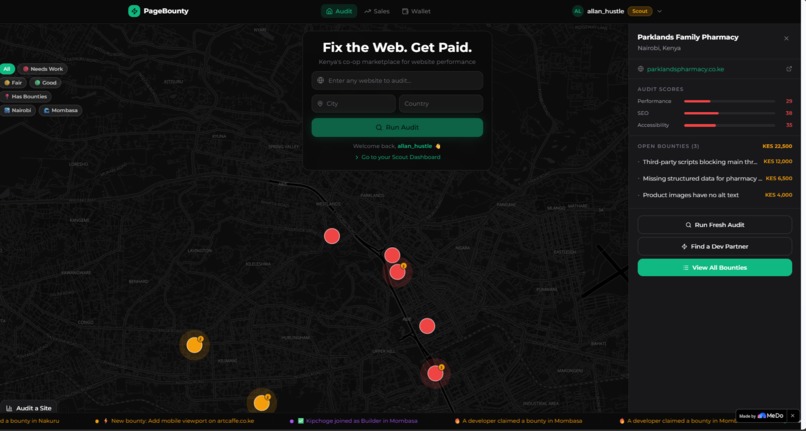
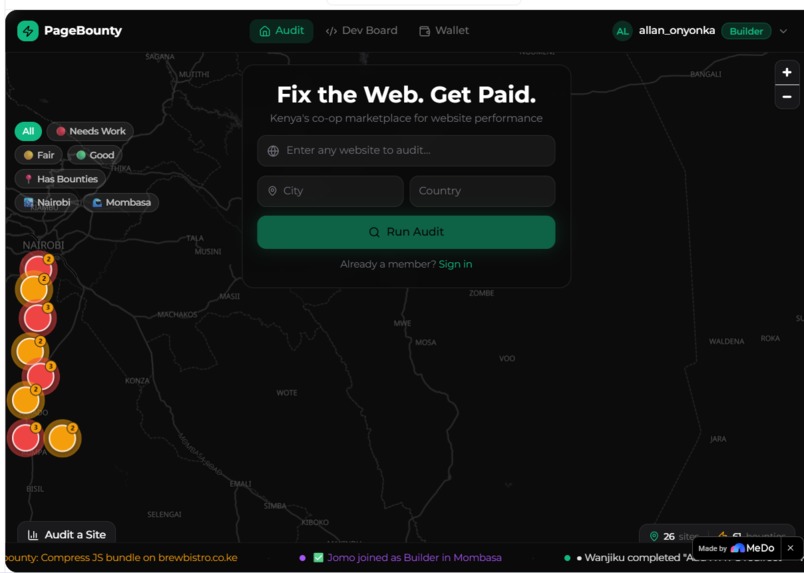
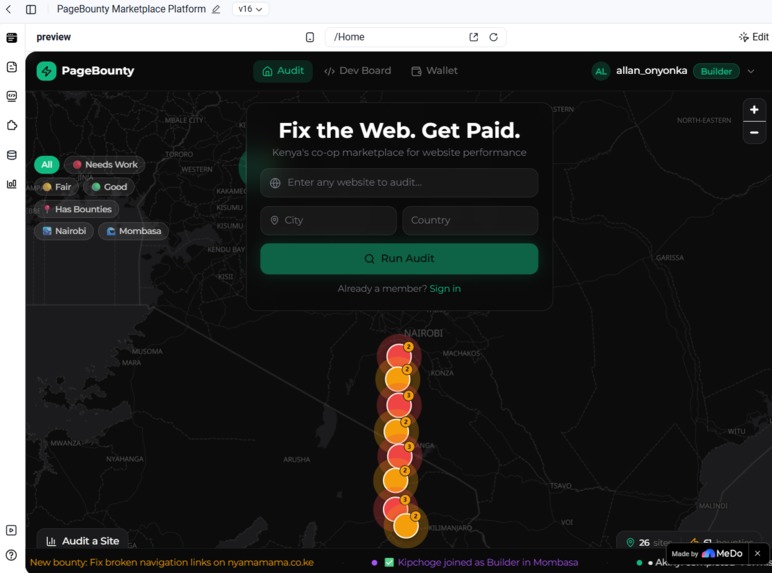
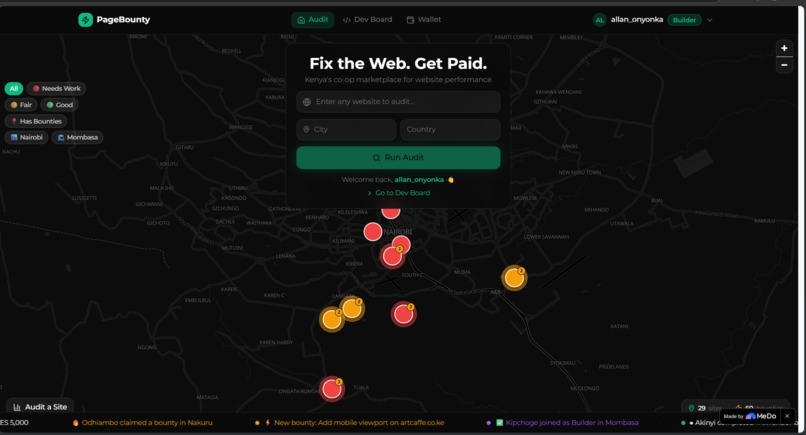
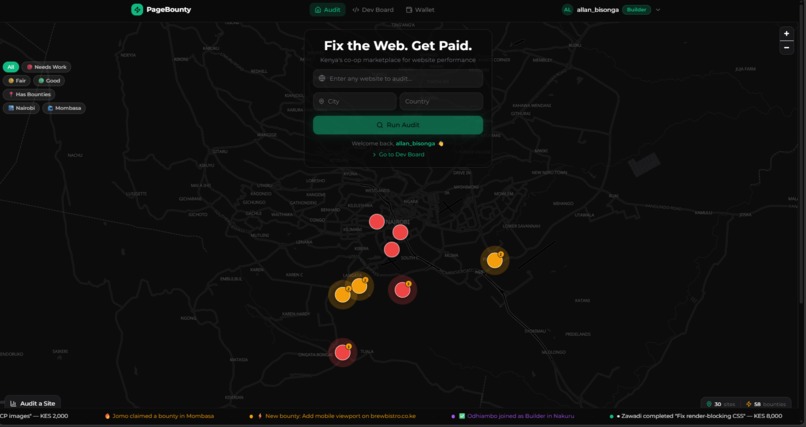
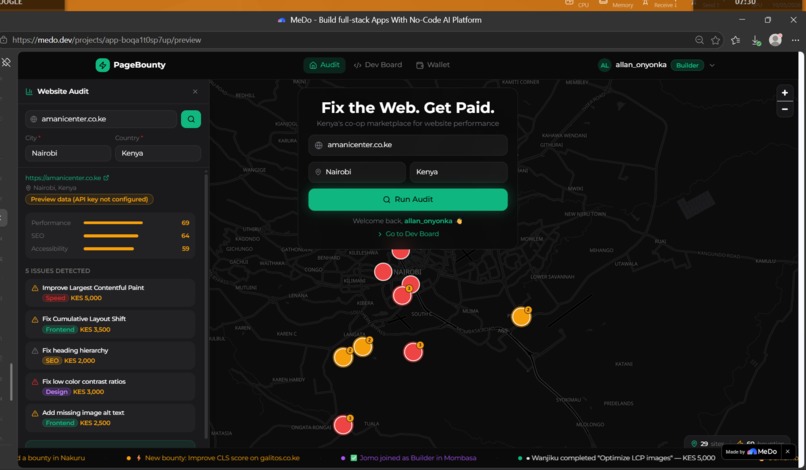
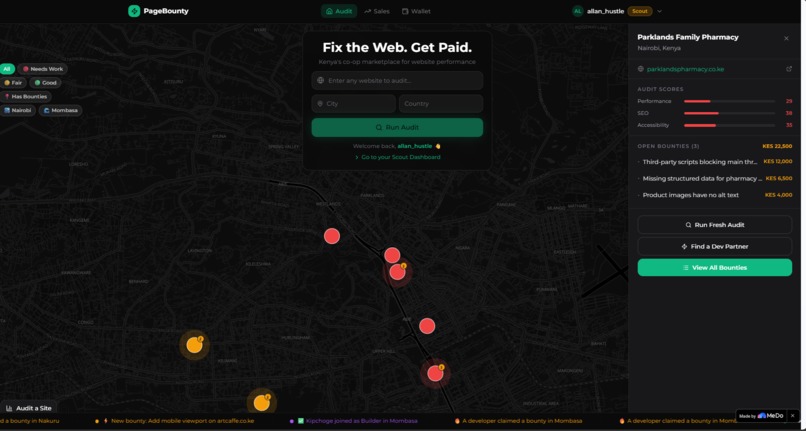
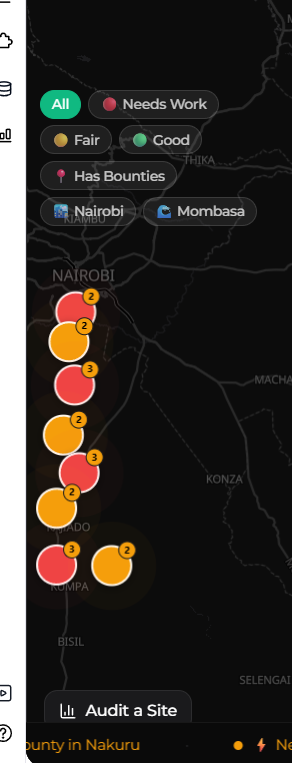
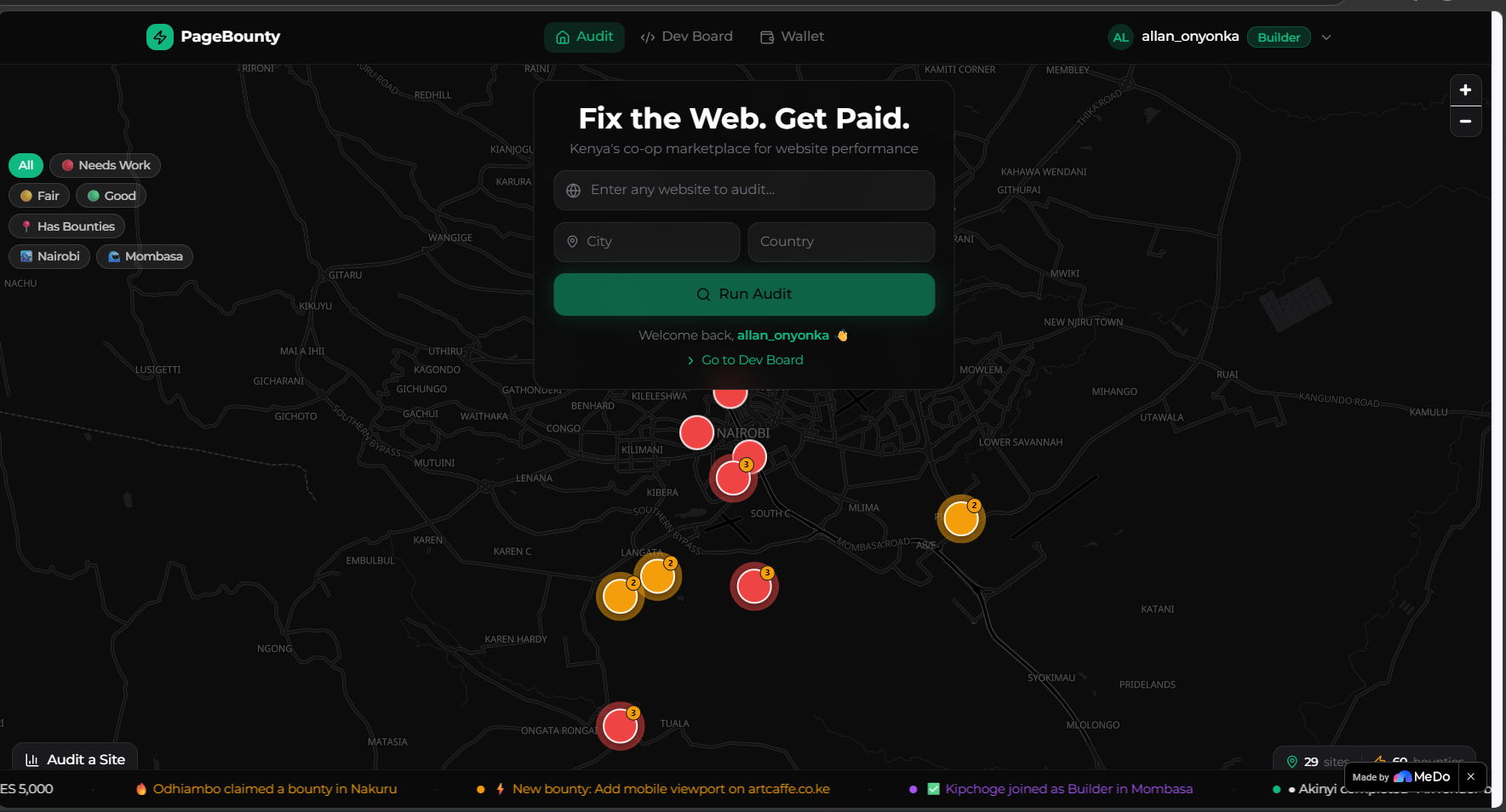
How It Works Scouts (Salespeople): They open the app and see a live map of Kenya. Every local business is marked with a color based on its website quality:
🔴 Red: Website is broken or very slow (needs urgent help).
🟡 Amber: Website is okay but needs improvement.
🟢 Green: Website works perfectly.
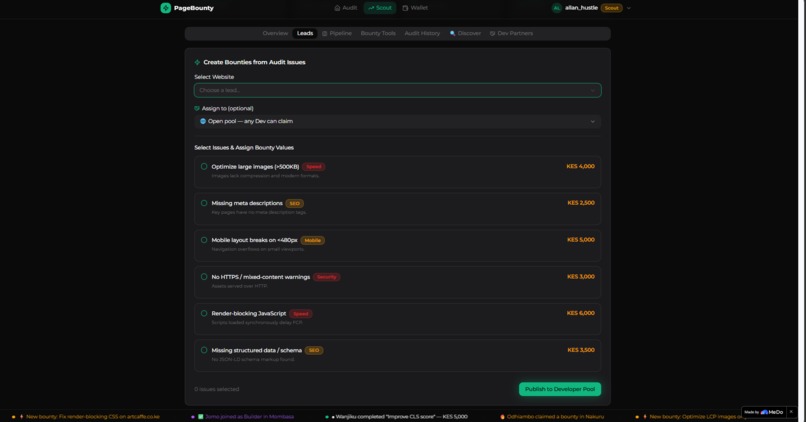
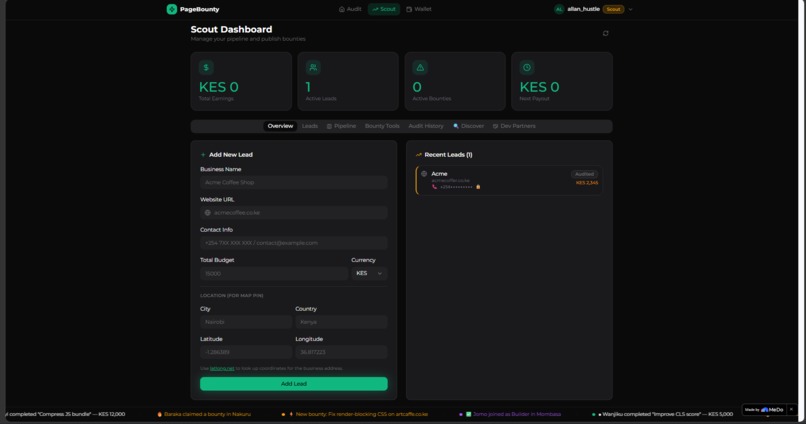
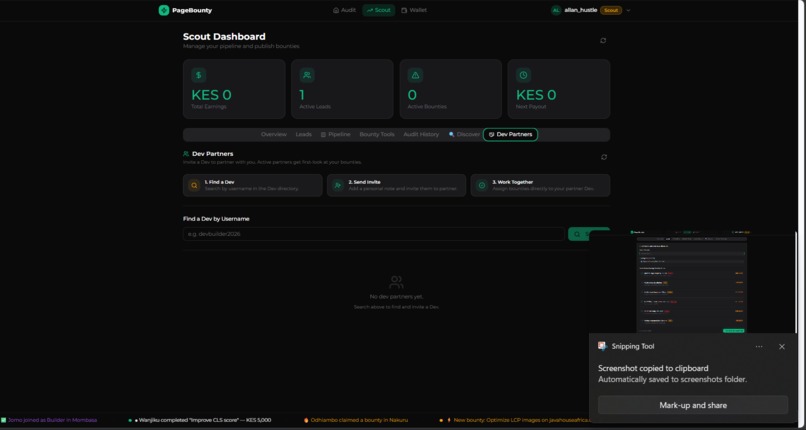
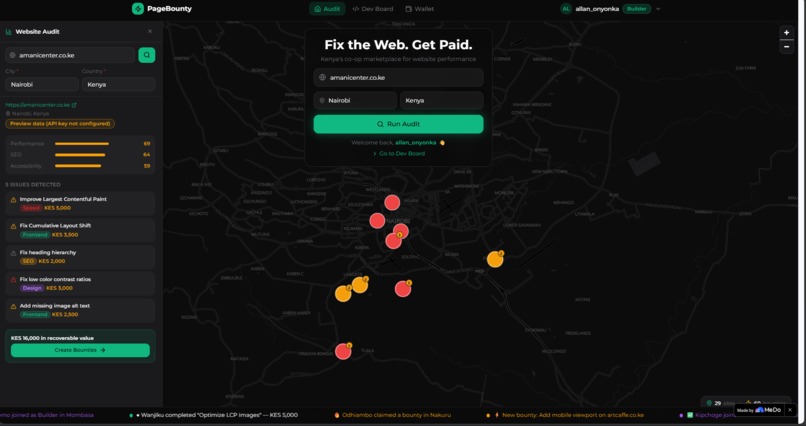
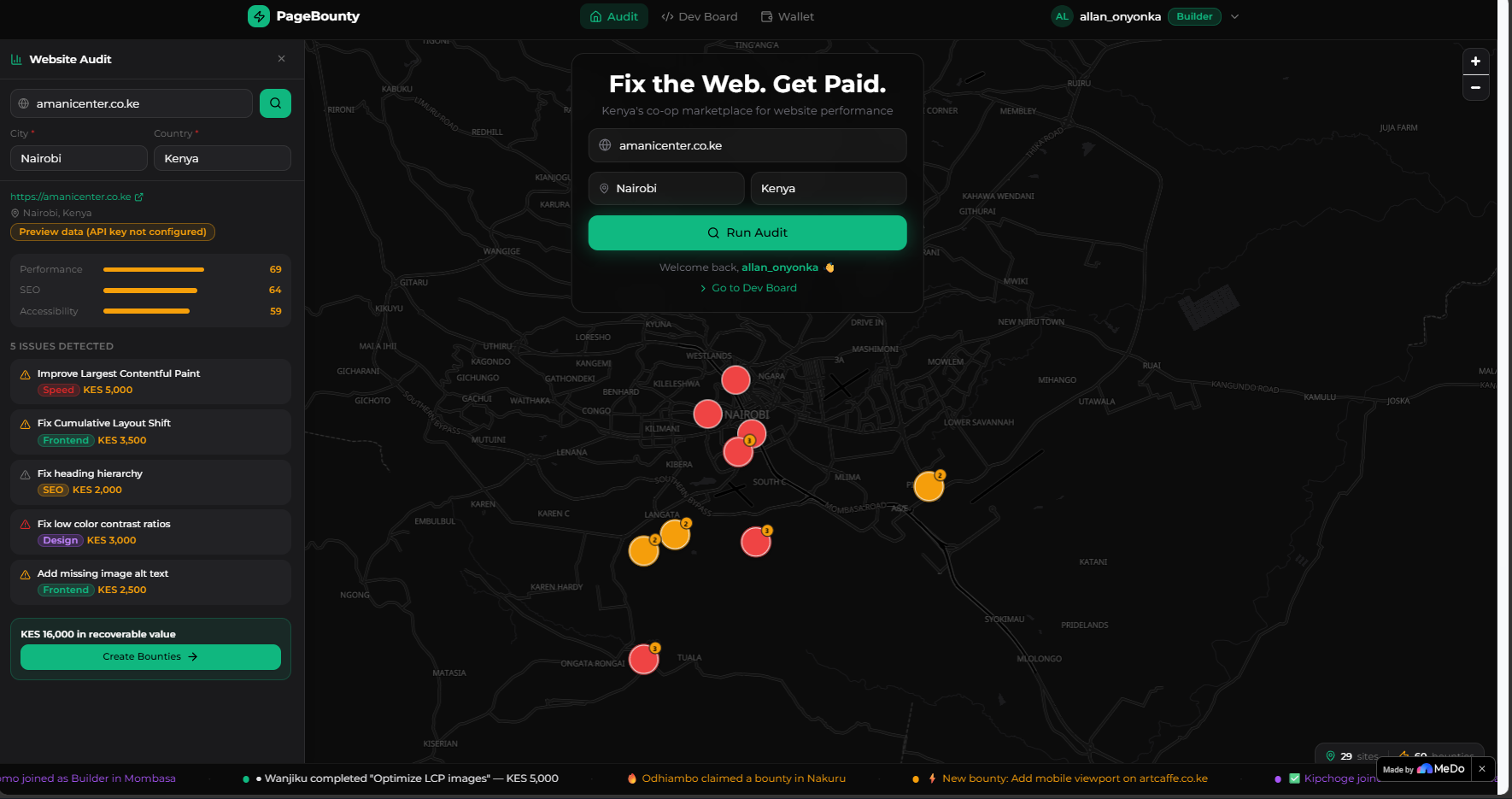
Scouts can also see businesses that have no website at all. They can walk into the shop, show the owner the bad score on their phone, and pitch a fix right there.
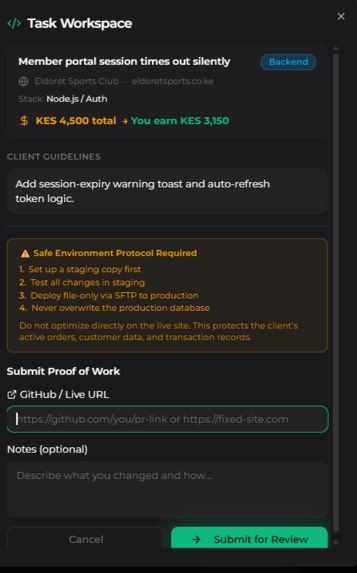
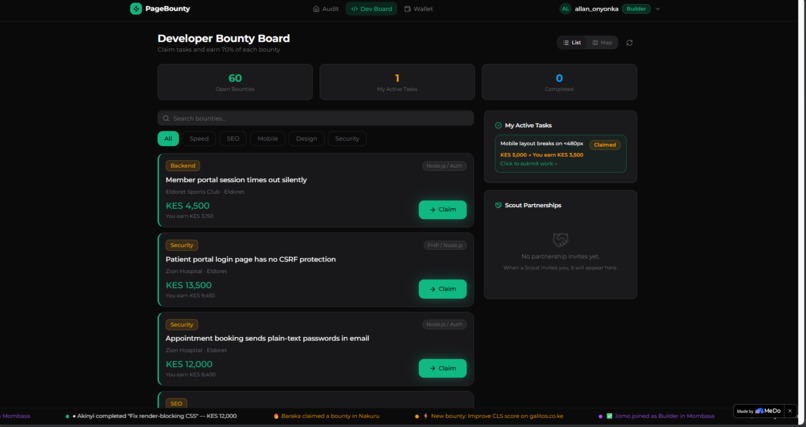
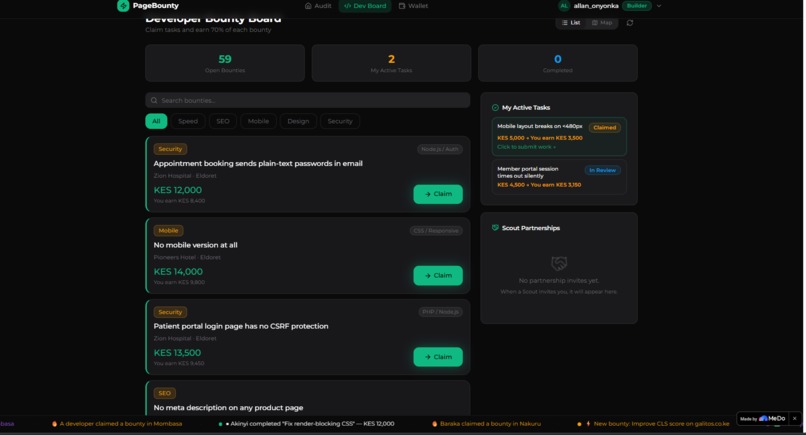
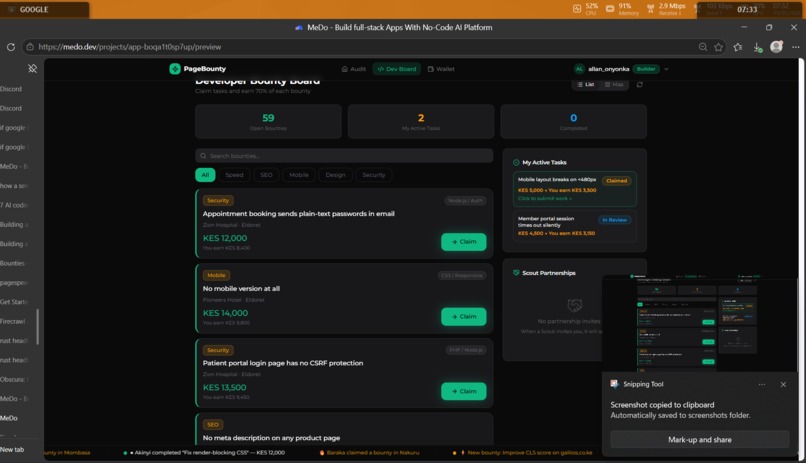
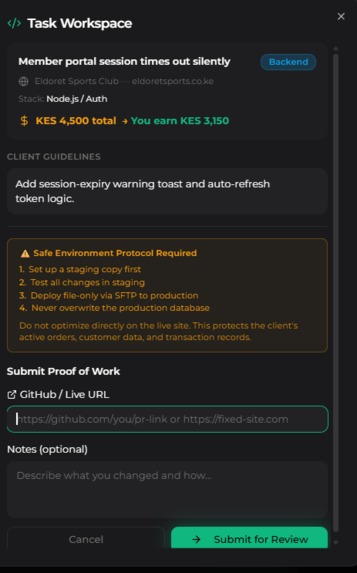
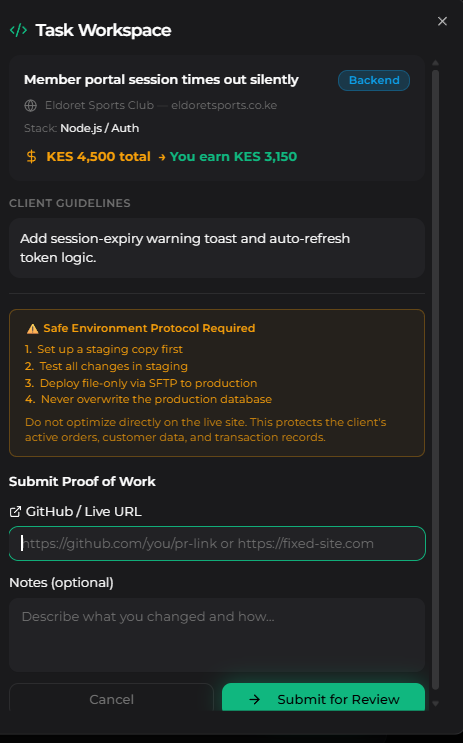
Builders (Developers): They look at a job board listing specific website fixes. Each job shows exactly what needs to be done, where the business is, and how much it pays in KES. No need to chase clients or worry about extra unpaid work. They just pick a job and build it.
Clients (Business Owners): They get a simple link sent via WhatsApp. They don't need to download any app. They can track the work and approve payments with just one tap.
The Money Split When the job is done and the client approves it, the payment is split automatically via M-Pesa:
Developer: 70% of the payment
Scout: 30% of the payment
PageBounty Platform: 10% platform fee
Everything is handled automatically. To prevent people from bypassing the app and cutting deals behind the scenes, client contact details are hidden until the money is securely deposited into the app's holding account.
How the App Was Built with MeDo We used the MeDo development environment to build 17 different versions of the app, turning a simple job board into a high-tech map platform.
During development, we solved major tech hurdles, including:
Switching to MapLibre GL JS so the map runs smoothly with custom colored pins.
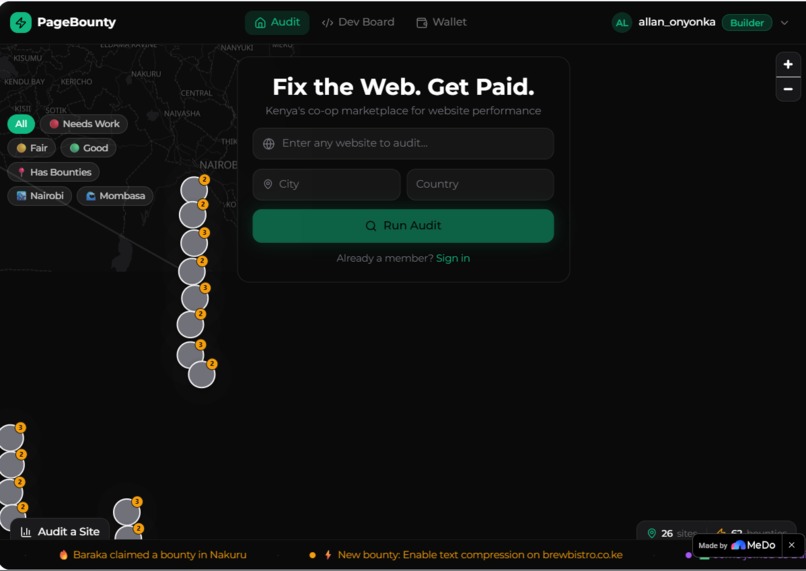
Fixing a glitch where the map pins accidentally collapsed into a tiny, unreadable line.
Setting up Supabase security rules so Scouts, Builders, and Clients only see the data they are supposed to see.
Fixing a bug where developers couldn't claim jobs because the system was silently blocking their requests.
Creating a backup test system so the app keeps running smoothly even if third-party testing tools go down.
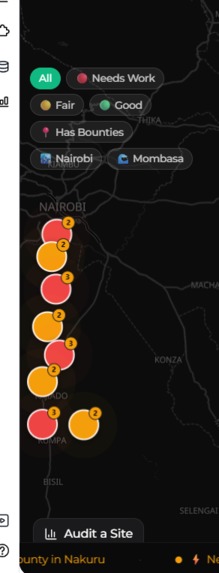
The Best Feature Built The Smart Map. It pulls live data to update the business pins in real-time. If a business runs a new test, the pin color updates instantly. If a business has an active job opening, its pin pulses amber. Scouts can search an area like "restaurants Westlands" and instantly see who needs a brand-new website versus who just needs a quick fix.
Cheating Prevention We found a loophole: tricky developers could fake a good website speed score by showing a blank page to the speed test while leaving the actual website broken for real users.
To stop this, PageBounty automatically compares the website's code size before and after the fix. If the speed score suddenly jumps but the website's content mysteriously disappears, the system freezes the money and flags the job for manual review.
Tech Tools Used Google PageSpeed Insights: To test how fast a website is.
Apify Google Maps Scraper: To find local businesses that don't have websites listed.
MapLibre GL JS & OpenFreeMap: To power the dark-themed map without needing expensive API keys.
Supabase: Handles the database, user logins, and live updates.
IntaSend: Powers the automated M-Pesa split payments.
Jina AI: Pulls extra details from websites to help with search engine optimization (SEO).
Why Kenya First? Nairobi is a booming tech hub full of small businesses, everyone uses M-Pesa, and there is a huge community of young developers and hustlers ready to work.
"Global freelance sites like Upwork don't really fit the Nairobi market. PageBounty works because it's built for how Kenyans actually do business."
The plan is to perfect the system in Kenya, then expand to other African tech hubs like Lagos (Nigeria), Accra (Ghana), and Dar es Salaam (Tanzania).
Major Challenges Overcome Map Confusion: The map software flipped coordinates (using longitude/latitude instead of latitude/longitude), which initially caused all our test businesses to show up in a weird straight line.
Silent Data Blocks: Database security rules were rejecting job claims without showing an error message. We had to rewrite how the app requests permission to update jobs.
System Timeouts: Google's speed test tool took too long and crashed our background systems. We fixed this by moving the tests directly to the user's phone browser.
Trust Issues: Making sure users didn't take the deal offline to avoid fees. Hiding client phone numbers until money is secured in escrow solved this.
What's Next? Launch real M-Pesa payments (moving out of the testing phase).
Add a feature that automatically detects if a site is built on WordPress, Wix, or Shopify.
Create a secure password vault that gives developers temporary access to the client's website.
Expand the business into Lagos and Dar es Salaam.
Build a downloadable mobile app using React Native.
Built With
- ai
- api
- apify
- css
- gl
- insights
- intasend
- javascript
- jina
- maplibre
- medo
- openfreemap
- pagespeed
- postgresql
- react
- shadcn/ui
- supabase
- tailwind
- typescript
- vite


Log in or sign up for Devpost to join the conversation.