-
-
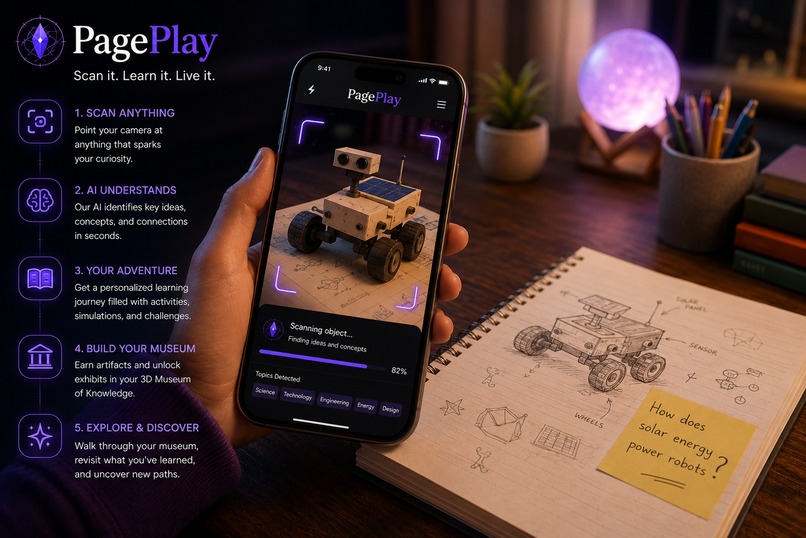
scan any object
-
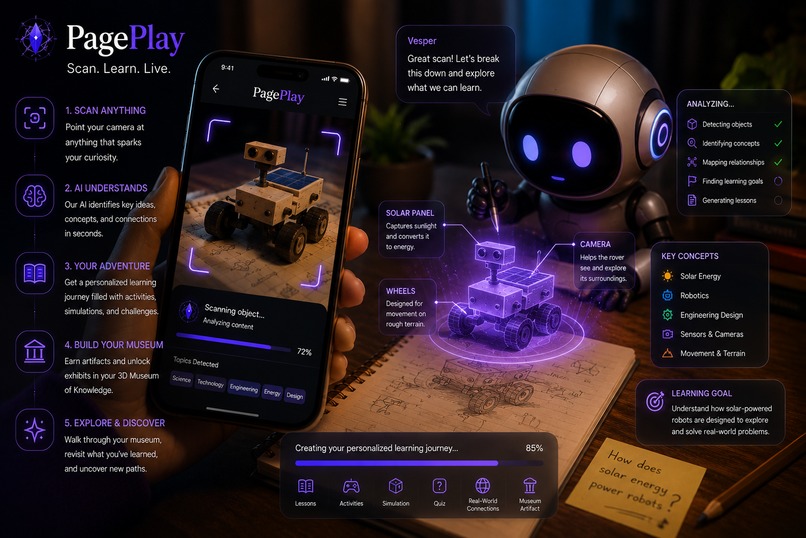
Vesper will help analyze
-
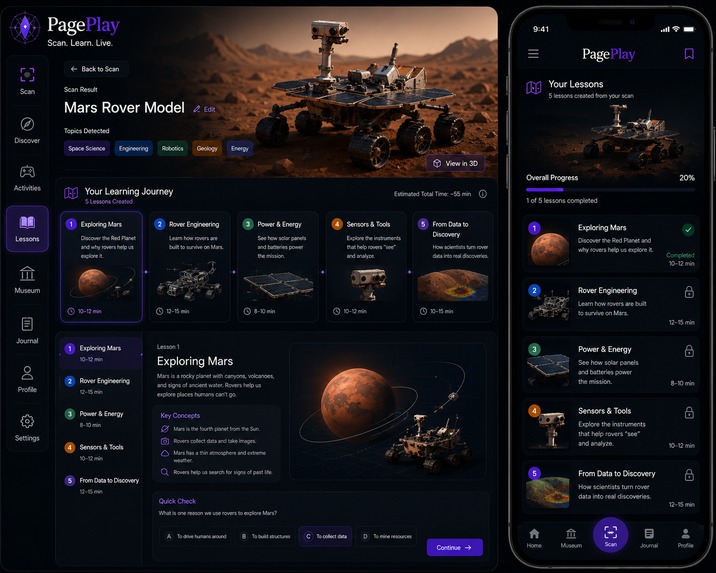
Learn more
-
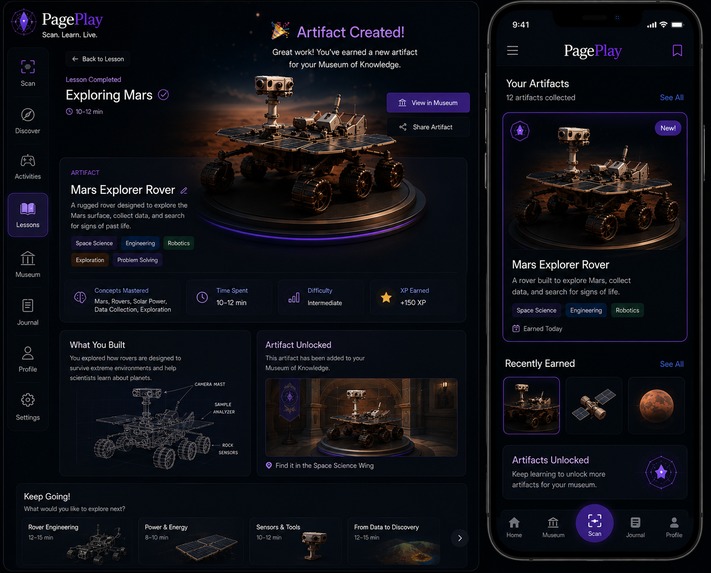
Earn your Prize
-
View it in 3d
Inspiration
Kids are naturally curious.
They watch a movie and wonder how spaceships fly. They visit a museum and ask why dinosaurs disappeared. They find an interesting diagram in a textbook and immediately start asking questions.
The problem is that those moments of curiosity rarely become learning opportunities.
We wanted to build something that starts with what students are already excited about instead of asking them to begin with a lesson plan.
That idea became PagePlay.
Instead of treating a page as something to read, we wanted every page, poster, game, diagram, or museum exhibit to become the start of a personalized learning adventure.
What it does
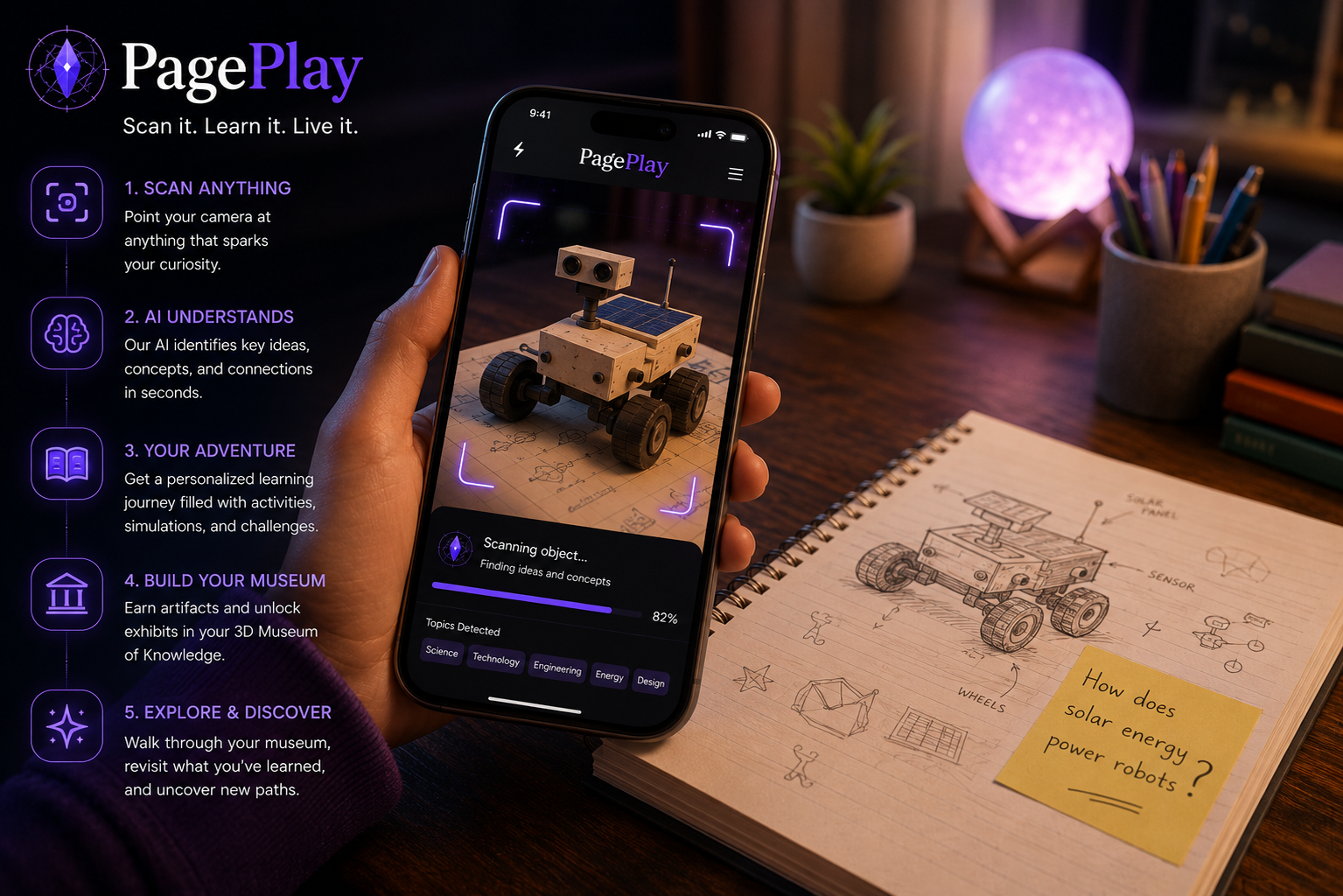
PagePlay turns almost anything you can scan into an interactive learning experience.
Students can scan a textbook page, movie poster, game case, worksheet, diagram, museum exhibit, or almost any visual source.
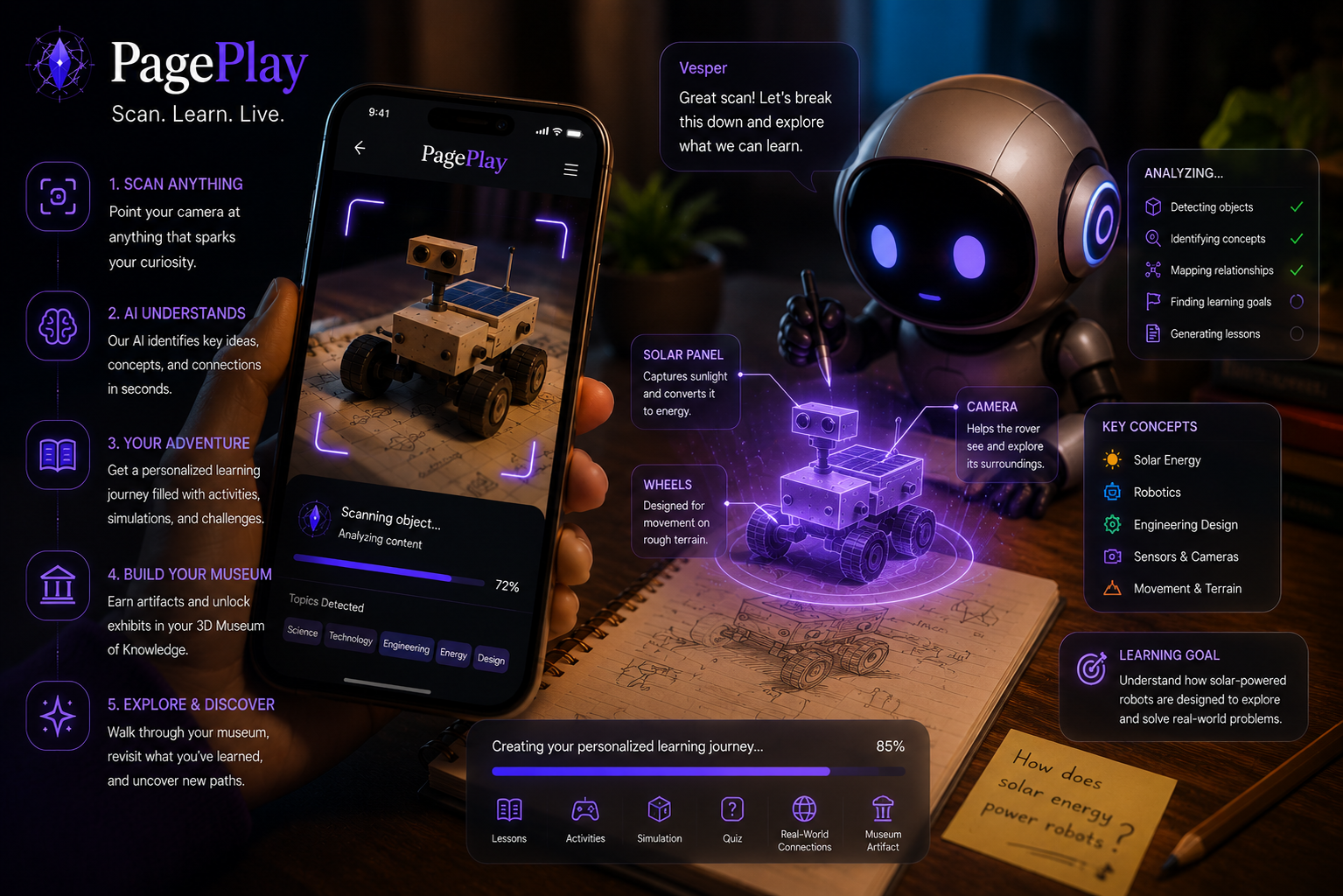
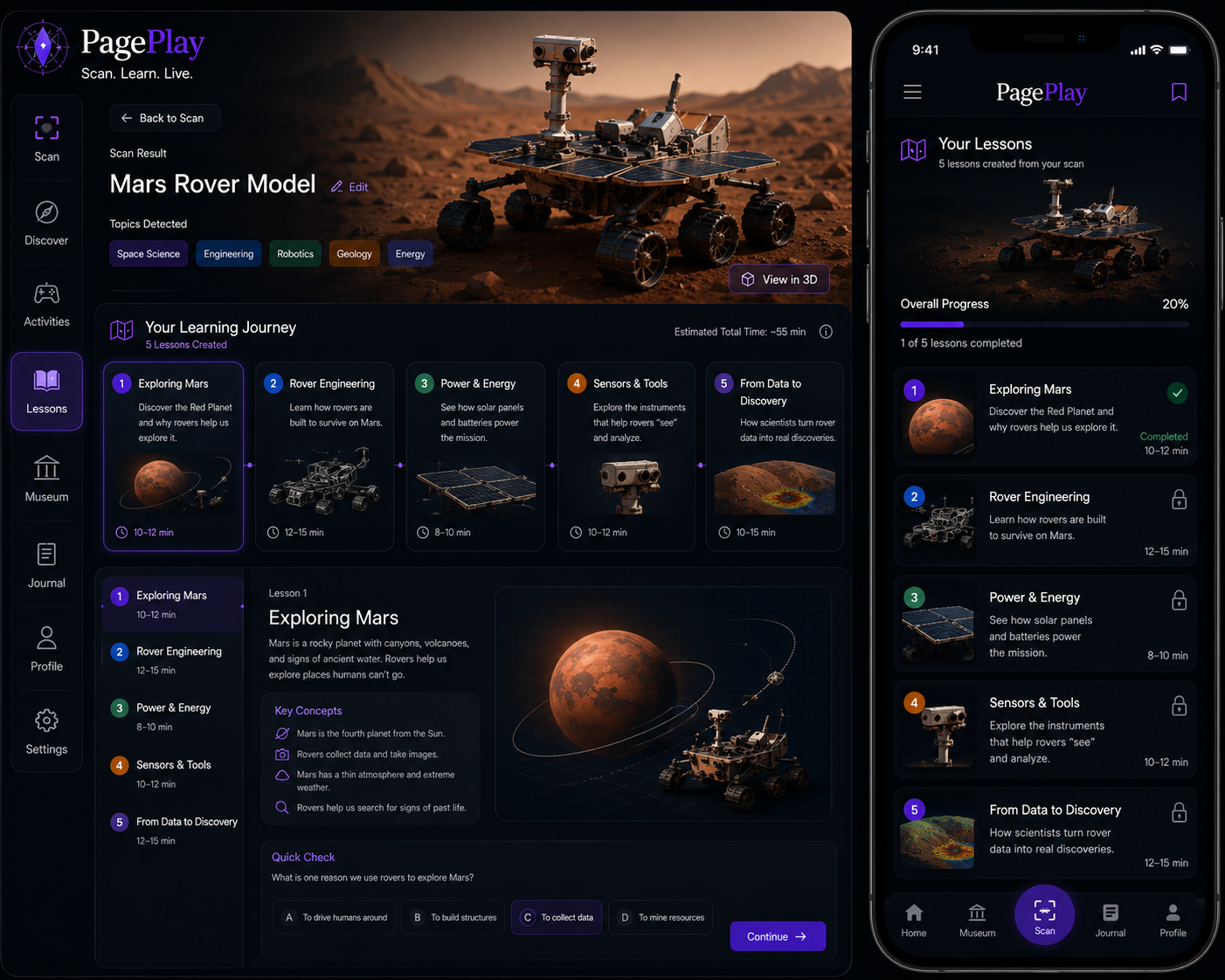
After a scan, PagePlay identifies the important concepts, generates age appropriate lessons, builds interactive activities, creates quizzes, suggests real world connections, and guides students through a complete learning journey.
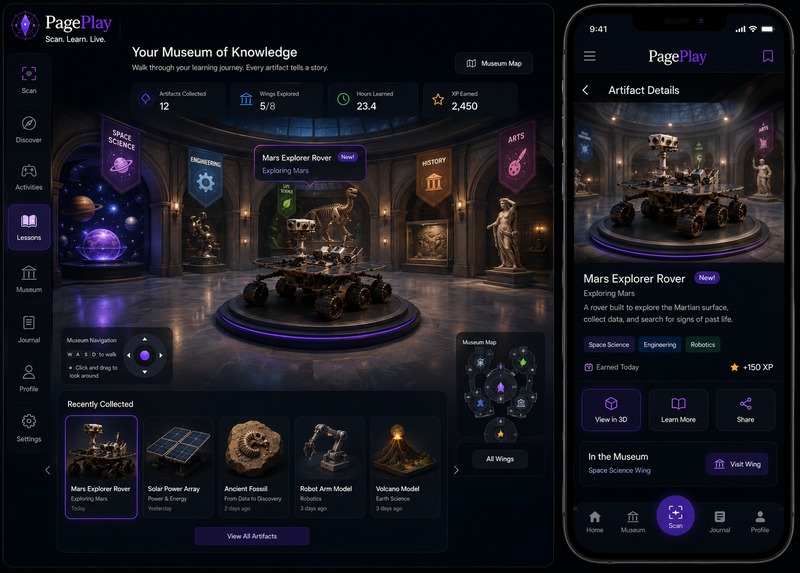
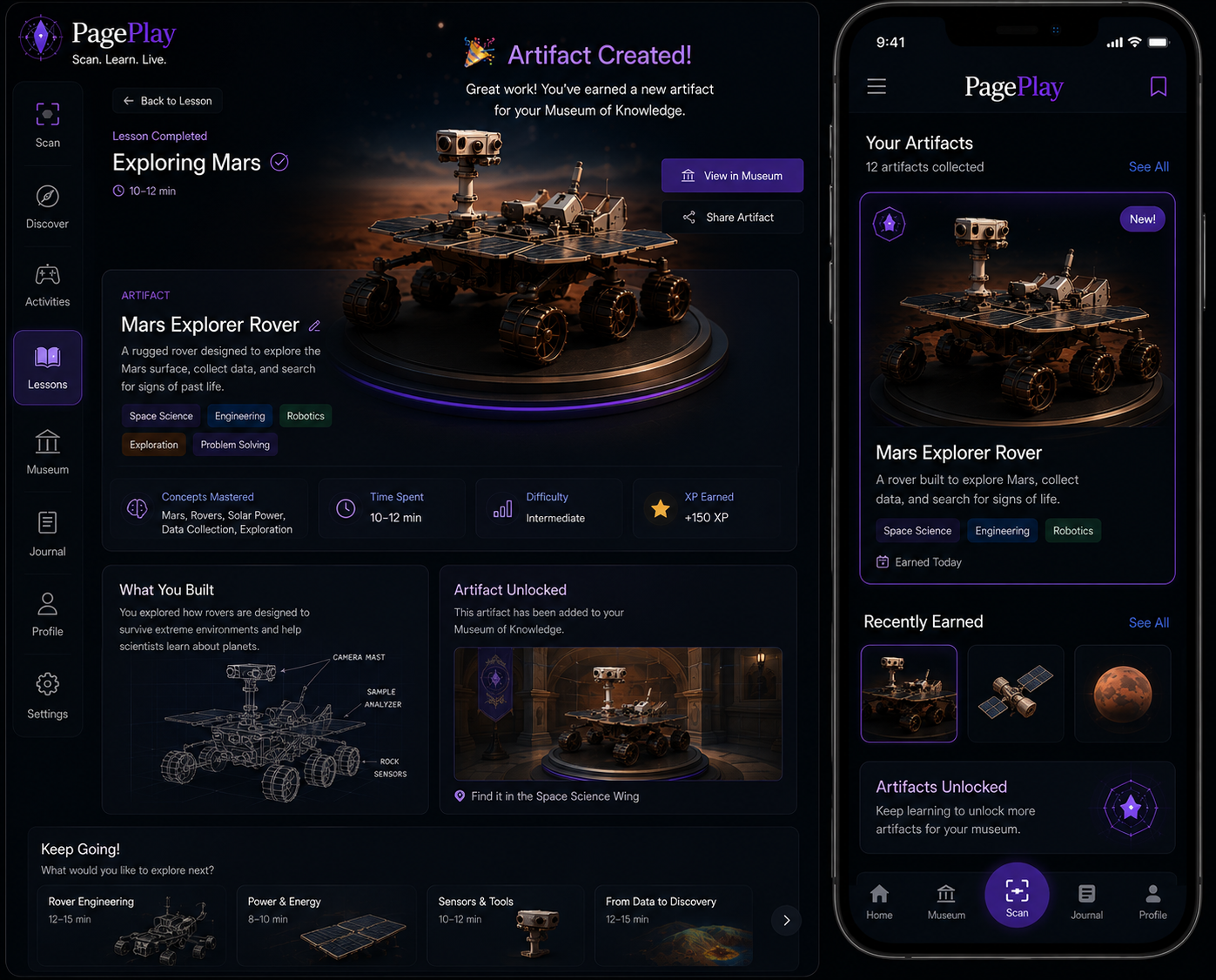
Every completed lesson rewards students with artifacts that are added to their own Museum of Knowledge.
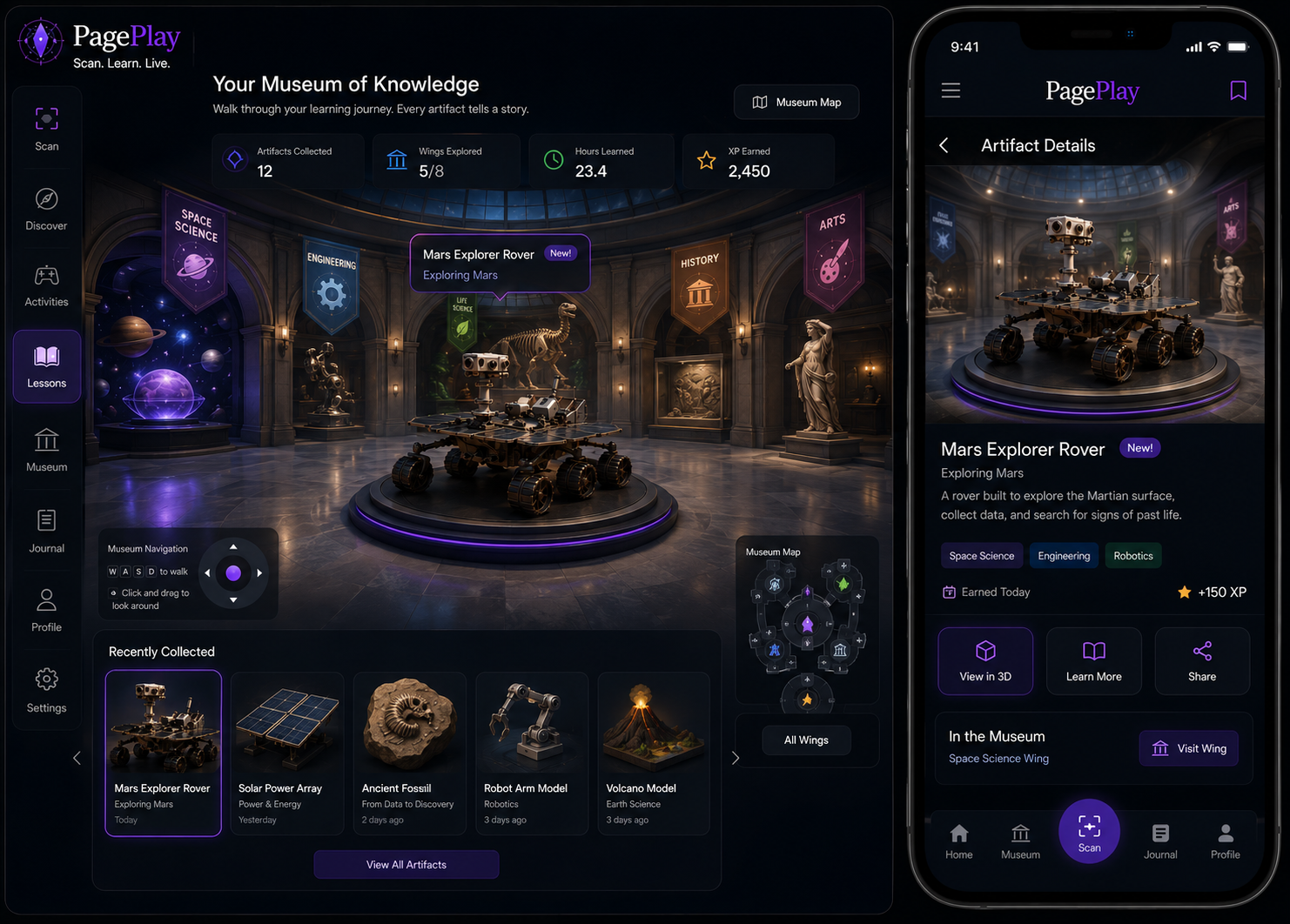
The museum is more than a collection screen. Students can walk through a living 3D museum, explore different subject wings, revisit discoveries, and see everything they've learned brought together in one place.
How we built it
We built PagePlay using React, TypeScript, Tailwind CSS, and OpenAI.
GPT-5.6 powers the learning engine behind every scan. After a page is scanned, it identifies important concepts, determines the appropriate grade level, detects possible misconceptions, and generates personalized lessons, activities, simulations, quizzes, reflections, and museum artifacts.
One of our goals was making the system reusable. Rather than building individual lessons by hand, we created a learning framework that works across almost any type of scanned content. The same workflow can generate experiences from textbooks, diagrams, museum exhibits, game cases, movie posters, comics, and many other sources.
Codex became a huge part of our development process. We used it to build reusable React components, refine the UI, solve TypeScript issues, improve responsive layouts, and iterate on nearly every major screen. We also used it to rapidly prototype new ideas, test different user flows, and continuously improve the overall experience throughout the hackathon.
A large part of the project was prompt engineering. We spent a significant amount of time refining prompts so the generated lessons felt intentional, educational, and consistent instead of producing generic AI responses.
Challenges we ran into
One of the biggest challenges was making the generated lessons feel engaging.
Early versions worked, but they felt like reading AI generated text instead of participating in a lesson.
We spent a lot of time redesigning the experience, simplifying the interface, and creating reusable activity templates that encourage exploration instead of memorization.
Another challenge was building a system flexible enough to work across almost any scanned content while still producing lessons that felt consistent and high quality.
Accomplishments that we're proud of
We're proud that PagePlay became much more than an AI lesson generator.
Students can scan almost anything and receive personalized lessons, interactive activities, simulations, creative challenges, and meaningful real world connections.
One of our favorite features is the Museum of Knowledge. Every completed lesson unlocks a new artifact that students can collect inside a fully explorable 3D museum. Instead of finishing a lesson and moving on, students build a world that grows with every discovery.
We're also proud that the same learning engine can support many different subjects without requiring separate handcrafted lessons for each one.
What we learned
We learned that building a great educational experience is about much more than generating content.
Good prompt engineering, thoughtful user experience, and meaningful interactions all matter just as much as the underlying model.
We also learned how valuable GPT-5.6 and Codex can be when used together. GPT-5.6 helped power the learning experience, while Codex allowed us to move quickly, experiment with new ideas, and continuously improve the product throughout development.
What's next for PagePlay
This prototype is just the beginning.
Next we want to expand the Museum of Knowledge with additional wings, collaborative exhibits, multiplayer exploration, and deeper connections between everything a student learns.
We also want to support multi-page textbook scanning, classroom tools for teachers, voice guided tutoring, richer simulations, accessibility improvements, and even more personalized learning journeys.
Our long term goal is simple.
Help students discover that learning doesn't begin with a lesson.
It begins with curiosity.


Log in or sign up for Devpost to join the conversation.