PADJ BOPR Hackathon Project
Inspiration
We noticed a common pain point in both academic and professional settings: people have big ideas, ambitious projects, or detailed assignments, but they often struggle to break them down into manageable pieces. It’s easy to feel overwhelmed when faced with a wall of requirements in a Word document, a dense PDF, or even just scattered notes. Instead of clear next steps, you’re left with stress and disorganization.
Our team wanted to create a tool that doesn’t just organize tasks—it links them together into a coherent execution plan, showing exactly when to work on what. That’s how PADJ BOPR was born: a smart planning assistant designed to take raw requirements and turn them into actionable, scheduled roadmaps.
What it does
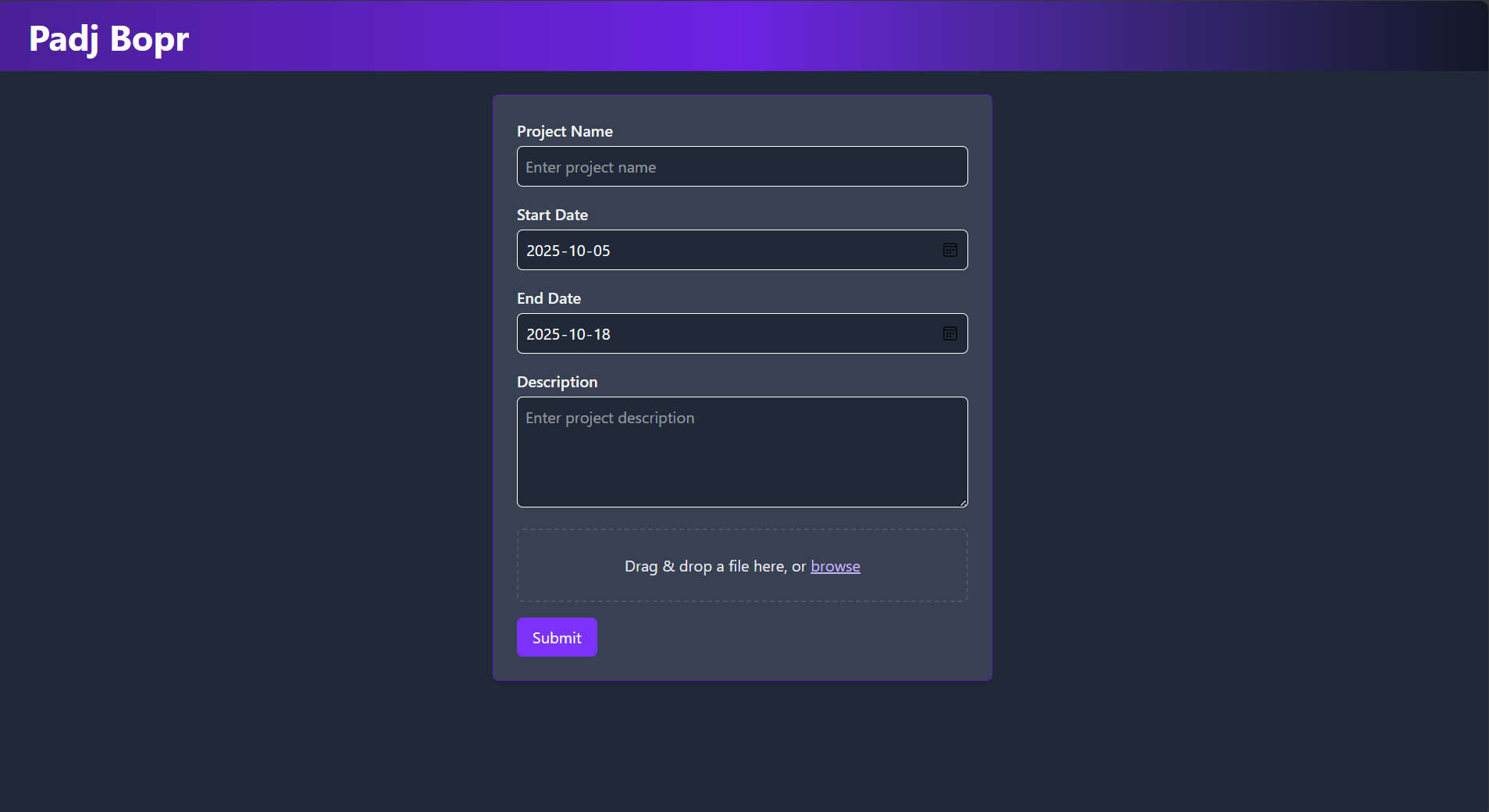
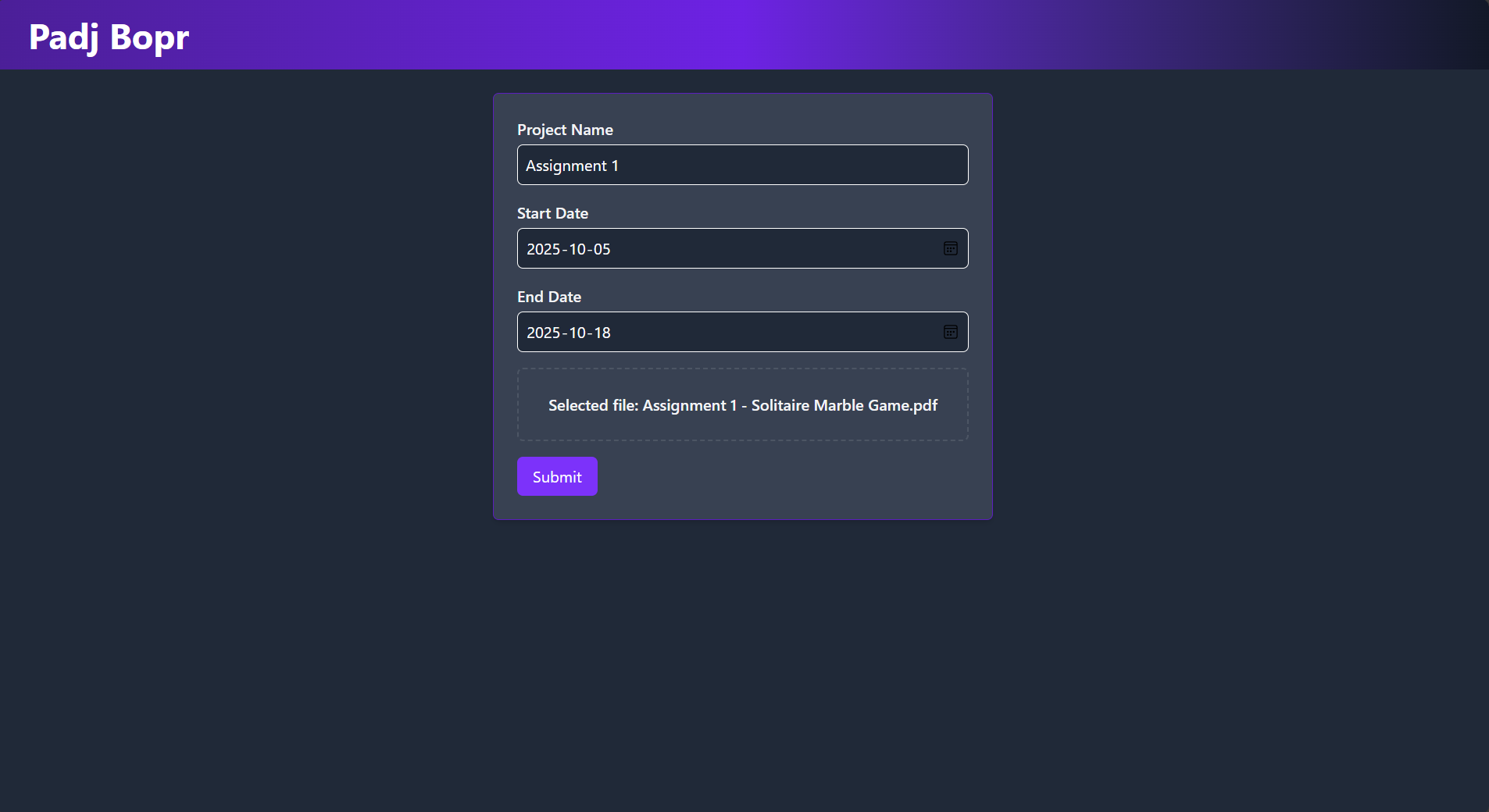
PADJ BOPR takes in project requirements—whether that’s a school assignment, a formal requirements document, or even a photo of handwritten notes—and uses a large language model to automatically break them down into dependency-linked subtasks.
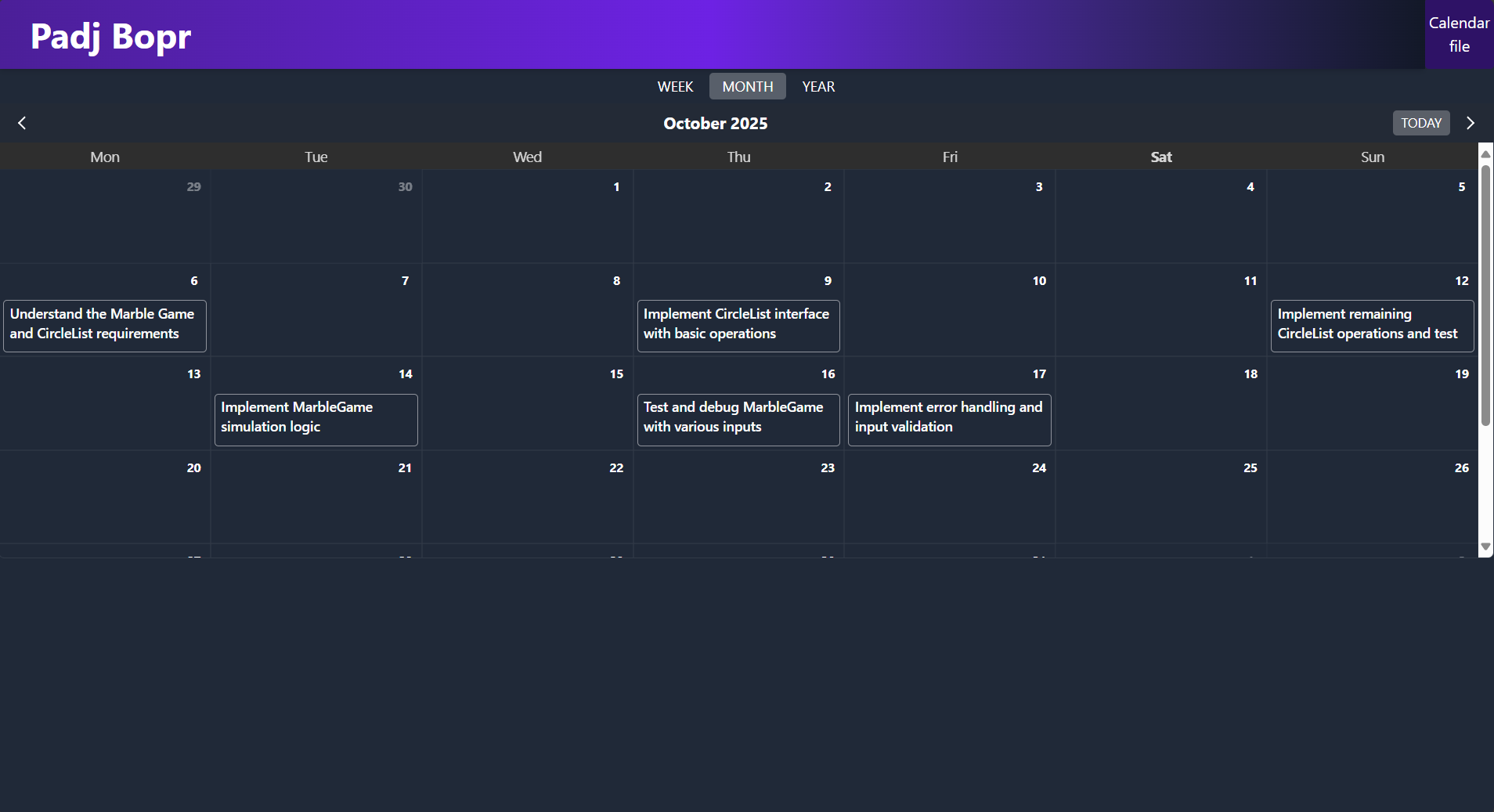
- Subtasks are mapped onto a calendar view, showing the logical order of execution and recommended timeframes.
- Users can drag and adjust tasks across days, ensuring flexibility.
- Calendars can be exported as ICS files, making them easy to import into Gmail, Outlook, or any calendar application.
How we built it
PADJ BOPR is a full-stack web application:
Frontend:
- Built with Vue, Tailwind CSS, and Vite for a fast, modern, and responsive experience.
- Users can upload documents, review generated subtasks, and interact with a drag-and-drop calendar.
- Deployed on Netlify for reliability and speed.
Backend:
- Developed with Flask, handling routing, API logic, and integration with external services.
AI Processing:
- Used Groq for LLM inference to quickly and accurately break down project requirements into dependency-based subtasks.
File Parsing:
- Supports Word documents, PDFs, plain text, and even handwritten notes using parsing and OCR libraries.
Hosting & Cloud:
- Backend deployed on Render, supporting scalable Flask hosting.
Calendar Exporting:
- Subtasks are formatted into universal ICS files, compatible with all major calendar platforms.
Challenges we ran into
- Dependency logic: Teaching the LLM to not just list subtasks, but capture dependencies and sequence them correctly.
- File support: Handling PDFs, Word docs, and handwritten images introduced edge cases.
- Calendar integration: Ensuring ICS files import cleanly across platforms.
- Deployment: Coordinating frontend (Netlify) and backend (Render) introduced CORS and routing issues.
- ML model complexity: Training a custom ML model was too complex, so we pivoted to using Groq.
Accomplishments that we're proud of
- Transforming unstructured requirements into structured, actionable subtasks.
- Supporting multiple input formats: Word, PDF, TXT, and handwritten images.
- Building a beautiful, responsive frontend with Vue + Tailwind.
- Seamlessly exporting plans as ICS files.
- Overcoming technical hurdles in AI integration and backend deployment under a tight hackathon timeline.
What we learned
- Balancing AI-generated structure with user flexibility.
- The importance of universal formats (ICS) for interoperability.
- Integrating modern frontend stacks (Vue + Vite + Tailwind) with a Python backend.
- Critical team communication when dividing frontend, backend, and AI tasks.
- Small design touches, like drag-and-drop subtasks, greatly improve UX.
What's next for PADJ BOPR
- Collaboration features: Allow multiple users to generate shared project calendars.
- Direct calendar syncing: Explore optional integration with Google Calendar and Outlook APIs.
- Progress tracking: Add task completion tracking, reminders, and visual progress dashboards.
- Mobile support: Build a mobile-friendly interface for managing tasks on the go.


Log in or sign up for Devpost to join the conversation.