-
-
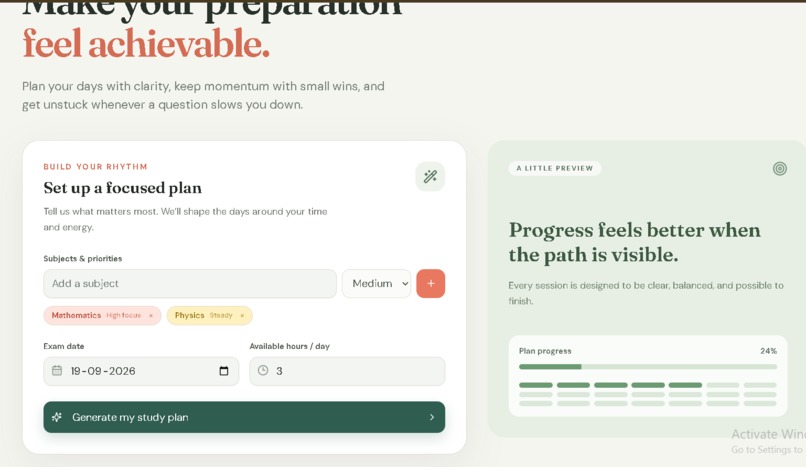
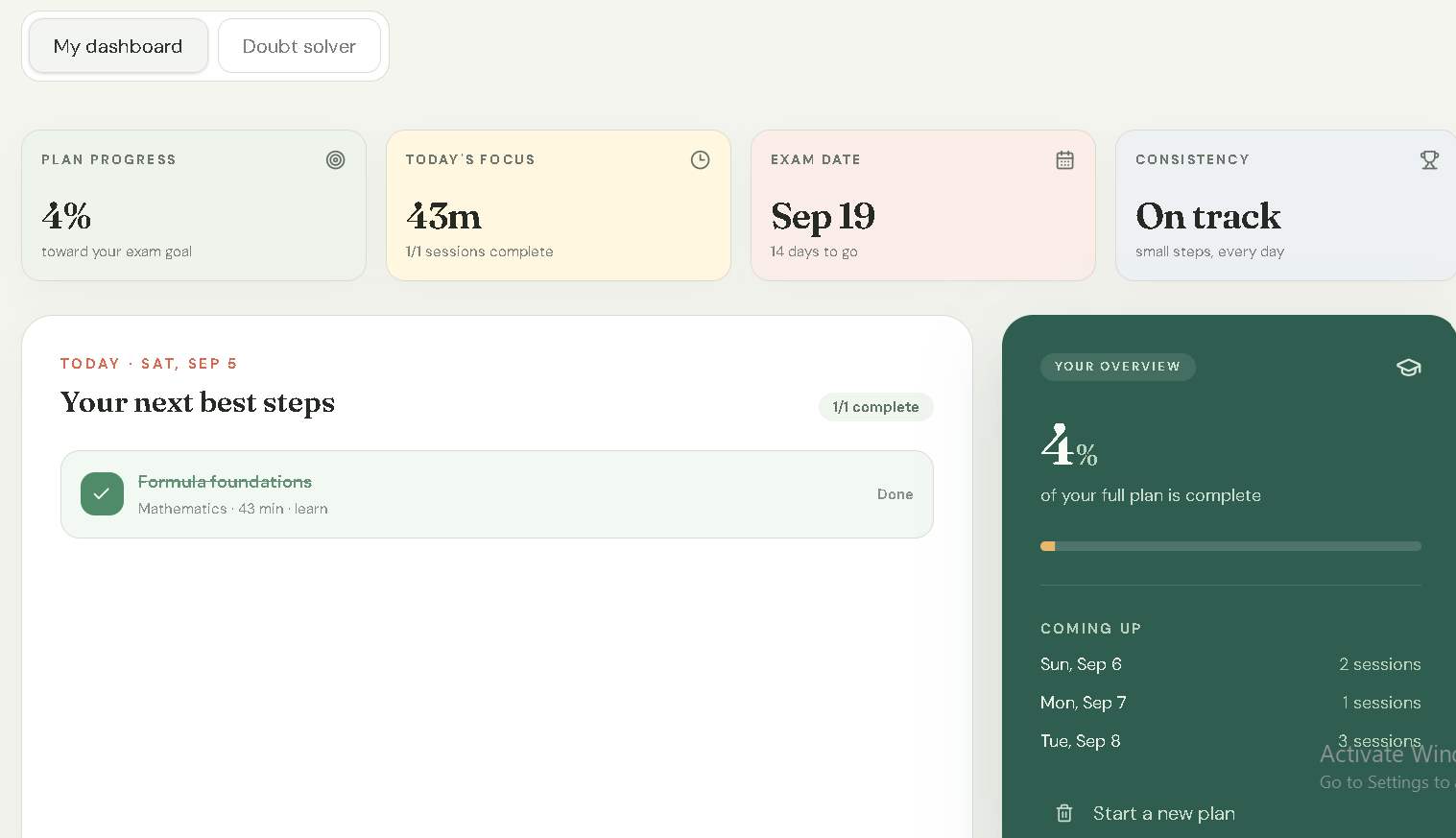
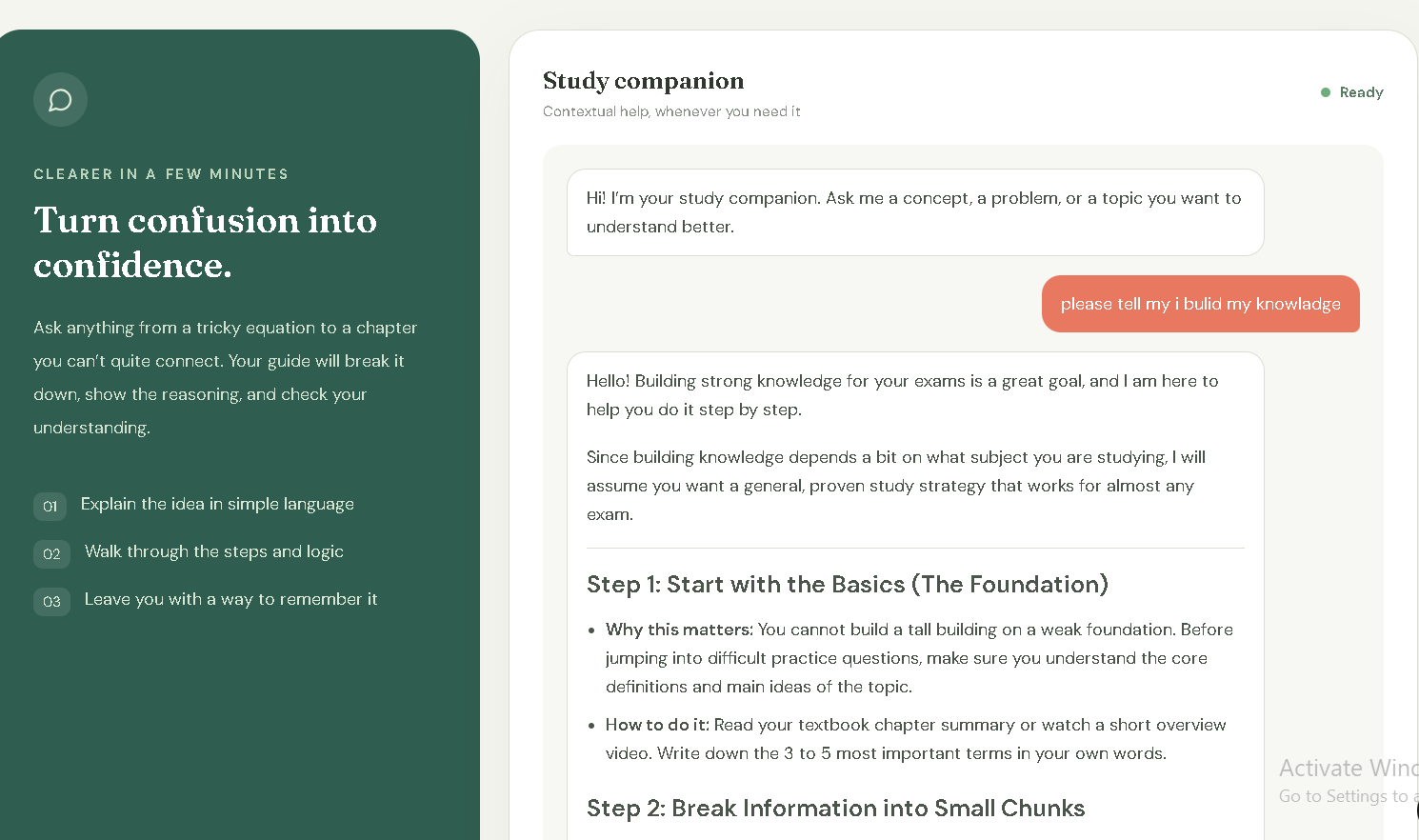
selet youar subject and check up how to your next step how to build your knowladge
-
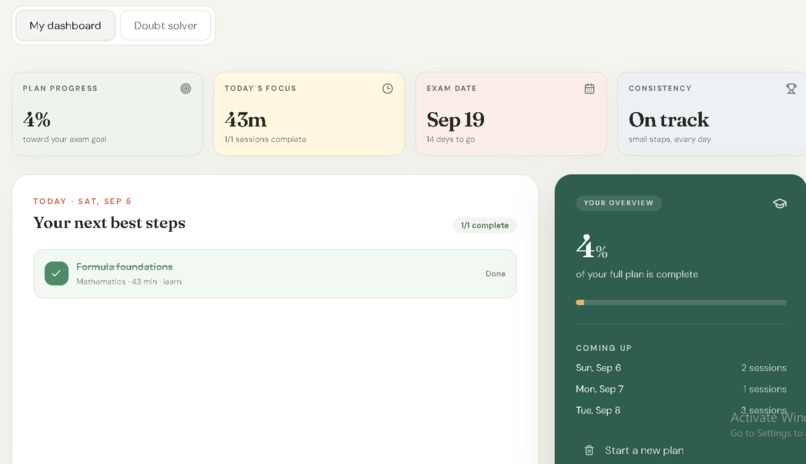
Your next best steps
-
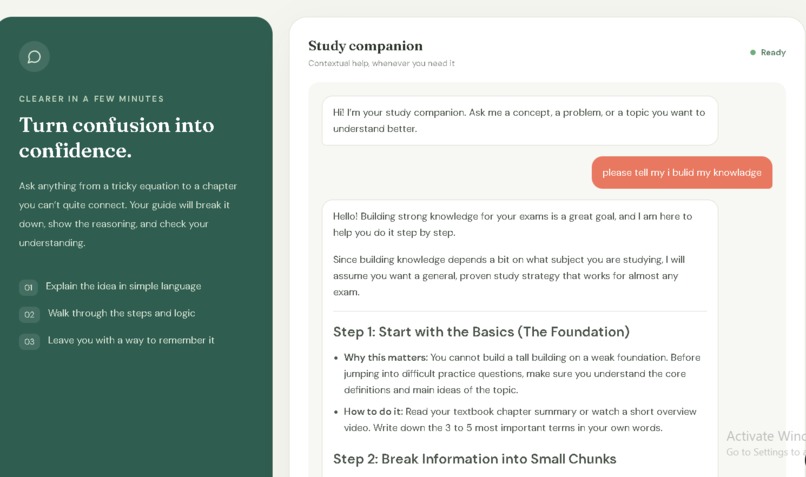
LLM model intiigrection any question all quections correct answer
Inspiration
What it does
How we built it
Challenges we ran into
Accomplishments that we're proud of
What we learned
What's next for PadhaiPath
Inspiration Students today face endless academic pressure paired with scattered, overwhelming tools. Existing platforms often bombard learners with unnecessary notifications or lock helpful guidance behind paywalls. We wanted to build PadhaiPath—a calm, clear, and privacy-first study companion designed to remove friction, structure daily preparation, and offer immediate step-by-step academic help when a difficult topic gets in the way.
What it does PadhaiPath brings structure and clarity to student preparation through two main capabilities:
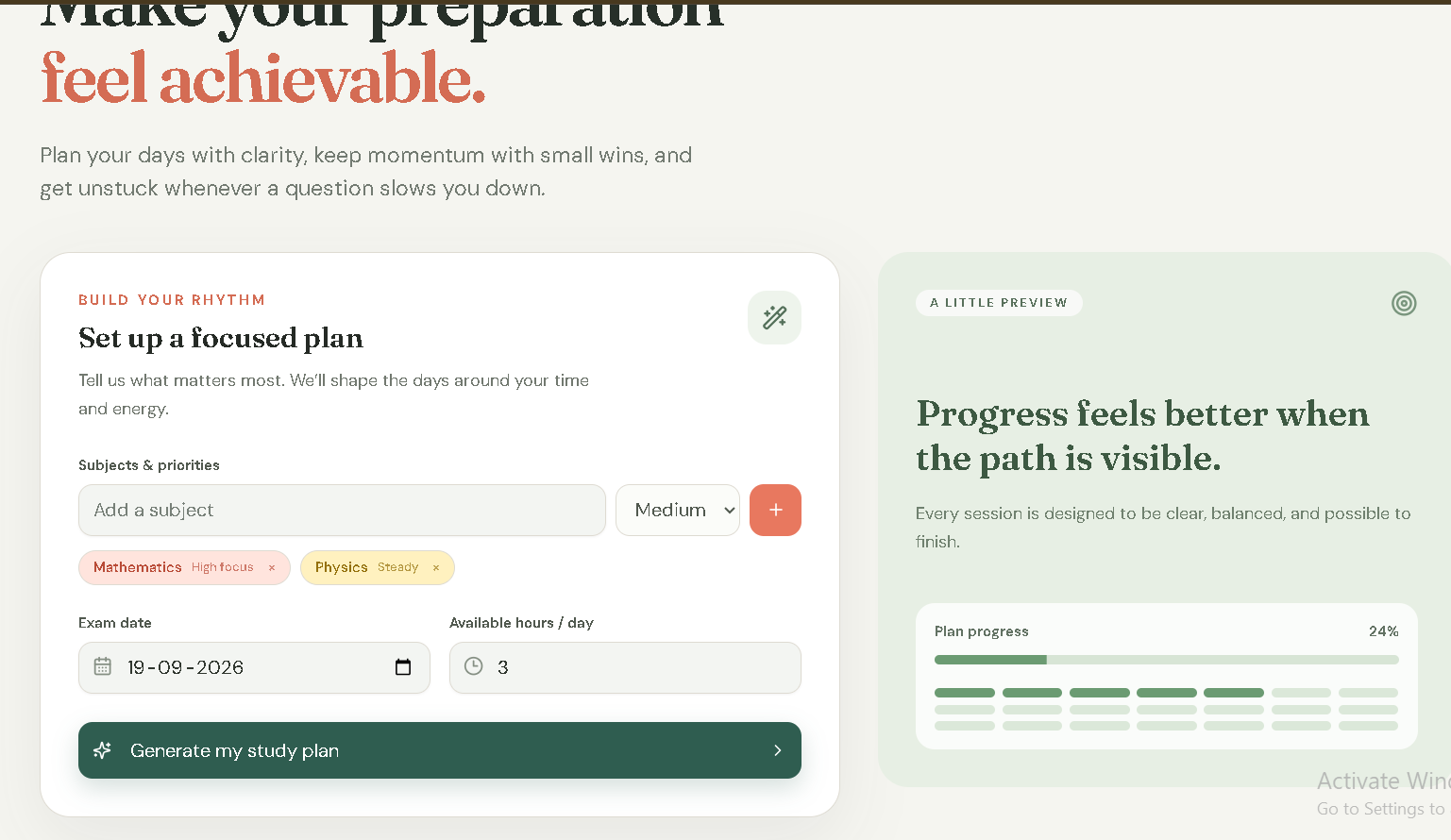
Smart Study Planner: Collects subjects, priorities, an exam date, and daily available study hours to generate a balanced, day-wise schedule. It alternates learning and practice sessions while inserting spaced-revision sessions at regular intervals.
Local Progress Tracking: Automatically saves study plans and task completion states directly in the user's browser via localStorage, avoiding forced sign-ups or progress resets.
Secure AI Doubt Solver: Uses a typed tRPC procedure to send questions to a server-side language model helper, returning contextual answers with clear, step-by-step reasoning.
How we built it
Frontend: Built with React 19, TypeScript, Vite, and Tailwind CSS 4, utilizing shadcn/ui primitives, Lucide icons, and custom typography (Fraunces + DM Sans).
Backend: Node.js, Express, and tRPC 11 to establish end-to-end type-safe API boundaries.
Data & AI Layer: Utilized browser localStorage for local persistence and implemented Zod validation on the server to handle AI prompts via invokeLLM.
Testing & Infrastructure: Verified generator algorithms, storage fallbacks, and server procedures using Vitest and the TypeScript compiler within GitHub Codespaces.
Challenges we ran into
Algorithm Balancing: Designing the study planner to dynamically balance learning, practice, and spaced-revision sessions across arbitrary date ranges without overloading any single day.
Server-Side AI Isolation: Ensuring strict security boundaries where no API secrets or model credentials ever leak to the client-side code while maintaining real-time, low-latency streaming responses.
Resilient Local Storage: Handling edge cases in browser persistence, such as corrupt JSON payloads or unexpected state wipes, without breaking the core UI or dashboard experience.
Accomplishments that we're proud of
Zero Credential Exposure: Successfully kept the entire AI execution layer strictly server-side, protecting platform runtime keys while delivering smooth, step-by-step Markdown answers.
End-to-End Type Safety: Achieved full TypeScript integration across the client, tRPC endpoints, and schedule generators.
Privacy-First Design: Delivered a fully functional, persistent dashboard experience that runs entirely inside the user's local browser context without requiring forced cloud synchronization.
What we learned
tRPC 11 Patterns: Deepened our understanding of building seamless full-stack architectures using type-safe API procedures.
Spaced-Repetition Mechanics: Gained insights into structuring effective study loops that balance new conceptual learning with timely revision cycles.
Client-Side Persistence: Learned best practices for writing fault-tolerant serialization utilities in browser storage environments.
What's next for PadhaiPath
Calendar Export: Adding .ics file generation so students can sync their day-wise study schedule directly to Google Calendar or Apple Calendar.
Dynamic Plan Editing: Allowing students to reschedule or add new subjects mid-plan without losing their completed session history.
Optional Cloud Sync: Implementing optional authenticated database synchronization (via Drizzle ORM) for multi-device access.
Built With
- ai
- css
- drizzle
- edtech
- express.js
- icons
- llm
- lucide
- node.js
- orm
- plann
- prettier
- react
- shadcn/ui
- study
- tailwind
- trpc
- typescript
- vite
- vitest
- zod

Log in or sign up for Devpost to join the conversation.