-
-
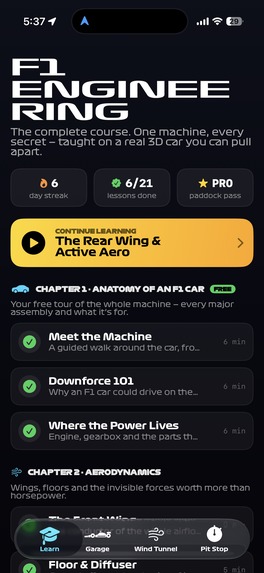
App Main View
-
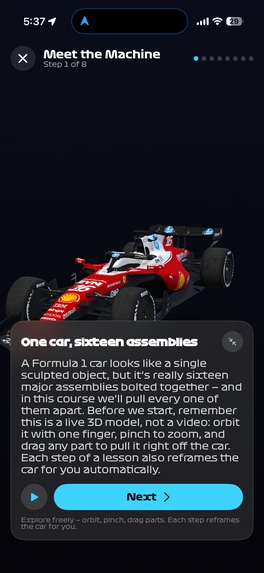
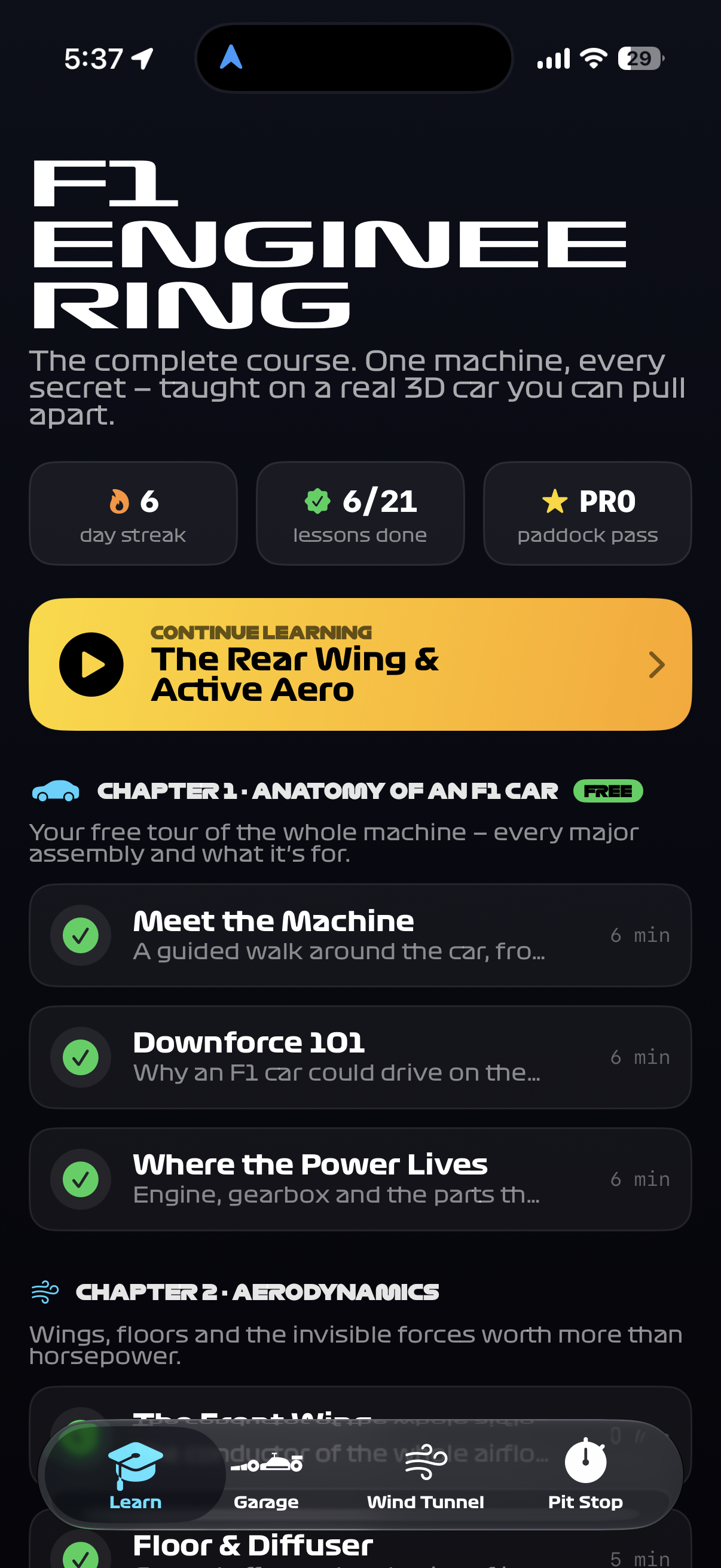
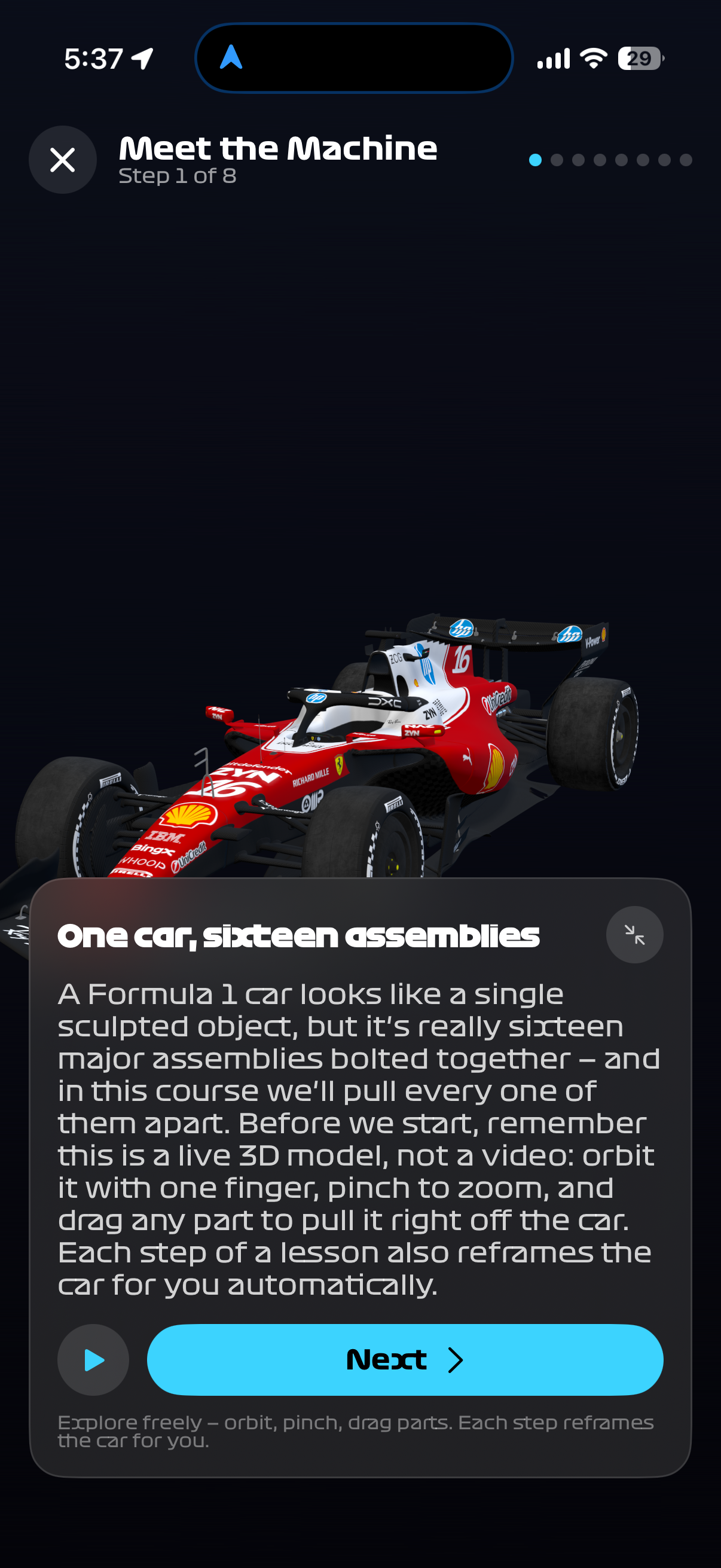
Course/Class
-
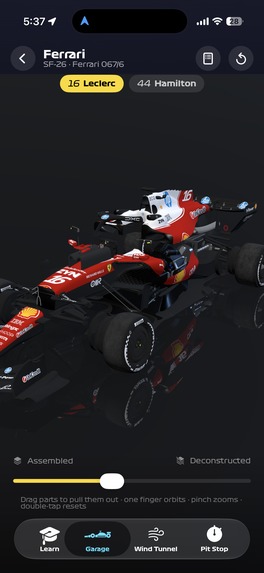
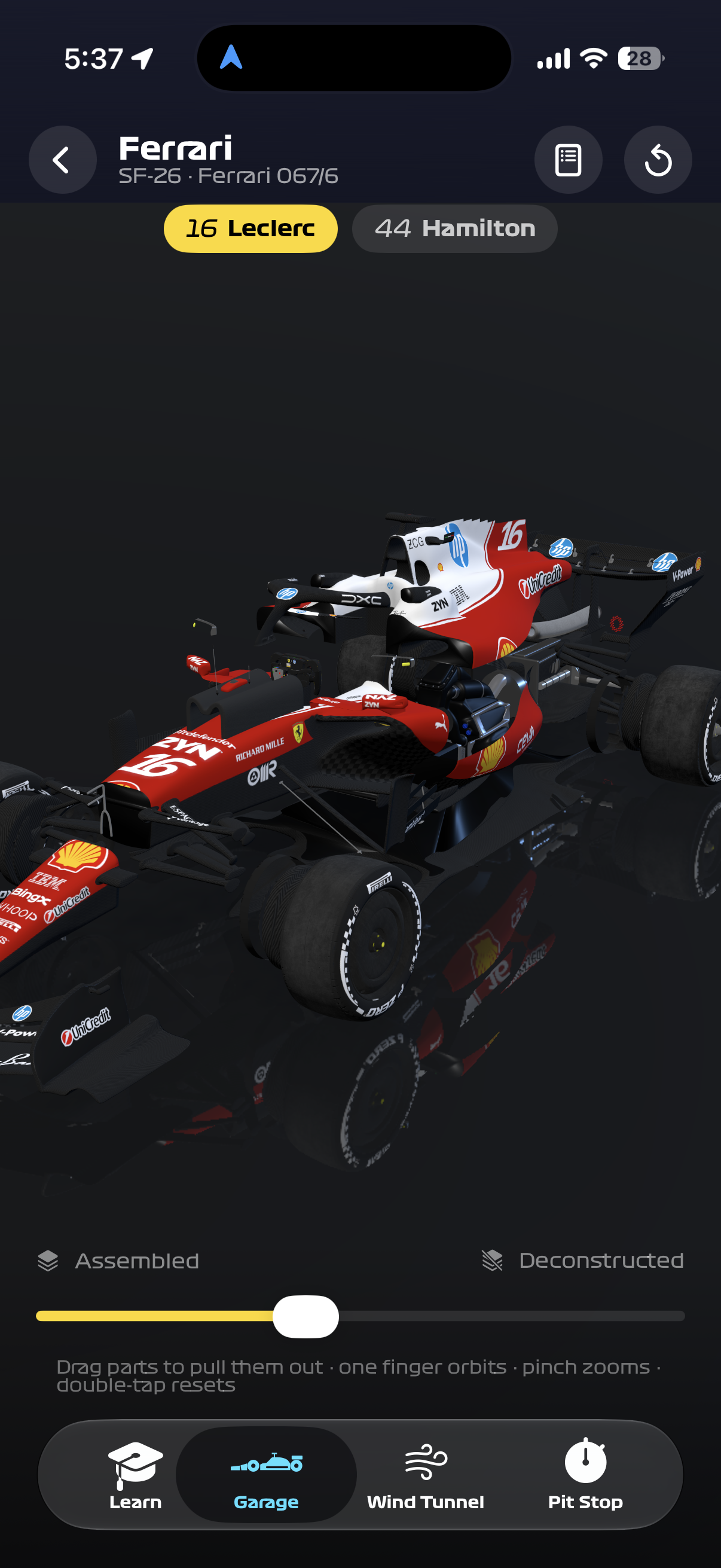
Garage - Ferrari Deconstructed
-
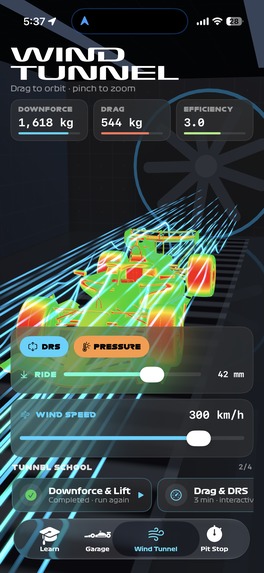
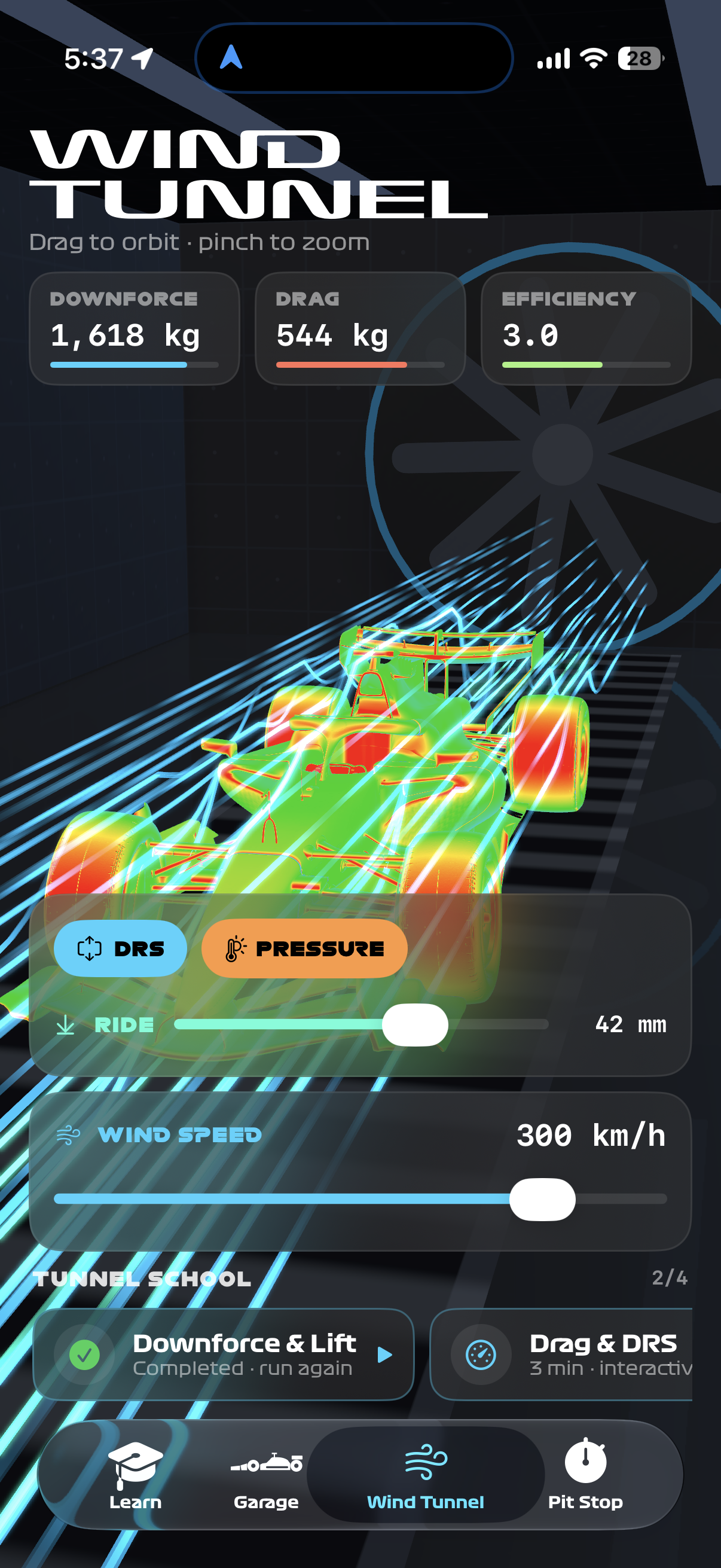
Wind Gallery Experience
-
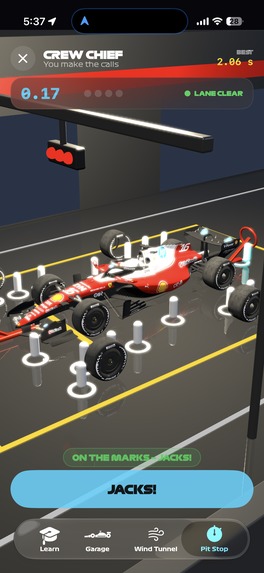
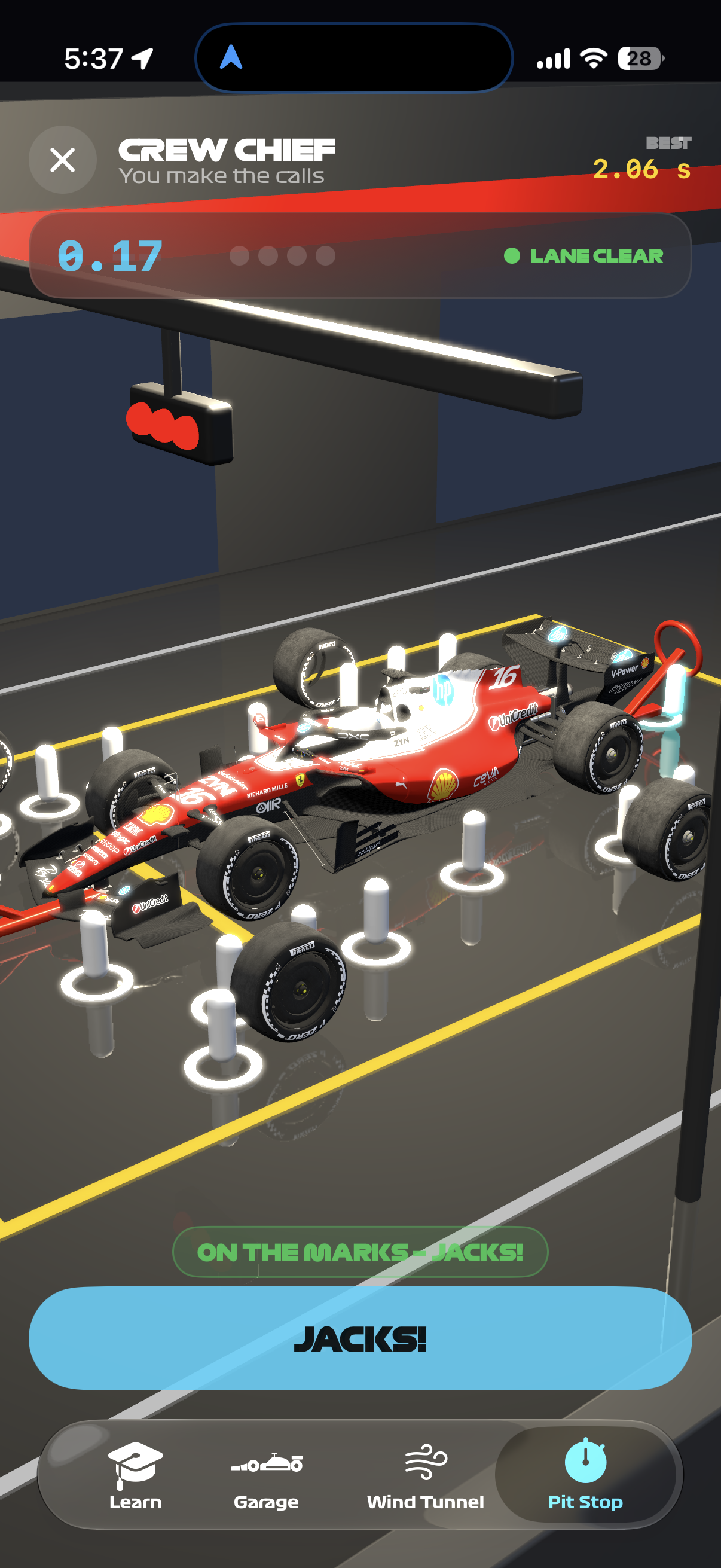
Pit Stop Experience
Inspiration
Some of my favorite childhood memories are of watching Formula 1 races on Sundays with my dad and uncle. I loved the speed, the sound, and the excitement, but I was too young to understand the engineering that made it all possible.
Years later, I still loved the sport—but I realized that most explanations of F1 technology were either too superficial or far too technical. I wanted a way to learn by seeing and interacting with the car itself.
That idea became Paddock Pass: a digital garage where you can explore a detailed 3D Formula 1 car, pull it apart piece by piece, and learn how every major component works. As a Ferrari fan, that was naturally the first car I wanted to build, but the bigger goal is to make Formula 1 engineering approachable for anyone who has ever watched a race and wondered what is really happening beneath the bodywork.
What it does
Paddock Pass turns a Formula 1 car into an interactive engineering course.
Instead of learning from static diagrams or long technical articles, users explore a detailed 3D car, rotate it, zoom in, and pull it apart piece by piece. Each major component includes guided explanations covering what it does, how it works, and why it matters on the track.
Users can also go deeper into systems such as the hybrid power unit, exploring individual components including the internal combustion engine, turbocharger, MGU-K, and energy store.
The goal is to make Formula 1 engineering approachable without oversimplifying it.
How we built it
We started by breaking the car down into its major mechanical and aerodynamic assemblies, then created a detailed 3D model in which every important component could be independently selected, moved, and explored.
We built a custom interactive experience around that model, allowing users to orbit the car, zoom in, explode the entire assembly with a slider, or remove individual parts by hand.
The educational content was then designed around the car itself. Rather than separating lessons from the model, each explanation is connected directly to the component being discussed. The same core experience is available through both the iOS app and the web.
A large part of the work involved balancing visual detail, technical accuracy, performance, and usability—especially on mobile devices.
Challenges we ran into
The biggest challenge was turning an extremely complex machine into something understandable without making it feel like a textbook.
Formula 1 components rarely work in isolation. Explaining the floor, diffuser, suspension, cooling system, or power unit means showing how each part affects the rest of the car. We had to decide how deep each lesson should go while keeping the experience accessible to someone encountering these concepts for the first time.
The 3D experience brought its own challenges. The car needed enough detail to feel credible while still loading quickly and running smoothly across different devices. Making every component selectable and removable also required careful organization of the model.
Finally, Formula 1 changes constantly. Building the experience around the new generation of cars meant researching evolving regulations and translating highly technical information into clear, visual lessons.
Accomplishments that we're proud of
We are proud that Paddock Pass does not simply show users a Formula 1 car—it lets them learn directly from it.
Users can take apart the complete car, explore its major assemblies, and then go another level deeper into systems such as the hybrid power unit. What would normally require dozens of diagrams, articles, and videos is brought together into one coherent interactive experience.
We are also proud that the first chapter can be explored for free without creating an account. We wanted people to understand the product by using it, rather than asking them to register before they could see what makes it different.
Most importantly, we built the learning tool we wished existed when we first became interested in Formula 1.
What we learned
We learned that complex engineering becomes much easier to understand when people can manipulate the object being explained.
A written description of airflow, suspension geometry, or energy recovery can feel abstract. Seeing the relevant component in context—and being able to isolate it from the rest of the car—makes the same explanation far more intuitive.
We also learned that technical depth and accessibility are not opposites. People are willing to engage with complicated subjects when the information is introduced gradually and connected to something they can see.
Finally, we learned how much curiosity exists beyond the racing itself. Many fans do not only want to know who won. They want to understand why one car is faster, what engineers are changing, and what is really happening beneath the bodywork.
What's next for Paddock Pass
The current experience is only the beginning.
We plan to add more cars, deeper component breakdowns, and new lessons covering aerodynamics, vehicle dynamics, race strategy, tires, setup changes, and the engineering decisions teams make throughout a race weekend.
We also want to make Paddock Pass something users return to regularly, with content connected to real races, technical developments, regulation changes, and the stories behind important innovations.
The long-term goal is to build an interactive library of Formula 1 engineering—one that grows alongside the sport and helps any curious fan understand the technology behind it.


Log in or sign up for Devpost to join the conversation.