inspiration
Online payments have become an essential part of everyday life, but trust and transparency remain major challenges in digital transactions. Users often face uncertainty about payment status, transaction reliability, and whether their payments have been processed correctly. We wanted to explore how artificial intelligence could make digital payment experiences smarter, more transparent, and easier to understand. This idea inspired us to build PayTrust AI, a platform that combines payment technology with AI-powered intelligence to improve the way users interact with digital transactions.
What it does
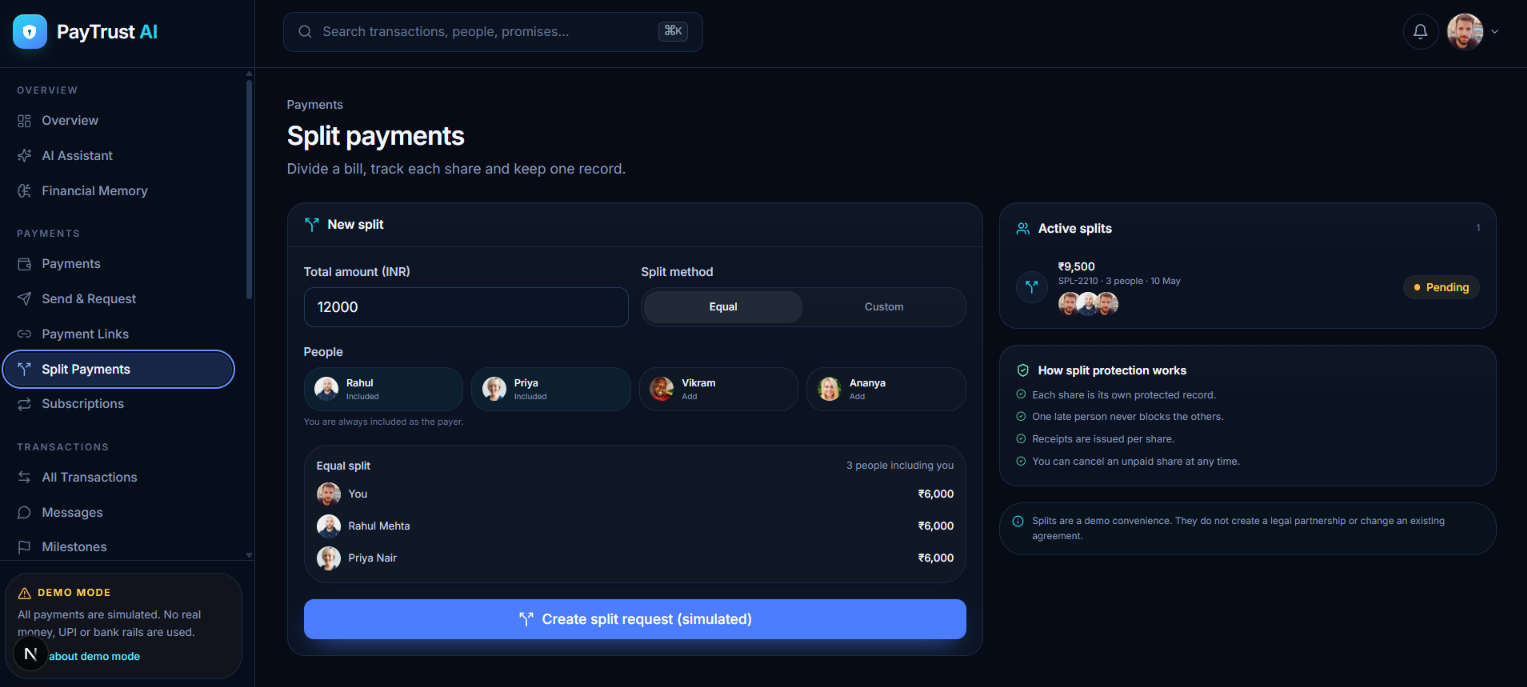
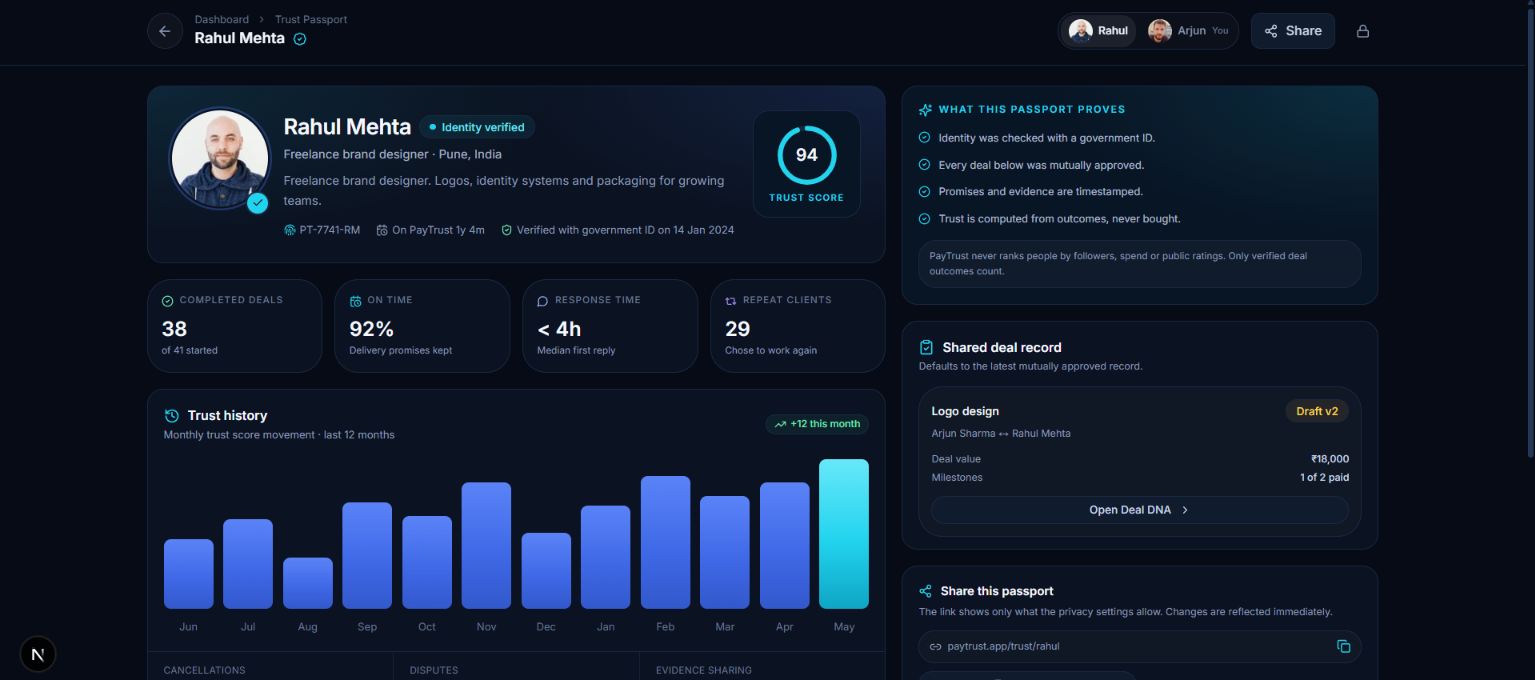
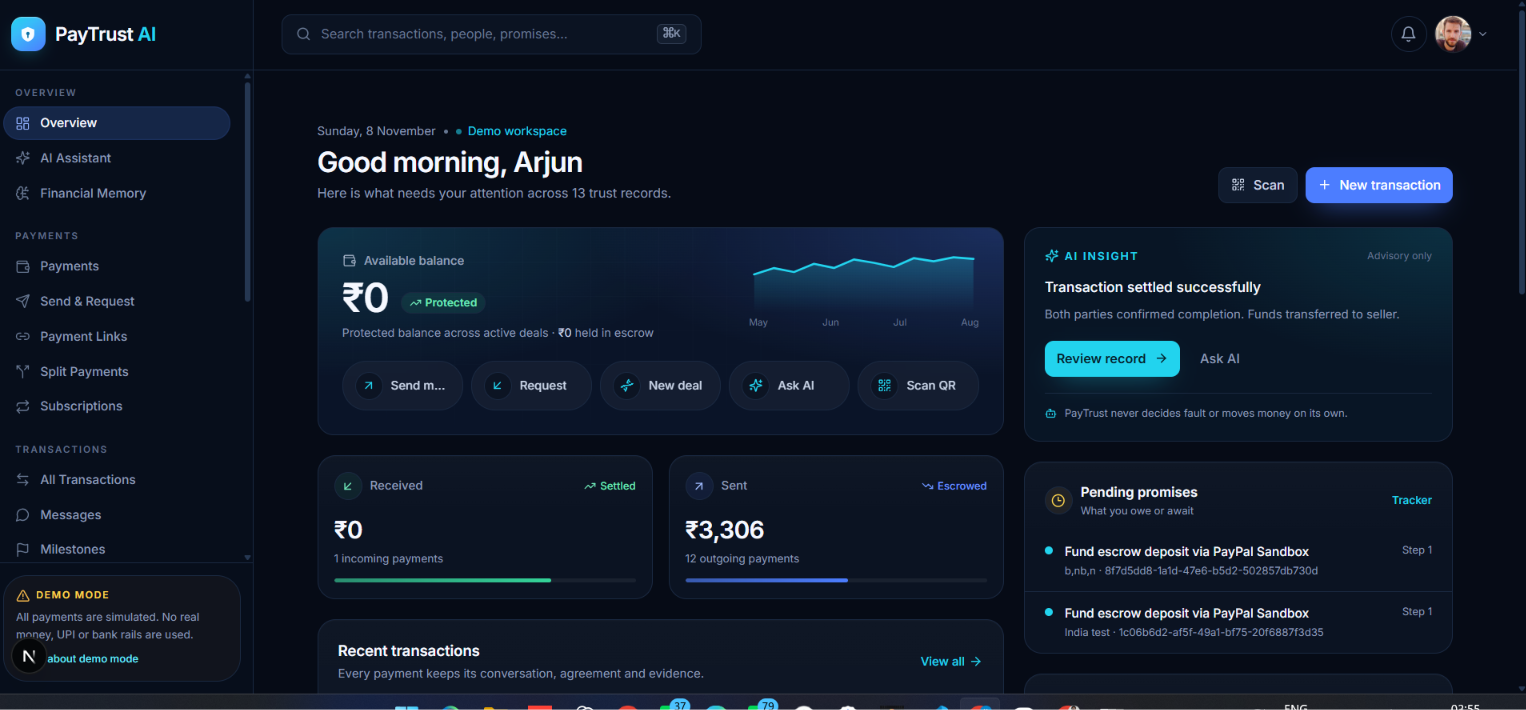
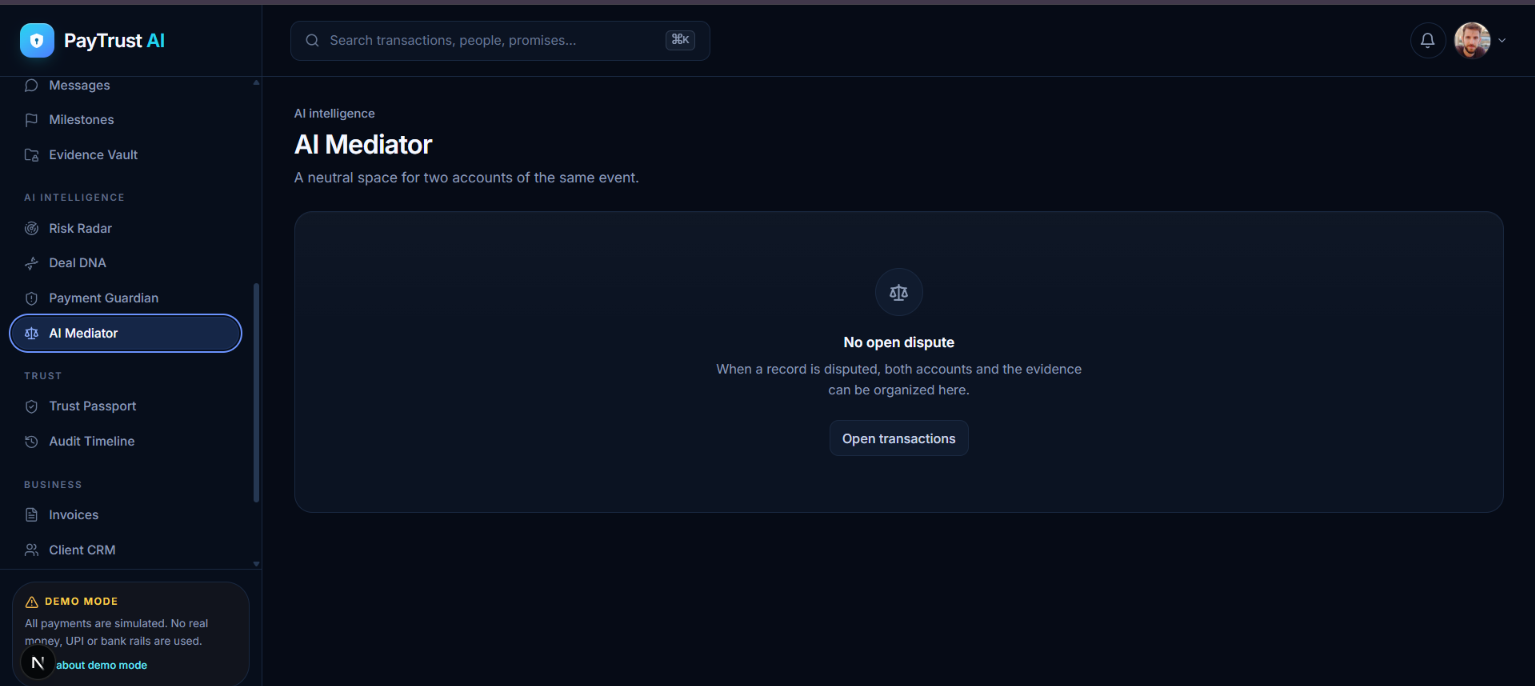
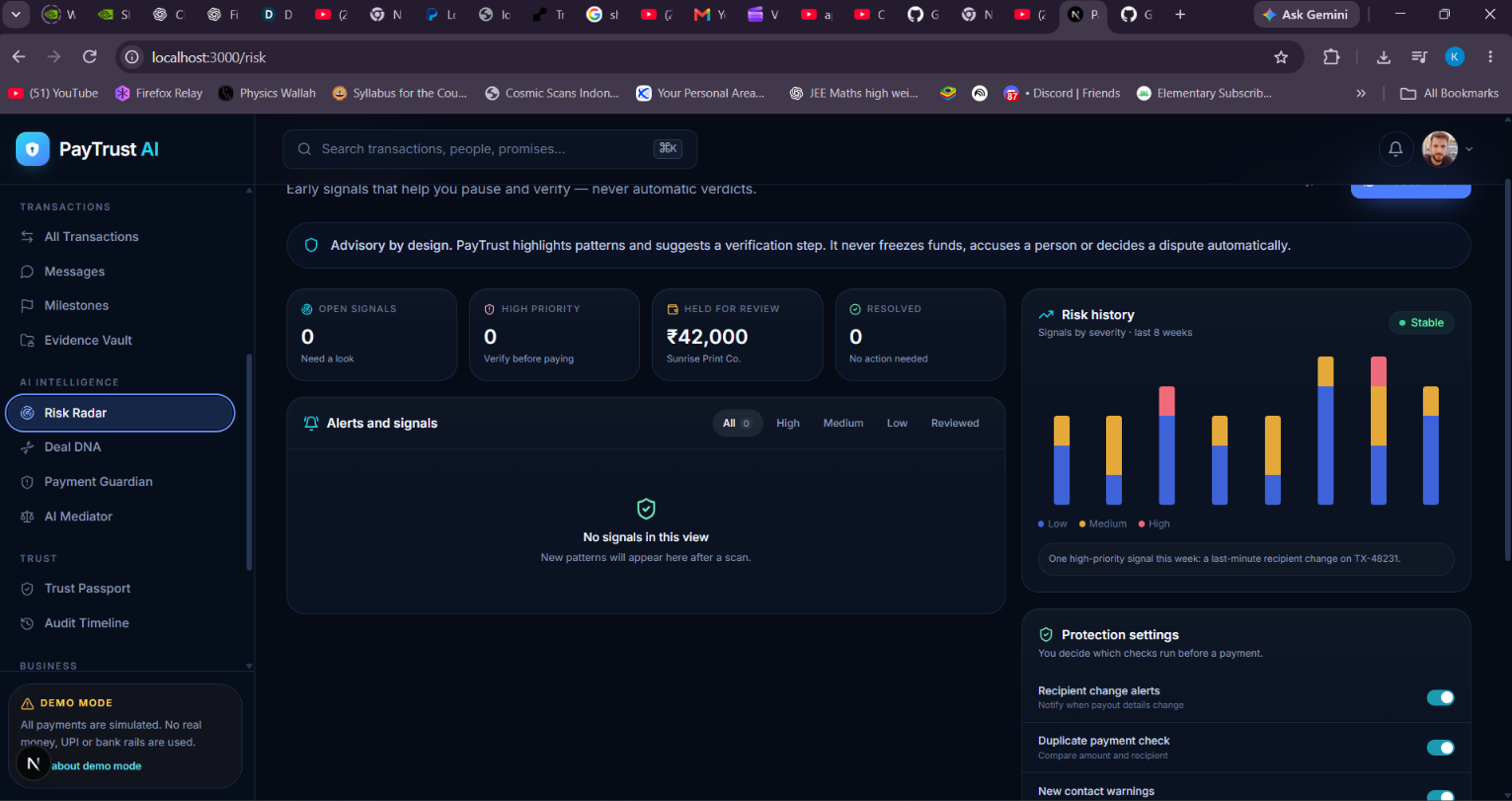
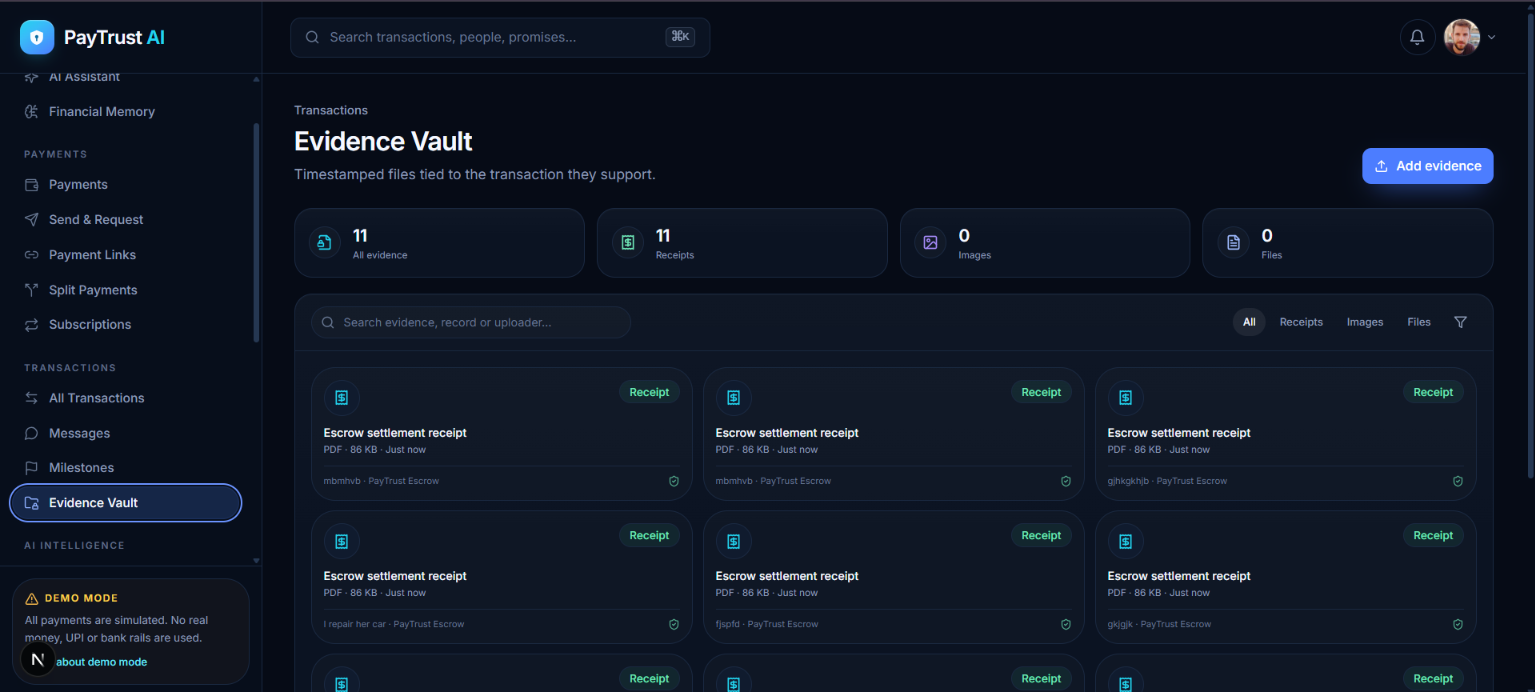
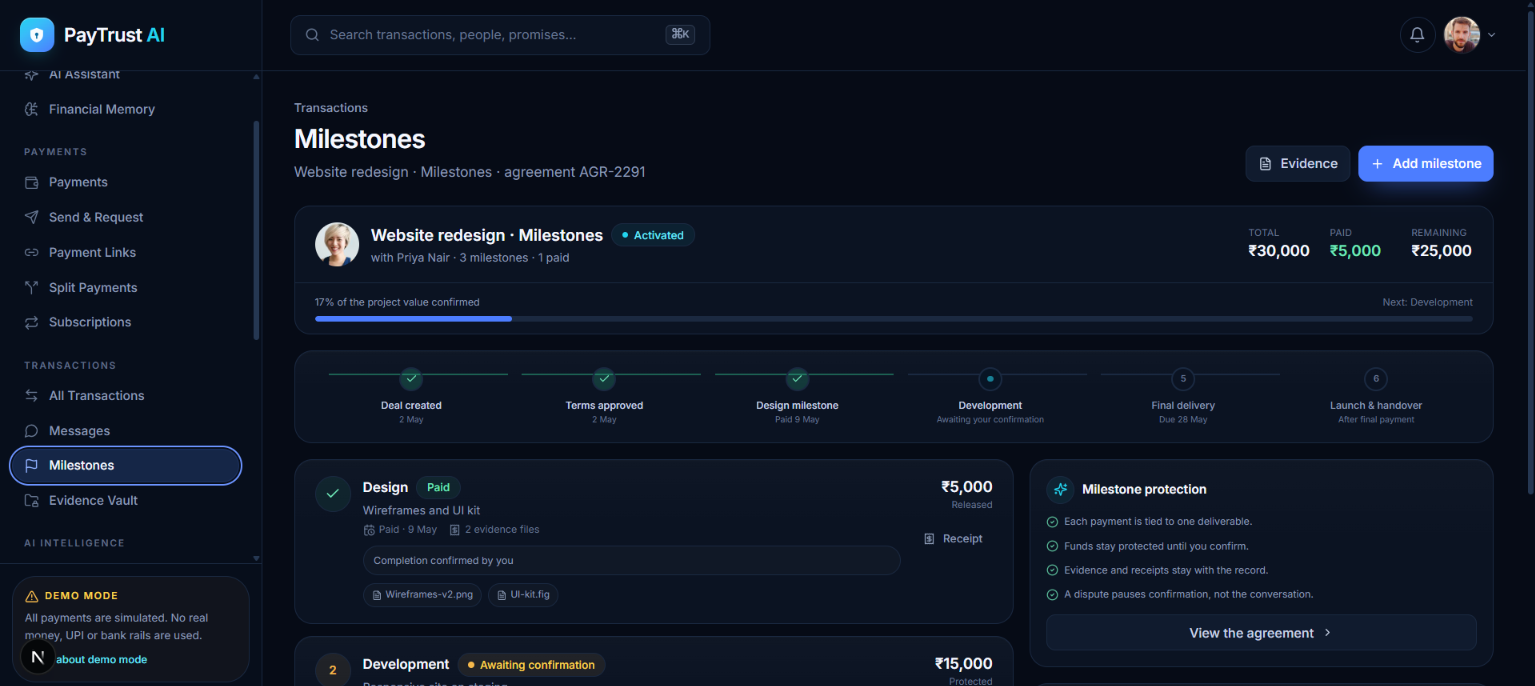
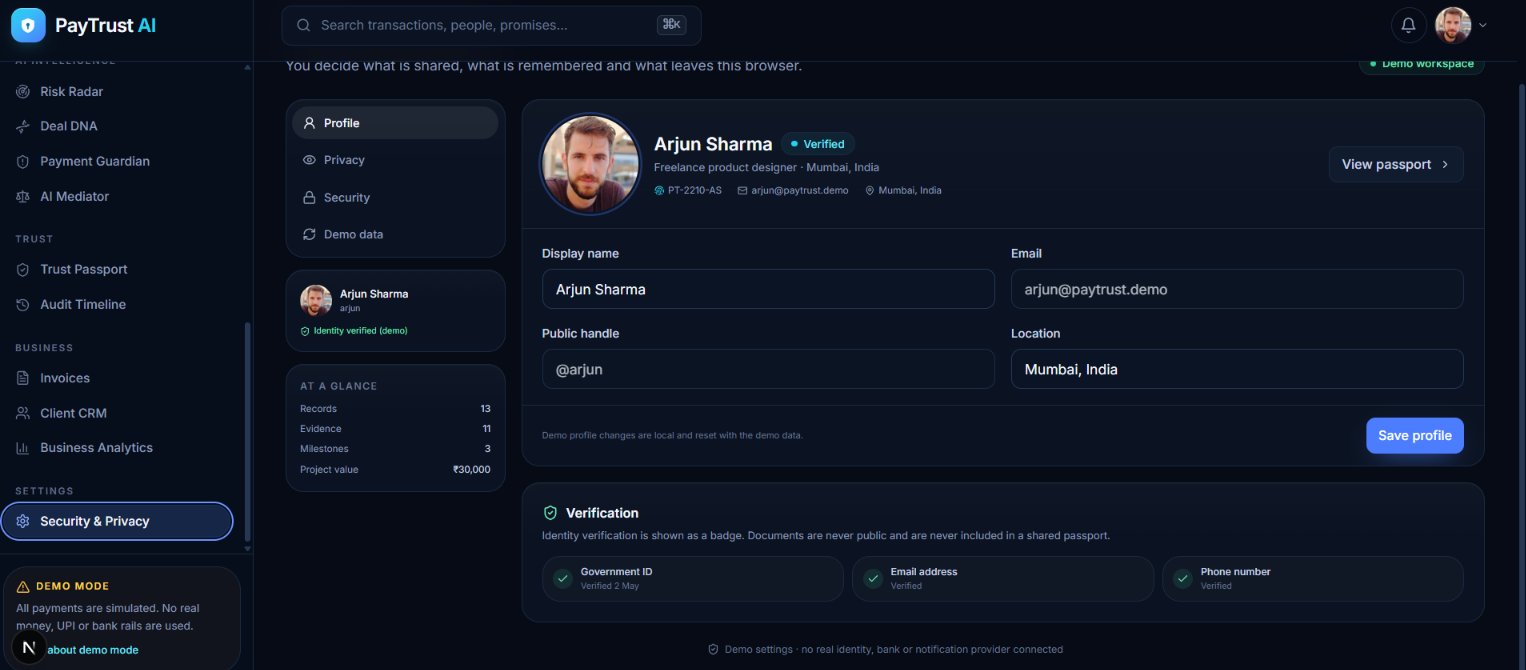
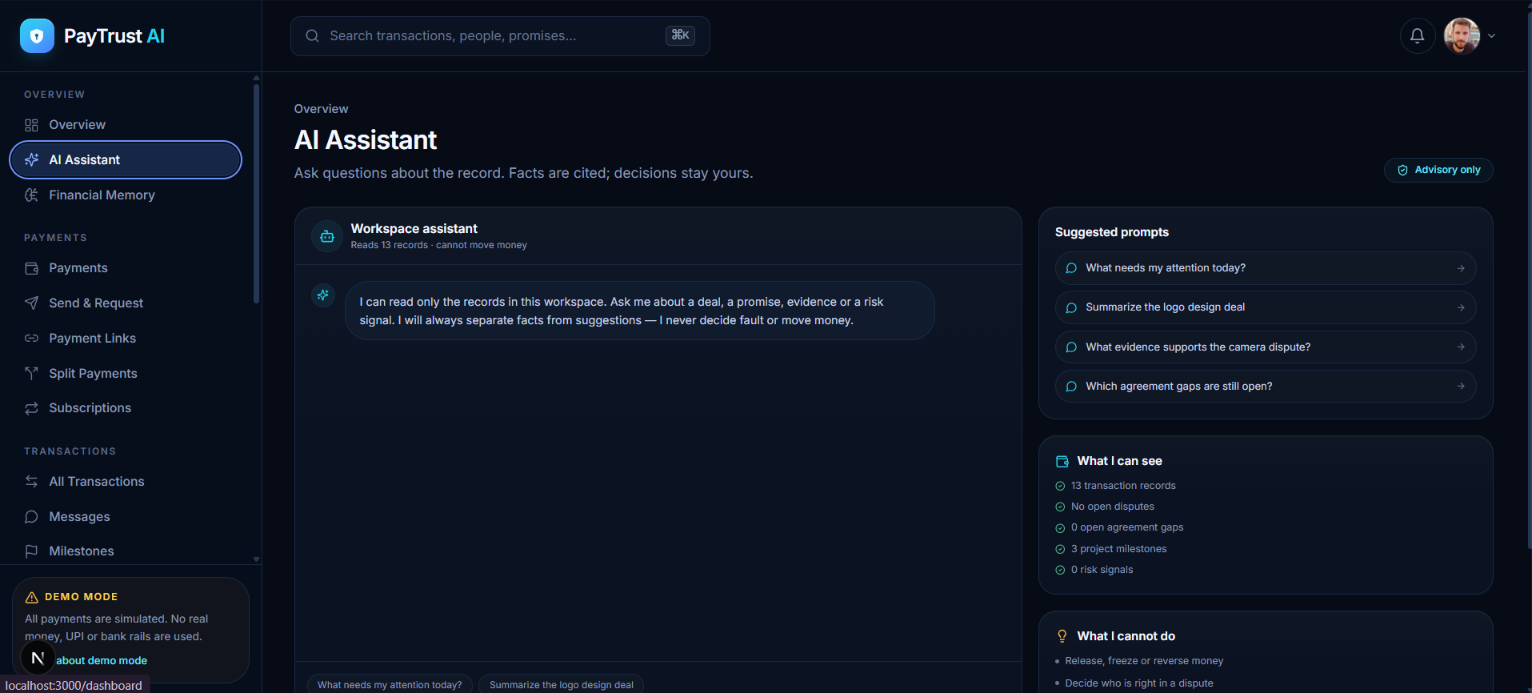
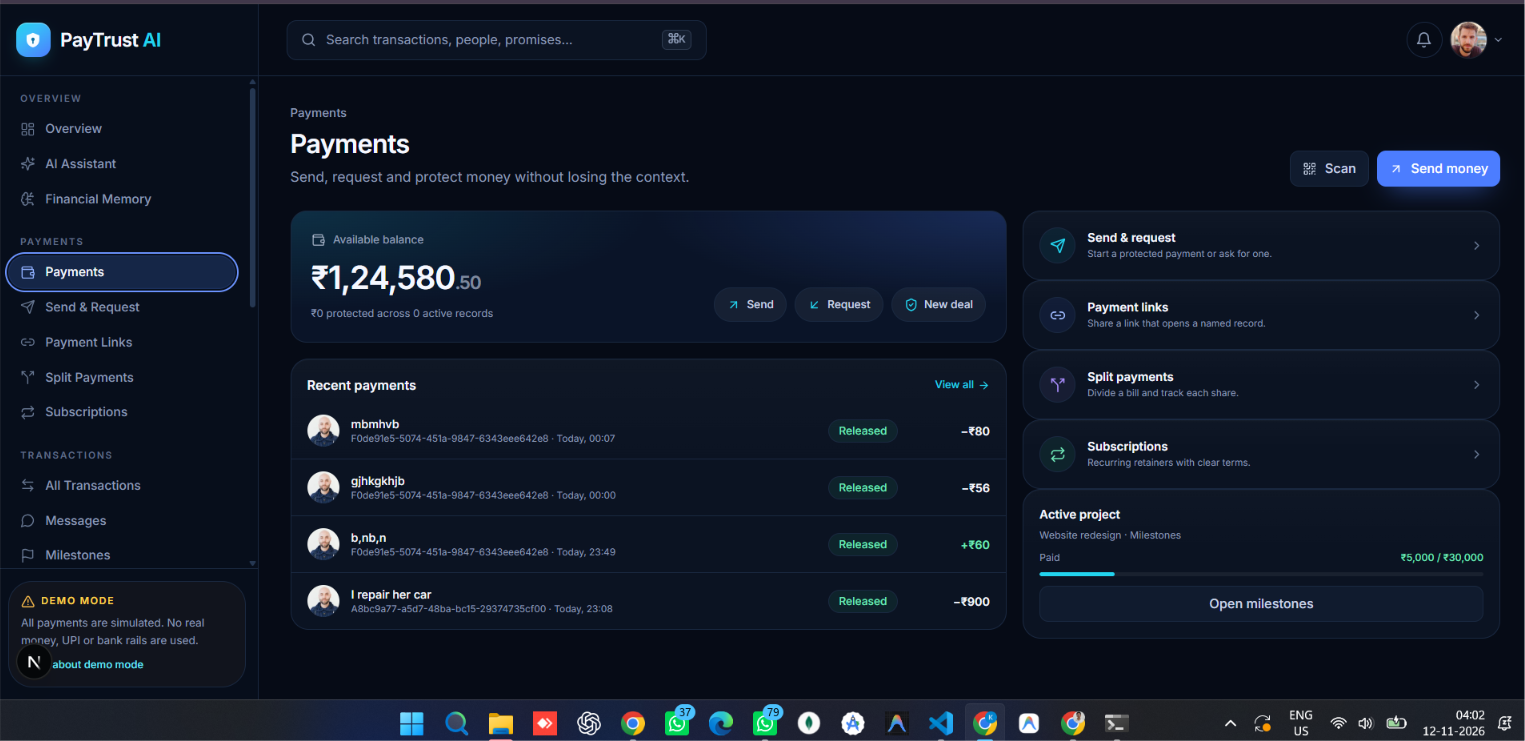
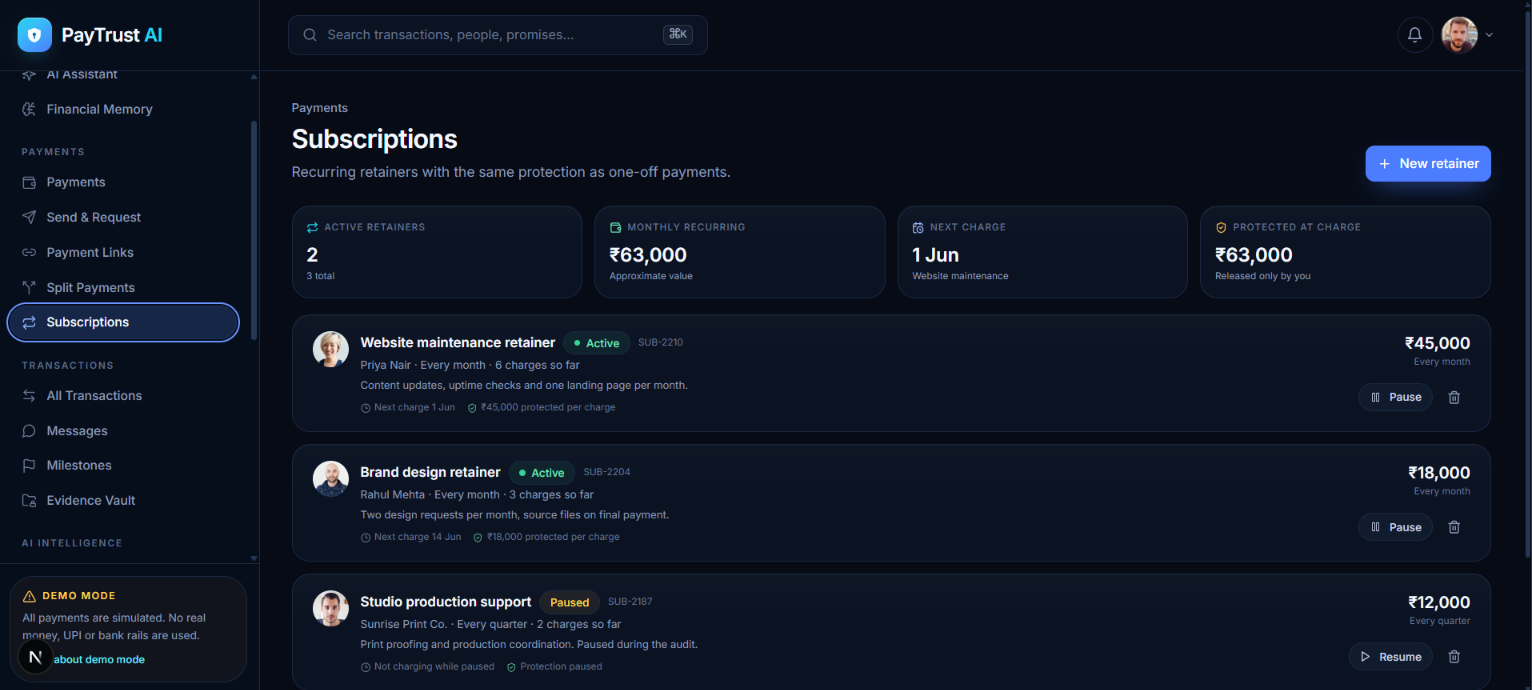
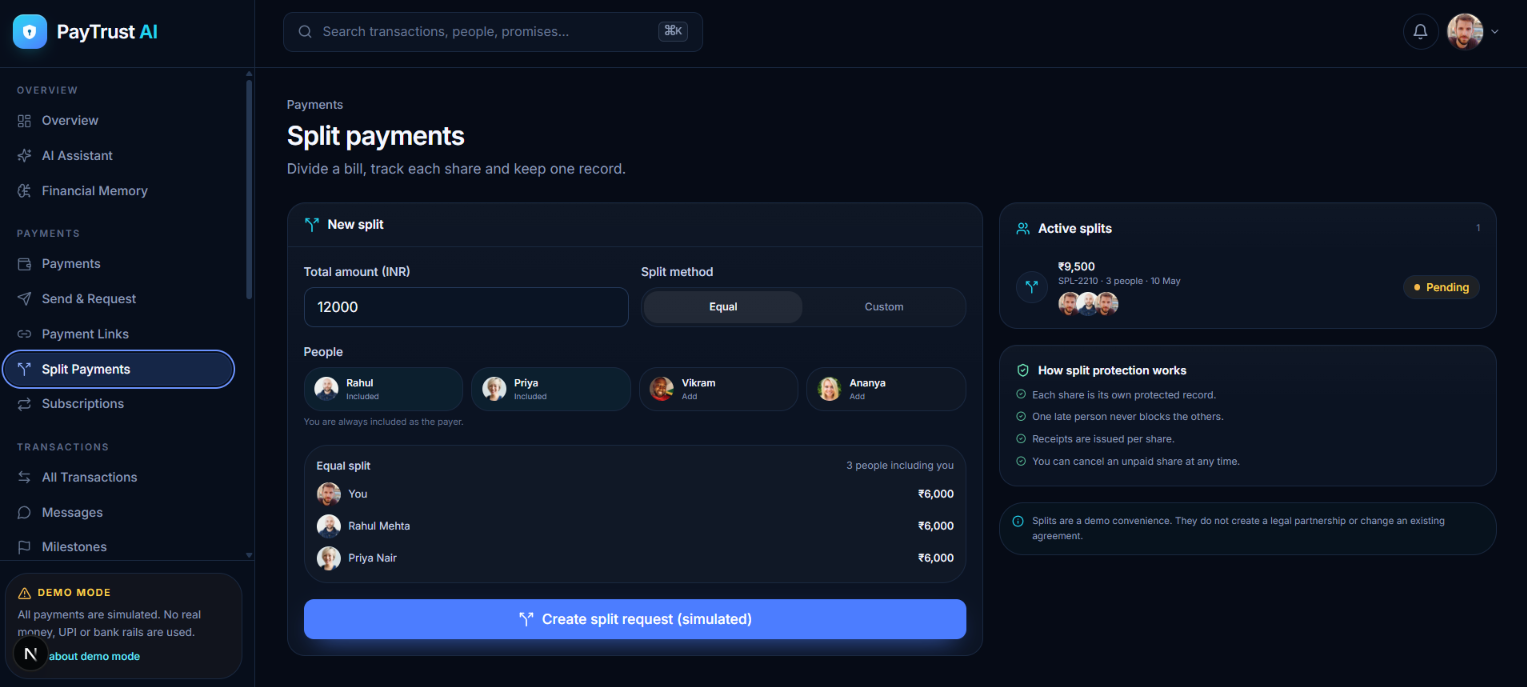
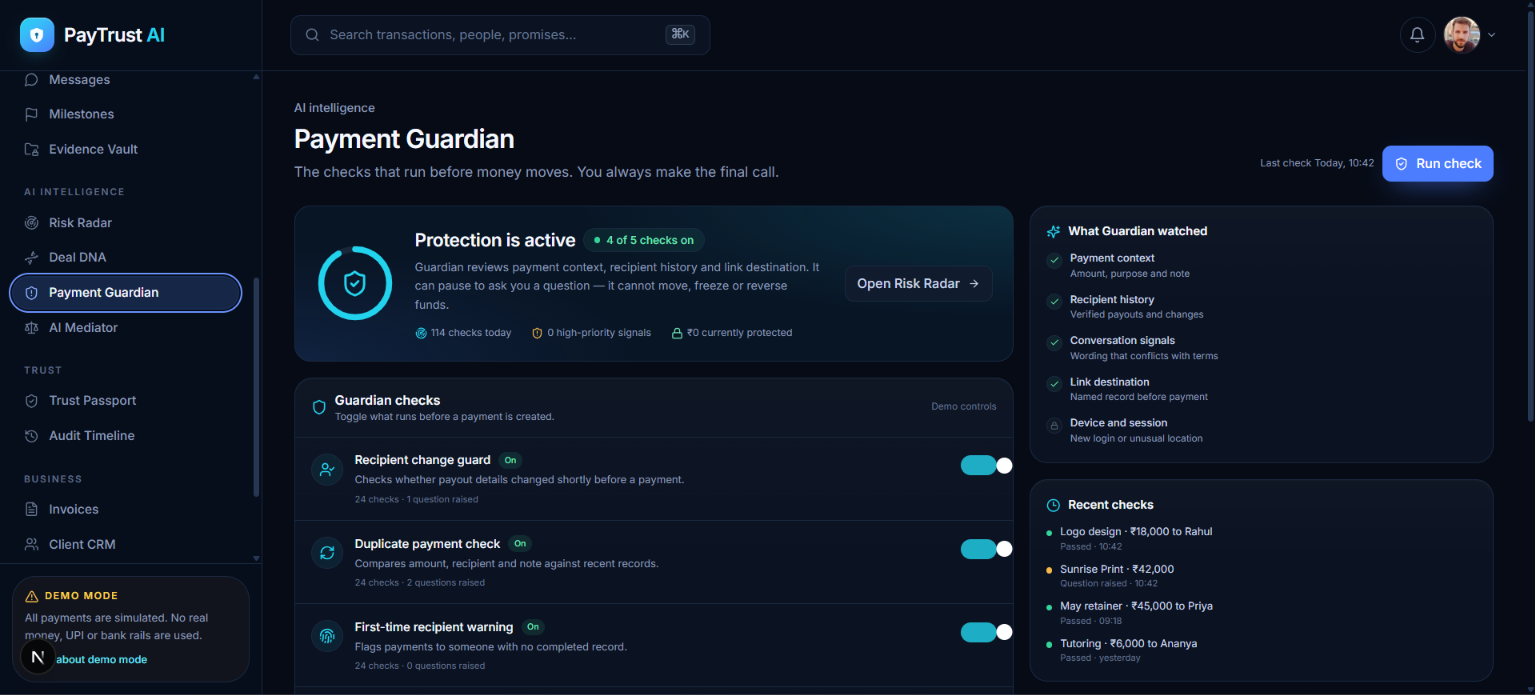
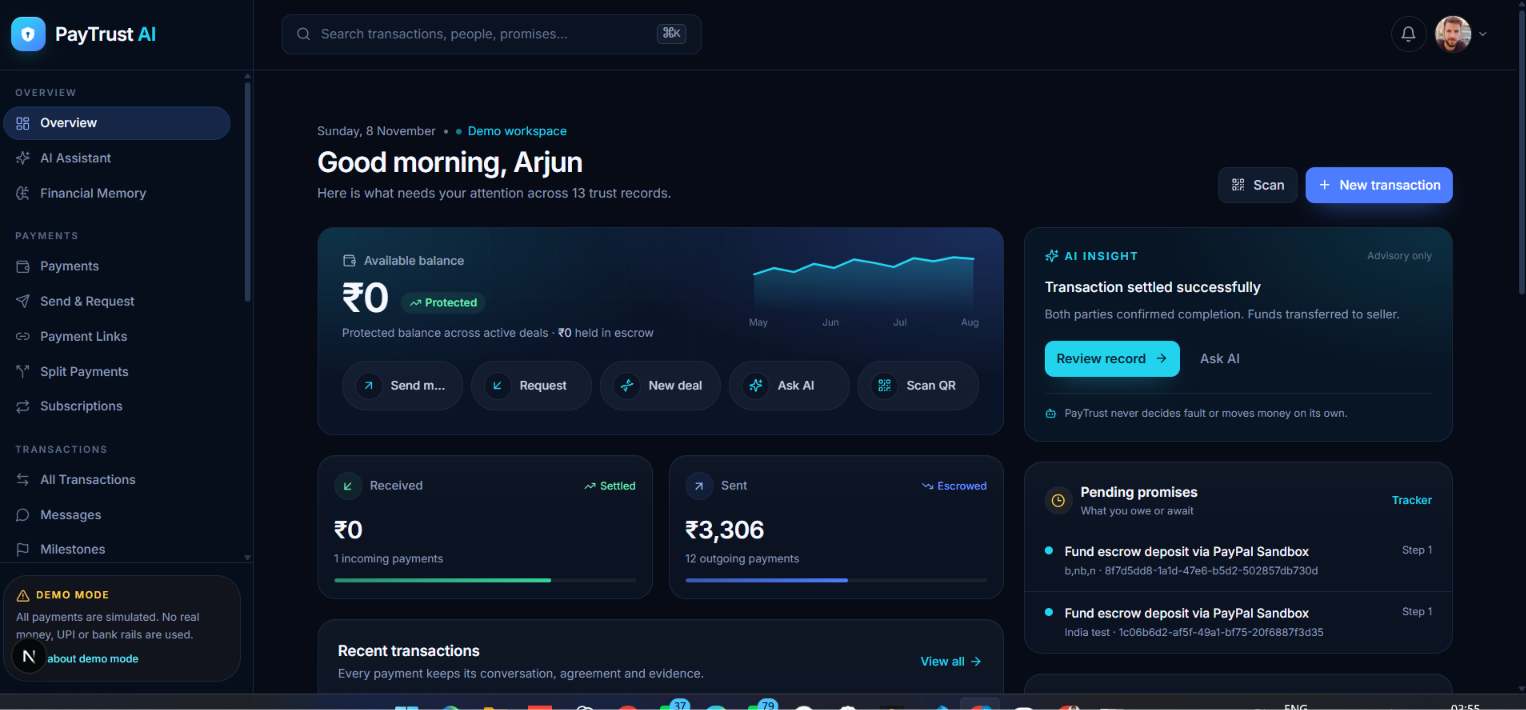
PayTrust AI is an AI-powered payment platform designed to bring payment processing, transaction management, and intelligent assistance together in one place.
The platform aims to provide:
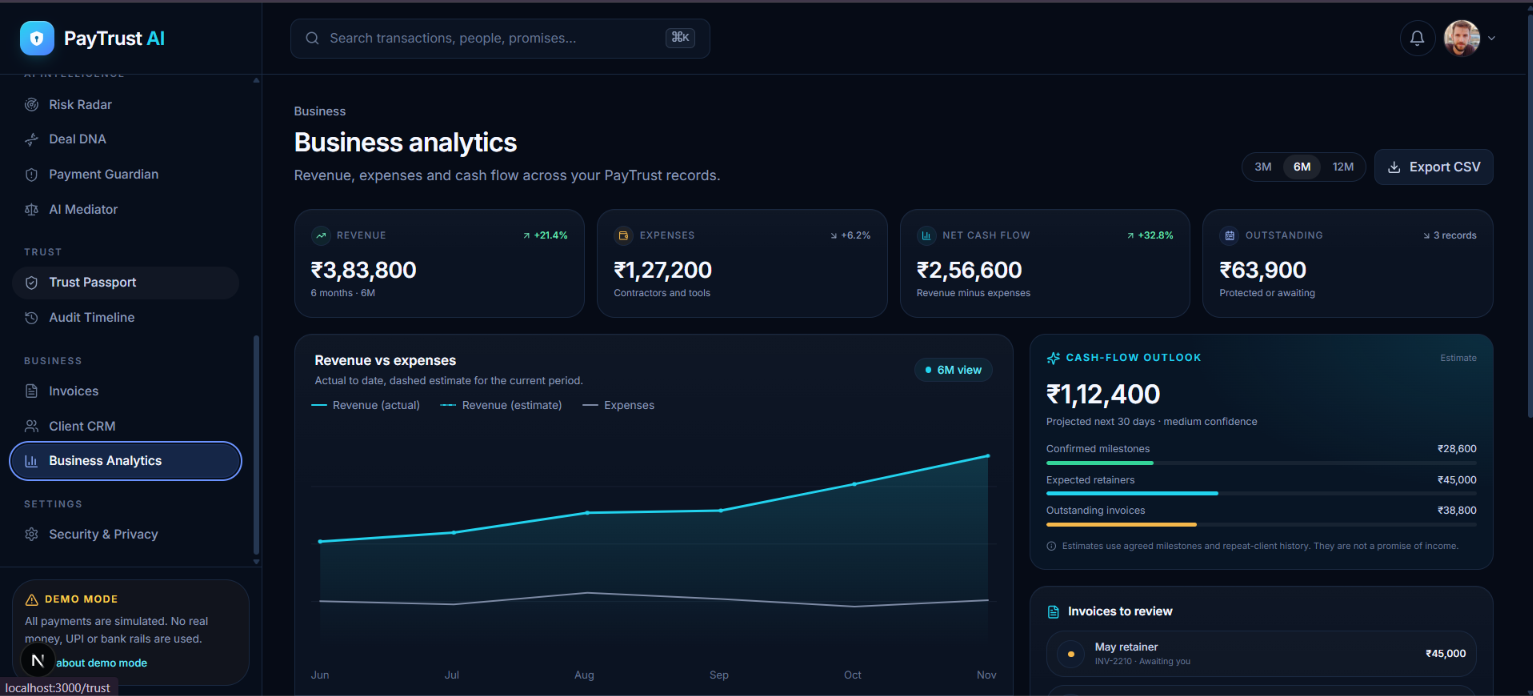
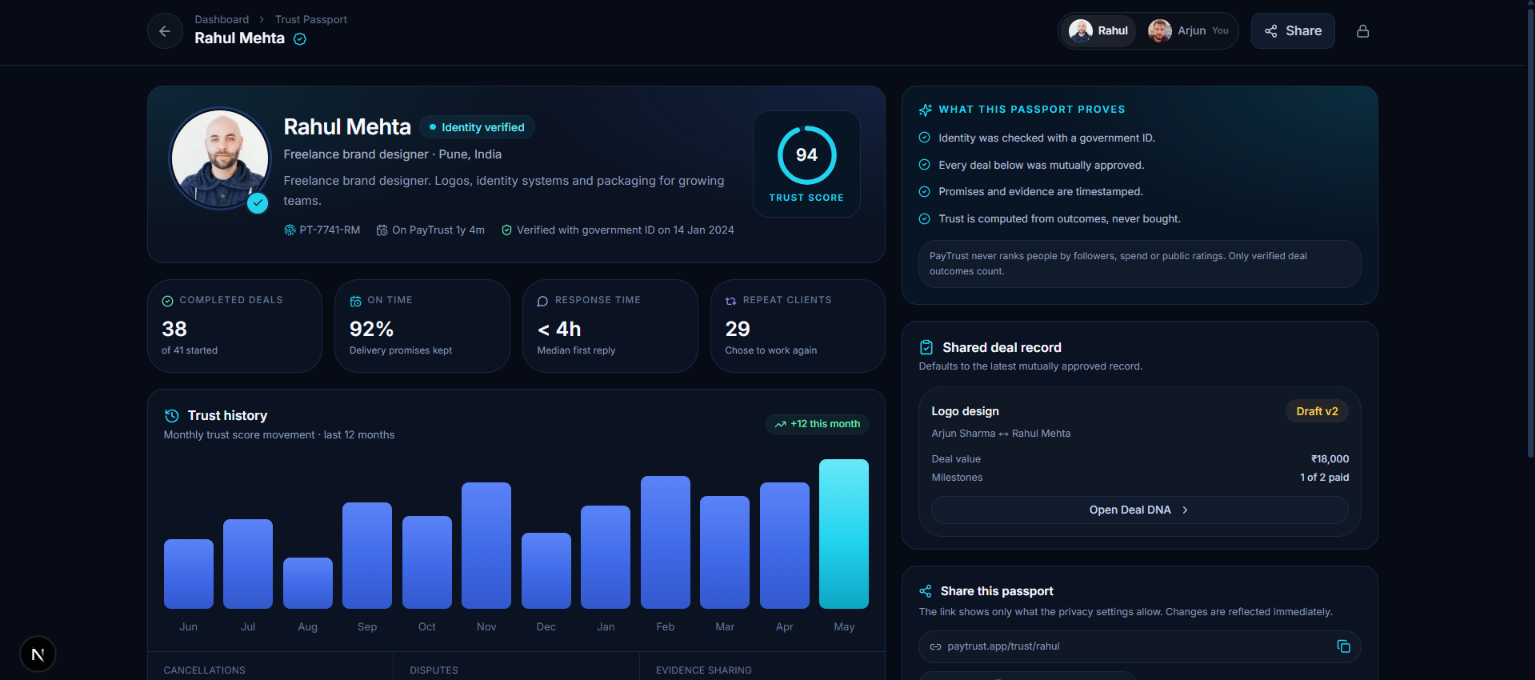
->Payment Integration: PayPal integration for handling payment workflows. ->AI-Powered Assistance: Gemini-powered intelligence to help users interact with the platform. ->Transaction Management: A centralized experience for managing and monitoring transactions. ->User Dashboard: An interface for accessing important payment-related information. ->Security and Reliability: A focus on reliable payment workflows, validation, and transaction integrity.
Our vision is to make digital payments more intelligent, transparent, and user-friendly.
How we built it
We built PayTrust AI using modern web technologies and integrated external services to create its core functionality.
Our technology stack includes:
->Next.js 16: Application framework and frontend development. ->React 19: Interactive user interfaces. ->Supabase: Database and backend infrastructure. ->PayPal Sandbox: Payment integration and testing. ->Google Gemini API: AI-powered functionality and intelligent assistance.
We developed the application by connecting the frontend, backend, database, payment provider, and AI services.
We also performed feature-by-feature testing to identify incomplete functionality, integration issues, and potential reliability problems.
Challenges we ran into
Building PayTrust AI presented several technical challenges.
->Payment Integration: Implementing and validating payment workflows using PayPal Sandbox required careful handling of payment states and API responses. ->AI Integration: Connecting Gemini with the application while handling API responses and potential failures. ->Backend Reliability: Ensuring frontend operations correctly communicate with Supabase and persist relevant data. ->Feature Validation: Testing a large feature set and distinguishing between fully working, partially working, and unimplemented functionality. ->Time Constraints: Building and stabilizing a complex application within a limited hackathon development period.
One of our biggest lessons was that building an interface is only one part of software development. Every feature must also work correctly behind the scenes.
Accomplishments that we're proud of
We are proud of turning an initial idea into a substantial working application with a modern technology stack.
Some of our key accomplishments include:
->Building a complete Next.js and React application. ->Integrating Supabase into the application architecture. ->Implementing PayPal Sandbox integration. ->Connecting Google's Gemini API for AI functionality. ->Developing a centralized payment-oriented user experience. ->Creating a structured QA process to evaluate individual features. ->Identifying functionality gaps and prioritizing improvements.
Most importantly, we established a foundation that can be extended into a more reliable and intelligent payment platform.
What we learned
Developing PayTrust AI taught us valuable lessons about full-stack development, API integrations, AI engineering, and software quality assurance.
We learned that:
->Integrating third-party APIs requires careful error handling and validation. ->AI functionality must be tested beyond simply checking whether an API returns a response. ->Payment systems require particular attention to transaction integrity and security. ->A feature is not complete just because its interface exists. ->Automated testing and systematic QA are essential for building reliable software. ->Real-world software development involves debugging, integration failures, trade-offs, and continuous improvement.
This project helped us understand the difference between building a prototype and engineering a dependable product.
What's next for PayTrust AI
Our long-term vision is to evolve PayTrust AI into a smarter and more reliable AI-powered payment ecosystem.
Our future roadmap includes:
->Advanced AI Fraud Detection: Explore intelligent detection of suspicious transaction patterns. ->Real-Time Transaction Monitoring: Improve transaction visibility and status tracking. ->Enhanced Payment Security: Strengthen validation, authentication, and transaction integrity. ->Intelligent Financial Insights: Provide AI-assisted explanations and insights into payment activity. ->Expanded Payment Integrations: Explore support for additional payment providers. ->Improved AI Assistance: Make the AI assistant more context-aware and useful. ->Production Readiness: Improve testing, reliability, monitoring, and security before handling real transactions.
PayTrust AI is more than a payment application. It is our exploration of how artificial intelligence can make digital payment experiences smarter, safer, and more transparent.
Built With
- ai
- artificial-intelligence
- full-stack
- google-gemini-api
- javascript
- next.js
- paypal
- postgresql
- react
- rest-api
- supabase
- typescript
