Inspiration
Financial strain is affecting more people than ever. Most tools to prevent overspending only apply retroactively so that's why a tool that works at the point of purchase is needed. This helps young people; people on unstable incomes and people with a proclivity to overspend.
What it does
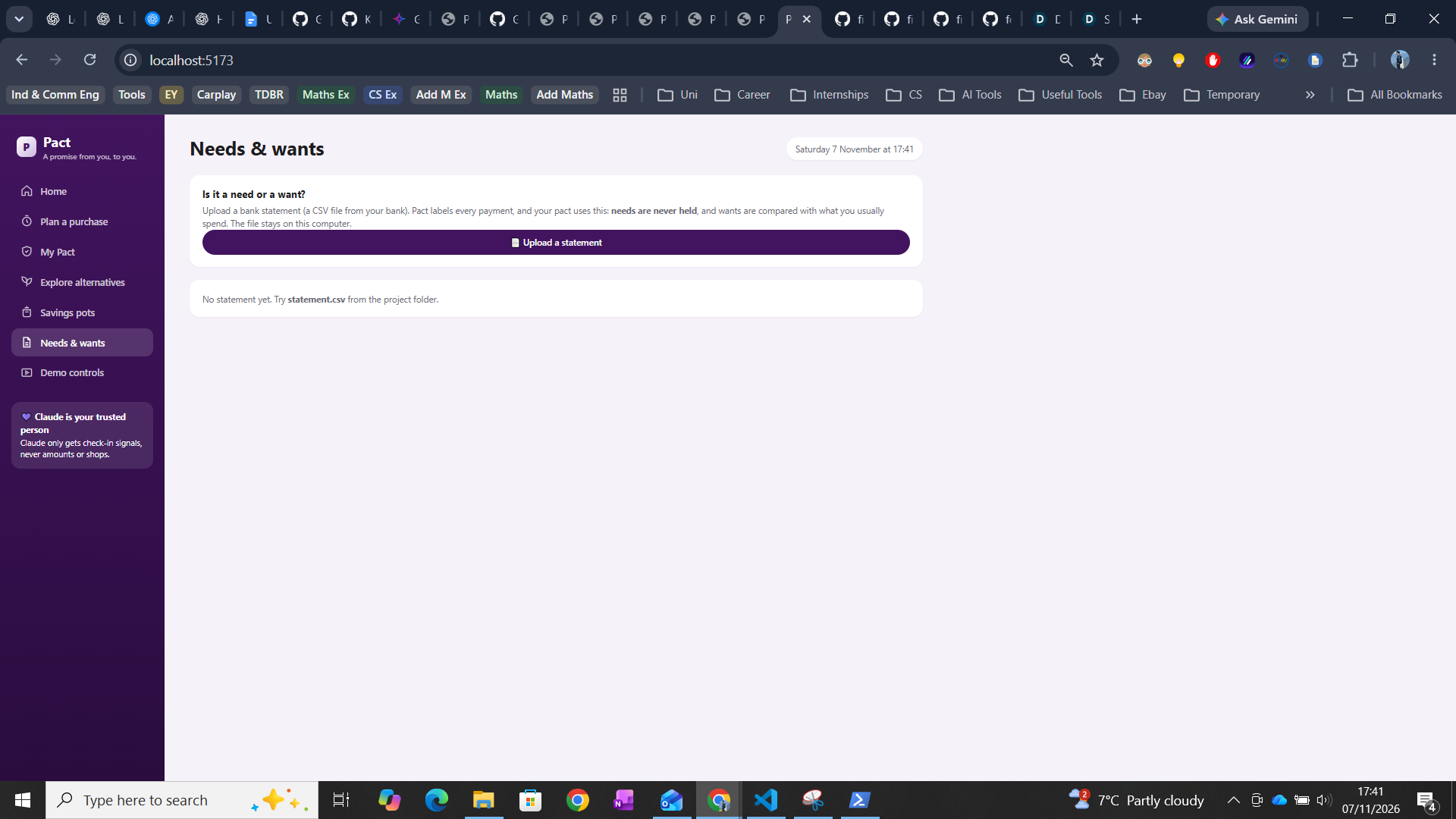
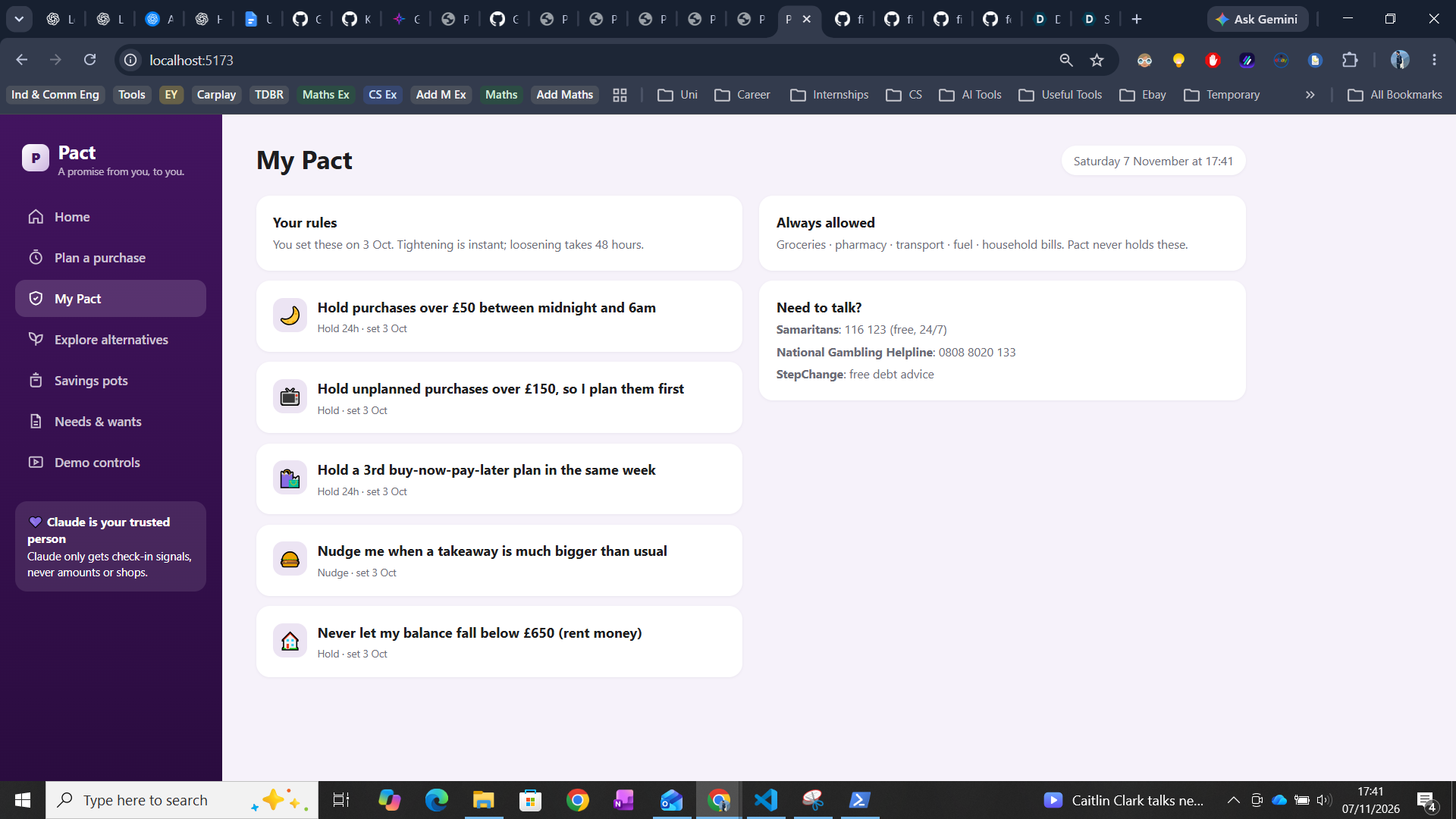
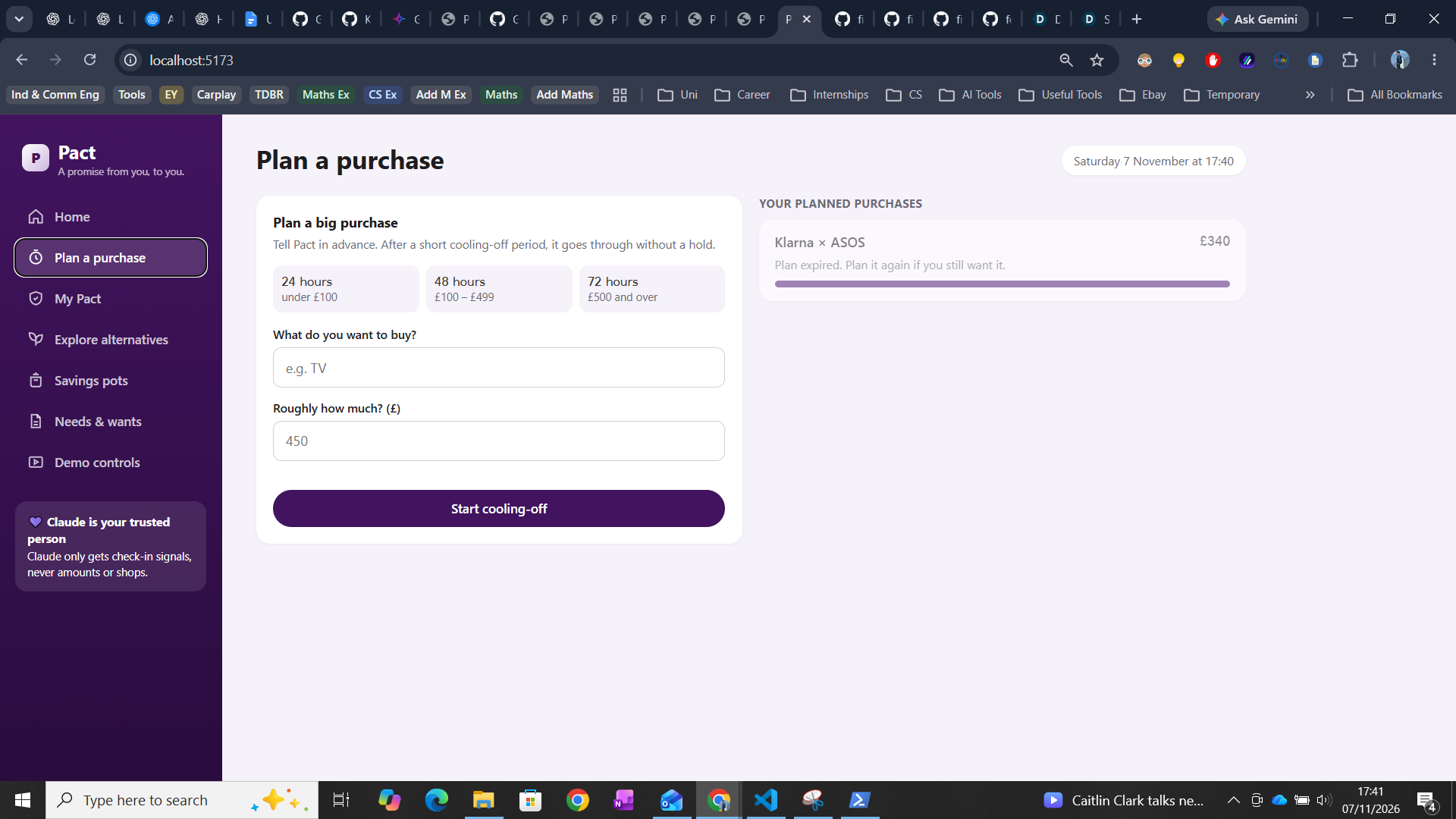
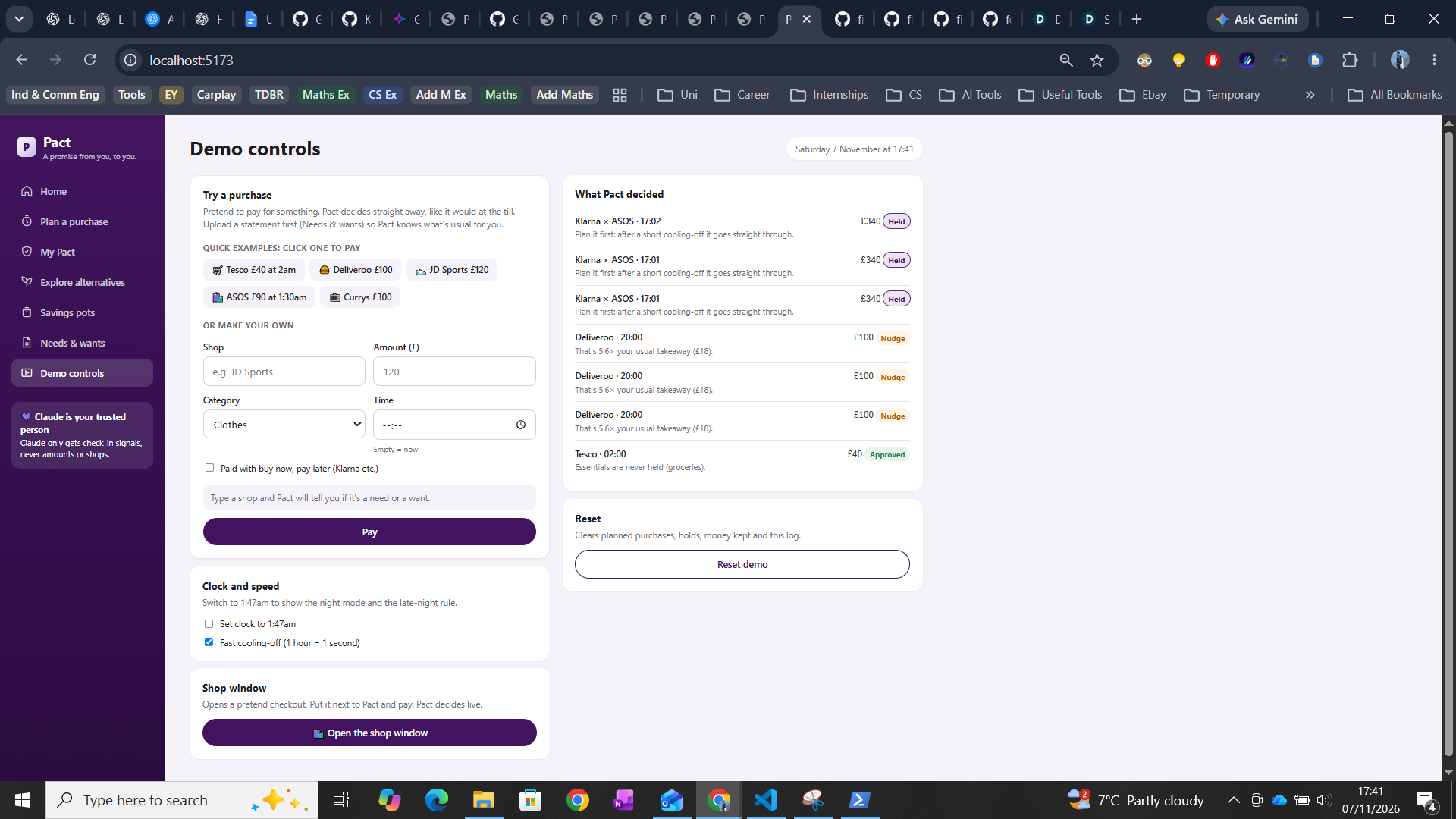
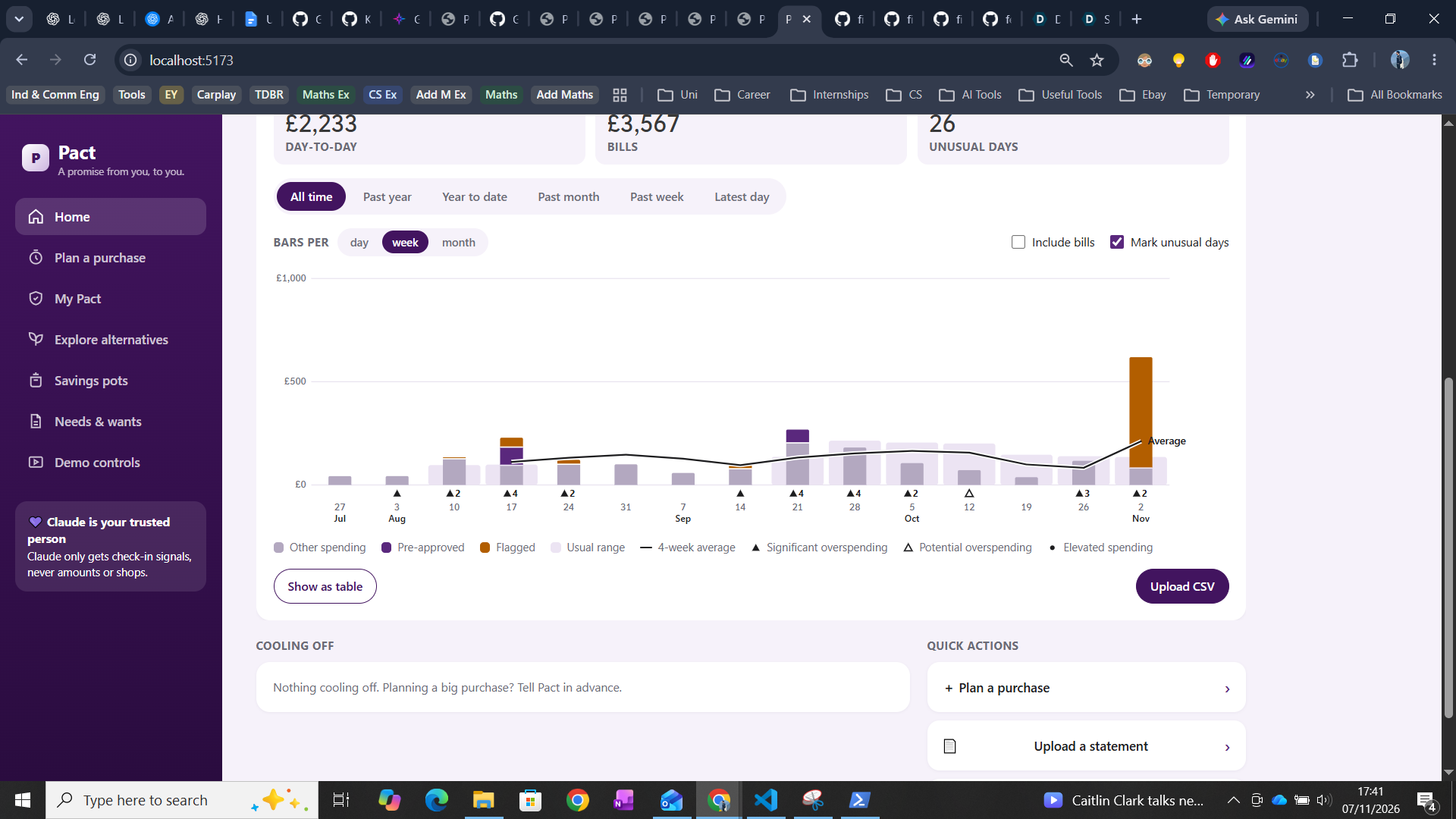
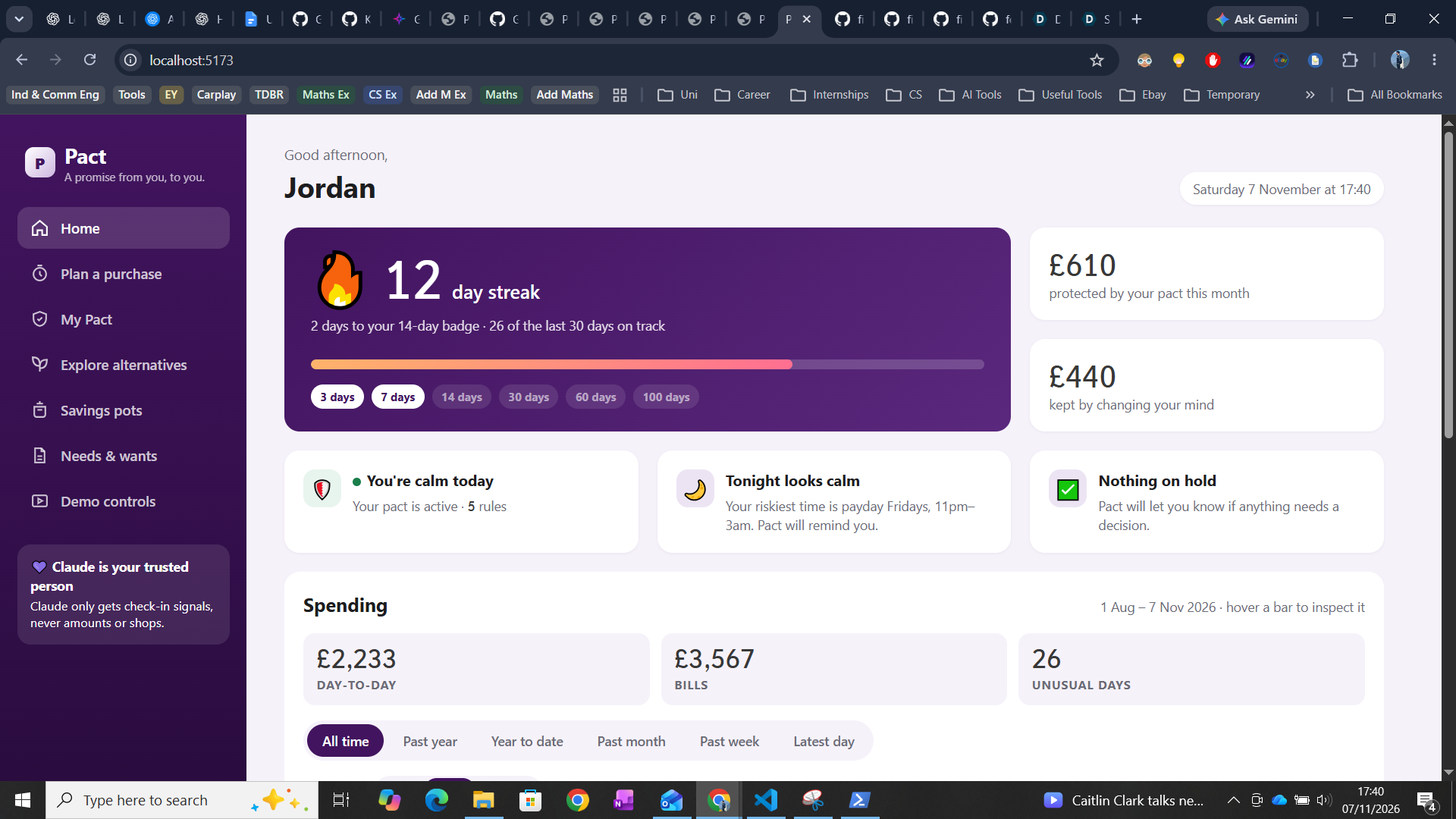
This tool tracks a users typical spending habits and off that it determines when a user has overspent on a particular day. Once it does this it then classifies it as either a need or want. Needs being essential one time emergency spends which the system allows through and wants as indulgences that get flagged for the user to double check. If it's determined to be a want it gives the user a second chance to reconsider whether they want to hold off and wait a cooling period or accept allowing it through. If a user knows a big one off purchase will happen the system allows them to plan for it so it doesn't get flagged.
How we built it
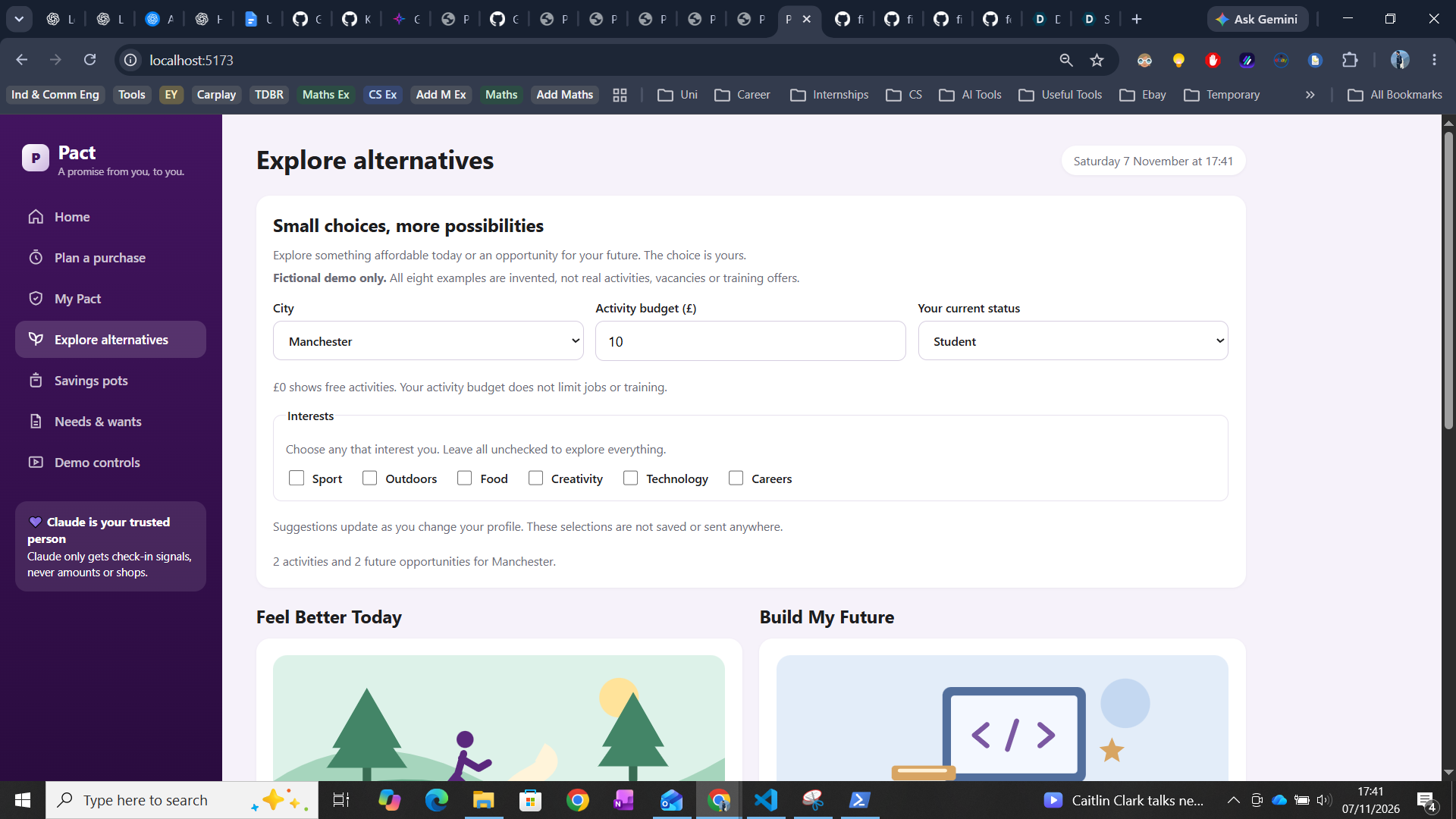
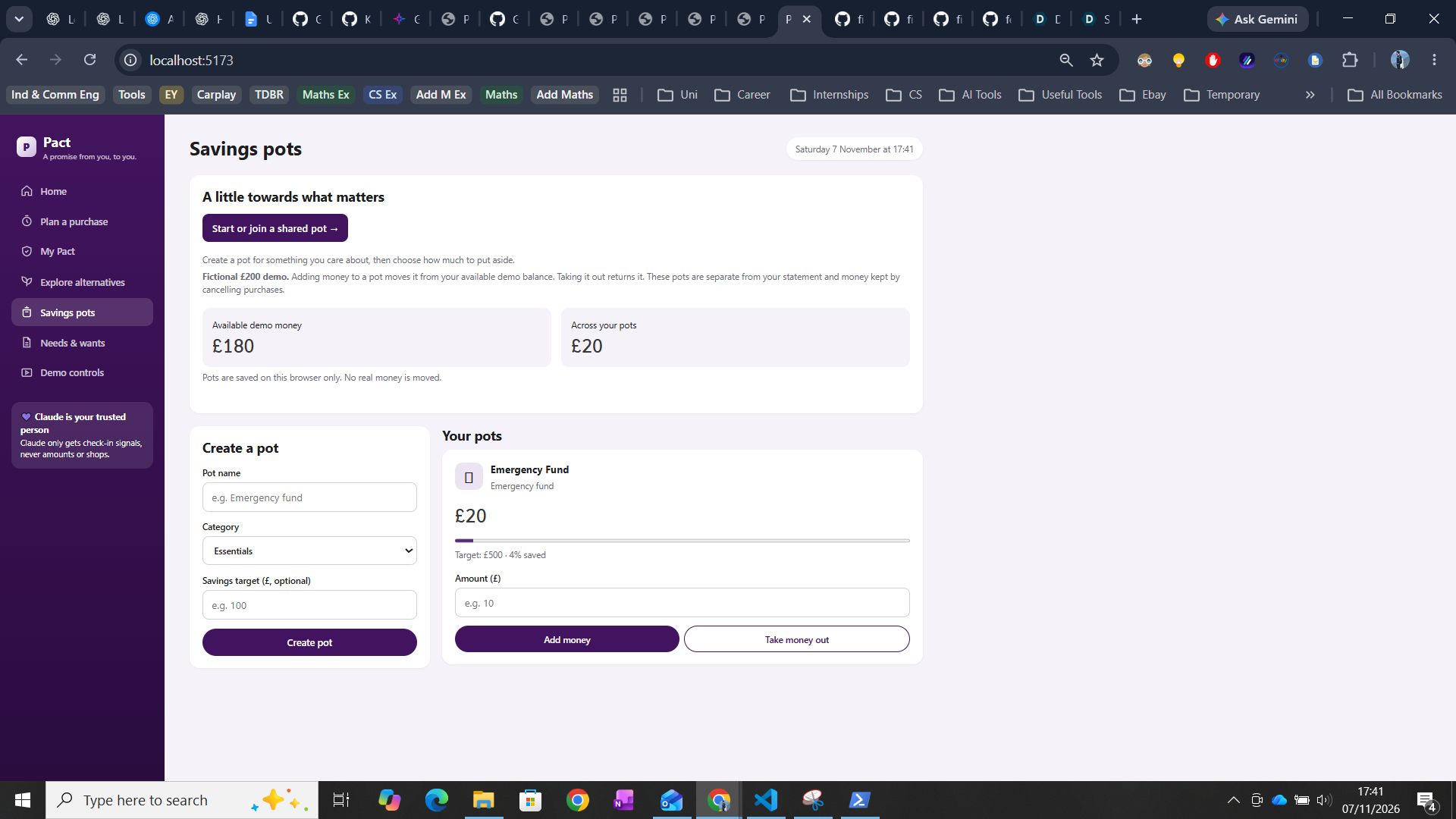
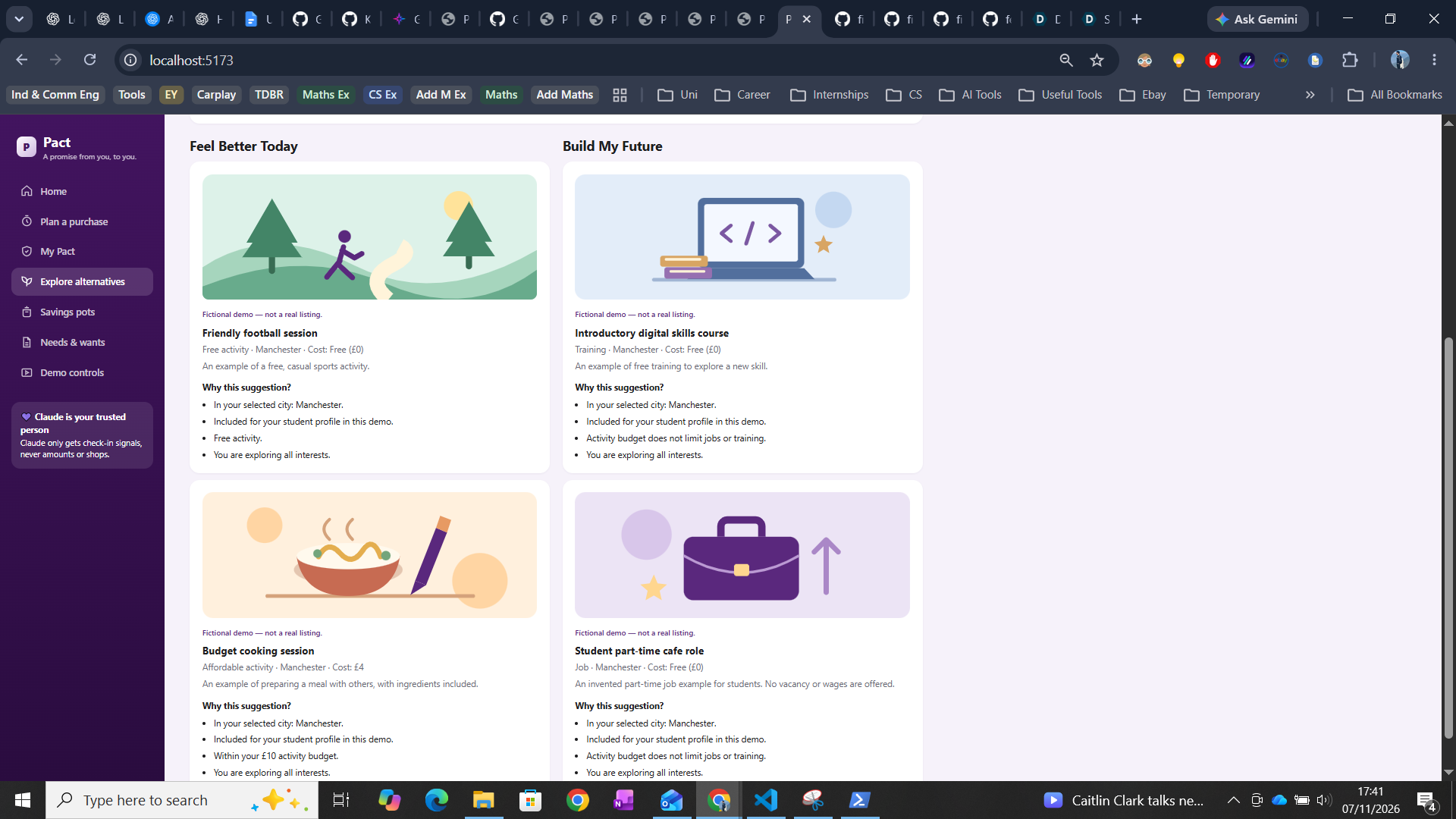
SpendSense is a web app built with HTML/CSS/JavaScript, plus a React + Vite spending chart. Five of us each owned one part: statement upload and need/want labelling, the rules and hold screen, the AI setup, savings pots, alternatives, and streaks. Bank statements are read in the user’s own browser, and simple keyword rules label each payment as a need or a want. Google Gemini only handles the unclear ones, like Amazon or Boots. All the money numbers and hold decisions come from plain code, not the AI, so they’re fast, predictable and easy to explain.
Challenges we ran into
Connecting five people’s features in one app meant merge conflicts almost every hour, so we merged and retested often. Gemini kept getting overloaded and hit its usage limits during the day. We added backup models and a safe fallback so the app never breaks when the AI is down. We also had to keep the API key out of a public repo, so we routed AI calls through a small server-side helper instead of putting the key in the website.
Accomplishments that we’re proud of
SpendSense reacts to each purchase in seconds, based on the person’s own history. It doesn’t use a generic budget. For example, it can say “£70 on Deliveroo is 2.3× your usual takeaway” and gently check in before the payment goes through. Needs like groceries are never held back, even at 2am. Every message is supportive rather than shaming, which matches our goal of helping people on bad days without judging them.
What we learned
We learned that AI works best as a helper, not the decision-maker. Rules handle the clear cases, and the AI fills the gaps. We learned how to work as a team on Git, with branches, merges and resolving conflicts, and how to design for privacy when handling sensitive financial data. Most of all, we learned that small, kind nudges at the right moment can matter more than strict limits.
What’s next for SpendSense
Next, we’d like to connect SpendSense to real card payments (e.g. through open banking or a card provider) so it can step in at the real checkout, not just in our demo shop. We also want to finish the “Make your pact” setup, where users describe their own rules in plain words. We’d also like to support more bank statement formats, including PDFs. Longer term, we’d love to pilot it with a bank like NatWest to help people build better habits over time.
