-
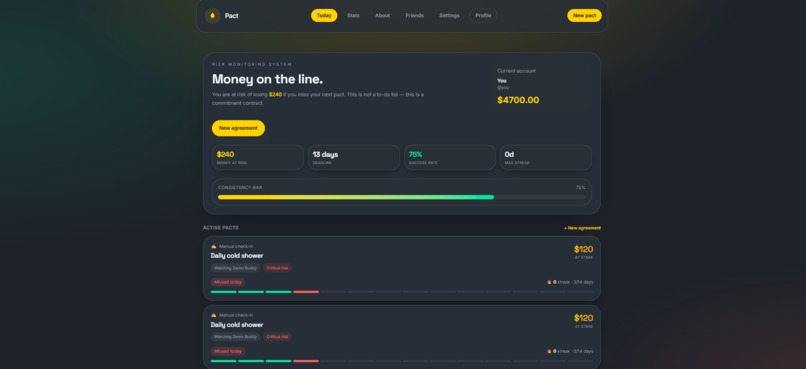
Homepage
-
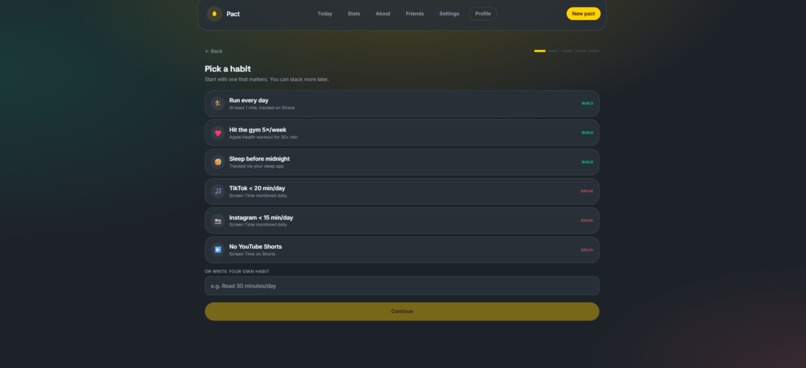
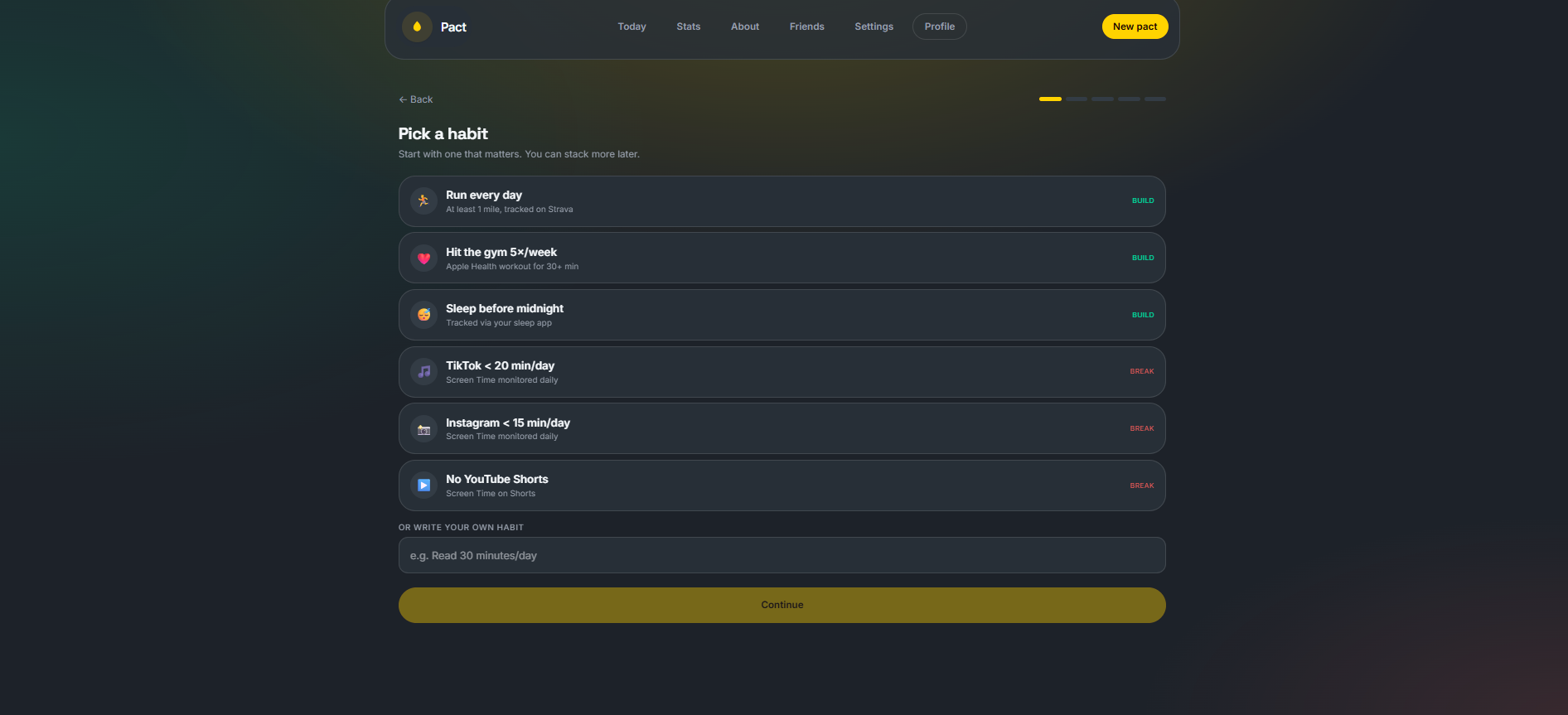
Create Pact Step 1: Pick a Habit
-
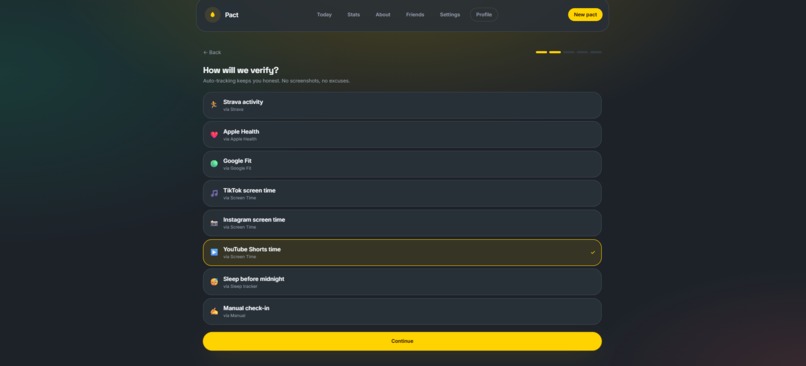
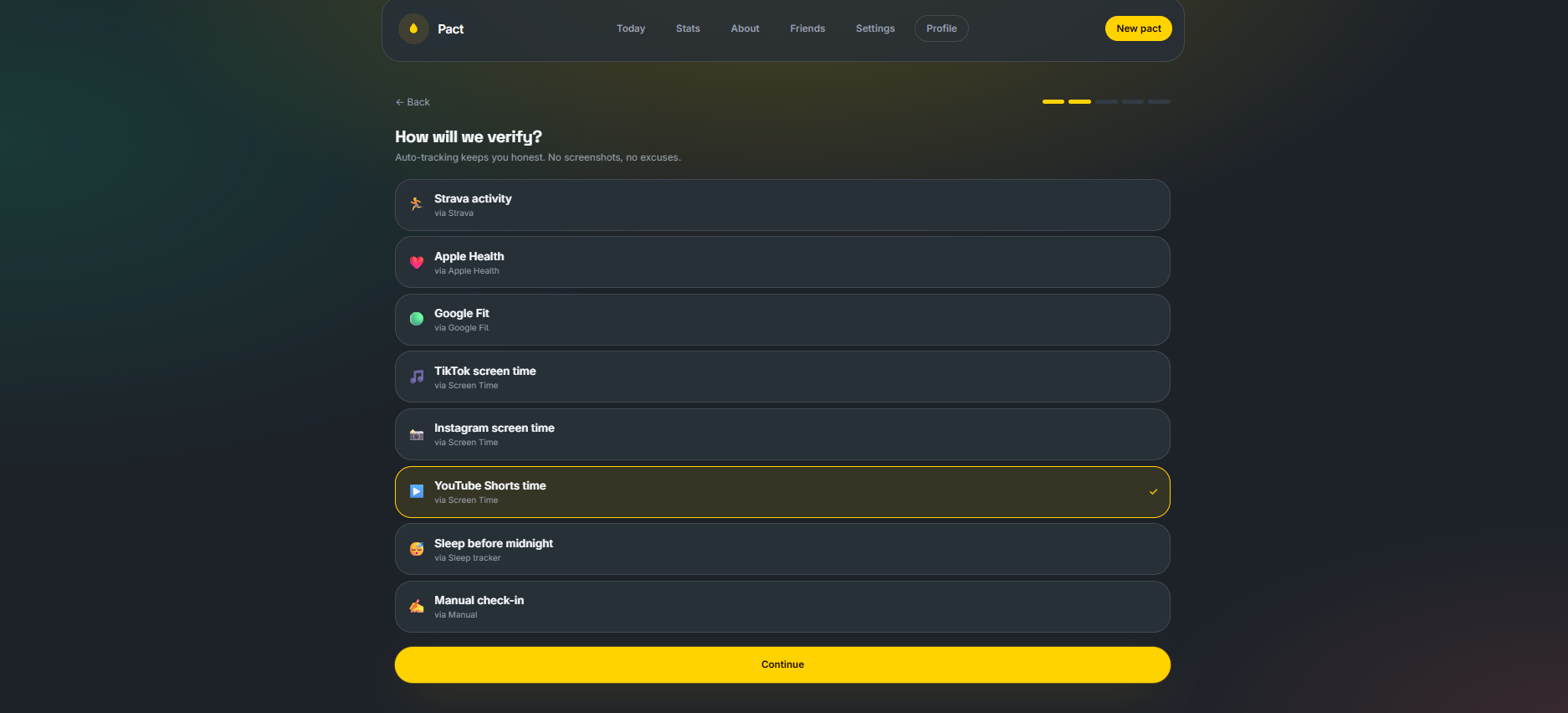
Step 2: App Tracking Verification
-
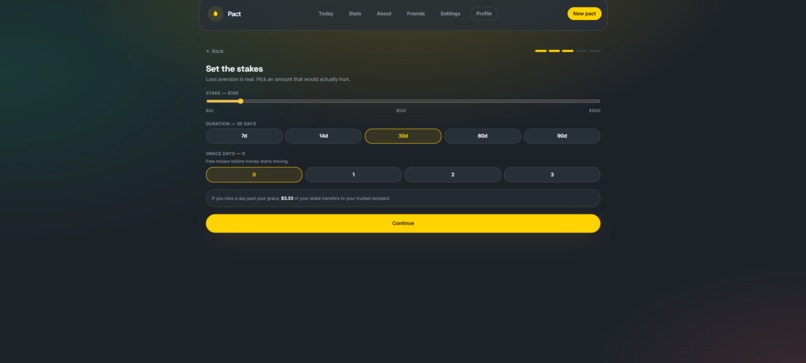
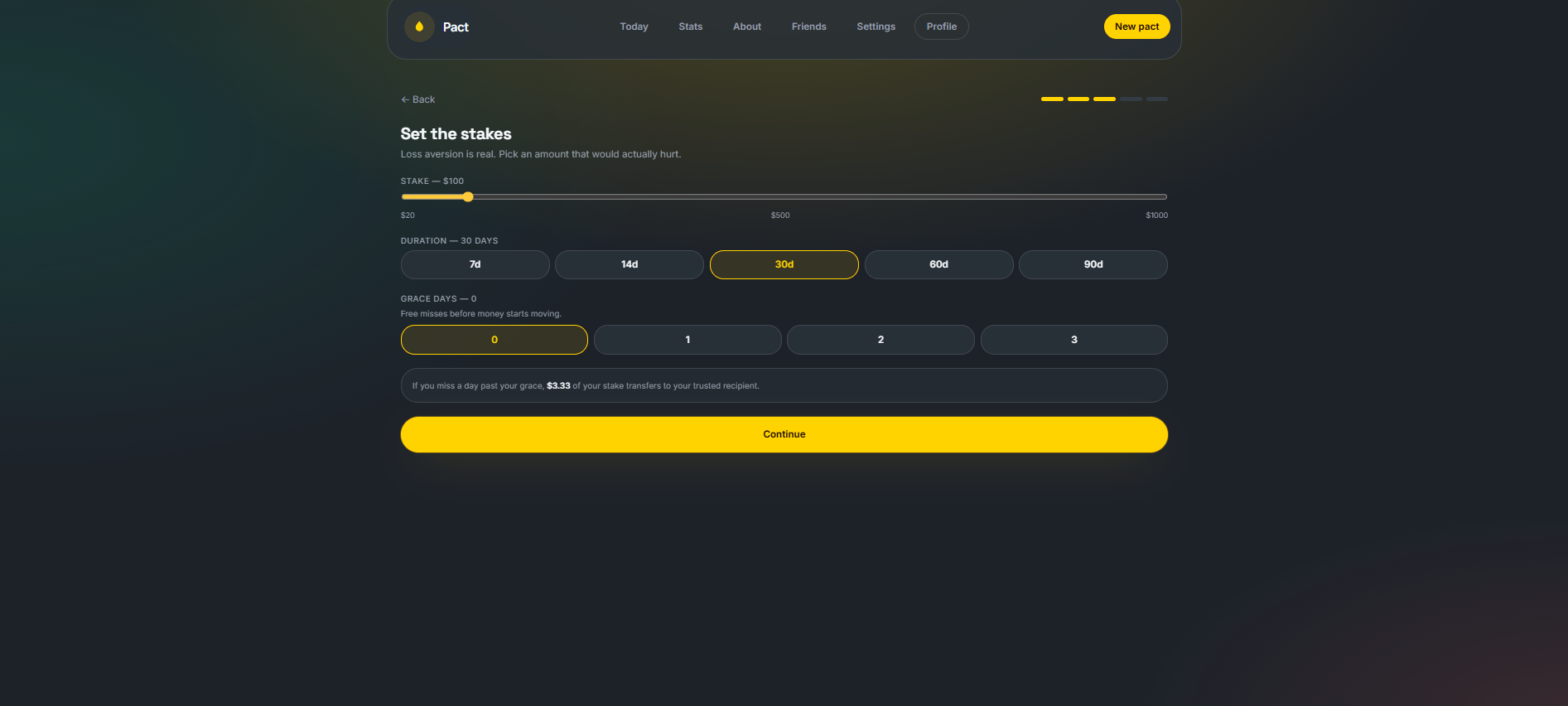
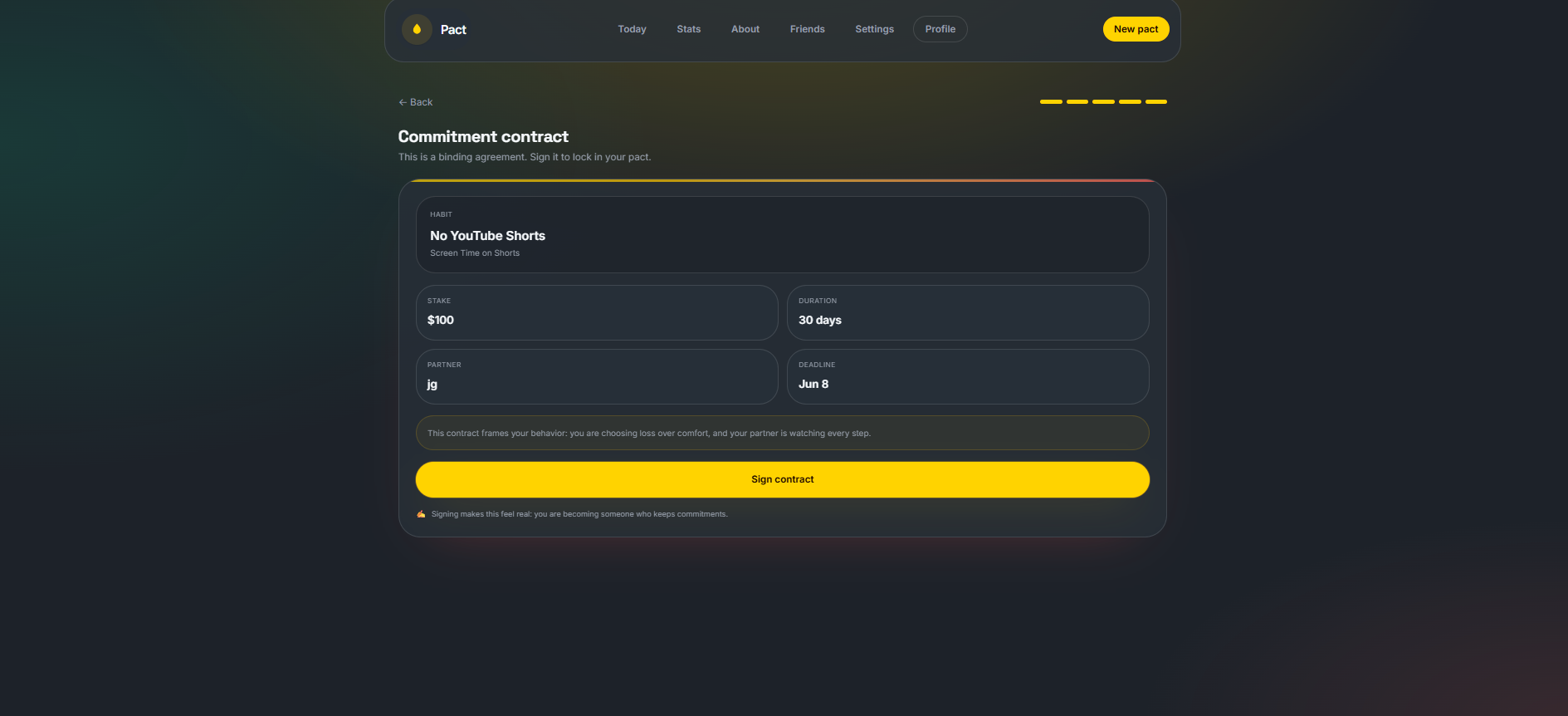
Step 3: Set Stakes
-
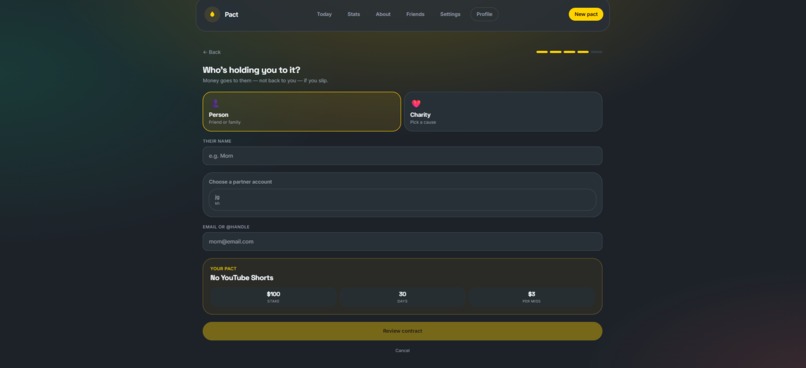
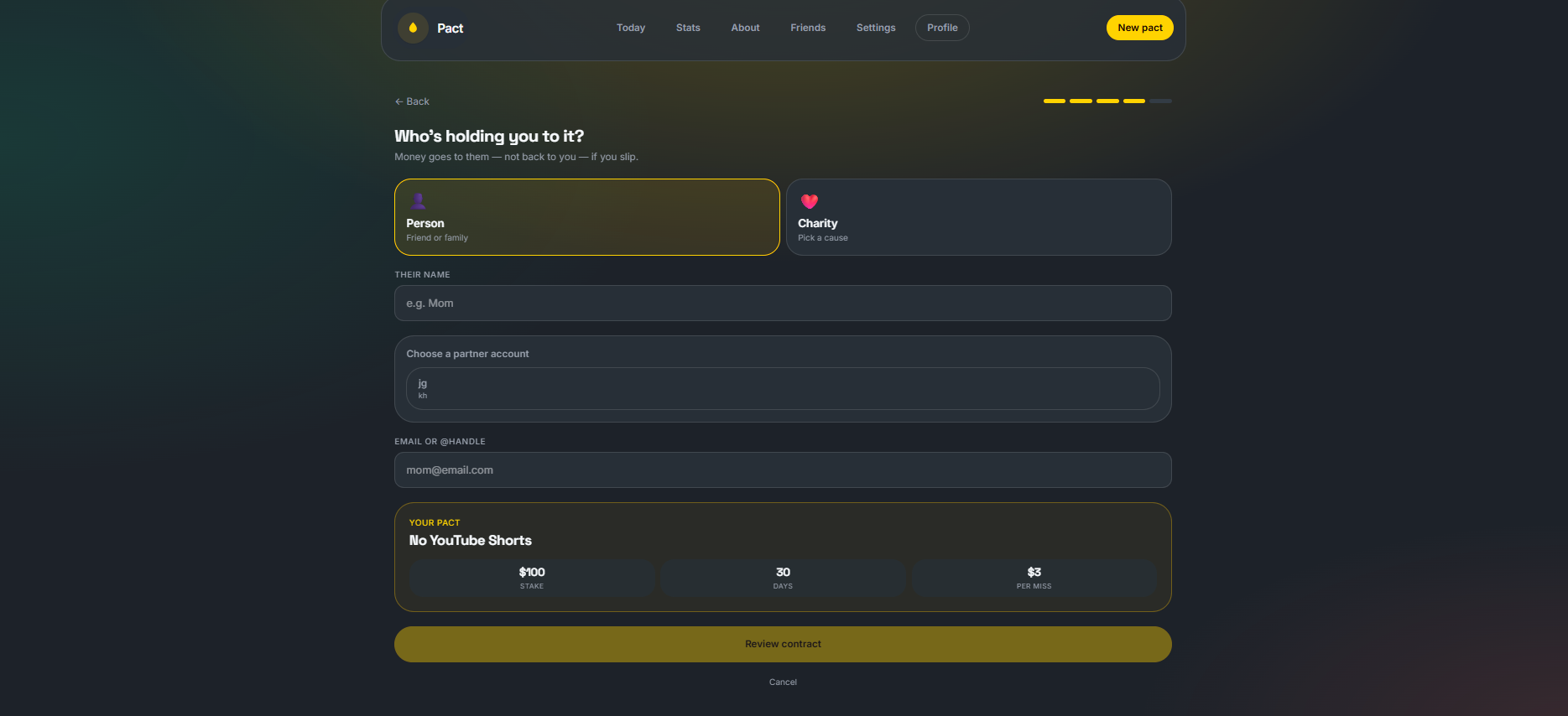
Step 4: Who is holding you accountable?
-
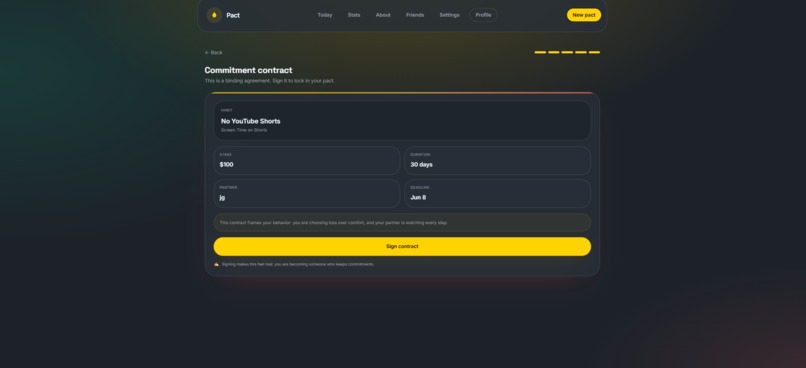
Step 5: Pact Confirmation
-
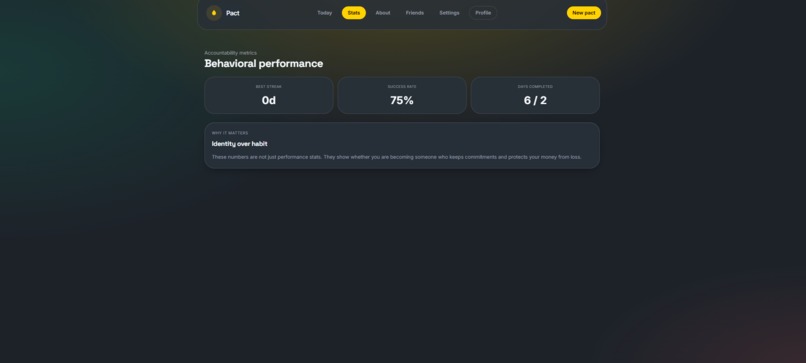
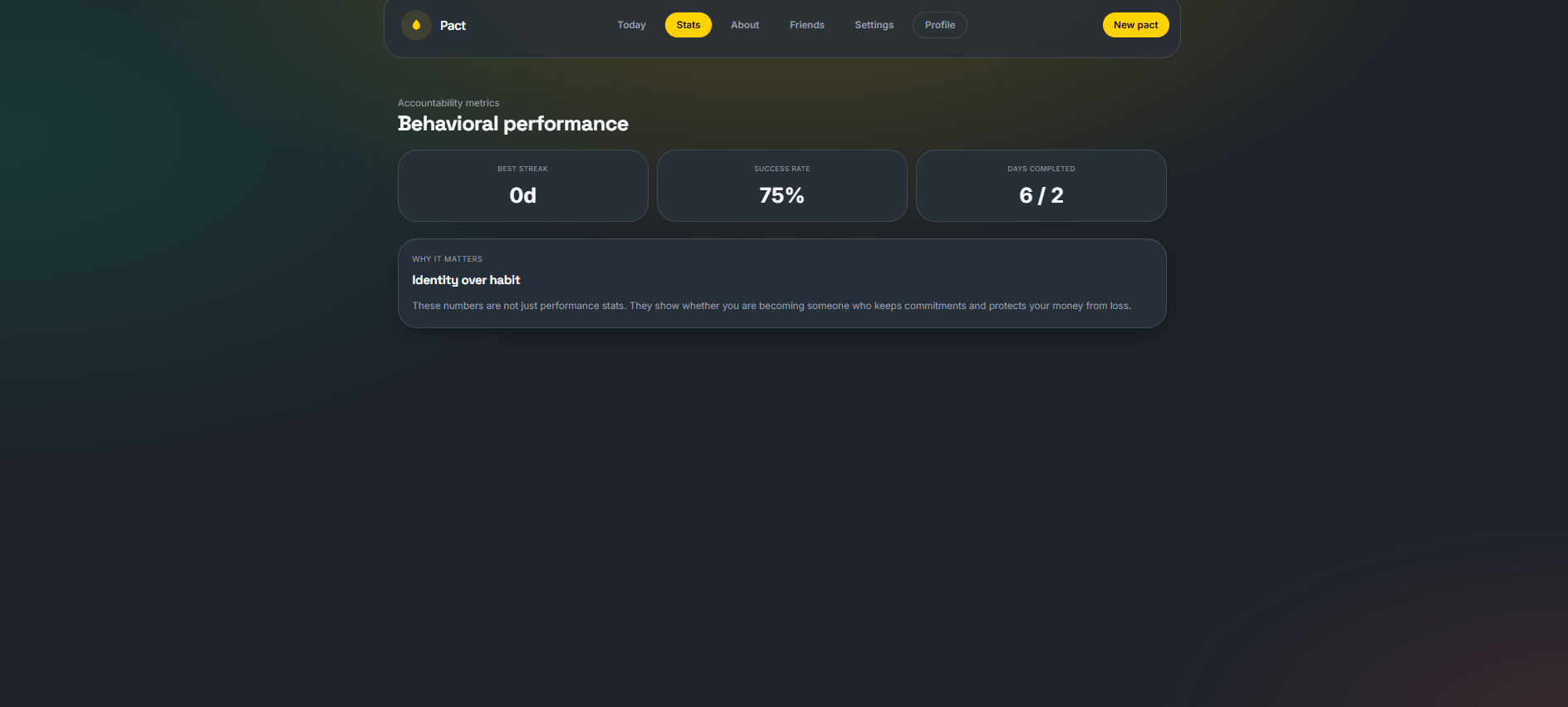
Statistical Analysis of Past Pacts and Behavior
-
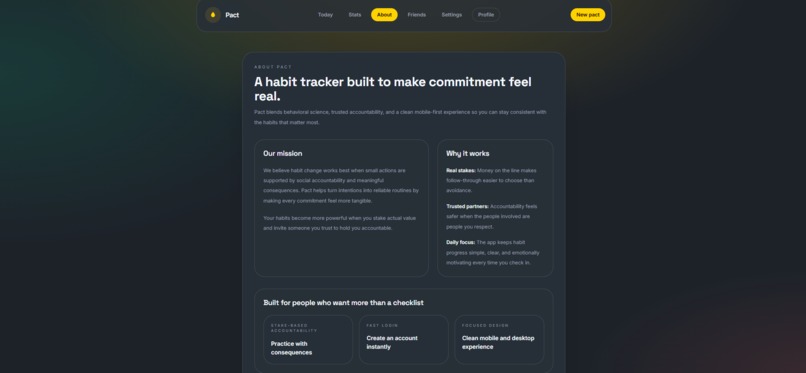
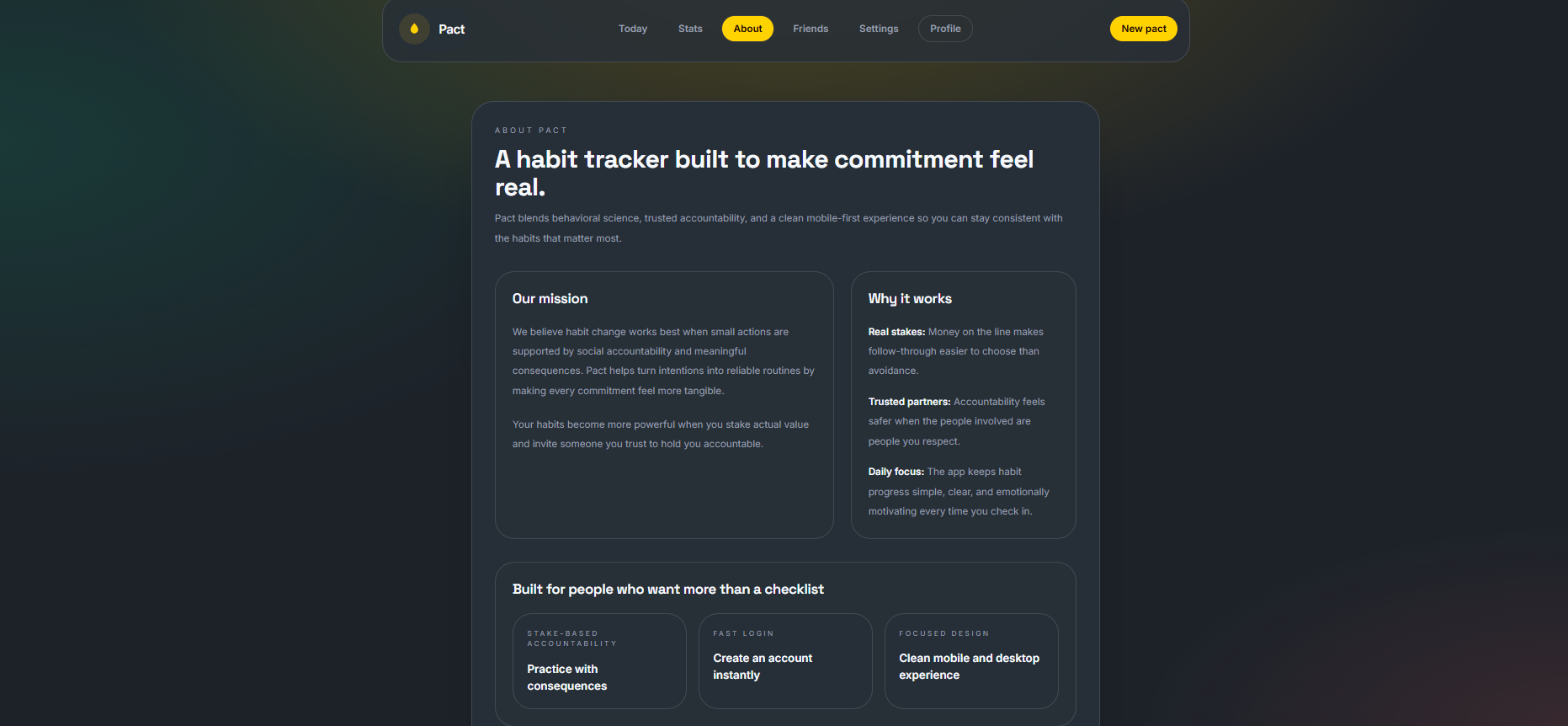
About Us
-
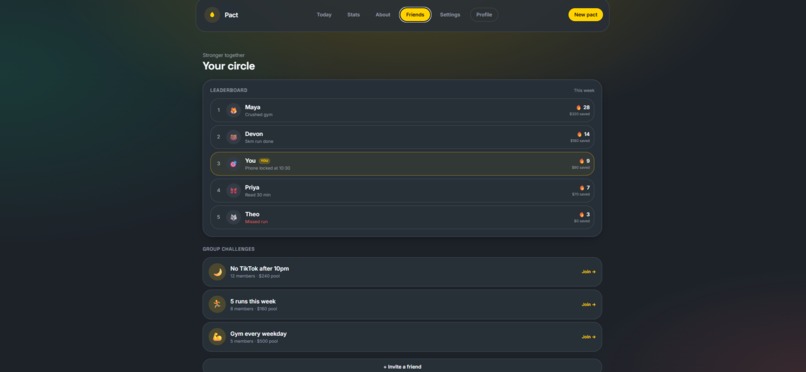
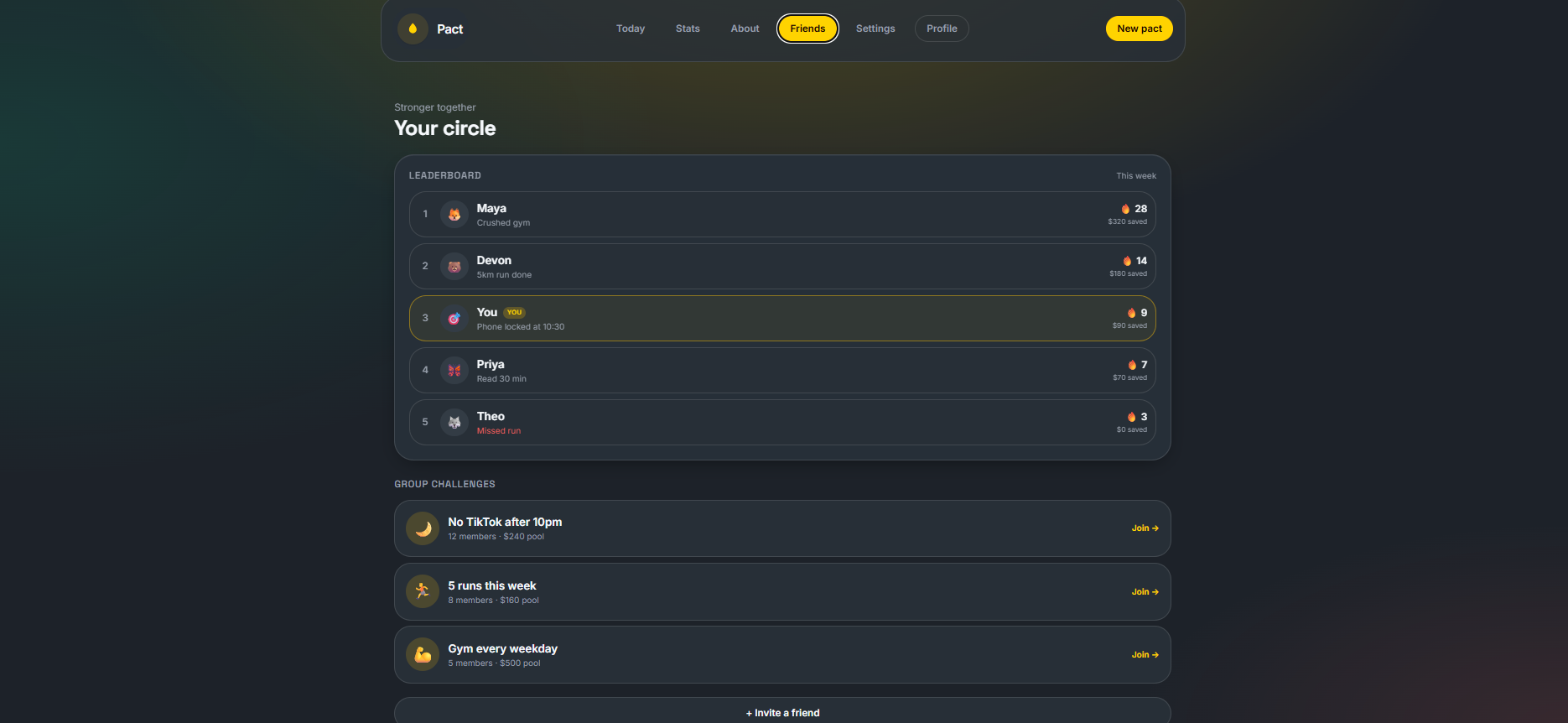
Friends List
-
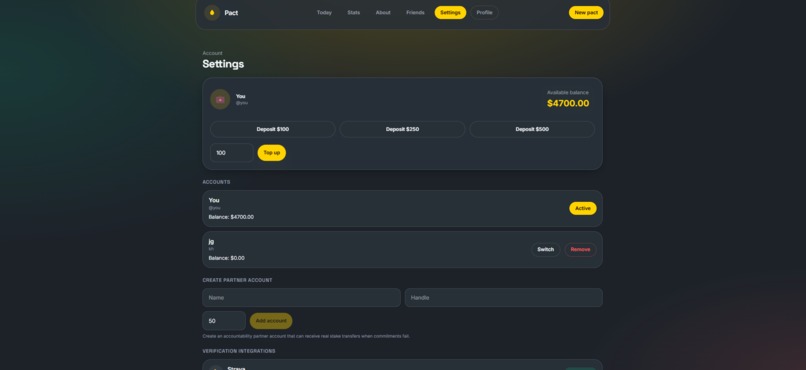
Settings
-
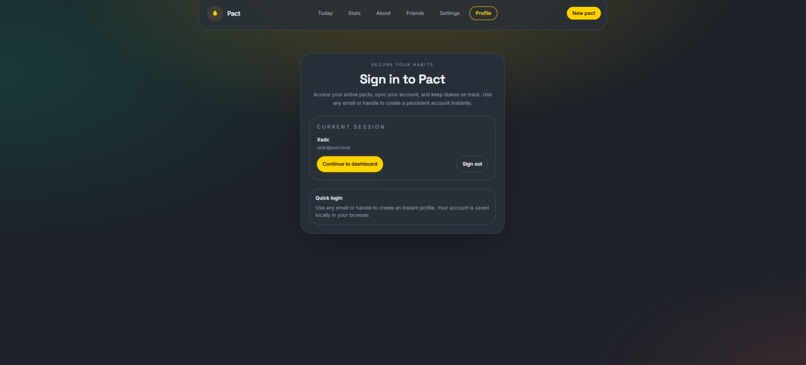
Sign In Page
Inspiration
Our inspiration came from a feeling many ambitious people know well: wanting to change, but struggling to stay consistent.
One day, you feel completely motivated. You want to go to the gym every day, run more, study harder, reduce your screen time, stop doomscrolling, or finally start a new project. But then real life happens. Fatigue sets in. Motivation fades. A couple of missed days turns into a broken routine, and the goals that once felt so important slowly disappear.
As a team, we are highly ambitious people who want to become the best versions of ourselves. But we are also willing to admit that the human mind is not simple. Motivation is not always reliable, and discipline is difficult to maintain without the right system. That is why we became interested in creating a stronger form of accountability.
Our idea was inspired by Atomic Habits by James Clear, specifically the concept of “Habit Contracts.” A habit contract is a promise you make where failing to follow through comes with a real consequence. Instead of relying only on willpower, you put something personal or valuable on the line, making the goal feel more serious and harder to ignore.
For one of our team members, Jason Mai, this concept became especially meaningful:
“Habit Contracts revolve around forfeiting something personal or valuable in order to create the feeling that there are genuine consequences for not committing to a promise or goal. Personally, I have used this system to become #1 varsity on my high school men’s tennis team, stay consistent with running for almost three years, and remain very disciplined towards my studies for longer and more focused periods of time”
We wanted to turn this powerful idea into a digital reality. Our app is built to help people form better habits, stay consistent, and follow through on the goals they set for themselves. By tracking progress and enforcing accountability through a clear system, the app removes the bias that often comes with self-made promises. It does not forget, sugarcoat, or make excuses. It simply helps users stay honest with themselves.
This project is not just a Hackathon idea to us. It is something we would genuinely use in our own lives. We believe this kind of accountability can help people turn ambition into action, and action into long-term change.
What it does
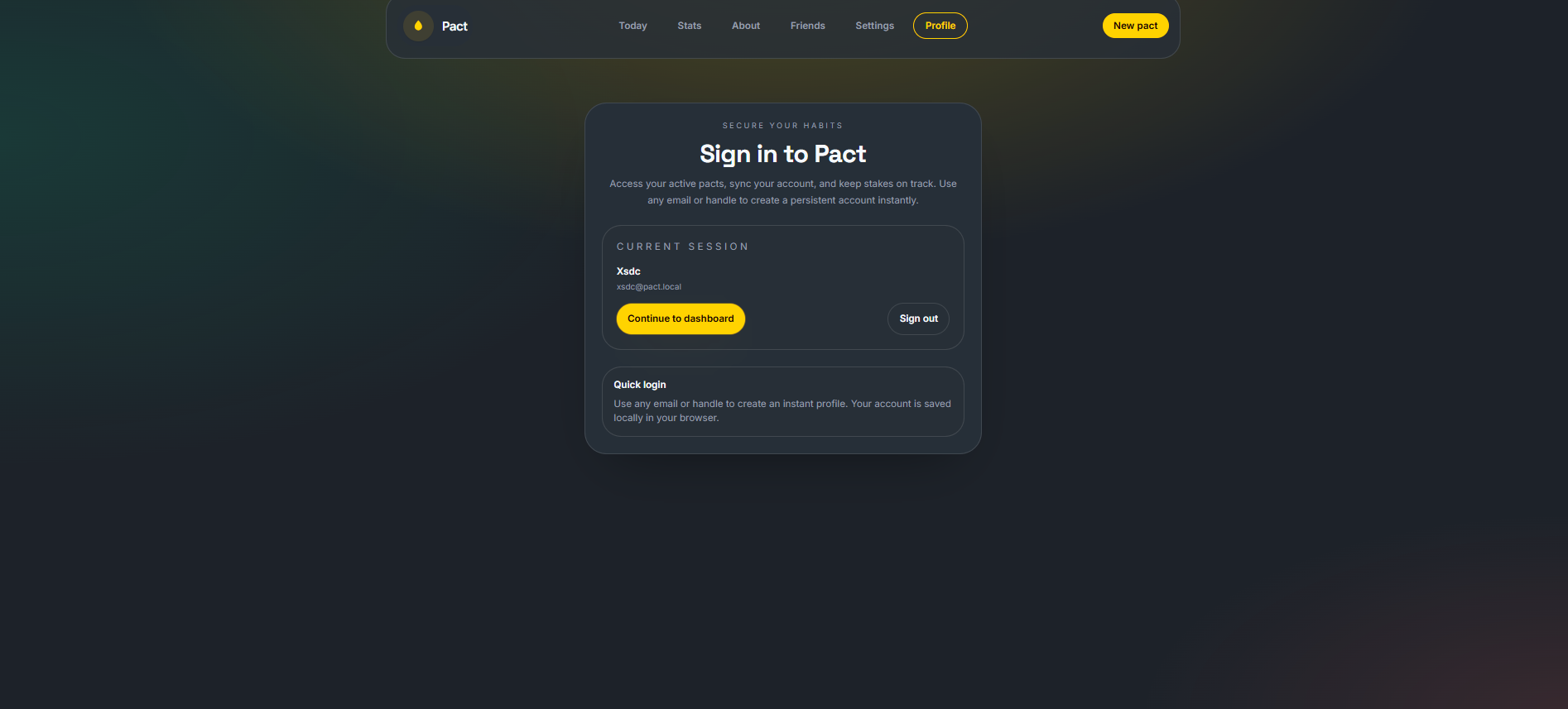
Pact helps users turn their goals into enforceable habit contracts. Users can create an account, choose from suggested habits or create a custom habit, and configure the contract around their personal goal. During setup, the app asks which applications should be tracked for that habit so completion can be verified more accurately and false check-ins can be reduced.
Users then set the stakes of the contract, including the amount of money they are willing to risk, the number of grace days allowed before a penalty, and the total duration of the habit pact. The money comes from a deposit made by the user. If they fail to complete the habit, the app automatically sends the penalty either to a charity of their choice or to a trusted accountability partner.
For charity-based contracts, users can enter the charity name and website, and the app is designed to send the money there when the habit is failed. For partner-based contracts, users connect with another Pact account, allowing the trusted partner to receive the penalty if the user fails. This creates a real sense of accountability because the consequence is personal, immediate, and difficult to ignore.
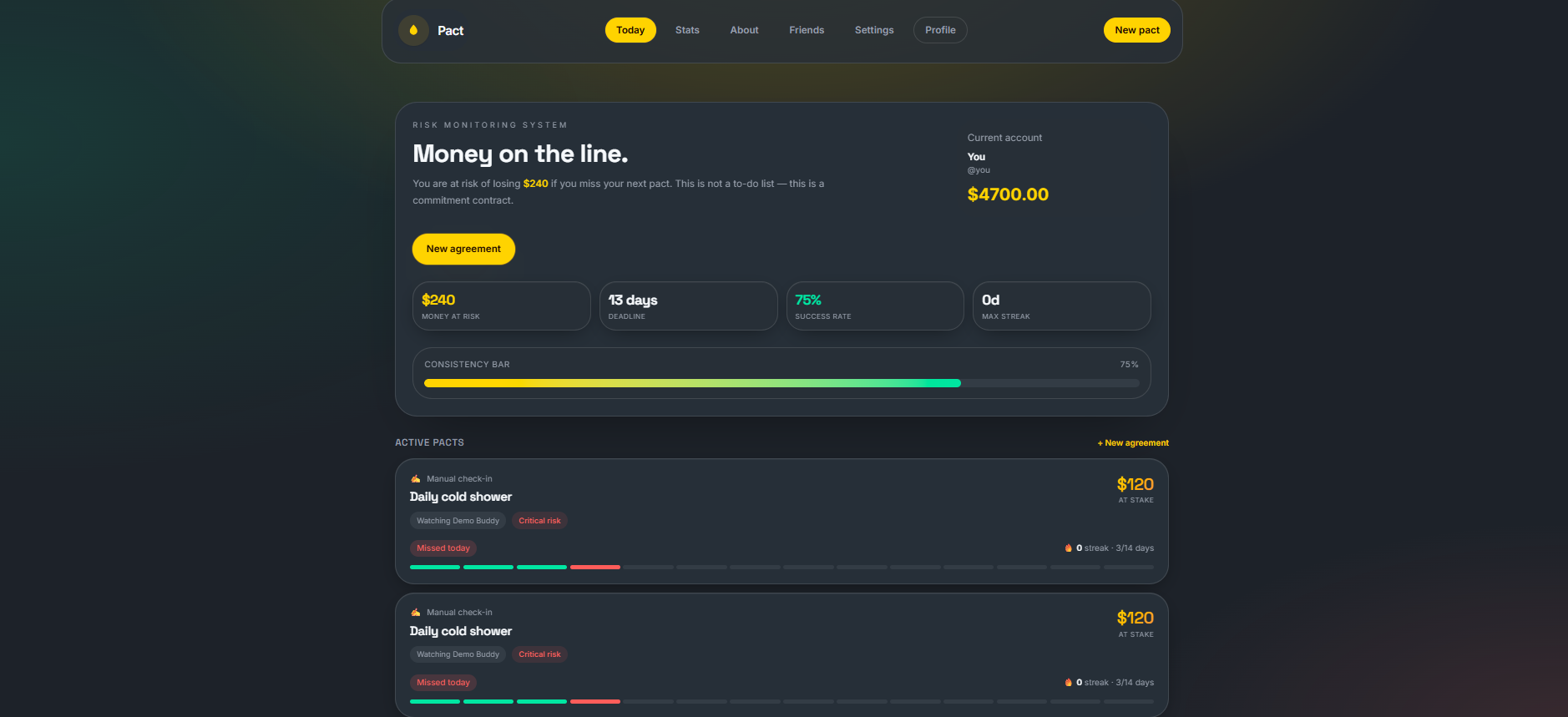
After a contract is created, Pact tracks each active pact until it is completed. Completion is enforced through a combination of app tracking, self-check-ins, and partner approval. Trusted partners can approve or revoke the validity of a user’s daily check-in, helping prevent dishonest completion claims. There is also an “End Pact” option for situations where unexpected circumstances make it unrealistic for the user to continue.
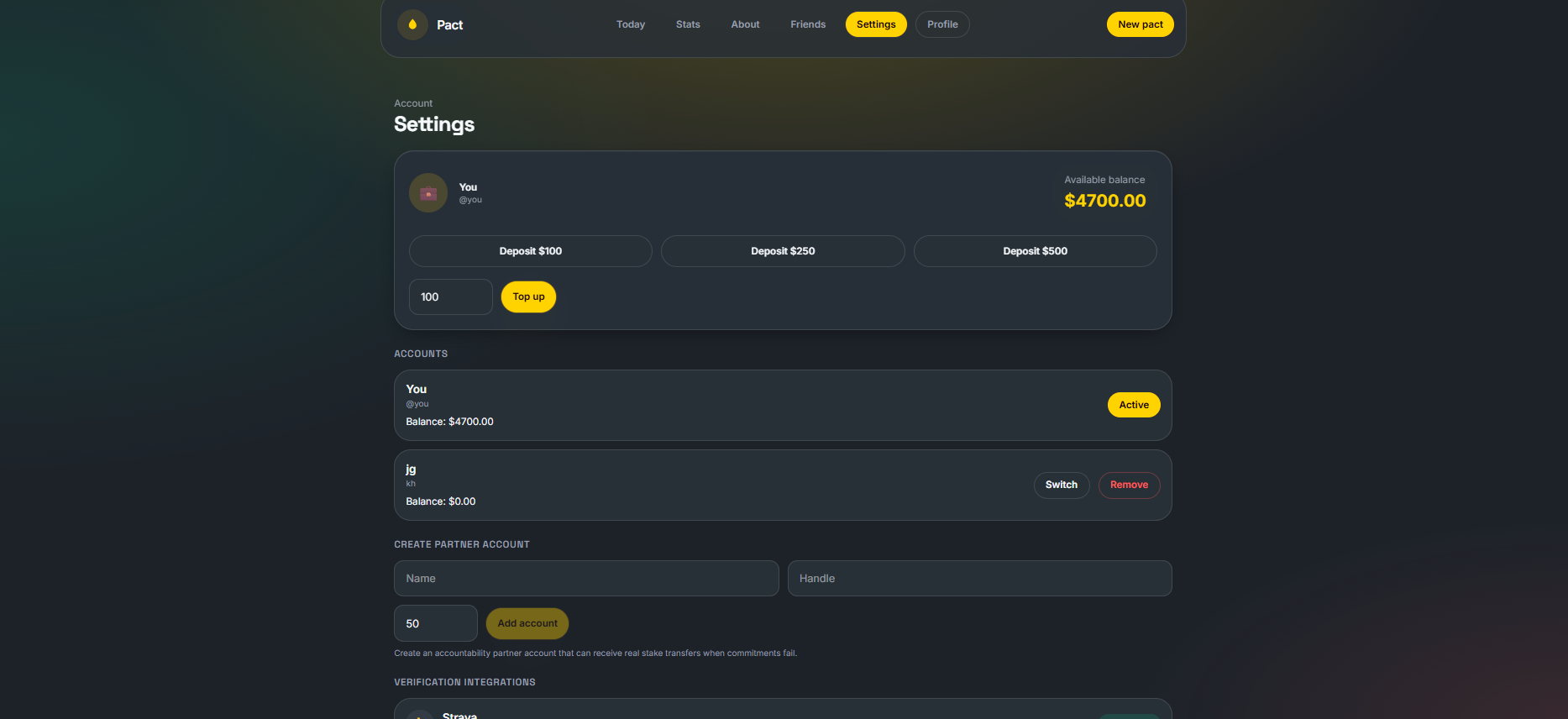
Beyond the main contract creation page, Pact includes several supporting tabs. The statistics page tracks success rates, streaks, and habit performance over time, turning progress into a more motivating and gamified experience. The friends page allows users to connect with trusted accountability partners. The About page explains the purpose of Pact and the behavioral psychology behind habit contracts. The settings page manages deposits, partner accounts, app tracking configurations, and other account preferences.
How we built it
We built Pact as a web application using a pre-configured starter template that gave us a solid foundation to work from. From there, we layered in the features that mattered most to us: the contract creation flow, check-in system, statistics page, friends and partner connections, and account management. We used AI tools heavily throughout Claude, ChatGPT, and GitHub Copilot helped us move quickly and bridge gaps in our technical knowledge. We also connected a backend database to handle user accounts and store pact data, making the app functional beyond just the frontend. The process was very much iterative. We would identify what we needed the app to do, figure out how to get there with the help of AI tools, test it, and keep building. It wasn't always clean, but it worked, and we ended up with something we're genuinely proud of.
Challenges we ran into
The hardest part was translating a concept we deeply believed in into something that actually functioned as software. None of us came in as experienced developers, so a lot of the challenge was learning on the fly, understanding how different pieces of the app connected to each other, debugging issues we didn't fully understand, and making decisions about features we'd never built before. The accountability verification flow was also difficult to think through. How do you make check-ins honest without making the daily experience feel like a chore? How do you handle grace days, early termination, or disputed completions? These weren't just technical questions; they were design and logic questions that required a lot of back and forth as a team.
Accomplishments that we're proud of
We're proud that Pact actually works and feels like a real product. The contract creation flow, the partner system, the statistics page, and the account system all came together into something cohesive. For a team without deep technical backgrounds, shipping something this complete in a hackathon timeframe is something we're genuinely proud of.
We're also proud that the idea stayed strong throughout. We never lost sight of why we were building this for ourselves, and for anyone who's ever struggled to stay consistent with a goal that actually mattered to them.
What we learned
We learned that you don't have to know everything to build something real. AI tools have genuinely lowered the barrier to bringing ideas to life, and we leaned into that fully. At the same time, we learned that the hardest part of building a product isn't the code, it's thinking clearly about what you're building, who it's for, and what problems you're actually solving.
We also learned a lot about habit psychology just by trying to design around it. Building Pact made us think harder about accountability, motivation, and behavior change than any book or class had before.
What's next for Pact
Honestly, we don't want this to just be a hackathon project. Pact is something we would actually use in our own lives, and we think there's a real opportunity to turn this prototype into a fully polished app that we could put out into the world.
The immediate next step is hardening everything that exists, cleaning up the prototype, ironing out edge cases, and making the experience smooth enough that someone outside our team could pick it up and use it without any handholding. From there, we want to make the financial consequence system official and reliable, because that's the core mechanic that makes Pact different from every other habit tracker out there.
Beyond that, we're thinking about what it would look like to actually launch this, whether that's on the App Store, as a proper web app, or both. We'd want to bring in more users, gather real feedback, and keep building based on what people actually need. Features like group pacts, social accountability, and deeper habit analytics are all on our radar.
The bottom line is that we built Pact because we genuinely believe in the idea. The hackathon gave us the push to build the first version. Now we want to see how far we can actually take it.
Built With
- cloudflare
- css
- eslint
- html
- javascript
- jsx
- node.js
- prettier
- radix
- react
- supabase
- tailwind
- typescript
- ui
- vite

Log in or sign up for Devpost to join the conversation.