
Inspiration
I'm always short on time, and so is almost everyone I know. My fiancée, Bethany, runs her own business, and between that, our work, and a puppy who needs training, feeding, and entertaining, exercise is usually the last thing we want to do at the end of the day.
What I noticed, however, is that we do have time, just never in one big chunk. A few minutes before a call, or ten minutes while dinner's in the oven. Across the week, those minutes add up to far more than you'd think, but nobody is using that time effectively.
'Time to Move' was made for the modern woman who's always juggling her time and keeps putting her own wellness after everything else. It works no matter how much spare time a day you have, whether that's two minutes or twenty.
What it does
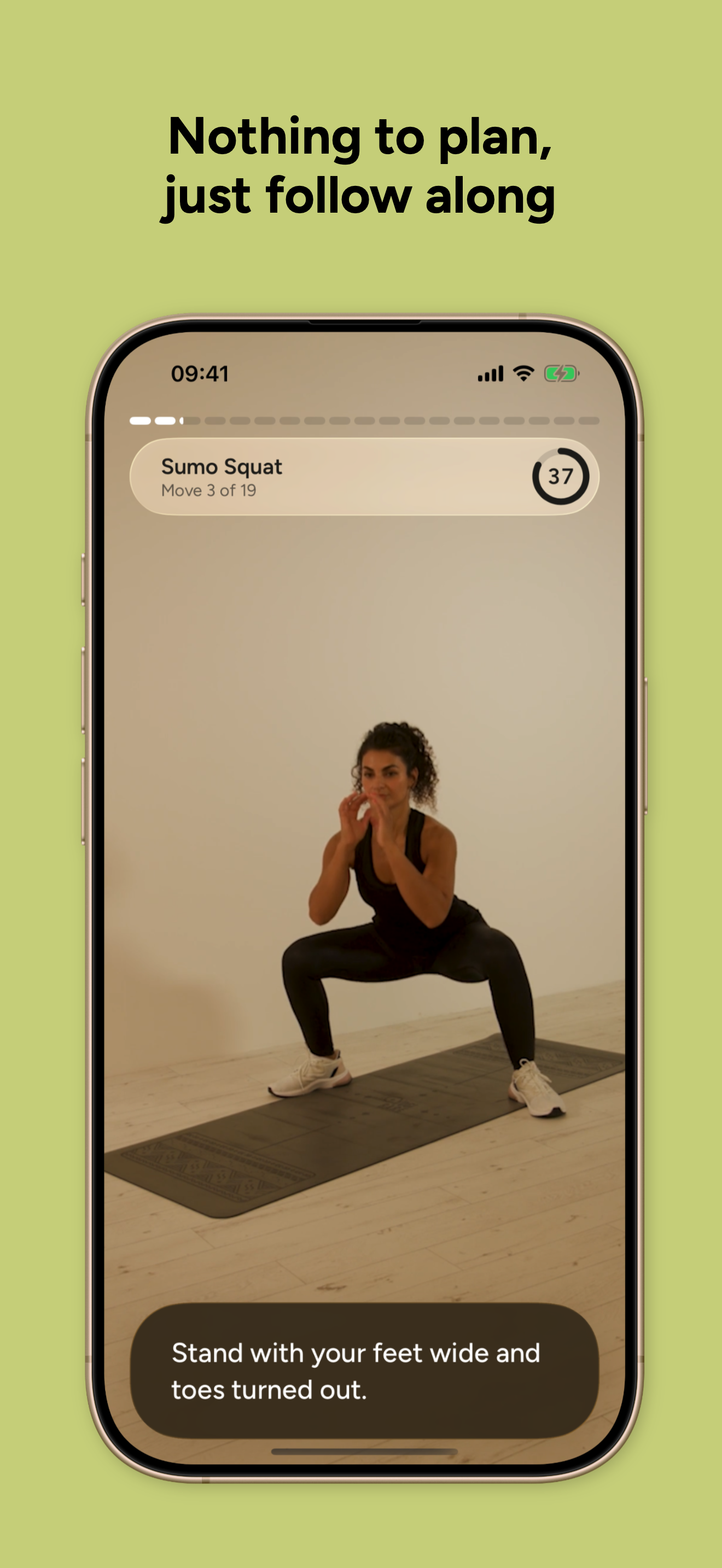
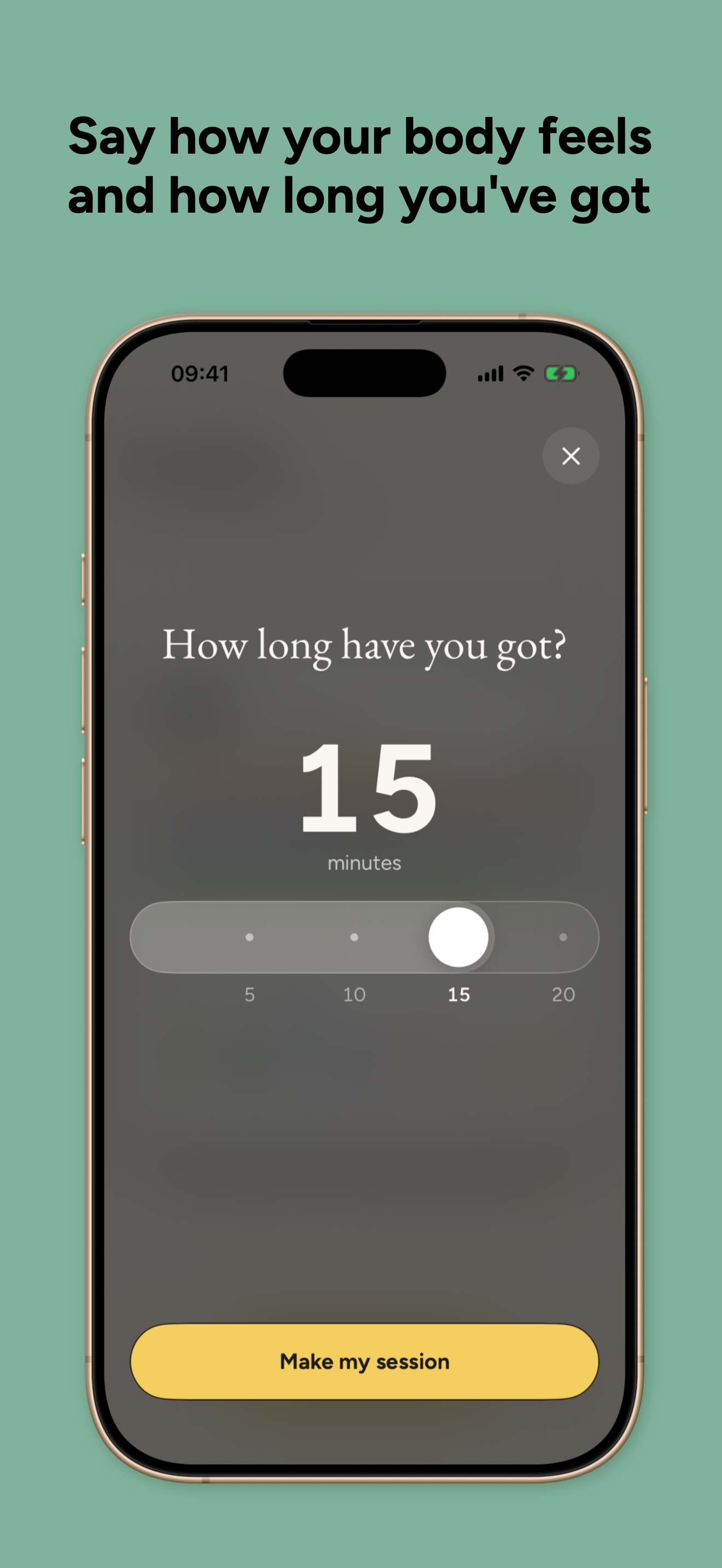
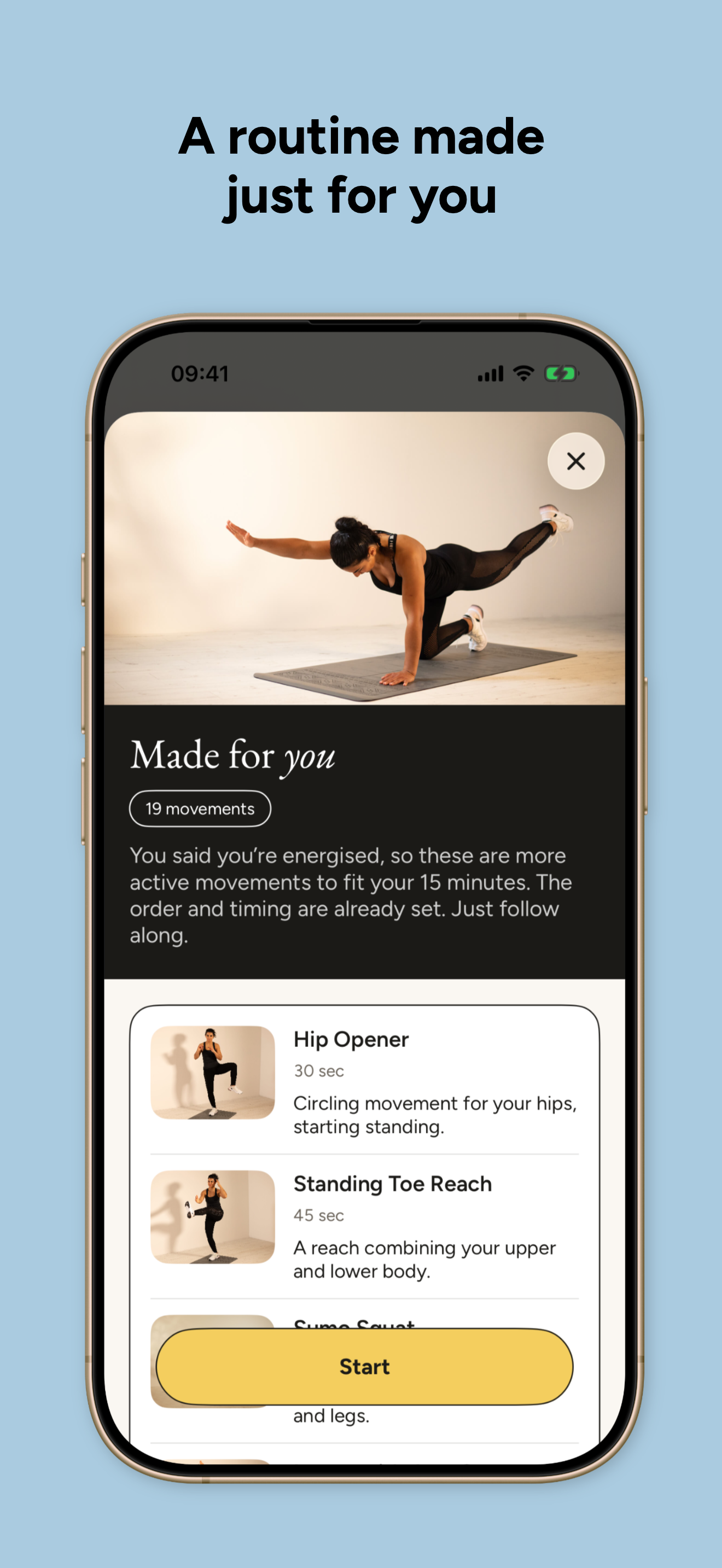
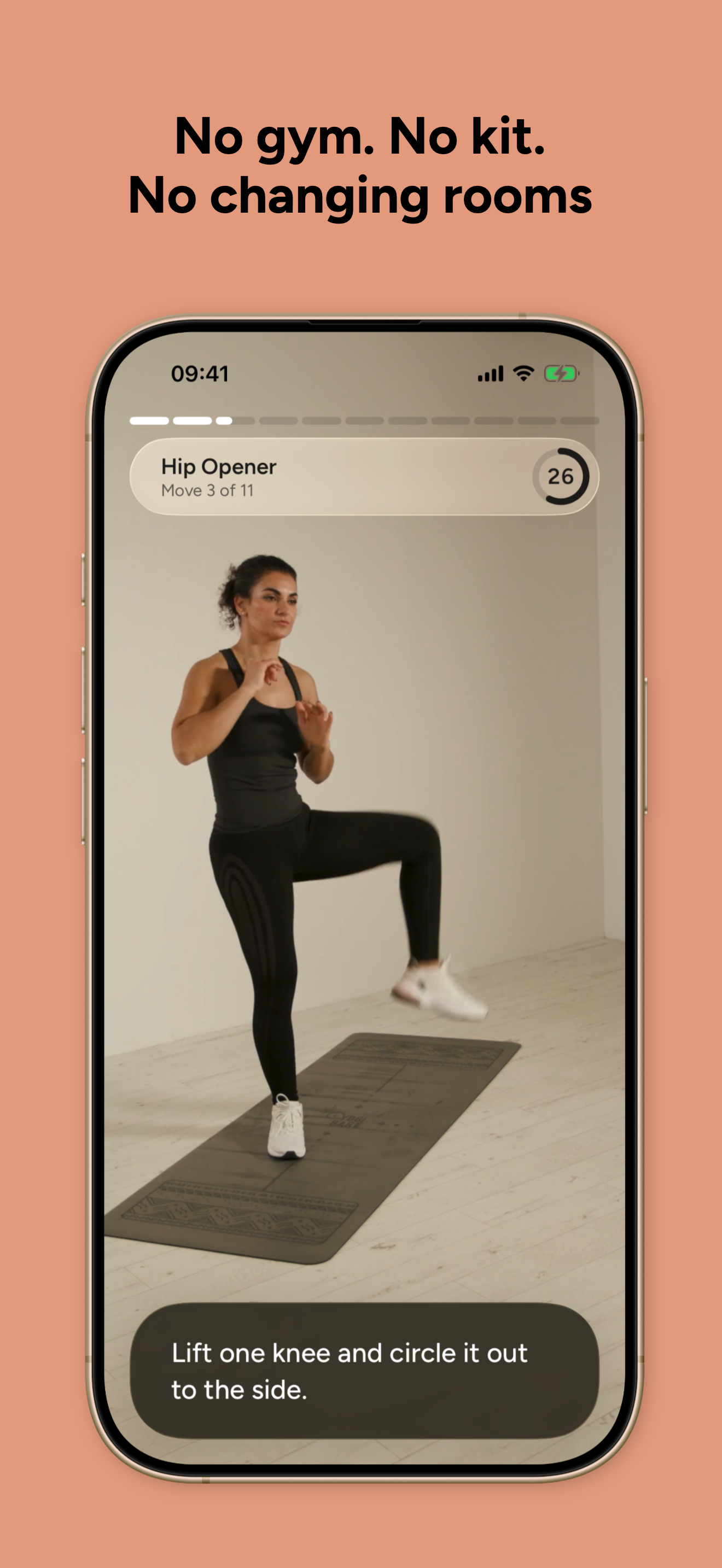
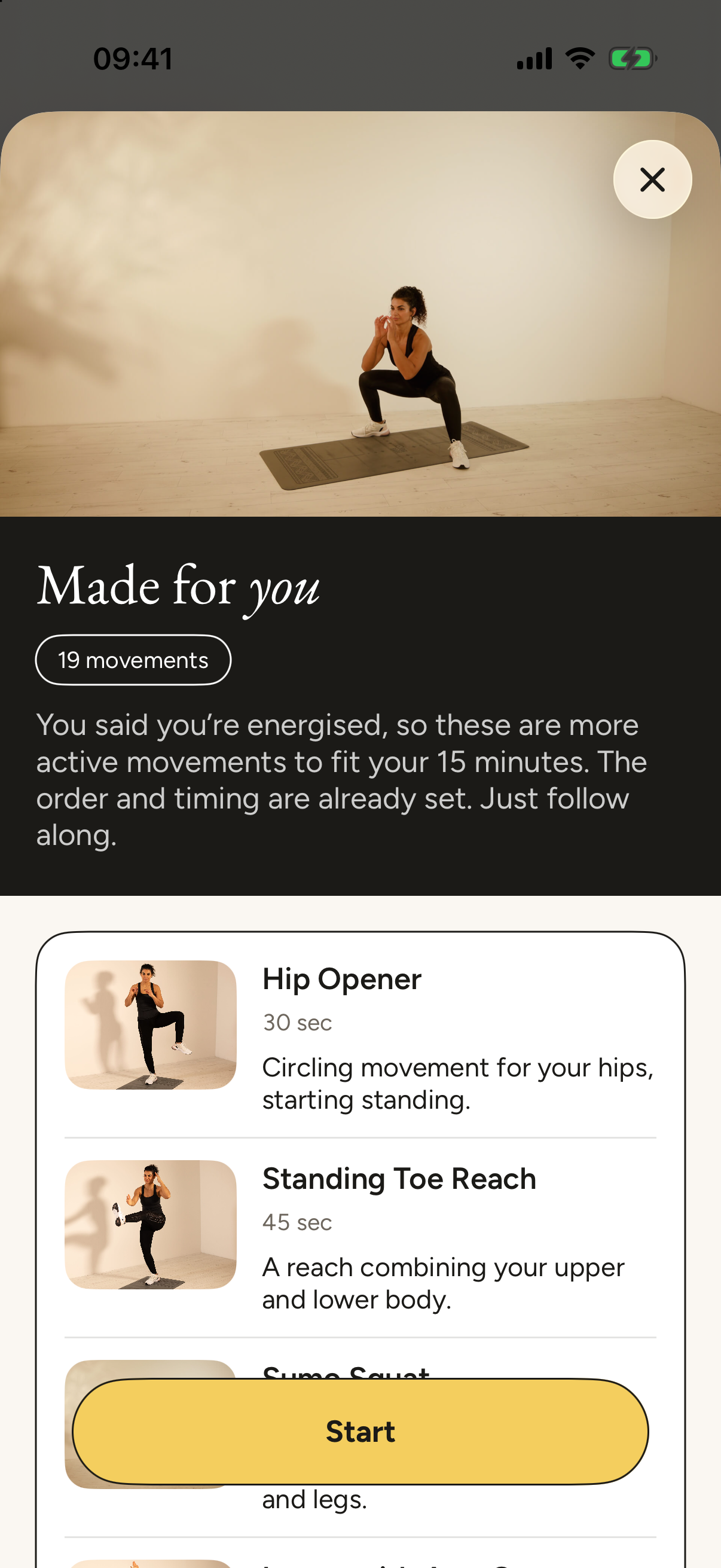
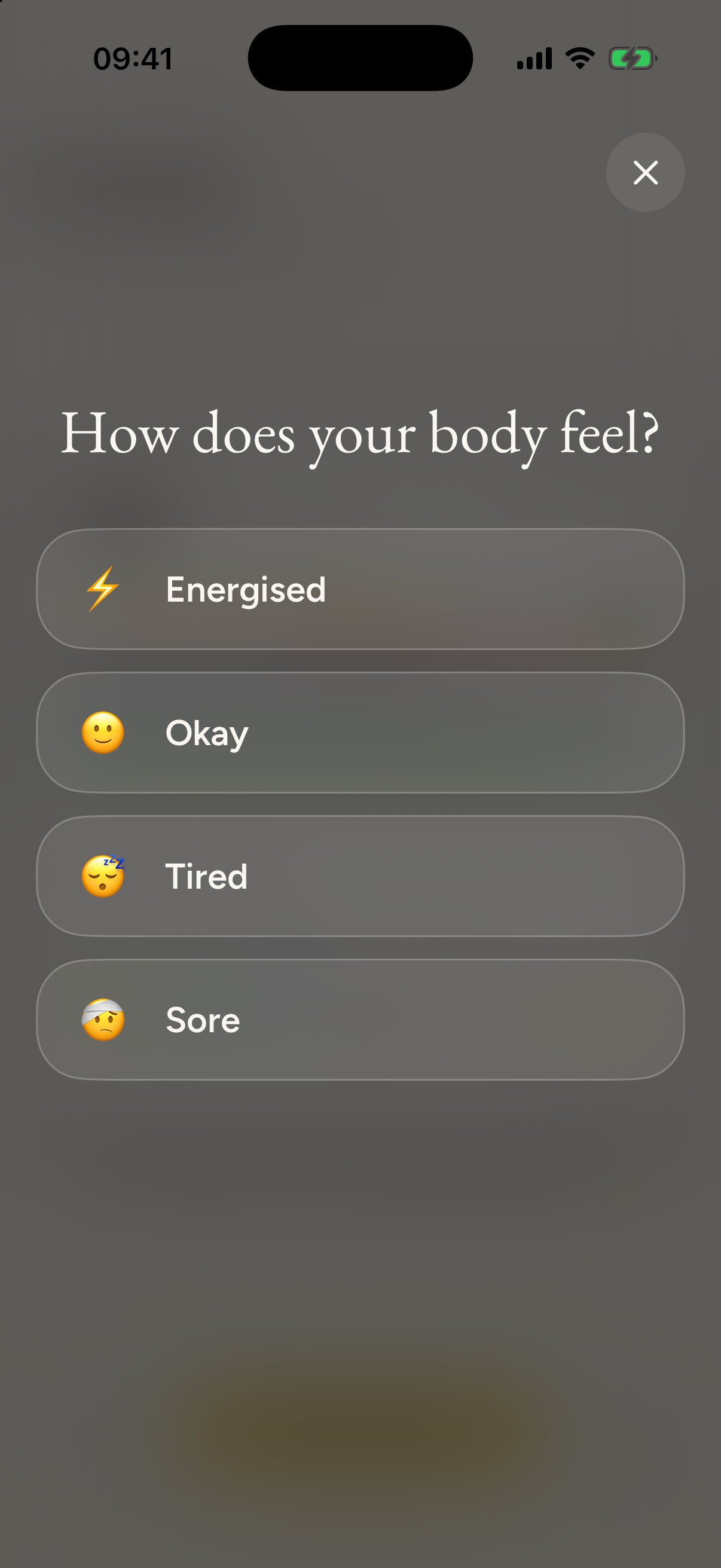
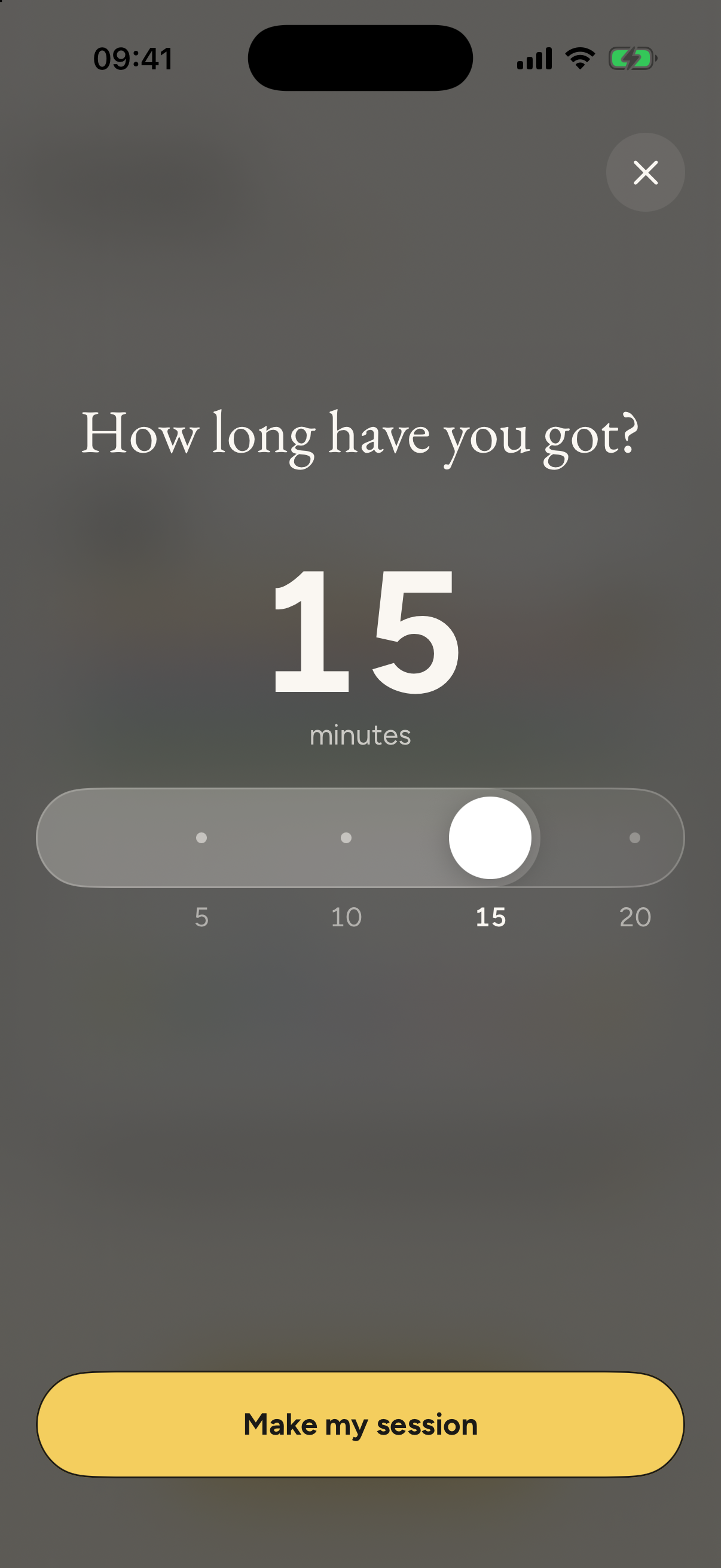
You simply tell the app how your body is feeling and how long you have. The app builds a personalised routine just for you, from a library of 40+ movements, covering stretches, mobility and gentle strength, and you follow along one move at a time. Most of it works without specialist equipment and in normal clothes, in everyday settings such as a kitchen or at a desk.
On a tough day, you get gentle movements and stretches to support recovery. On a day when you have more energy, the app will recommend more challenging movements such as squats and lunges.
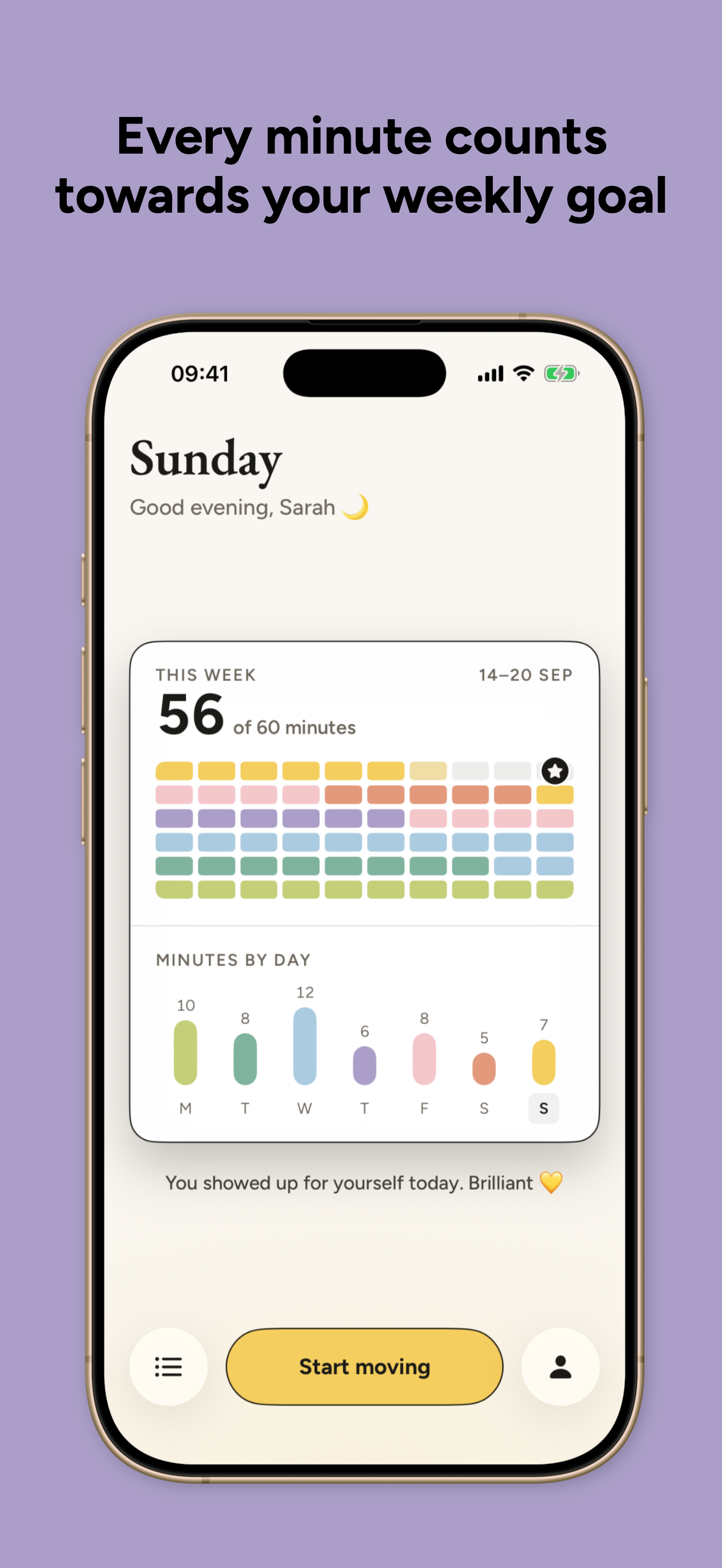
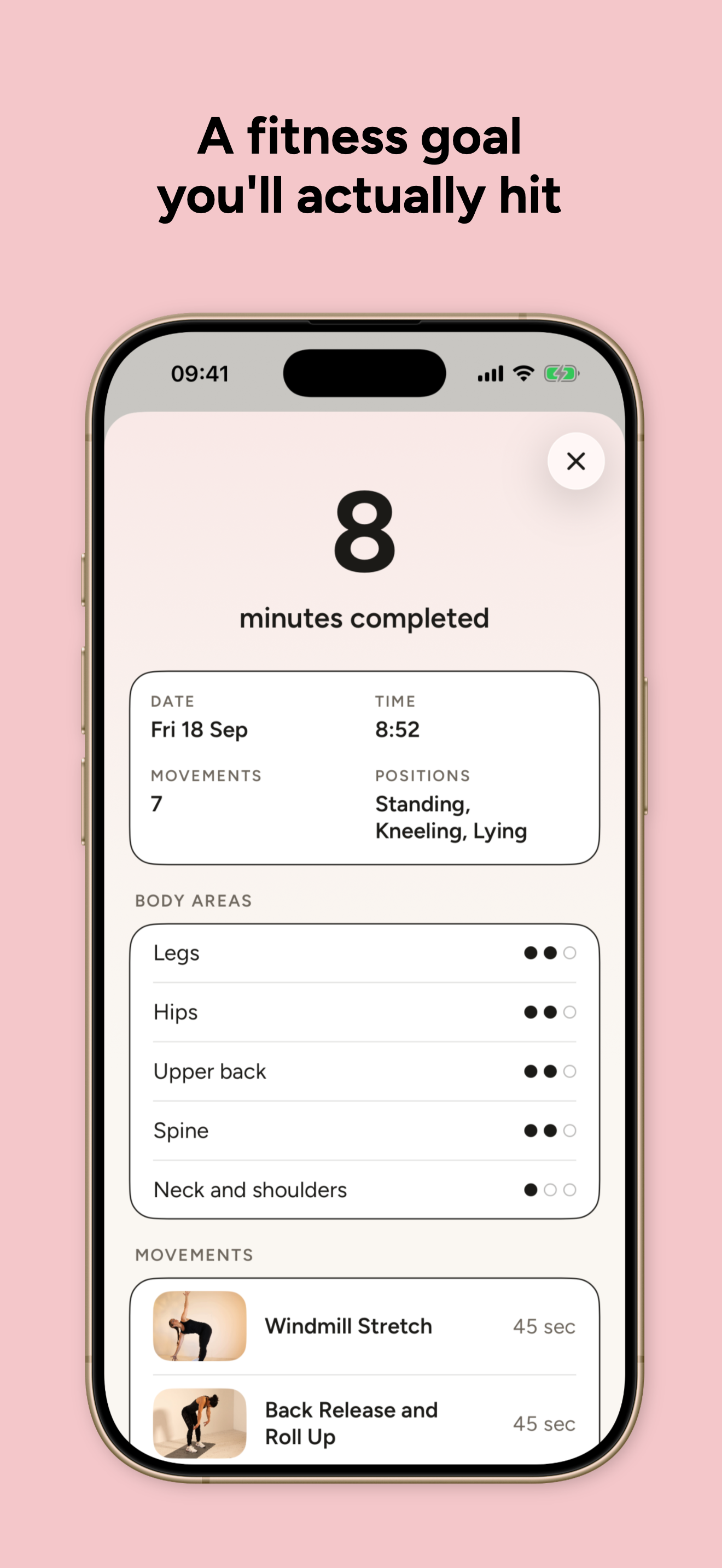
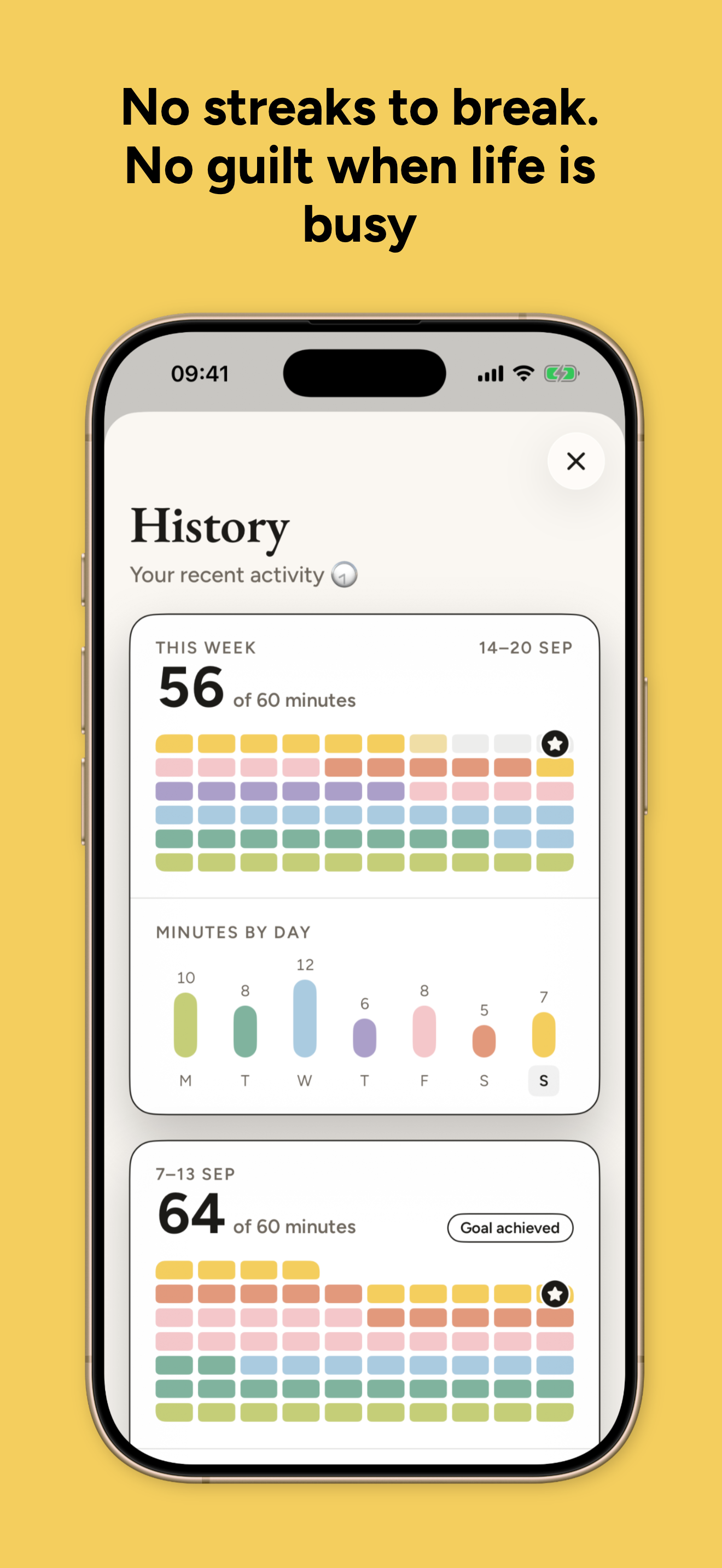
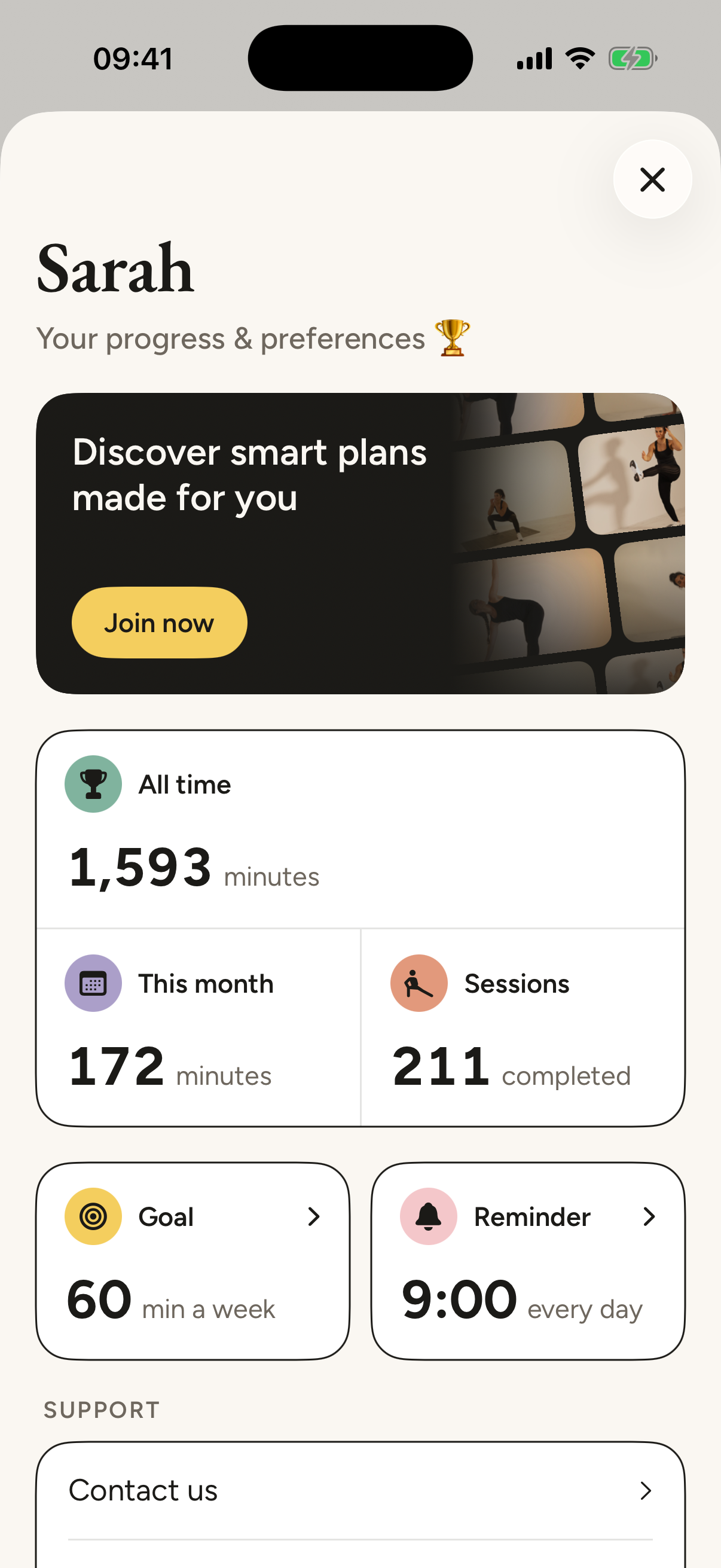
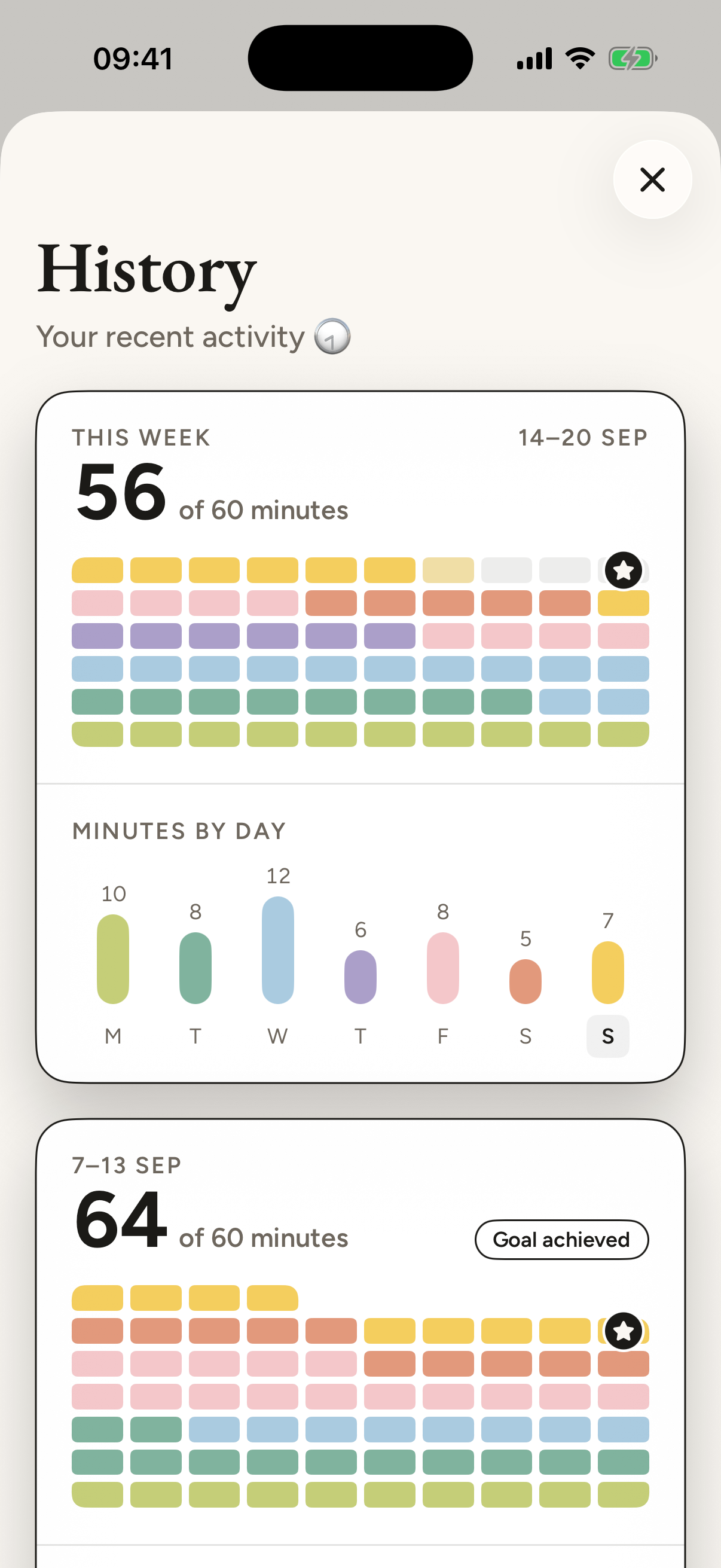
Every minute you complete counts towards a weekly goal you set yourself. There are no streaks to lose, and the app never tells you off. The only thing the app asks is that you show up only when you can.
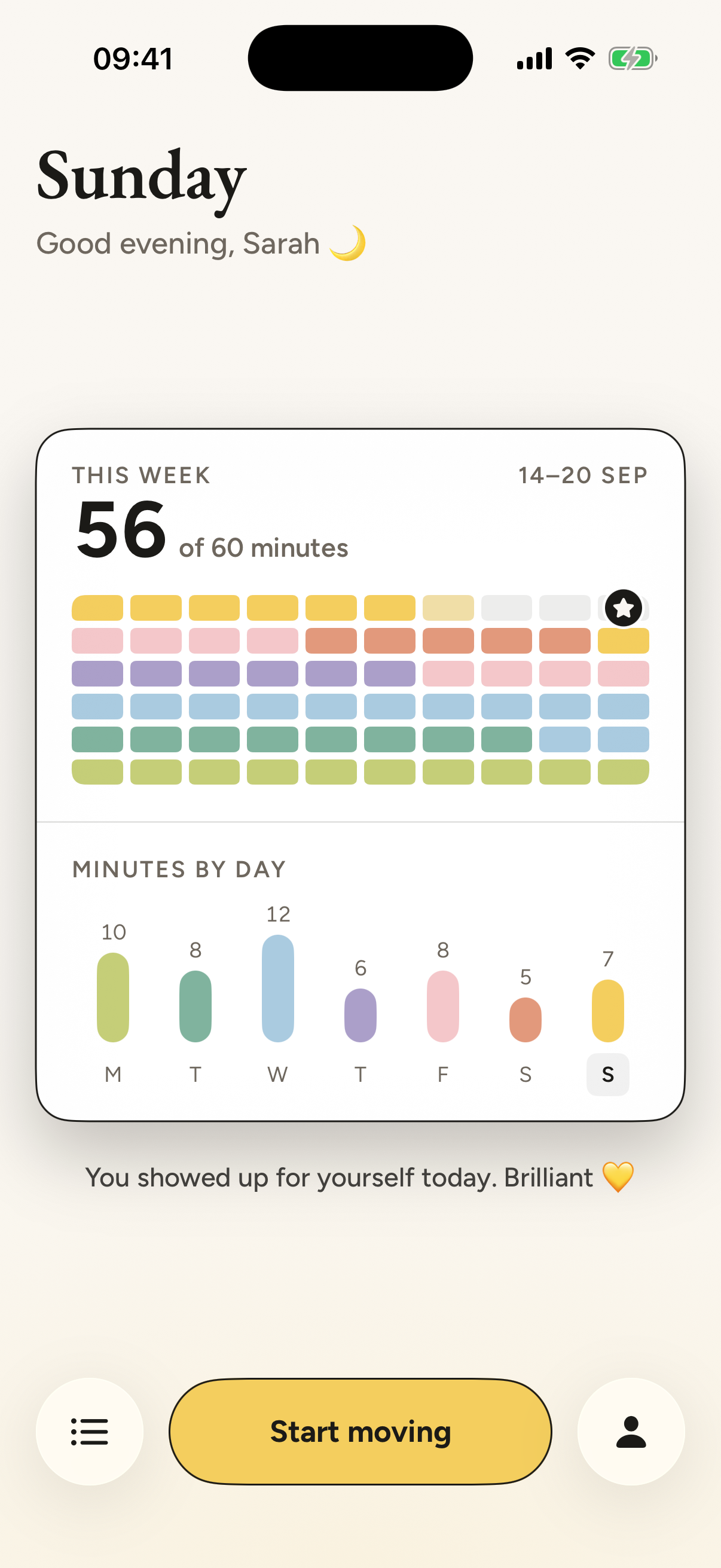
Your progress is shown on the home screen as a wall of tiles. Every minute you move is a tile, and the wall builds from the bottom up until you reach your goal in the top right corner. Each day has its own colour, so you can see at a glance which days you made the most of and which ones got away.
How we built it
'Time to Move' is a beautiful, native iPhone app written in SwiftUI. Sessions and settings are stored with SwiftData and sync through your private iCloud, which means you don't have to register an account and all of your data is private. Non-paying users can complete one short session a day, and paid members through RevenueCat unlock as many longer sessions as they like.
It took around 4 weeks to go from the initial idea to being live in the App Store in 3-4 weeks. Bethany tested the app throughout the entire journey, fitting sessions in around her busy work schedule, which turned out to be the most honest test we could have asked for.
Challenges we ran into
The hardest problem was how to show progress. We wanted something that felt like you were building towards a goal, and something you'd actually want to finish, without pressure or guilt.
It took a lot of iteration to get the wall right. Early on it looked like a spreadsheet, and at zero, the biggest thing on the screen was a huge "0". This was not a very motivational screen to show anyone on a Monday morning! The final design is a colourful wall of tiles, with friendly motivational messaging to encourage you each day.
Another big moment of inspiration that shaped the whole experience came from Bethany. She pointed out that some days your body simply can't do an intense workout, and forcing one is actually counterproductive. What matters instead is showing up. So "how does your body feel?" became the first question of every session, and your answer decides what the session looks like.
Accomplishments that we're proud of
The biggest accomplishment of the app, in my opinion, is how it feels to use. We iterated over the design of every screen, right down to the wording. The home screen greets you with a line of encouragement instead of a list of what you haven't done. Missing a day costs you nothing, and we purposely made sure that nothing in the app is there to make you feel guilty. Sticking to that was harder than we expected, because almost every habit app we looked at relies on guilt to bring you back.
What we learned
Showing up counts for more than intensity. A few gentle minutes of movement on a rough day is much better than doing a hard workout. I set out to build a workout app but ended up building a habit app that is about developing a kind relationship with exercise and movement.
What's next for Time to Move: Gentle Movement
The movement library will keep growing, starting with more Pilates. After that comes iPad support, because a bigger screen would make following along from across the room so much easier.
In the medium future, we plan to add a social element, as a way to send kudos and encouragement to friends who are building their own walls. We picture small groups of friends cheering each other on, and we don't want leaderboards anywhere near it!
In the long term, we plan to integrate the app with Apple Watch, showing exercises on the watch face, tracking heart rate alongside your movement, and eliminating the need to find somewhere to prop up your phone.

Log in or sign up for Devpost to join the conversation.