-
-
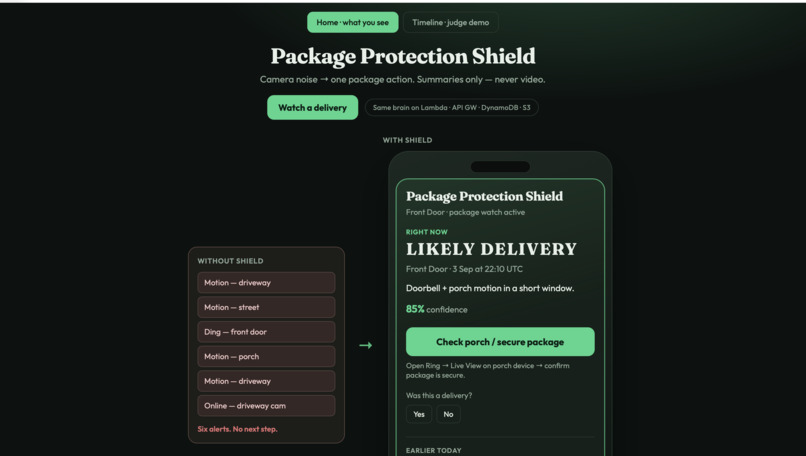
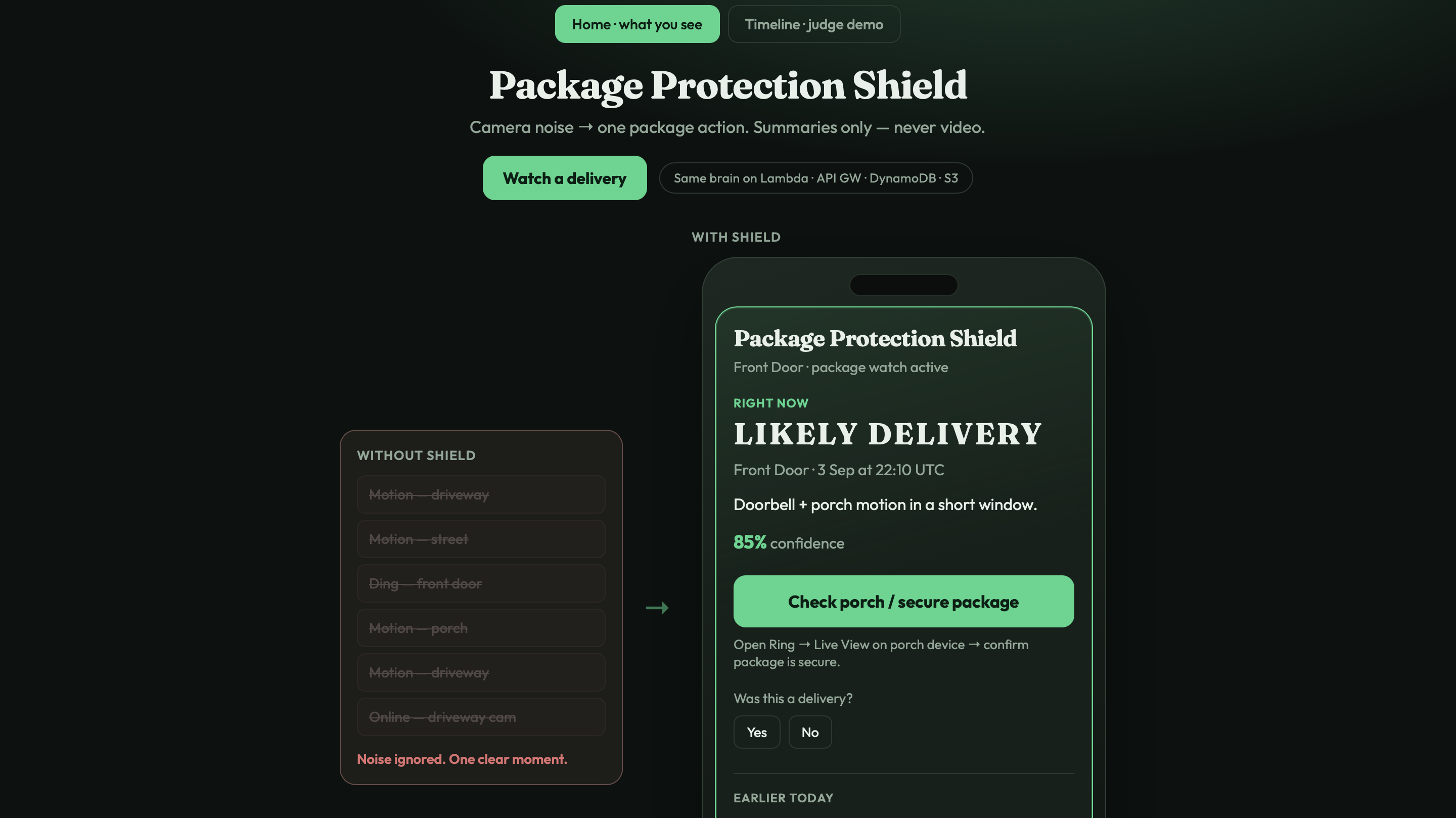
Home page
-
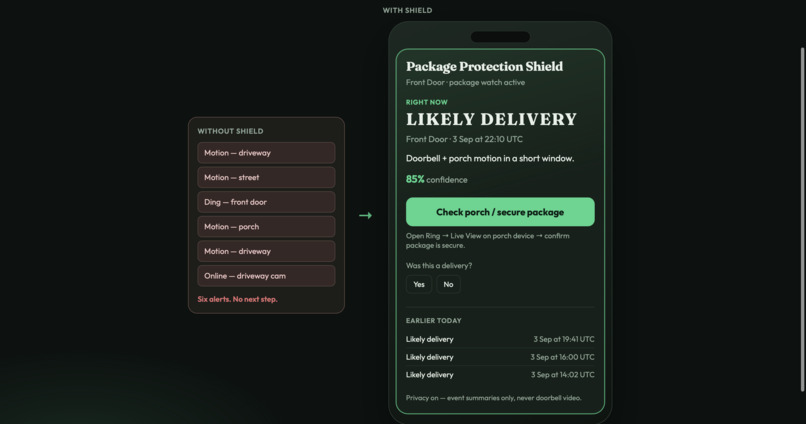
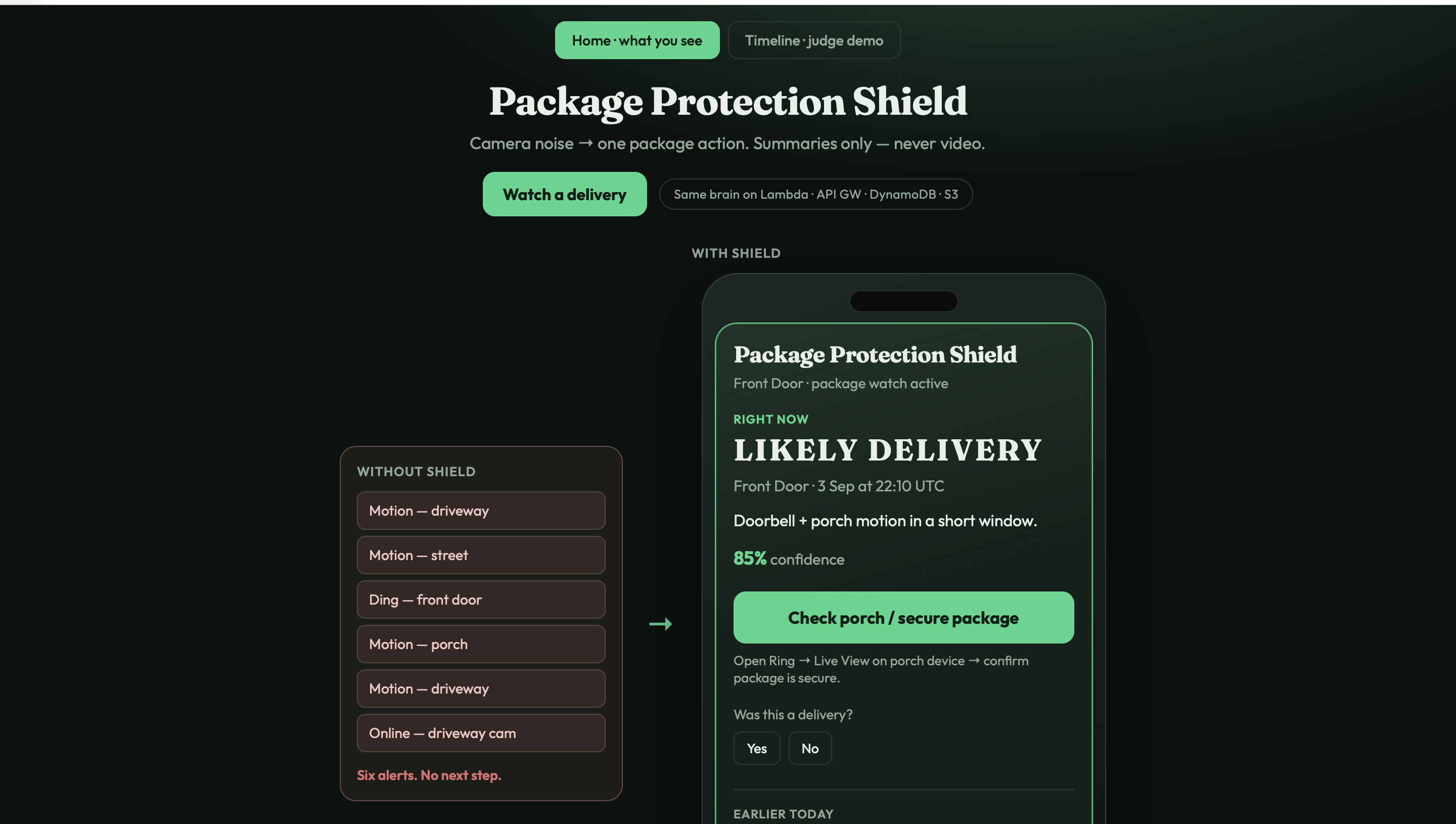
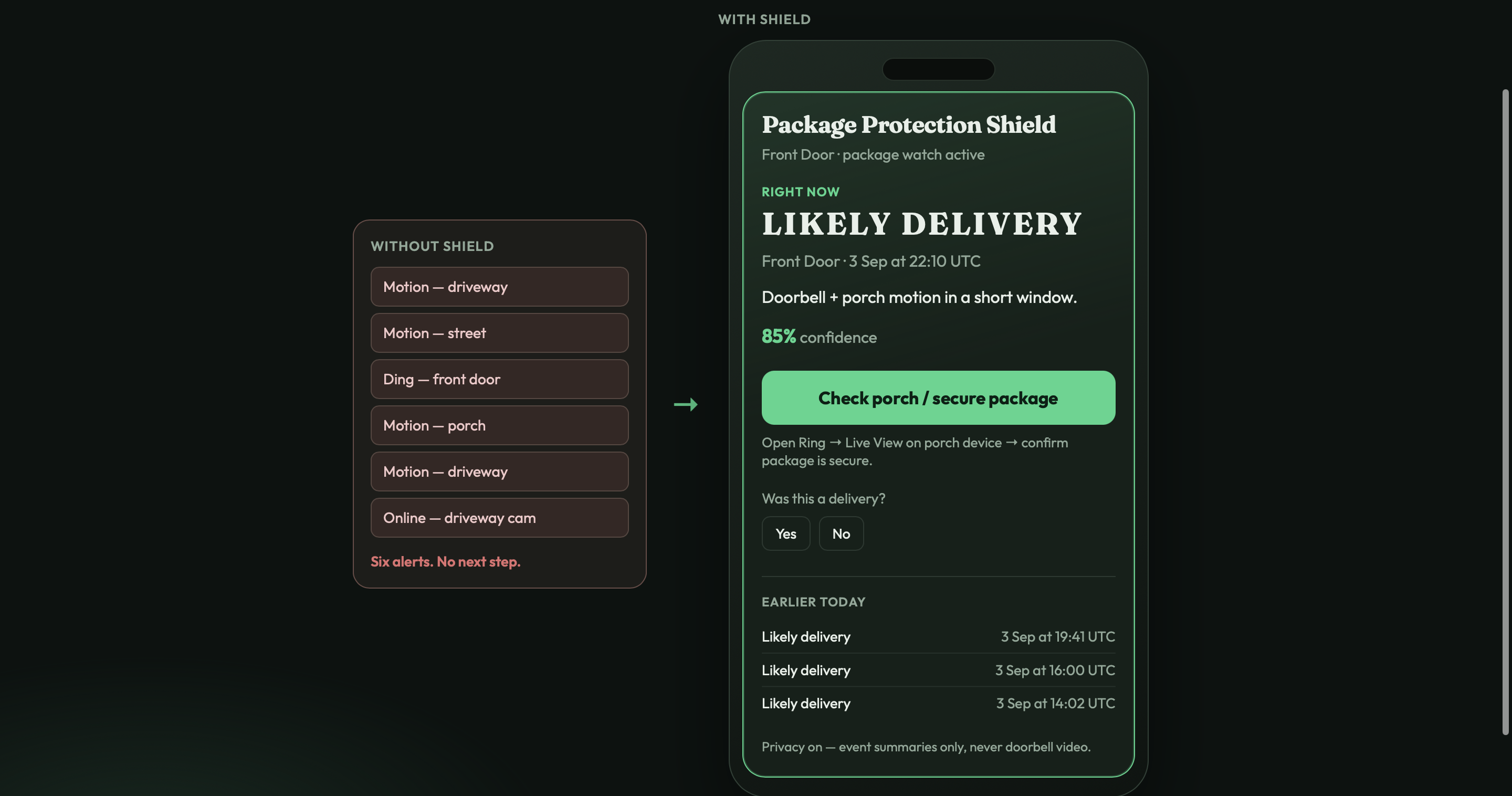
Without and with package-protection shield
-
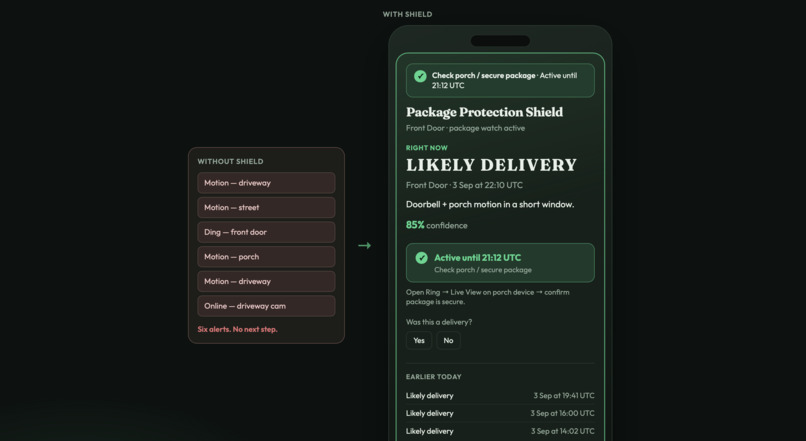
With package protection shield
-
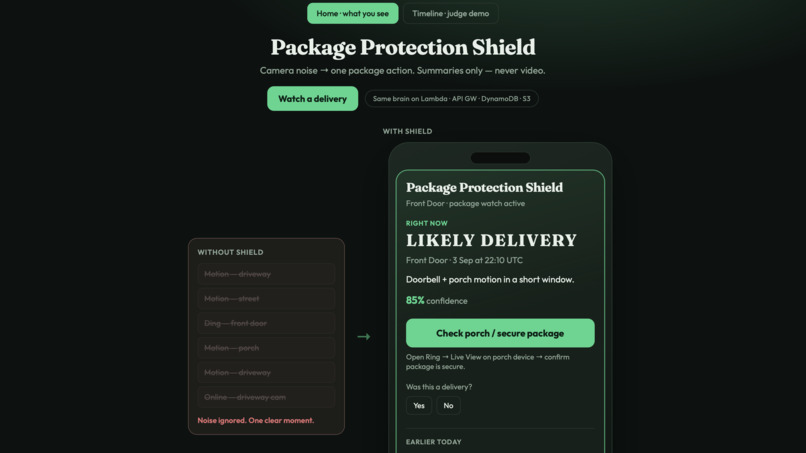
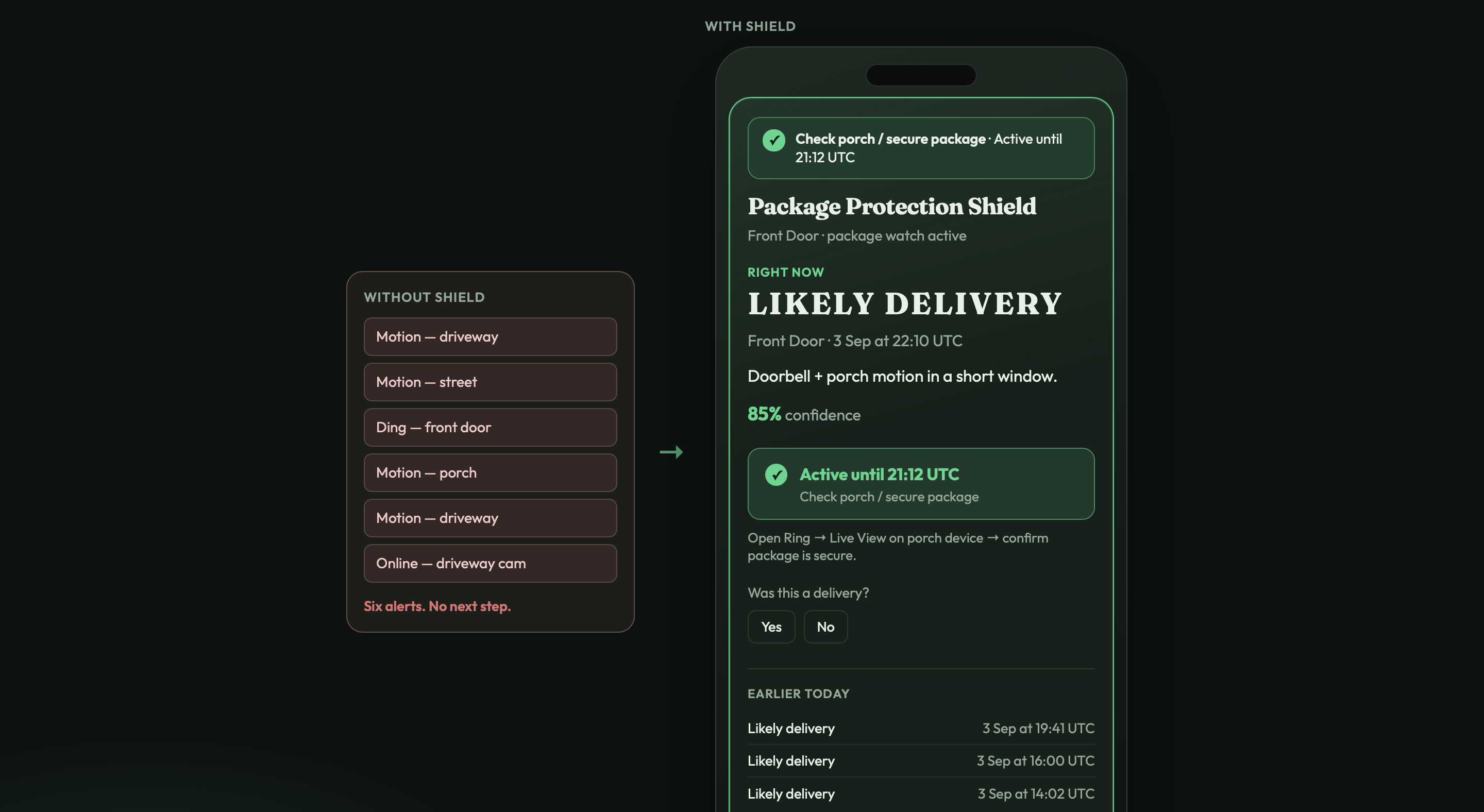
Watching a delivery
-
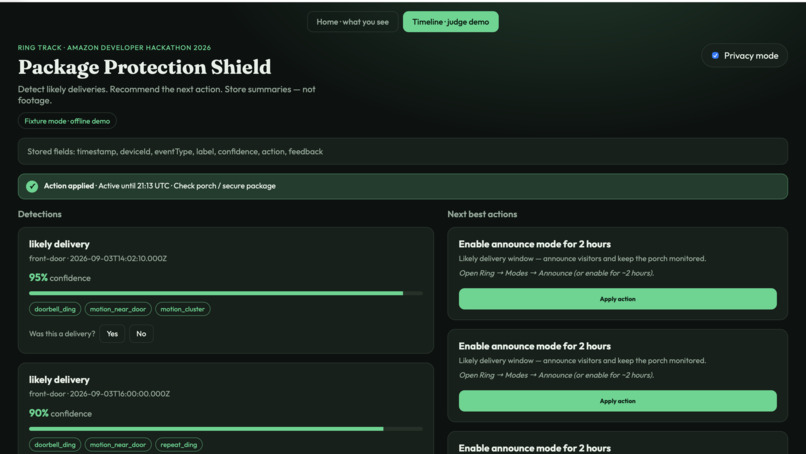
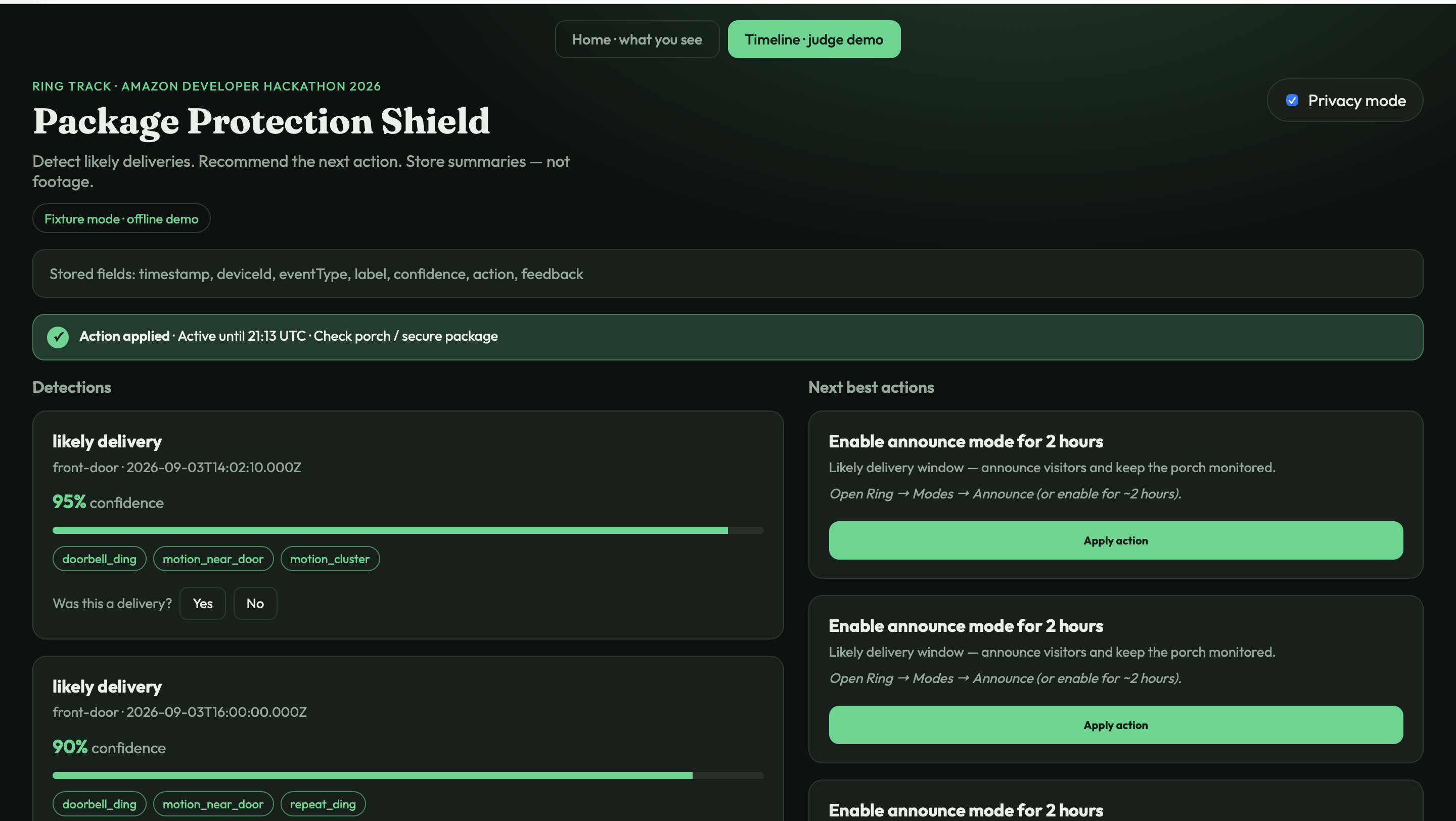
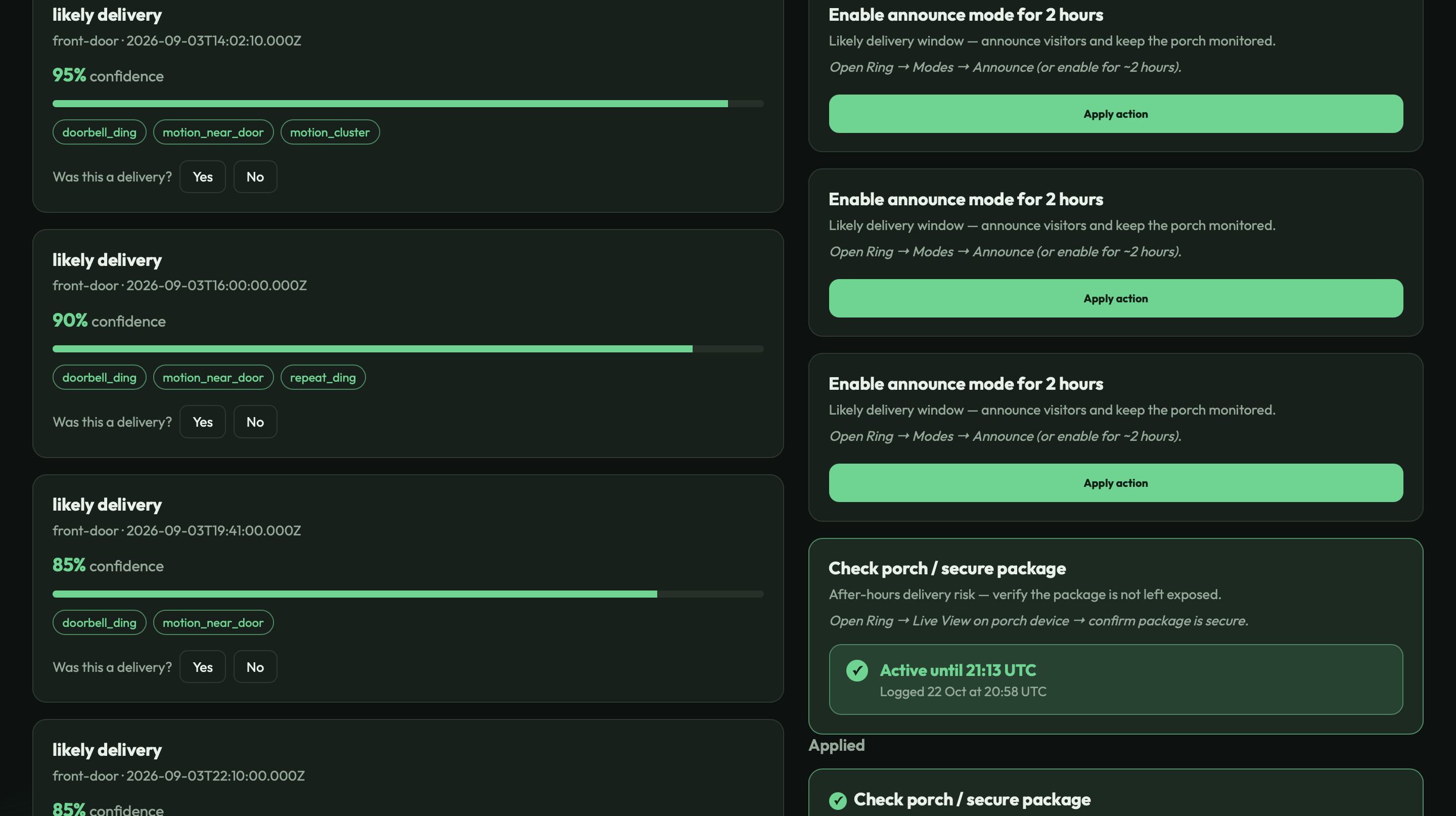
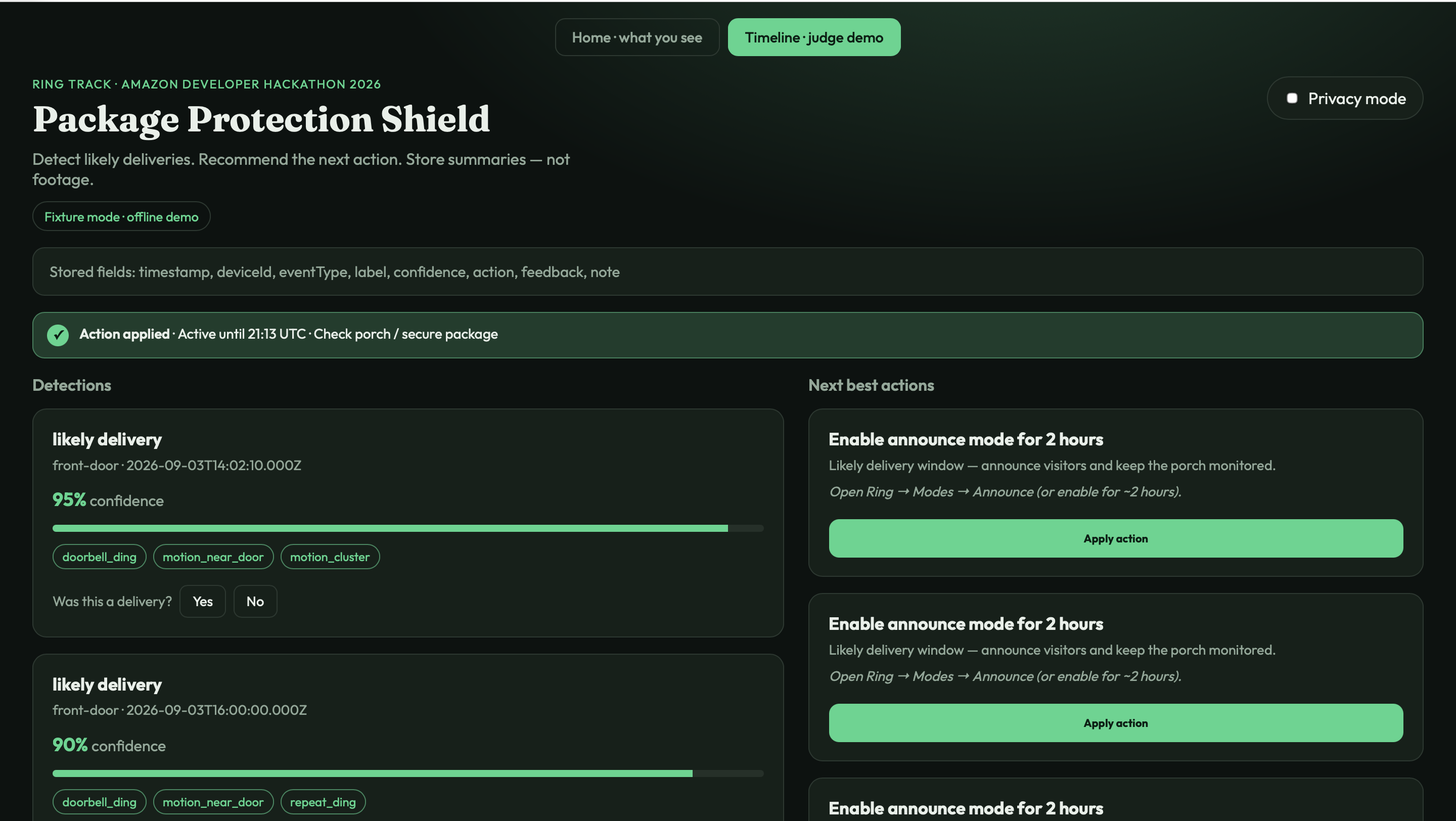
Judge demo page
-
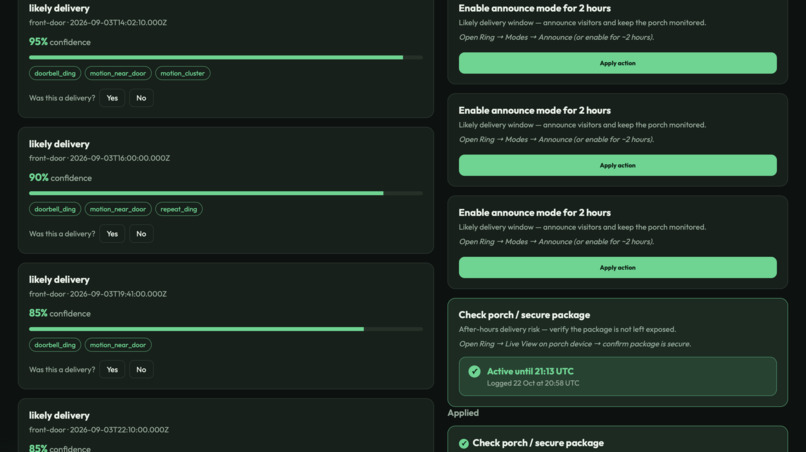
With privacy
-
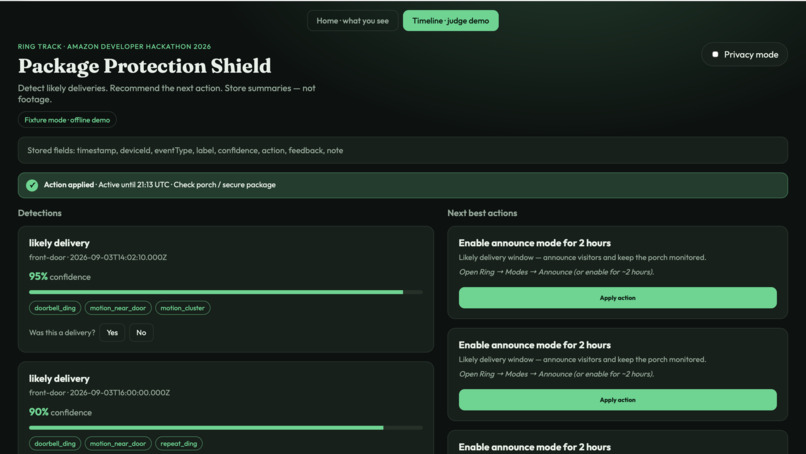
Without privacy
About Package-Protection-Shield What Inspired me
Like many people, I’ve experienced the frustration of having a package left on my doorstep, only to find it ruined by rain or missing entirely by the time I got home.
Right now, delivery companies try to solve item safety by wrapping everything in excessive plastic, heavy cardboard, and endless bubble wrap. It inflates shipping costs, creates mountains of trash, and still doesn't actually stop someone from taking your package or alert you if it gets damaged.
I realized that packaging shouldn't just be a passive piece of cardboard. I wanted to build a system where the doorstep itself becomes active using simple sensors and smart event tracking to recognize when a package is delivered, protect it in real time, and keep the homeowner informed without invasive monitoring.
How I Built It I built Package-Protection-Shield as a lightweight, event-driven system that turns raw doorstep sensor activity into clear, useful security actions.
Smart Event Detection: Instead of running heavy video analytics 24/7, MY system listens for natural sequence patterns like a motion trigger followed by a doorstep sensor reading to confirm a delivery. Risk Calculation:I created a simple mathematical model to evaluate how urgent or risky a situation is based on context: $$\text{Risk Score } (R) = w_1 \cdot \text{Motion} + w_2 \cdot \text{Proximity} + \text{TimeOfDayFactor}$$
If a package is dropped off late at night or left out during bad weather, the risk score spikes, immediately triggering a helpful safeguard action (like sending a quick notification or turning on a porch light). Privacy First:I purposefully designed the system to run on privacy-friendly sensor metadata. I don't record or store continuous audio or video feeds of people's front porches. AWS Integration:I mapped out the backend to run on AWS IoT Core, AWS Lambda, Amazon DynamoDB, and Amazon S3 so the entire service can scale efficiently across thousands of homes.
Real Challenges I Ran Into
- Dealing with Sensor Noise: Sensors are messy. Cars driving by, pets, or blowing leaves can constantly trip motion detectors. I had to write filtering logic so the system only reacts when sensor variance passes a meaningful threshold: $$\text{Signal Variance} > \text{Baseline Threshold}$$
This kept our database clean and stopped the app from spamming users with false alarms.
- Keeping It Helpful Without Being Invasive: It would have been easy to just throw a high-res camera feed at the problem, but nobody wants a camera tracking their every move. Finding the balance between accurate delivery detection and strict user privacy took a lot of trial and error with my event timing logic.
What I Learned
Keep It Simple:Asynchronous serverless functions are a lifesaver when dealing with unexpected bursts of IoT data. Software Over Waste: Smart software can solve physical security problems far better than extra layers of plastic packaging ever could. Focus on the User: Building with real user problems in mind helped us trim away unnecessary features and keep the core experience fast, reliable, and practical.
