
🌟 Inspiration
As students at the University of South Florida, we constantly saw our peers struggle with understanding course concepts, finding reliable study resources, and preparing for quizzes or exams—especially during crunch time. Traditional AI tools helped, but they required perfect prompts and lacked USF-specific context. That’s where the idea for PAAL (Promptless AI-Assisted Learning) was born:
A study assistant that understands our courses, our classes, and our struggles—without needing prompts.
We wanted to build something simple, fast, and genuinely helpful for students like us.
🧠 What We Learned
Working on PAAL taught us:
How to architect promptless AI workflows using structured templates and contextual data
How to connect a React frontend with an OpenAI-powered backend securely
How to create user-friendly UI components with a consistent design system
How to handle real-world problems like API latency, context injection, and error handling
How powerful AI can be when paired with thoughtful UX
We also learned how important it is to design tools that actually help students learn—not just generate answers.
🛠️ How We Built PAAL
We built PAAL in three major layers:
- Frontend (React + Vite)
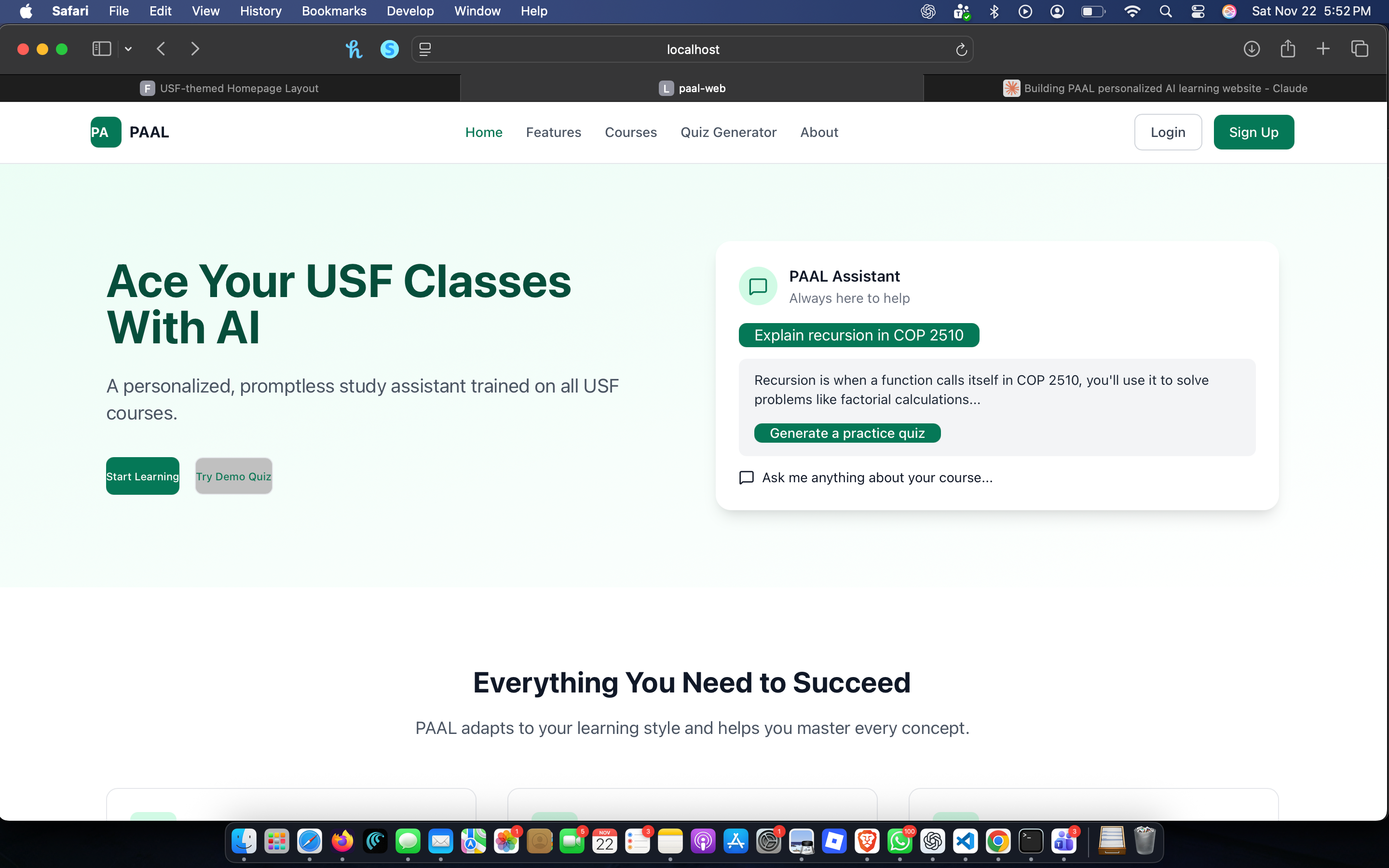
Clean USF-themed UI using Figma Make and custom CSS
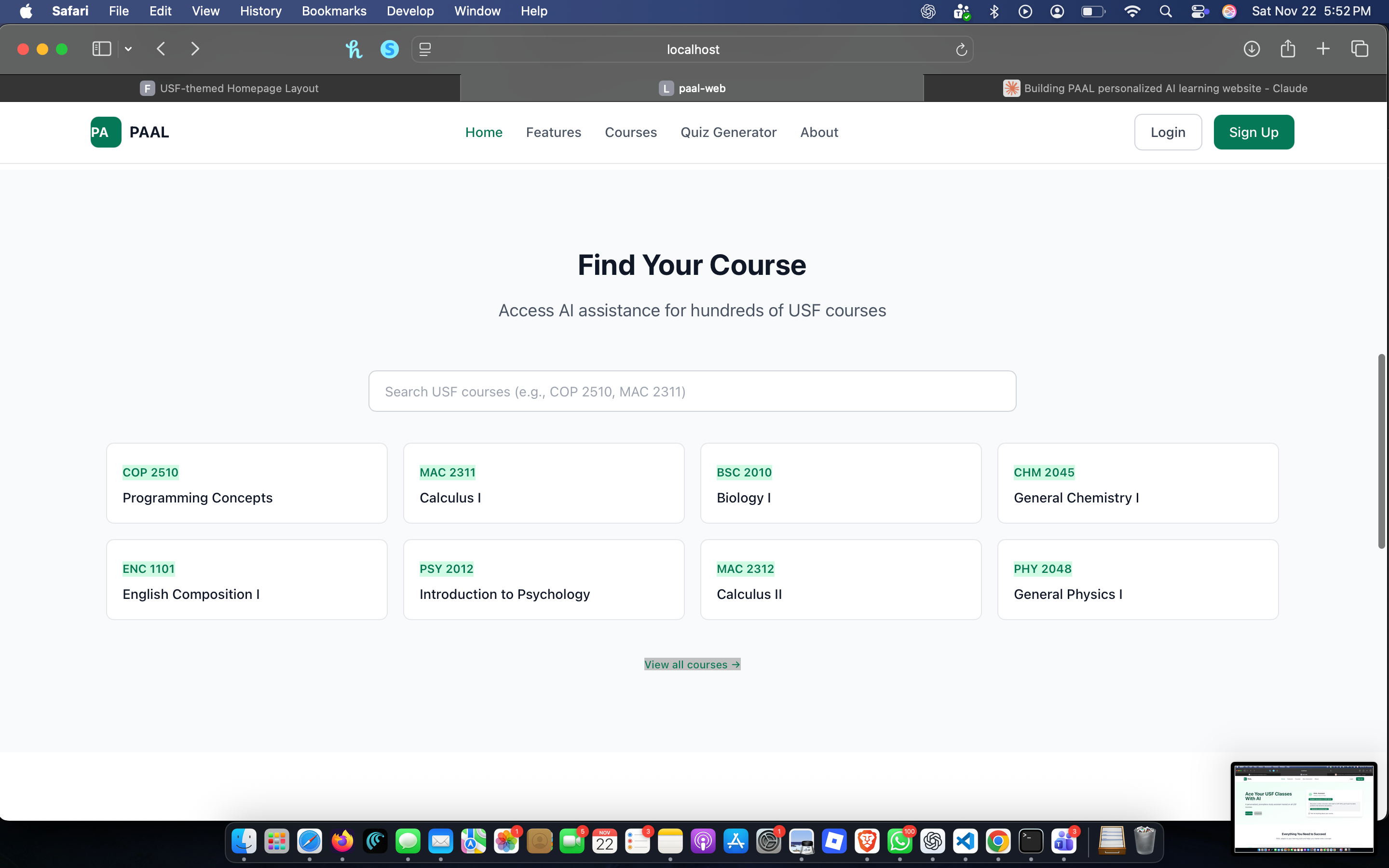
Course browser, quiz generator interface, and concept help UI
Interactive components for concept explanations and quizzes
- Backend (Node/Python + OpenAI API)
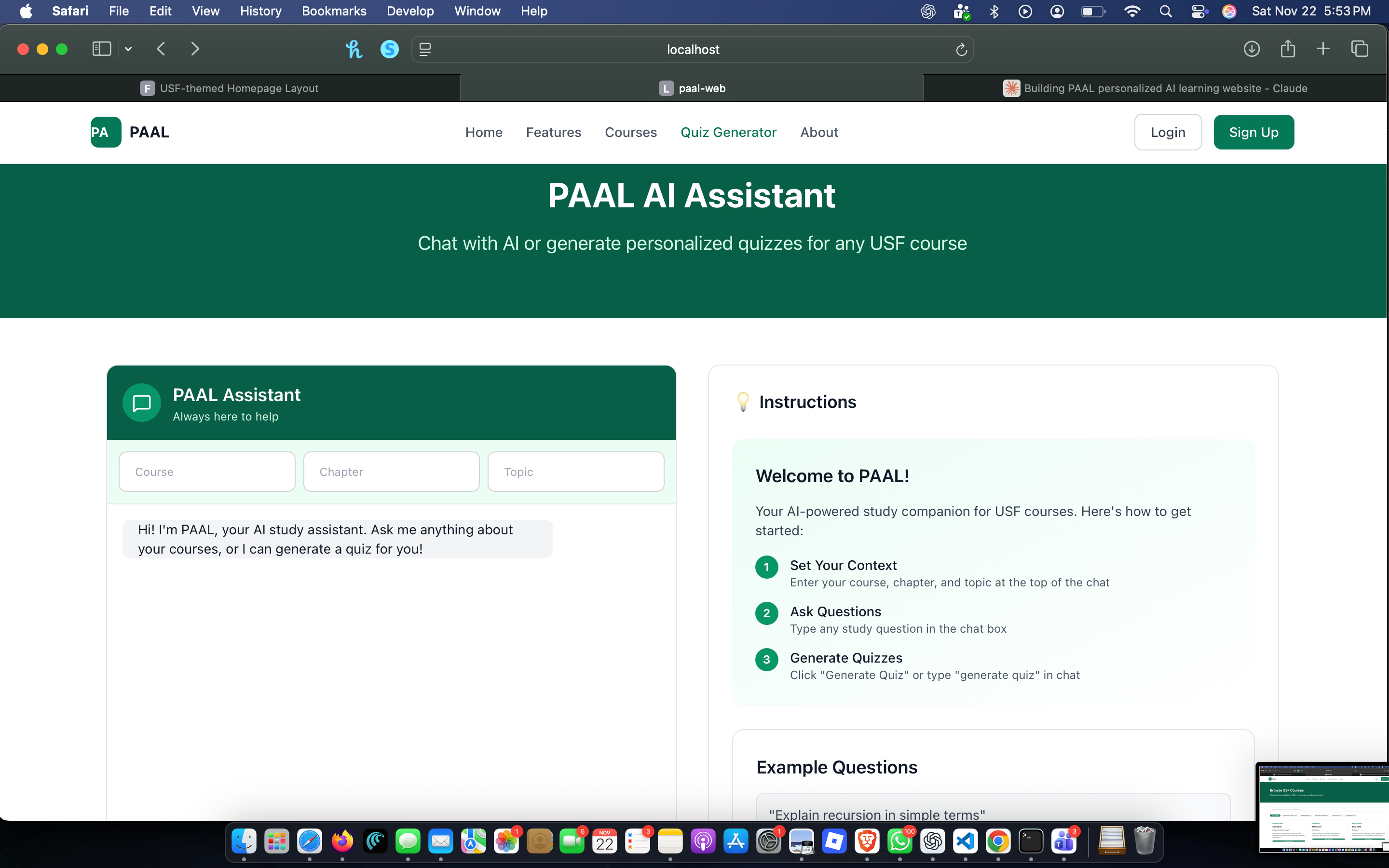
Promptless architecture: user selects course → backend adds course context → AI generates the output
Quiz generation pipeline producing structured MCQs in JSON
Explanation engine that delivers short, accurate, USF-specific answers
Environment variables stored in .env for safety
Error-safe API handler to avoid breakdowns during generation
- AI Logic
Customized prompts for USF courses
Dynamic difficulty scaling for quiz questions
Structured outputs for consistency
Low hallucination prompts with explicit constraints
🚧 Challenges We Faced
- Making AI “Course-Aware”
Generic AI answers weren’t enough. We had to design a system that adds USF-specific context dynamically without overwhelming the model.
- Promptless Input
Most AI tools rely heavily on prompts. We engineered a way for the system to work even with minimal input—just a course and topic.
- Frontend–Backend Sync
Handling quiz outputs, error cases, and reactivity required careful data shaping and state management.
- Time Constraints
Building a fully functional AI learning assistant in hackathon time meant prioritizing features while maintaining a clean user experience.
🎯 Final Result
PAAL delivers:
Instant concept explanations
Auto-generated quizzes with adjustable difficulty
Chapter summaries
A clean UI built for USF students
A foundation that can scale to any university
PAAL makes studying faster, simpler, and smarter—built by students, for students.## Inspiration
Built With
- openaiapi
- react
- typescript

Log in or sign up for Devpost to join the conversation.