-
-
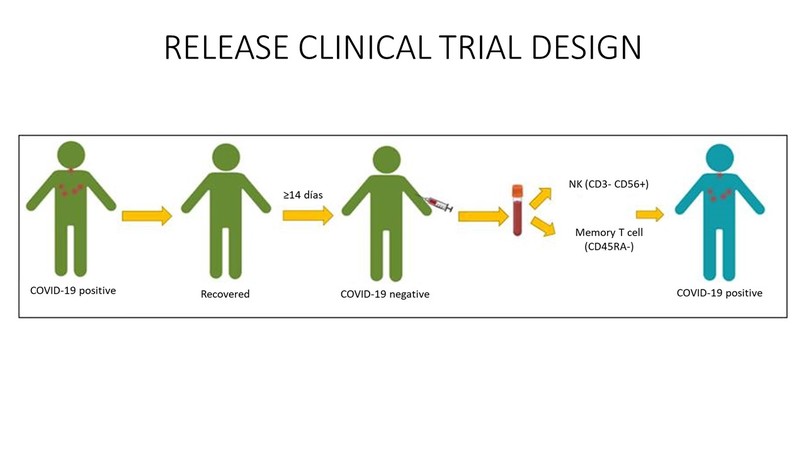
RELEASE HYPHOTESIS
-
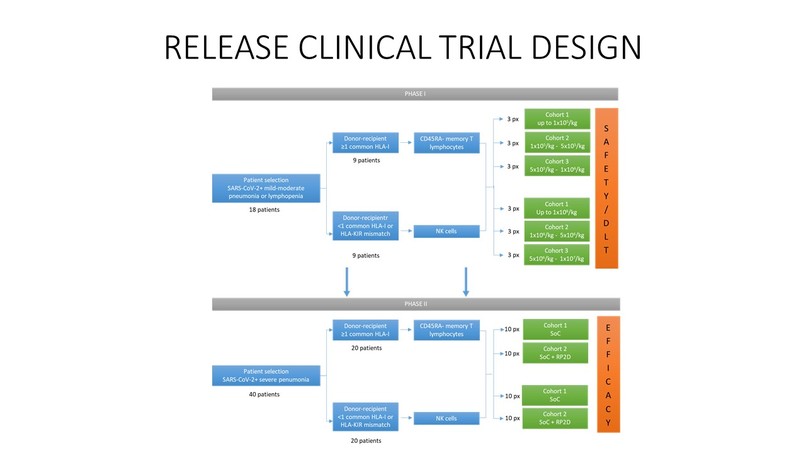
RELEASE PHASEI/II DESIGN
-
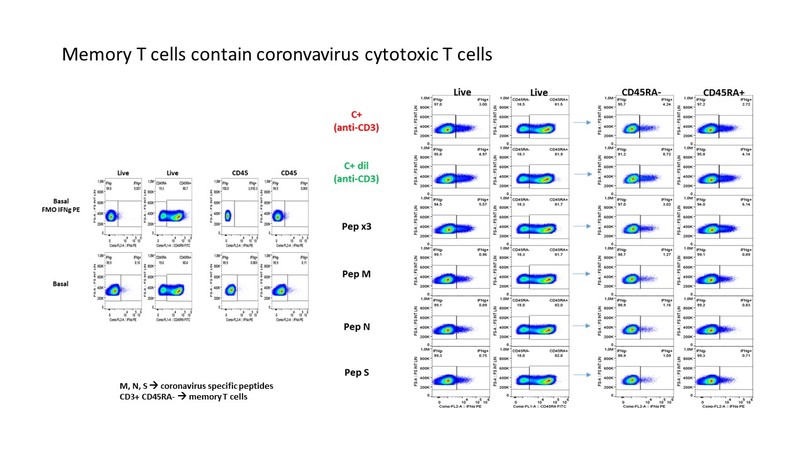
PRELIMINARY RESULTS
In the current global pandemic situation, there is an urgent need to act effectively against the devastating effects that SARS-CoV-2 is causing on the world population.
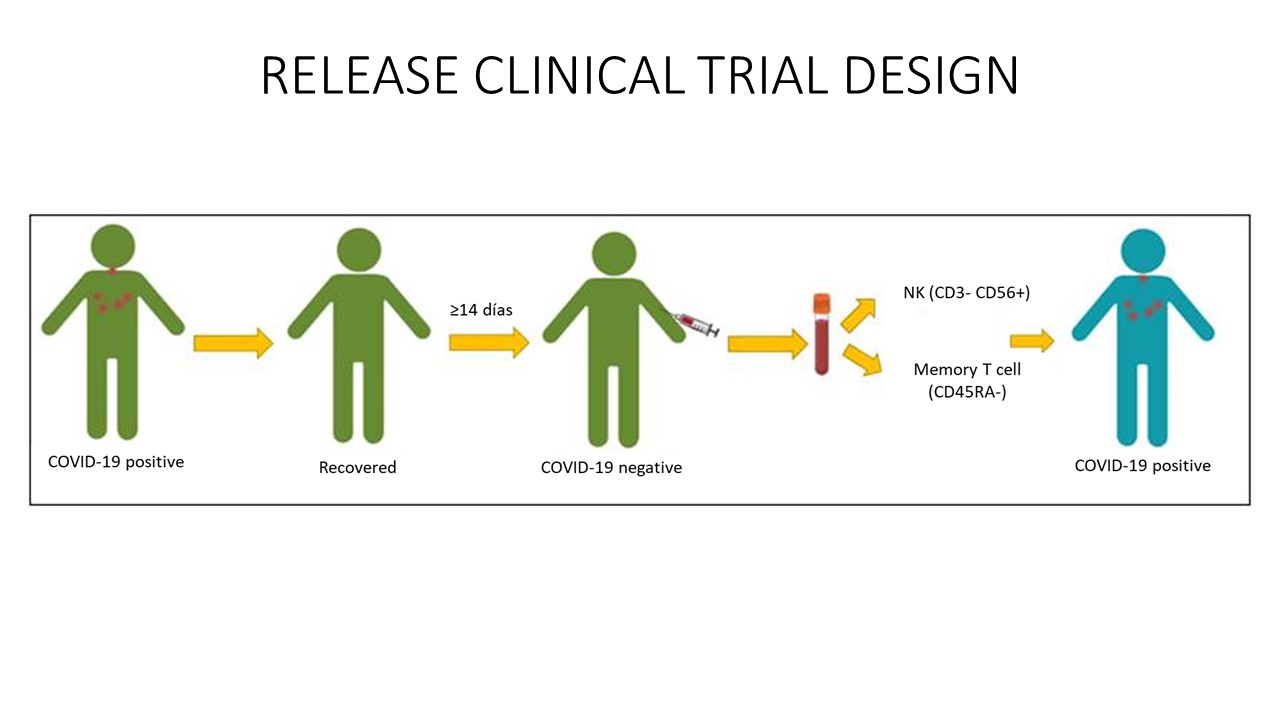
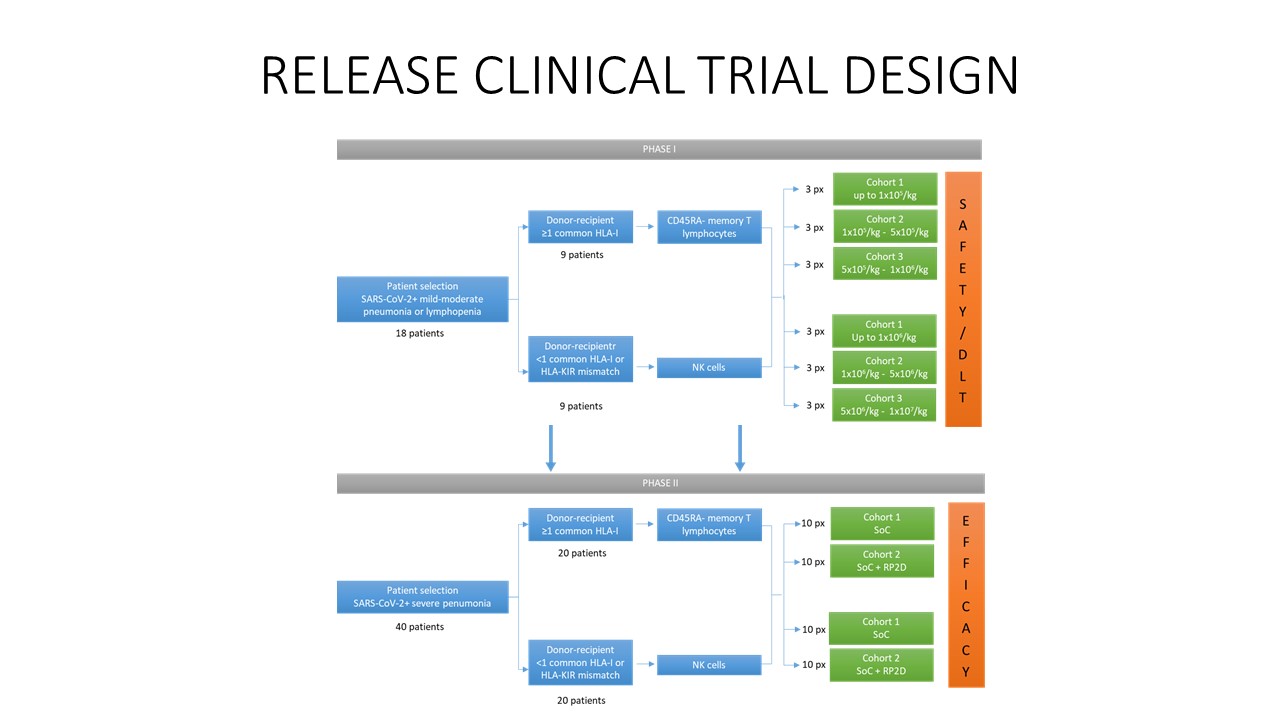
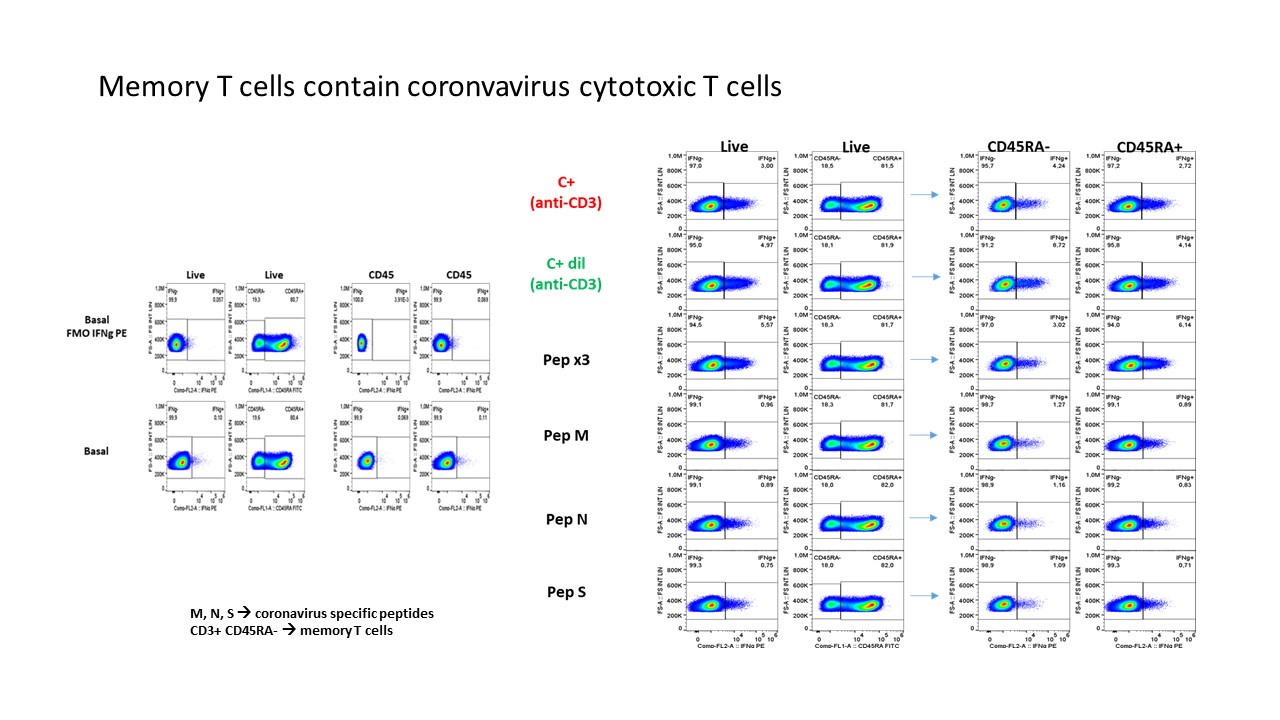
Many different treatments have been tried so far, from traditional Chinese medicine to anti-retroviral agents with different results that are not always positive. Nowadays, there is no effective cure for the disease caused by SARS-CoV-2. In this project we propose a new strategy using cell therapy from healthy donors who have survived the coronavirus. SARS-CoV-2 attacks with greater virulence elderly and morbidities-associated people. These people normally have a weakened immune system. The number of immune system cell that usually fight against infections, including T lymphocytes and natural killer (NK) cells, are decreased in patients infected with SARS-CoV-2. This makes this group very vulnerable and in many cases it is unable to overcome the disease, causing death. NK cells are lymphocytes of the innate immune system with the ability to kill virus-infected cells. The role of NK cells has already been demonstrated in another coronavirus infection (Severe Acute Respiratory Syndrome (SARS)) that originated in China in 2002, where the number and function of NKs correlated with the degree of SARS severity. Besides, NK cells play an active role in the control of other viruses such as human Herpes virus 6 (HHV-6) and the human immunodeficiency virus (HIV). In the case of T lymphocytes, there is a population of T lymphocytes that acquire memory after exposure to an antigen and, by finding the same antigen successively (in this case SARS-CoV-2), eliminate it in a faster and more efficient way. Both NK cells and T lymphocytes are found at low levels in patients infected with SARS-CoV-2 so it is necessary to balance the immune response and improve specific antiviral cell activity. We propose the use of cell therapy in patients with a moderate-severe prognosis due to infection, pneumonia and / or lymphopenia by SARS-CoV-2. These patients present a dysregulation in their immune system with T cell lymphopenia, especially NK cell and memory T cell, and a state of hyper inflammation. Patients recovering from COVID-19 are the ideal donors because they have memory immune cells against SARS-CoV-2. In this way, the infusion of memory NK and T cells from these donors will increase the reservoir of cells with cytotoxicity against cells infected with the virus while increasing memory cells favoring a faster response to a stimulus with a previous encounter. In this innovative, non-pharmacological phase I / II clinical trial, cells from donors that have recovered from COVID-19 and are disease-free for at least one month will be infused in COVID-19 patients with a moderate-severe diagnosis. This is a randomized study to determine the safety, tolerability, alloreactivity and efficacy of the therapy with allogeneic cells NK (arm 1) and memory T (arm 2). The allocation in each arm will be given by the donor-recipient biology. A total of 58 patients will be included in this trial. In the first phase where safety will be studied, it is planned to include 18 patients with dose escalation: 9 patients per arm (3 patients in each cohort). After choosing the appropriate dose, a total of 40 patients will be included in phase II where the efficacy of the treatment will be evaluated and 20 patients per arm will be included (10 will receive the selected dose in phase I for NK cells and 10 will receive the selected dose in phase I for memory T lymphocytes). What we hope with this study is a quick recovery of the patients because the NK cells act quickly after a viral infection, and the memory T lymphocytes will offer greater protection to the patient by increasing their effector function after a rencounter with SARS-CoV-2, in the same way that these strategies are being effective in the control of infections by Epstein Barr virus (EBV), cytomegalovirus (CMV), human herpes virus type 6 (VH-6), when we use them in the context of hematopoietic progenitors transplantation. The results of this project will impact society in several ways: thousands of lives will be saved, hospital beds will be released quickly, considerably reducing the costs in healthcare and in the economy of the countries. Due to the new challenges that this virus represents for society and science, new innovative treatments are necessary where others have failed. Cellular therapies are safe, inexpensive, and have shown effectiveness in other diseases such as cancer.
SLACK CHANNEL: team_release_gicitt_hulp ; https://euvsvirus.slack.com/archives/G012QRJQ24U


Log in or sign up for Devpost to join the conversation.