-
-
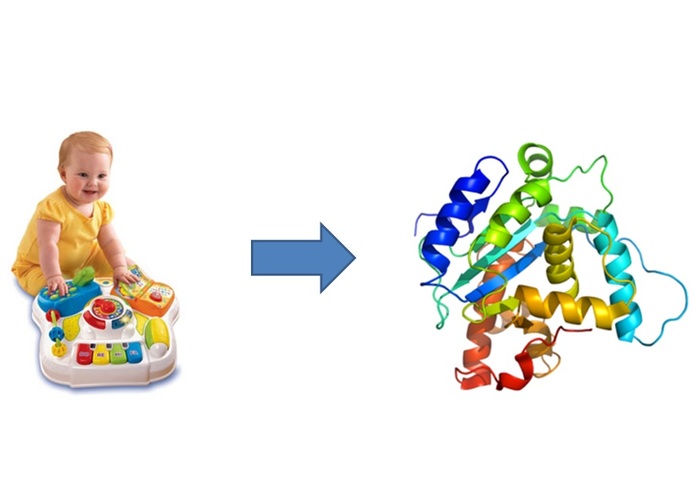
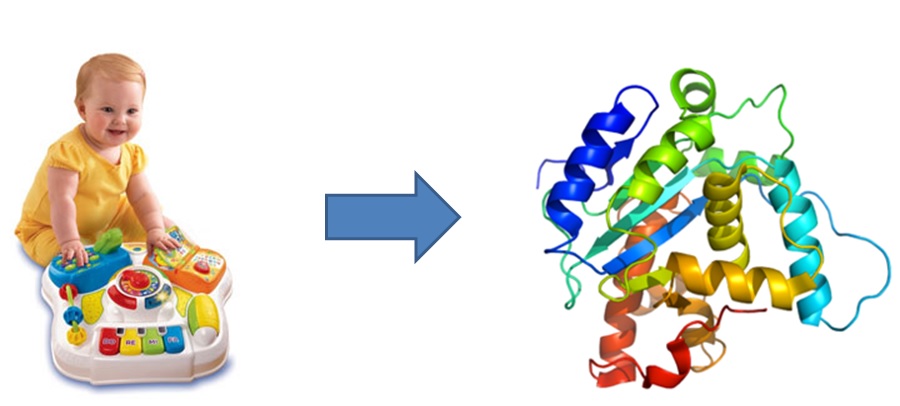
Protein Engineering like Child's Play
-
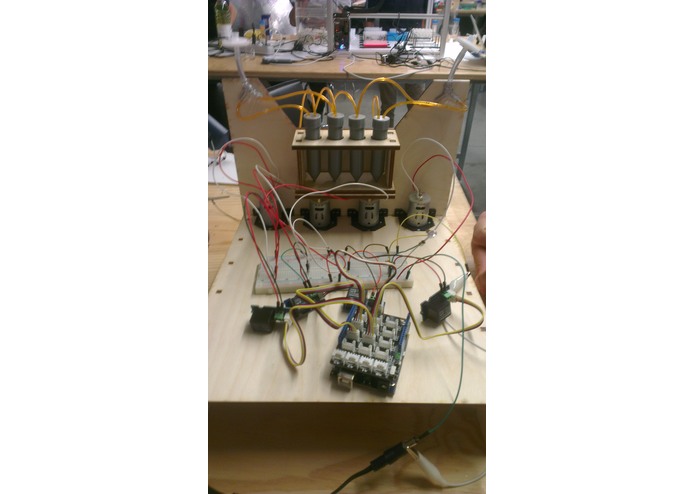
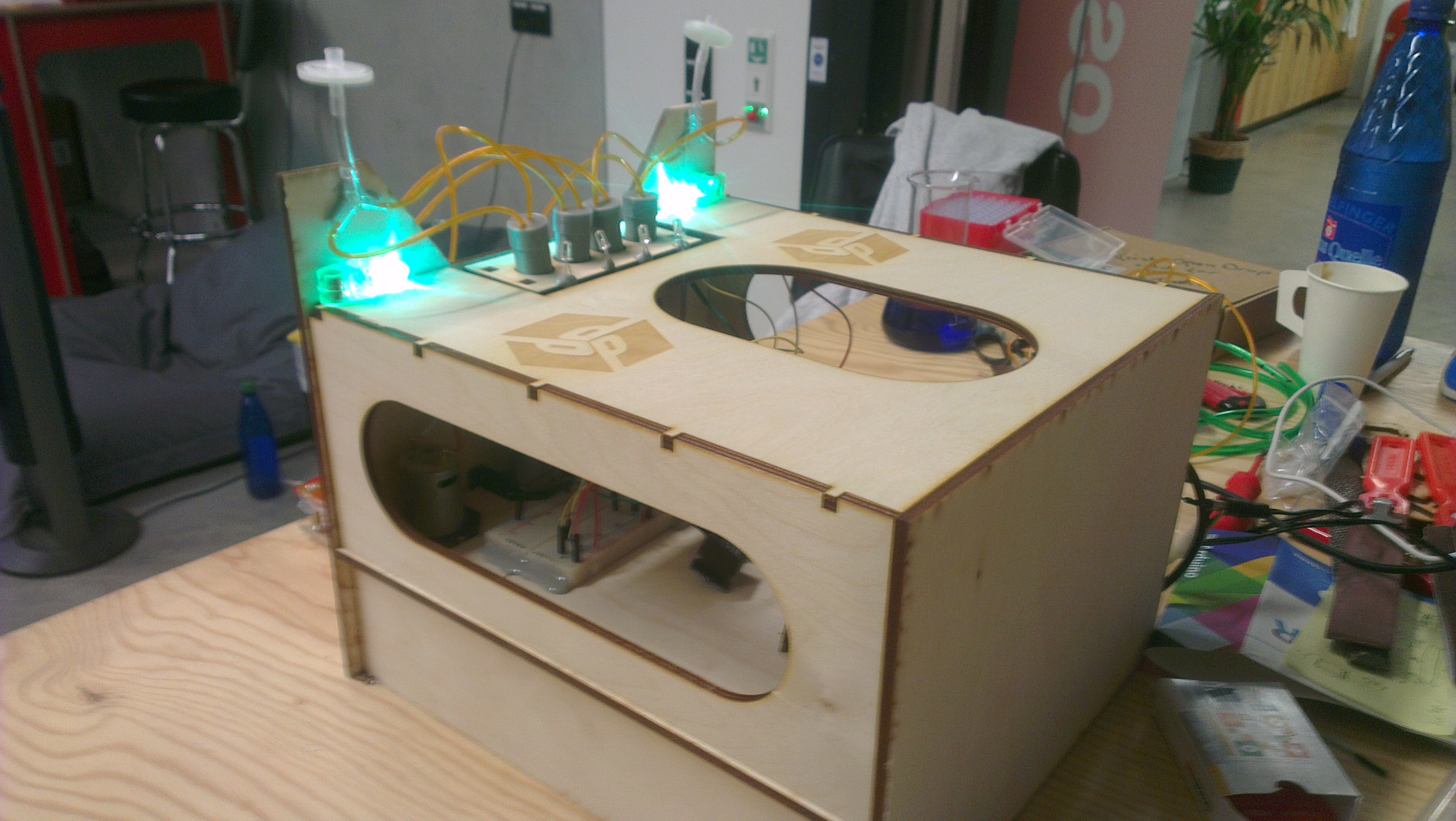
Open Back
-
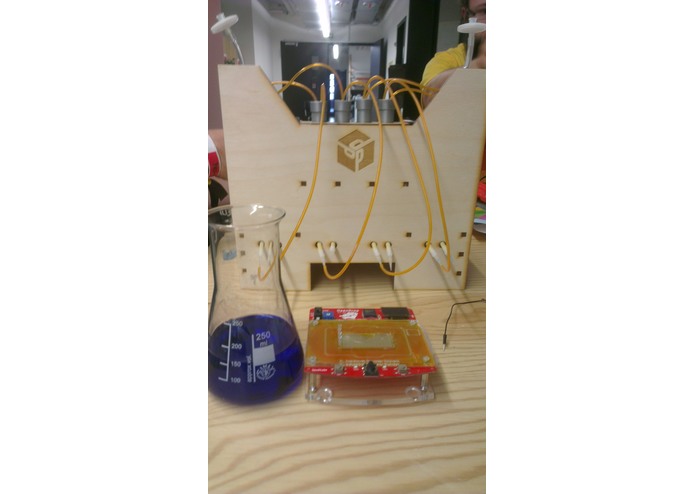
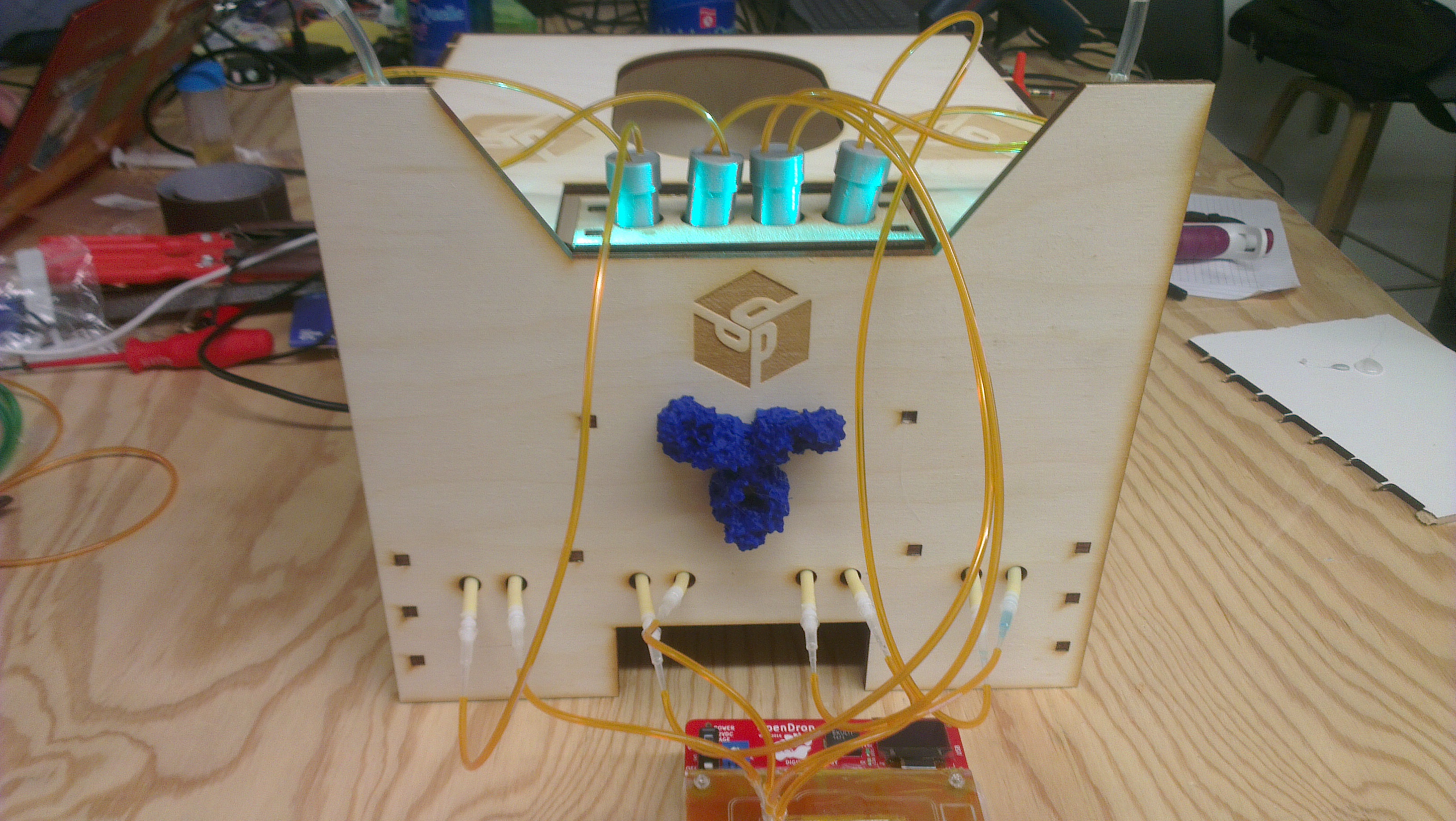
Front
-
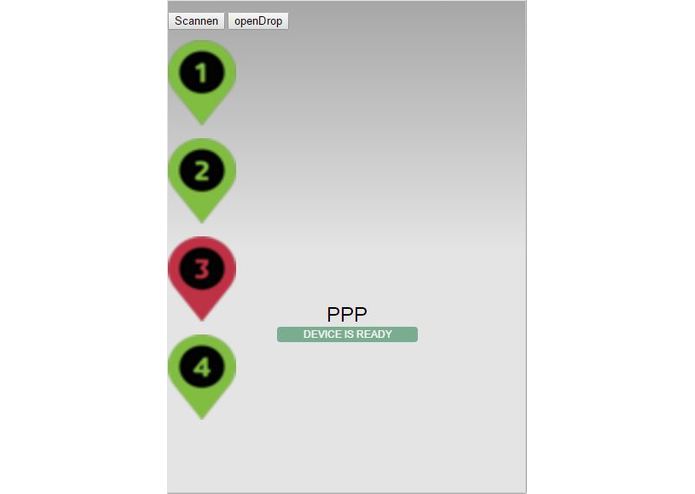
buttons to control the pumps
-

-
-
-
-
-
-



Inspiration
The world needs nanotechnology. The world needs innovative medicines that are cheap and easy to prototype. We give you the world's first personal protein printer.
What it does
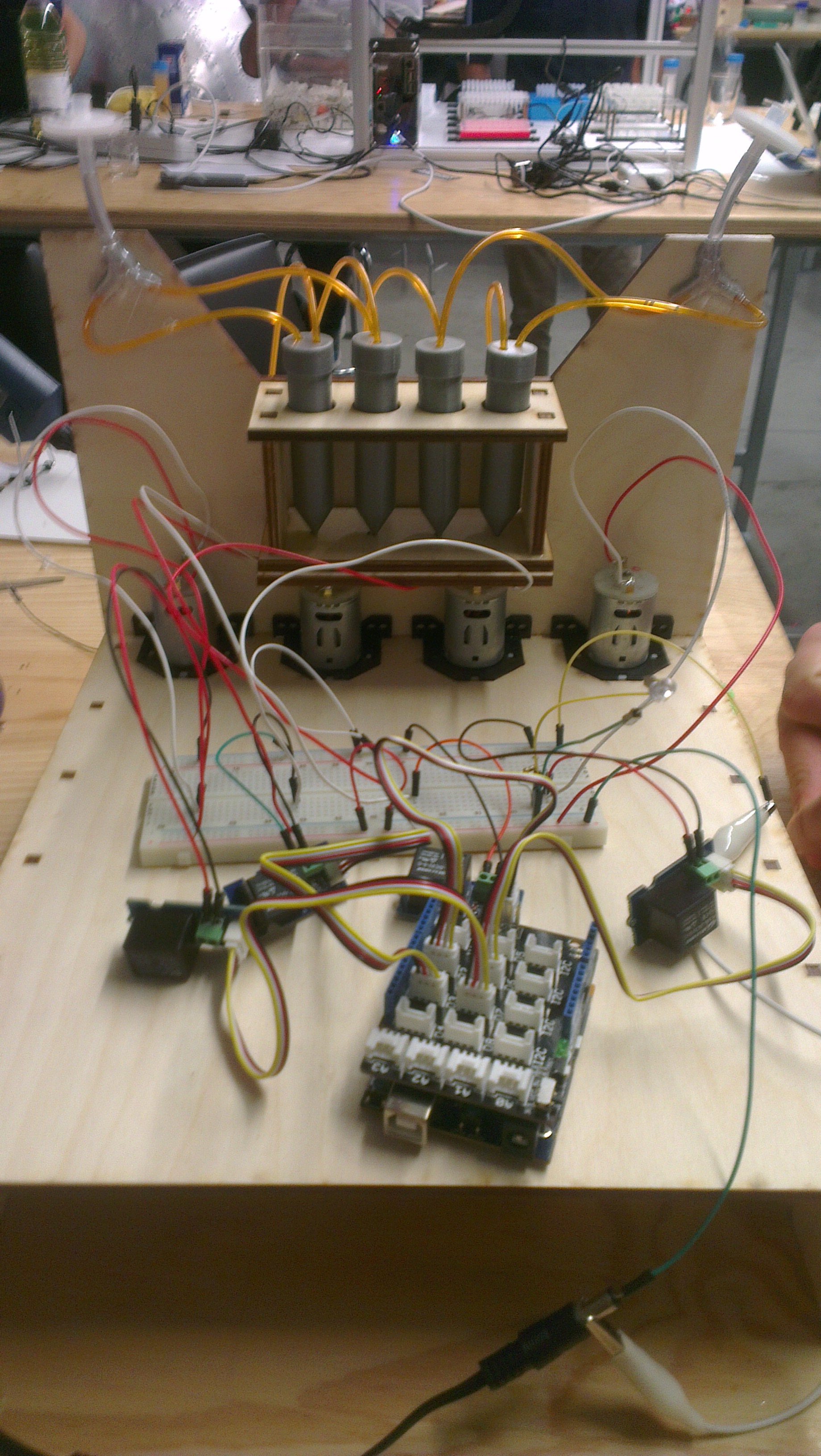
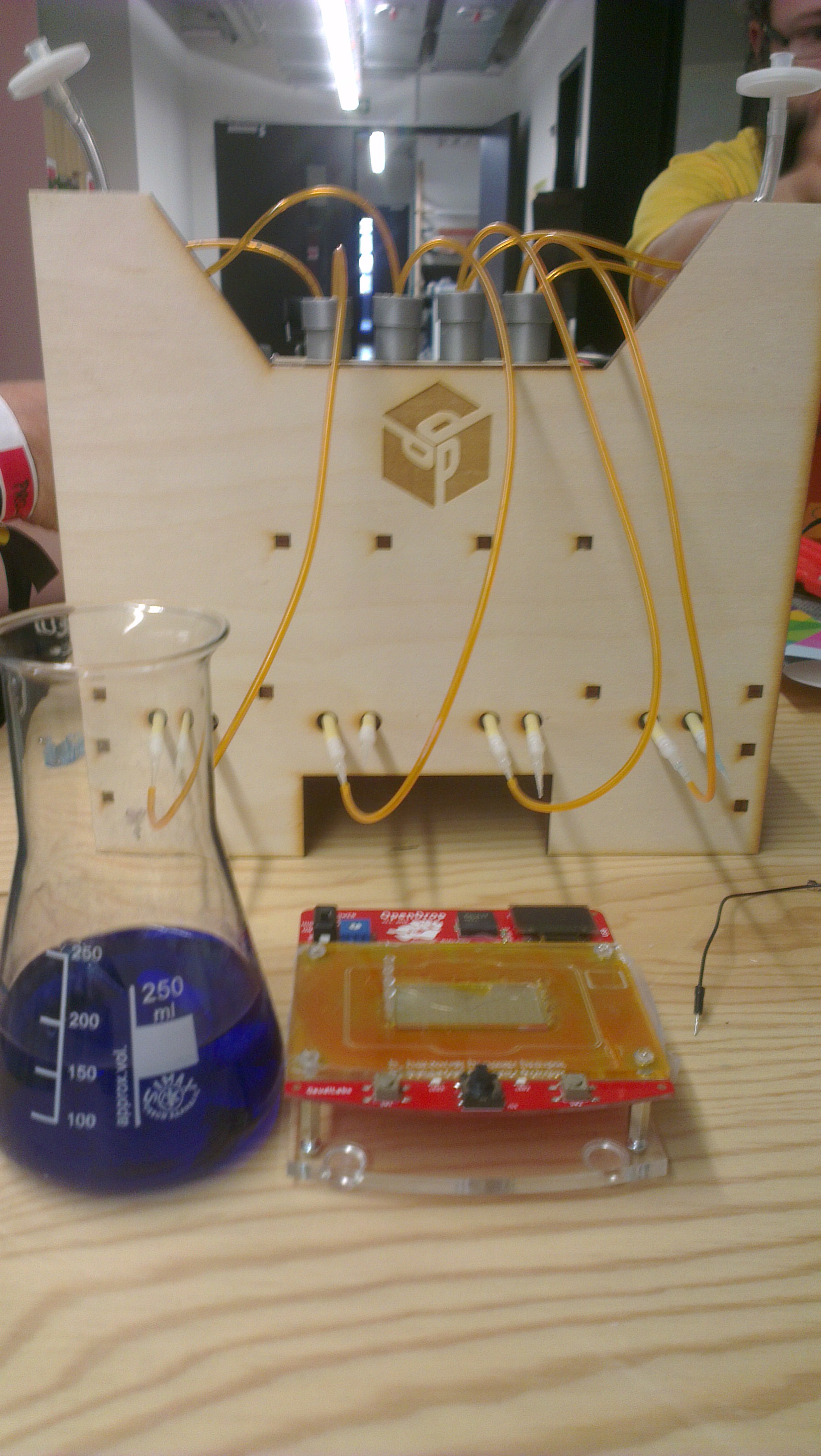
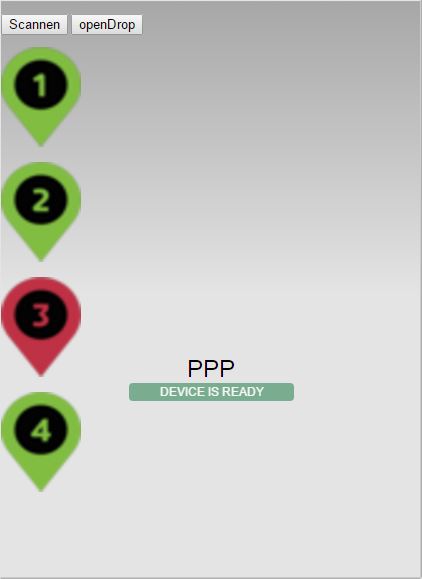
Hacking the biological translation machinery by an automated combinatorial microfluidic system. We build an app to control the entire pumping system from your smartphone. Each chemical reservoir is connected to a peristaltic pump that applies precise amounts of microliters on a microfluidic chip, where individual droplets can be moved by an array of switchable electrostatic fields, termed "fluxels" (as a reference to pixels). Single droplets can thus be merged to initiate chemical reactions, both manually and automatically (however the software sees fit).
How we built it
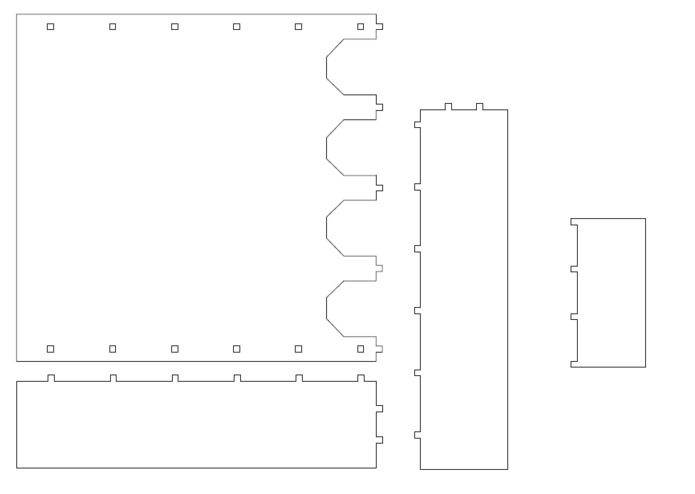
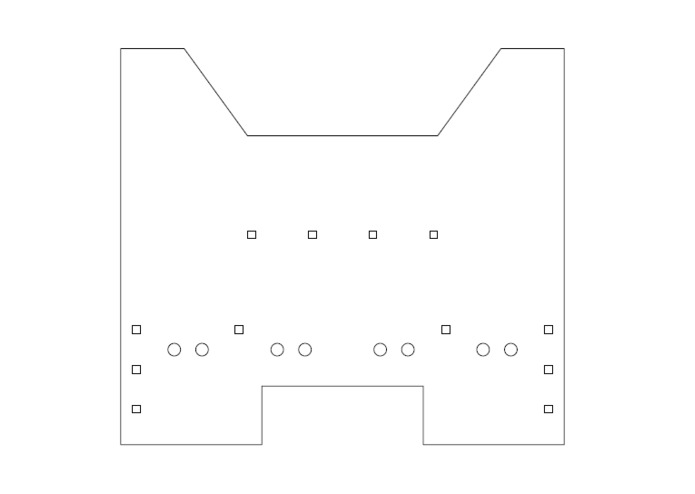
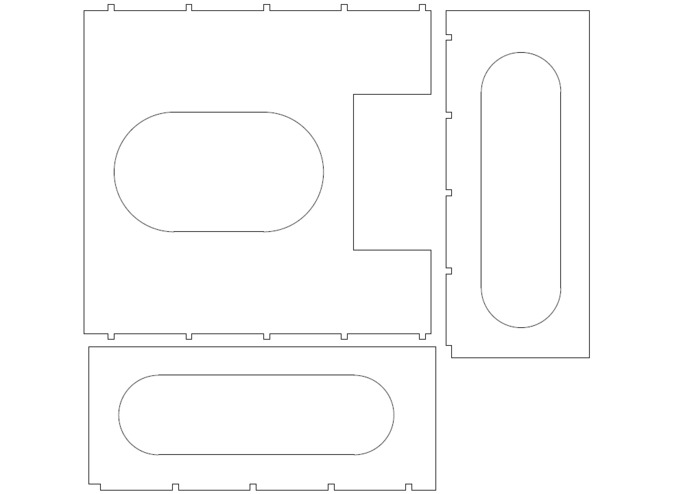
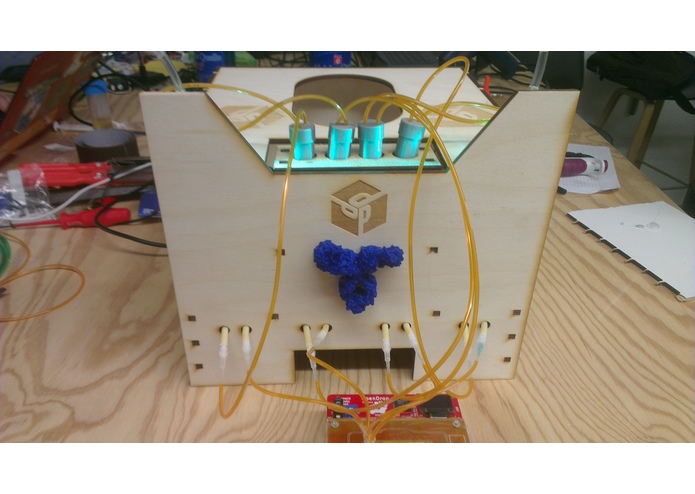
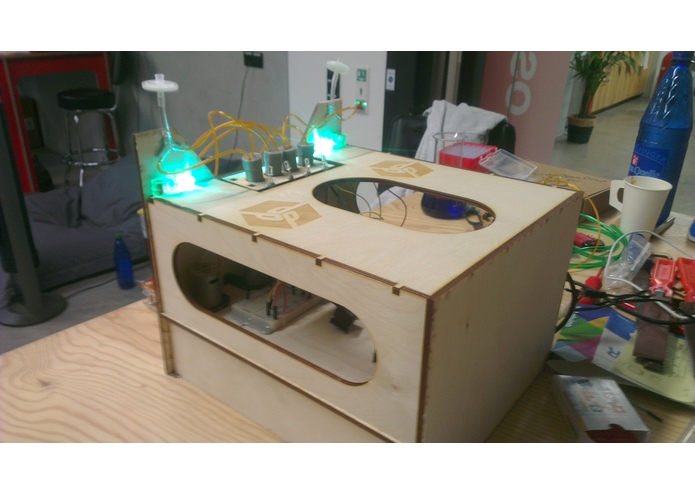
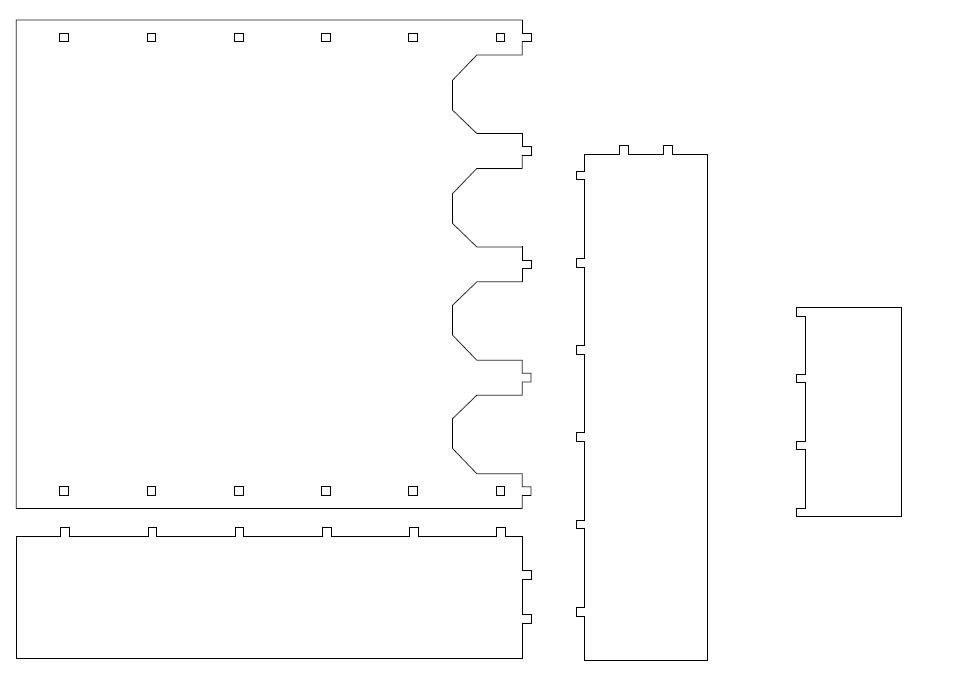
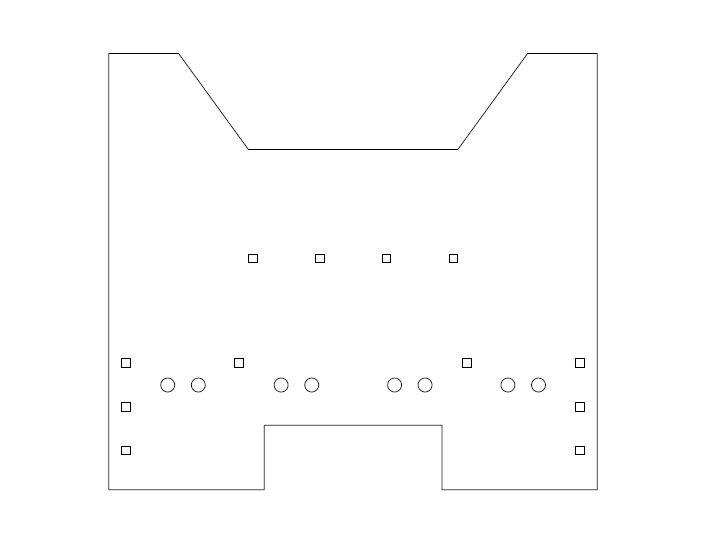
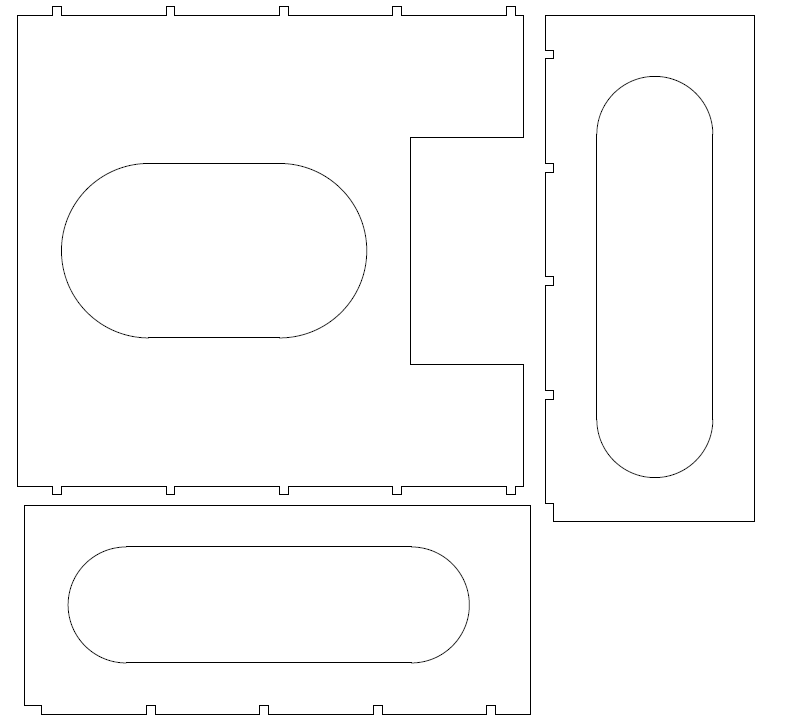
Arduino-controlled pumps run the flow of differing reservoirs containing parts of the translation machine to be re-assembled in a novel way. The combinatorial synthesis is achieved by moving tiny droplets on individually addressable "fluxels". The Arduinos involved use Bluetooth to connect to our custom app. We used teflon-foil to achieve a hydrophobic surface for droplet movement. We also applied air filters to ensure that there won't be any contamination in the reservoirs. The casing was sketched on the computer and laser-cut. Our reservoirs were custom-designed and 3D-printed.
Challenges we ran into
Leaky pumps, wireless real-time communication with the OpenDrop microfluidic system.
Accomplishments that we're proud of
Self-made falcons and tube racks. Printed IgG1 antibody.
What we learned
There can't be enough RedBull.
What's next for P^3 - Personal Protein Printer
World Domination.
Built With
- 3d-printing
- air-filters
- arduino
- breadboard
- c
- genuino-shield
- html5
- javascript
- laser-cut-casing
- leds
- opendrop
- peristaltic-pump
- rasberry-pi
- relais
- teflon-foil


