-
-
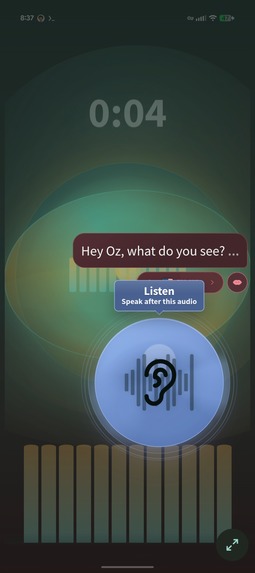
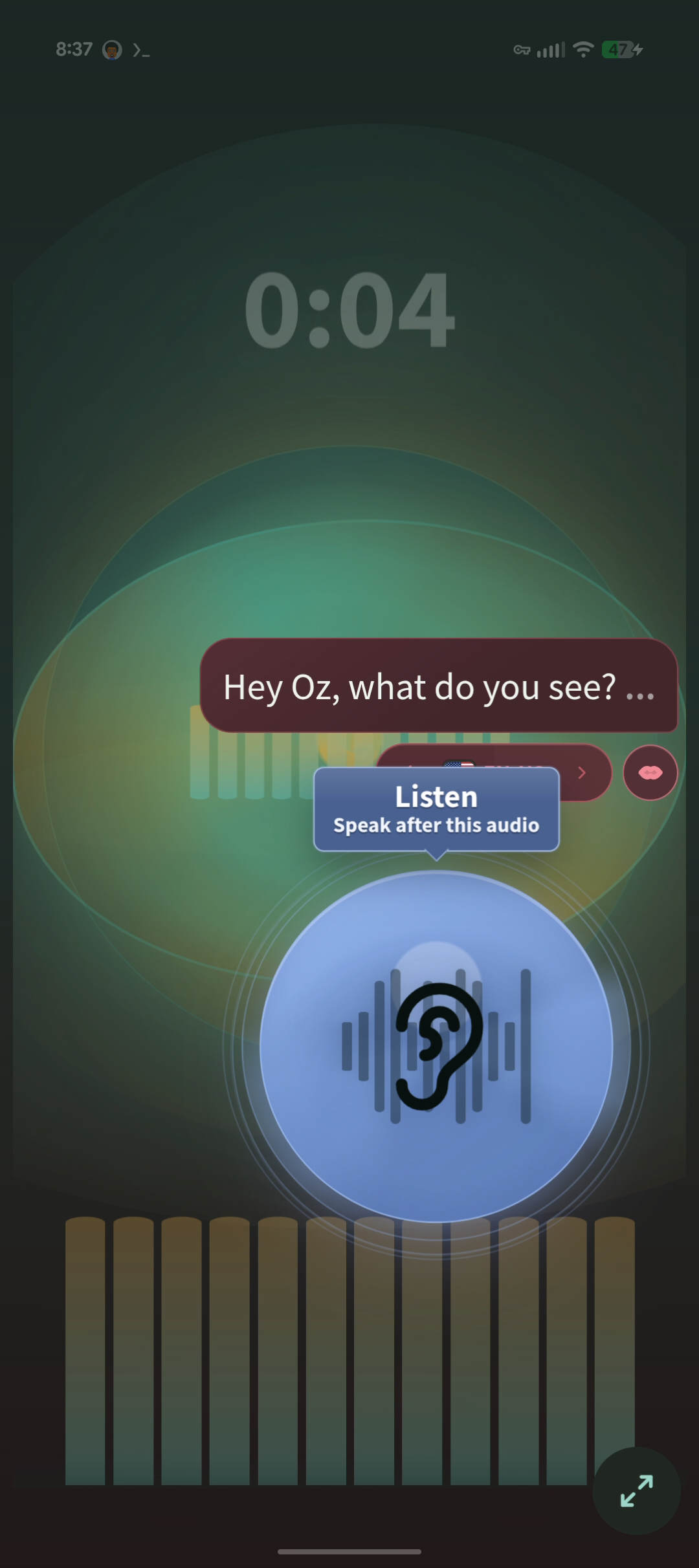
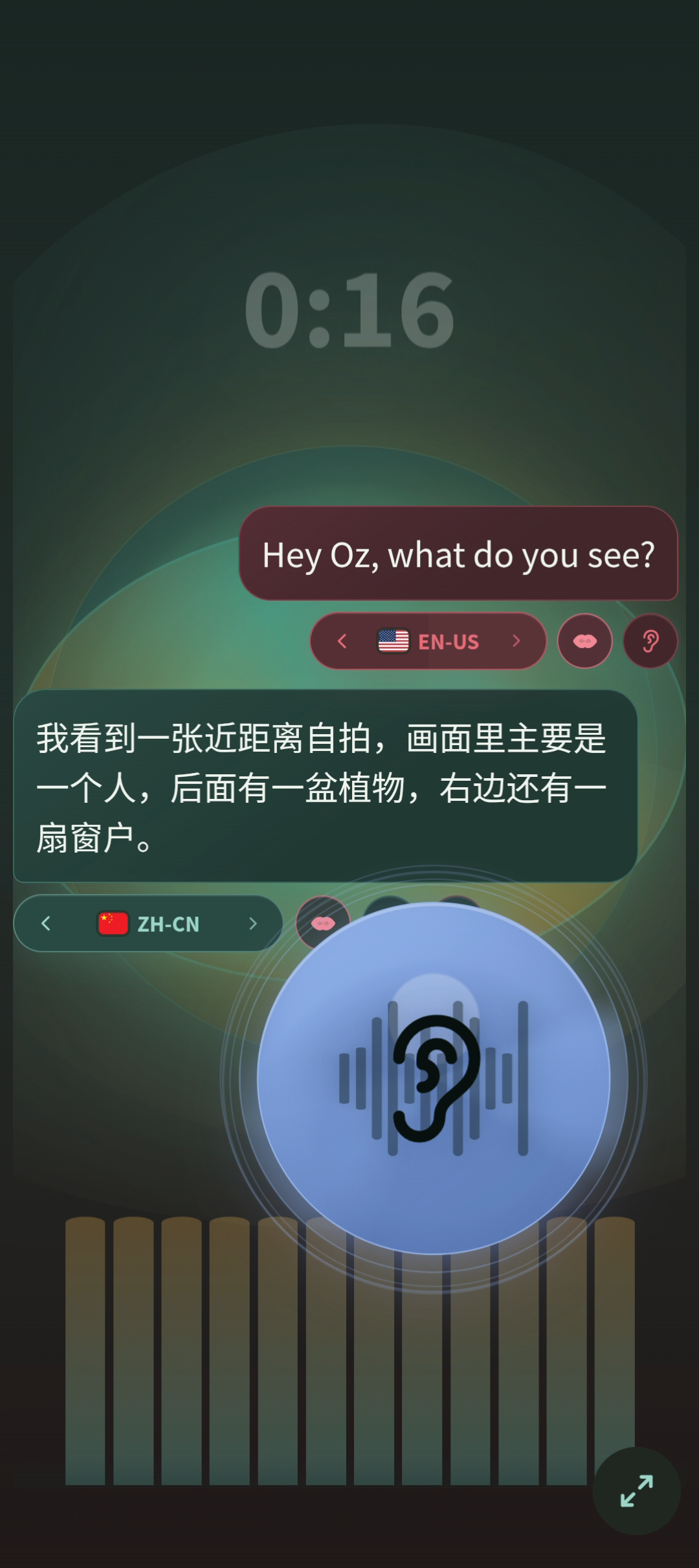
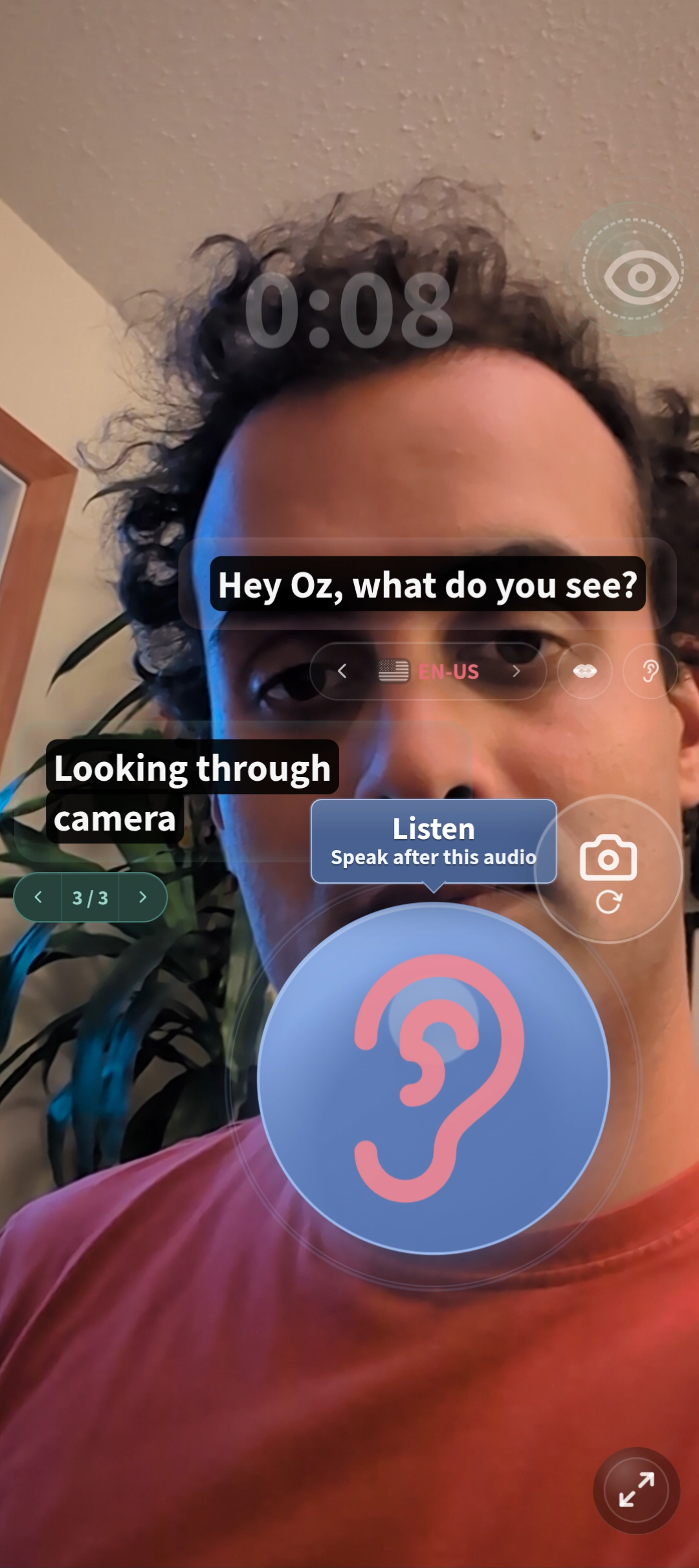
hey ozzz what do you see?
-
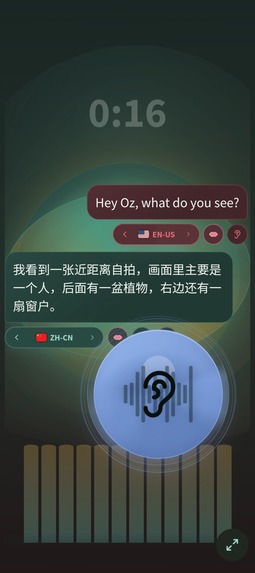
I'll look through your camera
-
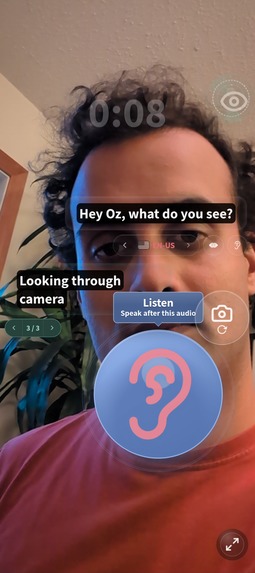
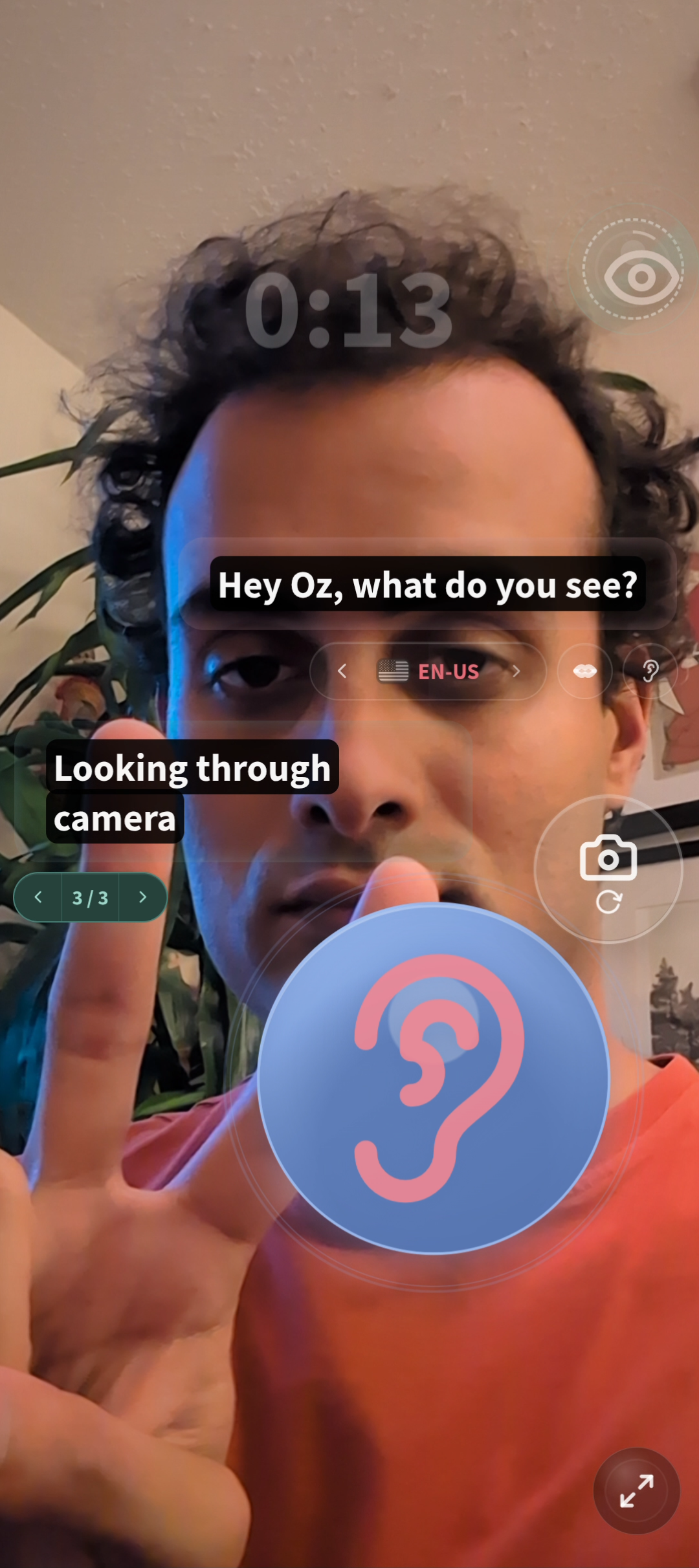
Looking through camera
-
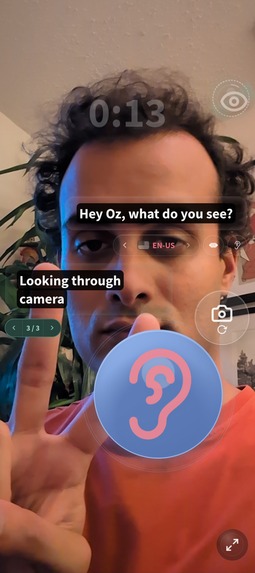
looking through camera 2
-
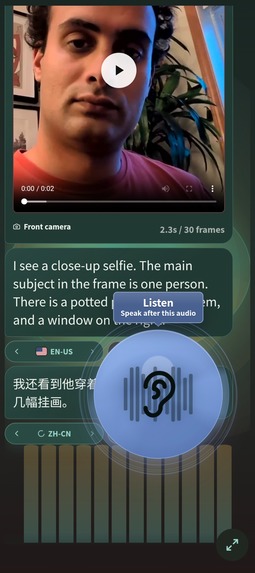
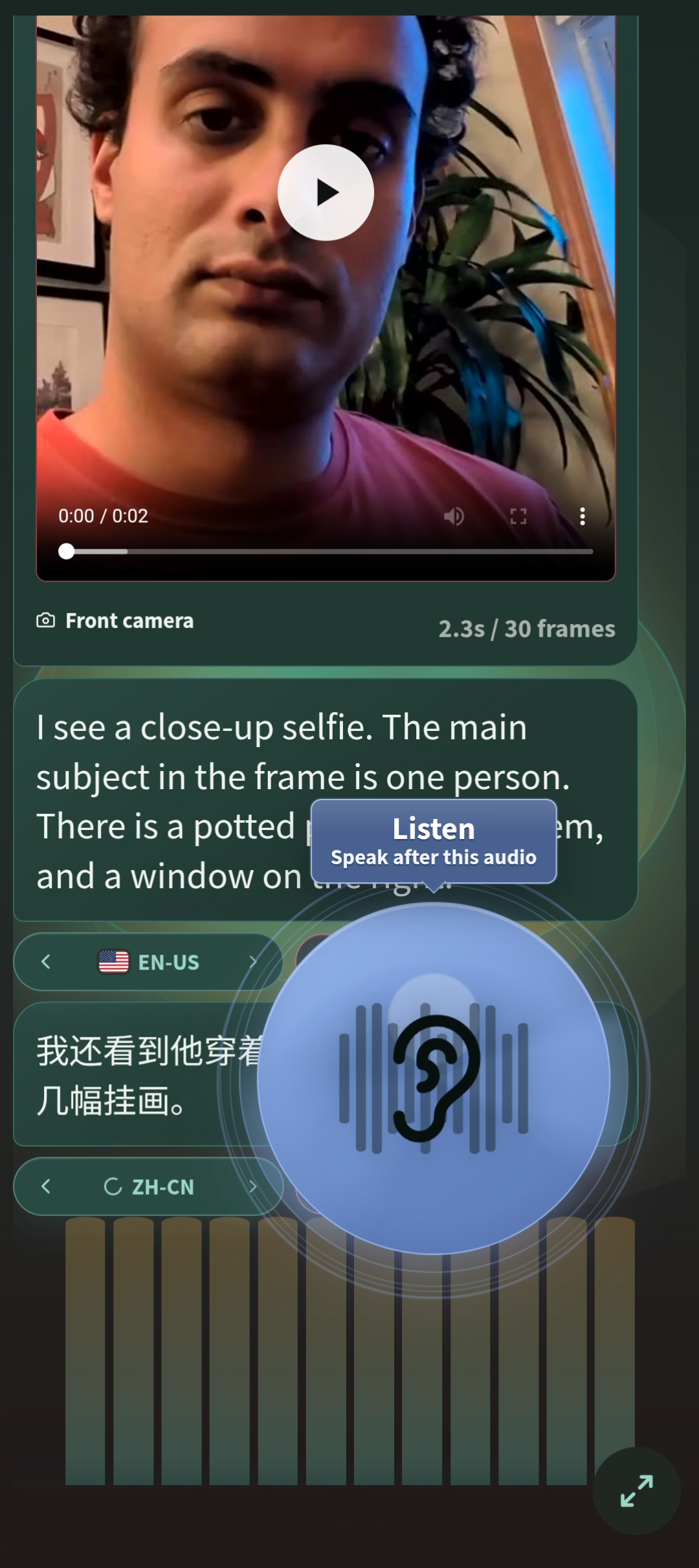
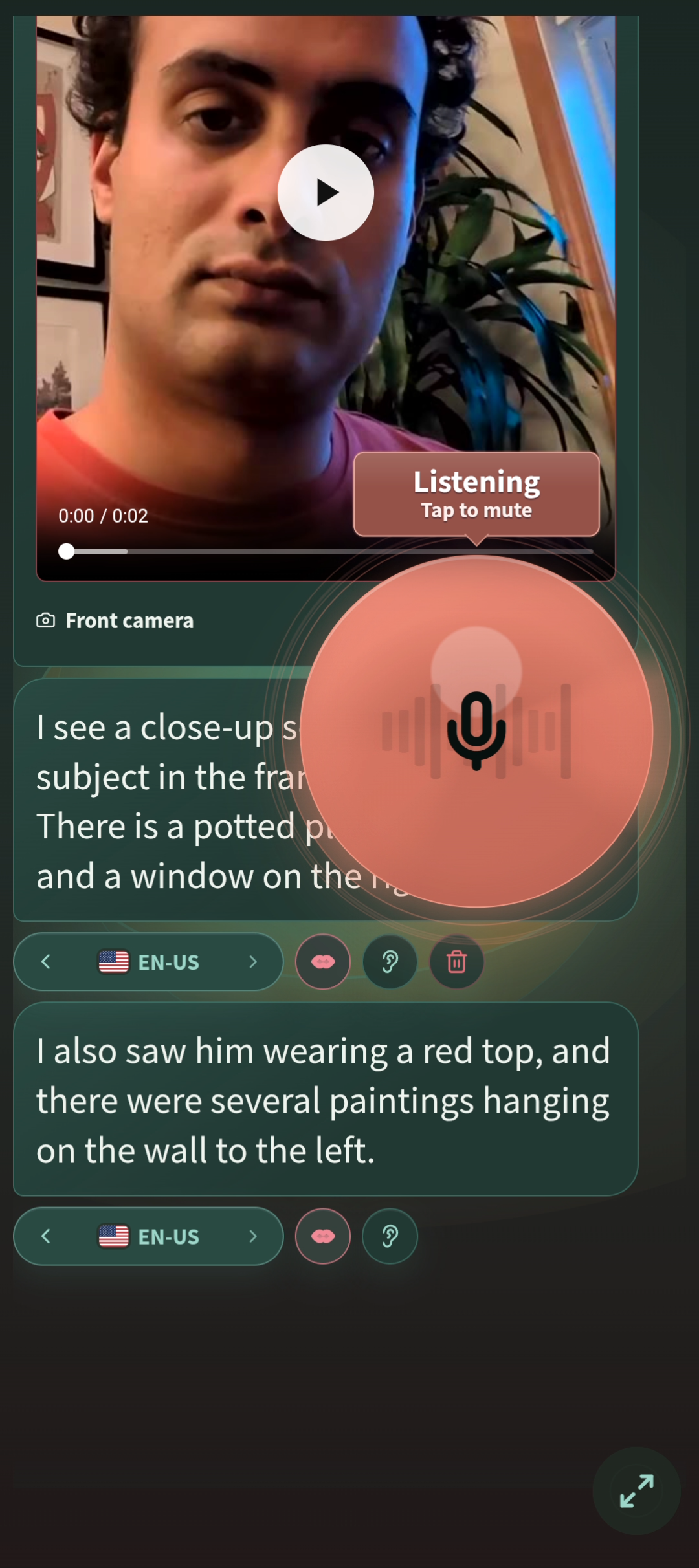
ozzz describes
-
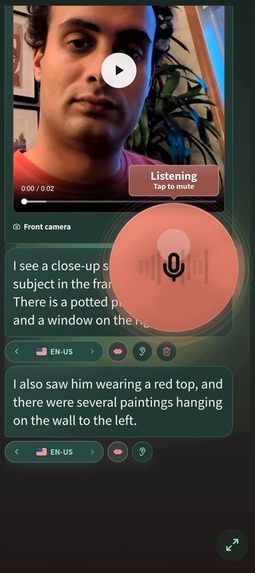
ozzz describes more
-
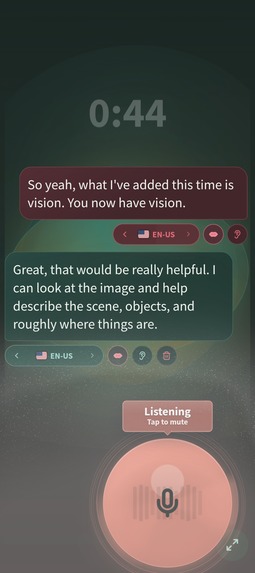
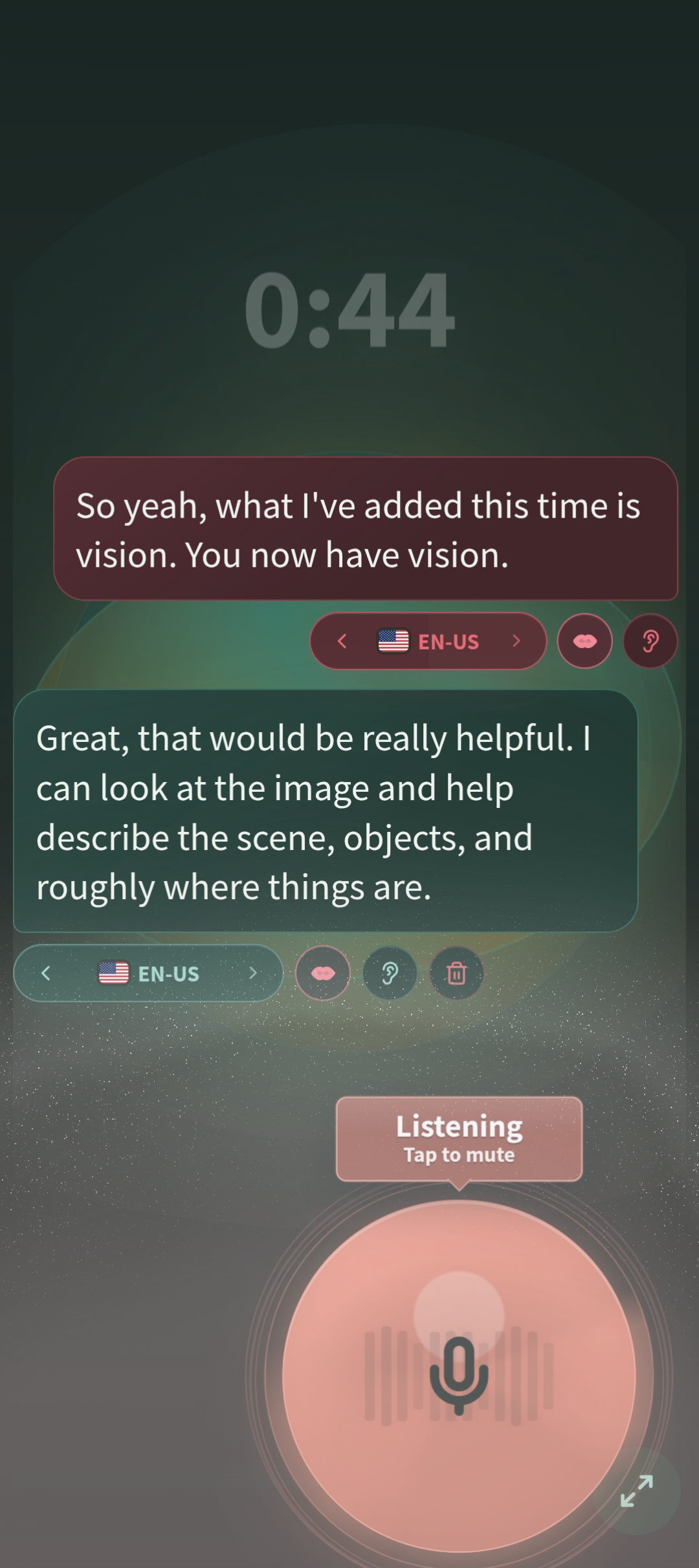
ozzz is happy to immerse!
Ozzz.io - Immersion Is All You Need
Ozzz: Conversational Vision for Language Immersion
Inspiration
Language immersion is most powerful when it connects words to the world around you. Existing AI language experiences can hear what you say, but they cannot continuously understand what you are looking at or help you discuss a moment as it unfolds.
For this hackathon, we wanted to give Ozzz vision: a conversational camera that makes the learner's surroundings part of a realtime bilingual conversation.
What It Does
Ozzz can see through your camera during typed or voice conversations. You can ask it to:
- Look at a photo or short video.
- Describe what is happening bilingually.
- Recall something from its recent visual memory.
- Revisit a saved capture with follow-up questions.
- Adjust supported camera settings conversationally.
This lets learners point at an object, sign, place, or activity and immediately talk about it in the language they are learning.
How We Built It
We built the vision system using Codex and GPT5.6. I directed the product, architecture, and testing through prompts, while Codex implemented the system, ran end-to-end validations, visually verified the experience, and deployed it.
The system works across the web and native Android application. It supports still photos, short video, private persisted captures, saved-capture follow-ups, semantic camera controls, and a rolling buffer of recent visual context.
For video, Ozzz first analyzes an early frame so it can respond quickly. Once recording finishes, the server decodes the complete video, selects representative frames, and produces a more complete continuation. This keeps the conversation responsive without limiting vision to a single image.
Challenges We Ran Into
Keeping Video Conversations Responsive
The central challenge was latency. Waiting for a video to finish recording, upload, decode, and pass through a vision model made the conversation feel slow. We solved this with staged analysis: an early still produces the first response, while inspection of the completed recording adds further detail to the same conversational turn.
Preserving Capture Identity
We had to preserve the identity of every capture across asynchronous operations, retries, and overlapping requests. Without exact capture identifiers, a delayed visual response could become attached to the wrong photo, video, or turn.
Building Private Visual Memory
Recent visual memory introduced privacy and platform challenges. Ozzz keeps a bounded, temporary camera buffer on the active device. Only media explicitly requested by the user is uploaded and saved as private conversation context.
Supporting Native Android Camera Memory
Android added another layer of complexity. Background camera memory had to work within camera permissions, foreground-service requirements, visible notifications, privacy indicators, process transitions, and unreliable mobile connections.
Grounding Camera Controls in Reality
Camera controls required a clear boundary between model intent and physical device state. The model can request a change, but the device must perform it and report what actually happened. Ozzz bases its spoken response on that verified result rather than claiming that an unsupported or failed adjustment succeeded.
Accomplishments That We're Proud Of
During the hackathon, we turned Ozzz's camera into part of a continuous AI conversation.
The completed system can inspect current photos and videos, remember a bounded window of recent visual context, answer follow-up questions about saved captures, and control the camera through natural language. It works through both typed interaction and realtime voice, on the web and in the native Android application.
Most importantly, vision is not presented as a separate image-analysis tool. It participates in the same bilingual conversation as speech and text, allowing learners to explore their real environment in another language.
What We Learned
Conversational vision requires much more than sending an image to a model. A useful experience needs:
- Fast, staged responses.
- Reliable capture identity.
- Server-side video processing.
- Private media persistence.
- Bounded temporary memory.
- Device-authoritative controls.
- Continuity across follow-up questions.
We also learned that adding sight changes language immersion substantially. Learners no longer have to invent a topic or describe all of the missing context themselves. They can simply show Ozzz what they see and begin talking about it.
What's Next for Ozzz.io
Next, we want to make visual conversations feel even more immediate and natural: better temporal understanding, longer useful visual continuity, richer camera guidance, and more ways to learn directly from everyday surroundings.
Built With
- codex
- gpt
- nextjs

Log in or sign up for Devpost to join the conversation.