-
-
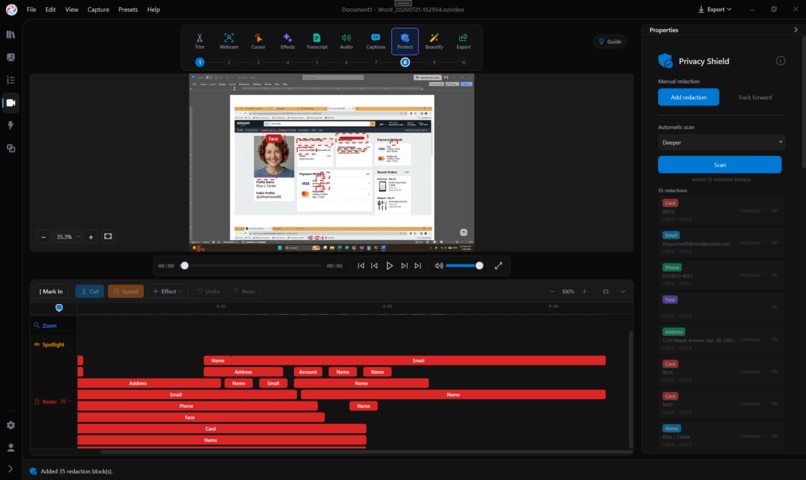
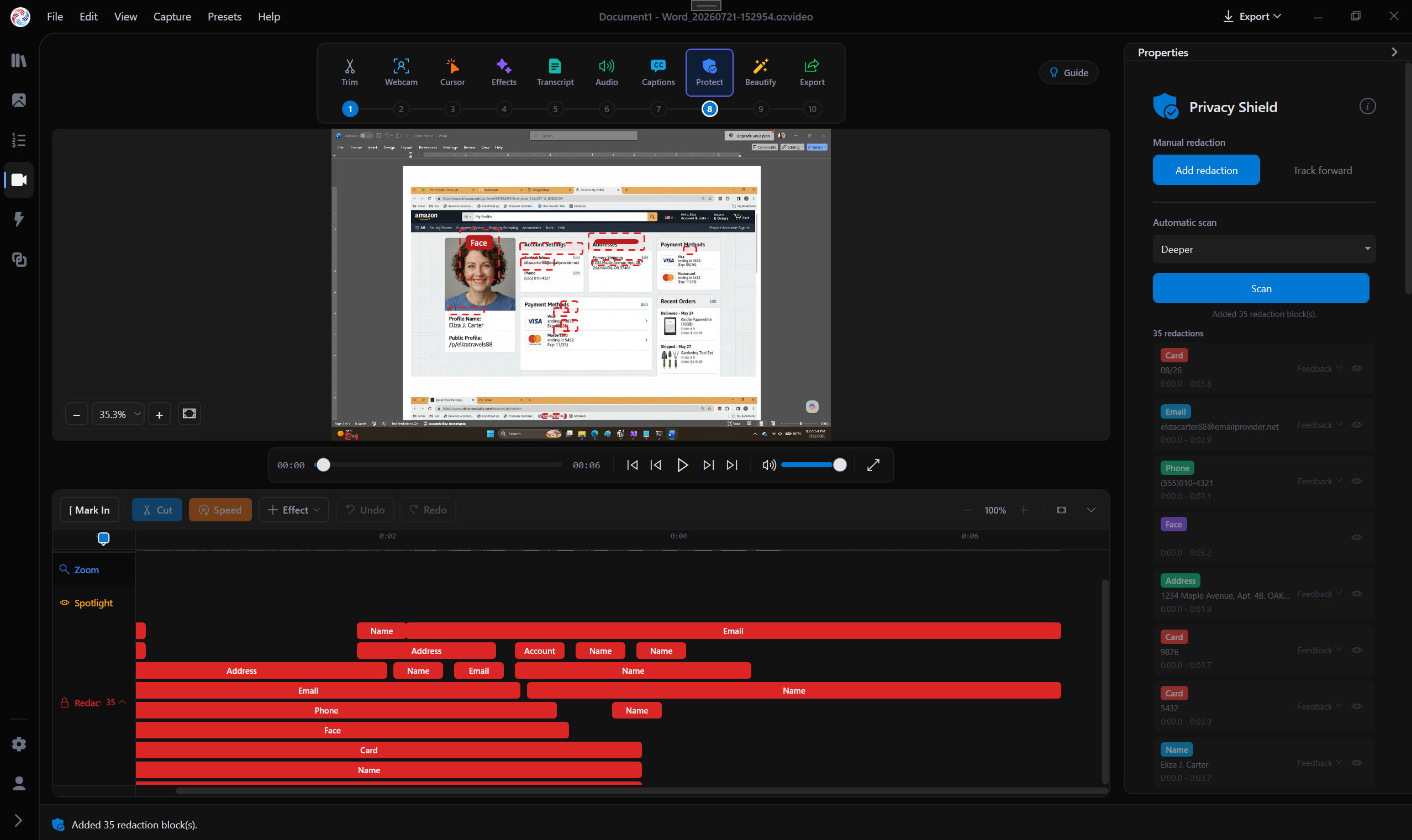
Video After Redaction Applied
-
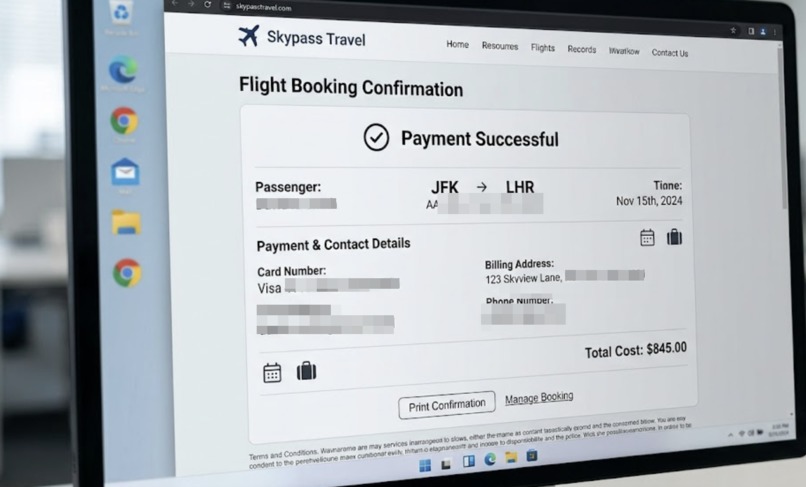
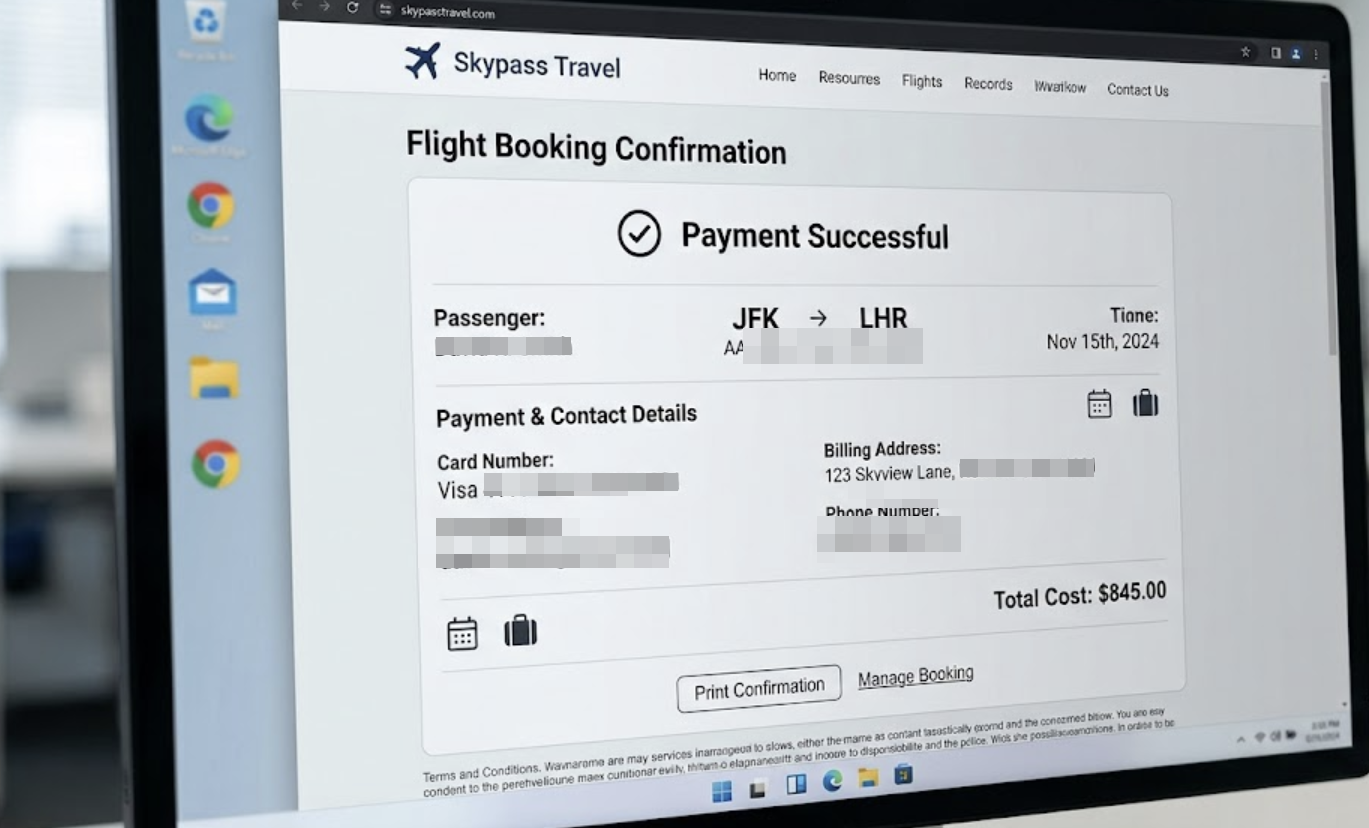
Image After Redaction Applied
-
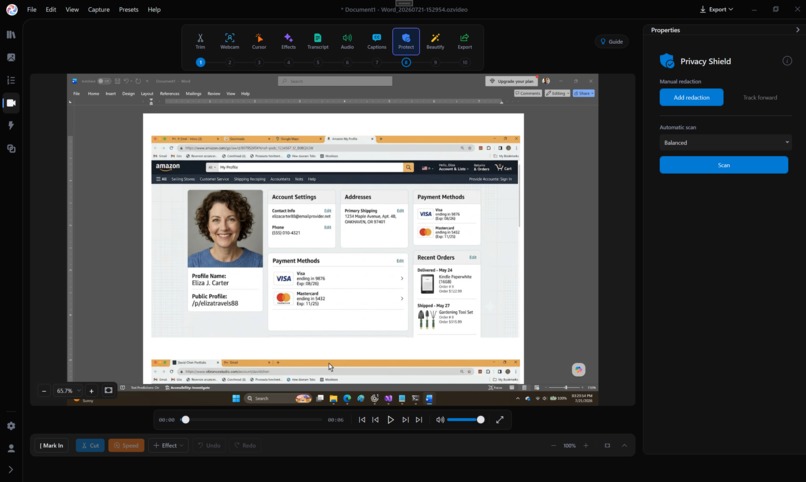
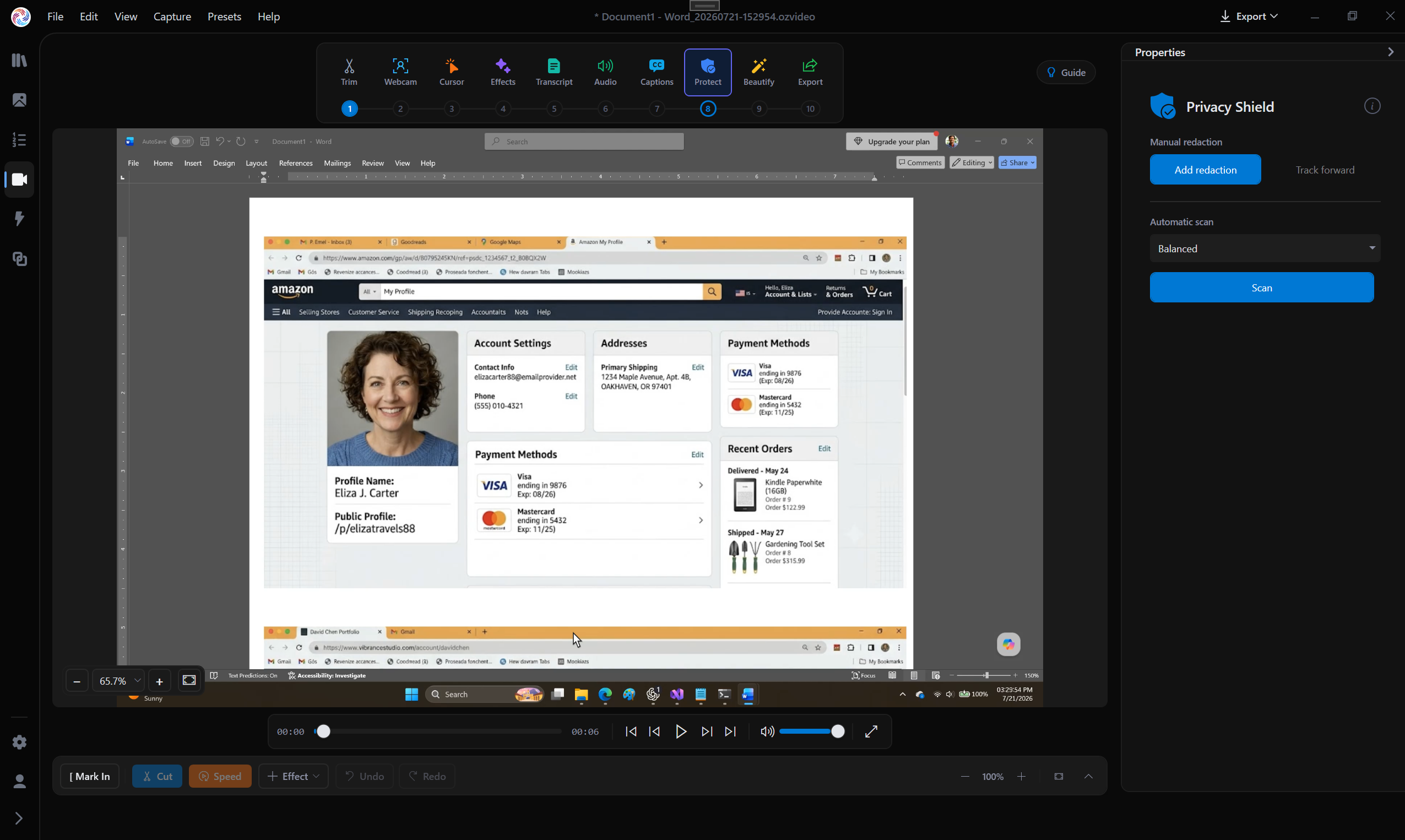
Video Before Redaction Applied
-
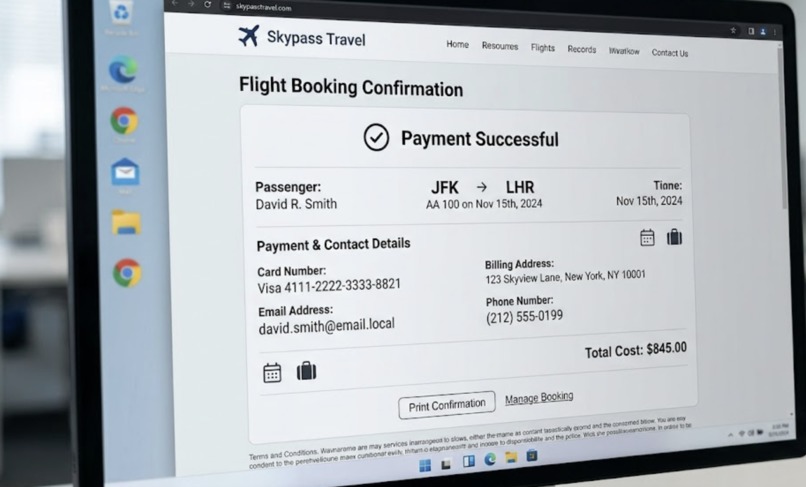
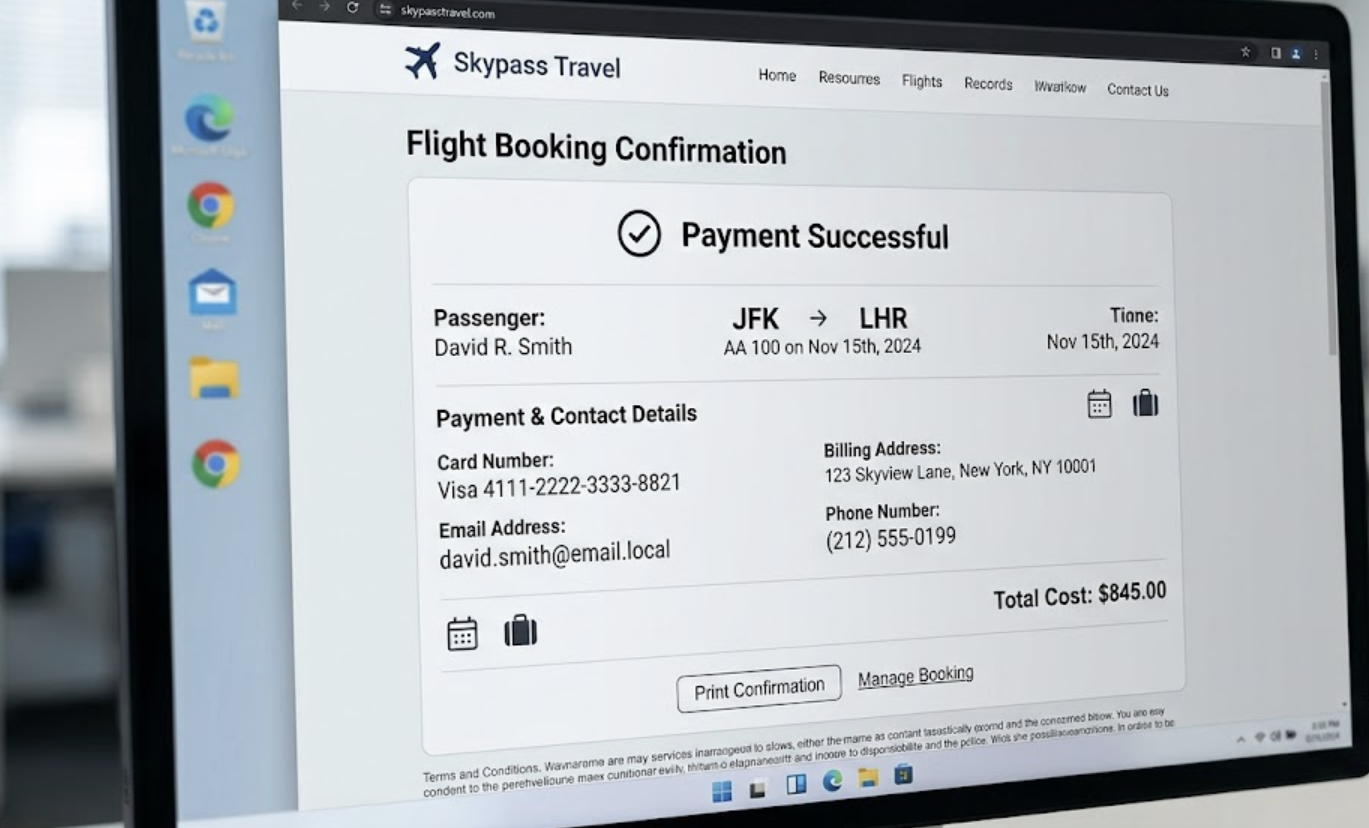
Image Before Redaction Applied
Inspiration
Screen captures are how teams explain, teach, and ship work - but they often expose names, credentials, payment details, addresses, or internal information. Ozulon is a pre-launch AI-native screen workflow studio, and Privacy Shield is the wedge we needed to make screen sharing safer by default.
Our earlier local deep-scan approach was too resource-intensive for default screenshot scans and impractical for video. During Build Week, we set out to make local privacy detection fast enough for everyday screenshots and viable for reviewed video protection.
What it does
Ozulon Privacy Shield finds and locates sensitive information in screenshots locally, then lets users review each finding and apply Mosaic, Blur, or Solid protection.
For video, it analyzes the source video using adaptive sampling, proposes time-bounded redaction tracks, and lets the user review, resize, reposition, remove, or manually track masks before previewing and exporting.
Users can also give local feedback: mark a finding as not sensitive, correct its type, or always protect the same normalized value later forms the feedback and continuous learning loop. That feedback stays on the device, protected with DPAPI; it is never uploaded or used to train a shared model.
Automatic video findings are assistance, not a guarantee—they remain review-required before export.
How we built it
Working under my direction, Codex with GPT-5.6 served as our research and implementation partner. It helped evaluate Microsoft DeBERTa xSmall, small, and base candidates; fine-tuning iterations; and INT8/FP16 exports against held-out screen evidence, latency, memory use, package size, and false positives.
We selected a fine-tuned DeBERTa-v3-xsmall v6 INT8 production model: an approximately 87 MB local model, backed by a larger safety system rather than model inference alone.
The production pipeline combines OCR text and geometry, deterministic detectors and hard rejections, contextual DeBERTa predictions, context consensus, type-specific validation, schema and checksum checks, deduplication, and OCR-box grounding. Screenshot, guide, and video Privacy Shield share this policy boundary.
For video, we added Simple, Balanced, and Deeper scan profiles; source-video sampling; stable-frame reuse; temporal planning; review cards; tracked redaction masks; preview; and export rendering.
GPT-5.6 is not part of the shipped runtime. The product runs locally through ONNX Runtime and deterministic privacy policy layers.
Challenges we ran into
The difficult problem was not simply replacing a large model with a smaller one. A smaller model can be faster and lighter while still creating unacceptable misses or false positives.
We had to improve the evaluation harness, test culturally varied address and OCR cases, reject candidates that weakened untouched precision, and add deterministic safeguards around the model. Video added another layer of complexity: sampling rate, resolution, OCR quality, temporal continuity, track duration, and user-visible controls all affect a safe result.
We also needed a release that works outside our development machine, so the installer now includes the verified local model, tokenizer, configuration, FFmpeg, FFprobe, and desktop runtime.
Accomplishments that we're proud of
- Made local Deep Scan practical enough to become the default screenshot scan.
- Shipped an approximately 87 MB INT8 model with about 100 ms mean detector latency after OCR and approximately 300 MB isolated peak process memory.
- Reached 95.87% end-to-end recall and 94.73% strict precision on a frozen 200-screen held-out certification suite.
- Extended the same privacy policy into reviewed video redaction tracks.
- Reduced a controlled two-minute video evaluation from 178.00 seconds to 26.33 seconds—an 85.2% scan-time reduction—while keeping video findings review-required.
- Built a local cross-surface feedback loop for company-specific terms, false positives, and preferred protection behavior.
- Added hash-verified model packaging so a missing or corrupted detector cannot silently weaken the offline release.
What we learned
We learned that a smaller model only becomes production-ready when the surrounding system is strong: representative screen-specific evaluation, deterministic validation, geometry grounding, explicit product controls, and honest review boundaries matter as much as model accuracy.
We also learned that Codex with GPT-5.6 can accelerate more than implementation. It helped us structure a model-selection and evaluation program, investigate failures, build safeguards, and connect the result to a real desktop product. The product owner remained responsible for constraints, acceptance criteria, and final decisions.
What's next for Ozulon Privacy Shield
This is just beginning, there are bugs. Evals do not still represent real world scenarios we are iterating. We will continue expanding hard-negative and international screen coverage, improving adaptive video performance, and refining local feedback controls. The goal remains the same: make privacy protection a natural part of creating and sharing screen-based work, without requiring users to send sensitive content to the cloud.

Log in or sign up for Devpost to join the conversation.