-
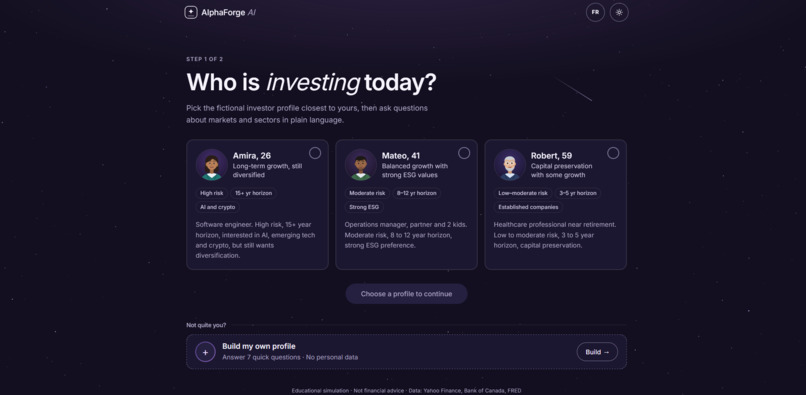
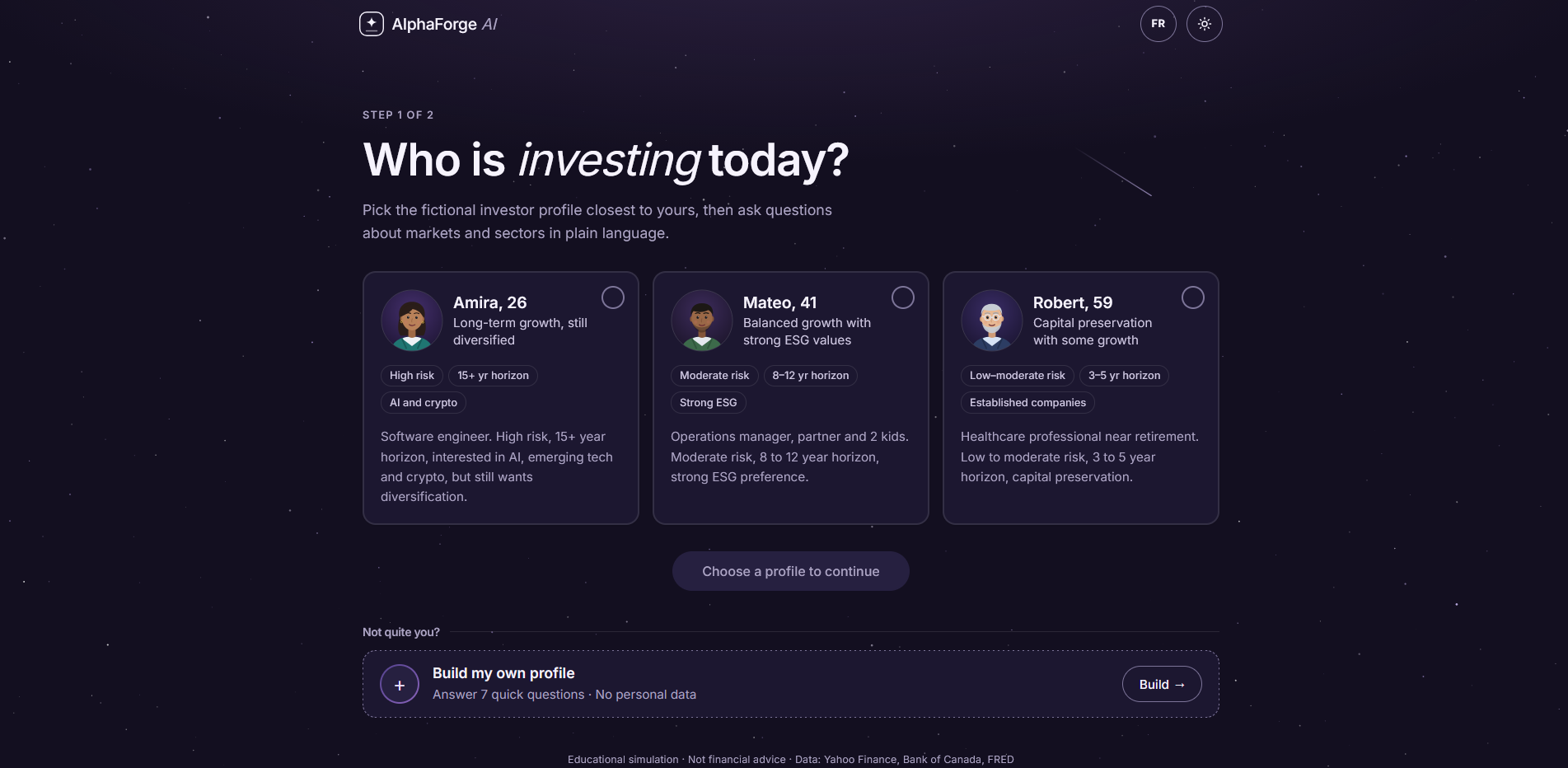
Home page
-
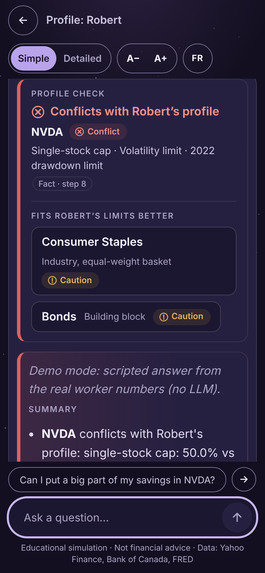
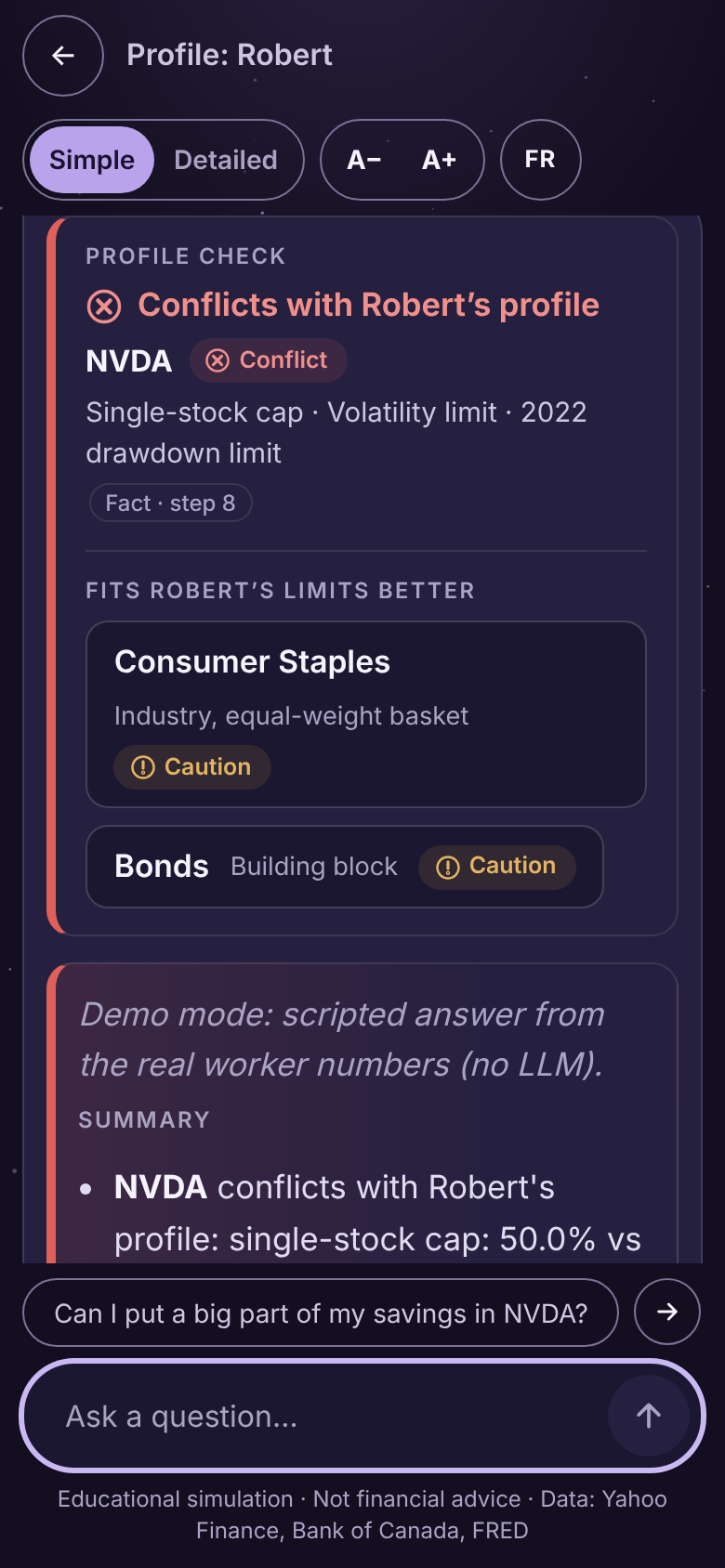
Recommendation
-
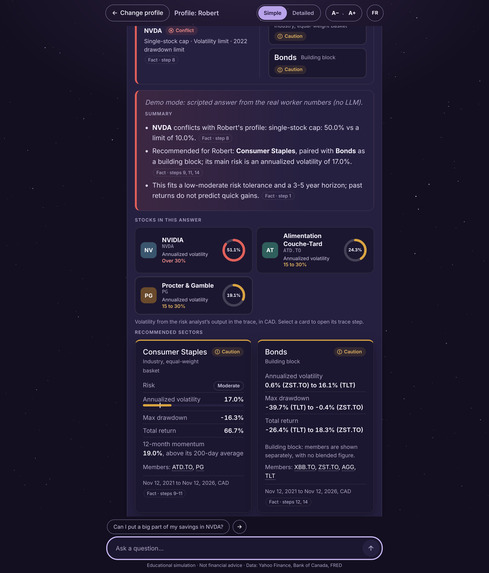
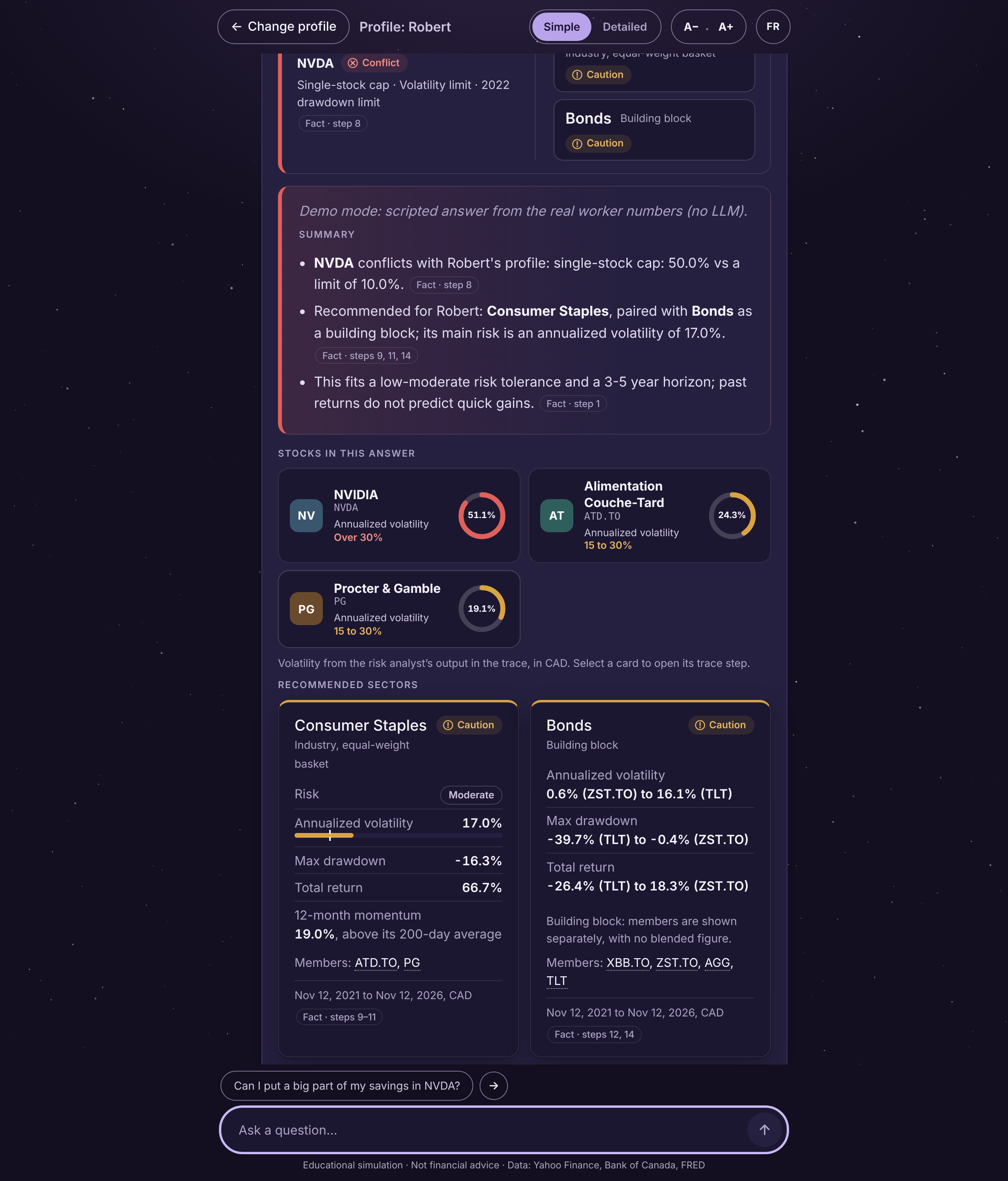
Traceable Evidence
-
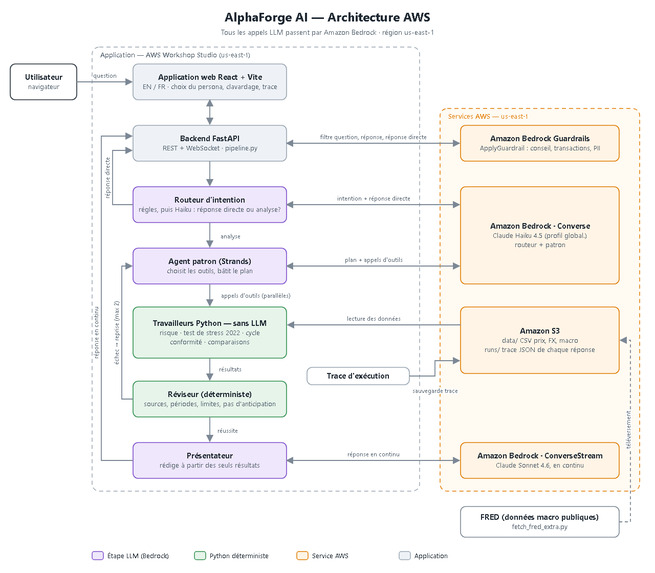
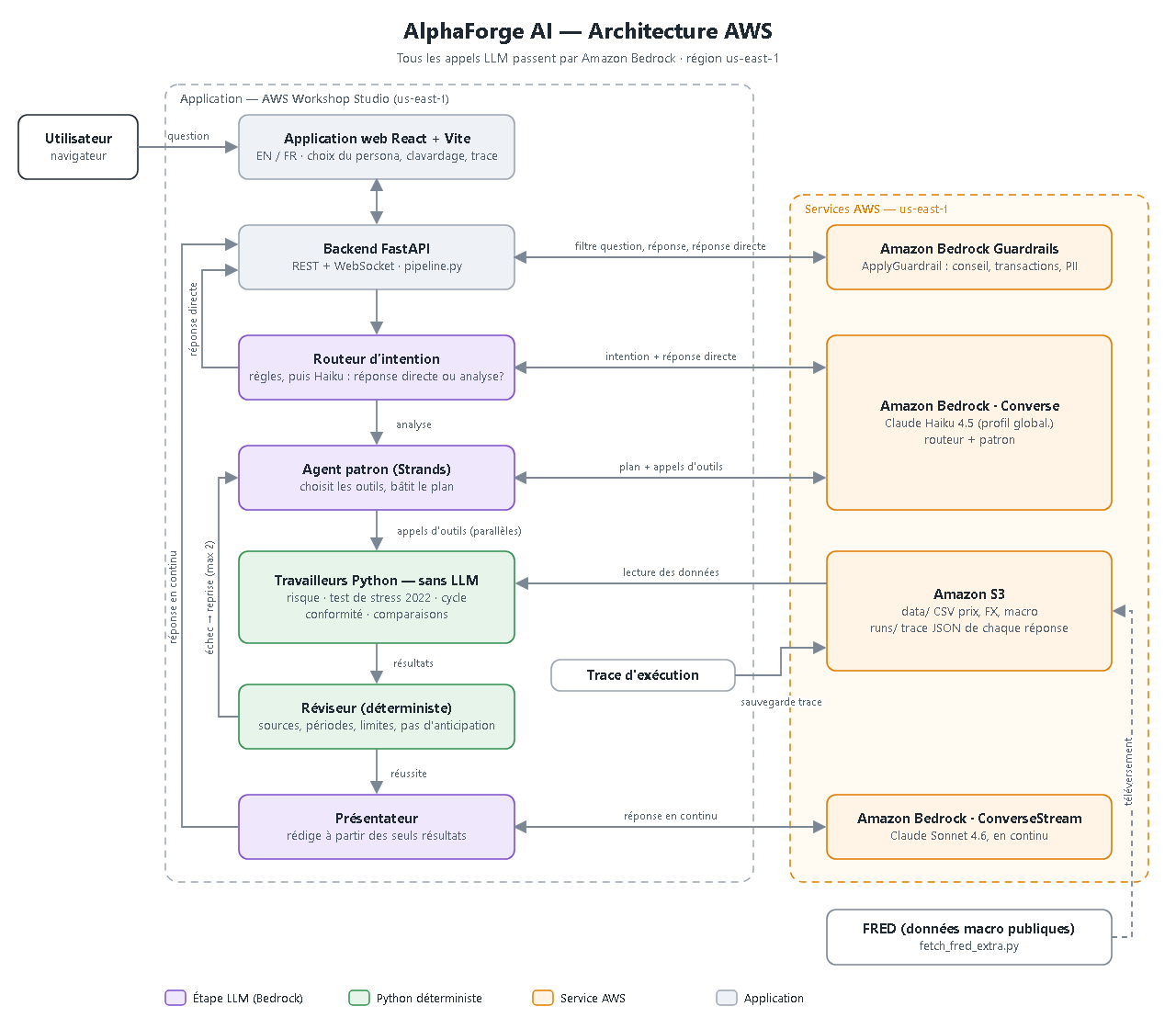
Project Architecture
Inspiration
Most people don't have the time to study price charts and economic data before investing. And even when they do, it's hard to know whether a stock is too risky for their situation. We wanted a tool that does that research, shows its numbers, and lets people decide for themselves.
What it does
You pick an investor profile: Robert, who is close to retirement; Amira, who is young and fine with high risk; or Mateo, who wants balance and cares about ESG. You can also create your own. Then you ask about a stock or sector, like "How risky has NVDA been for someone like Robert?"
The app answers with whether the stock fits the profile's limits, and why. For example, NVDA's volatility (51%) is far above Robert's limit (10%), so it gets flagged as a conflict. Each stock appears on a card with a coloured ring showing how volatile it has been. You can click any number to see where it came from.
How we built it
When you ask a question, an AI agent on Amazon Bedrock decides what needs to be looked up. Smaller Python programs then do the actual work. They pull five years of stock prices and economic data from FRED and the Bank of Canada, measure how much each stock’s price has moved and how far it has fallen at its worst, and check how it held up during the 2022 market drop.
Before you see an answer, a checker makes sure every number in it matches those calculations, and Amazon Bedrock Guardrails block unsafe questions and answers. The website is built with React and hosted on AWS Amplify, and the backend runs on Amazon EC2.
Challenges we ran into
Our first guardrails were too strict. They couldn’t tell the difference between someone asking how risky a stock is and someone asking what to do with their own money
AI models sometimes round or hallucinate numbers, so we made the calculations the only source of numbers and added a step that checks each one.
We also had to keep rewording answers so the app explains risk without telling people what to buy.
Accomplishments that we're proud of
Every number in an answer can be traced back to its calculation. All our tests pass, including live runs through Bedrock. The app works in both English and French.
What we learned
Safety filters need to be tested on real questions, not just obviously bad ones. Small agents that each do one job are easier to test than one big one. Users care more about seeing where a number comes from than about seeing more numbers.
What's next for AlphaForge AI
We want to add news analysis, so the app can look at events like earnings or acquisitions and compare them with how similar past events moved prices. We also want real ESG data for Mateo's profile.
Built With
- amazon-bedrock
- amazon-web-services
- bedrock-guardrails
- python
- react
- typescript
- vite


