-
-

I use the COO as a strategic partner and sounding board to turn an early business idea into bounded work and clear decisions.
-
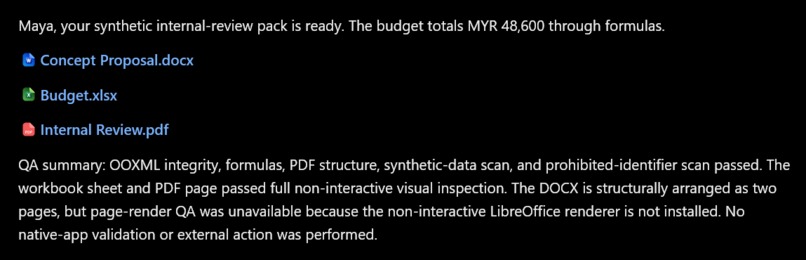
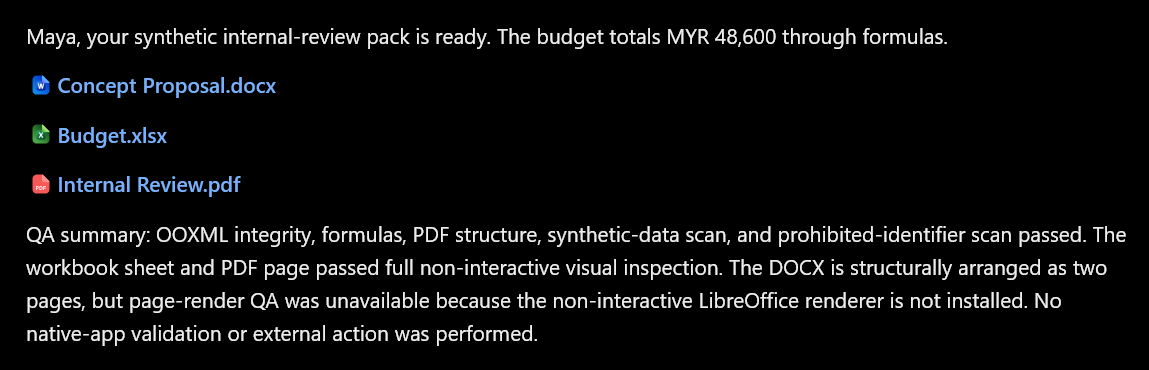
A controlled Word, Excel and PDF review pack reports the budget result, completed integrity checks and clear QA limitations.
-

Codex retrieves a precise salutation and promised follow-up from an approved meeting record, then offers to draft without sending.
-
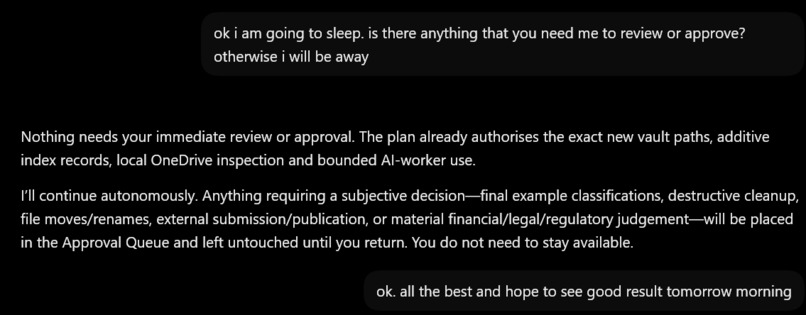
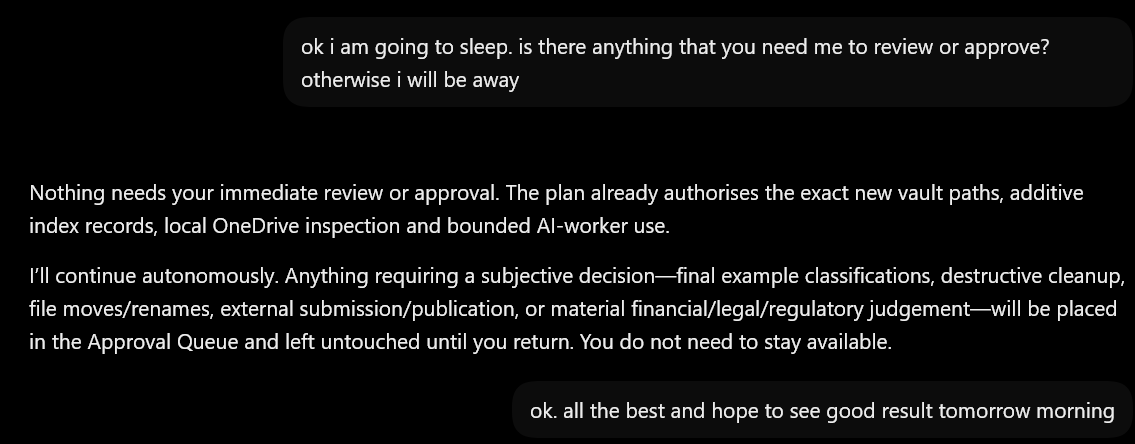
Before stepping away, I ask Codex to surface decisions I must make and keep consequential actions gated until I return.
-
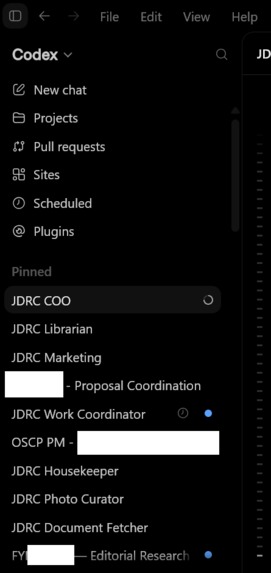
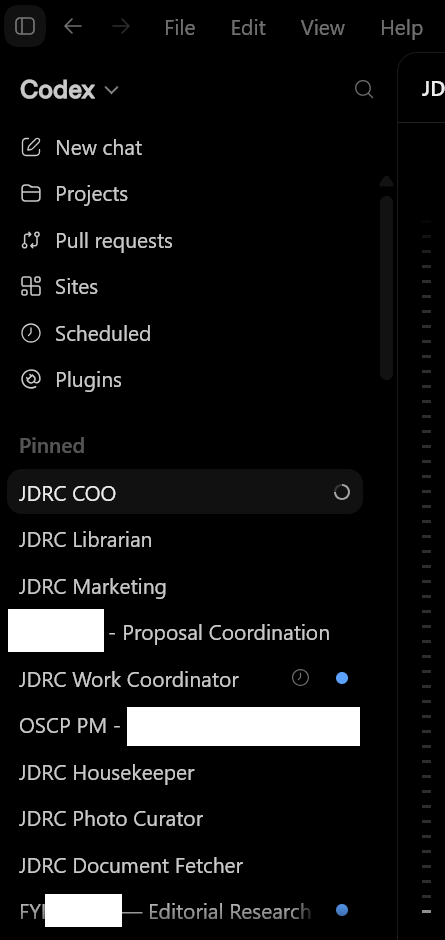
Separate Codex lanes handle coordination, sourcing, accounting, compliance and other functions, keeping ownership and hand-offs clear.
-
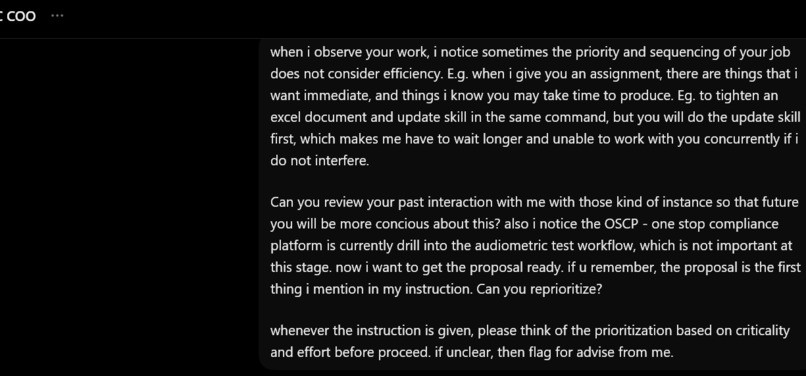
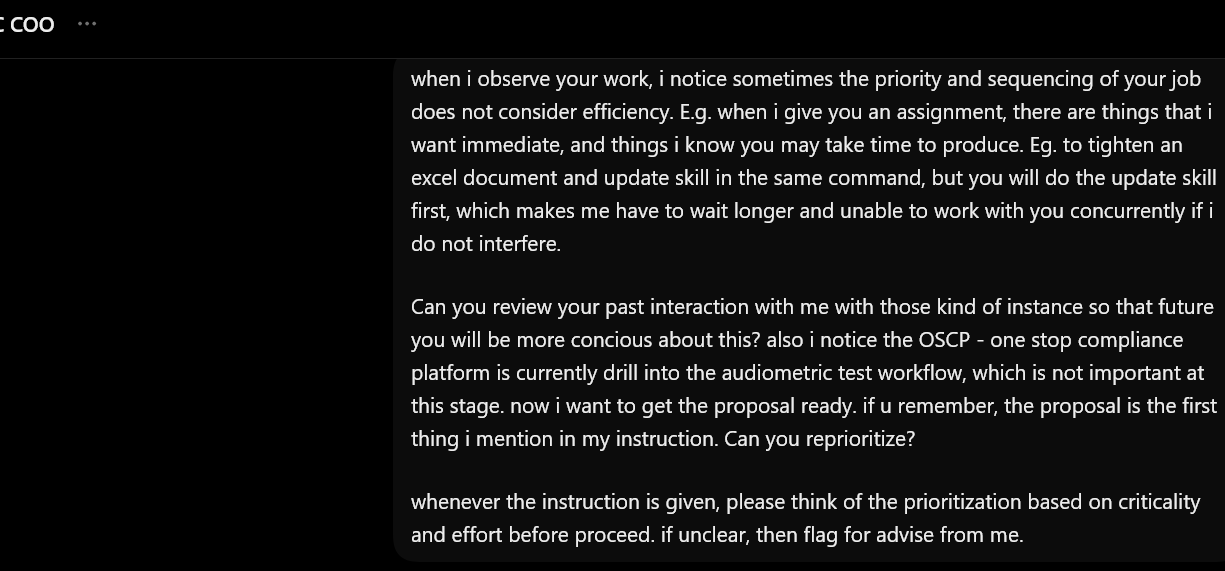
I identify a sequencing failure and ask Codex to reprioritise by urgency, criticality, dependency and effort.
-
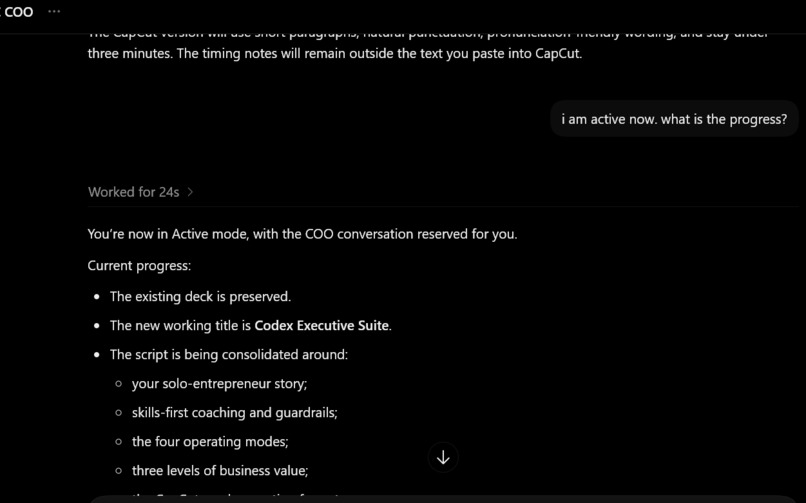
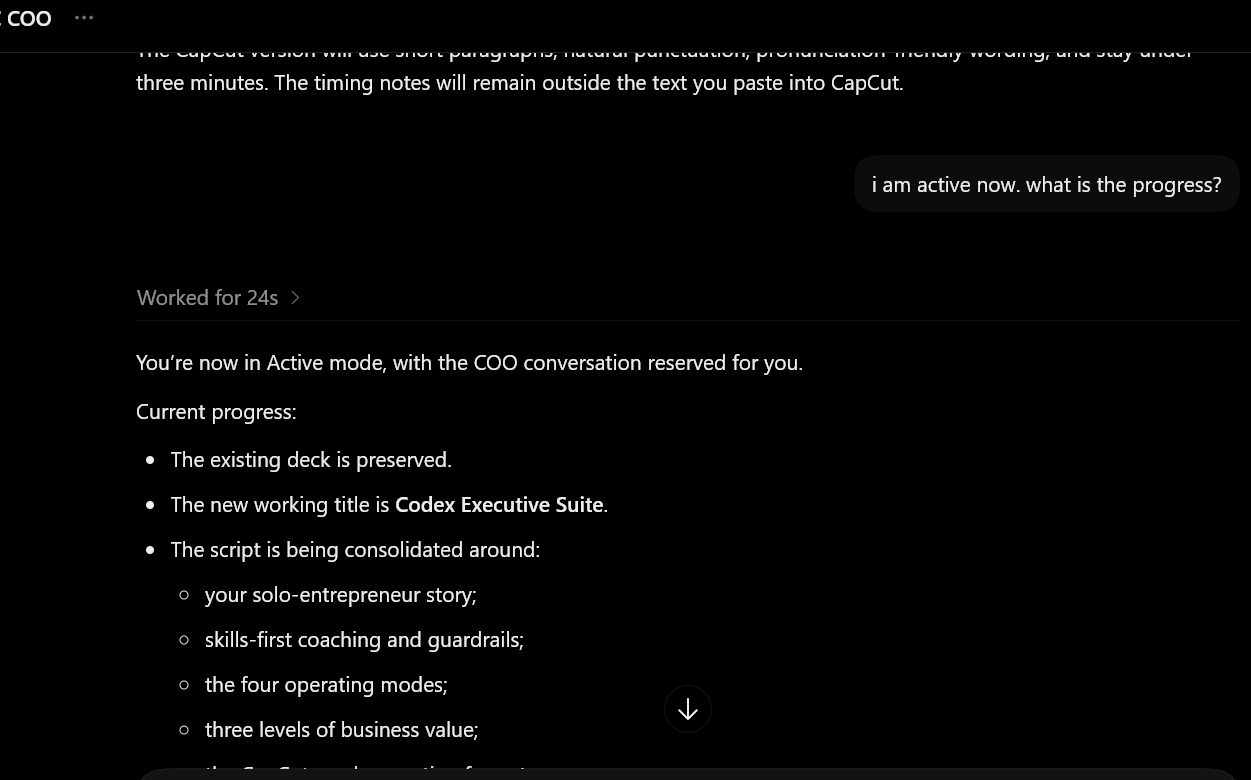
I declare Active mode when I am available to guide the work, review progress and make decisions directly.
-
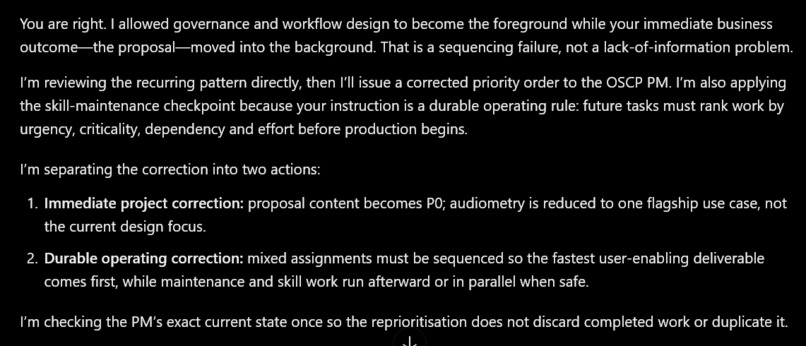
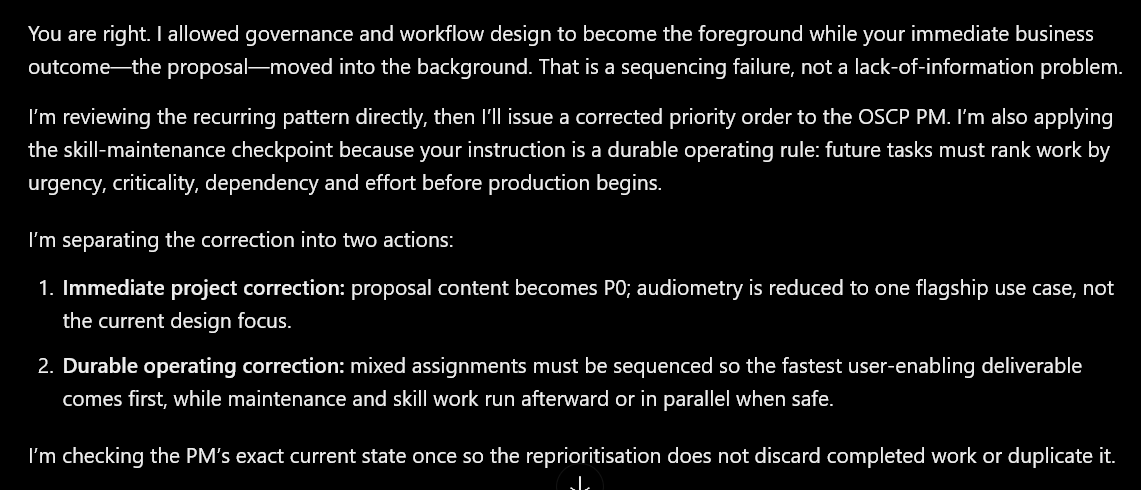
Codex acknowledges the failure, restores the immediate business outcome as priority and turns the lesson into a durable rule.
-
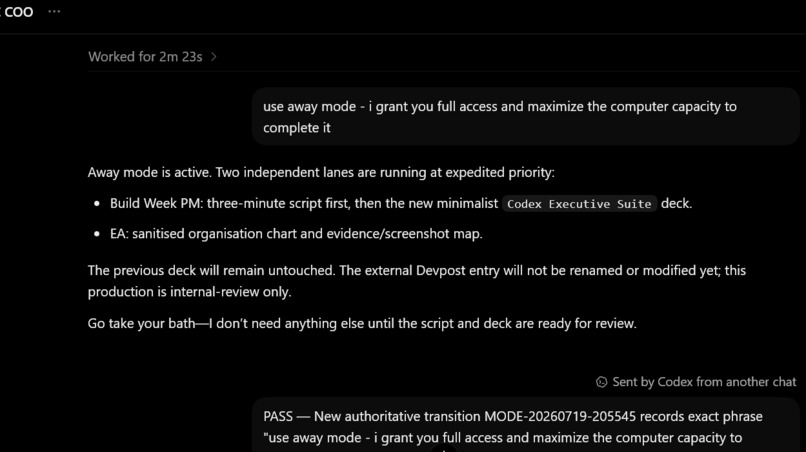
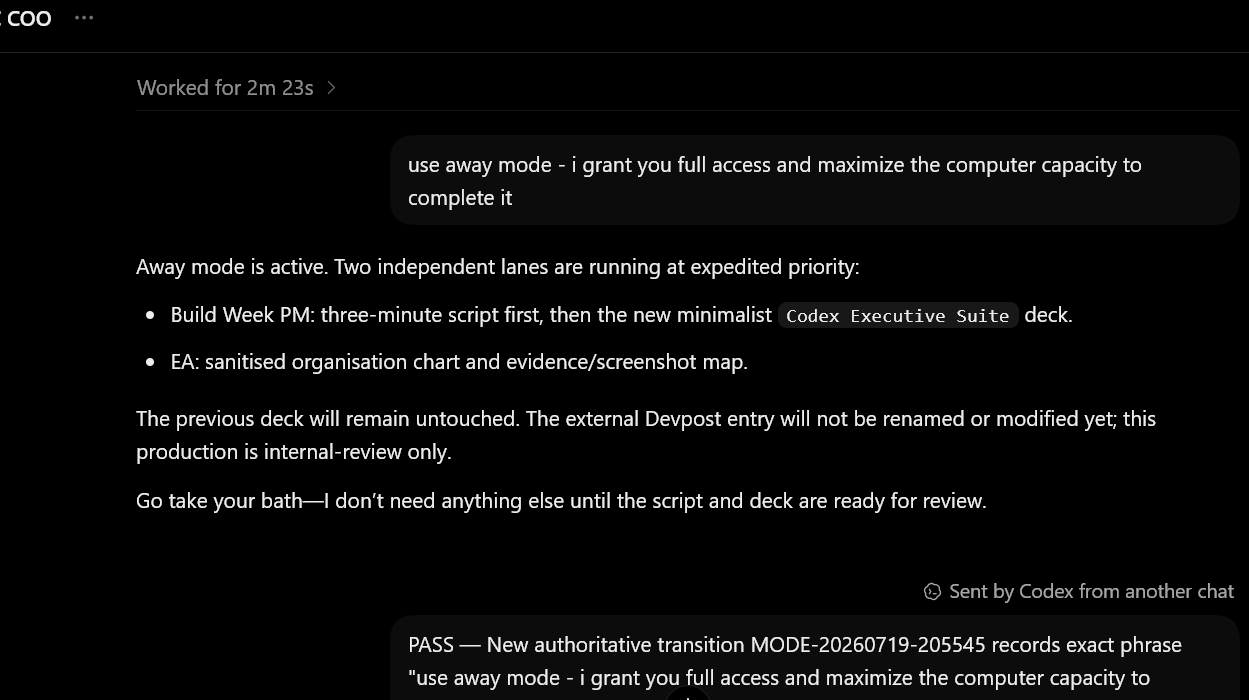
Away mode allows pre-authorised work while the laptop runs, with bounded lanes, approval gates and restart-safe checkpoints.
-
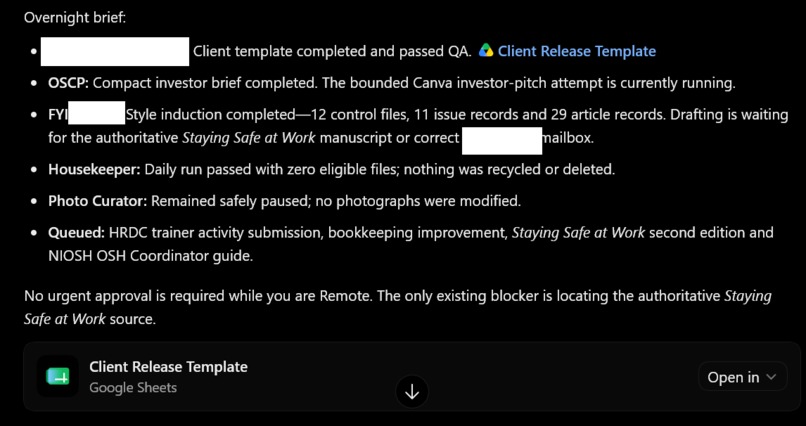
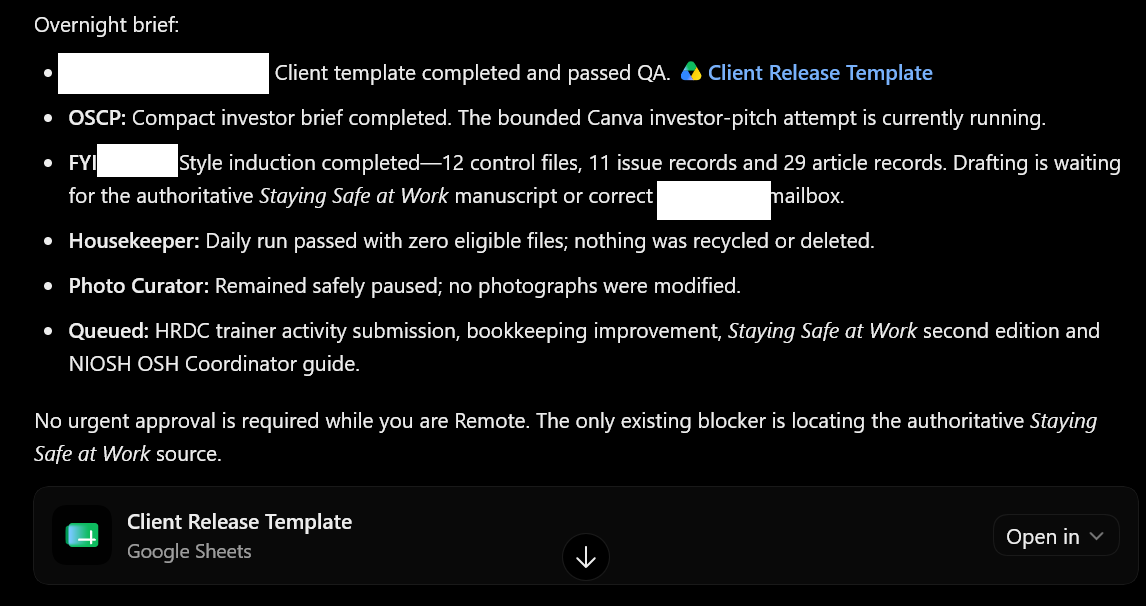
A return brief summarises what finished, what is running, paused or queued, and which decisions need my attention.
-
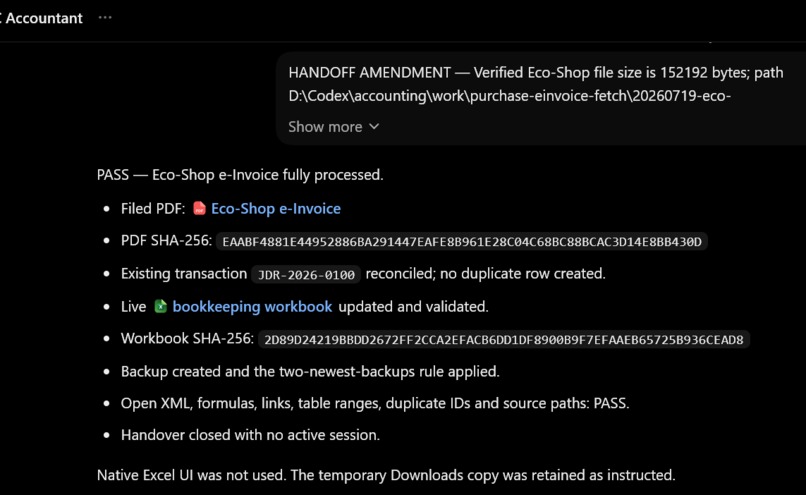
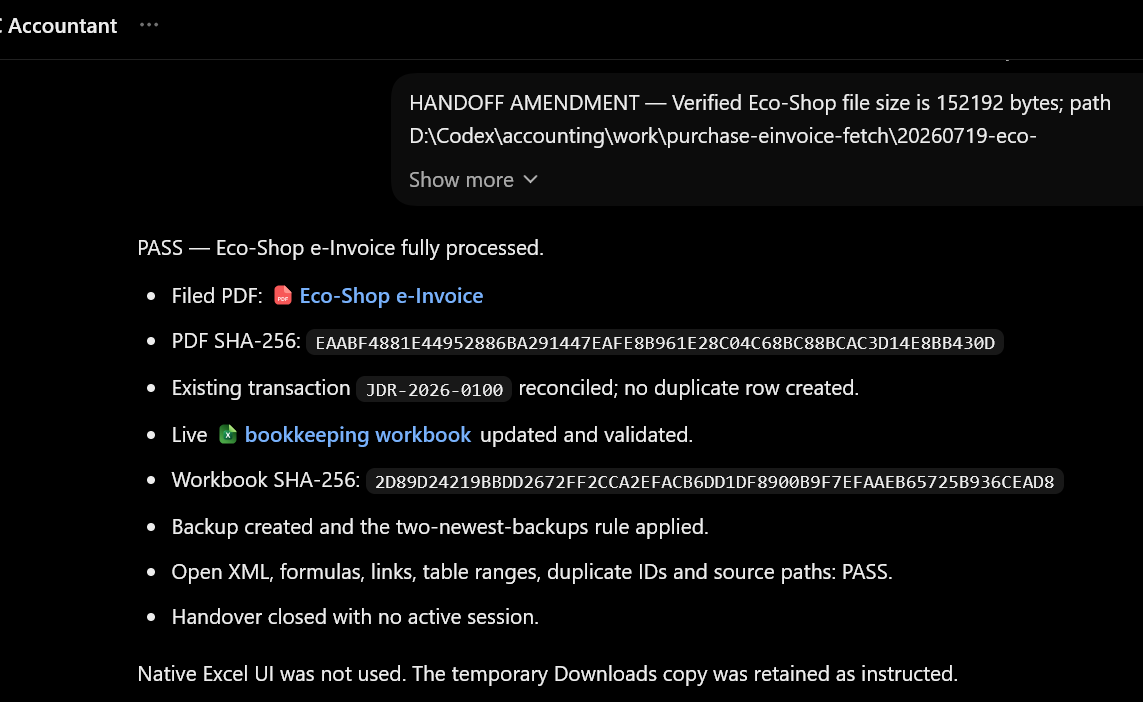
An administrative workflow covering source acquisition, invoice processing, reconciliation, validation and duplicate prevention.
-
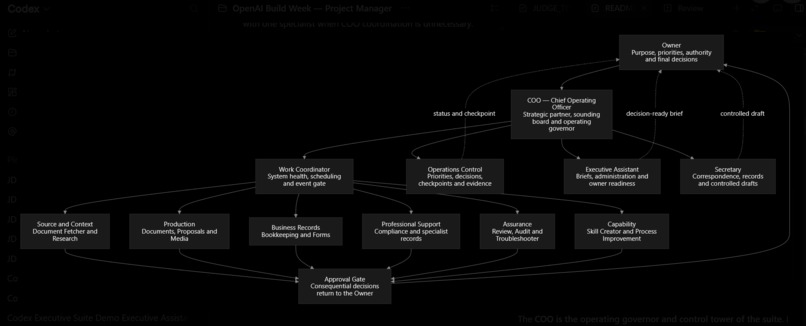
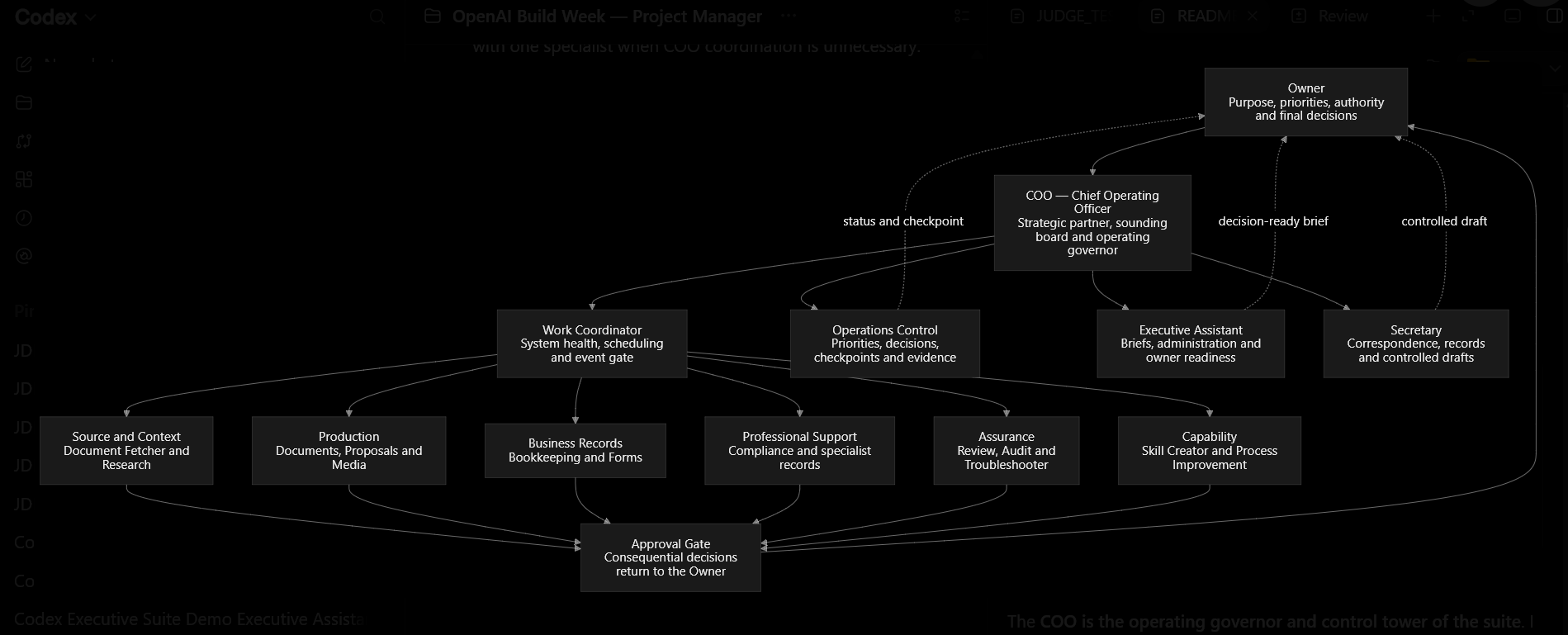
I remain the final decision-maker while the COO coordinates specialist functions and returns consequential work through an approval gate.


Inspiration
Codex Executive Suite began with an ordinary problem in my new business. I am a solo entrepreneur without a stable income stream. Ideas and assignments arrive at all hours, but I cannot yet responsibly afford a full-time assistant or professional team. I also would not expect human staff to remain available around the clock without the responsibilities and protections that proper employment requires.
Since 2024, ChatGPT has been my sounding board for ideas, drafting and proofreading. It helped, but the process was still manual and inconsistent. When Codex introduced stronger local execution and control, I began asking a more ambitious question: could I coach it into a functional business team rather than use it as another chatbot?
What it does
Codex Executive Suite is the operating framework I use inside Codex to govern real business work. It turns my natural-language request into a controlled workflow: my availability, priority and authority are made explicit; the work goes to a bounded specialist; progress, blockers and decisions return in plain English; consequential action stops for my approval; and verified work ends with a checkpoint and return brief.
The Chief Operating Officer is my strategic partner, sounding board and operating control tower. It helps me discuss strategy and possible applications, translates objectives into bounded work, sets priorities and authority, selects specialists, sequences dependencies, protects approval gates and returns the decisions that need my attention. It coordinates but does not replace the production specialist. When one clear specialist can handle a task without cross-lane coordination, I work directly with that specialist instead.
I use four operating modes:
- Active/Cyborg: I am directly engaged and can guide or approve.
- Passive/Centaur-Local: I am using the laptop for other work and checking in intermittently.
- Remote/Centaur-Remote: I am reachable for brief decisions.
- Steward/Away: While the laptop is running, I permit only pre-authorised, bounded work with safe holds and restartable checkpoints.
These modes help me use available laptop time without pretending artificial intelligence has unlimited authority. In Steward/Away, I can also choose Away Economy, which conserves tokens for essential authorised work, or Away Expedite, which applies more processing effort to an approved deadline. These are owner-directed work profiles, not automatic token budgeting, and neither expands authority.
Suite-wide rules apply across the framework: no authority from silence, no routine polling or status spam, no unapproved redesign, no silent overwrite or rewritten history, no uncontrolled scope expansion, no external action without exact approval and no unsupported completion claim. Content begins as a Markdown draft before final formatting. Scratch work stays local, controlled outputs are filed only after approval and validation, and interruptions end at restart-safe checkpoints.
The React and TypeScript interface shown for Build Week explains selected parts of this workflow. It uses temporary in-memory information and performs no email, upload, purchase, publication or account action. It does not call Codex or GPT-5.6 at runtime or launch a live agent fleet.
How I built it
I started with skills, not screens. Skills give Codex the right context, tone, role boundaries, source expectations, provenance rules and decision gates. They do not eliminate mistakes, but in my experience they reduce out-of-context responses, unnecessary assumptions, hallucinations and rework. Because my real work can involve confidential information, I build these methods from primary and official sources rather than importing unknown skill files that could contain unsafe, malicious or damaging instructions. This became my coaching process for building a more dependable team.
I then organised the work around coordination, source acquisition, research, production, review, administration, skill maintenance and troubleshooting. Human staff-management ideas helped, but Codex is not human. Context, model capability, authority, capacity, evidence and recovery all needed explicit operating rules.
I am not a coder, so I built this through guided, no-code collaboration with OpenAI Codex and GPT-5.6. Codex helped me translate selected operating rules into a pure TypeScript workflow module, an owner-first React interface, automated tests, sample data, evidence gates and reproducible documentation. React holds the local interface state, while vinext and Vite produce the local build.
A personal note on technical review: I do not have the technical expertise or capacity to independently review or validate the code-related documents prepared with ChatGPT and Codex. I have reviewed the business intent, workflow and owner-control requirements, and I am sharing the technical material transparently for informed review. Thank you for your understanding.
The framework was shaped through real source acquisition, research, document preparation, administration, specialist review, troubleshooting, controlled filing and restart recovery. A typical hand-off moves from verified source and provenance, to bounded specialist work, to my review or approval, and then to validated filing or checkpointing.
Working files remain local to reduce cloud-sync noise and custody risk. Content normally begins as a Markdown draft. Only outputs I approve and validate move to OneDrive, using no-overwrite checks and version or hash evidence where appropriate. The Build Week interface explains this principle but does not integrate with OneDrive or Microsoft Office.
Challenges I ran into
My biggest challenge was turning familiar management instincts into explicit rules for artificial intelligence. A person may infer context, but inference is risky when privacy, authority or consequential action is involved. Silence could never become permission.
Office work created another learning curve. Word and PDF may look simple to a person, but artificial intelligence does not perceive a screen as we do. I learned to protect sources, work locally, check meaning and appearance, validate in the native application, request approval and only then file the result.
The interface also needed balance. I wanted enough evidence for trust and recovery without making the normal experience feel like a developer console. The main views therefore answer simple business questions: what needs my attention, what is being worked on and what has finished?
Accomplishments I am proud of
I moved beyond isolated prompts and created a coherent owner-controlled operating framework. Natural-language delegation, specialist routing, meaningful status, exact approval, safe checkpointing and return briefs now work as connected management practices rather than unrelated chats.
The Work Coordinator is now a lightweight, state-only health, scheduling and event gate. It does not routinely read production content or history, poll active work or rebuild dashboards. This improves availability while reducing unnecessary context and token use.
Document controls have also become stronger: frozen baselines, content-only editing where required, Markdown-first approval, traceable coverage or deletion records, reasoned model escalation, and no-overwrite or version evidence. These controls do not make every output automatically correct; they make the work more reviewable, recoverable and accountable.
The dashboard is evidence of the result, not the centre of the story. The real achievement is the journey of coaching a tailored Codex team through skills, tone, modes, authority, evidence, failures, recoveries and explicit decisions.
What I learned
I learned that a useful artificial-intelligence team is built through sustained coaching, not one perfect prompt. Model choice, context, evidence, authority, capacity and recovery matter as much as the task itself.
I also learned to treat offline time honestly. A checkpoint and return brief are more credible than unsupported claims of continuous autonomy. Technical receipts matter, but I should receive a natural business brief first and inspect audit detail only when I need it.
In my personal experience, proposal research and writing that might previously have taken two to three person-days can sometimes be completed in one to two hours with Codex. This is my observed estimate, not a universal benchmark.
What’s next
Codex Executive Suite is still maturing. The features and functions described in this submission reflect its development status as at 20 July 2026. My next step is to continue refining the suite, so it becomes more economical, efficient and dependable while preserving clear owner control.
The suite has already reduced repetitive administration and mental load, giving me more attention for meaningful work and helping me turn ideas into progress while I remain in control. Codex did not replace my ambition. It gave my ambition a team.
Thank you, Codex—and thank you, OpenAI, for making this kind of partnership possible.
Built With
- codex
- gpt-5.6
- node.js
- openai
- react
- typescript
- vinext
- vite


Log in or sign up for Devpost to join the conversation.