-
-
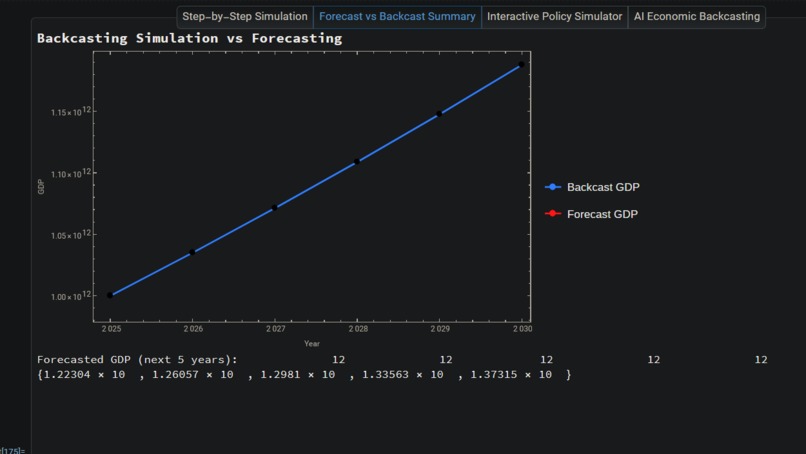
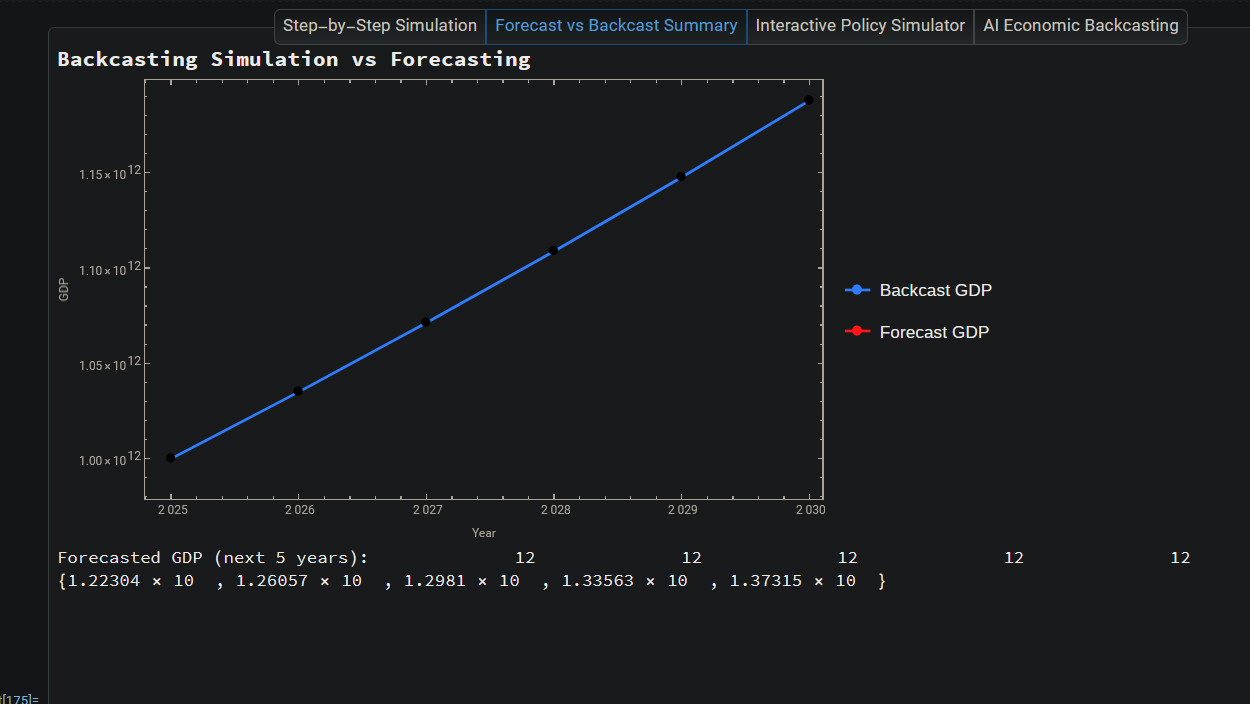
Forecast vs Backcast comparison showing GDP growth trajectory and 5-year projection reaching 1.37 trillion by 2030.
-
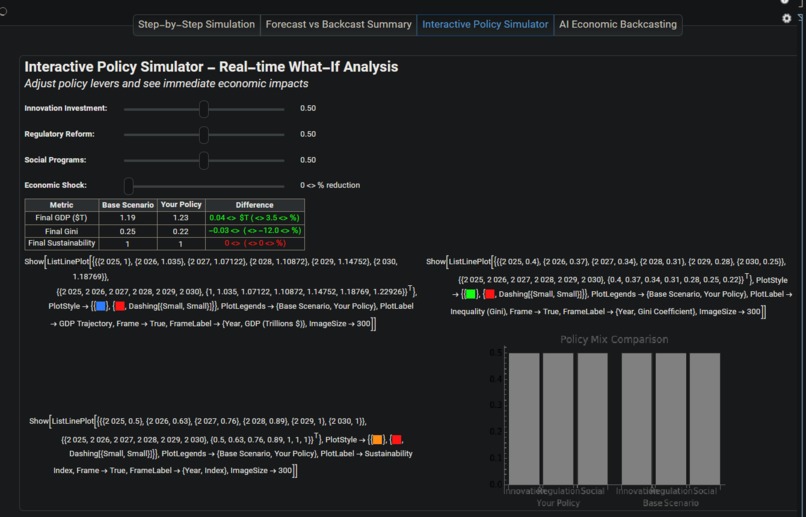
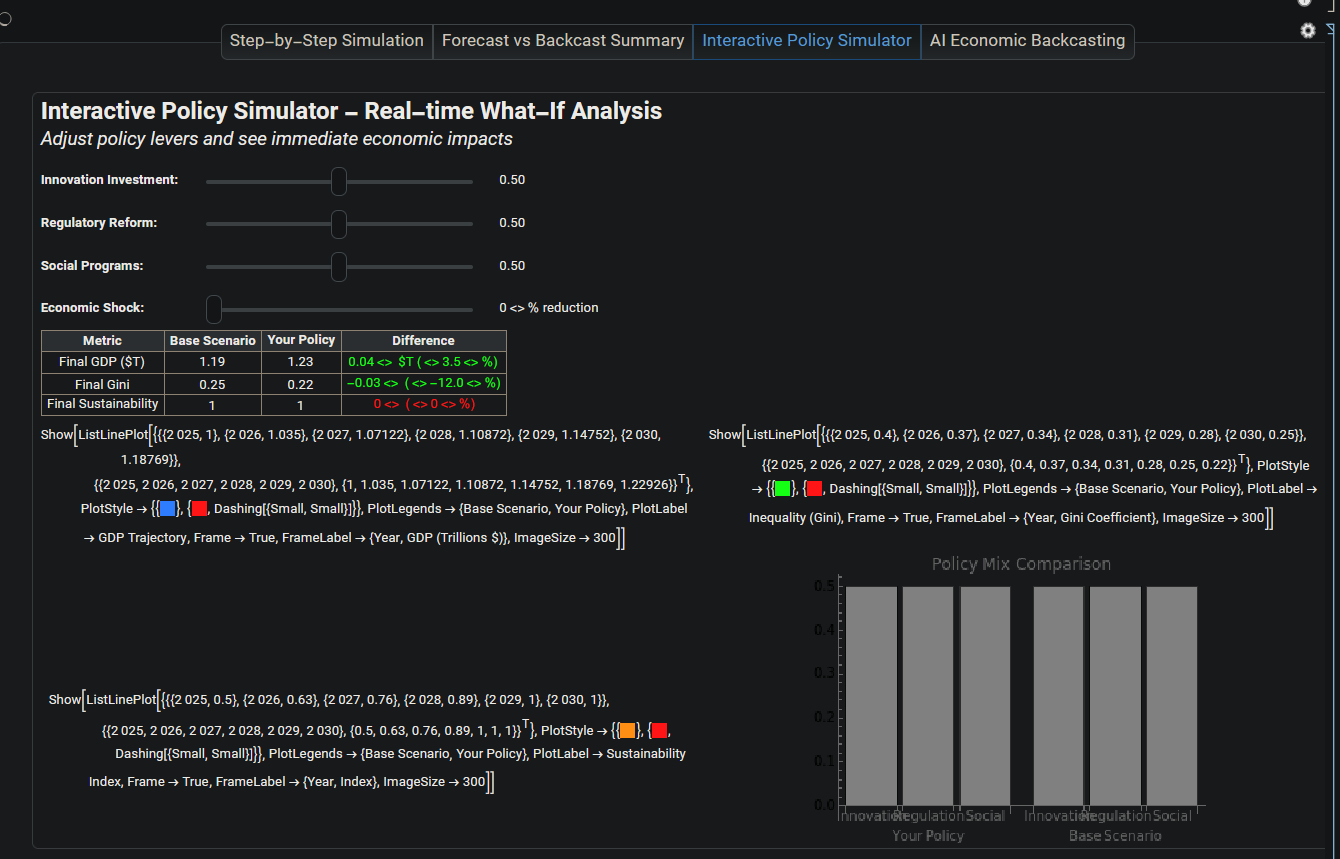
Interactive Policy Simulator showing balanced policy mix (0.5) with modest economic growth and reduced inequality.
-
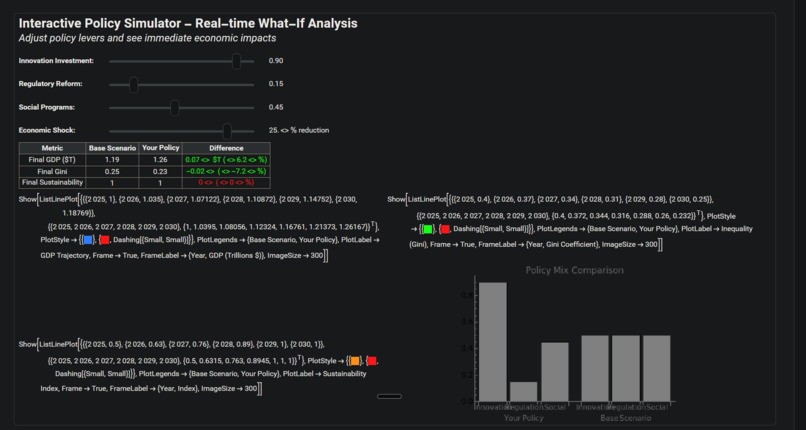
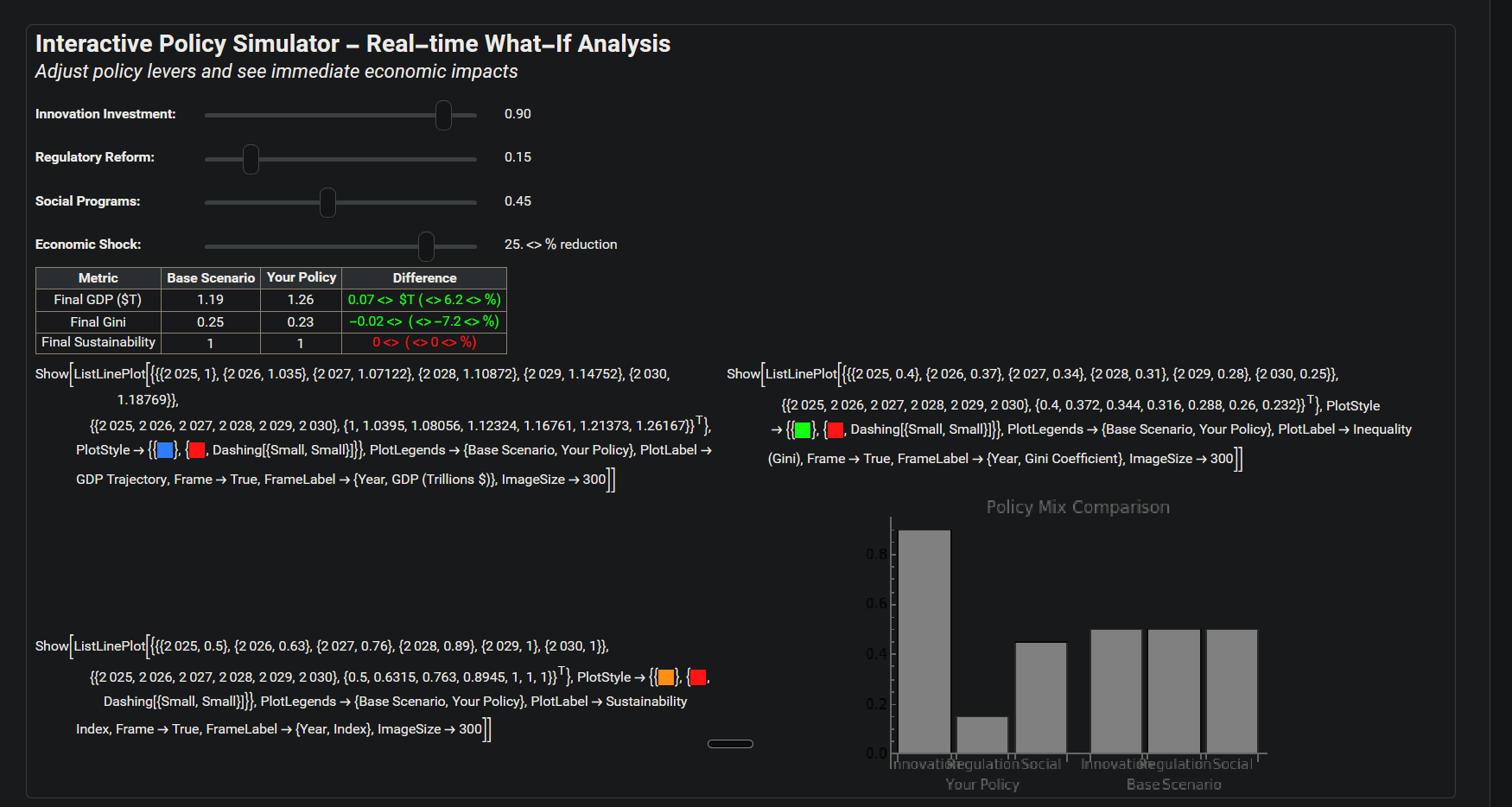
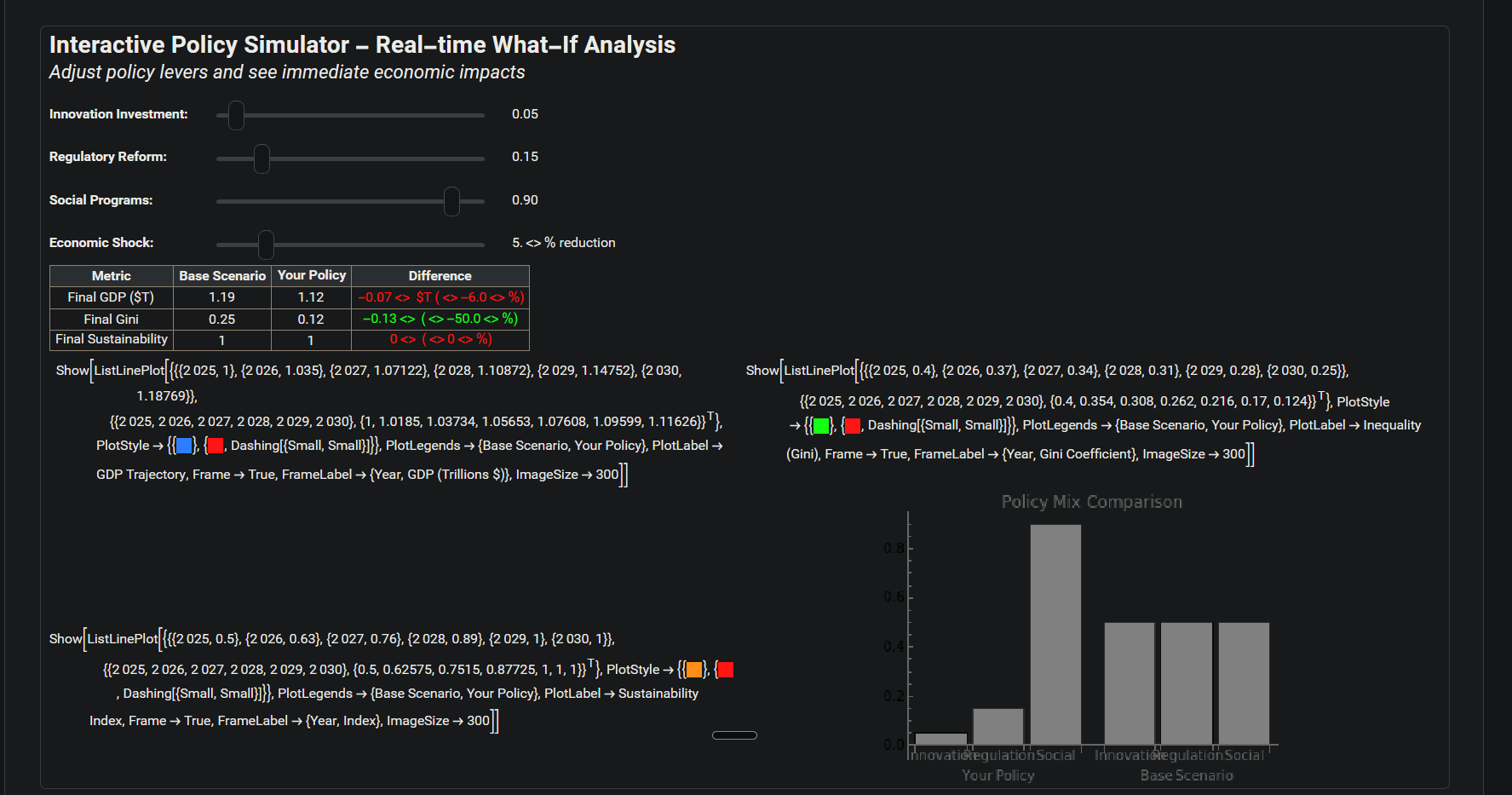
Policy simulator demonstrating high innovation (0.9), low regulation (0.15) strategy boosting GDP while cutting Gini.
-
-
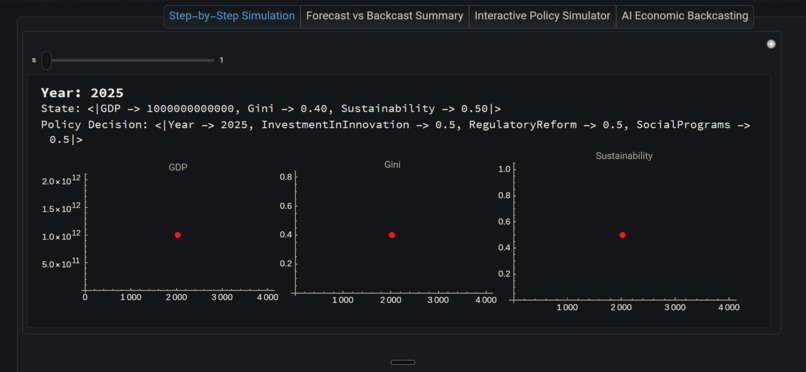
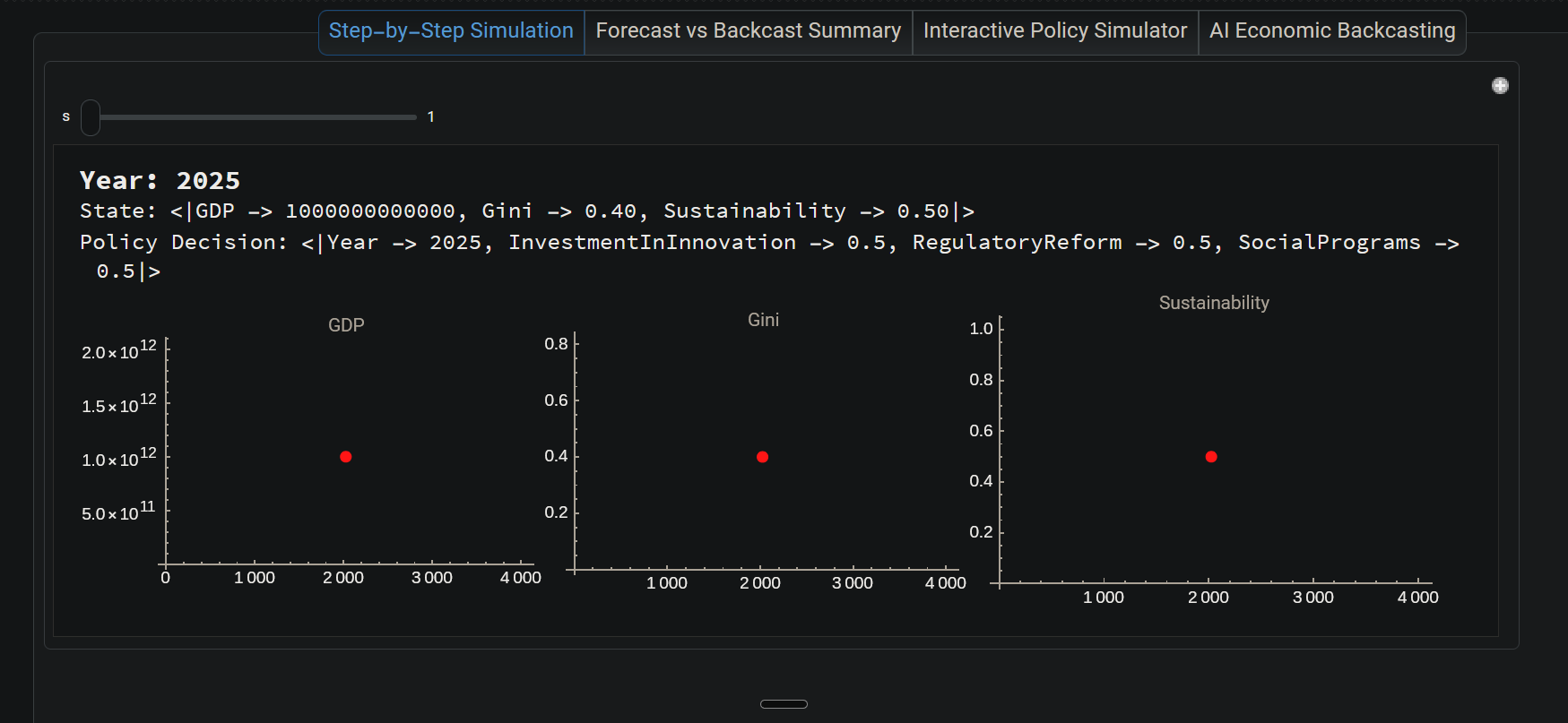
Initial economic state (2025) with baseline GDP of 1 trillion, Gini coefficient of 0.4, and sustainability index of 0.5.
-
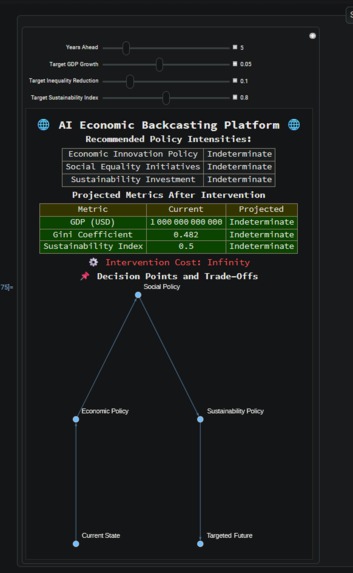
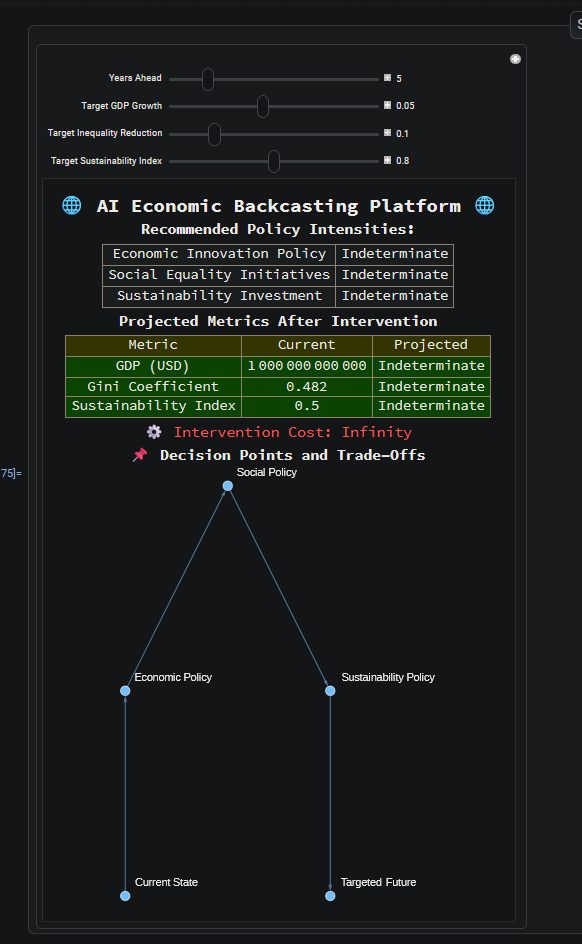
AI Economic Backcasting Platform showing "indeterminate" outcomes when targets exceed realistic policy capabilities.
-
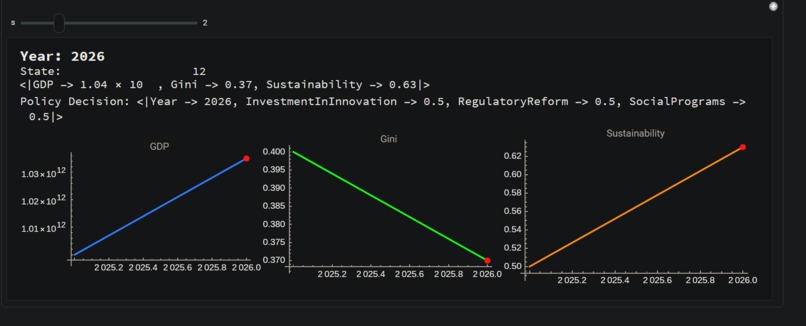
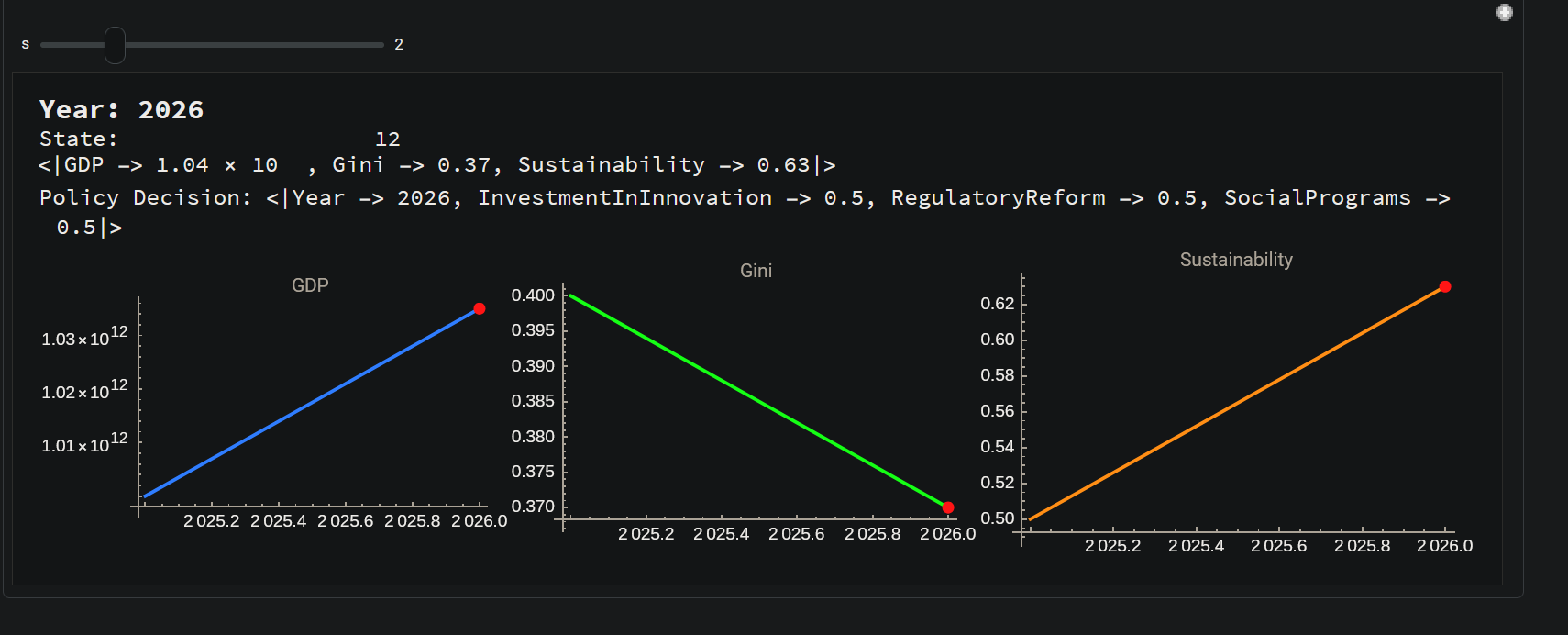
Year 2026 simulation showing positive trends in GDP growth, inequality reduction, and sustainability improvements.
Inspiration
The inspiration for DSINTYS (Don't Say I Never Told You So) emerged from the disconnect between short-term policy decisions and their long-term consequences—especially in light of the impending workforce disruptions driven by AI. As automation and artificial intelligence increasingly reshape industries, the potential for significant job displacements is becoming impossible to ignore. Yet, policymakers often focus on immediate political wins without fully considering the lasting impacts on society.
Our goal with DSINTYS is to bridge this gap. We wanted to create a tool that not only forecasts economic trends but also backcasts from an ideal future—one where economic growth, sustainability, and equality coalesce rather than conflict. DSINTYS is designed to help policymakers start meaningful conversations and develop proactive strategies to mitigate adverse outcomes, ensuring that future economic transitions are both equitable and sustainable.
What It Does
DSINTYS is an AI-powered economic simulation platform that fuses machine learning forecasting with backcasting optimization to chart sustainable economic development pathways. The system:
- Forecasts Economic Scenarios: Uses ensemble ML models (combining RandomForest and LSTM neural networks) to project future economic trends, drawing on historical data and current policy signals.
- Backcasts Optimal Policies: Works backward from desired future states (e.g., targeted GDP growth, reduced inequality, improved sustainability) to identify actionable policy steps required today.
- Interactive Dashboard: Empowers users to adjust key target parameters in real-time—visualizing the interplay between economic, social, and environmental outcomes.
- Policy Recommendations: Suggests precise policy intensities (for innovation investment, regulatory reform, and social programs) that balance growth, sustainability, and social equity.
- Trade-off Visualization: Presents complex multidimensional trade-offs in a clear triangular decision space, highlighting scenarios where win-win-win outcomes are possible.
- Cost Analysis: Quantifies intervention costs to aid in resource allocation and policy prioritization.
This platform is aimed at policymakers, economists, and educators who need to experiment with different policy mixes and immediately visualize their potential impacts.
How We Built It
DSINTYS was developed using the robust Wolfram Language ecosystem, which offered several key advantages:
- Computational Power: Wolfram's symbolic computation engine enabled us to implement complex optimization and simulation algorithms with ease.
- Built-in Knowledge: We leveraged curated economic datasets to set realistic baselines and dynamically validate our models.
- Advanced Visualization: Interactive graphics and dynamic interfaces (via Manipulate and DynamicModule) allow for real-time feedback as users adjust parameters.
- Dynamic Modeling: Our state-transition model captures both direct and indirect policy effects over time, providing a holistic view of the economic landscape.
Core Architecture:
- Machine Learning Ensemble: Combines RandomForest and LSTM models to forecast economic trends.
- Constraint Optimization: Utilizes NMinimize (with Differential Evolution) to backcast optimal policy pathways.
- Interactive Interface: A responsive dashboard facilitates step-by-step simulation and comparison of forecast versus backcast scenarios.
- Cloud Deployment: Designed for scalability and sharing with stakeholders via cloud-based services.
By avoiding hardcoded coefficients, our system dynamically computes transition scenarios based on real-world data from Wolfram's extensive data functions.
Challenges We Faced
Developing DSINTYS came with its share of challenges:
- Balancing Complexity and Usability: Creating a model that is both sophisticated and accessible required iterative design and extensive user feedback.
- Data-Driven Parameterization: Moving away from arbitrary coefficients to a data-driven approach demanded significant recalibration and validation.
- Performance Optimization: Initial backcasting optimizations were computationally intensive, necessitating performance enhancements and caching strategies.
- Visualizing Multidimensional Data: Iterative design was required to effectively present complex relationships between economic, social, and environmental factors.
- Cloud Deployment: Deploying interactive elements to the cloud introduced technical hurdles that were overcome through robust testing and optimization.
- Communicating Uncertainty: Representing forecast confidence intervals and scenario variability without overwhelming users was a key design challenge.
Accomplishments We're Proud Of
Our team is especially proud of the following achievements with DSINTYS:
- Real-Time Interactive Simulation: Developed an intuitive dashboard that allows users to step through economic scenarios in real-time.
- Robust Backcasting Algorithm: Implemented a reliable backcasting engine that works effectively across diverse economic environments.
- Intuitive Visualization: Created a clear, triangular decision-space visualization that communicates complex trade-offs between competing policy goals.
- Data-Driven Modeling: Successfully integrated real-world economic data, ensuring that simulations reflect realistic scenarios rather than arbitrary assumptions.
- Actionable Policy Insights: Delivered specific, quantifiable policy recommendations that help translate simulation insights into real-world actions.
What We Learned
Throughout the development of DSINTYS, our team gained valuable insights:
- The Art of Economic Modeling: Striking the right balance between abstraction and detail is crucial.
- Interdisciplinary Collaboration: Bridging economic theory, data science, and user experience design requires a common language and frequent communication.
- Iterative Prototyping: Rapid prototyping and iterative design are key to refining complex systems.
- Visualization's Impact: The way data is presented fundamentally influences decision-making.
- Creative Problem-Solving: Technical limitations can inspire innovative solutions.
- Systems Thinking for Sustainability: An integrated approach that considers economic, social, and environmental factors is essential for sustainable development.
We also deepened our understanding of Wolfram Language's capabilities in optimization, symbolic computation, and interactive visualization.
What's Next for DSINTYS-Economic Simulator
Our vision for DSINTYS is ambitious and includes several potential expansions:
- Region-Specific Models: Tailor simulations to account for regional differences in economic structures, regulations, and social systems.
- Expanded Metrics: Incorporate additional indicators such as employment quality, educational outcomes, and public health.
- Enhanced Data Integration: Integrate real-time economic and climate data to further refine predictions.
- Advanced ML Capabilities: Explore more sophisticated deep learning models to improve forecasting accuracy.
- Collaborative Features: Develop multi-user functionalities to enable collaborative scenario planning.
- API Development: Create APIs for seamless integration with other planning and analysis tools.
- Automated Narrative Generation: Implement natural language generation to provide clear, plain-language policy insights.
Our ultimate vision is for DSINTYS to become a standard tool for evidence-based policymaking, equipping governments, NGOs, and academic institutions with the insights needed to navigate the economic transitions driven by AI and other disruptive forces.

Log in or sign up for Devpost to join the conversation.