Inspiration
Living in a major European city, I saw friends struggle to find reliable nightlife spots, book VIP tables hassle-free, or stay safe after hours. The chaos of scouring social media for events, worrying about age checks, or finding a safe ride home sparked the idea: create a one-stop platform that makes nightlife easy, safe, and premium. I wanted to turn late-night outings from stressful to seamless—no more missed events, sketchy ride shares, or complicated bookings.
What it does
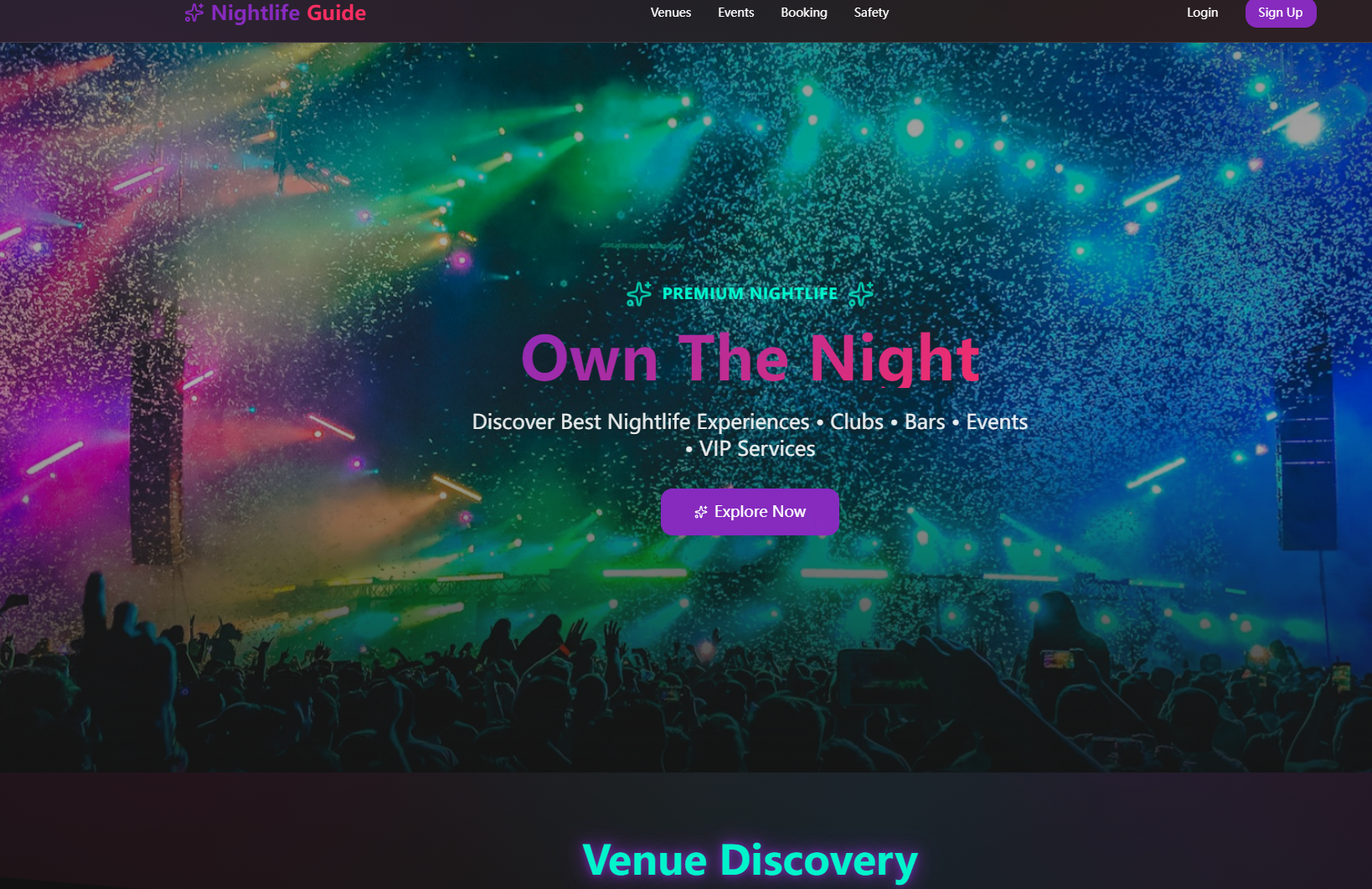
Own The Night is a nightlife discovery & booking platform for adults 21+. It lets users explore curated venues (clubs, bars, live music spots), book VIP tables/bottle service, join event guest lists, and access safety tools like emergency contacts and safe ride bookings. Every detail—from neon-accented dark UI to location filters—centers on making nights out unforgettable and secure.
How we built it
We started with wireframing the dark premium UI (focused on glass-morphism cards and soft ambient color spots) using Figma. For development, we used React for the front-end (responsive grids for venue/event cards, form validation for bookings) and Node.js/Express for the back-end. MongoDB stored user data, bookings, and venue details; we integrated Mapbox API for location embeds and third-party ride APIs for safe transit. We prioritized z-index management to ensure background glow effects never hindered readability.
Challenges we ran into
The biggest hurdle was balancing visual flair (the ambient color spots) with usability—we tested 10+ opacity/blur combinations to keep text/cards readable. Age verification logic also posed challenges: ensuring server-side DOB validation blocked underage users without breaking the sign-up flow. Additionally, integrating external ride APIs required fallback logic for regions where the service was unavailable.
Accomplishments that we're proud of
We built a fully responsive platform that looks and feels premium (true to the dark neon theme) while being functional. The venue filter/search works flawlessly across devices, and the safety tools (emergency contact, safe ride) add real value. Most importantly, user testing confirmed the UI is intuitive—no one struggled to book a table or find an event.
What we learned
We mastered balancing design aesthetics with accessibility—ambient visuals don’t have to sacrifice usability. We also learned the importance of edge-case handling (e.g., sold-out events, missing form fields) for a smooth user experience. Backend-frontend sync for booking data taught us to prioritize clear API contracts and error handling.
What's next for this project
First, we’ll add payment gateway integration to process table/bottle service payments (currently request-only). We’re also building a venue owner dashboard for real-time booking management, and testing an AI recommendation engine to suggest spots based on user history. Finally, we’ll expand to more European cities and add push notifications for event reminders.

Log in or sign up for Devpost to join the conversation.