-
-
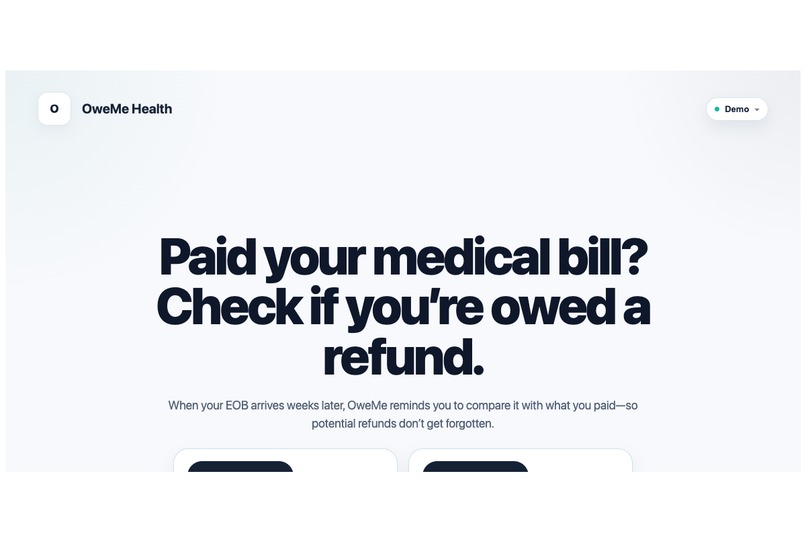
Homepage
-
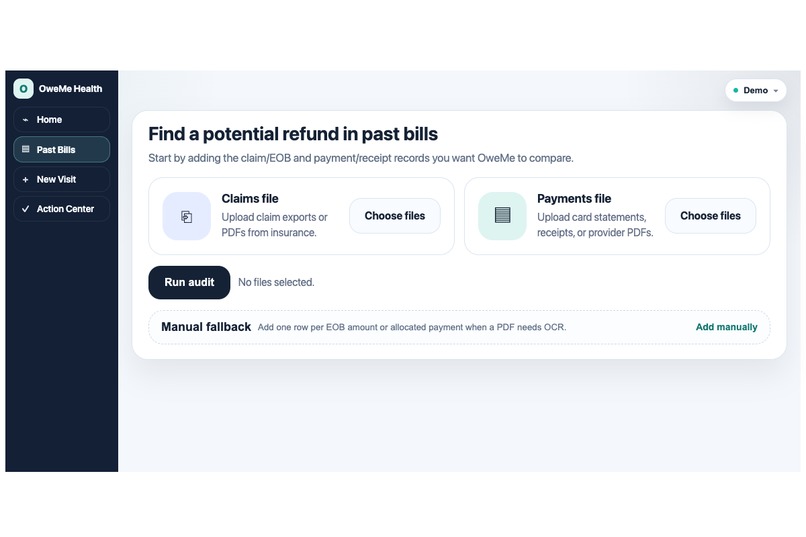
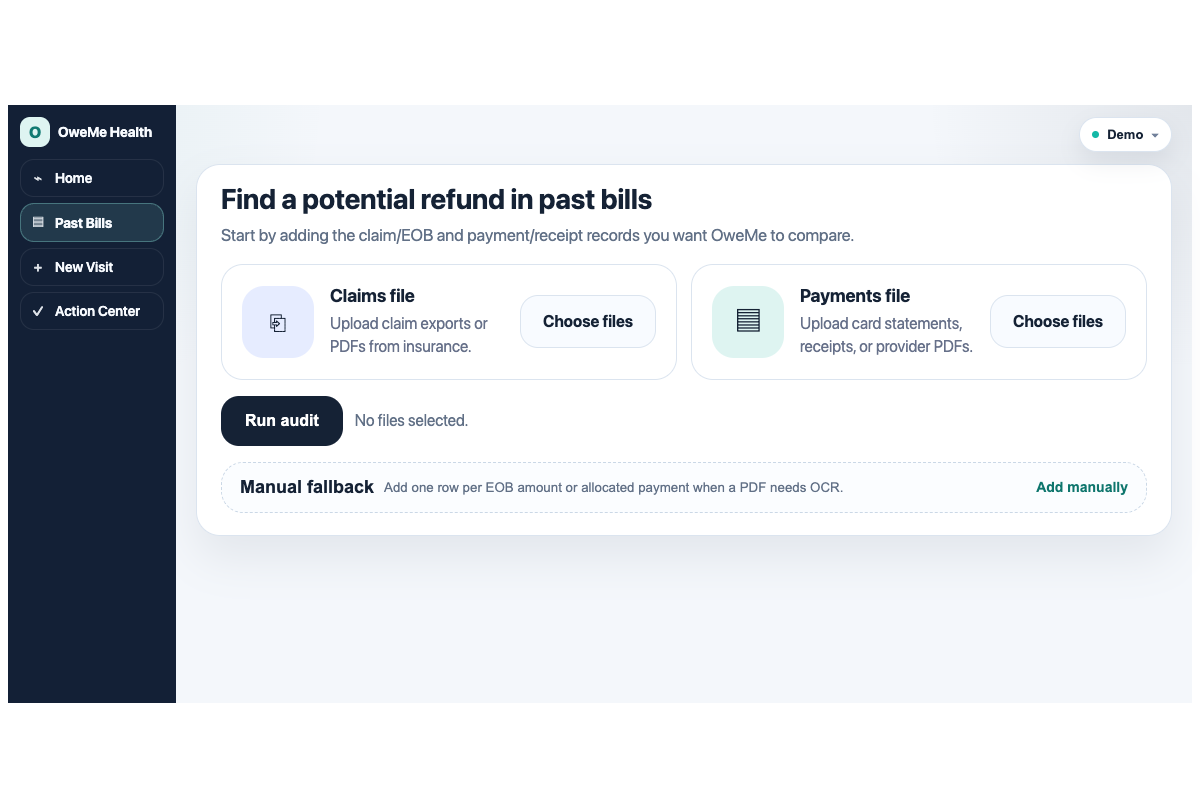
Check past bills
-
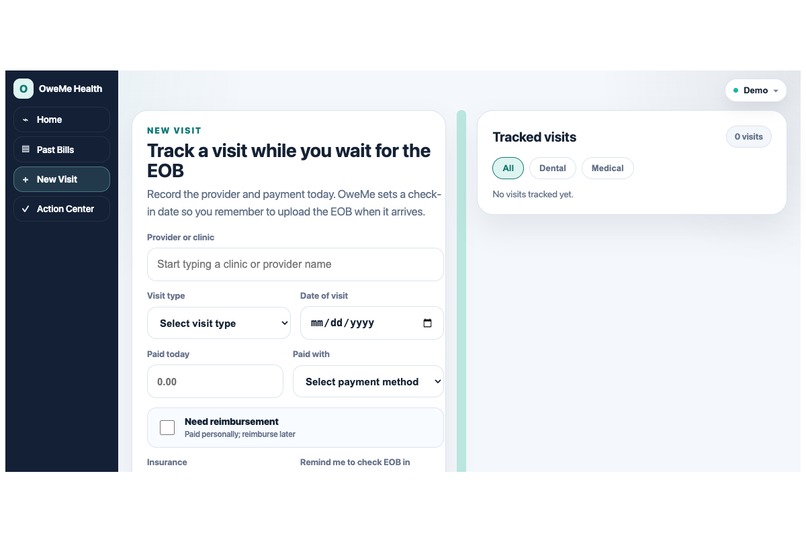
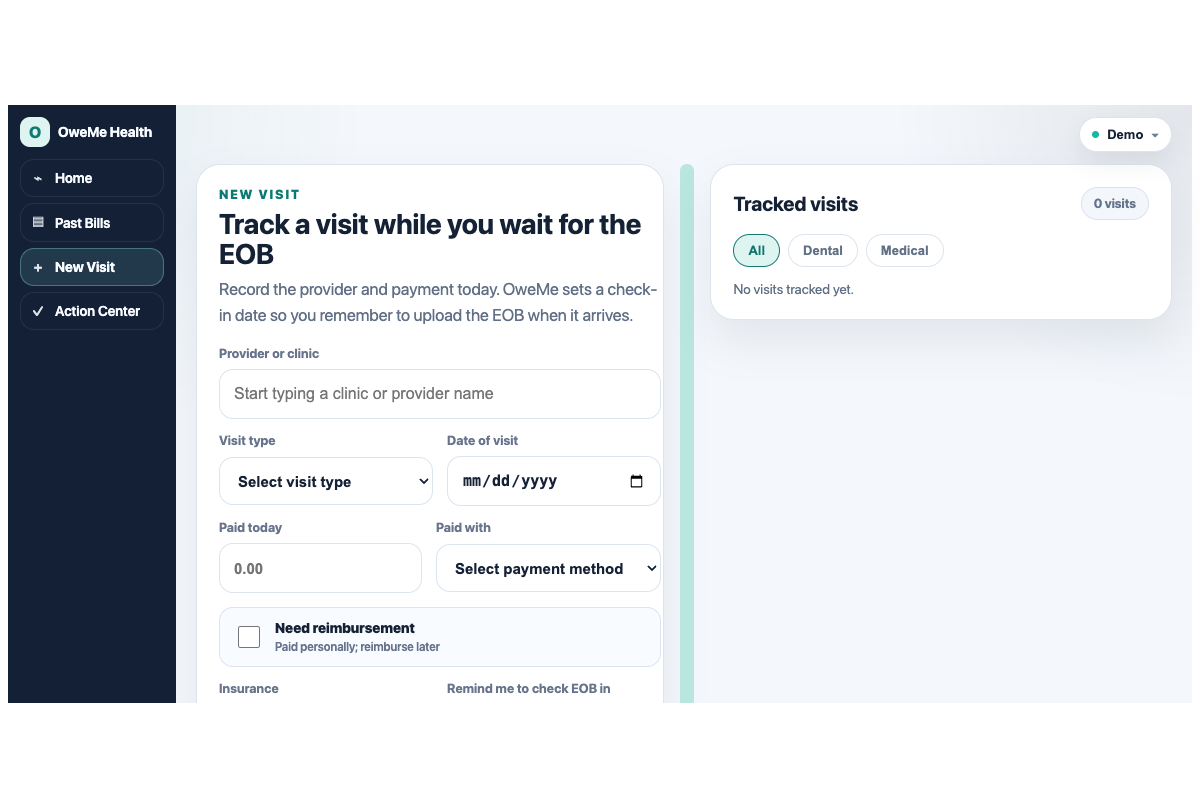
Track a new visit
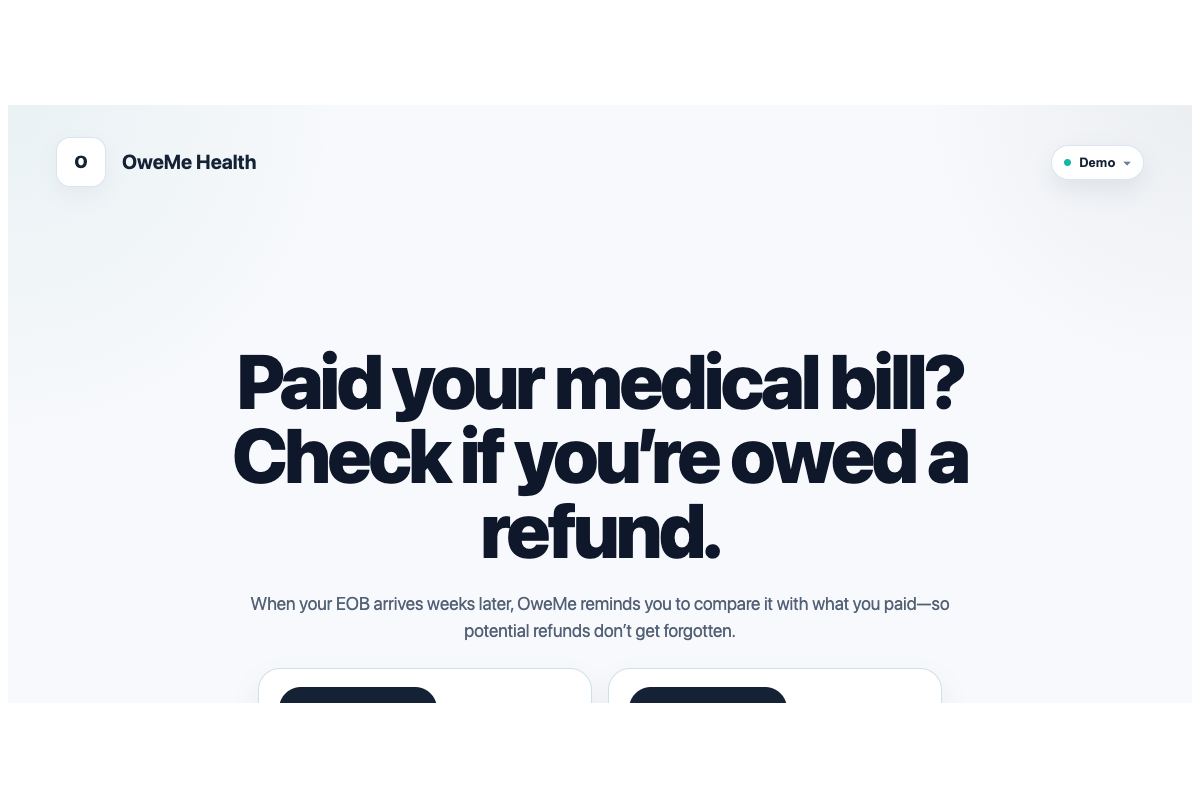
Inspiration
Medical billing is confusing even for insured patients. People may know what they paid at the clinic, but weeks later they still have to figure out whether that payment actually matched the insurance claim, whether it was allocated correctly, or whether they should have been refunded.
I built OweMe Health from a real experience. By comparing my own payment records against insurance data, I found more than $800 that was later refunded. That made me realize how easy it is for patients to miss money that should come back to them.
What it does
OweMe Health is a private AI-assisted medical billing review tool.
It helps patients:
- log new medical or dental visits
- upload past claims, EOBs, receipts, PDFs, and card statements
- compare insurance responsibility with actual payment records to flag overpayments, unclear matches, and missed refunds
- generate editable follow-up emails and call scripts for provider outreach
Instead of giving a black-box answer, OweMe shows the evidence behind each result so users can verify it and follow up with confidence.
How I built it
I built OweMe Health with:
- Next.js, React, and TypeScript for the product experience
- Supabase for authentication, storage, and application data
- a separate Python worker for parsing, normalization, and audit processing
The system ingests billing documents and payment records, normalizes them into a common structure, and surfaces findings in an evidence-first review workflow.
Challenges
The hardest part was matching messy real-world billing data. Claims, EOBs, receipts, and card statements often use different provider names, dates, descriptions, and amounts.
Another challenge was designing for trust. In healthcare finance, users need to see why something was flagged before they can act on it.
What’s next
Next, I want to improve provider-name matching, receipt ingestion, and payment reconciliation so OweMe can handle more real-world billing edge cases with less manual review.
OweMe Health helps patients understand not only what they owe, but when the system may owe them money back.
Built With
- data-reconciliation
- healthcare
- next.js
- ocr
- postgresql
- python
- react
- supabase
- typescript


Log in or sign up for Devpost to join the conversation.