-
-
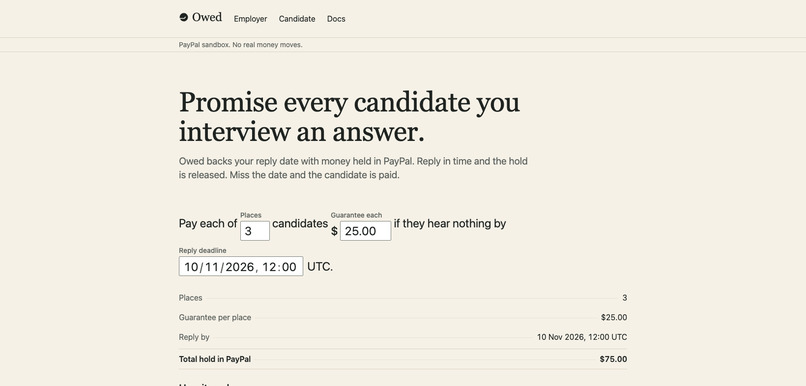
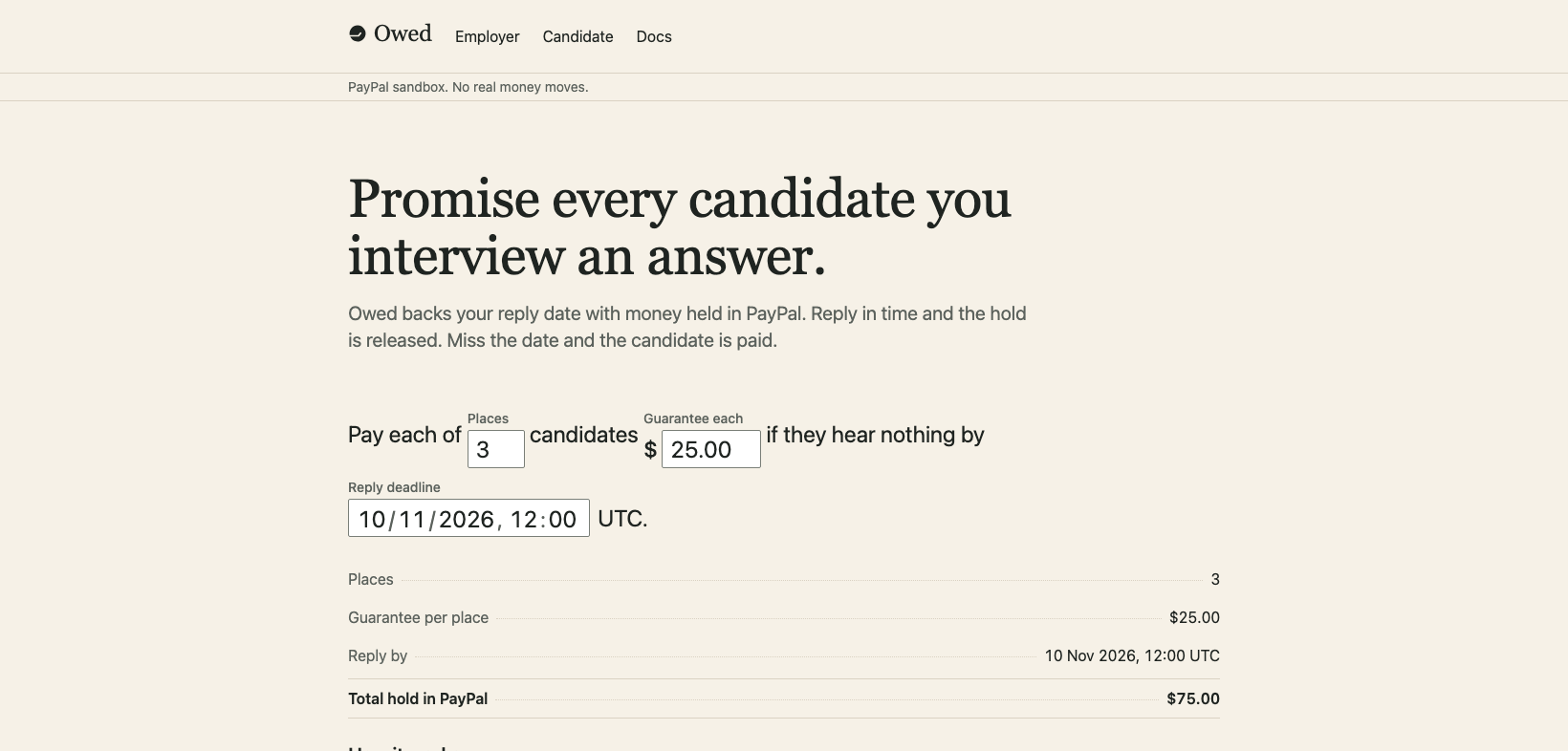
The landing page. An employer sets places, a guarantee and a reply date, and sees the total PayPal hold.
-
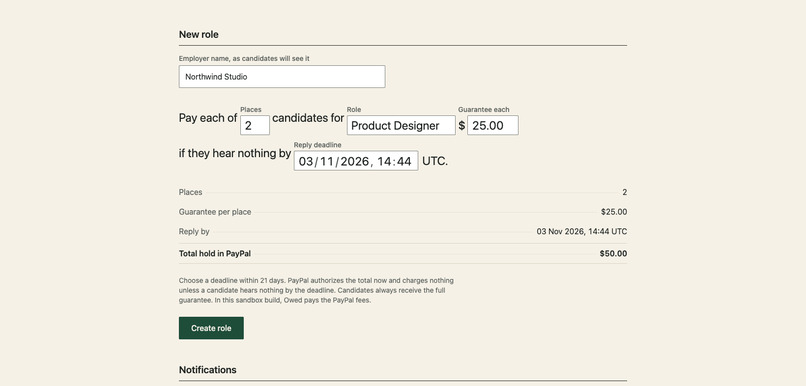
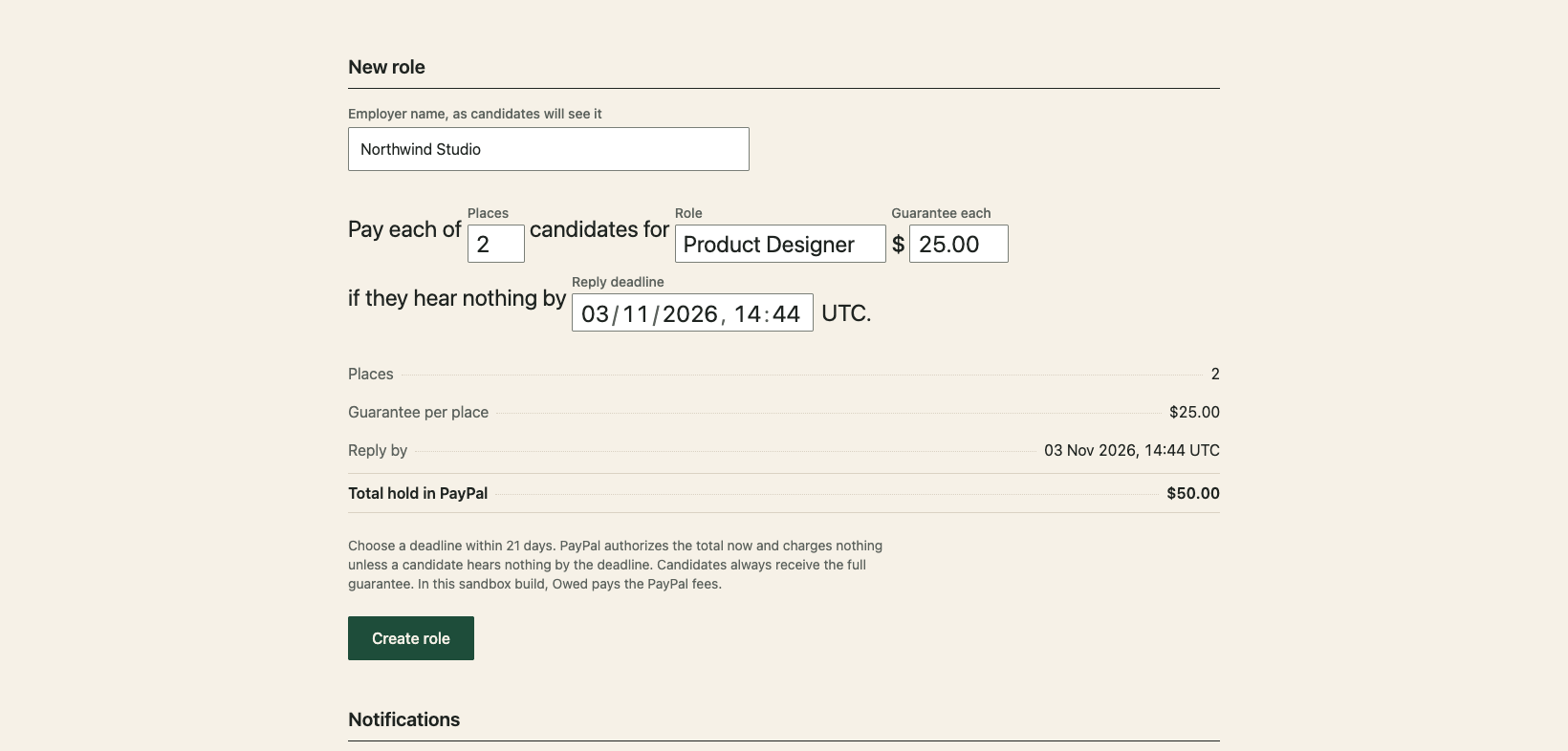
Northwind Studio creates a Product Designer role: 2 places, $25.00 each, $50.00 held in PayPal.
-
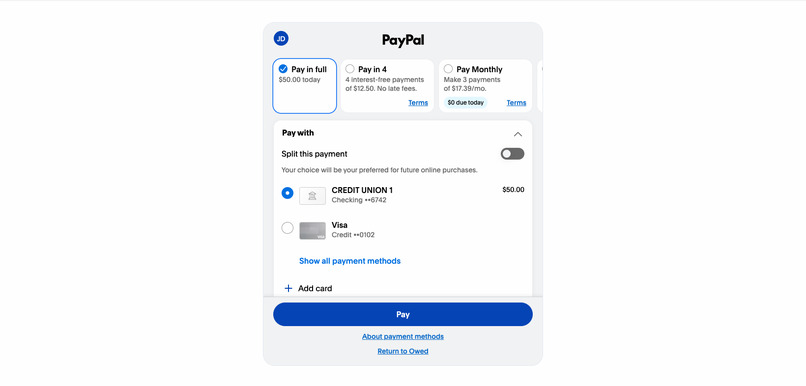
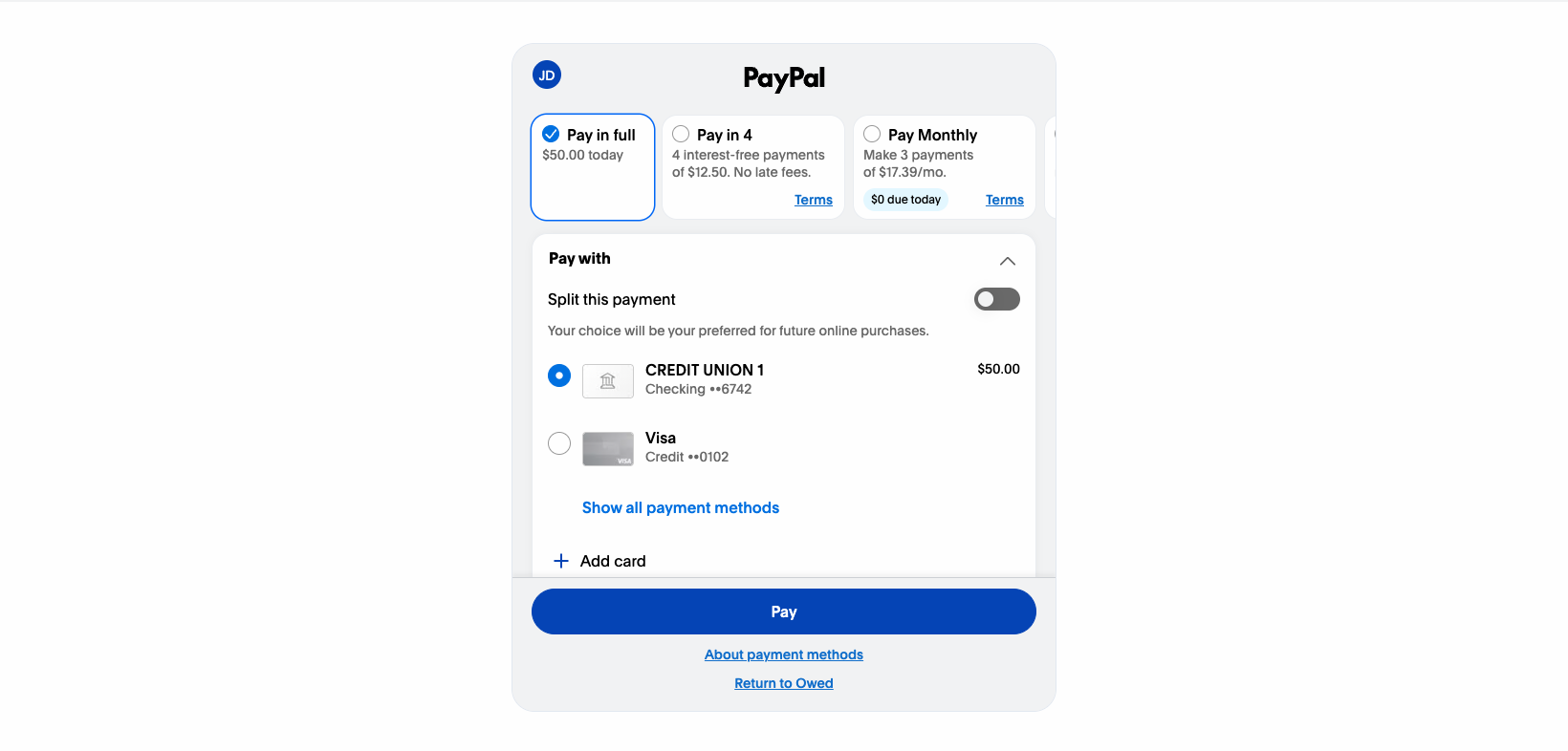
The employer approves the $50.00 hold in the PayPal sandbox. Nobody is charged yet.
-
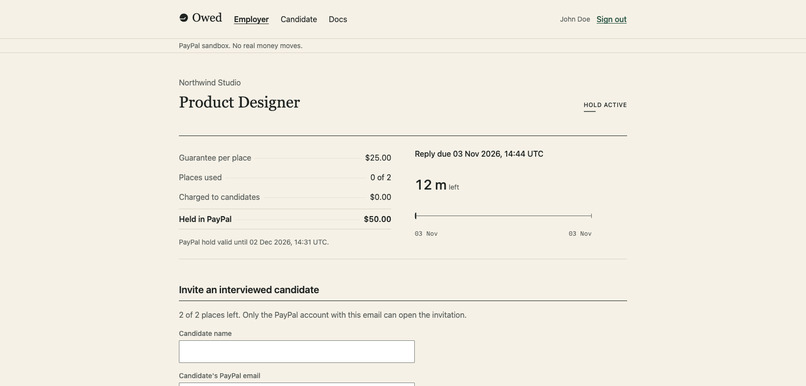
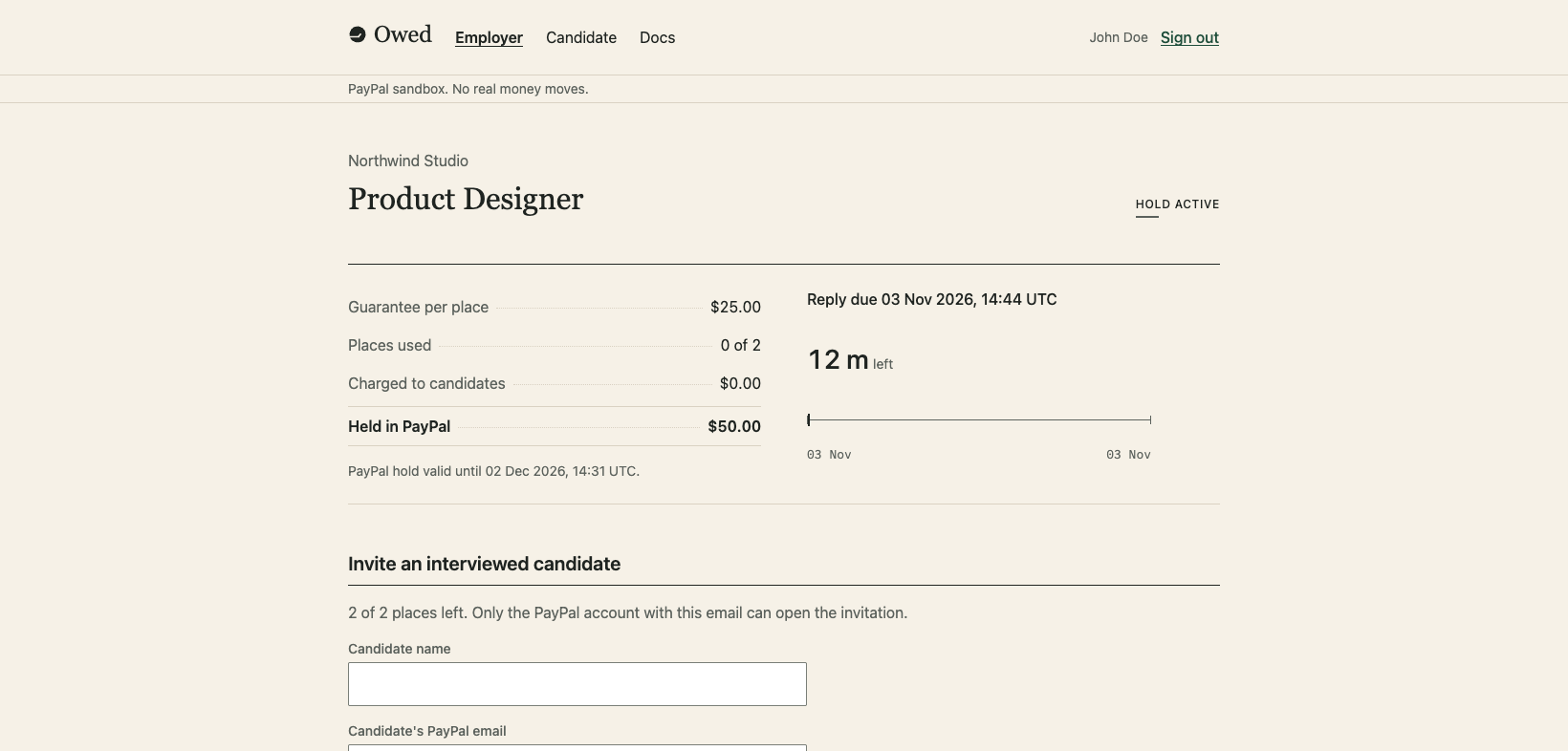
The role is live with the hold active, and the employer invites Dave.
-
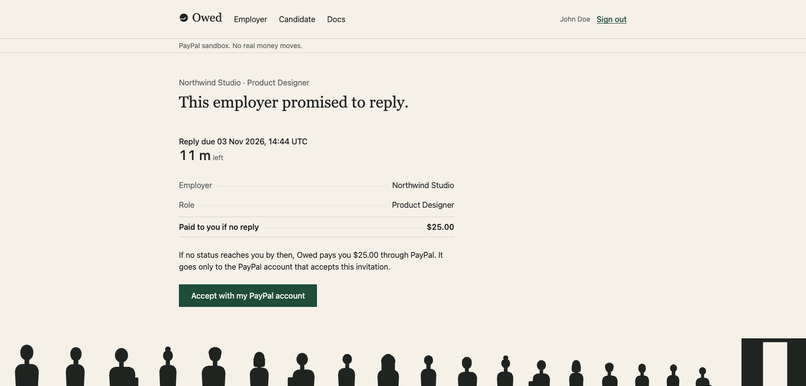
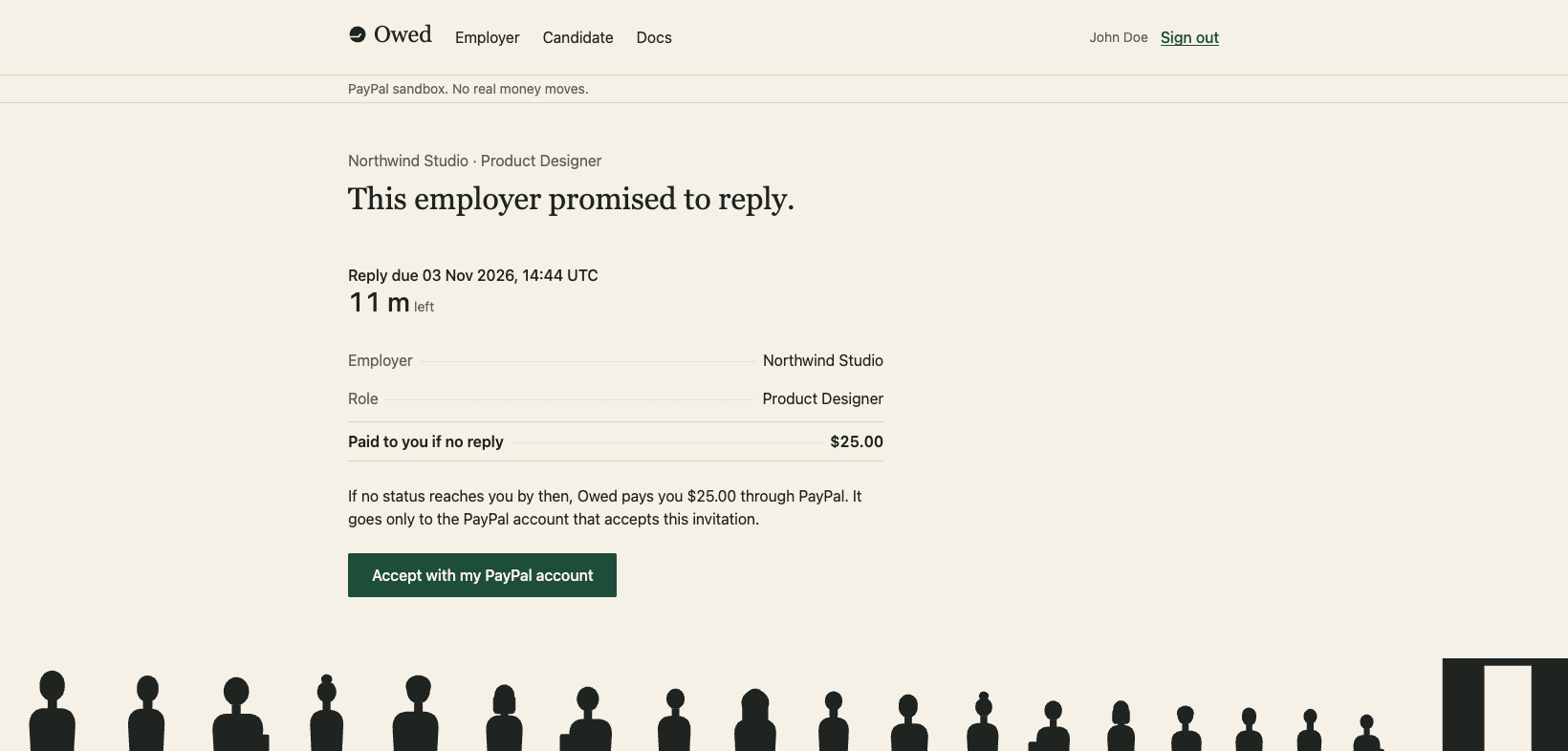
Dave opens his private invitation and sees the promise: an answer by the date, or $25.00.
-
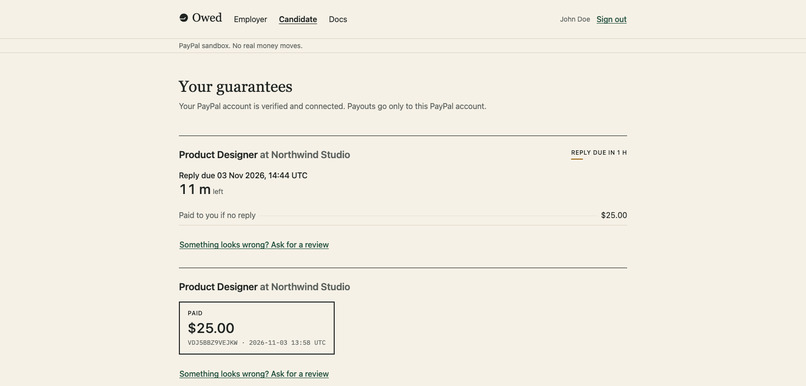
Dave accepts with PayPal. Only his PayPal account could accept it.
-
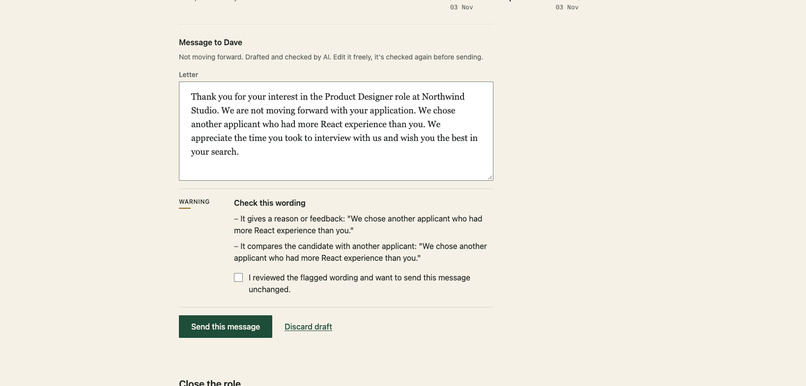
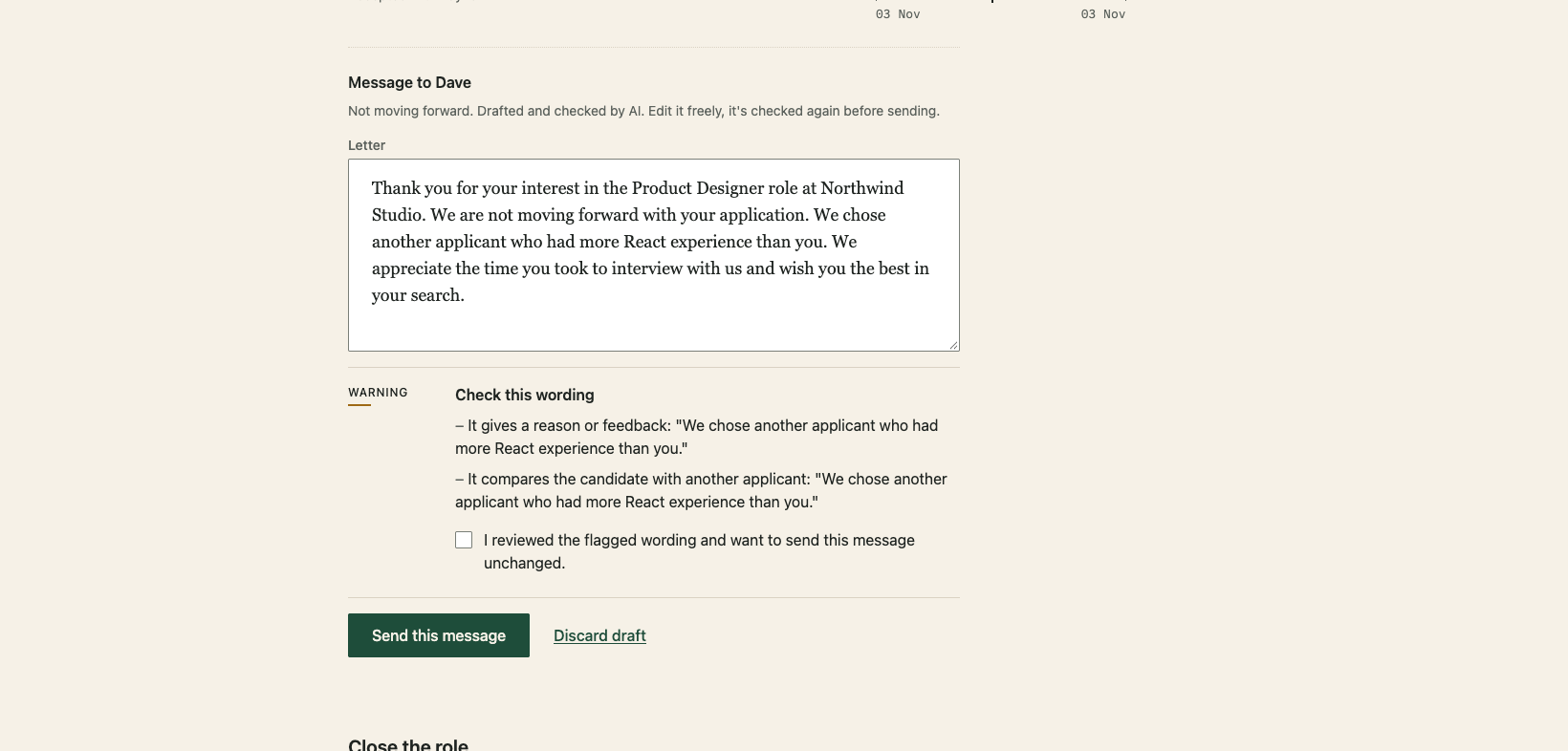
The AI drafts a closure message and flags wording that gives a reason and compares candidates.
-
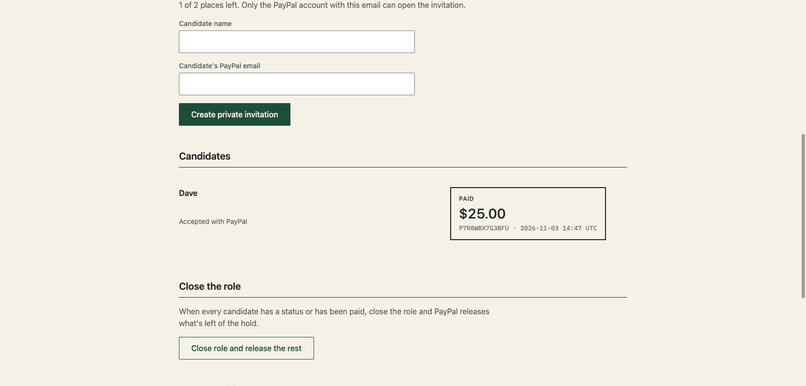
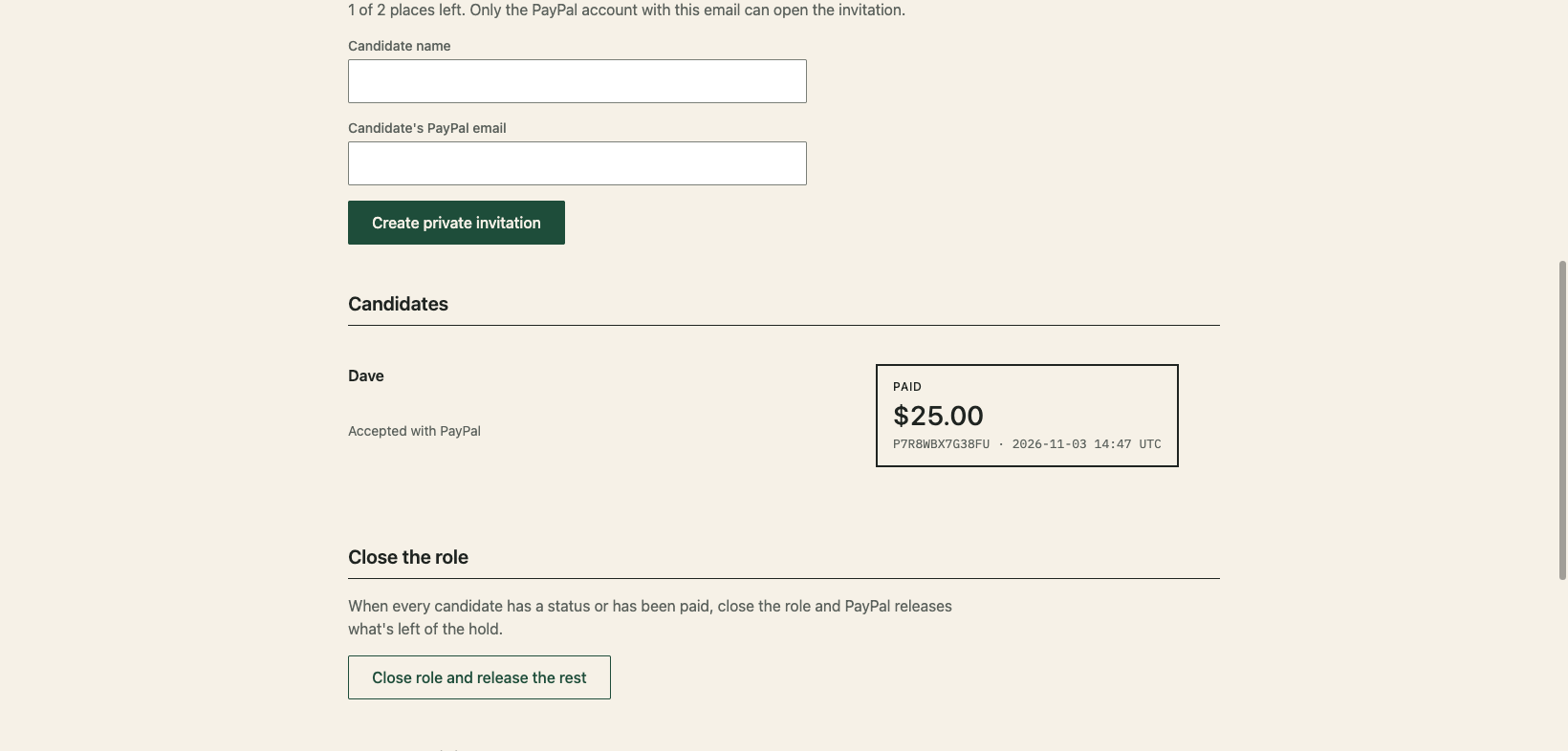
Northwind misses the date. Owed's rules charge $25.00 from the hold and pay Dave through PayPal.
-
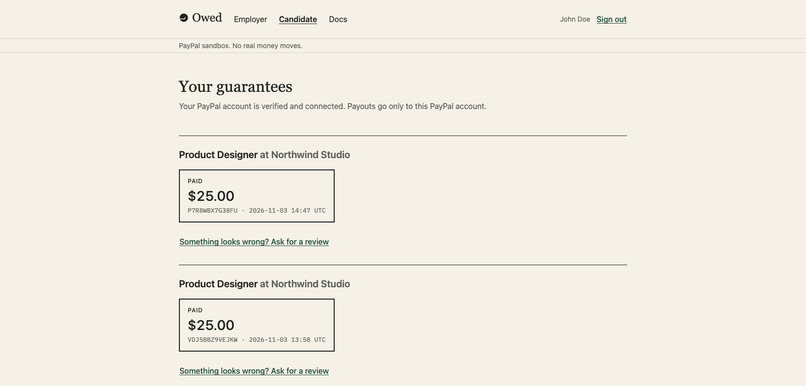
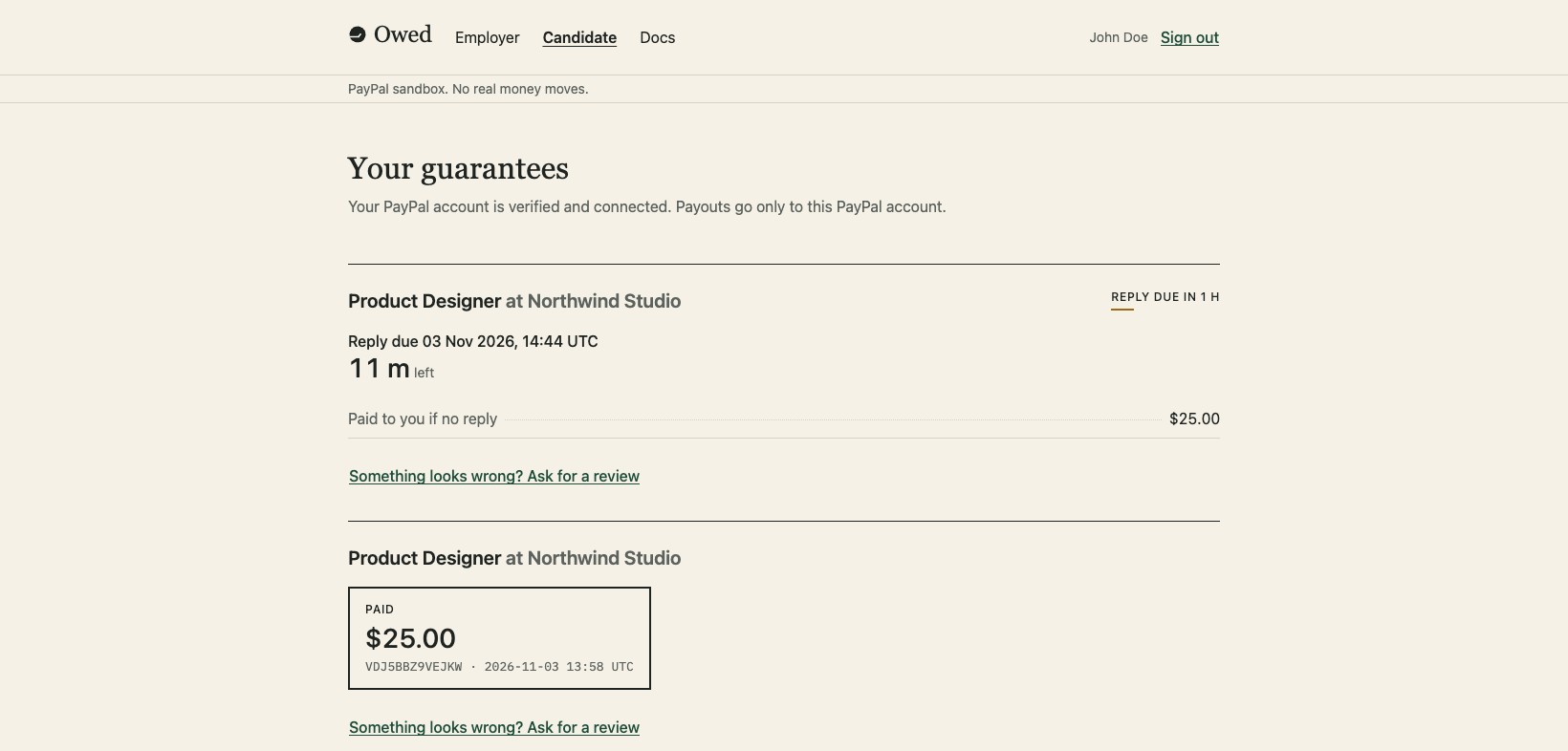
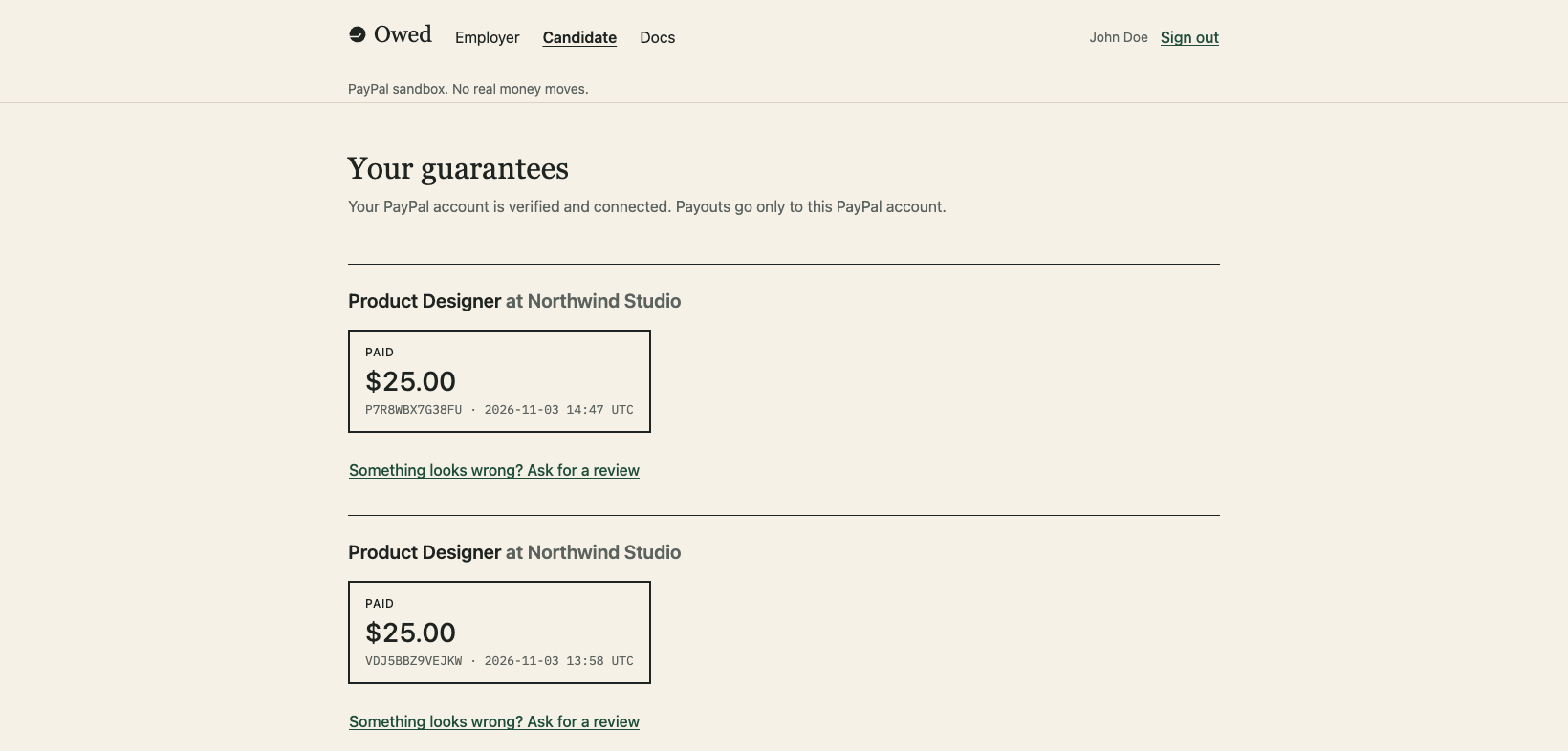
Dave's page shows the $25.00 payout with its PayPal reference.
-
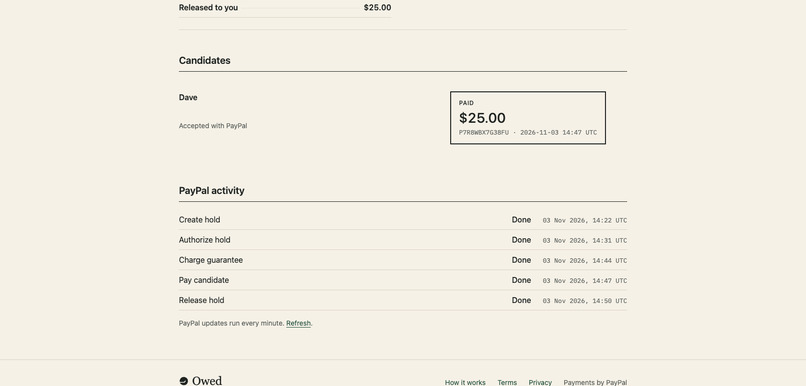
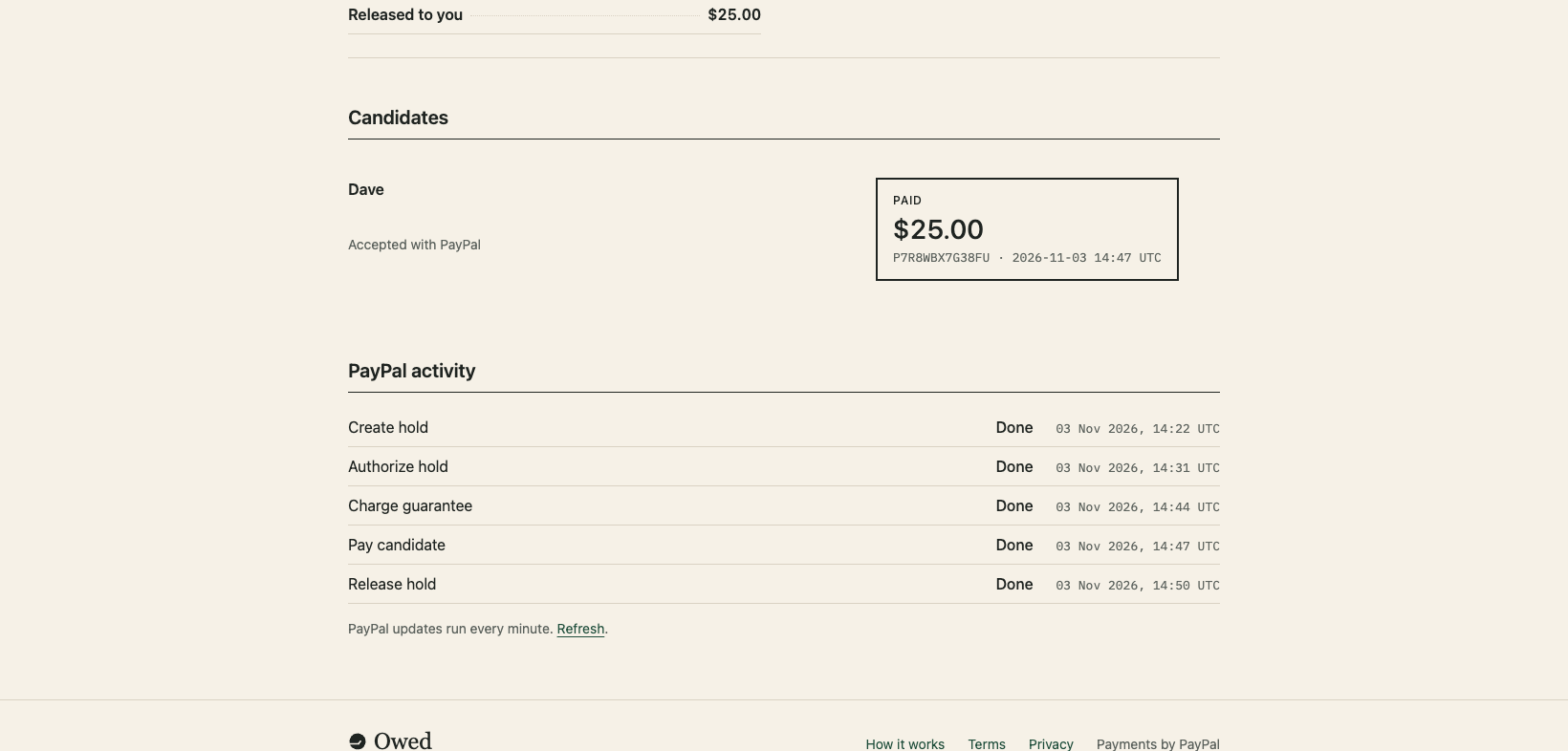
The PayPal activity list: hold created, authorized, guarantee charged, Dave paid, rest of the hold released.
Inspiration
Candidates prepare for an interview, take time off work, sit through every round, and then hear nothing. 63% of US job candidates say they were left in the dark after an interview (Greenhouse 2025 Workforce & Hiring Report). A promise to reply costs an employer nothing to break. We wanted it to cost something.
What it does
An employer opens a role and writes the promise as one sentence, for example "Pay each of 2 candidates for Product Designer $25 if they hear nothing by 3 Nov, 13:55 UTC." They approve one PayPal hold for the whole role. PayPal sets the money aside and nothing is charged.
Each interviewed candidate gets a private invitation. They sign in with PayPal, and only the PayPal account the invitation was sent to can accept it.
Before the date, the employer sends each candidate a status: moving forward, not moving forward, or still deciding with one new date. AI can write the first draft and checks the wording, flagging things like a rejection reason or a comparison with other applicants. The employer decides what goes out.
If the date passes with no status, fixed rules on the server charge that candidate's guarantee from the hold and pay it to them through PayPal. Nobody presses a button, and AI has no say. When the role closes, PayPal releases the rest of the hold.
How we built it
- Next.js 16, React 19 and TypeScript on Vercel, with Supabase for data and a scheduler that runs every minute.
- PayPal Orders v2 with an AUTHORIZE intent for the hold, Payments v2 for partial capture, reauthorization and void, Payouts to pay the candidate, and Log in with PayPal for identity.
- Orders and payments go through APIMatic's generated PayPal TypeScript SDK, built with APIMatic's Context Plugin.
- Every PayPal write carries a request ID from a stable business key, so a retry can't charge or pay twice. A timeout counts as an unknown outcome and is settled by reading PayPal back.
- Closure emails go through a durable outbox.
Challenges we ran into
- Getting PayPal's money states right: a hold, a partial charge, a payout and a release all have to agree, even when a request times out halfway.
- Keeping AI useful without letting it near the money.
Accomplishments that we're proud of
On the live demo, in the PayPal sandbox, an employer approved a $50.00 hold for two candidates. One candidate accepted with PayPal and heard nothing. When the date passed, Owed charged $25.00 and paid it to the candidate through PayPal, and closing the role released the other $25.00. That run is in the demo video.
What we learned
- A PayPal hold is a good fit for a promise. It sets money aside without charging anyone, lasts 29 days, and can be renewed once between day 4 and day 29. That window decided how far out an employer can set a reply date.
- One hold can pay several people. Taking part of it leaves the rest available, so one hold per role covers every candidate, and closing the role releases whatever is left.
- With money, a timeout isn't a failure. We gave every PayPal request a fixed ID built from what it's for, and when PayPal didn't answer we asked PayPal what happened instead of retrying blind. Sending the same payout twice was refused the second time, which proved the IDs work.
- A payout to an email with no PayPal account sits unclaimed, so Owed pays the PayPal account that accepted the invitation and never shows an unclaimed payout as paid.
- AI is useful for the words and risky near the money. It drafts a closure message and flags reasons, comparisons or age comments, but fixed server rules move every dollar.
- Plan before code. APIMatic's Context Plugin made us write a contract sheet for every PayPal call first, and that caught real SDK gaps early, like a missing header when a request had no body.
What's next
- Live PayPal, after a review of fees and compliance. Owed is sandbox only today.
- PayPal webhooks alongside the readback recovery that runs now.
- Real employers. Demand hasn't been tested yet.
AI tools used
- Devin (Cognition) wrote and tested the code, docs and demo video under the owner's direction.
- APIMatic Context Plugin for PayPal guided the SDK integration.
- In the app, OpenRouter with the free nvidia/nemotron-3.5-super-vl model drafts closure messages and reviews wording. It's advisory only.
- Kokoro text-to-speech (am_michael voice) narrates the demo video.
Try it
Live demo, PayPal sandbox with test money only: https://owed-vert-ten.vercel.app
Docs: https://owed-vert-ten.vercel.app/docs
Repo: https://github.com/CryptoZephyr/owed
Demo video: https://youtu.be/5Ymb56MXC1I
Built With
- apimatic
- next.js
- openrouter
- paypal
- react
- supabase
- typescript
- vercel
