-
-
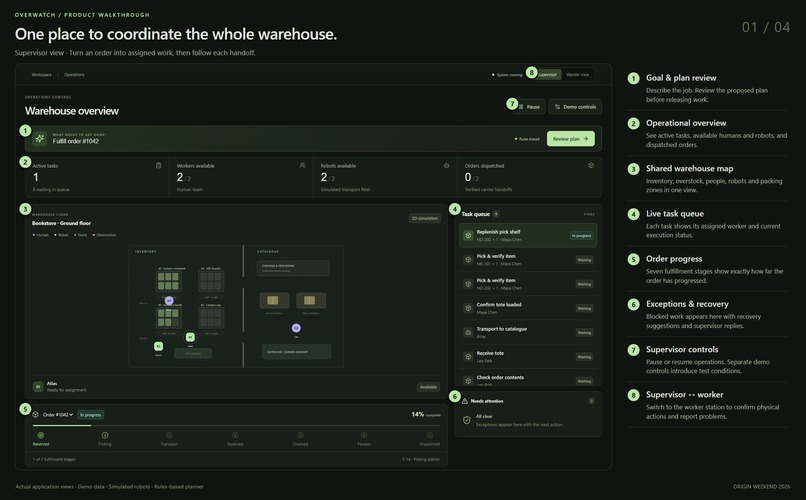
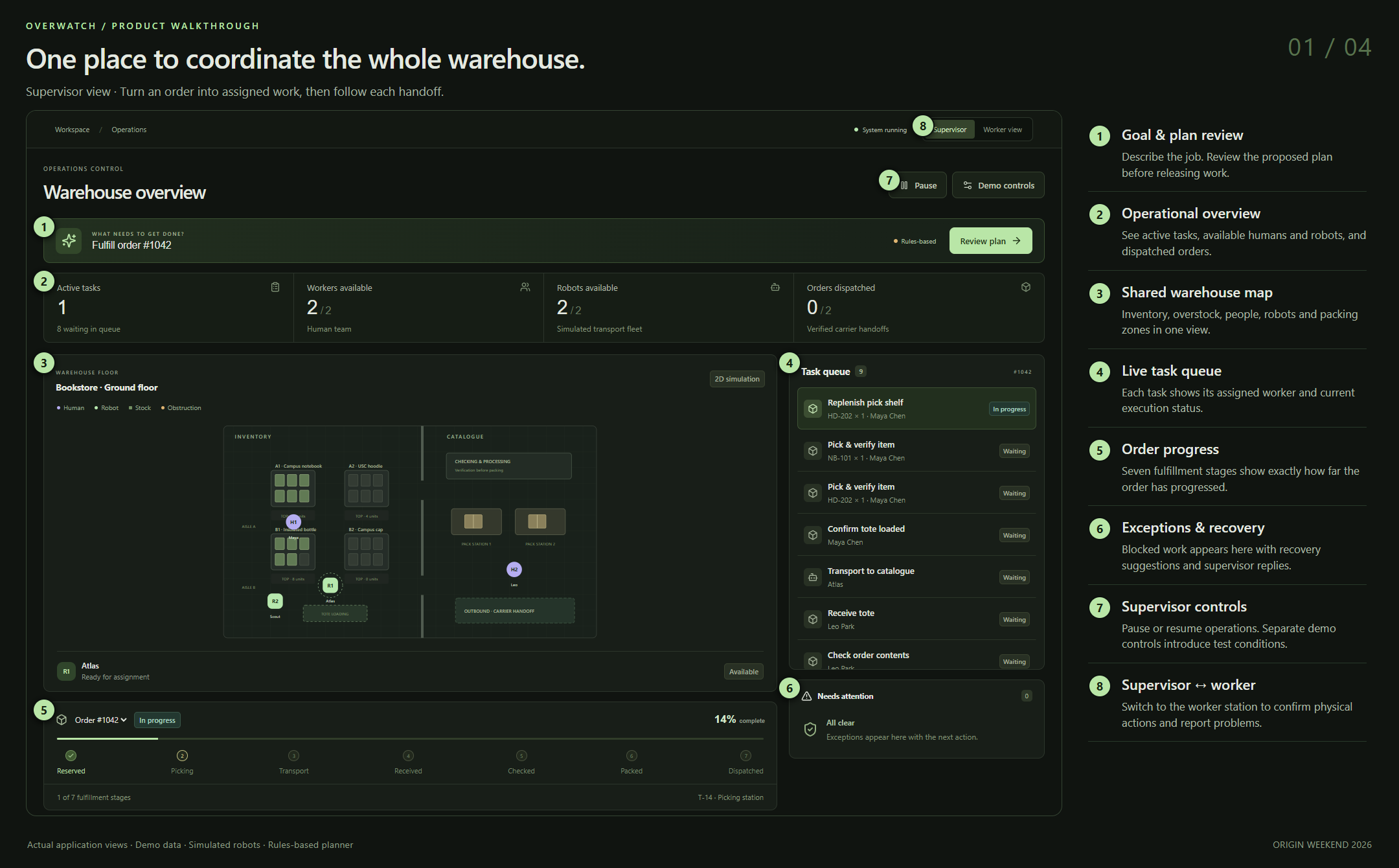
01-supervisor-dashboard
-
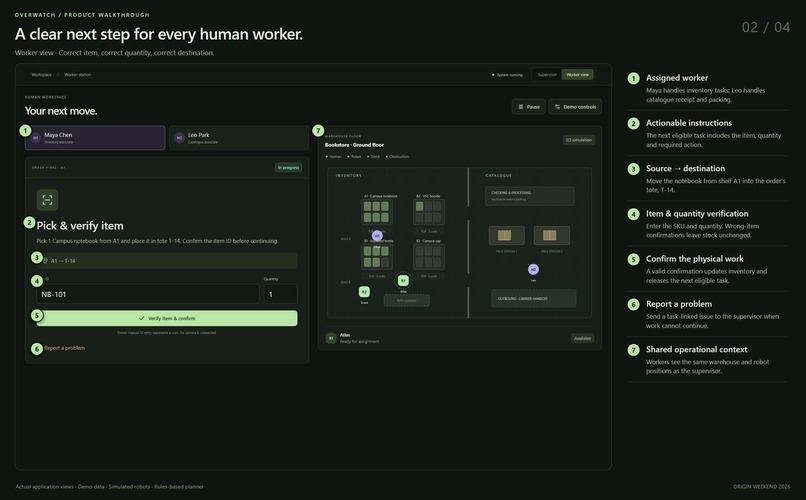
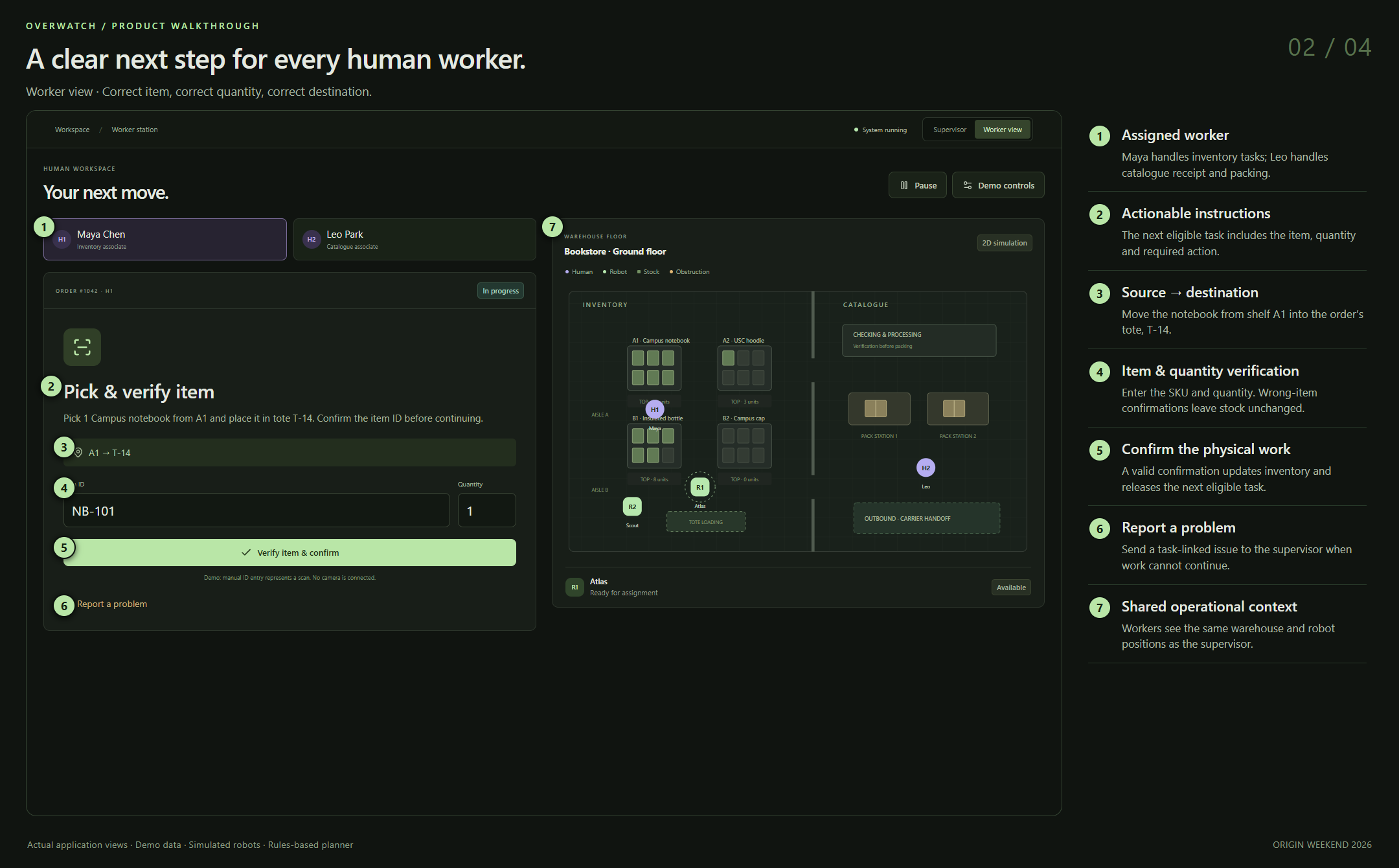
02-worker-verification
-
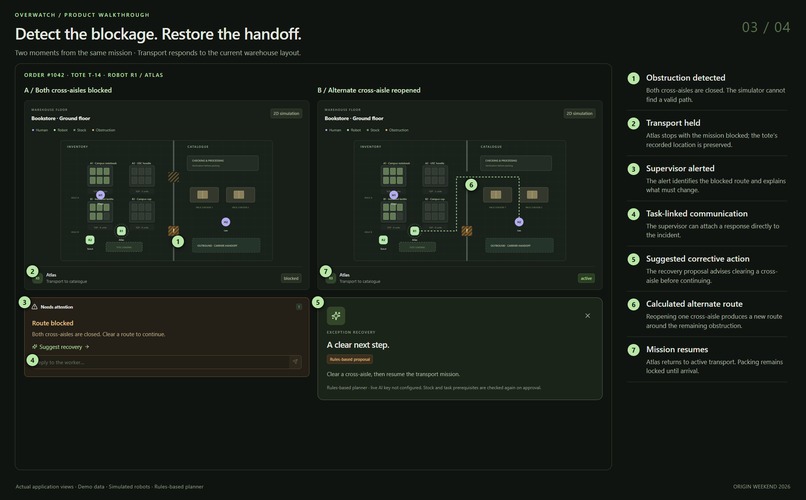
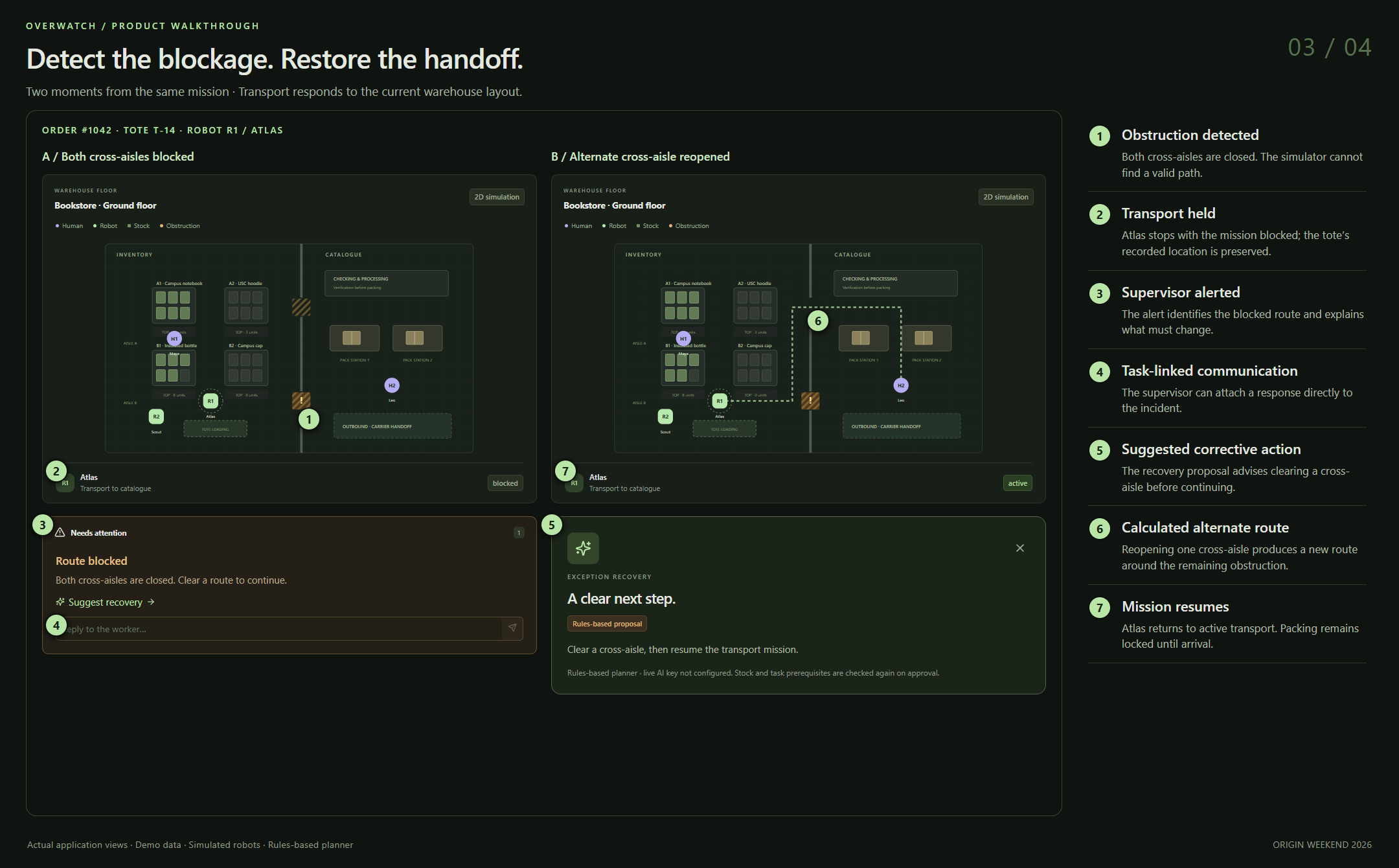
03-robot-routing-and-recovery
-
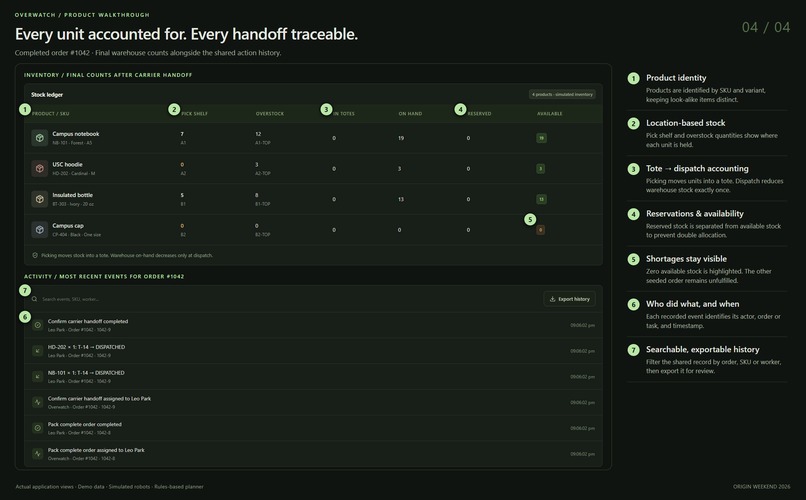
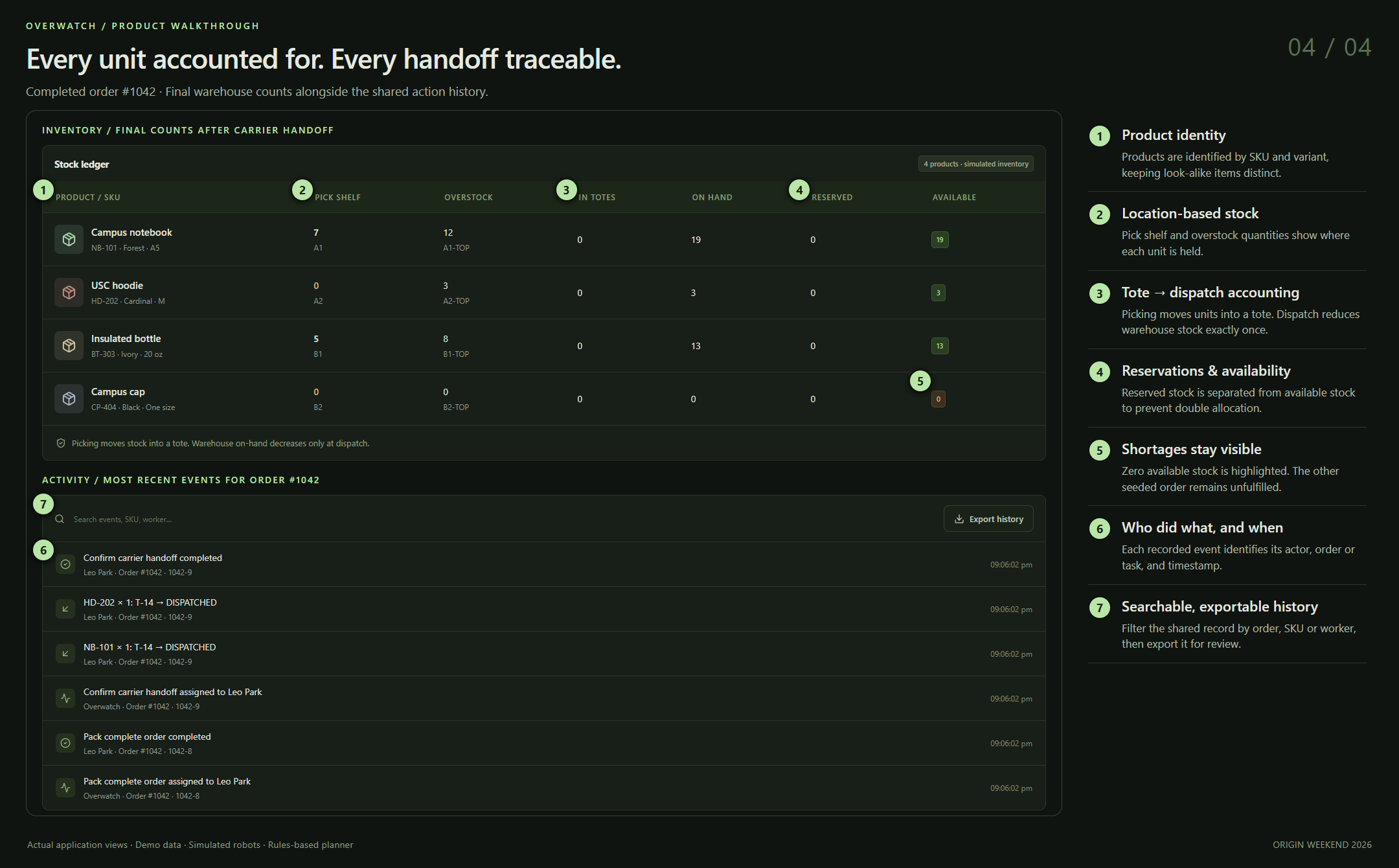
04-inventory-and-action-history
-
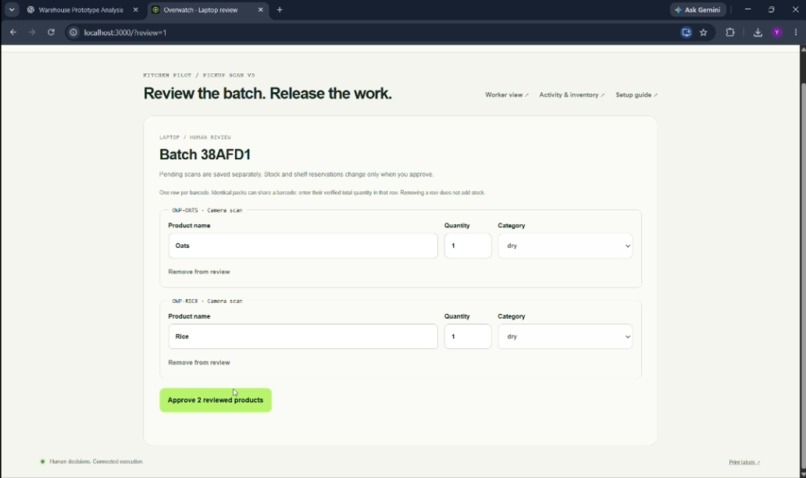
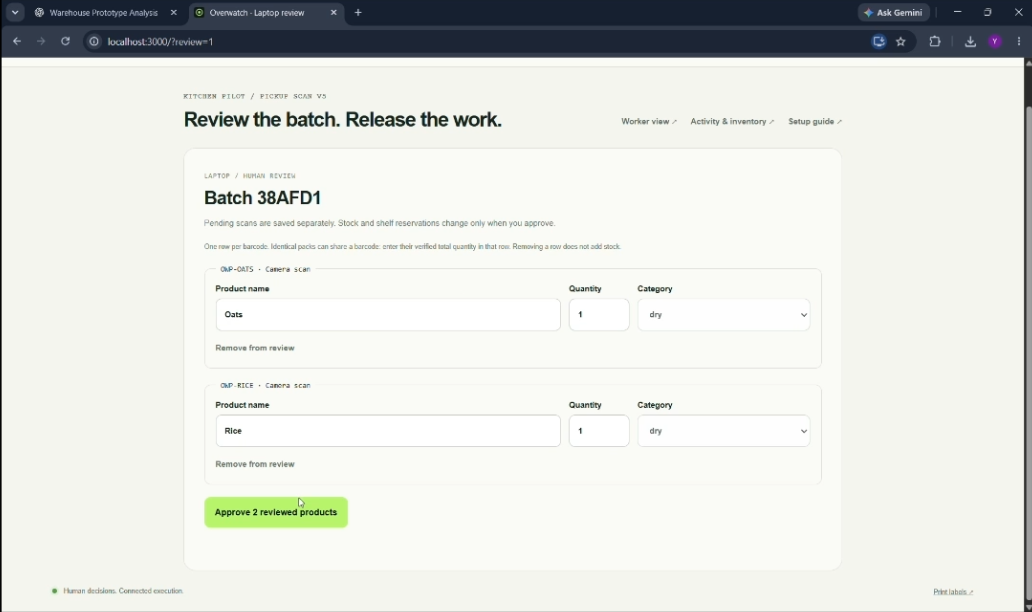
05-Review and approve scanned products
-
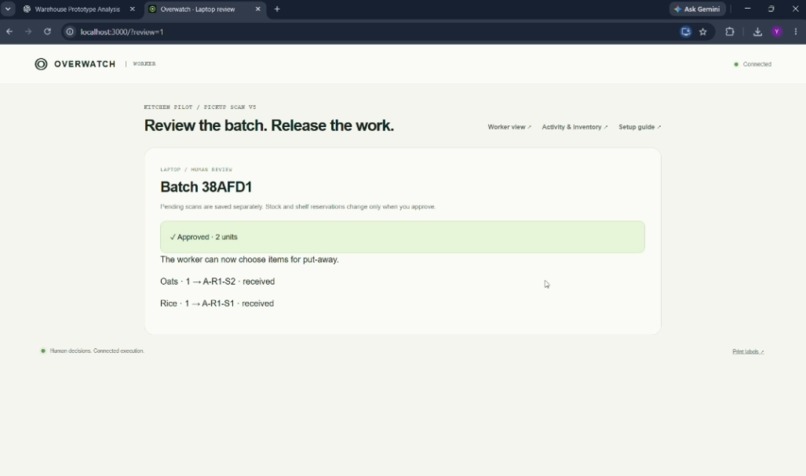
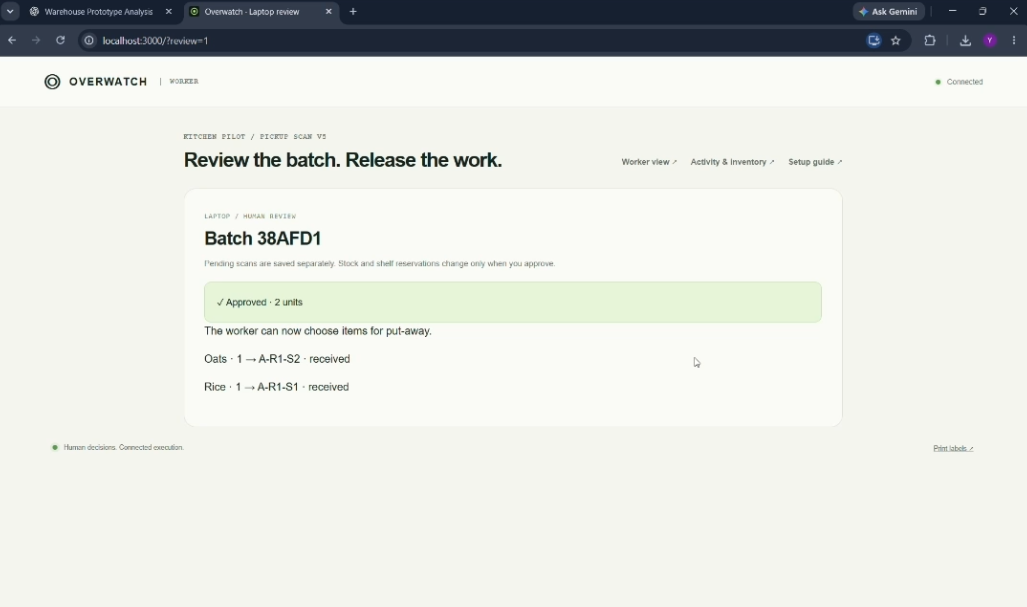
06-Batch approved. Ready for put-away
-
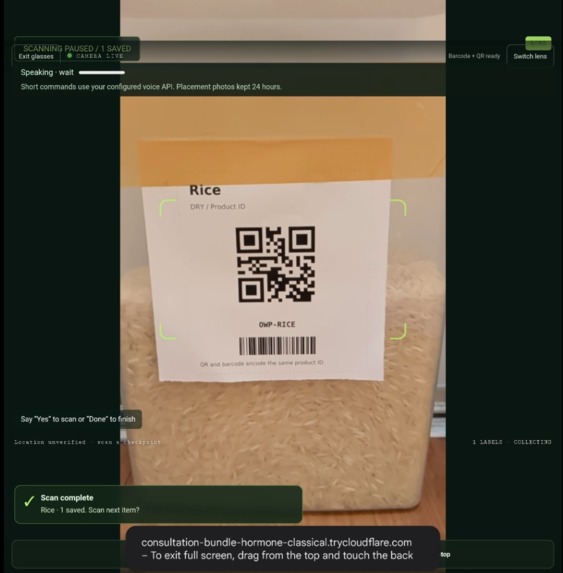
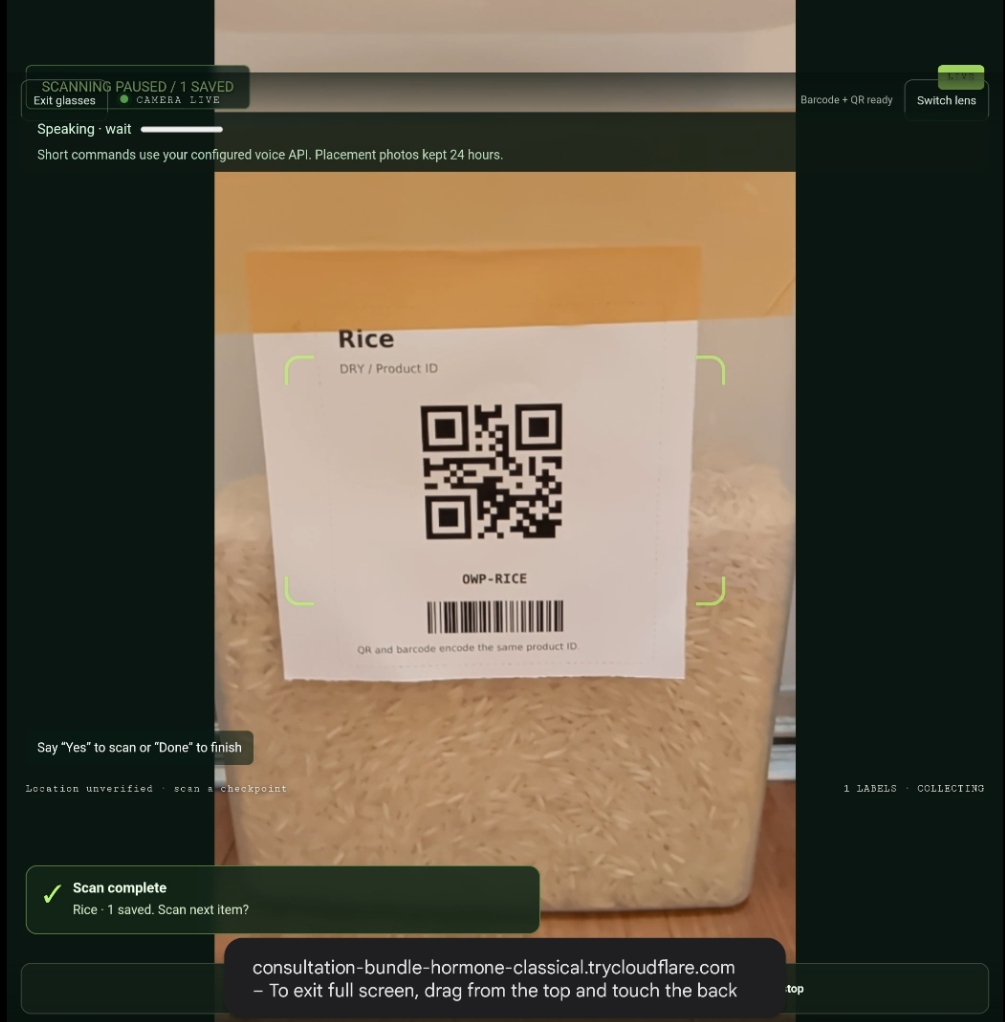
07-Voice-guided product scanning
-
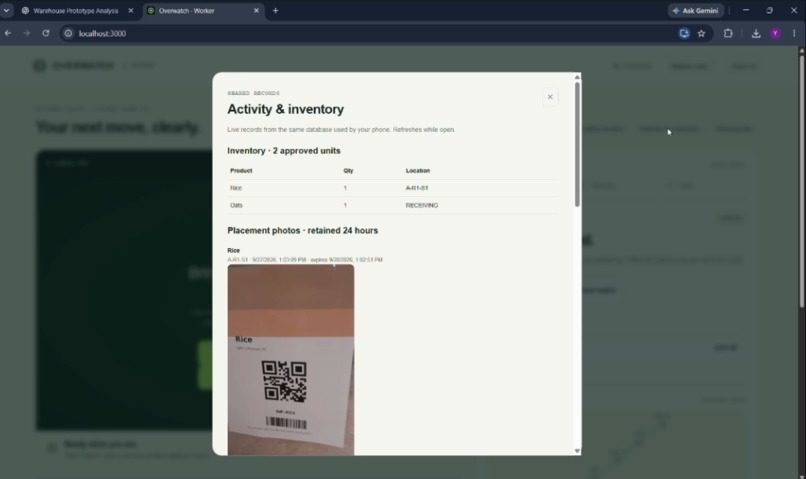
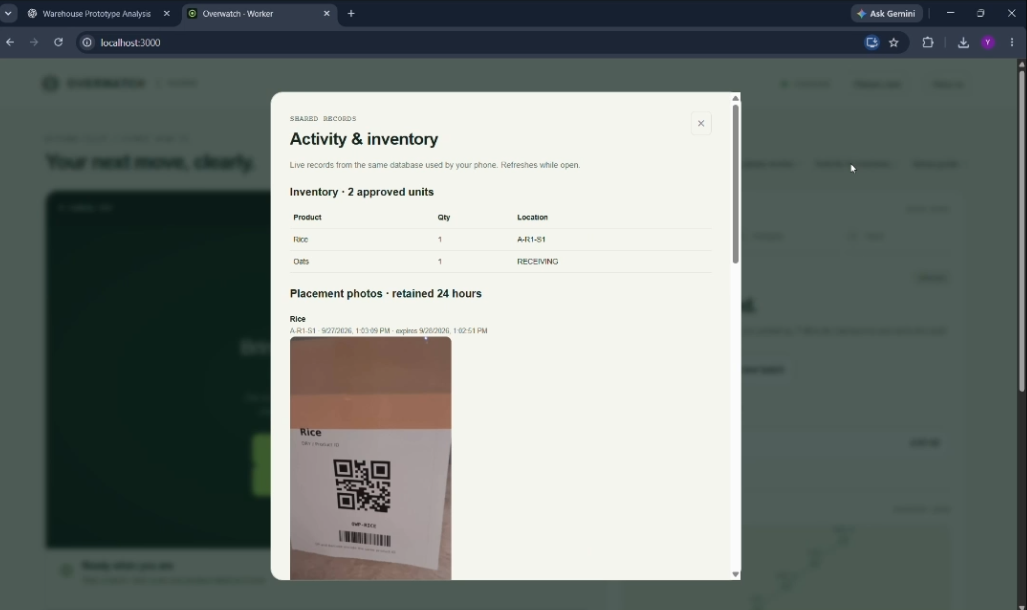
08-Inventory tracking with placement photos
Inspiration
We chose prompt C
Most people who work in warehouses and job sites don't sit at a desk, and the software they use hasn't kept up. Even as the warehouse automation market grows toward roughly $60B, about 80% of warehouses still run with no automation, and many mid-size operations coordinate the day on whiteboards, spreadsheets, and radio calls.
The gap isn't a lack of interest. One 2026 operations survey found 81% of operators want AI in their operations, but only 11% use any. The tools built for the top of the market, like Vecna, GreyOrange, and Gather AI, assume a large facility, a mature warehouse management system, and a budget for new robot fleets. Mid-size operators have none of that.
We also kept hearing a second barrier: trust. Research from Lucas Systems and Accenture points to fear of job replacement and inadequate training as major obstacles to adoption. So we set one rule for ourselves: use the people and equipment a warehouse already has, and give workers tools that help them instead of replacing them.
What it does
Overwatch is an AI dispatcher for physical worksites. It coordinates humans, equipment, and robots from one live view.
- A supervisor sets a goal in plain language, such as "stage this shipment."
- An AI agent breaks the goal into tasks and assigns each one to the best available worker or machine.
- Workers see their next task in smart glasses, with no clipboard, radio call, or walk to the supervisor.
- Existing forklifts, fitted with cameras and location tracking, report when a task is done, help with collision avoidance, and raise alerts.
- A live dashboard shows task status, worker and equipment availability, blockers, and a history of who did what.
Humans still do the driving and the physical work. Overwatch makes sure everyone knows what's next and the supervisor sees it as it happens.
How we built it
Our prototype is a working dashboard and coordination demo that runs locally with simulated goods, workers, and robots. It covers:
- Multi-way communication between the supervisor, planner, workers, and robots
- A task queue with waiting, assigned, in-progress, blocked, and completed states
- Seven-stage order progress and worker and robot availability controls
- Obstruction alerts, rerouting, stopped missions, and supervisor approval for recovery
- Inventory reservations, picking, replenishment, dispatch, and a movement history
- Whole-order shortage holds so an incomplete order isn't shipped by accident
- Supervisor controls to approve, pause, resume, and reassign
Task planning currently uses a labeled rules-based fallback, not a live AI model.
The smart glasses and forklift sensors are not built yet. The demo simulates them so we could test the coordination logic.
Customer discovery
We had informal conversations with 52 people who work in warehouses or similar environments, using the USC bookstore and mailroom storage operation as context. We presented our concept and asked about their workflow, problems, and what they'd want from a shared dashboard. Their feedback turned into 17 feature expectations, including alerts with suggested fixes, correct-item verification, visible progress, inventory change history, and end-to-end traceability. The common thread was keeping what physically happens, what the system records, and the next assigned task in agreement, especially when something goes wrong.
These conversations were shaped by our concept, so we treat them as early feedback, not proof of demand or willingness to pay.
Challenges we ran into
- Choosing our customer. Large distribution centers already have well-funded vendors. We narrowed to mid-size operators, which changed our pricing and our whole approach.
- Avoiding overclaiming. We first described forklifts as "autonomous," then realized cameras alone can't safely drive one. We reframed them as sensored equipment with a human still driving.
- Competitors closer than expected. Vecna and GreyOrange coordinate humans and robots but need existing structured data, and Gather AI puts cameras on forklifts but mainly reports inventory after the fact. We had to sharpen what we do differently.
- Scope. A whiteboard replaces many small things, so we had to choose which few to build well in one weekend.
What we learned
The hardest part of coordinating physical work isn't planning. It's keeping the real world, the records, and the next task in sync. We also learned to check our own claims: several numbers and competitor descriptions changed once we verified them.
What's next
- Build the worker-facing glasses interface and test forklift sensing on real equipment
- Run a paid pilot at one mid-size site
- Test pricing (our current hypothesis is per forklift and per worker)
- Add returns handling, damage tracking, configurable stock thresholds, and site configuration
Built With
- barcode-scanner
- css3
- frontend
- github
- html5
- javascript
- node.js
- npm
- openai-api
- python
- replit
- sqlite
- typescript
- web-audio-api
- web-speech-api

Log in or sign up for Devpost to join the conversation.