Inspiration
Overtone was inspired by synesthetic arcade tube shooters like Rez Infinite, Tetris Effect, and Thumper, where the music, the visuals, and your own actions blur into one feeling. Our goal was to make a game that could show off all the new features of the Meta VR Glasses and build on the strengths of the tech. After weeks of iteration, we finally landed on flicking as our core input and built the entire game around that interaction. Then we designed the world to be as reactive and playful as possible so every player action can be heard and seen in the world.
What it does
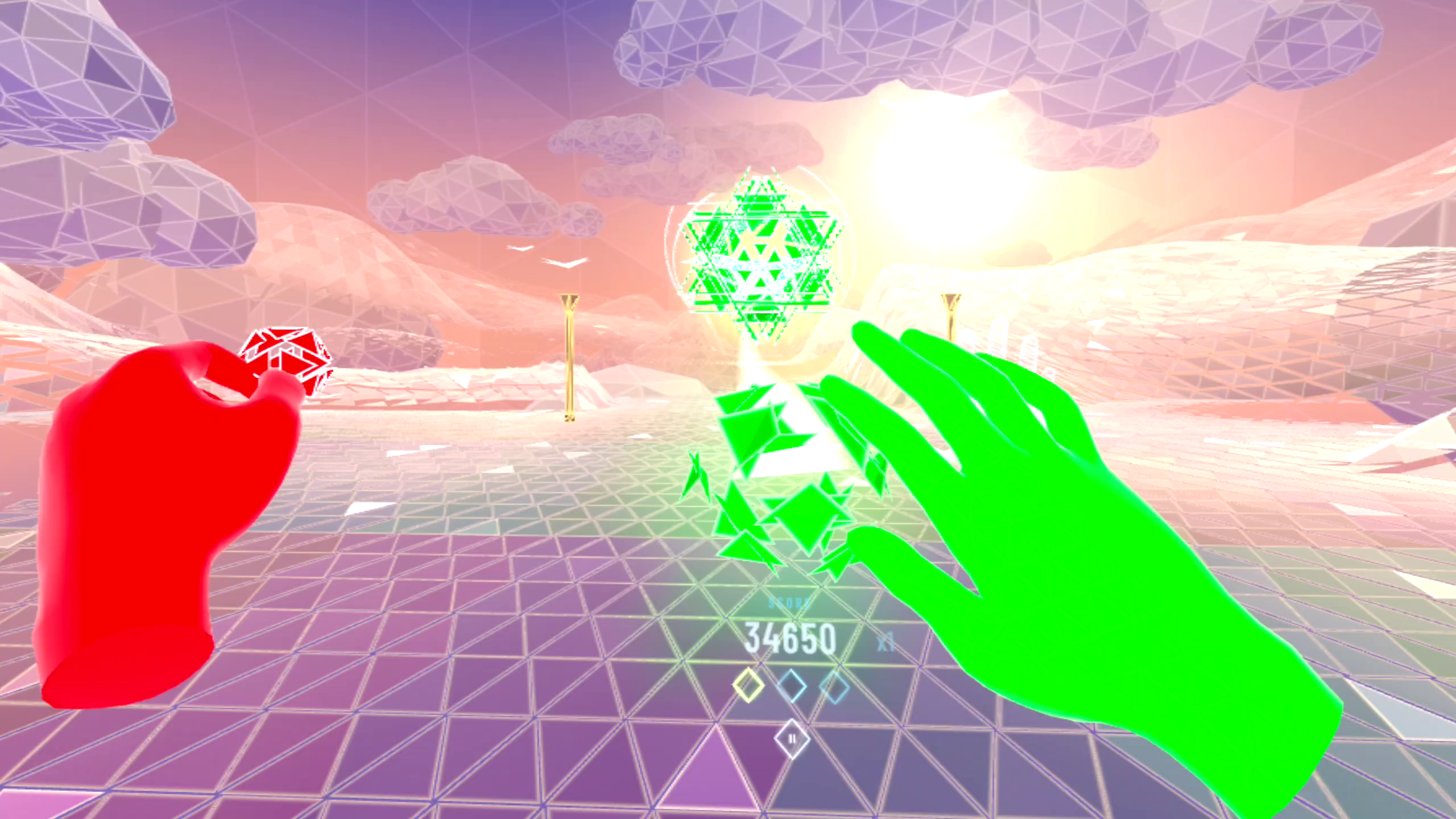
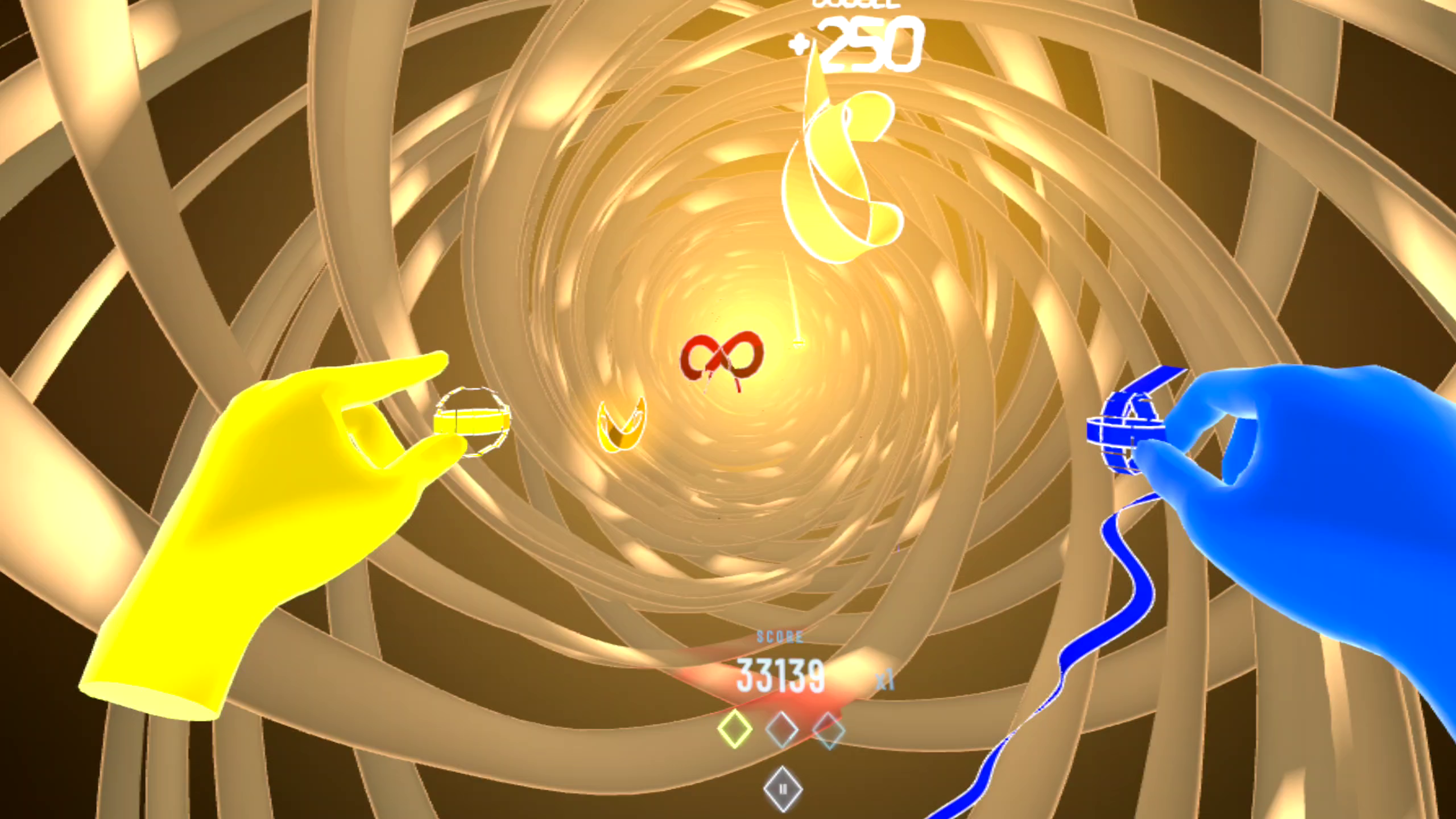
Overtone is a hands-only synesthetic arcade game designed for Meta VR Glasses. Blast through audio-visual reactive worlds in a fever dream of color and light from the comfort of your favorite chair. The game was built from the ground up for hand controls, so we employ a suite of simple, intuitive inputs:
- Flick with your thumb and finger to fire. Soft flicks hit near targets and hard flicks reach ones further away.
- Thumb Tap microgesture to swap a hand's color. Your left hand holds warm colors and your right hand holds cool ones. Targets only break for the correct color.
- Open your palm to deflect incoming projectiles back at the spawner, smashing every target along the way.
- Clap to unleash a powerful powerup like Laser Fingers, Power Beam, or Pulse Clap.
- Pinch to select anything in the menus.
The music is your health bar. Every music track is split into five layers that build and evolve as your streak grows. Miss too many targets and the color and sound drain out of the world until the run ends.
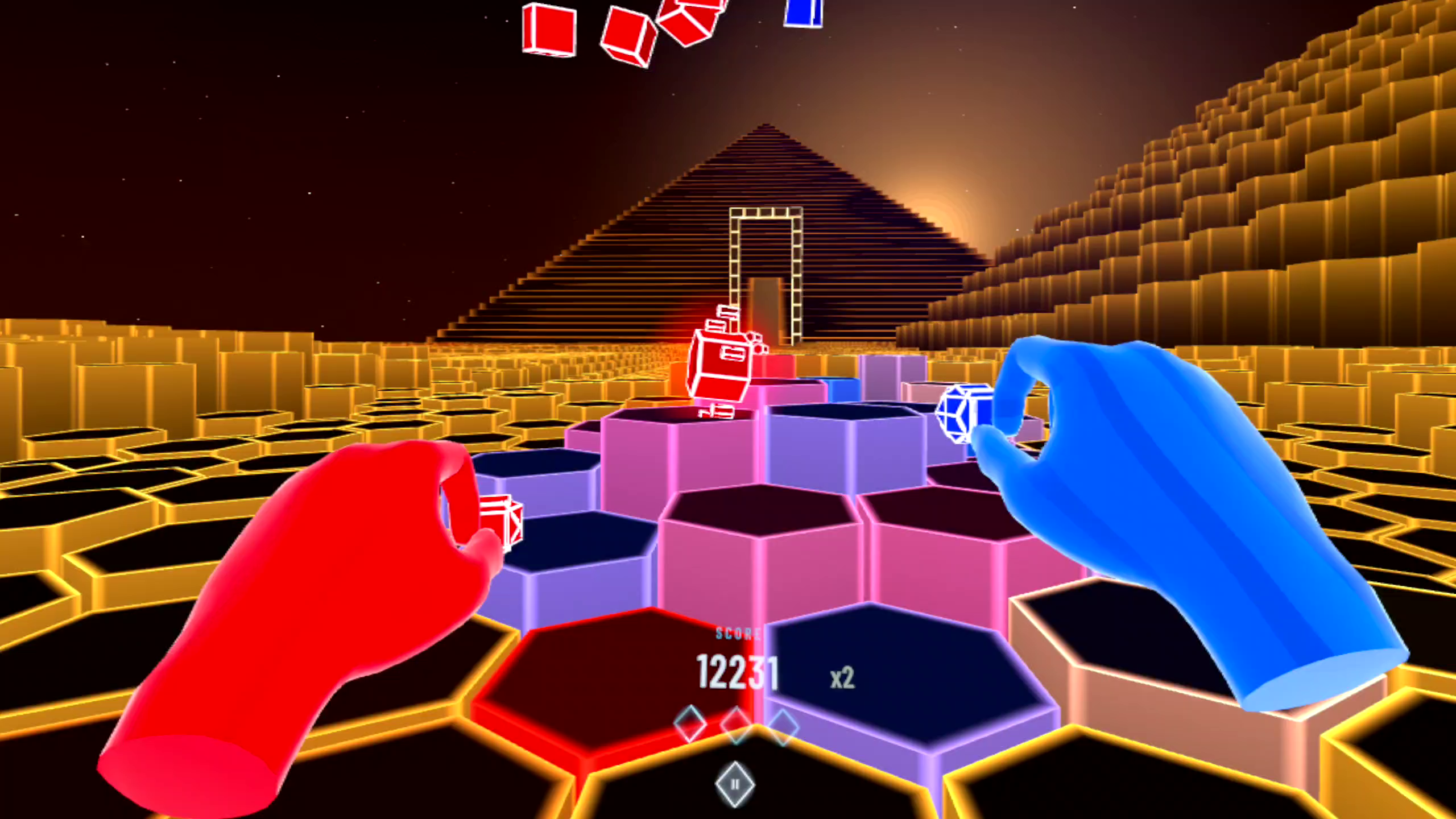
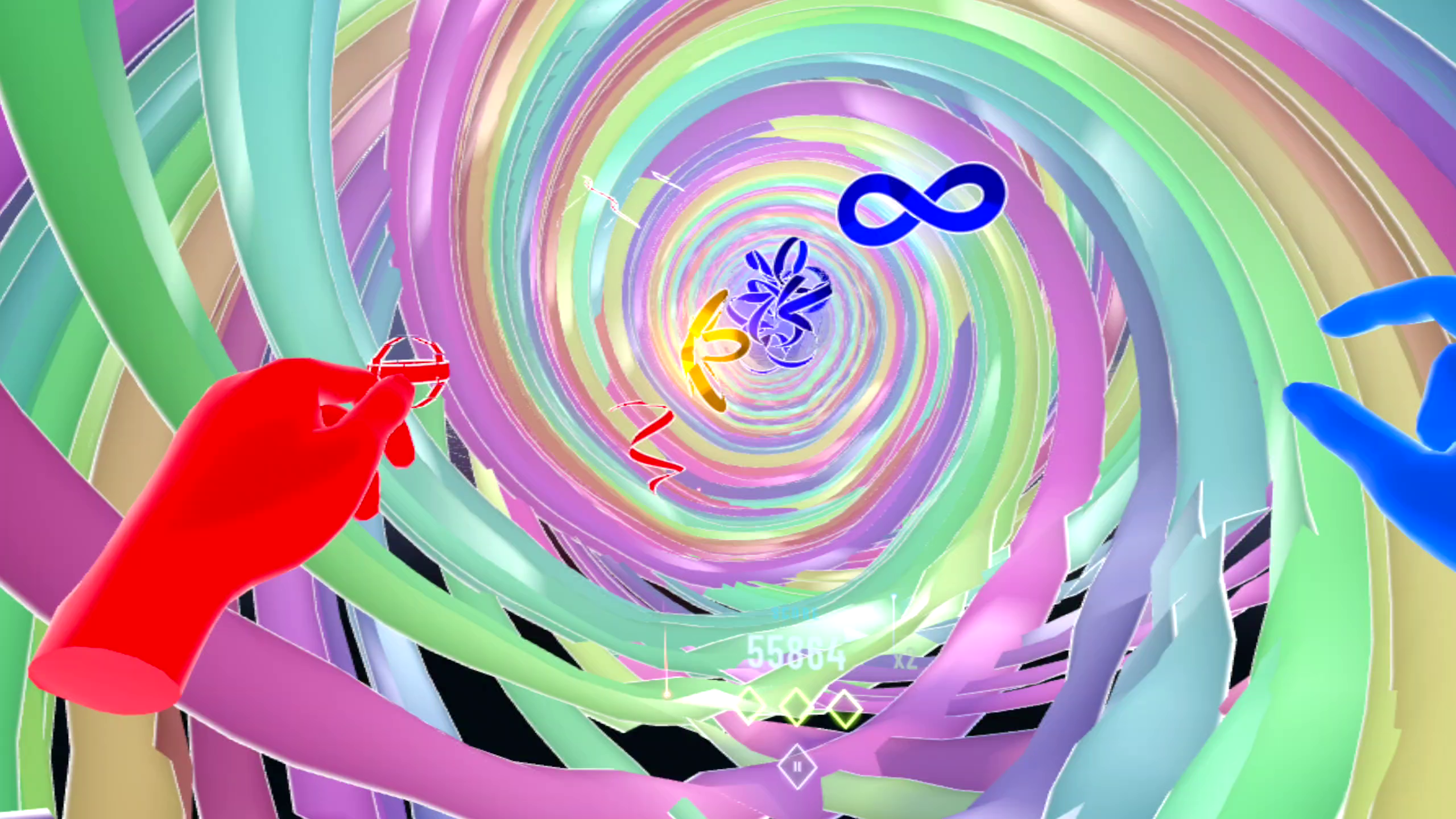
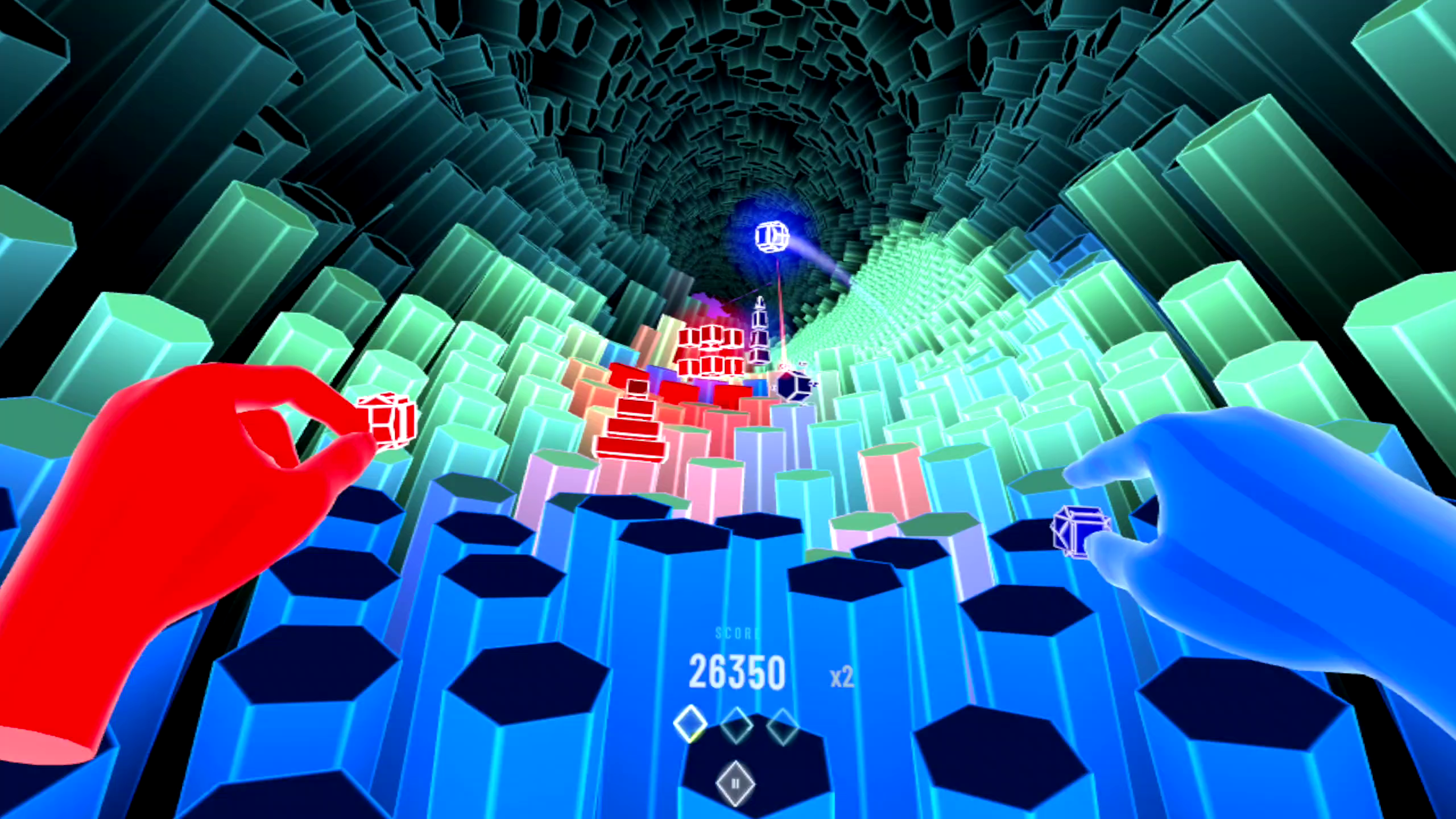
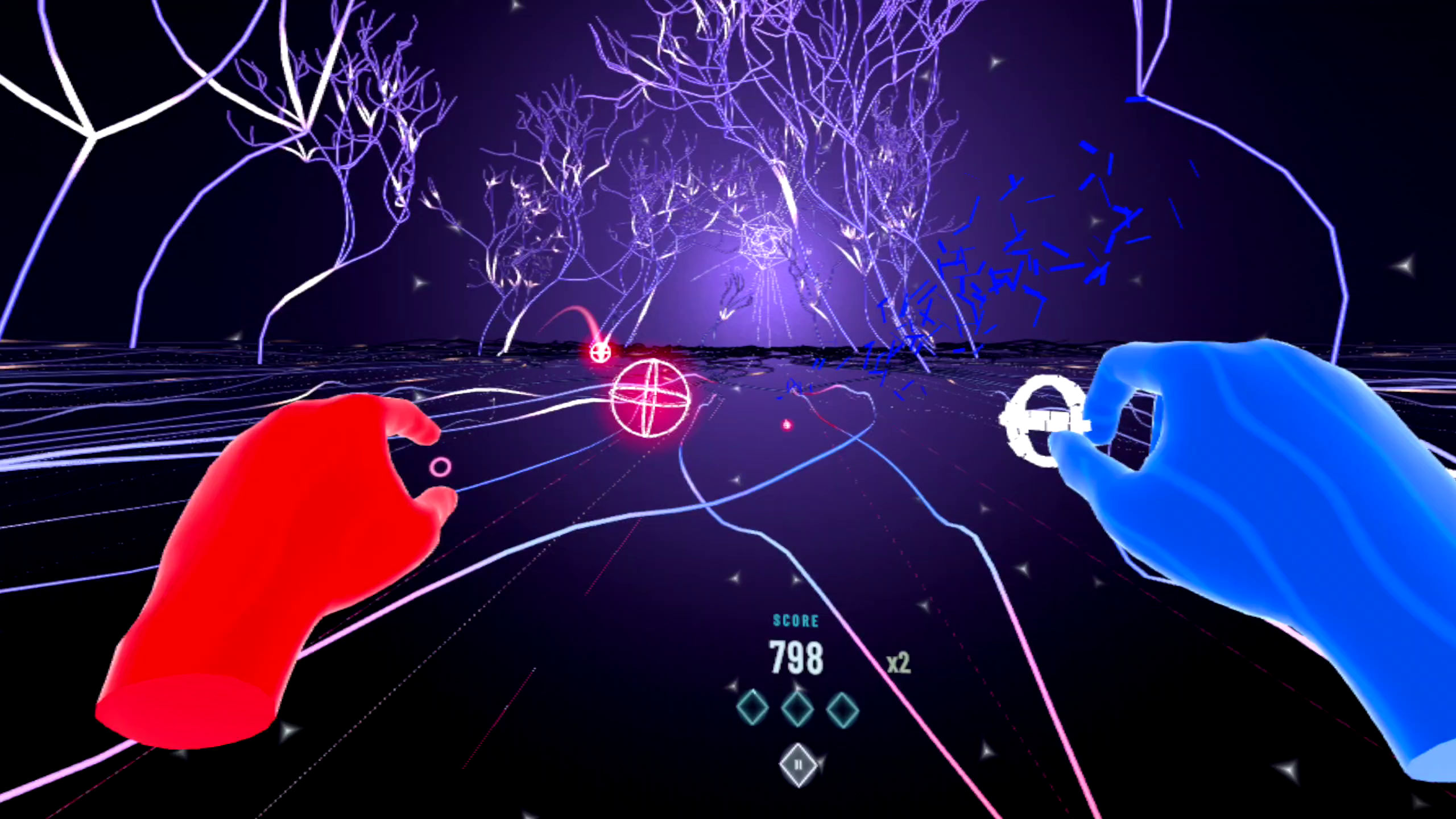
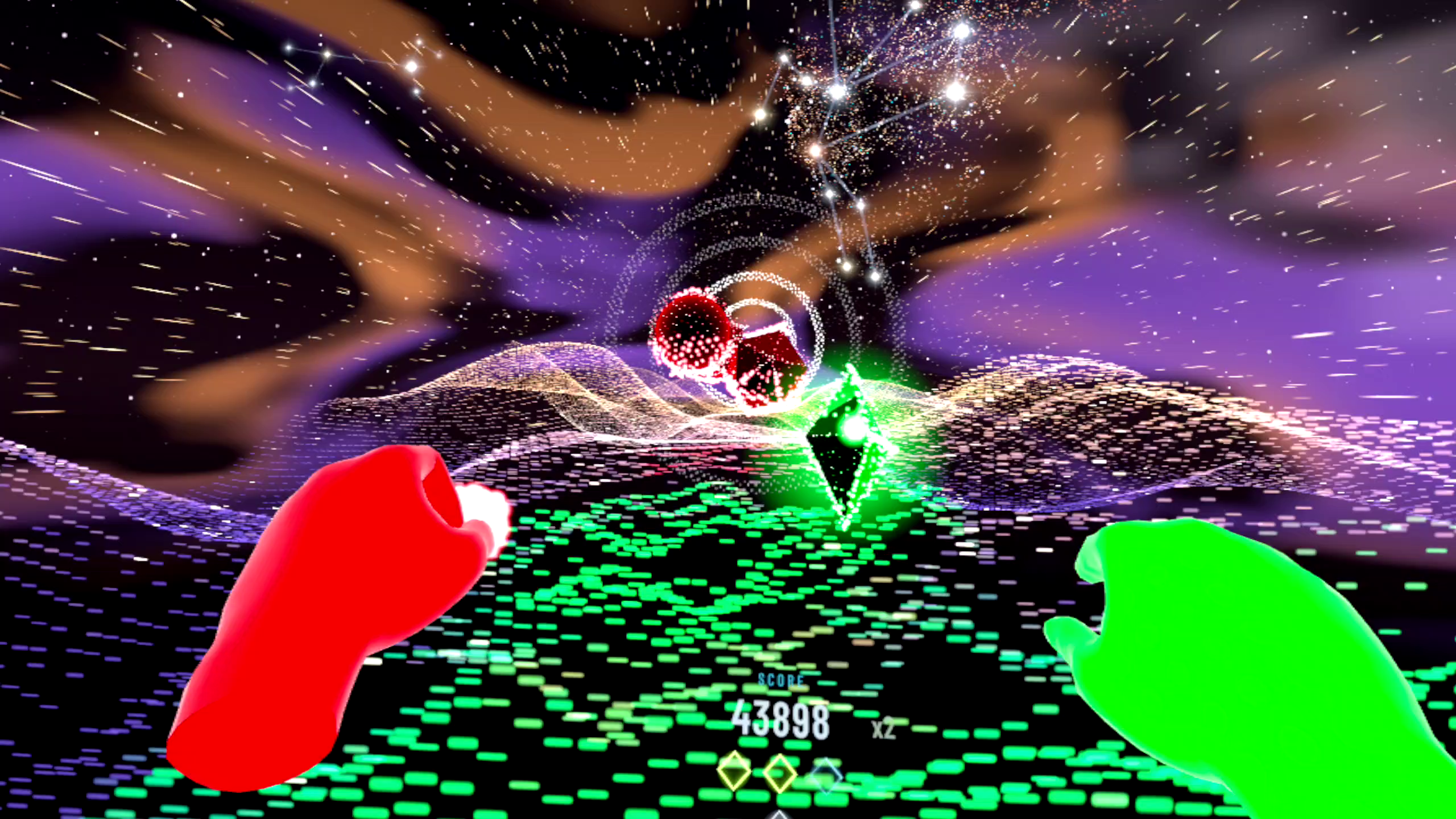
The competition build has four base levels. Each one is a complete audio-visual journey through a fantastic dreamscape that ends in a boss encounter. The four base levels showcase just a few of the visuals and effects we've explored:
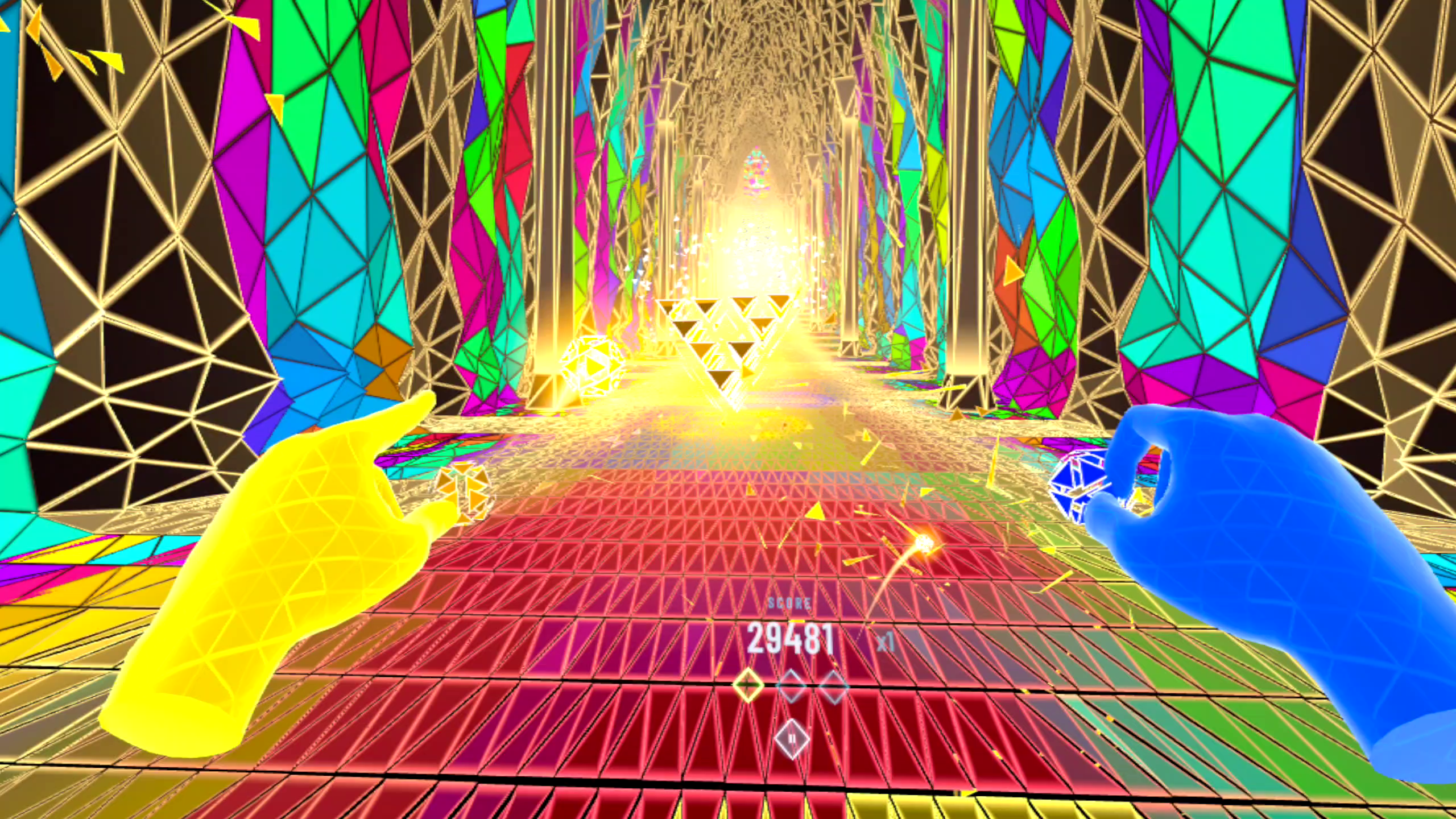
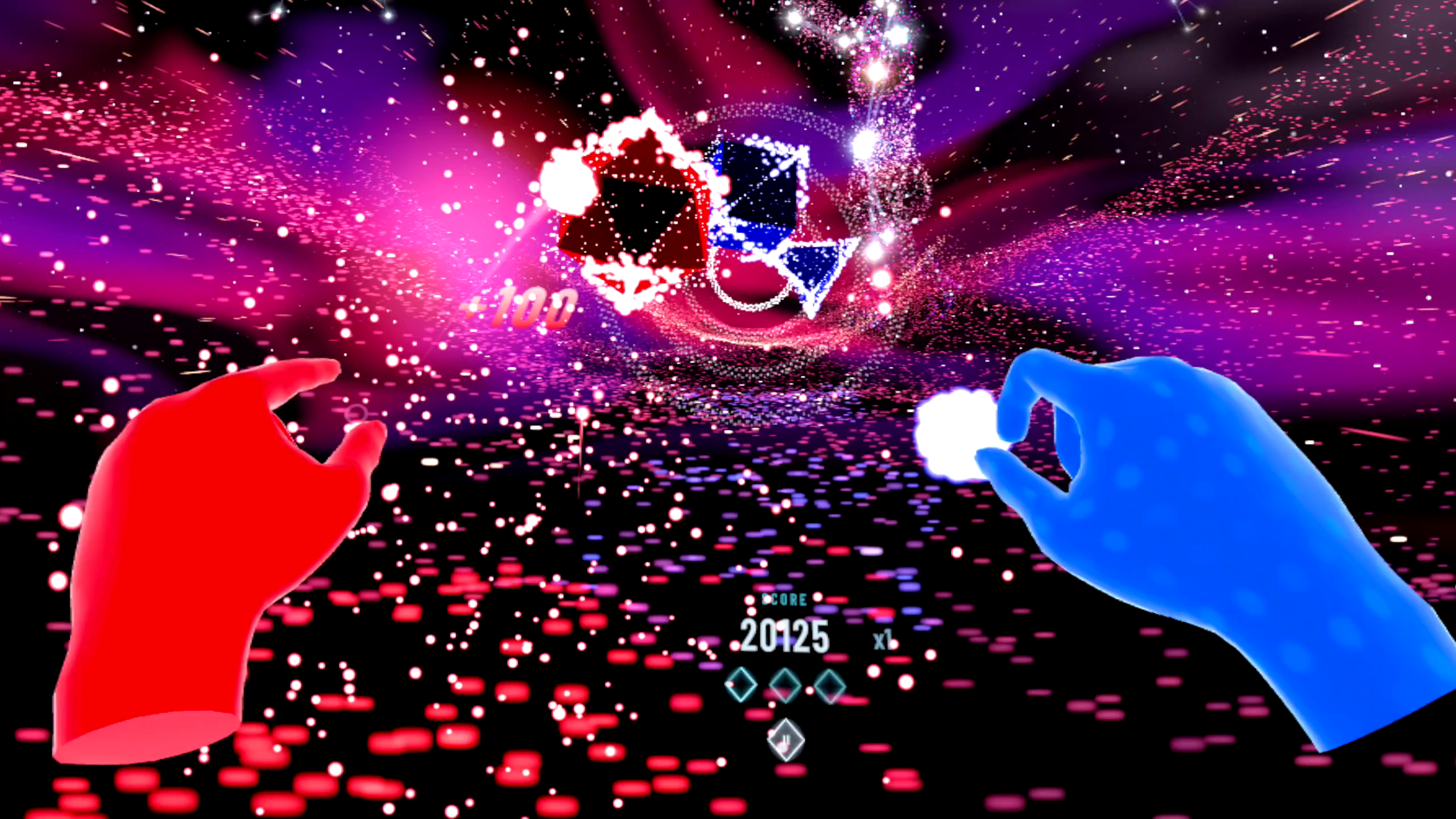
- Tessellation is a stunning voyage through living meshes of glowing triangles and sacred geometry that ends with a cosmic sunrise.
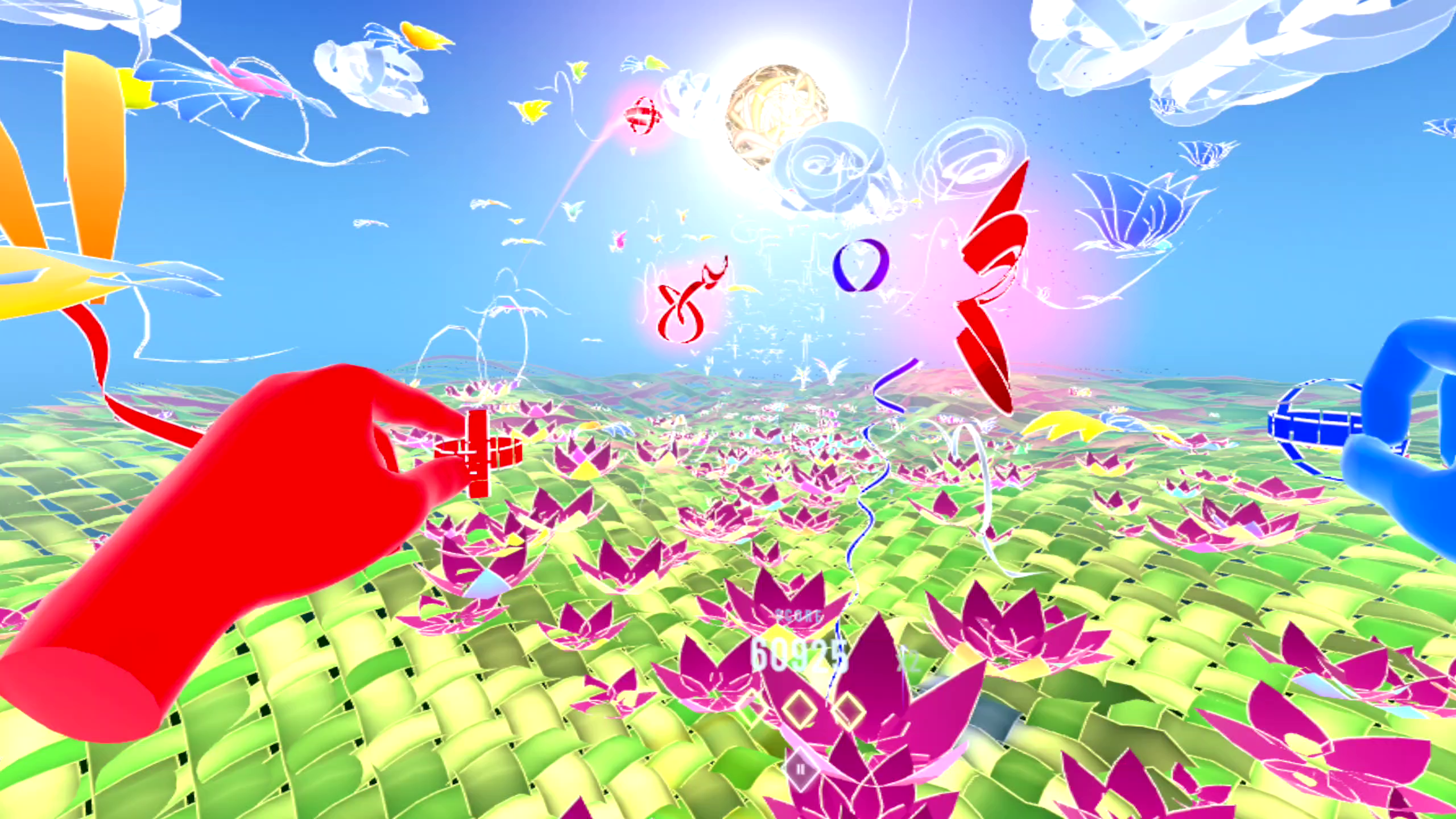
- Chrysalis is a story about transformation and resilience in a world woven entirely from ribbon.
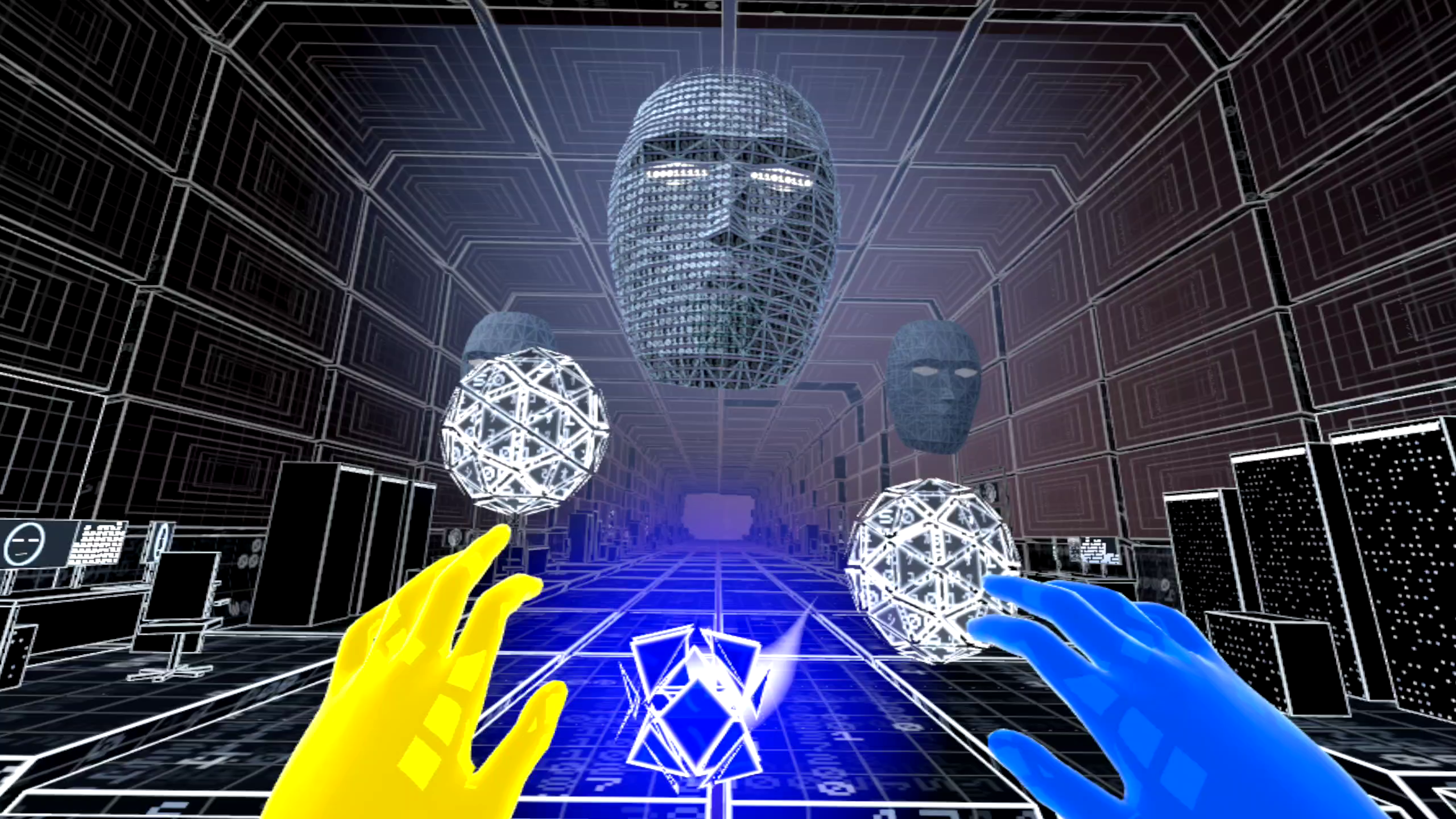
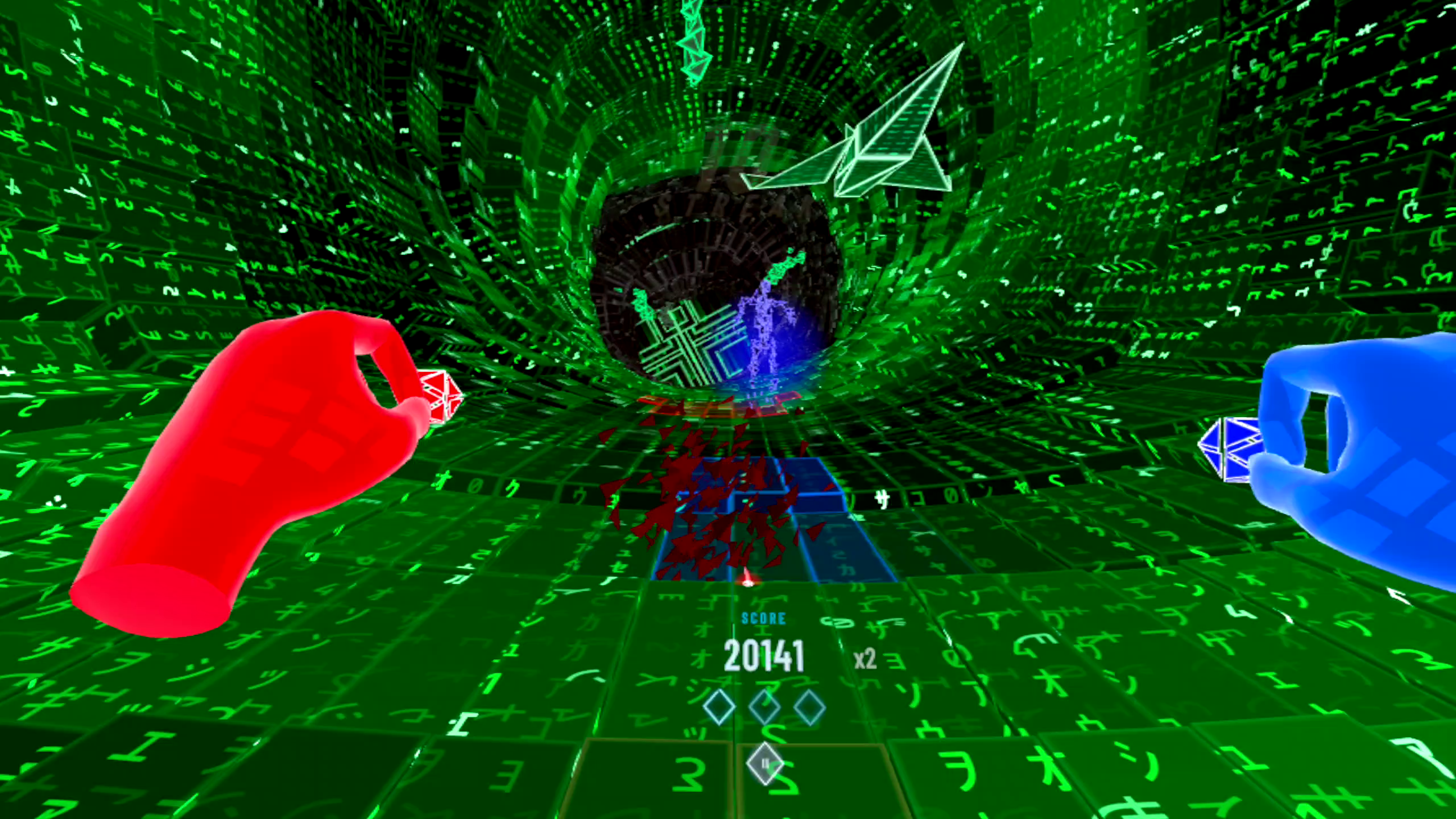
- Source is a dive through tunnels of code, a neon club, and a rolling sea to face a glitching stone mask made of ones and zeros.
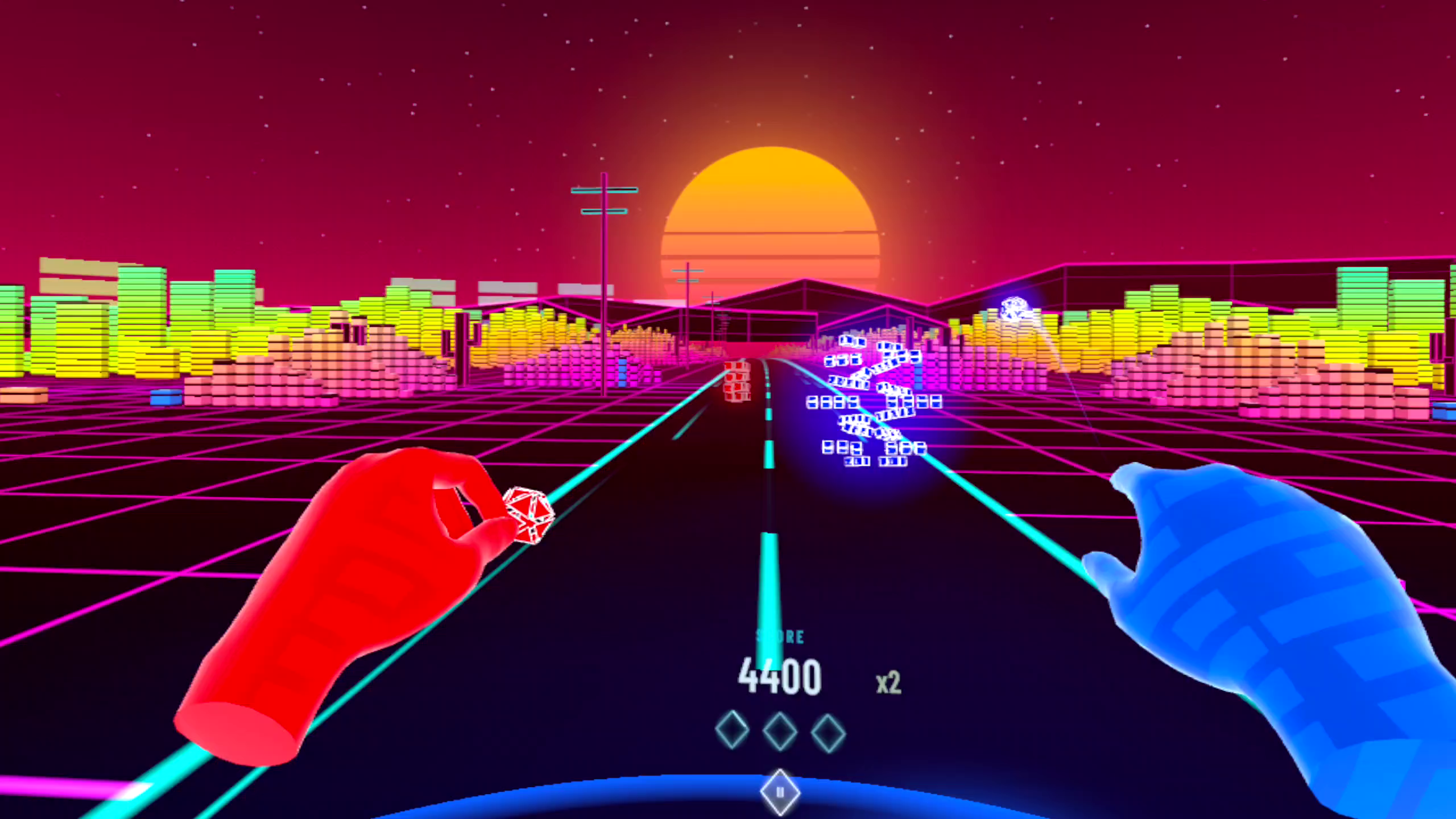
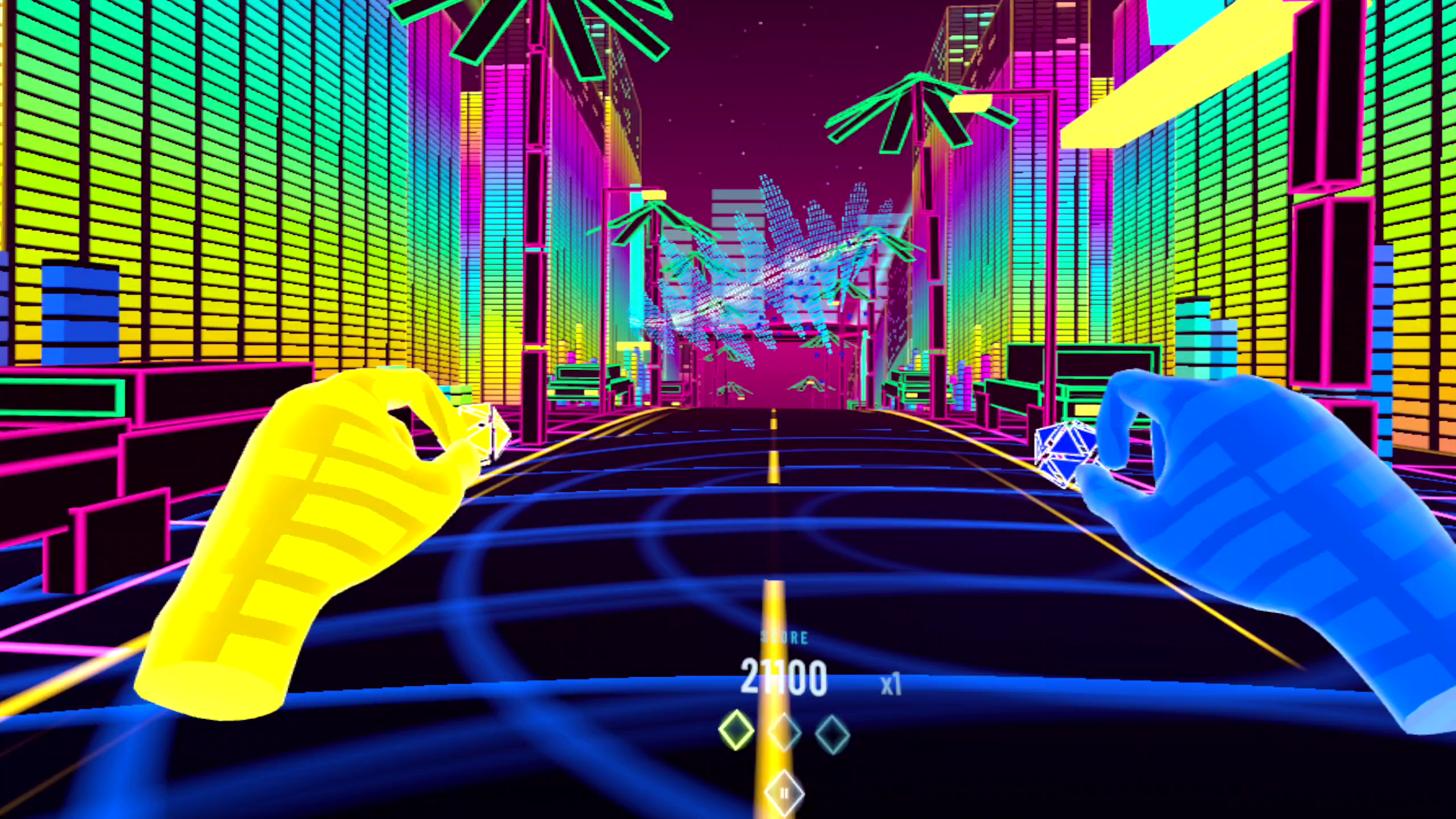
- Serenade is a synthwave love story that follows a musical entity across a desert highway, through Tinseltown nightlife, and out into the new horizon.
Every level tells a story and takes you on a magical journey through color and sound. On top of that there are four difficulty tiers, star ratings, global and friends leaderboards, and a dynamic living galaxy as the level select.
How we built it
We built Overtone in Unity 6 with the Universal Render Pipeline. We used the Meta XR Core SDK for hand tracking and microgestures and the Meta Platform SDK for leaderboards, and we tested constantly on various Meta Quest headsets. Each world is drawn with its own custom shaders (particles, triangle meshes, ribbons, lines of code, sound bars) that pulse to loudness curves baked from every layer of the music tracks. Our goal was to make the world as responsive as possible, so we built the worlds from the ground up to be audio reactive and visually arresting.
Hand tracking runs through a small interface that let us record our own real hand poses on the headset and replay them in automated tests. The project has over a thousand automated tests in all. This allowed us to fine-tune flick detection without putting the headset on for every change. Every number in the game lives in a tunable asset, so design iteration happened inside the Editor instead of in code. For sound, we layered 116 cues from over 800 takes, tuned them to the key of whichever track is playing, and made your hits climb the scale as your streak grows.
We also leaned heavily on various agentic coding apps as AI pair programmers that drove the Unity Editor directly.
Challenges we ran into
The biggest challenge was discovering the direction of our final aesthetic. For the first four weeks of development, Overtone was a completely different game. The flicking mechanics were always there, but the gameplay and environment design were wildly different. After extensive playtesting and weeks of running into obstacle after obstacle, we pivoted our vision and unleashed our creativity on the bold new direction you see today.
Hand tracking was the other big challenge. A flick is one of the fastest motions a hand can make, and it's over in a few frames. Our detector catches the snap on its first frame, waits three frames, and launches along the finger, and getting there took a lot of headset recordings. We also found that the thumb-tap microgesture had trouble registering whenever the hand was moving quickly, so we added a wrist twist as an alternate way to swap colors. The menus took several attempts too. We went through flickable buttons, poke buttons, and grab-and-pull stars before landing on the simple pinch input that mirrors the OS interactions.
Designing for the upcoming VR Glasses shaped everything else. Every target stays inside a 50-degree view so nothing important ever appears at the edge of a smaller display. To hold frame rate on a mobile chipset we kept bloom and HDR switched off, so all of the glow is drawn directly into our shaders.
Accomplishments that we're proud of
We're incredibly proud of how great the flick input feels. It's a simple, tactile gesture that everyone knows and never gets old. We're proud that the entire game, from launch through menus, play, pause, and leaderboards, works with nothing but your bare hands. We're also proud of the sheer amount of game we shipped in such a short time: over four hand-crafted journeys with boss fights, powerups, four difficulty tiers, adaptive music, and a full reactive soundscape.
And most of all, we're super proud to have taken user playtesting to heart and followed the design instead of trying to force something that just wouldn't work. Listening to your game and building on its strengths, even if it means scrapping tons of progress, isn't easy. But we're thrilled to have an experience that feels natural and intuitive to pick up and play.
What we learned
We learned that a great core interaction can survive anything. The flick outlived countless iterations of prototypes and experiments. When the verb is right and the interaction is novel, the world around it is free to adapt.
We also learned a lot about designing for hands. Every gesture needs its own unmistakable pose so that a flick, a palm, a pinch, a clap, and a twist never get confused with each other. We learned to show the game to other developers early, because one honest playtest was worth more than a week of polish. And we learned that an AI coding partner is only as good as the source of truth you give it. Documenting every decision and ensuring we're all on the same page about what decisions we're making and (more importantly) WHY we're making them is the key to building fast.
What's next for Overtone
More journeys, more music, more powerups, and expanded features to enhance replayability. We'll keep playtesting and fine-tuning the experience ahead of our launch for Meta VR Glasses in Spring 2027. We can't wait to see the high scores you set!
Built With
- chatgpt
- claude
- discord
- github
- google-drive
- suno
- unity
